• About Us
    • What Is Street Harassment?
    • Why Stopping Street Harassment Matters
    • Meet the Team
      • Board of Directors
      • Past Board Members
    • In The Media
  • Our Work
    • National Street Harassment Hotline
    • International Anti-Street Harassment Week
    • Blog Correspondents
      • Past SSH Correspondents
    • Safe Public Spaces Mentoring Program
    • Publications
    • National Studies
    • Campaigns against Companies
    • Washington, D.C. Activism
  • Our Books
  • Donate
  • Store

Stop Street Harassment

Making Public Spaces Safe and Welcoming

  • Facebook
  • Instagram
  • Pinterest
  • Tumblr
  • Twitter
  • YouTube
  • Home
  • Blog
    • Harassment Stories
    • Blog Correspondents
    • Street Respect Stories
  • Help & Advice
    • National Street Harassment Hotline
    • Dealing With Harassers
      • Assertive Responses
      • Reporting Harassers
      • Bystander Responses
      • Creative Responses
    • What to Do Before or After Harassment
    • Street Harassment and the Law
  • Resources
    • Definitions
    • Statistics
    • Articles & Books
    • Anti-Harassment Groups & Campaigns
    • Male Allies
      • Educating Boys & Men
      • How to Talk to Women
      • Bystander Tips
    • Video Clips
    • Images & Flyers
  • Take Community Action
  • Contact

Late Fall News Round-Up 2017

November 22, 2017 By HKearl

Here are some of the relevant stories, resources and research that’s come forward across September, October and November!

Global News:

BBC’s global 100 Women campaign included harassment on public transit.

Argentina’s Lower House approved a bill that will criminalize street harassment nationally and set-up a free hotline.
Rapper Drake called out a sexual assaulter in the audience of his show in Australia.

A new mobile app is launching in Belgium to help survivors and witnesses of sexual harassment.

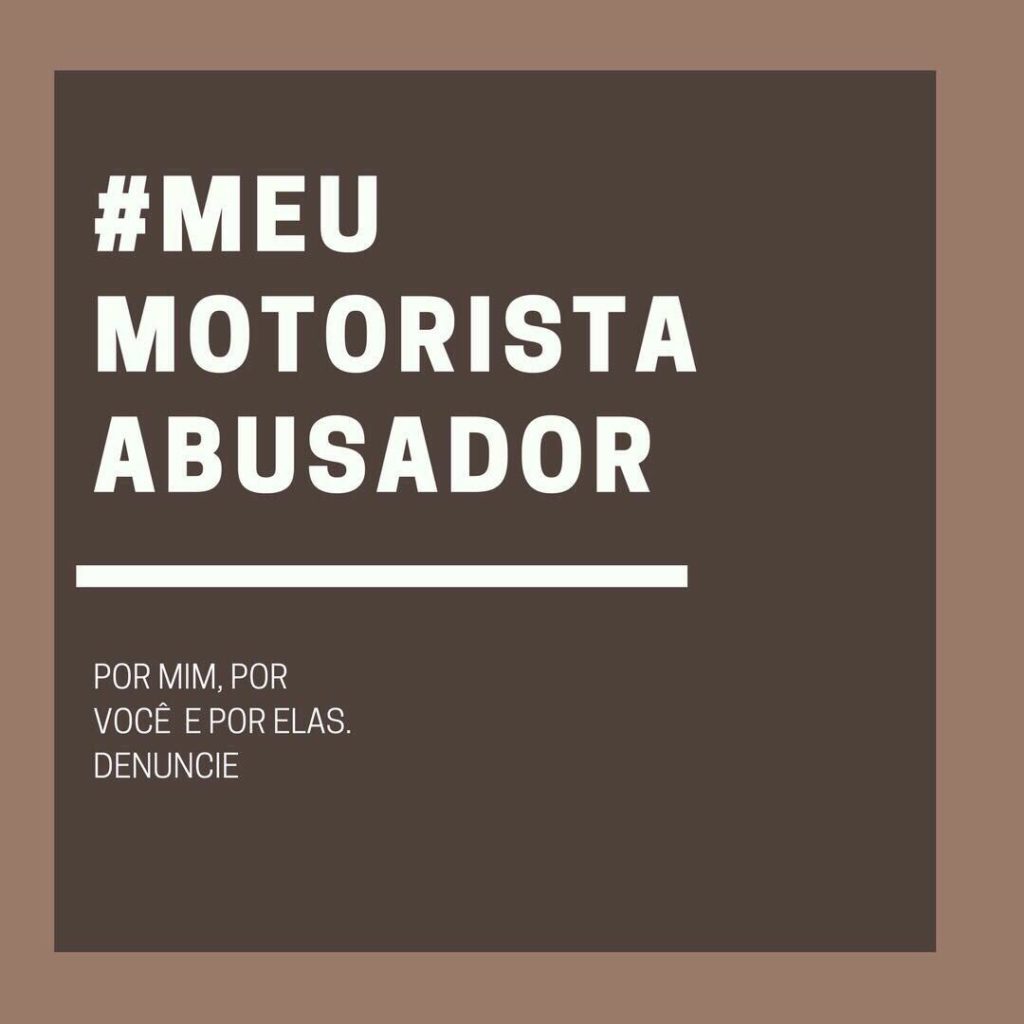
Women in Brazil shared their stories of harassment and abuse by taxi and rides-sharing drivers.

The city of London in Ontario (Canada) is planning efforts to prevent street harassment.

Street artists in Colombia challenge sexism, street harassment with spray paint.
The new film “The People’s Girls” about street harassment in Egypt is now available.

Women in France rallied against sexual violence while a national law against street harassment inched closer to passage.

An anti-harassment hotline in France quickly had to shut down due to trolls.

Activists in Guyana discussed how to address street harassment in their country.

Safecity in India released a new mobile app.

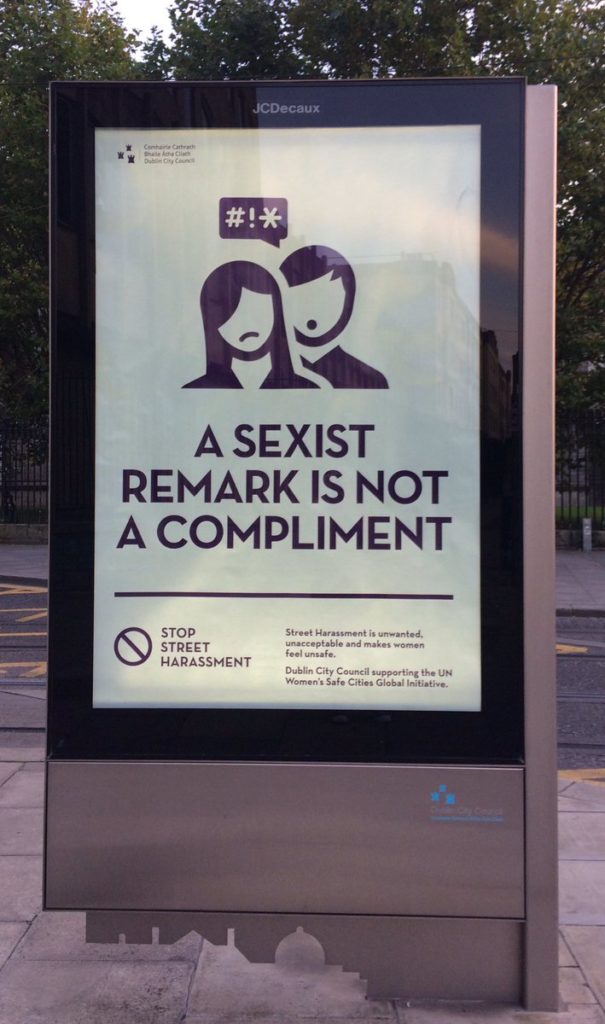
New posters by the Dublin City Council (Ireland) say, “A sexist remark is not a compliment.”

There’s a new sexual harassment hotline for transit riders in Kathmandu (Nepal).

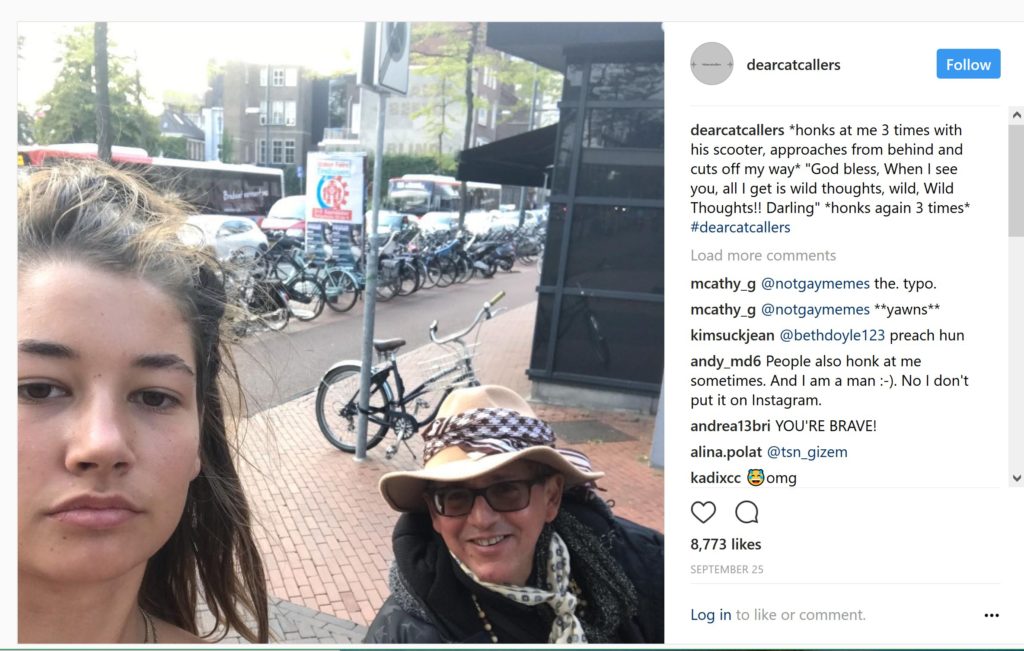
A college student in the Netherlands took selfies with many of her street harassers across one month.
Staying safe in Pakistan (and elsewhere) may be easier if you have money.

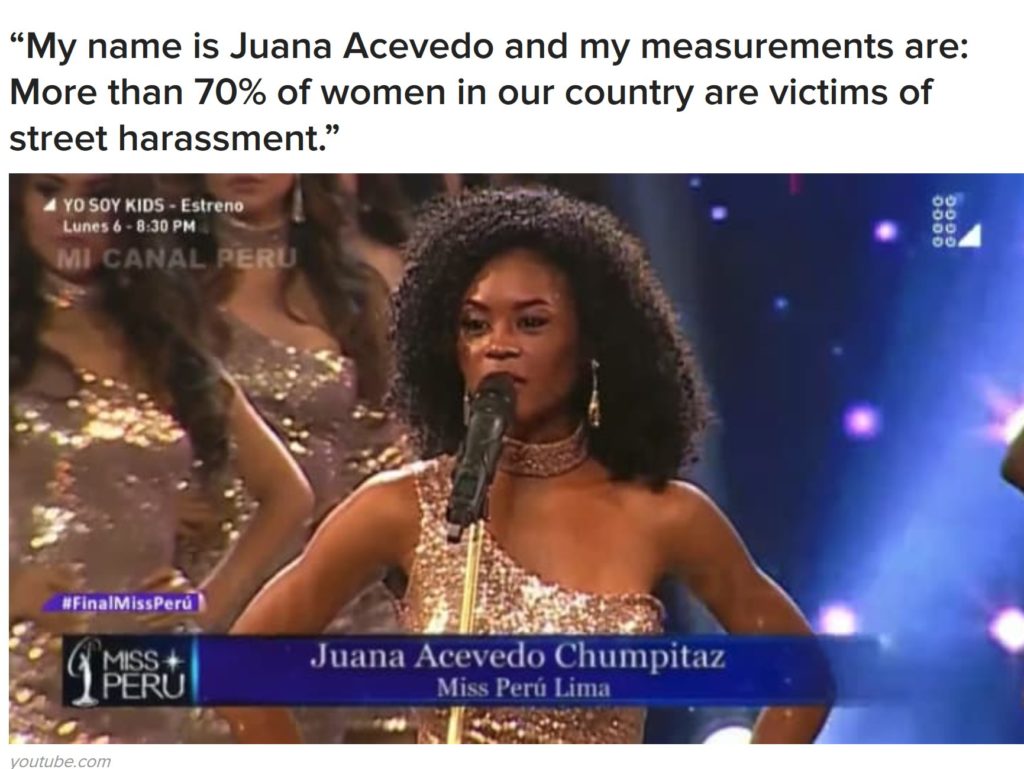
Beauty pageant contestants in Peru gave PSAs about sexual violence, including street harassment.
Two harasser police officers were the first ones tried under Quezon City’s anti-harassment ordinance (Philippines).

An anti-harassment ordinance was proposed in Baguio City (Philippines).

A woman in Singapore wrote about street harassment and the right to public spaces.

Bars and clubs in Switzerland are doing more to address sexual abuse.

A woman in the UK made a map of street harassment hotspots.

The “Unmute” badge fosters bystander action on public transit in the UK.

The category of “gender hate crime” is now recognized in Bristol (UK).

Upskirt photos and videos may become a crime in UK.

Womanability released a new video on women’s safety in public in Uruguay.

The Mary Sue in the USA invited women to give persistent harassers the number of their rejection hotline

Some migrants from Venezuela face harassment in Peru.


New Research:

The Global Mobility Report (by World Bank-led partner SuM4All) shows that “harassment and physical abuse are preventing women around the world from being able to use public transportation safely.”

43% of women in Germany have faced some form of sexual abuse, with most occurring in public spaces.

In the UK, a poll showed that younger women face higher rates of harassment and are more likely to see wolf-whistling as unacceptable compared with older women.

Almost 80% of women and 26% of men ages 18 to 24 have been sexually harassed during “a night out” in the UK.

In the UK, 34% of teenage girls worry about being followed by a stranger and many girls cited experiences of street harassment.

A new survey shows 1 in 3 men don’t think catcalling is harassment (USA)


Powerful or Notable Pieces:

“Where do Harvey Weinsteins come from?”

“My daughter got her first catcall [at age 11, from an adult man], and I didn’t know what to tell her.”

“On being a woman alone in the woods.”

“Paying to stay safe: why women don’t walk as much as men.”

“Black woman viciously attacked after rejecting advances of cat callers.”

“Jogger stabs man with knife after he groped her.”

“Flagstaff police looking for man accused of grabbing teen girls near schools.”

“Why it’s never okay for men to ask women to smile.”

“I recorded every time I was catcalled this summer: Here’s what I learned.”

Share

Filed Under: News stories, weekly round up

End-Of-Summer 2017 News Round-Up

August 30, 2017 By HKearl

New Research:

A new study conducted in the MENA region sheds light on why men street harass.

A study published in the Australian and New Zealand Journal of Public Health found strong links between women’s experience of sexual violence – including street harassment — and poor mental health.

A study in the British Journal of Social Psychology shows street harassment negative impacts how women think about themselves.


Global News:

Women in Lebanon speak out against street harassment.

Australian women are receiving unsolicited “dick pics” via AirDrop.

Reports of sexual harassment are up on Brussels’ (Belgium) public transport.

Pressure is mounting for music venues in Canada to address sexual harassment.

A man in China stabbed a woman on the bus after she protested his harassment.

Young women in Egypt face harassment in public spaces and restrictions at home.

In France, the Gender Equality Minister wants to outlaw street harassment.

A new survey shows harassment on public transport is rampant in Chennai, India.

A teenager’s account of harassment went viral in Italy.

A new cartoon character tells people to report street harassment in Japan.

There was a death penalty ruling in a forced public stripping case in Kenya.

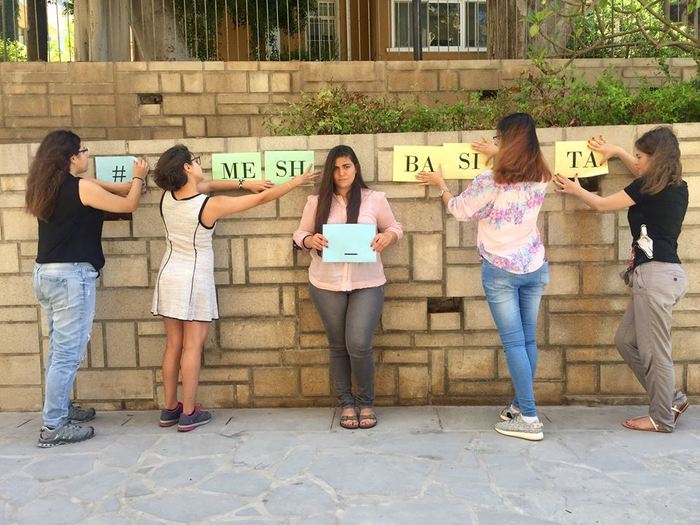
There’s a new anti-harassment campaign in Lebanon, #mesh_basita.

The gang rape of a woman on a bus in Morocco led to protests and promises of action by the Prime Minister.

Stop Straatintimidatie launched a new anti-harassment campaign in the Netherlands.

A new fine and jail time will be enforced on street harassment in Rotterdam, the Netherlands.

42 gay men in Nigeria were arrested simply for organizing a HIV awareness event in a public venue. Sign a petition for their release.

Combatting street harassment in Pakistan.

A senator in the Philippines will propose to criminalize street harassment.

A woman in South Africa wrote about wishing she was a man so she didn’t face harassment.

There’s a new dress code being enforced in Uganda, including against mini-skirts.

From Uganda to Tajikistan, women are fighting to enjoy the freedom of bicycling.

A Labour MP in the UK has suggested women-only train carriages – but the idea is insulting.

Women in Bristol (UK) are mapping street harassment.

“Cheer Up Luv” is a new UK-based photo series project.

Women of color in Washington, D.C. (USA) organize against street harassment.

Why street harassers speak the same language across the USA.

Latina and African American women in the USA created a choreo-film on street harassment.

A guitarist in the USA stopped his performance after witnessing sexual harassment in the audience.

American actress Ashley Judd calls out “everyday sexism”.

A high percentage of Missoula (MT, USA) patrons experience sexual harassment.


Powerful Pieces:

“My body doesn’t belong to you.”

“The thrill and fear of ‘Hey, Beautiful’”

“I don’t accommodate uncontrolled men”

“9 types of street harassment you’ve probably experiences if you’re a woman”

“After fighting off mid-run attack, she’s using her voice to help others”

Share

Filed Under: News stories, Resources, street harassment

Thank You, Taylor Swift!

August 15, 2017 By HKearl

Have you been following Taylor Swift’s lawsuit the last few days? If not, here is context via an excerpt of an article I wrote for Huffington Post a few days ago:

“Pop star Taylor Swift testified a few days ago about David Mueller, a former radio DJ, allegedly groping her backstage during a meet-and-greet after an event in 2013. Groping is a form of sexual violence. When her team reported the incident to his company, they launched their own investigation and fired him.

If her allegations are true, and I believe they are, then Swift’s experience is not unlike that of millions of Americans. In 2014, my organization Stop Street Harassment worked with national survey firm GfK to conduct a nationally representative survey about sexual harassment and violence in public spaces. Alarmingly, 23 percent of women and 8 percent of men nationwide had experienced some form of unwanted sexual touching while they were in public spaces, including streets, buses, trains, stores, bars, concert venues and parks…

Another common reason why people stay silent about groping is they fear being disbelieved or blamed for the incident. Countless women have written on the Stop Street Harassment site about encountering these kinds of responses when sharing their stories of harassment with friends, relatives or police. Even though she is a megastar, it is telling that these are both responses Swift faced. She had the fortitude to refute them in court saying, “This is what happened, it happened to me, I know it was him,” and “I’m not going to allow you or your client to make me feel in any way that this is my fault, because it isn’t.”

Yesterday, Swift won her lawsuit and today she announced she is donating money to organizations that work with sexual violence survivors.

Via ABC News:

“After a Denver jury found that a preponderance of evidence showed that former radio DJ David Mueller had groped the pop star, Swift said in a statement that her four-year ordeal, which included a two-year-long trial process, was for “anyone who feels silenced by a sexual assault.”

“I acknowledge the privilege that I benefit from in life, in society and in my ability to shoulder the enormous cost of defending myself in a trial like this,” the 27-year-old singer said in a statement obtained by ABC News. “My hope is to help those whose voices should also be heard. Therefore, I will be making donations in the near future to multiple organizations that help sexual assault victims defend themselves.”

Two organizations working with victims of assault told ABC News that they have already benefited from Swift taking on Mueller in court [including RAINN].”

Thank you, Swift, for using your platform in this way and for standing so tall in the face of abuse and disbelief. You are an inspiration and a role model.

Share

Filed Under: News stories, public harassment, Stories Tagged With: groping, lawsuit, sexual violence, taylor swift

Indonesia: Is Women-Only Transport Effective?

July 26, 2017 By Correspondent

Astrid Nikijuluw, Serpong, Banten, Indonesia SSH Blog Correspondent

English version below.

AREA KHUSUS WANITA PADA TRANSPORTASI UMUM: EFEKTIF?

Image courtesy of: Tribunnews.com

Kereta pagi meluncur dari stasiun Manggarai menuju stasiun tanah abang.  Di dalam penumpang kereta yang berdesak-desakkan, terdapat Agnes yang hendak berangkat menuju kantor.  Tiba-tiba dari arah belakang dia merasakan sesuatu yang aneh.  Sontak ia segera berbalik badan dan dengan lantang berteriak ke muka pria yang tepat berdiri di belakangnya,”Heh! Kamu sengaja ya gesek-gesek?!” Pria tersebut tidak bisa mengelak dan di stasiun berikutnya dia pun diturunkan oleh petugas dan dilaporkan pada pihak berwenenang.

Kisah diatas merupakan ilustrasi dari kejadian pelecehan seksual yang kerap terjadi di transportasi umum di Indonesia.  Banyaknya pengguna kereta di pagi hari mengakibatkan hal-hal seperti ini terkadang sulit dihindari.  Kejadian pelecehan seksual seperti yang terjadi pada KRL juga terjadi pada penumpang wanita Bis Trans Jakarta.    Beruntung pemerintah cukup peduli dengan hal tersebut.  PT Kereta Api Indonesia melalui PT KAI Commuter Jabodetabek (KCJ) terhitung sejak tanggal 1 Oktober 2012 meresmikan kereta khusus wanita.  Gerbong khusus ini biasanya terdapat pada gerbong pertama dan gerbong terakhir dari rangkaian KRL.  Selain pada transportasi kereta api, transportasi umum lainnya yang juga terdapat area khusus wanita adalah Bis Trans Jakarta.  Bis Trans Jakarta juga merupakan sarana umum yang kerap digunakan oleh para pekerja setiap harinya.  Dengan adanya area-area khusus wanita tersebut dapat pemerintah Indonesia melalui PT KCJ  seperti yang diungkapkan oleh Eva Chairunissa selaku VP Communications PT KCJ dapat mengakomodasi permintaan para pengguna KRL yang merasa risih harus berdempet-dempetan dengan lawan jenis.  Selain itu ia juga mengharapkan agar dengan adanya gerbong khusus wanita dapat menghindari kejadian-kejadian yang tidak diharapkan yang korbannya lebih sering perempuan. (https://news.detik.com/berita/d-3504057/sejarah-gerbong-krl-khusus-wanita-di-indonesia-dan-negara-lain)

Saya sebagai salah satu pengguna reguler KRL sangat mengapresiasi tindakan pemerintah dalam mengurangi pelecehan seksual terhadap pengguna wanita baik di kereta maupun di Bis.  Kejadian seperti ilustrasi kisah diatas memang sangat mengganggu bahkan cenderung menjadi terror yang cukup menakutkan bagi sebagian wanita terutama para korban dari tindakan asusila tersebut.  Saya merasa cukup beruntung tidak pernah mengalami kejadian ini.  Dalam pengamatan saya membaca berita-berita, semenjak diadakannya area khusus wanita baik pada kereta api maupun bis trans Jakarta, kasus pelecehan seksual pada transportasi umum tidak sebanyak sebelumnya. Namun apakah hal ini bisa dibilang efektif untuk menanggulangi kasus-kasus pelecehan seksual yang terjadi pada sarana transporasi umum?  Saya rasa hal ini masih harus dikaji lebih dalam.  Coba sama-sama kita bayangkan.  Untuk merasa lebih aman, pengguna kereta wanita yang jumlahnya bisa mencapai puluhan bahkan ratusan ribu per harinya harus rela berdesak-desakkan dalam 2 gerbong yang tersedia.  Berita-berita terakhir bahkan menunjukkan kejadian tidak mengenakkan di gerbong wanita seperti adu mulut berebut tempat duduk.  Sehingga akhirnya sebagian dari mereka tetap menggunakan gerbong biasa dengan resiko bisa mengalami kejadian pelecehan seksual.  Dan apabila memang terjadi, akankah mereka disalahkan karena ‘memilih dengan sengaja’ gerbong yang bukan dikhususkan untuk wanita?

Buat saya kejelasan hukum juga menjadi poin penting dalam rangka pencegahan kasus pelecehan seksual tersebut.  Dari penelitian singkat saya mengenai kasus-kasus pelecehan seksual yang terjadi di transportasi umum, pelaku tidak mendapat hukum yang setimpal, bahkan dalam beberapa kasus dibebaskan karena dianggap ‘hanya’ melakukan percobaan.  Bukankah segala sesuatu itu berawal dari ‘mencoba’?  Kalau berhasil diteruskan.  Justru titik krusial menurut saya adalah pada saat mencoba ini.  Jika dari hal ini saja sudah ‘dibolehkan’ secara hukum maka jangan heran kalau kasus pelecehan seksual masih akan dan terus berlangsung di transportasi umum.  Sejauh ini saya belum menemukan hukuman yang dapat memberikan efek jera kepada para pelaku kejahatan seksual tersebut.  Sekali lagi seperti yang pernah saya tulis sebelumnya, hal ini masih belum dianggap serius.  Padahal efek yang ditimbulkan kepada para korban sangat dalam.  Berdasarkan laman resmi dari Komnas Perempuan (komnasperempuan.go.id) pelecehan seksual dikategorikan ‘hanya’ sebagai perbuatan yang tidak menyenangkan dalam hukum Indonesia.  Hal inilah menurut saya yang masih perlu perbaikan.

Upaya pemerintah dengan mengadakan area khusus wanita pada transportasi umum patut kita hargai.  Setidaknya pemerintah masih peduli terhadap kasus-kasus pelecehan seksual yang kerap terjadi pada pengguna wanita.  Namun alangkah baiknya apabila langkah yang sudah baik ini diikuti pula dengan payung hukum yang sepadan.  Kita semua juga tahu tidak mungkin semua penumpang wanita berada di area khusus wanita.  Sebagian akan tetap berada di area umum.  Dengan hukum yang jelas dan bisa menimbulkan efek jera, akan sangat menunjang usaha pengurangan tingkat pelecehan seksual di area publik dan transportasi umum.  Jika tidak maka jangan heran apabila kejadian seperti akan tetap berlangsung tanpa dapat dicegah.

Astrid received her Bachelors of Business at Queensland University of Technology Brisbane Australia. She finished her Master’s Degree at Gadjah Mada University Yogyakarta where she majored in Human Resource Development. Follow her on Twitter at @AstridNiki or on Facebook.

The morning train is on its way from Manggarai station to Tanah Abang station.  Among those many people, there was Agnes who is on her way to the office.  Suddenly she feels something disturbing.  She quickly turns her body angrily and yells at the man standing behind her, “Hei! Are you intentionally touching my back with your p***s?! The man cannot avoid the accusation and in the next station he is brought to the post for further process.

The above story is an illustration of how the sexual harassment happens on public transportation in Indonesia. The crowds of people using the trains and buses in their daily morning makes that behavior seems unavoidable.

Luckily the government has shown their concern towards this matter. Since October 1, 2012, PT Kereta Api Indonesia (Indonesian Train Company) through PT KAI COMMUTER JABODETABEK (KCJ) has run women-only transit carriages in the front and back of the train.  In addition to the train, the trans-Jakarta bus, which is also a common mode of transportation, has a special area for women, the first few rows behind the driver.

Eva Chairunissa, the VP Communications of PT KCJ, said the women-only areas are meant to help women riders feel more comfortable. The government hopes that the women-only areas are decreasing the levels of sexual harassment and that people are more comfortable using the public transportation.

I, as one of the public transportation user, really appreciate what the government has done in order to reduce the level of sexual harassment in public transportation. I am lucky enough to never have experienced such an incident, but based on what I’ve read in the news, the sexual harassment cases have gone down since the launch of the women-only areas.

However is it really effective at decreasing the level of sexual harassment in public transportation?  I think it still needs to be reviewed.  Let’s imagine.  To feel more comfortable and safe, women passengers, who are up to hundreds of thousands in number each day have to use only two carriages on the train or the first few rows on the trans-Jakarta bus.  There is simply not enough space for all women and there are often arguments over seating. Thus, many women still use the regular area in the public transportation and face the risk of experiencing sexual harassment there.  And of course if and when that happens, some may blame them for choosing the “wrong” area.

In my opinion, women-only options are not enough. The clarity of the law is also very important in order to prevent sexual harassment.  From my own research of news stories, the punishment for the perpetrators are not worth it, even in some cases they are not being punished because they were ‘only’ just ‘trying’ to sexually harass the victim…. But doesn’t everything start from trying? If they succeed, they may do it again. The crucial moment for me is at the stage of ‘trying’. If this stage is ‘allowed’ according to law, then no wonder sexual harassment cases in public transportation still occur.  Thus far, I haven’t found any punishment that would realistically act as a deterrent to the perpetrators.  Once again, as my two last articles had stated, this kind of behavior has not yet been taken seriously.

Based on the KOMNAS PEREMPUAN (National Commission On Violence Against Women) website, by law, sexual harassment is categorized only as a “disturbing behavior” that is on the same level as other behavior, such as cheating. This is what needs to be improved.  The current sexual harassment law is not at all adequate to accommodate the range of every day behaviors.

The government’s plan for preventing sexual harassment in public transportation by creating women-only areas is well-respected.  At least the government has done something.  However, it would be much better if this action was accompanied with a decent law, especially as many women still use the regular sections of public transportation. Therefore a stronger law will help reduce the sexual harassment cases on a larger scale in public spaces, including public transportation.  Otherwise, we can’t be surprised when sexual harassment incidents continue to occur.

Share

Filed Under: correspondents, News stories, public harassment Tagged With: indonesia, laws, public transit, women-only

Kenya: Death Penalty Ruling in Stripping Case

July 24, 2017 By Contributor

By: Naomi Mwaura

In November 2014, hundreds of people joined the #MyDressMyChoice protest in Kenya after three men (including the bus driver and bus conductor) robbed, stripped and sexually assaulted a woman in September in an empty public bus at the Millennium petrol station in Githurai 44, Nairobi county. They video recorded the attack and the video subsequently went viral, sparking outrage.

Since 2013, Flone Initiative has been working to create safe commuter spaces and professionalism in the public transport industry in Kenya. To advance this mission, I was among the lead organizers of the 2014 protest. Our goal was to stop the increased number of cases of stripping of women and girls in public transport vehicles and terminals.

Now, nearly three years later, on July 19th 2017, the three men involved in the Sept. 2014 incident have been sentenced to death as well as to 25 years each in prison. This is one of the two landmark cases in court involving the sexual assault and robbery of women in the public transport industry. The other case being held in Makadara law court involves a woman hawker who was robbed, stripped and sexually assaulted in Kayole.

No executions have been carried out in Kenya since 1987, when Hezekiah Ochuka and Pancras Oteyo Okumu were hanged for treason. In 2009, Kenya commuted all death sentences to life imprisonment, impacting over 4,000 death row inmates. Despite the lack of executions, death sentences are still passed in Kenya.

I believe that life is precious. Hence, I feel uncomfortable with the possibility of loss of life. However, I can not ignore the heinous acts that the accused committed, the scars and trauma that the victim has to live with and the dangers that the accused pose to public transport users (especially women who make up the majority of public transport users).

Public silence and judicial inertia have ensured that rates of violence against women are often vastly under-reported and that offenders often go unpunished. This ruling changes the norm and, as such, plays an important symbolic role, by indicating that such behavior is socially unacceptable and will not go unpunished. This sentence serves a deterrence function to perpetrators and encourages victims to report. I commend the judicial system for being responsive to the victim by providing protection and handling the case with appropriate sensitivity. The ruling may be appealed but it is our hope that the judicial system will not falter. We look forward to a similar ruling in the Kayole case.

As the magistrate in this current case noted, “What you (the accused) thought was a joke should not be taken lightly, as a woman’s privacy and decency should be respected at all times.” This ruling is the strong message needed to criminalize violence against women and reaffirm the rights of women to live free of violence in public spaces, especially the transport industry, which has been plagued with various forms of violence against women.

I feel honoured to have supported the cause and, most importantly, to see justice in my lifetime.

As the rule of law takes it’s course, Flone Initiative will continue addressing the underlying norms and behaviours associated with violence against women in the transport system by training PSV operators on customer service, prevention of sexual violence and professional development, as well as working to increase the number of women employed in the industry.

Let’s make a toast: To Justice! It’s been over three years of waiting but it’s been worth the wait. Cheers!

Sending a life free of violence and love your way,

Naomi Mwaura
Founding Director, Flone Initiative

Share

Filed Under: News stories, street harassment Tagged With: court case, kenya, sexual assault, stripping

« Previous Page
Next Page »

Share Your Story

Share your street harassment story for the blog. Donate Now

From the Blog

  • #MeToo 2024 Study Released Today
  • Join International Anti-Street Harassment Week 2022
  • Giving Tuesday – Fund the Hotline
  • Thank You – International Anti-Street Harassment Week 2021
  • Share Your Story – Safecity and Catcalls Collaboration

Buy the Book

  • Contact
  • Events
  • Join Us
  • Donate
  • Facebook
  • Instagram
  • Pinterest
  • Tumblr
  • Twitter
  • YouTube

Copyright © 2026 Stop Street Harassment · Website Design by Sarah Marie Lacy