• About Us
    • What Is Street Harassment?
    • Why Stopping Street Harassment Matters
    • Meet the Team
      • Board of Directors
      • Past Board Members
    • In The Media
  • Our Work
    • National Street Harassment Hotline
    • International Anti-Street Harassment Week
    • Blog Correspondents
      • Past SSH Correspondents
    • Safe Public Spaces Mentoring Program
    • Publications
    • National Studies
    • Campaigns against Companies
    • Washington, D.C. Activism
  • Our Books
  • Donate
  • Store

Stop Street Harassment

Making Public Spaces Safe and Welcoming

  • Facebook
  • Instagram
  • Pinterest
  • Tumblr
  • Twitter
  • YouTube
  • Home
  • Blog
    • Harassment Stories
    • Blog Correspondents
    • Street Respect Stories
  • Help & Advice
    • National Street Harassment Hotline
    • Dealing With Harassers
      • Assertive Responses
      • Reporting Harassers
      • Bystander Responses
      • Creative Responses
    • What to Do Before or After Harassment
    • Street Harassment and the Law
  • Resources
    • Definitions
    • Statistics
    • Articles & Books
    • Anti-Harassment Groups & Campaigns
    • Male Allies
      • Educating Boys & Men
      • How to Talk to Women
      • Bystander Tips
    • Video Clips
    • Images & Flyers
  • Take Community Action
  • Contact

“Kick them straight in the balls”

March 5, 2012 By HKearl

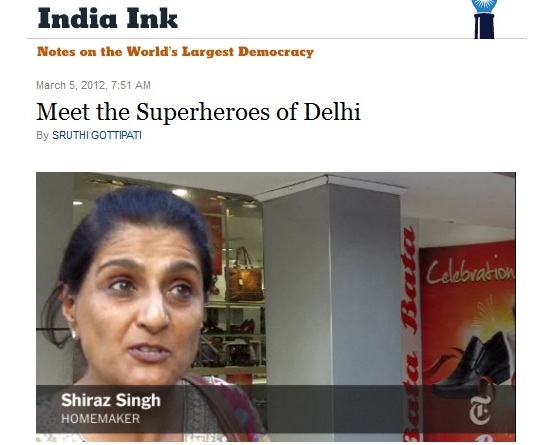
This is part of the advice that Shiraz Singh (the woman on the right) gives her daughter when faced with aggressive street harassers.

Watch as women like Singh in Delhi, India, one of the least safe cities for women in the world, explain how they defend themselves against street harassers in a New York Times video (there is an accompanying article, too).

Share

Filed Under: News stories Tagged With: delhi, eve teasing, India, street harassment

80 percent of women in Mumbai experience street harassment

March 4, 2012 By HKearl

We The People Foundation interviewed 1,000 women in Mumbai, India, about their experiences with street harassment. Eighty percent had experienced some form of street harassment on a regular basis. Mumbai is supposed to be one of the safer cities for women in India and perhaps that’s why the statistic was “only” 80 percent, while in Delhi, over 90 percent of women feel unsafe leaving home alone.

The majority of the harassment takes place on crowded trains and railway platforms, and 60 percent had faced harassment while commuting by train and 40 percent while commuting by another public transportation system, like a bus or taxi.

Via Daily News & Analysis:

“The statistics are worrying especially as women do not take concrete steps to stem the menace,” said Jason Temasfieldt, founder-member of the organisation, which addresses the issue of women’s safety in public places in Mumbai.

Only one out of 10 women lodges a police complaint, and not more than two confront the perpetrator or attempt to stop him.

“Only two out of every 10 women glare angrily at the offender. The rest just ignore him or worse, feel embarrassed or ashamed of themselves,” said Sacha Lobo, a college students who joined the organisation after being interviewed during the survey.

Another worrying finding was that most women do not consider catcalls or lewd comments as sexual harassment, but an “unfortunate drawback” of being a woman.

“Any unwanted physical or verbal action by a man is nothing but harassment. And it is high time both men and women did their bit to stop this menace,” said Temasfieldt.

Share

Filed Under: News stories Tagged With: India, mumbai, study

Less access to public spaces for women in Afghanistan?

March 4, 2012 By HKearl

“A resolution passed by the Ulema Council of Afghanistan prohibits women from traveling without a male family member and studying, working, or communicating with strange men in the society, and it allows only men to seek divorce. The Presidential Palace, Arg, welcomed this resolution. Has Afghanistan failed its 50%?….As for as it remains a resolution it will have no binding affect. If the Ulema Council give a Fatwa then it will be binding and will have to be enforced.”

This was the Facebook status update of Noorjahan Akbar, co-founder of Young Women for Change, yesterday.

It is upsetting to see women’s rights under this kind of attack in Afghanistan. If the Ulema Council does give a Fatwa, one of the many, many negative outcomes will be an even greater restriction of access to public places for women and likely more harassment and assault should they dare go outside without a male family member.

Afghanistan is the most dangerous place for women to live in the world (Iceland the best place and Yemen the worst place) and it’s initiatives like this that make it so. A society with few rights for women and where women’s free agency is not respected fosters violence. And that is not good for women or for men.

Young Women for Change is currently fundraising to raise enough money to build and run a women-only, safe and secure Internet Cafe and meeting place. As more and more public places become restricted to women and harassment increases, this space is vital because it will allow women to connect with each other and the outside world. Donate today.

Share

Filed Under: News stories Tagged With: Afghanistan, young women for change

Myanmar’s “Whistle for Help” Campaign

February 27, 2012 By HKearl

Volunteers distribute whistles and pamphlets near Sule Pagoda on February 21. Pic: Seng Mai

Women in Myanmar launched a creative campaign to fight the problem of sexual harassment on their transit system.

Their campaign is called “whistle for help” and “about 150 volunteers have been distributing whistles and pamphlets to women at eight busy bus stops in Yangon each Tuesday morning in February. The group plans to continue the weekly program for another nine months.”

Via The Myanmar Times:

“The pamphlet instructs women to blow the whistle when they experience sexual harassment on the bus.

“Please go and help the women who blow whistle and let’s stop this unacceptable behaviour,” the pamphlet said. “The campaign and advocacy is not directed against all men but only those who commit these acts.”

The group has also requested support for its campaign from the Myanmar National Human Rights Commission.

Daw Htar Htar, a member of the campaign committee, told The Myanmar Times that women regularly experienced sexual harassment on the city’s bus network but they were usually too afraid or shy to report it.

“Our country is famous for Theravada Buddhism and its related culture and customs but this behaviour brings shame on all of us. We should not accept it anymore and have to stop it from now on,” she said.

“Our body is not their sex object. Why should we keep silent with our head down? It is time to go against it. We can’t work alone but need all helping hands to go against it so that we can create a beautiful, safe and secure environment.”

“Over the past 30 years I myself faced this awful event sometimes and I always thought it was my fault, and kept silent even though I hated it so much. I am now over 40 so … I don’t have to worry as much about this problem but I am worried for my daughter, nieces and younger sisters. What if they meet these kind of detestable men?”

The whistle campaign is so popular, riders regularly ask for extra whistles to pass out to their friends and family and some have requested the organizers expand their campaign to other regions.

The bus drivers are supportive too: “U Tun Aung, a driver one the No 51 line, said sexual harassment had been tolerated on buses for too long and he praised the “whistle for help” organisers for devising an effective, non-violent campaign to stop it.”

Also, on Feb. 14, the Parami bus line and its Adipati subsidiary began offering women-only services during the morning and evening rush hours, when buses are crowded and women more likely to experience sexual harassment. They haven’t said if that would be a permanent measure or not.

I really like the whistle campaign and its community grassroots activism feel. It encourages bystanders to get involved and help out when they hear a whistle so the harassed person does not have to deal with it all on their own. Plus, it’s a simple idea and whistles are cheap and easy to use!

Do you think a similar campaign could work in other cities/countries?

Share

Filed Under: News stories Tagged With: Myanmar, street harassment, transit harassment, whistle for help

Snapshot of street harassment stories, news, announcements & tweets: February 26, 2012

February 26, 2012 By HKearl

Read stories, news articles, blog posts, and tweets about street harassment from the past week.

** Sign up to receive a monthly e-newsletter from Stop Street Harassment ***

Street Harassment Stories:

Share your story! You can read street harassment stories on the Web at:

Stop Street Harassment Blog

HarassMap Egypt

Resist Harassment Lebanon

Many of the Hollaback sites

In the News, on the Blogs:

* The New York Times, “Sex Crimes Pass Under the Radar on Public Transit“

* Huffington Post, “International Anti-Street Harassment Week: 10 Things You Can Do To Stop Street Harassment“

* Jezebel, “How to Be a Good Guy on the Sidewalk“

* ABC 7, “Sexual harassment on Metro trains, buses a problem“

* Fox 5, “Riders Complain of Sexual Harassment on Metro“

* WAMU, “Women’s Group Targets Harassment On Metro“

* Greater Greater Washington, “End sexual harassment on Metro“

* Washington City Paper, “Holla Back, Metro“

* TBD.com, “D.C. Metro grapples with how to talk and confront sexual harassment“

* The Mooring Mast, “Catcalling crosses line into harassment“

* Ecofeminism, “My Gendered Body and Me“

* ABC News, “Girl Power!“

* Daily News & Analysis, “Run for a cause: Let’s stop gender-based violence“

* Egypt Independent, “Citing harassment complaints, travel agencies threaten to suspend Luxor flights“

* Daily Targum, “Activist looks to stop street harassment“

International Anti-Street Harassment Week Updates:

* Huffington Post coverage

* Founder Holly Kearl talks about why she’s organizing/participating in the week of action on March 18-24

* What were you wearing when you got stared at or street harassed? Submit your photo

* Start planning for International Anti-Street Harassment Week, March 18-24

Activism Announcements:

New:

* Activists in Washington, DC, testified at a city council hearing about harassment on the transit system and made recommendations to the transit authorities.

* Watch a video about efforts in Afghanistan to address street harassment and other gender issues


Reminders:

* College men in the USA share tips on how men can stop street harassment

* SSH founder Holly Kearl is quoted in the March 2012 issue of Cosmo magazine with advice on dealing with gropers. Read an extended version of her advice on the blog.

* The Adventures of Salwa campaign has a hotline for sexual harassment cases in Lebanon: 76-676862.

* In Bangalore, India, there is a helpline for street harassment 080 – 22943225 / 22864023

10 Tweets from the Week:

1. ‏ @sakshichopra5 Street harassment knocks closer to home! Younger sister’s best friend eve teased in her colony, moti bagh! Thank heavens neighbors helped!

2. @NadaHKandil Walking to the bus stop with my neighbour,got followed by a construction worker who only stopped when a taxi driver shouted at him :/ #EndSH

3. ‏ @_nowimgold @AfroSinTrick I’ve worked w/street harassment orgs. ALL women experience it. Women of color are more exposed though, especially Black women.

4. @DeeRmY2020 March 8 is the Women World day, and March 18-24 is International Anti-Street Harassment Week and it should be taken seriously!

5. @JessiDG @gibblertron: Nothing sets me off like when a man passes me and tells me to “smile!” #streetharassment

6. @Karnythia @ebonstorm @ZerlinaMaxwell Challenge the meme that black women are here for the amusement of men. Push back against #streetharassment.

7. ‏ @SabaEm just adjusting to the fact that while being back at home, when a car honks it means someone made a mistake on the road #streetharassment

8. ‏ @Karnythia There needs to be a call from black men to black men to fight #streetharassment, #rapeculture, & #abuseculture. #WeAreThe44

9. @BangsandaBun Nothing like a but of Hackney street harassment to kick start your day the right way. *sigh*

10.‏ @TaraMonstah I’ve already told one heckler to go fuck himself today. Who’s next? Because I’m getting really sick of this shit. #StreetHarassment

Share

Filed Under: anti-street harassment week, News stories, street harassment, weekly round up

« Previous Page
Next Page »

Share Your Story

Share your street harassment story for the blog. Donate Now

From the Blog

  • #MeToo 2024 Study Released Today
  • Join International Anti-Street Harassment Week 2022
  • Giving Tuesday – Fund the Hotline
  • Thank You – International Anti-Street Harassment Week 2021
  • Share Your Story – Safecity and Catcalls Collaboration

Buy the Book

  • Contact
  • Events
  • Join Us
  • Donate
  • Facebook
  • Instagram
  • Pinterest
  • Tumblr
  • Twitter
  • YouTube

Copyright © 2026 Stop Street Harassment · Website Design by Sarah Marie Lacy