• About Us
    • What Is Street Harassment?
    • Why Stopping Street Harassment Matters
    • Meet the Team
      • Board of Directors
      • Past Board Members
    • In The Media
  • Our Work
    • National Street Harassment Hotline
    • International Anti-Street Harassment Week
    • Blog Correspondents
      • Past SSH Correspondents
    • Safe Public Spaces Mentoring Program
    • Publications
    • National Studies
    • Campaigns against Companies
    • Washington, D.C. Activism
  • Our Books
  • Donate
  • Store

Stop Street Harassment

Making Public Spaces Safe and Welcoming

  • Facebook
  • Instagram
  • Pinterest
  • Tumblr
  • Twitter
  • YouTube
  • Home
  • Blog
    • Harassment Stories
    • Blog Correspondents
    • Street Respect Stories
  • Help & Advice
    • National Street Harassment Hotline
    • Dealing With Harassers
      • Assertive Responses
      • Reporting Harassers
      • Bystander Responses
      • Creative Responses
    • What to Do Before or After Harassment
    • Street Harassment and the Law
  • Resources
    • Definitions
    • Statistics
    • Articles & Books
    • Anti-Harassment Groups & Campaigns
    • Male Allies
      • Educating Boys & Men
      • How to Talk to Women
      • Bystander Tips
    • Video Clips
    • Images & Flyers
  • Take Community Action
  • Contact

Street Harassment Curriculum

March 2, 2016 By HKearl

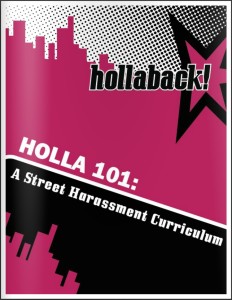
SHcurriculumHere’s a new resource from Hollaback.

Via their Facebook page:

“Today we released our new anti-street harassment curriculum that we have been working hard on! HOLLA 101 features 19 lesson plans, videos, role-play exercises and more. The curriculum also features our vlog series, With Love and Revolution. To view the curriculum visit the link!”

Share

Filed Under: hollaback, Resources, street harassment

Video: Push My Button

February 29, 2016 By HKearl

Here’s a new video about street harassment by Heather Arnett, her latest in a series called the Cat Call Choir.  She writes that the series is “a somewhat sardonic, slightly scornful, but non-violent, songful response to street harassment.”

Push My Button from Heather Arnett on Vimeo.

“In this week’s Cat Call Choir experiment we added the Staples Easy Button with “sing” written on it to encourage people to stick around to listen for a verse and perhaps engage in a conversation about street harassment.

What do you think? Should we just sing to people so there’s no option to get away from unwanted attention very much like when women are harassed on the streets, in parks, on trains and at work? Or is there value in encouraging the conversation?”

Share

Filed Under: Resources, street harassment Tagged With: video

New Efforts in Lebanon and Kosovo

February 26, 2016 By HKearl

Here are two new initiatives to address street harassment!

Newsweek, “Female Entrepreneurs Launch Online Sexual Harassment Tracker in Beirut“

“Three female entrepreneurs have kickstarted a sexual harassment tracker in Beirut in the hope of combating crimes against women in the Lebanese capital.

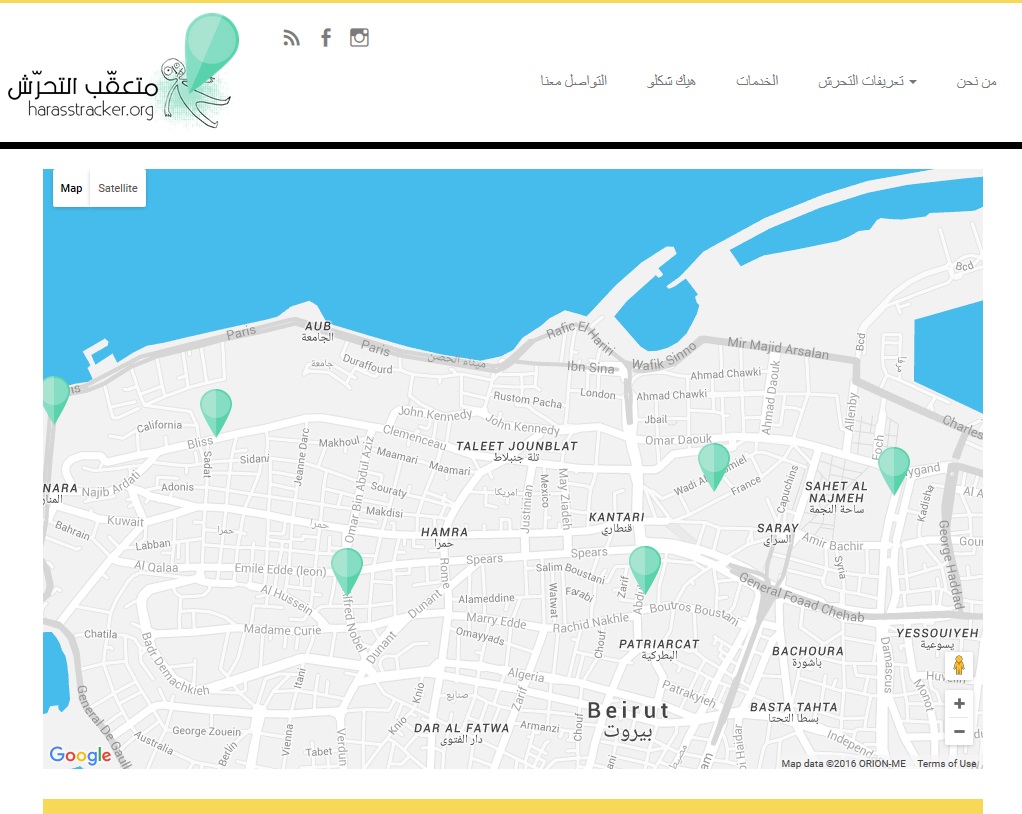
A beta version of Harass Tracker—launched on Monday—will provide a three-month trial in the city after which, if successful, it will be expanded across the entire country.

The platform is essentially an online reporting tool where people who have witnessed or experienced sexual harassment can mark the location on a map of the city and provide information regarding the type of sexual harassment that they encountered, alongside a description of the event.

The three founders of the initiative—Sandra Hassan, who is based in France, Myra El Mir and Nay El Rahi, both in Lebanon—hope to “empower victims to report” these crimes and “raise awareness as to the frequency and severity of sexual harassment in the city,” Hassan, who developed the tracker, tells Newsweek by email.

“In the longer term, we hope to use the data collected to offer recommendations on how to tackle this issue practically as well as contribute to a shift in perception with regards to sexual harassment.”

HarassTrackerLebanon

Kera News, “Young women in Kosovo are writing code to fight harassment“

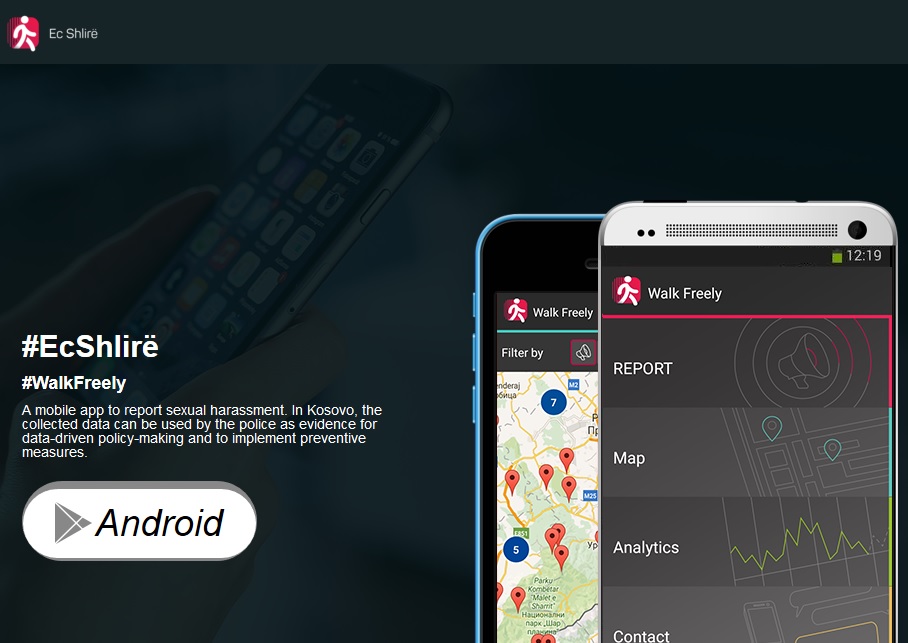
“Women and girls in Kosovo almost never report these incidents, which are exceedingly common. But a new mobile app called Ec Shlirë — Walk Freely in Albanian — hopes to change that.

Ec Shlirë, which launched on Thursday, is inspired by Hollaback, an American movement to report street harassment. The Kosovar app gives users the ability to discreetly report instances of sexual harassment of all types. The reports will be visualized on an interactive map and will be sent to the authorities.

While individual perpetrators won’t be identified, the data gathered by the app will allow Kosovars to actually see the full extent of sexual harassment and will also put pressure on the authorities to respond.

“In Kosovo a lot of women who experience harassment don’t go report it directly to the police, because the police may not take one incident of harassment on the street so seriously,” says programmer Albana Dulaj. “If we have more reports, I believe they’ll take it more seriously.”

Dulaj is among 30 young women who built the app as part of a group called Girls Coding Kosova.

The development of Ec Shlirë also is helping address another problem in Kosovo: the lack of women in the tech industry.”

EcShlire - kosovo app

Share

Filed Under: News stories, public harassment, Resources, street harassment Tagged With: beirut, kosovo, lebanon, map, phone app

New Street Harassment Report in Kosovo

February 24, 2016 By HKearl

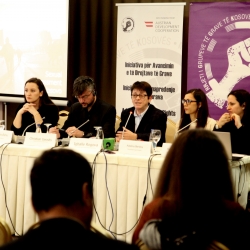
The report release event, photo via the Kosovo Women's Network site
The report release event, photo via the Kosovo Women’s Network site

The body of research about the prevalence of street harassment is growing! This week a new report was released in Kosovo.

Via NWPTV:

“The Kosovo Women’s Network recently published the country’s first national report on sexual harassment, and the research shows what Kosovar women have always known: street harassment affects women across Kosovo, regardless of geographical location, ethnicity, sexual orientation, and able-bodiedness.

Although most Kosovars know that sexual harassment is harmful, a disturbing 40 percent of both men and women think that young women actually enjoy being harassed. The majority of Kosovars still think that women’s dress and behavior causes sexual harassment, and not our country’s culture of male entitlement.

Kosovo’s feminists have tools that we didn’t have before, the first being this research, which quantifiably demonstrates that sexual harassment is real, widespread, and threatens the safety of women and girls. The second tool is an upcoming app which will allow users to report sexual harassment in real time and directly contact the police through an emergency button.”

The victim-blaming attitudes are indeed disturbing.

I went on to read the report summary, and here is information about how it was conducted and a few more statistics:

“The research involved a review of the legal framework, a survey of 1,315 Kosovo citizens in 2015 and more than 200 interviews with representatives of public institutions, civil society, and other key actors. The report concludes with recommendations for amending the legal framework and improving institutional response to sexual harassment.

  • 48.5% of Kosovars have experienced some form of sexual harassment in their lifetimes.
  • 64.1% of women report having experienced sexual harassment, 32.5% of men state that they have.
  • The most common form of sexual harassment reported by respondents is having someone make unwelcome sexual comments, jokes, or gestures to or about them, including while walking down the street.
    • One in three women (34.2%) compared to only 1.6% of men had someone honk a vehicle horn at them while walking down the street.
    • 46.4% of women and only 3.9% of men had someone whistle at them
    • 26.4% of women and 3.3% of men had someone follow them
  • Women tend to be harassed more by unknown people in the street and friends than do men. Men are more likely to be harassed by friends than women.”

Good for the Kosovo Women’s Network for thoroughly researching this topic and bringing national and global attention to the issue. It’s harder to tackle a problem without data, so this is an important step.

Raporti: Ngacmimi seksual në Kosovë
http://www.womensnetwork.org/documents/20160224112147815.pdf

Research Report: Sexual Harassment in Kosovo
http://www.womensnetwork.org/documents/20160223185243349.pdf

Izveštaj Istraživanja: Seksualno uznemiravanje na Kosovu
http://www.womensnetwork.org/documents/20160224134742609.pdf

Share

Filed Under: News stories, Resources, street harassment Tagged With: kosovo, national study, research

Calling out #ShirtlessShamers

February 23, 2016 By HKearl

Our ally Lindsey of Cards Against Harassment wrote an excellent guest piece for The Daily Beast. Here are two excerpts:

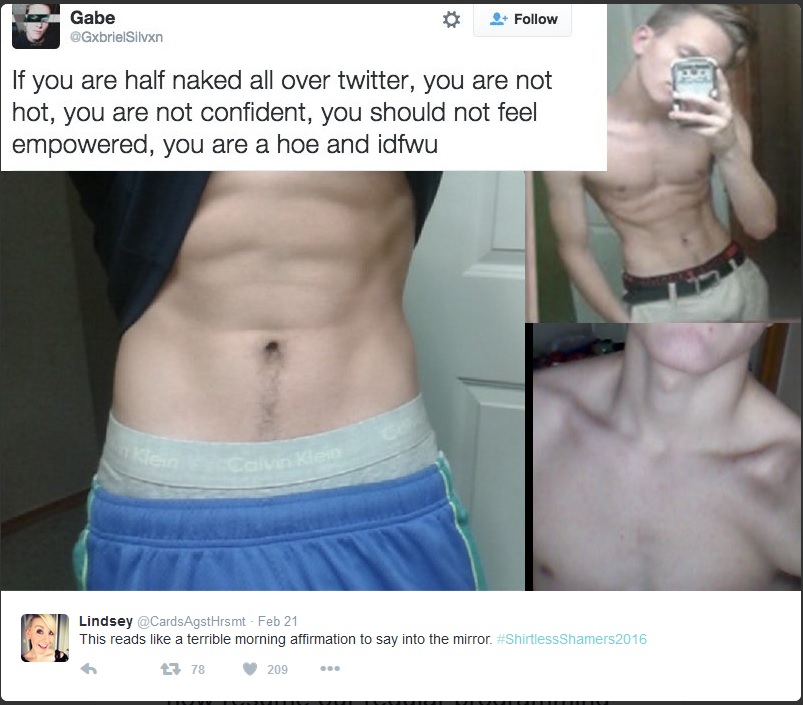
“This January I started #ShirtlessShamers2016, a Twitter hashtag in which I juxtapose men’s sexist, slut-shaming social media posts about women’s bodily respectability with their own bare-chested pictures. This isn’t my first adventure in challenging misogyny through social media; you may also remember me from such other controversial positions as, “Street Harassment: Please Stop Doing It.” …

When I started using the #ShirtlessShamers2016 hashtag, I expected things to stay funny. Light. Playful. Sexism and gender-based double standards aren’t really funny, of course, but lampooning shirtless broskies who are heavy on ego and light on self-awareness has a certain silliness to it. They flex their pecs and regurgitate some casual misogyny, and we marvel, bemused, that they aren’t in on the joke.

But, as is often the case, we laugh to keep from crying.

I am about five weeks into the hashtag, with more than 100 posts (conveniently gathered here for your viewing pleasure) and the recurring themes are far from funny….

ShirtlessShamers

Unfortunately, this isn’t just a problem of young men being doofuses. The double standard is pervasive, and touches on the fundamental right for girls and women to be in their own bodies without being deemed provocative and inappropriate and at risk. That right matters. It matters for all women but especially for black women and girls, whose bodies are hypersexualized from very young ages. It matters for people like my sister, who has had strangers chastise her for breastfeeding her infant even as men jog half-naked nearby. It matters in how we continue to talk about street harassment as a problem related to clothing choices or other respectability proxies, no matter how many marketable white women go viral for reminding us street harassment happens to women in t-shirts and jeans.

This issue also matters for people like me who have survived sexual violence and routinely run into uninformed rape apologists and enablers who desperately want to prop up a myth that sexual violence is a problem contributed to by clothing or other victim choices. (It’s not.) It matters for people who have been bullied and shamed by their classmates and schools for the crime of developing parts unilaterally declared to be inappropriate or distracting. (They’re not.) It matters for people in the sex industry who are treated as if they shed their humanity when they shed their clothing. (They don’t.) The list goes on. Holding men and women’s bodies to a different standard as far as nudity and sexuality is concerned matters for everyone who has come to accept that no amount of fabric can fix an underlying culture problem.”

Thank you for all you do, Lindsey, to call out double standards and fight for women’s right to respect and dignity!

Share

Filed Under: News stories, online harassment, public harassment, Resources Tagged With: double standard, online harassment, shirtless, shirtlessshamers, slut shaming

« Previous Page
Next Page »

Share Your Story

Share your street harassment story for the blog. Donate Now

From the Blog

  • #MeToo 2024 Study Released Today
  • Join International Anti-Street Harassment Week 2022
  • Giving Tuesday – Fund the Hotline
  • Thank You – International Anti-Street Harassment Week 2021
  • Share Your Story – Safecity and Catcalls Collaboration

Buy the Book

  • Contact
  • Events
  • Join Us
  • Donate
  • Facebook
  • Instagram
  • Pinterest
  • Tumblr
  • Twitter
  • YouTube

Copyright © 2026 Stop Street Harassment · Website Design by Sarah Marie Lacy