• About Us
    • What Is Street Harassment?
    • Why Stopping Street Harassment Matters
    • Meet the Team
      • Board of Directors
      • Past Board Members
    • In The Media
  • Our Work
    • National Street Harassment Hotline
    • International Anti-Street Harassment Week
    • Blog Correspondents
      • Past SSH Correspondents
    • Safe Public Spaces Mentoring Program
    • Publications
    • National Studies
    • Campaigns against Companies
    • Washington, D.C. Activism
  • Our Books
  • Donate
  • Store

Stop Street Harassment

Making Public Spaces Safe and Welcoming

  • Facebook
  • Instagram
  • Pinterest
  • Tumblr
  • Twitter
  • YouTube
  • Home
  • Blog
    • Harassment Stories
    • Blog Correspondents
    • Street Respect Stories
  • Help & Advice
    • National Street Harassment Hotline
    • Dealing With Harassers
      • Assertive Responses
      • Reporting Harassers
      • Bystander Responses
      • Creative Responses
    • What to Do Before or After Harassment
    • Street Harassment and the Law
  • Resources
    • Definitions
    • Statistics
    • Articles & Books
    • Anti-Harassment Groups & Campaigns
    • Male Allies
      • Educating Boys & Men
      • How to Talk to Women
      • Bystander Tips
    • Video Clips
    • Images & Flyers
  • Take Community Action
  • Contact

#16Days of Activism: Raising Awareness on Campuses (Day 12)

December 6, 2015 By HKearl

Nov. 25 – Dec. 10 are the 16 Days of Activism Against Gender-Based Violence. To commemorate the week, we are featuring 1 activism idea per day. This information is excerpted from my new book Stop Global Street Harassment: Growing Activism Around the World (Praeger 2015).

A growing number of colleges and universities from Egypt to the United States have been addressing street harassment, often during Sexual Assault Awareness Month or in conjunction with International Women’s Day or International Anti-Street Harassment Week. They host workshops and street demonstrations, write sidewalk chalk messages, distribute materials, screen documentaries like the 1998 film War Zone, and create their own videos.
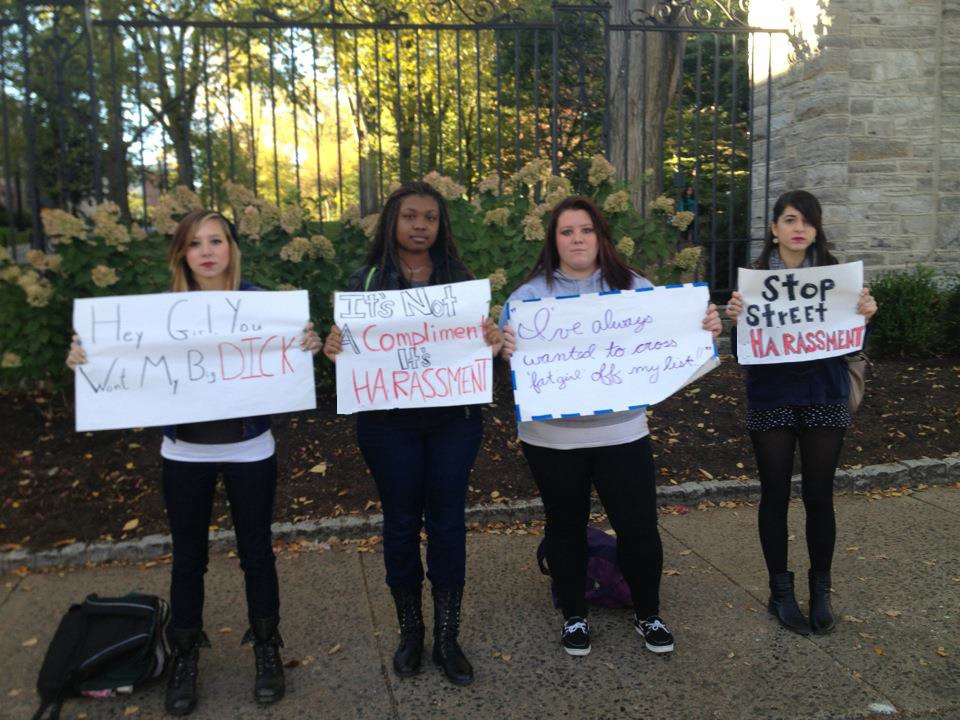
Penn State TRIOTAIn 2012, members of Pennsylvania State University’s Triota, the women’s studies honor society, held an anti-street harassment demonstration on a busy Friday afternoon in October in downtown State College, Pennsylvania. They held signs proclaiming their anti-harassment message and even included specific remarks that had been yelled at them during their time at Penn State like “Hey girl, you want my big dick?” and “I’ve always wanted to cross a fat girl off my list.” They also held up anti-street harassment messages like “It’s not a compliment; it’s harassment.” Julie Mastrine, one of the organizers, wrote about it for the SSH blog:

Don’t be mistaken: these types of incidents aren’t rare in this town. Street harassment is a widespread problem in State College, where nearly every woman I know has experienced some form of it: catcalls, taunting, lewd remarks, leering, sexually objectifying remarks, you name it. And this type of harassment functions as part of a larger issue in this town: rape culture. We saw a lot of stares and furrowed brows from passersby. Only a few people approached us to express their support, but it doesn’t matter—getting this issue in the eyes and ears of the State College community is important if we want to combat harmful behavior and attitudes toward women.
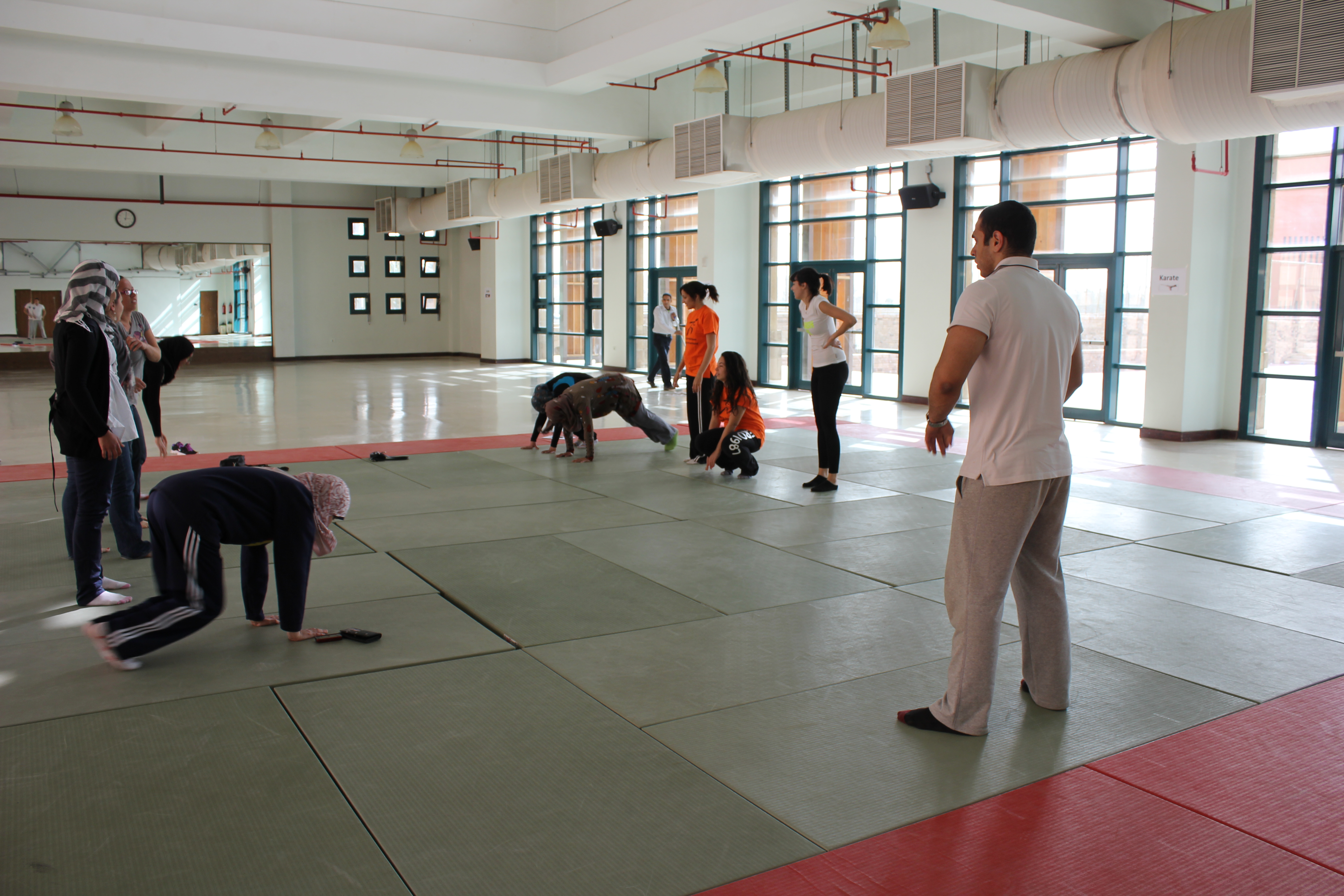
Harassment 101 Class EgyptIn Egypt, college student Holly Dagres created the Fight Harassment 101 (FH101) workshop in 2012 to educate female students about harassment and the use of self-defense. For 10 weeks at the American University of Cairo, 15 students took part in FH101 for two hours a week. Dagres wrote for the SSH blog about how the workshop entailed sharing information and stories about street harassment and then practicing self-defense for 90 minutes. She wrote: “It gave them a sense of empowerment to defend themselves in the worst-case scenarios. At first they were shy about sharing their experiences, but once they found it was a common occurrence and learned that it was not their fault, they felt the need to fight against it

Help fund our work in 2016, donate to our end-of-year giving campaign!

Share

Filed Under: 16 days, public harassment, Resources Tagged With: campuses, Egypt, penn state, university students

#16Days of Activism: Making Businesses Safer (Day 11)

December 5, 2015 By HKearl

Nov. 25 – Dec. 10 are the 16 Days of Activism Against Gender-Based Violence. To commemorate the week, we are featuring 1 activism idea per day. This information is excerpted from my new book Stop Global Street Harassment: Growing Activism Around the World (Praeger 2015).

In the United States, a few advocacy groups have worked with businesses to make safer spaces for customers and community members. In 2011 in Arizona, the Southern Arizona Center Against Sexual Assault, for instance, launched Safe Streets AZ to address street harassment, particularly harassment targeted at LGBTQ youth. One component of the campaign is Safe Sites. Staff at restaurants, bookstores, and coffee shops take a 30-minute Safe Sites training, which then allows the establishment to be listed as a place where youth can seek safety if they are facing street harassment or feel unsafe. Nearly 30 businesses have gone through the training, and it is endorsed by the Pima County Small Business Commission, the Southern Arizona Chamber of Commerce Alliance, and the Pima County Public Libraries. Each site is listed on a Google map on the Safe Streets AZ website.

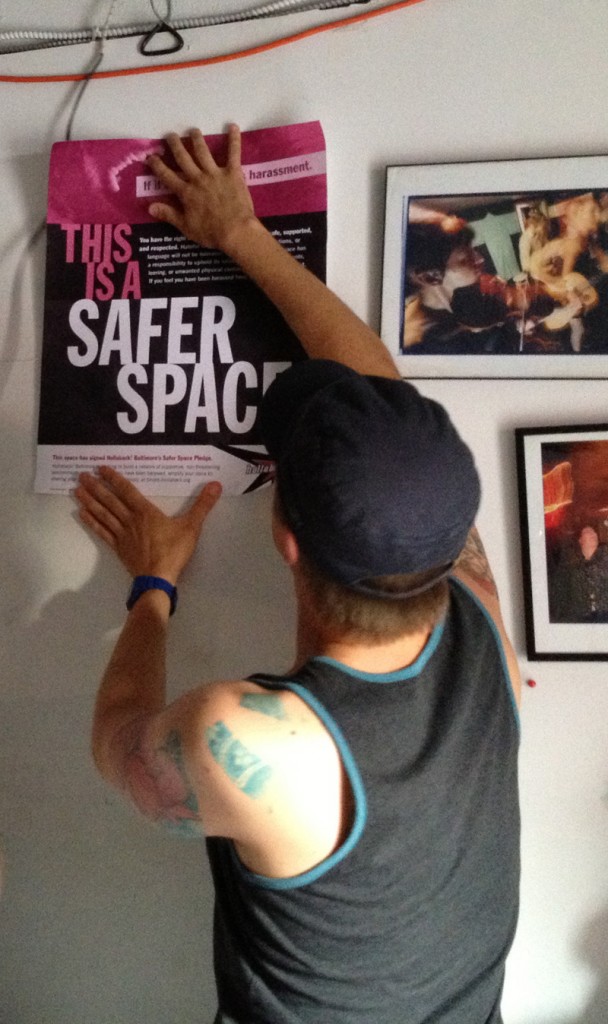
SaferspaceInspired by the Good Night Out campaign in London, the members of Baltimore’s Hollaback! Bmore launched a Safer Spaces Campaign in 2013. They work directly with a business to ensure its current employee guide and/or security policies are comprehensive and sensitive to experiences of gender-based violence. Then Hollaback! Bmore provides a free training workshop on street harassment basics and crisis response that includes role-playing real-life situations. Once a majority of employees have gone through the training, they sign a pledge, hang an informational poster (provided) in plain view, and receive the Hollaback! Employer’s Guide to Ending Street Harassment. Hollaback! Bmore then supports and advertises these spaces on its website. So far, eight venues are completely trained, two are being scheduled, and 14 more have expressed interest.

Help fund our work in 2016, donate to our end-of-year giving campaign!
Share

Filed Under: 16 days, public harassment, Resources Tagged With: safer business

Historic DC City Council Hearing

December 4, 2015 By HKearl

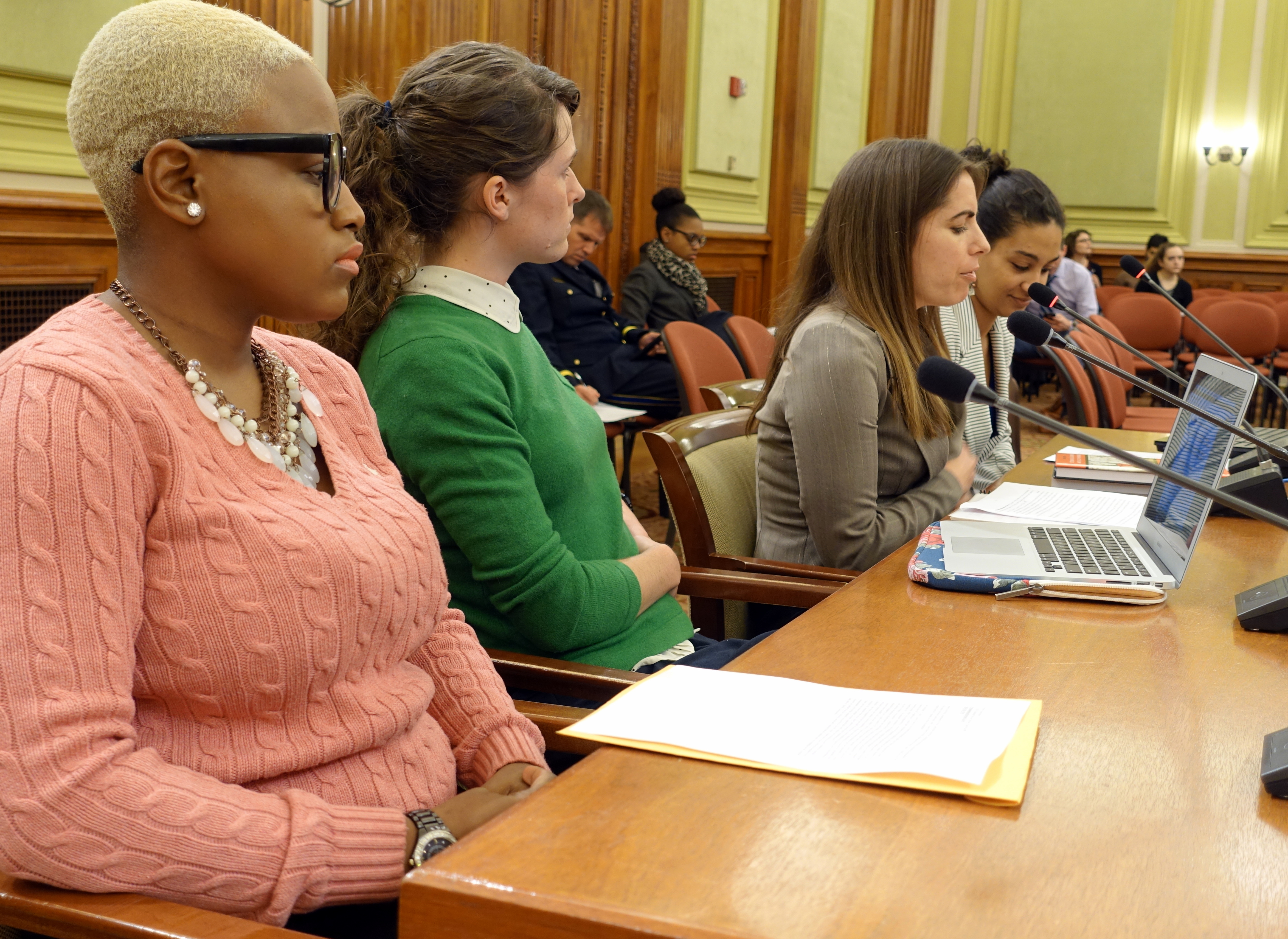
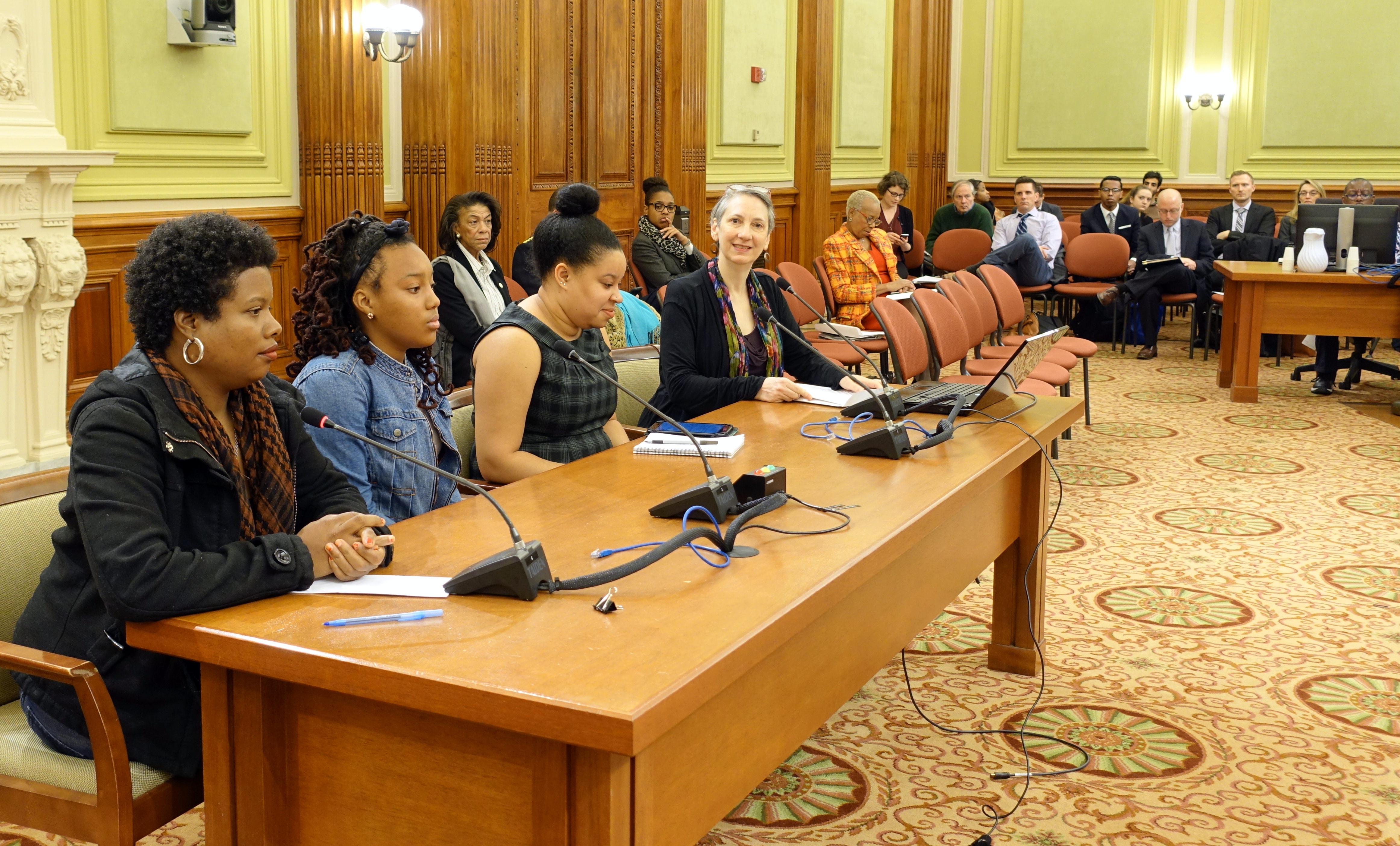
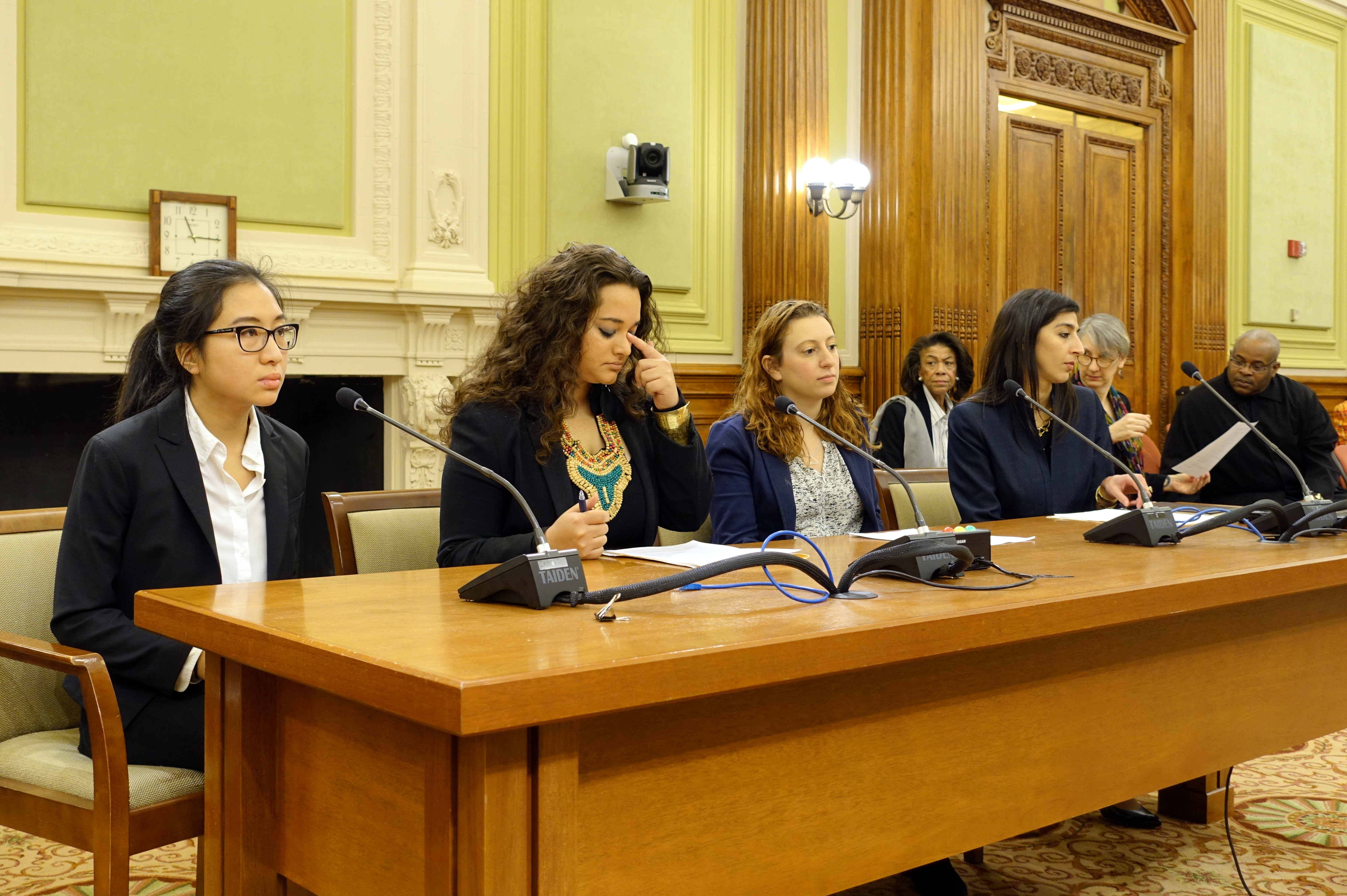
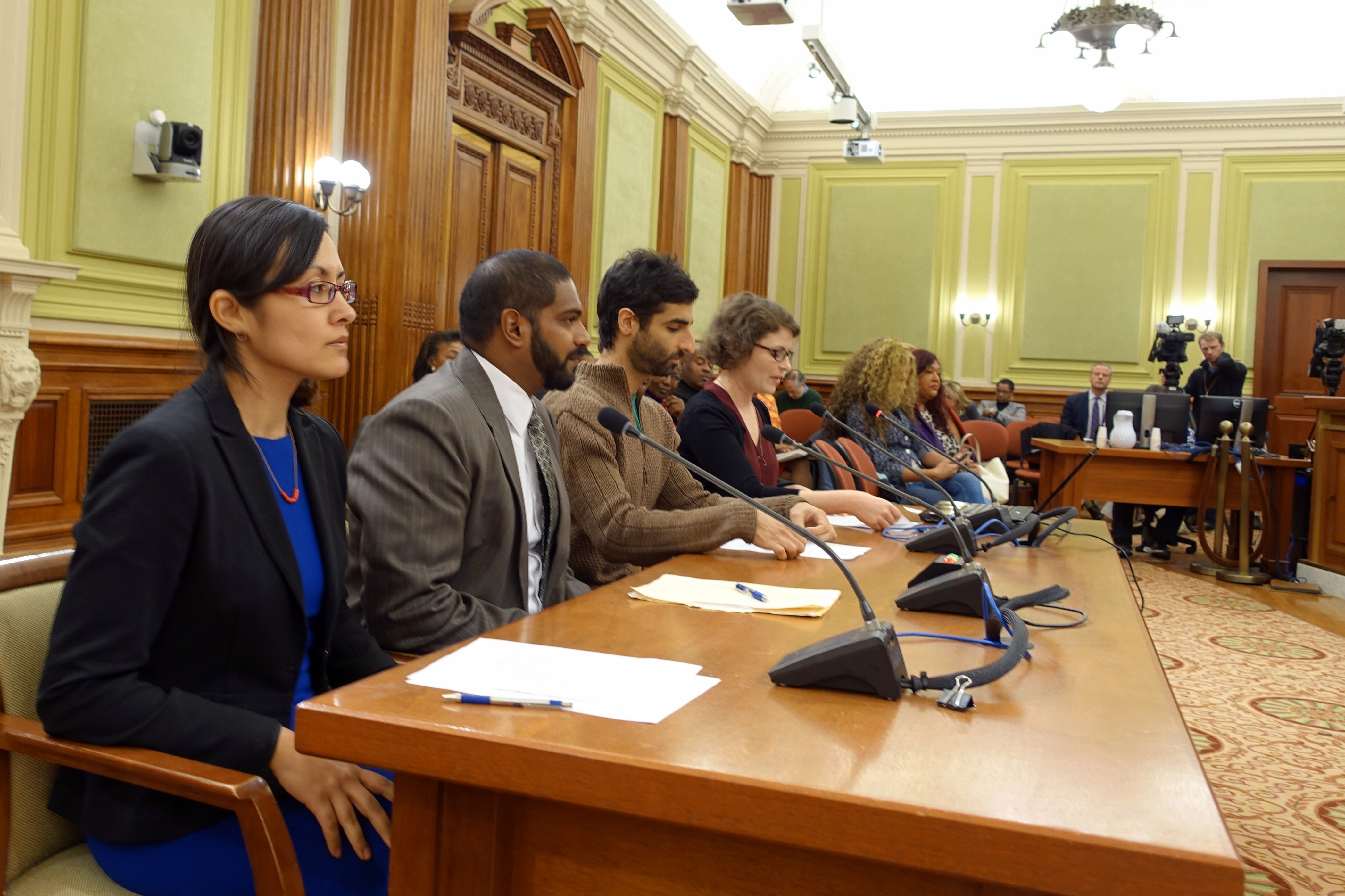
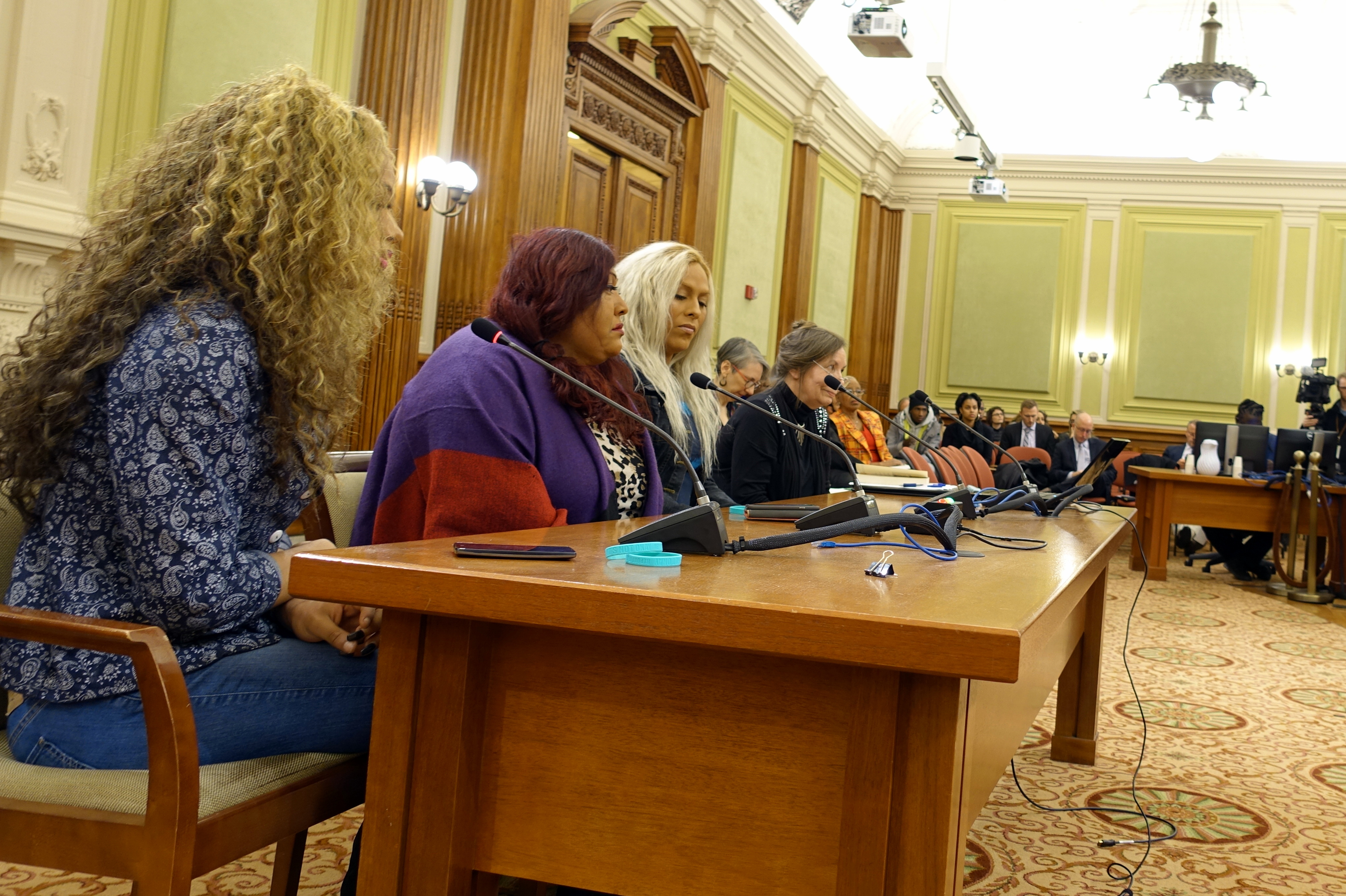
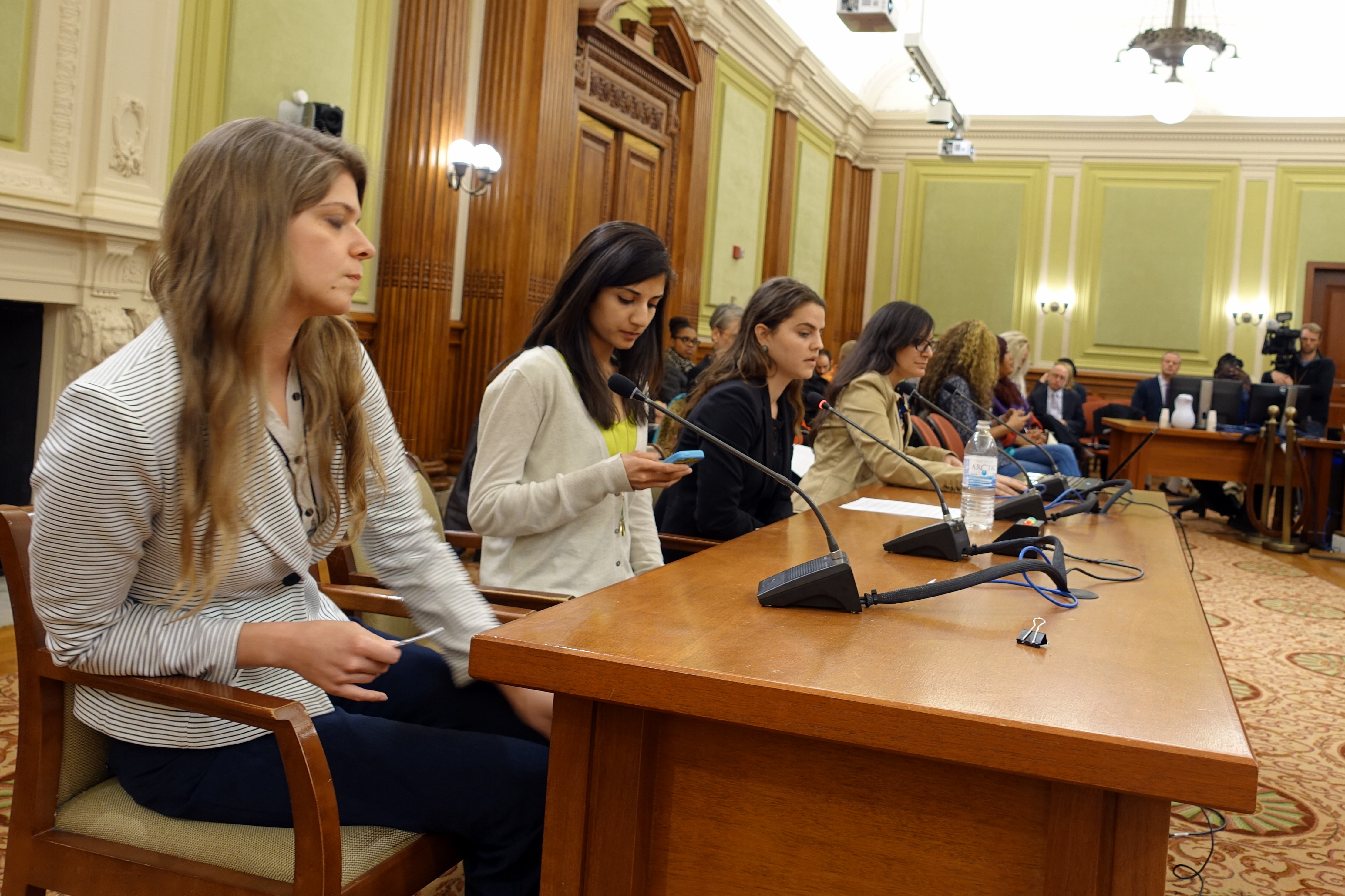
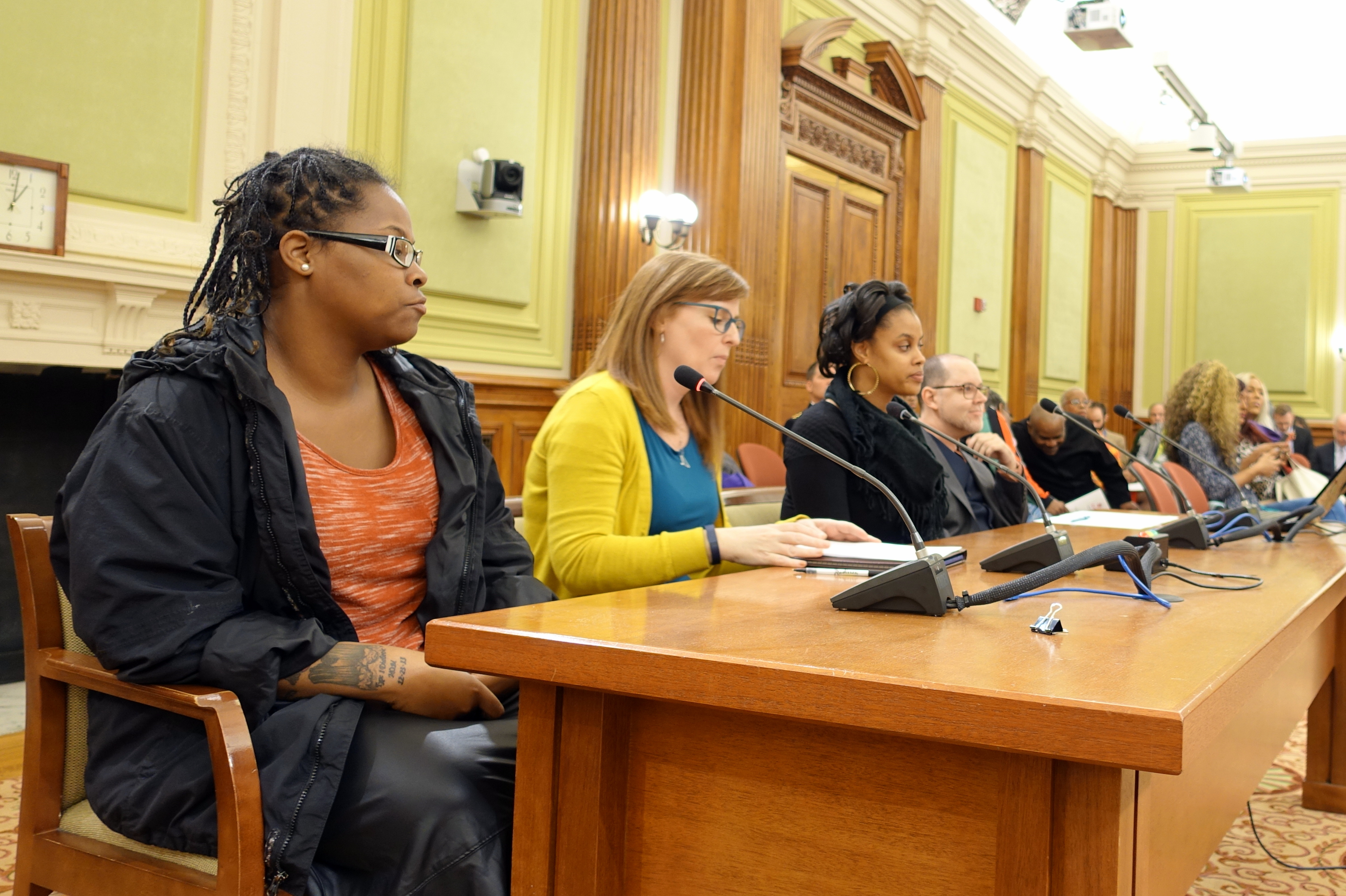
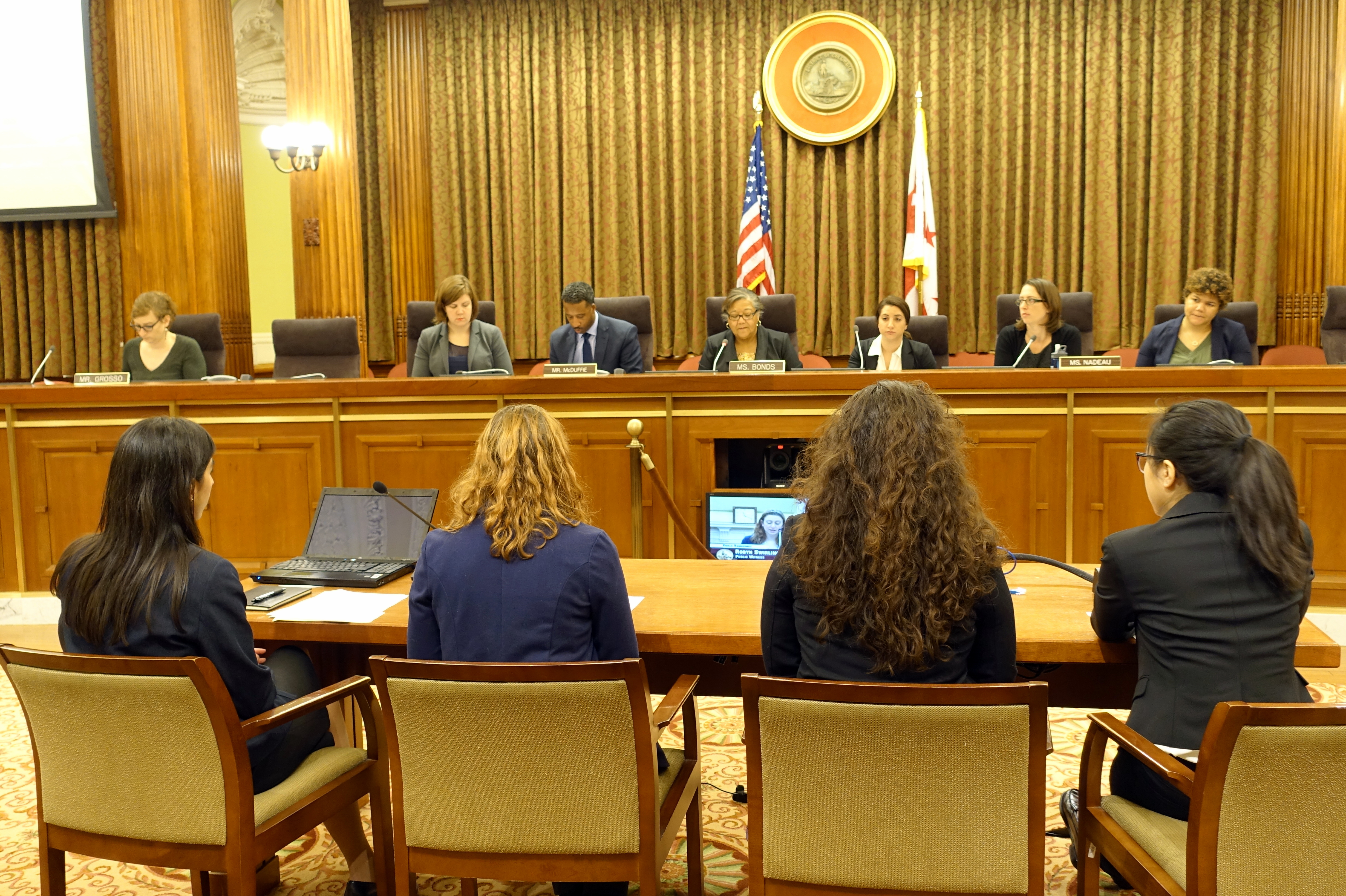
12.3.15 third panel DC Council Hearing -2The fourth ever hearing on street harassment was held in Washington, DC, on December 3, 2015. The first was held in 2010 in New York City, the second in Philadelphia in 2013 and the third in Kansas City in 2014.

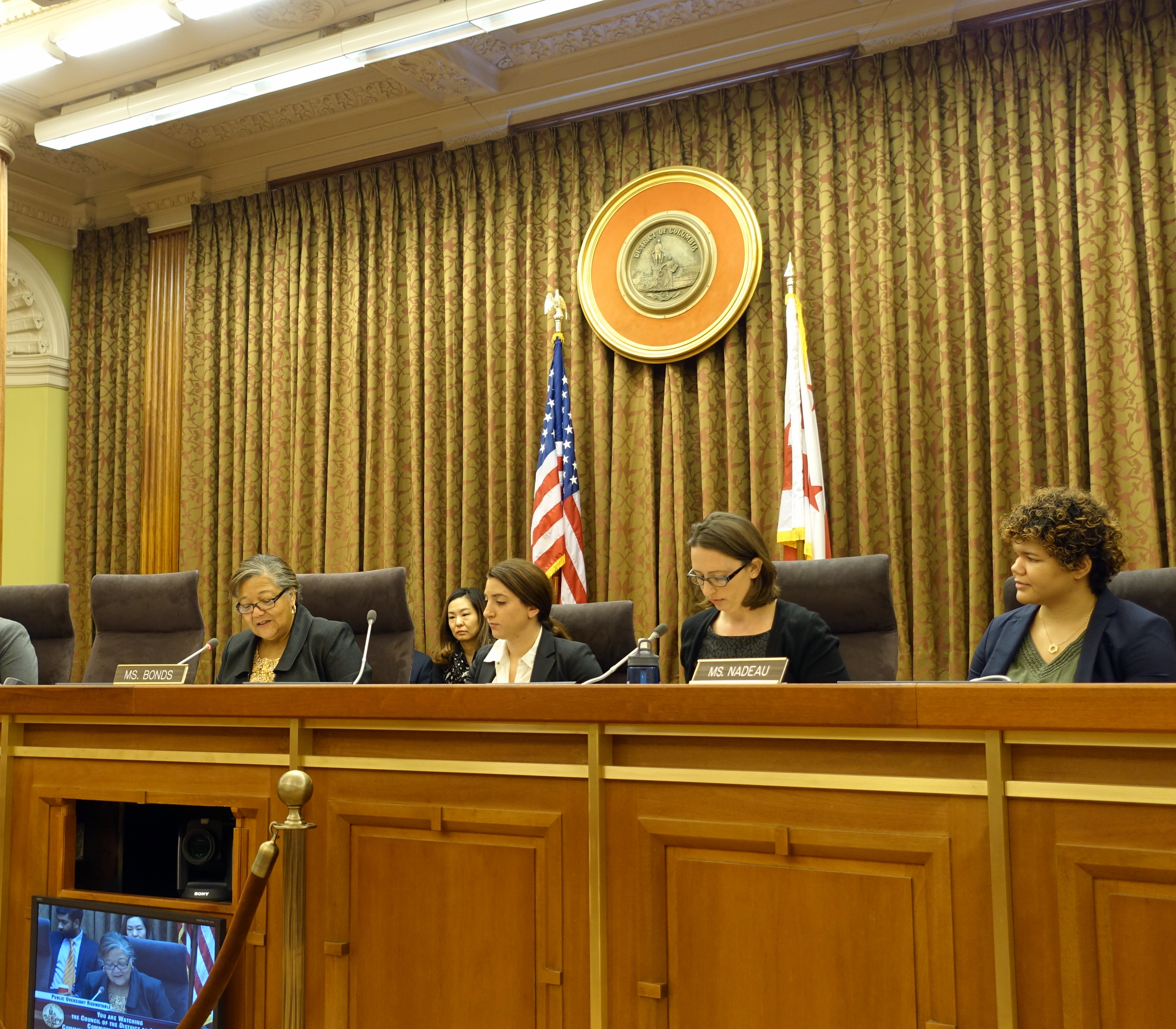
The hearing was requested by Ward 1 D.C. Councilmember Brianne K. Nadeau and co-convened by the Committee on the Judiciary and Committee on Housing and Community Development. Our ally organization Collective Action for Safe Spaces was instrumental in helping the hearing happen, organizing witnesses, and crafting talking points and assisting people with their testimonies.

This is from Councilmember Nadeau’s website:

“Unfortunately, many residents in the District have experienced some form of street harassment, which can include vulgar remarks, heckling, insults, innuendo, stalking, leering, fondling, indecent exposure, and other forms of public humiliation, often focused on the individual’s perceived gender, gender identity, race or ethnicity, or disability. Street harassment impairs the ability of District residents to move freely and safely and contributes to a broader culture of violence. The roundtable will provide an opportunity for stakeholders to identify additional steps that could be taken to better understand and address the issue.”

The hearing lasted for four hours and 15 minutes. During the public portion, there were people representing various organizations, including CASS, SSH, Defend Yourself, Muslim American Women’s Policy Forum, Casa Ruby DC, and the Washington Area Bicyclist Association. There were individuals who shared heartbreaking and moving stories, including a mother and her teenage daughter, three transwomen of color, women of all races, and four male allies, including three men of color. CASS did a commendable job ensuring that a range of voices and viewpoints were represented in the panel.

Government officials also testified at the end, including the chief of police for the transit system and a representative from the mayor’s office in the department of human rights.

I was proud to join SSH board member Layla in testifying. You can read or watch her testimony here and read my full testimony here.

It was exciting to have SSH’s national study cited numerous times by the council members and people testifying. Many of us who testified advocated for the city council to collect DC-specific data so we can better understand the problem and work on non-criminal, community solutions. There was a special focus on asking for help working with bars — common sites of harassment — for CASS and Defend Yourself’s Safe Bars program.

Many people live tweeted throughout the event using #RaiseTheBar. A Storify will be available soon.

Photos:

(Click on the photo to see a larger version.)

DC council members Bond and Nadeau with their staff
DC councilmembers Anita Bond and Brianne Nadeau with their staff

First panel of speakers (L to R): Paris Sashay, Nelle R Pierson, Holly Kearl, Jessica Raven

Second panel of speakers (L to R): Schyla Pondexter-Moore and her daughter Carol Pondexter, Krystal Leaphart, and Lauren Taylor

Third panel of speakers (L to R): Melissa Yeo, Darakshana Raja, Robyn Swirling and Layla Moughari

Fourth panel of speakers (L to R): Star Silva, Dave Chandrasekaran, 16.Ramin Katirai, and Julia Strange
Fourth panel of speakers (L to R): Star Silva, Dave Chandrasekaran, Ramin Katirai, and Julia Strange

Fifth panel of speakers (L to R): Tanisha Phllips, Ruby Corado, Lissa Alfaro, and Marty Langelan

Sixth panel of speakers (L to R): Mindi Westhoff, Rudhdi Karink, Shannon Kreider, and Jazmin Gargoum

Seventh panel of speakers (L to R): Carshena Chambers, Melissa Kleder, Valenteen Love, and Ben Merrion

Testimonies:

You can watch the entire hearing via the DC Council’s website. Closed Caption is available. I also recorded videos of several people who testified and those are available in this playlist on the SSH YouTube Channel. These are two of my favorite testimonies.

An amazing mother-daughter duo talk about how this issue unique affects teenage girls.

A passionate plea from a survivor of sexual abuse.

Media Coverage:

NPR interviewed councilmember Nadeau and CASS’s interim director Jessica Raven for a morning segment before the hearing (I was thrilled to hear on my drive to the hearing!).

In the evening, there were segments on NBC4, Fox5, and WUSA9.

The Washington Post, Washington Blade, The DCist and the Washington City Paper covered it too.

Share

Filed Under: Events, LGBTQ, male perspective, national study, News stories, police harassment, Resources, SSH programs, street harassment Tagged With: city council hearing, Washington DC

#16Days of Activism: Working with Nightlife Venues (Day 10)

December 4, 2015 By HKearl

Nov. 25 – Dec. 10 are the 16 Days of Activism Against Gender-Based Violence. To commemorate the week, we are featuring 1 activism idea per day. This information is excerpted from my new book Stop Global Street Harassment: Growing Activism Around the World (Praeger 2015).

Groping, grinding, and verbal harassment are common problems at nightlife venues across the world. Groups in both England and the United States have programs to address and combat this unfortunate reality.

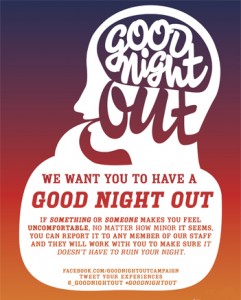
Good Night Out London PosterNightlife harassment stories make up a significant portion of the stories submitted to the Hollaback! London website. Co-Directors Bryony Beynon and Julia Gray wanted to do something about it and lucked out when in 2013, one of London’s biggest and most famous clubs, fabric, contacted them acknowledging that it had a harassment problem. Beynon and Gray worked with the club to create the first anti-harassment policy of its kind in the United Kingdom. “The results were amazing,” Beynon told me. Kristi Weir, the press officer at fabric, agreed, saying, “We’ve received some really positive messages from women thanking us for taking this stance and having their backs since we started publicising the campaign.”

After their success at fabric, Beynon and Gray created the Good Night Out Campaign and launched it as a London pilot on International Women’s Day in March 2014. Only a few months later, it spread across the United Kingdom and Ireland, and within a few more months, 95 licensed premises had signed on to the campaign. The women told me the establishments range from “superclubs to tiny pubs, university union bars, from theatres to pizza joints” and that more are signing up every week.

The women customize the program to meet each establishment’s needs and only move forward once everyone there is committed and will sign the pledge, which in part reads: “We want you to have a Good Night Out. If something or someone makes you feel uncomfortable, you can speak to any member of staff, and they will work with you to make sure it doesn’t have to ruin your night.” The premise must post this pledge very visibly around the venue. This is “so that customers really see them and are aware that they’re in an environment that doesn’t tolerate harassment.”

The staff members of each premise receive an hour-long training session about harassment and handling reports that includes what to say to avoid using victim-blaming language. They also can get other training tools like a hints and tips sheet for the back bar areas. The Good Night Out Campaign is expanding quickly. Through a new partnership with their local council in Southwark, the campaign will soon deliver the training to every venue in the area. Through another new partnership with the national alcohol awareness nonprofit organization Drinkaware, the campaign will “provide training and advice on a pilot project aimed at reducing harassment on nights out by placing hosts in licensed premises to provide help and support.”

Similar programs are underway in the United States in Washington, D.C., Arizona, Iowa City, and Boston. Washington, D.C.’s program Safe Bars is a collaboration between grassroots groups Defend Yourself and Collective Action for Safe Spaces. In Arizona, the program is run by a sexual violence prevention arm of the Arizona Department of Health and Human Services. The Rape Victims Advocacy Program and Women’s Resource and Action Center at the University of Iowa is working with bar staff at venues in downtown Iowa City. The Boston program is run through the Boston Rape Crisis Center in collaboration with law enforcement and the Alcoholic Beverages Control Commission.

The reach of each program has been much smaller than the Good Night Out Campaign, but feedback from venues that have used the training has been very positive, and staff members feel better able to address harassment in their establishments.

Help fund our work in 2016, donate to our end-of-year giving campaign!
Share

Filed Under: 16 days, public harassment, Resources Tagged With: 16 days, good night out, night life, safe bars

#16Days of Activism: Posting Fliers (Day 4)

November 28, 2015 By HKearl

Nov. 25 – Dec. 10 are the 16 Days of Activism Against Gender-Based Violence. To commemorate the week, we are featuring 1 activism idea per day. This information is excerpted from my new book Stop Global Street Harassment: Growing Activism Around the World (Praeger 2015).

Afghanistan

A simple way to raise awareness about street harassment that one person or a group can do is to hang flyers and posters on bulletin boards, walls, the backs of street signs, and other public places. Take Afghanistan. There, members of the group Young Women for Change, founded by college women, posted flyers about women’s rights and street harassment on the walls of Kabul several times, including a day in 2011 when 25 volunteers glued 700 fliers to walls around the city despite the potential danger involved in publicly calling for women’s rights. Their acts received a mixture of responses, from anger to support.

“I felt like my heart was going to melt down when we posted a poster and a shopkeeper who was there watching us post it couldn’t read it [because he was illiterate],” wrote then 20-year-old co-founder Anita Hadiary in a blog post. “He asked another person to read it. When he learned what the poster said, he started fixing the poster and glued it harder on the wall.”

Zimbabwe
Zimbabwe

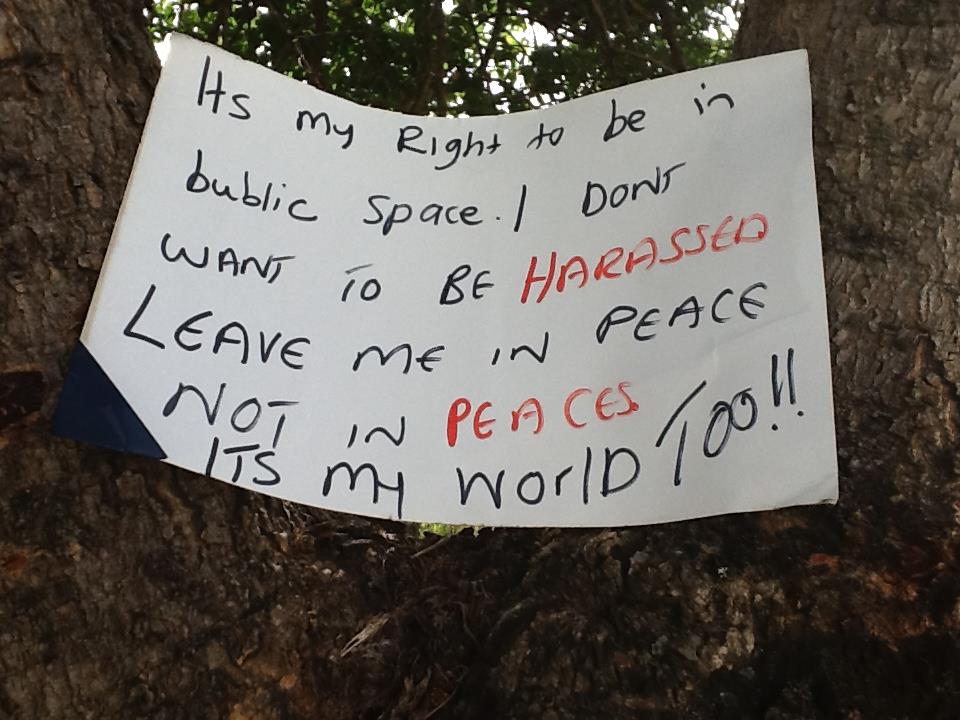
In 2013, members of the Zimbabwe Parents of Handicapped Children Association hung signs on trees in their rural community with messages like “It’s my right to be in public space. I don’t want to be harassed. Leave me in peace not in pieces. It’s my world too!” That same year, Ryerson University college students in Toronto, Canada, posted fliers on bulletin boards around their campus. One flier had an image of flat shoes with the words “These shoes do not make me a prude.” Another flier showed high-heeled shoes with the words “These shoes do not make me a slut.” The larger message was “I do not dress for you.”

When a few women in their 20s and 30s formed the STOP Harcèlement de rue in Paris, France, in 2013, one of their first actions was to post 50 fliers against harassment on walls, lamp posts, bar windows, and mailboxes near the Place de la Bastille in Paris, a crowded area well-known for street harassment. The fliers’ messages included “Me siffler n’est pas un compliment” and “Ma mini-jupe ne veut pas dire oui” (“Whistling at me is not a compliment” and “My mini-skirt is not a yes”). Throughout the summer of 2014, the women met every Monday night to put up posters around the city.

Mexico

In the United States, oil painter/illustrator Tatyana Fazlalizadeh launched Stop Telling Women to Smile in 2012. Her own daily experiences with street harassment inspired her to draw her own and other women’s faces and add simple anti-harassment messages. She would then photocopy the illustrations and paste them on walls. The messages included “Stop telling women to smile,” “Women are not outside for your entertainment,” and “Harassing women does not prove your masculinity.” During 2013, Fazlalizadeh held a very successful online fundraising Kickstarter campaign so she could travel to more than 10 cities across the United States to meet with women, hear their stories, create portraits, and then paste their portraits in their communities. In 2014, she also went to Mexico City.

Help fund our work in 2016, donate to our end-of-year giving campaign!
Share

Filed Under: 16 days, Resources, Street Respect Tagged With: 16 days of activism, activism, flyers, gender-based violence, Resources

« Previous Page
Next Page »

Share Your Story

Share your street harassment story for the blog. Donate Now

From the Blog

  • #MeToo 2024 Study Released Today
  • Join International Anti-Street Harassment Week 2022
  • Giving Tuesday – Fund the Hotline
  • Thank You – International Anti-Street Harassment Week 2021
  • Share Your Story – Safecity and Catcalls Collaboration

Buy the Book

  • Contact
  • Events
  • Join Us
  • Donate
  • Facebook
  • Instagram
  • Pinterest
  • Tumblr
  • Twitter
  • YouTube

Copyright © 2026 Stop Street Harassment · Website Design by Sarah Marie Lacy