• About Us
    • What Is Street Harassment?
    • Why Stopping Street Harassment Matters
    • Meet the Team
      • Board of Directors
      • Past Board Members
    • In The Media
  • Our Work
    • National Street Harassment Hotline
    • International Anti-Street Harassment Week
    • Blog Correspondents
      • Past SSH Correspondents
    • Safe Public Spaces Mentoring Program
    • Publications
    • National Studies
    • Campaigns against Companies
    • Washington, D.C. Activism
  • Our Books
  • Donate
  • Store

Stop Street Harassment

Making Public Spaces Safe and Welcoming

  • Facebook
  • Instagram
  • Pinterest
  • Tumblr
  • Twitter
  • YouTube
  • Home
  • Blog
    • Harassment Stories
    • Blog Correspondents
    • Street Respect Stories
  • Help & Advice
    • National Street Harassment Hotline
    • Dealing With Harassers
      • Assertive Responses
      • Reporting Harassers
      • Bystander Responses
      • Creative Responses
    • What to Do Before or After Harassment
    • Street Harassment and the Law
  • Resources
    • Definitions
    • Statistics
    • Articles & Books
    • Anti-Harassment Groups & Campaigns
    • Male Allies
      • Educating Boys & Men
      • How to Talk to Women
      • Bystander Tips
    • Video Clips
    • Images & Flyers
  • Take Community Action
  • Contact

Queer in Public Ends

September 26, 2015 By HKearl

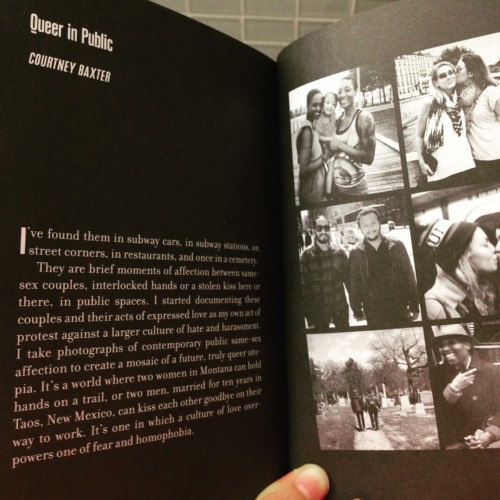
Queer in public

After 2+ years of posting photos of queer couples showing affection in public — “a simple idea built on the foundation that visibility begets change” — Queer in Public has published its last post, closing out on the high note of being included in the book anthology Feminist Utopia Project.

Founder Courtney writes:

“To the three men in 2011 who whispered sexually explicit homophobic slurs in my ear, who shouted homophobic slurs loudly across Union Square, who stood closely behind me as I refilled my metro card, angrily ranting: this is for you.

To Mollie and and Mary, the couple, both shot in their heads on a summer night in Texas, 2012.

To Marc Carson, shot dead in the West Village in 2012.

To Keyshia, Jasmine, Tamara, Shade, Amber, and the number of other trans women of color killed this year alone.

The better world needs continuous creating, I am thankful to my peers who are doing the work and I’m proud QUIP has been a part of that creation…. Thank you to every single person who gave/gives a damn about this project. It’s been the best run.”

Thanks for your work, Courtney!

Share

Filed Under: public harassment, Resources

Stop Global Street Harassment Book Release Event!

September 24, 2015 By HKearl

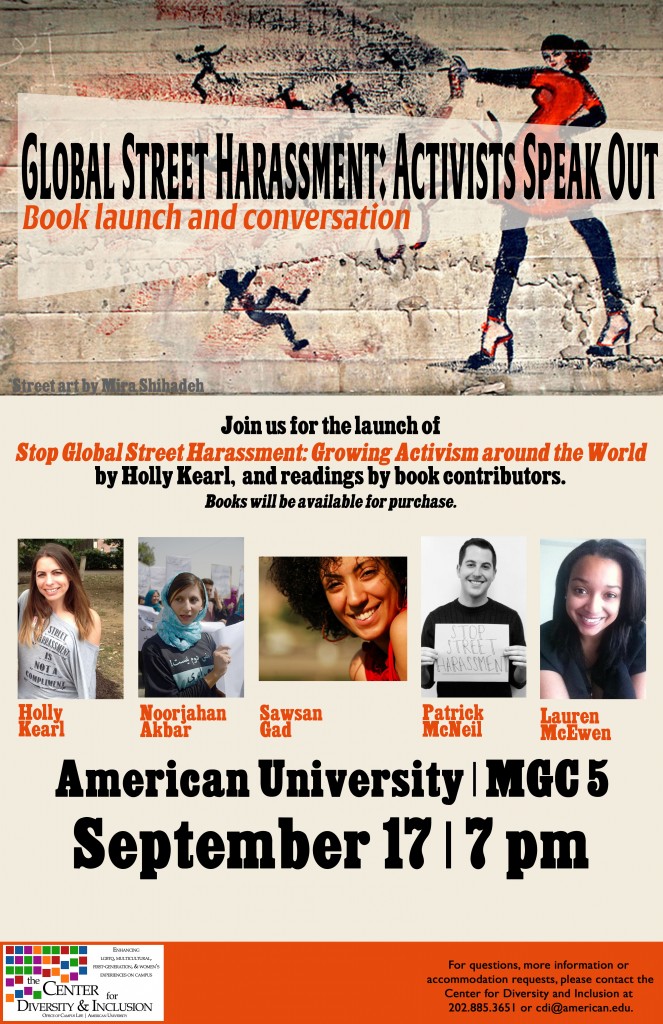
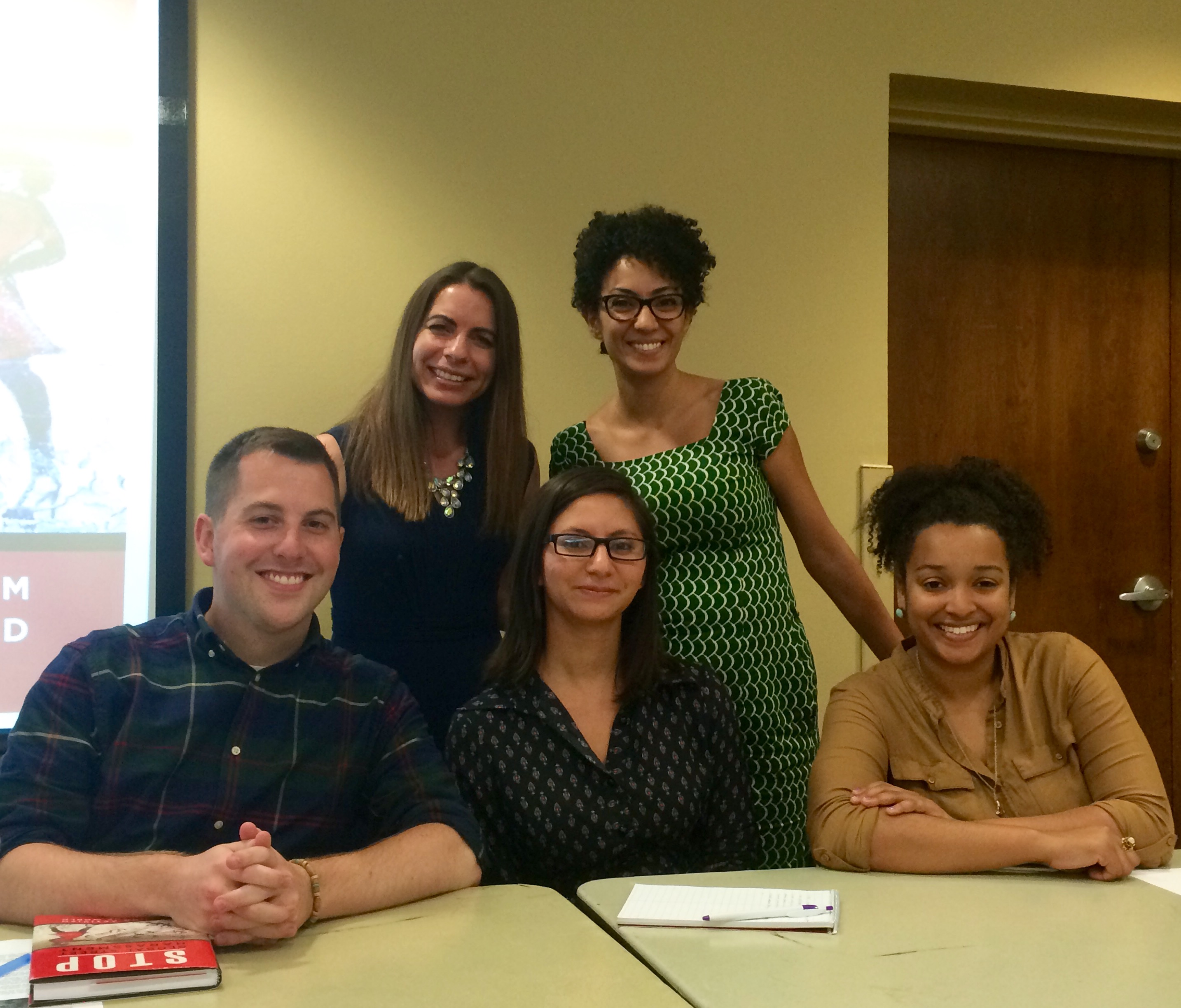
Stop Global Street Harassment AU book eventLast week the Center for Diversity and Inclusion at American University in Washington, DC, kindly hosted my book release event. I am so grateful to them (especially staff member Kerry Diekmann), to everyone who came, to my co-presenters (who are all featured in the book), and to local groups Defend Yourself and the Queer Review for tabling/supporting. After our presentations, we had a rich Q&A, discussing the issue with attendees who hailed from countries like Afghanistan and Belgium. And my mom even flew in from out of state to be there as a surprise!

Holly, Sawsan (back), Patrick, Noorjahan, and Lauren (front)

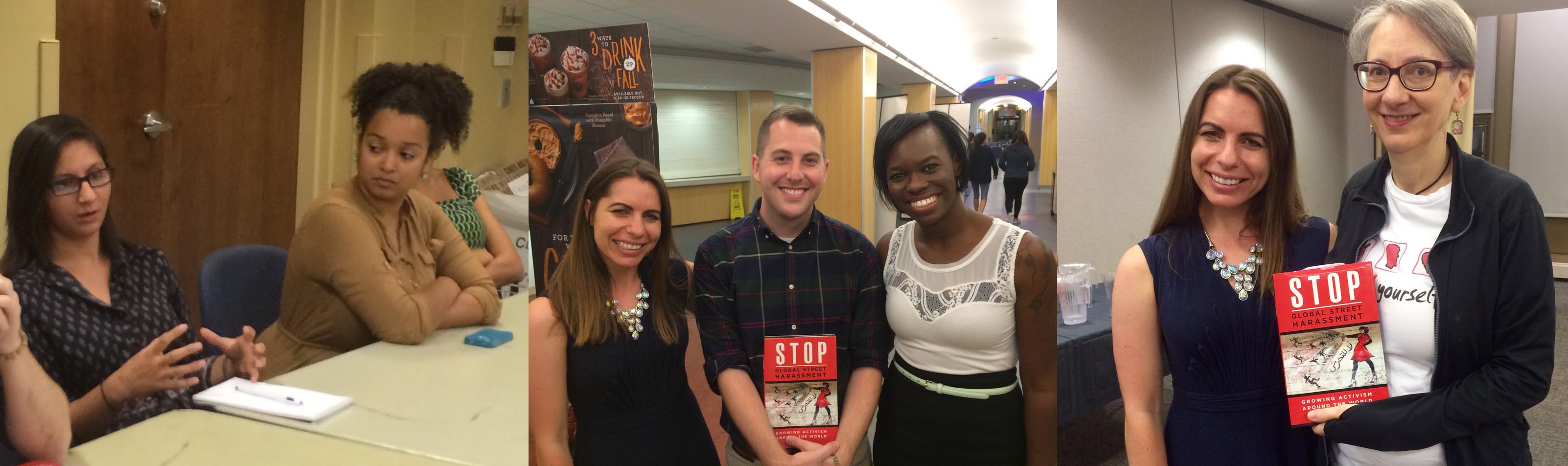
(Holly and Sawsan (back) | Patrick, Noorjahan, and Lauren (front))

In my presentation, I gave an overview of the topic and why it matters. I noted that, “When I wrote my master’s thesis on street harassment in 2007 at GWU and started the Stop Street Harassment blog in 2008, I was one of the few visible and public voices speaking out on this issue. I am so thrilled that just a few years later, there are hundreds of people taking a stand.

My new book focuses on many of those people and what they have done over the past five years to work to help end the normalization of sexual harassment in public spaces globally.”

And then I gave examples of some of the changes we’ve seen in the past five years, like more research on the topic, international entities like UN Women and Huairou Commission overseeing international efforts, more individuals using the Internet to launch awareness campaigns, several viral documentaries, concrete changes wrought by advocacy groups like Paremos el acoso callejero in Peru, and an increase in actions individuals have taken, like writing sidewalk chalk messages, distributing cards against harassment and working with youth.

ssh blog
Noorjahan speaking during Q&A. SSH board members Holly, Patrick and Maureen. Defend Yourself founder Lauren Taylor.

I talked about how it is an exciting time because so many people are refusing to be silent and are making more and more people aware of what street harassment is and why it is unacceptable. You can read all about these efforts and much more in my new book, Stop Global Street Harassment: Growing Activism Around the World (Praeger, 2015). (20% off for the ebook) See upcoming book events.

I took iPhone videos of my co-presenters and they gave me permission to share their words below. (Transcripts to come.) They are amazing and I’m so honored to have their words in my book and to have had them join me at AU!

Share

Filed Under: Events, Resources, street harassment

New Anti-Harassment Cards

September 10, 2015 By HKearl

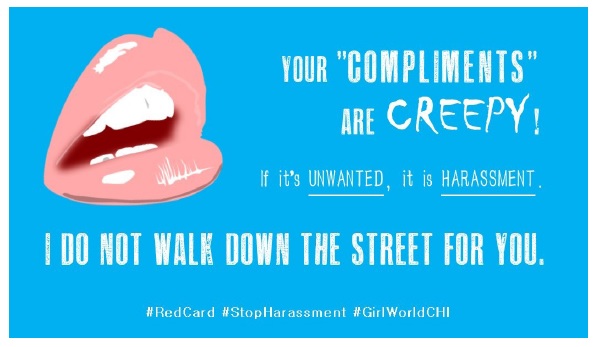
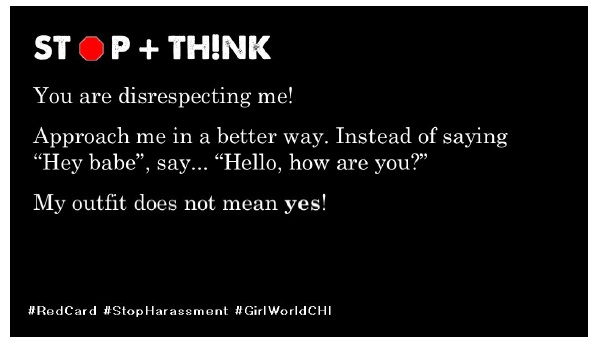
Girl World Chicago‘s Red Cards are available for download (pictured are two examples).

“With six different options, you can use these double-sided cards to respond to your harasser and let them know what they did is NOT OKAY; or give the “All The Fed Up Ladies” card in solidarity next time you see someone experience harassment.”

your compliments are creepy card to hand to harassersStop & Think: you are disrespecting me card to hand to a harasser


Share

Filed Under: Resources, street harassment

New Book: Gender, Sex, and Politics

September 9, 2015 By HKearl

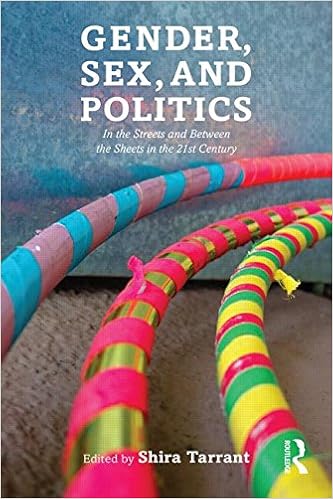
Gender, Sex, and Politics book coverI met Dr. Shira Tarrant five years ago next month when she attended a book talk I gave in Pasadena, CA. I was thrilled as I’d been following and reading her work for a while and even quoted her book Men Speak Out: Views on Gender, Sex and Power in mine.

Our paths crossed again in 2013 when she participated in a focus group I held in Los Angeles as part of the national study on street harassment that Stop Street Harassment released last year.

Tarrant is so smart and writes about gender in a very accessible way. She is also a very warm, kind and approachable person and I envy the students who get to have her as their professor at California State University, Long Beach, where she is a Profess of Women’s, Gender, and Sexuality Studies!

Tarrant’s latest project was editing the newly released book Gender, Sex, and Politics: In the Streets and Between the Sheets in the 21st Century (Routledge, 2015). It contains 27 short chapters written by contributors. Tarrant opens the book by acknowledging that she doesn’t agree with every viewpoint she included – and she doesn’t expect any of the readers to agree with all of them either. Instead, it is her hope to provide “opportunities to think through various perspectives and ideas that we may take for granted or assume to be true…[and] examine our assumptions and presumptions and come to better informed understanding about the politics of sex and gender.”

After I read the book, I found that I agreed with most of the authors, but she was right, a few I had some disagreements with and would have liked the chance to discuss the points in person. I was grateful that several of the authors challenged my thinking and others significantly expanded it.

At the end of each chapter are a list of questions to prompt you to think further about the topics and issues raised and challenge your own response to it and your existing assumptions. This makes it an ideal book for a women and gender studies class, sociology class, or social change class.

The 27 chapters are divided into 5 sections and the short chapters/essays in the first section focus on the topic of gender, sexuality, and social control. Within that section were two short chapters about street harassment. In the first, Hollaback! co-founders Emily May and Samuel Carter wrote about how the Hollaback! organization grew from an idea to a movement. As a sidebar to their essay was a piece written by a former SSH Blog Correspondent Joe Samalin for SSH about the male privilege of not knowing first-hand about street harassment that he and many other men, especially straight men, enjoy.

The second short chapter is by Dr. Kimberly Fairchild and looks at how victim-blaming causes people to feel less sympathy for some assaulted and harassed women. Specifically, “women are judged to be culpable for street harassment and sexual assault because of their sexy dress.” She concludes, “The problem is that if we are apt to blame the victim then street harassment will continue to be considered typical, normal, and acceptable – despite all the negative consequences harassment entails.”

A piece in a later section that relates to street harassment is Alexandra Tweten’s short chapter “Bye Felipe: Online Harassment and Straight Dating.” On her site Bye Felipe she posts women’s submissions of sexism, hate and harassment from men they encounter in online dating and focuses on how that site came about and the main categories of posts she receives. She writes that “the cultural atmosphere that says it’s okay for hundreds of men to catcall any women in public space is part of the same continuum of misogyny that drives men to brutally injure women, as exemplified by the man in New York City who slashed a woman’s neck because she ignored him…There are clear messages in society telling men that they deserve to go on a date with women simply because the men want to and simply because they are male.”

Further, she notes that “Bye Felipe has acted like an immortalized record of catcalling, which links the harassment women see on the street to the same type of harassment they see in their own living rooms, when they are simply online… Until we change the cultural atmosphere, women will continue to receive these hurtful messages online and in real life.”

One of my favorite writers is Soraya Chemaly and she wrote a short chapter called “Slut-Shaming and the Sex Police: Social Media, Sex, and Free Speech.” In it she discusses how like a public street, women on the Internet have to regularly fight for control over their “self-defined image and expression – of ideas, of bodies, of sexuality” and she looks at issues like sexting, online dating, revenge porn and free speech issues. She pulls apart the complexities of needing to allow women (and men) the freedom and right to have sexual agency and engage in consensual sexual behaviors and freedom of expression (e.g. nudity as art or nudity as an expression of one’s sexuality), while also regulating and discouraging non-consensual, harassing and objectifying behavior.

One of the short chapters that was most informative for me was Noah E. Lewis’s piece “Sex and the Body: A 21st-Century Understanding of Trans People.” Noah breaks down what trans people are experiencing in a very logical, clear way. For example: “I transitioned to achieve comfort in my own body. I did not transition because of gender stereotypes, gender roles, or gender expression. I did not transition for the benefit of anyone else. I did not transition in order to be able to express masculinity or femininity, but rather maleness or femaleness. I transitioned not because of my gender but because of my sex.” The really powerful piece concludes with a useful sidebar: “Boosting Trans Equality: 10 Tips for Cis People.”

Tarrant and the 27 contributors show how relevant gender is in our daily lives — from online dating to the experience of walking down the street – and the format makes each chapter easy to digest and ponder while the discussion questions can help guide either internal debate or a classroom discussion.

Share

Filed Under: Resources, street harassment

Documentary: Young Women in Manchester Speak Out

September 6, 2015 By HKearl

Here’s a new documentary out of the UK. Young women in Manchester share their street harassment stories.

It was made in conjunction with ODD Arts and The Hideaway project Manchester.

Share

Filed Under: Resources, Stories, street harassment

« Previous Page
Next Page »

Share Your Story

Share your street harassment story for the blog. Donate Now

From the Blog

  • #MeToo 2024 Study Released Today
  • Join International Anti-Street Harassment Week 2022
  • Giving Tuesday – Fund the Hotline
  • Thank You – International Anti-Street Harassment Week 2021
  • Share Your Story – Safecity and Catcalls Collaboration

Buy the Book

  • Contact
  • Events
  • Join Us
  • Donate
  • Facebook
  • Instagram
  • Pinterest
  • Tumblr
  • Twitter
  • YouTube

Copyright © 2026 Stop Street Harassment · Website Design by Sarah Marie Lacy