• About Us
    • What Is Street Harassment?
    • Why Stopping Street Harassment Matters
    • Meet the Team
      • Board of Directors
      • Past Board Members
    • In The Media
  • Our Work
    • National Street Harassment Hotline
    • International Anti-Street Harassment Week
    • Blog Correspondents
      • Past SSH Correspondents
    • Safe Public Spaces Mentoring Program
    • Publications
    • National Studies
    • Campaigns against Companies
    • Washington, D.C. Activism
  • Our Books
  • Donate
  • Store

Stop Street Harassment

Making Public Spaces Safe and Welcoming

  • Facebook
  • Instagram
  • Pinterest
  • Tumblr
  • Twitter
  • YouTube
  • Home
  • Blog
    • Harassment Stories
    • Blog Correspondents
    • Street Respect Stories
  • Help & Advice
    • National Street Harassment Hotline
    • Dealing With Harassers
      • Assertive Responses
      • Reporting Harassers
      • Bystander Responses
      • Creative Responses
    • What to Do Before or After Harassment
    • Street Harassment and the Law
  • Resources
    • Definitions
    • Statistics
    • Articles & Books
    • Anti-Harassment Groups & Campaigns
    • Male Allies
      • Educating Boys & Men
      • How to Talk to Women
      • Bystander Tips
    • Video Clips
    • Images & Flyers
  • Take Community Action
  • Contact

Video: Here’s the difference between street harassment and compliments

September 14, 2013 By HKearl

What’s the difference between street harassment and a compliment? Stop Street Harassment supporter Jess breaks it down in this video.

It’s especially aimed at men who genuinely don’t understand when it’s okay and when it’s not okay to talk to women they don’t know in public spaces. Please share!

Share

Filed Under: Resources, street harassment

Superhero Qahera fights street harassment in Egypt

September 9, 2013 By HKearl

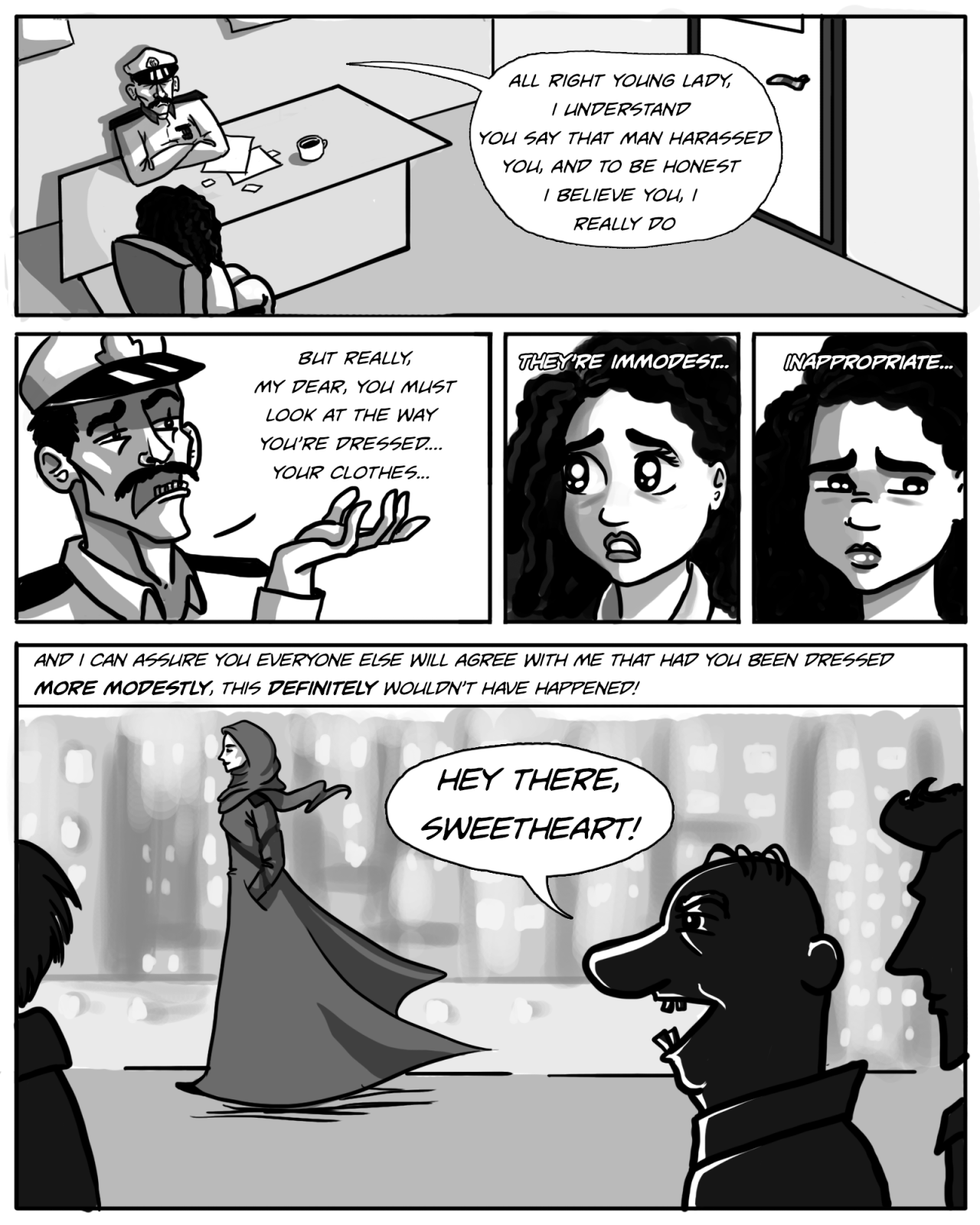
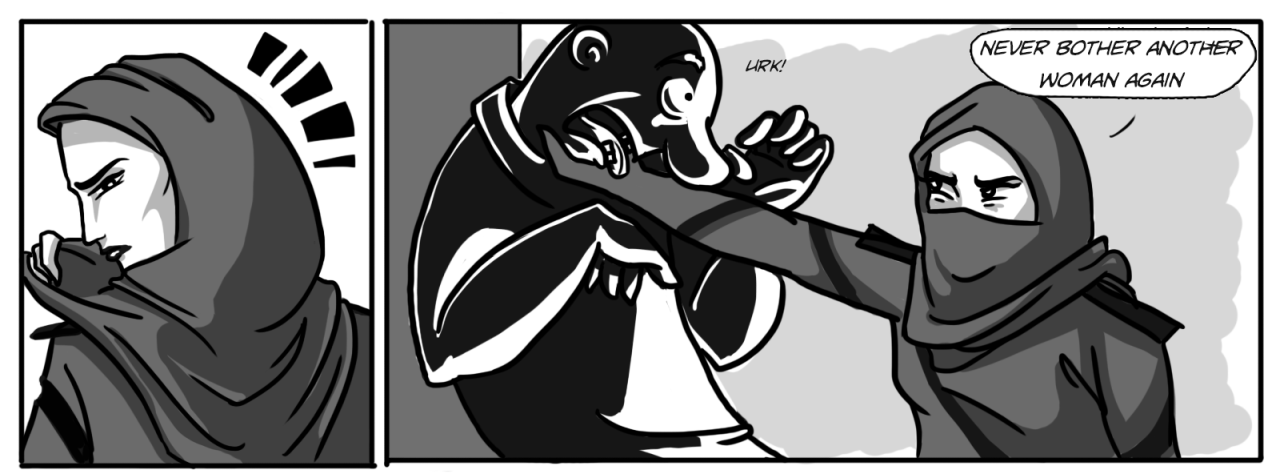
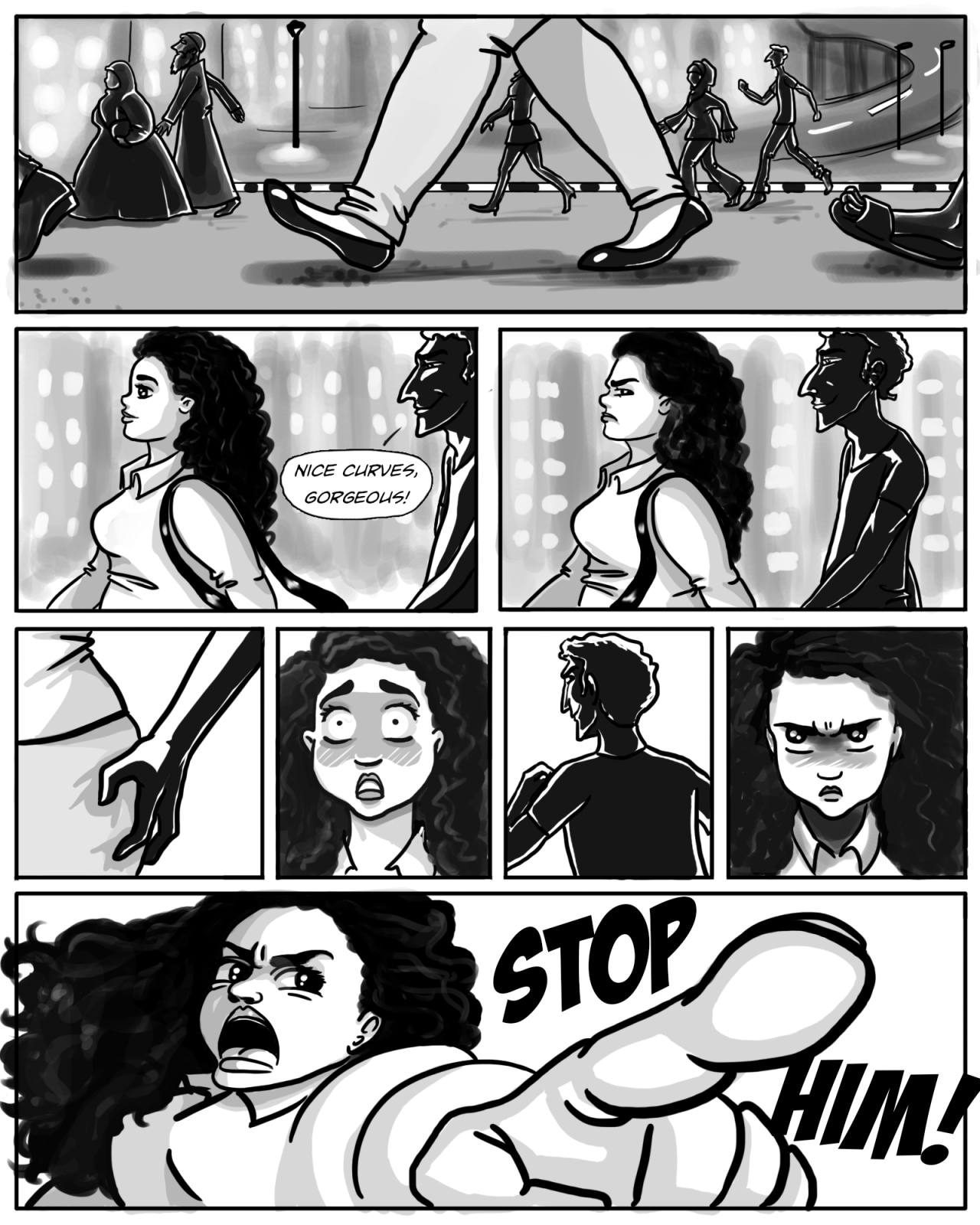
Qahera is a veiled superhero who addresses issues like street harassment in Egypt! It was created by Deena, an Egyptian artist.

In a country where 99.3% of Egyptian women have reported being sexual harassment, with 91.5% reporting unwanted physical harassment, it’s important to bring attention to it in any way possible.

It also reminds me of the Adventures of Salwa in Lebanon. Super heroes fighting street harassment for the win!

Qahera

Share

Filed Under: Resources, street harassment

Take Action: This YouTube Channel Normalizes Street Harassment

September 3, 2013 By Contributor

UPDATE: Sign the petition to YouTube!

By: Julie Mastrine, USA

It’s no secret that society accepts street harassment as a normal part of women’s experiences in public spaces. Company after company has come under fire for trivializing street harassment, pegging it as a joke, compliment, or a great way to get a date. Many of those companies have rescinded or apologized for these portrayals. Now, a popular YouTube channel is the latest perpetrator of harmful attitudes toward street harassment — and we need your help to get it removed.

Simple Pickup is a YouTube channel that features three guys as they harass, sexualize and often downright grope women on the street, all in the name of “picking up girls” and “giving you tips to help guys like you, get laid,” according to the user description. Unfortunately, the channel has over a million subscribers, and the message it sends is clear: it’s totally okay to harass women on the street, sexualize them, make them uncomfortable, and touch them without their consent.

The channel boasts 94 videos, but after watching just two I found enough harmful content to make my stomach lurch. In one skit, three men speak into an earpiece, encouraging another man to approach random women in public and do what they tell him to. “Just start dancing and back your ass up into her,” they advise, and shockingly, the perpetrator obliges. In another video, a man approaches a girl outside of a bar and asks, “So which one of your boobs is bigger? This one or this one?” as he gropes her chest.

Video after video on Simple Pickup’s channel makes a joke of harassing random women as they walk in public. Among the more sexualized comments the men make to strangers — most of whom have their faces hidden or blurred — are:

“What is the biggest cock you’ve ever had up your asshole?”

“This right here means you like to have your face jizzed on.”

“I know I’m in a wheelchair, but what’s in my pants is still able to move.”

The men seem to think the whole shtick is hilarious, often dressing up in costumes to carry out their acts. But street harassment is not funny — it is threatening, scary, and limits people’s access to public spaces.

And Simple Pickup isn’t just a YouTube channel — it’s actually a small business that profits off of these videos and provides lessons in street harassment under the guise of “learning how to pick up girls.”

Here’s how you can help — tell YouTube to remove Simple Pickup’s channel. On the user page, simply click “About,” select the drop-down flag and click “Report User.” From there, you can select “Hate speech against a protected group” and then “Gender.”

All women deserve respect in public spaces, and Simple Pickup promotes non-consent and harmful attitudes about women’s bodies and agency. Street harassment is not funny and should not be treated as a joke or a way to get a date — and YouTube would do well to take this trivialization seriously.

Julie Mastrine is an activist, feminist, and writer working in the PR industry. She holds a B.A. in Public Relations from Penn State University, and is a social media volunteer for Stop Street Harassment. Buy her new e-book Make Your Own Sandwich: A 20-Something’s Musings on Living Under (And Smashing) The Patriarchy and follow her on Twitter.

Share

Filed Under: offensive ads, Resources, street harassment

Help Art Campaign “Stop Telling Women to Smile” Travel Around The Country

September 3, 2013 By HKearl

Our friend artist Tatyana Fazlalizadeh – the woman behind the “Stop Telling Women to Smile” wheat pasting and t-shirts – is launching a Kickstarter today for an exciting new project!

From Tatyana:

Stop Telling Women to Smile is my public art project about gender based street harassment. I started this project in Brooklyn last fall and to my surprise, it has been viewed and shared around the globe. This work is very important to me, and I the huge response to it just shows me that it’s important to other people as well. Therefore, the next logical step for this project is to take it across the country to new cities.

I plan to create all new pieces in several cities that address the type of harassment that happens specifically in that area. I’ll sit down with women to interview them and hear their stories of harassment. I’ll then draw their portraits and use them to design new posters, including text that is inspired by their words. Those posters will be wheat pasted in that particular city – allowing women to use their faces and voices to speak out against the exact type harassment that happens to them in their communities.

I’m launching a Kickstarter campaign to fund traveling to specific cities around the country. Funding I receive will go towards travel expenses, lodging, materials, producing and shipping the donation rewards, and bringing on board a filmmaker to document this entire process. I’ll be giving away shirts, prints, original art, and more.

I encourage you to donate to her campaign if you can! Her art is so powerful and has already raised a lot more awareness around the problem of street harassment. I just made a donation 🙂

Share

Filed Under: Activist Interviews, Resources, street harassment

New Book Tackles Street Harassment, Other Feminist Topics

August 27, 2013 By Contributor

By: Julie Mastrine, USA

In the fight against street harassment other gender inequalities, our voices are our most powerful weapons.

This is something I’ve always believed. The fight for social justice is difficult and fraught with roadblocks, chief among them flawed cultural attitudes. The best thing we can do to create change and end issues like street harassment is to fight the fear in our bellies and give a face to these incidents. Stories have power, and they can provide the groundwork we need to help others understand the links between personal injustices and how they connect to a broader, global issue.

This was the thinking behind the creation of my new ebook, Make Your Own Sandwich: A 20-Something’s Musings on Living Under (And Smashing) The Patriarchy. Plenty of people have pegged Millennials as lazy, entitled and narcissistic, but the truth is, our generation has championed the use of new technologies as a way to create lasting change in the world away from our computer screens. Opening up about our experiences online through ebooks, blogging and social media has proven an effective and pervasive way to ignite the change we want to see.

And just what change do we want? My book delves into the more subtle ways we harm and oppress others, like creating conflicting media messages about how women should look or act, using language that pegs femininity as weak or trivial, criticizing how — or if — women wear makeup, taunting women who engage in self-portraiture like the selfie, and yes, street harassment.

The following excerpt from Make Your Own Sandwich delves into the issue of street harassment:

“At some point in their lives — often starting at a very young age — 99 percent of women will experience street harassment. One in four will experience it before the age of 12. Some will endure it every day. Some will experience hateful and sexualized comments. Some will be threatened with violence. Some will be assaulted. Some will replay the incident in their head for years, wondering how they could’ve retaliated, what it was they’d done to deserve being the victim of such behavior…

Too often, women and LGBTQ persons are told street harassment should be taken as a compliment, that it’s just “boys being boys.” But street harassment is not a compliment — it is scary, threatening, and a human rights violation.

Men and women have competed for access to public spaces since the beginning of time. Now that women are no longer expected to stay at home tending to house and children, we’re seeing these power struggles being doled out on the streets. And consequently, it’s made plenty of women afraid.

When I told my mother about my first street harassment incident at age 11 — I was catcalled while walking my dog — she brushed it off, saying, “Oh, that’s always happened around here.” We’ve created a culture in which women are often told to take harassment as a compliment, and if we don’t like it, to watch what we wear, travel with a companion, or otherwise police our own behavior to avoid being targeted. And plenty of women and LGBTQ folk simply accept that they should “choose” to restrict their actions to avoid harm…

“It wasn’t until I started to get wind of the anti-street harassment movement — efforts fueled nonprofits like Stop Street Harassment and Hollaback! — that I learned this wasn’t just an isolated incident, but an issue happening on streets worldwide. As a volunteer for Stop Street Harassment, I learned how powerful it can feel to share these incidents with others to take the power back, whether that means standing at a demonstration with the comment scribbled on a sign or simply sending out a tweet. Just telling other people what happened can be an effective tool that affords the incident less strength over our consciousness and sense of self. It opens up others to the idea that this isn’t something we should tolerate, but should fight back against.”

I hope you’ll give my book a read, and hopefully come away not just with an understanding of the complex sociopolitical landscape of gender issues, but with a sense of empowerment to affect change. Make Your Own Sandwich is available for download here.

Excerpted from Make Your Own Sandwich. Copyright ©2013 by Julie Mastrine. Reprinted with permission from Thought Catalog.

Julie Mastrine is an activist, feminist, and writer working in the PR industry. She holds a B.A. in Public Relations from Penn State University, and is a social media volunteer for Stop Street Harassment. You can follow Julie on Twitter.

Share

Filed Under: Activist Interviews, Resources, Stories, street harassment

« Previous Page
Next Page »

Share Your Story

Share your street harassment story for the blog. Donate Now

From the Blog

  • #MeToo 2024 Study Released Today
  • Join International Anti-Street Harassment Week 2022
  • Giving Tuesday – Fund the Hotline
  • Thank You – International Anti-Street Harassment Week 2021
  • Share Your Story – Safecity and Catcalls Collaboration

Buy the Book

  • Contact
  • Events
  • Join Us
  • Donate
  • Facebook
  • Instagram
  • Pinterest
  • Tumblr
  • Twitter
  • YouTube

Copyright © 2026 Stop Street Harassment · Website Design by Sarah Marie Lacy