• About Us
    • What Is Street Harassment?
    • Why Stopping Street Harassment Matters
    • Meet the Team
      • Board of Directors
      • Past Board Members
    • In The Media
  • Our Work
    • National Street Harassment Hotline
    • International Anti-Street Harassment Week
    • Blog Correspondents
      • Past SSH Correspondents
    • Safe Public Spaces Mentoring Program
    • Publications
    • National Studies
    • Campaigns against Companies
    • Washington, D.C. Activism
  • Our Books
  • Donate
  • Store

Stop Street Harassment

Making Public Spaces Safe and Welcoming

  • Facebook
  • Instagram
  • Pinterest
  • Tumblr
  • Twitter
  • YouTube
  • Home
  • Blog
    • Harassment Stories
    • Blog Correspondents
    • Street Respect Stories
  • Help & Advice
    • National Street Harassment Hotline
    • Dealing With Harassers
      • Assertive Responses
      • Reporting Harassers
      • Bystander Responses
      • Creative Responses
    • What to Do Before or After Harassment
    • Street Harassment and the Law
  • Resources
    • Definitions
    • Statistics
    • Articles & Books
    • Anti-Harassment Groups & Campaigns
    • Male Allies
      • Educating Boys & Men
      • How to Talk to Women
      • Bystander Tips
    • Video Clips
    • Images & Flyers
  • Take Community Action
  • Contact

Apply for 2014 Safe Public Spaces Mentoring

July 17, 2014 By HKearl

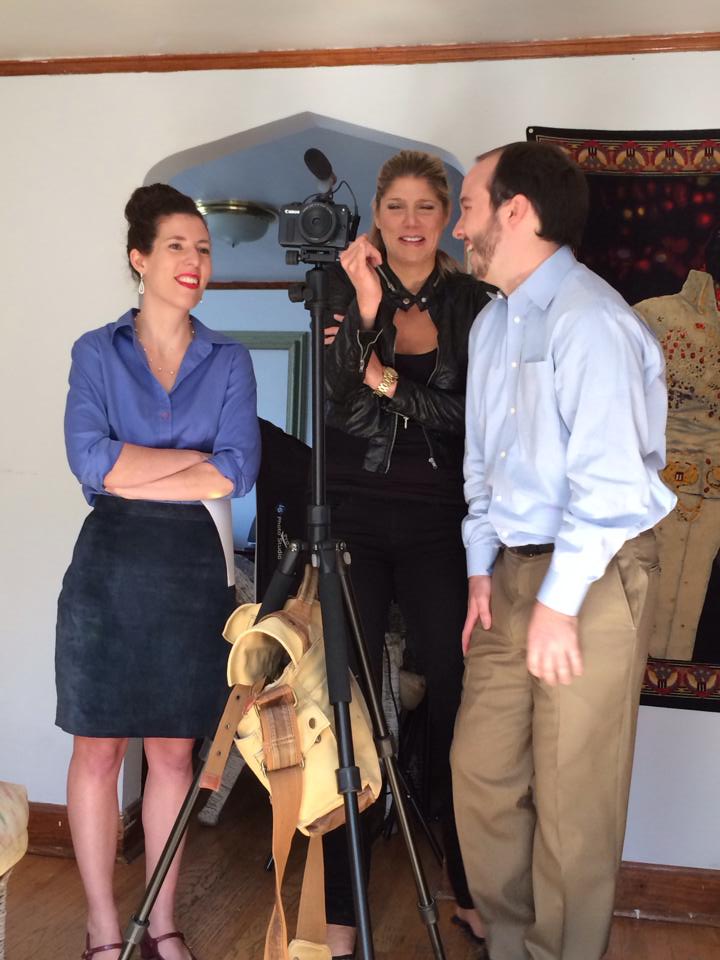
Chicago team in 2013

Stop Street Harassment (SSH)’s Safe Public Spaces Mentoring program empowers people to consider what efforts might decrease street harassment in their community, and then propose and carry out a project. Across three months, selected activists receive advice, network connections, input, and up to $250 for expenses from SSH.

In 2013 we worked with three pilot sites who held high school workshops in Afghanistan, conducted focus groups and organized a youth seminar in Cameroon, and created three short films and held a community event in Chicago, USA.

APPLICATIONS NOW AVAILABLE!

The 2014 period is September 1 through December 1.

** To apply, complete & submit this online form & complete and email this excel spreadsheet for expenses to hkearl@ stopstreetharassment.org. **

DEADLINE: AUGUST 8, 2014.

Who can apply?

Groups (or a very motivated individual) anywhere in the world!

We will accept and fund up to four mentoring sites this year.

Notification:

Applicants will be notified of the decision by August 18 and their program can start as soon as September 1.

Share

Filed Under: SSH programs

Our New National Study on Street Harassment Found….

June 3, 2014 By HKearl

FOR IMMEDIATE RELEASE
06/03/14

Contact: Holly Kearl, hkearl@stopstreetharassment.org, (571) 449-7326

Two in Three American Women Experience Sexual Harassment and Assault in Public Spaces

Stop Street Harassment Releases a Groundbreaking National Report

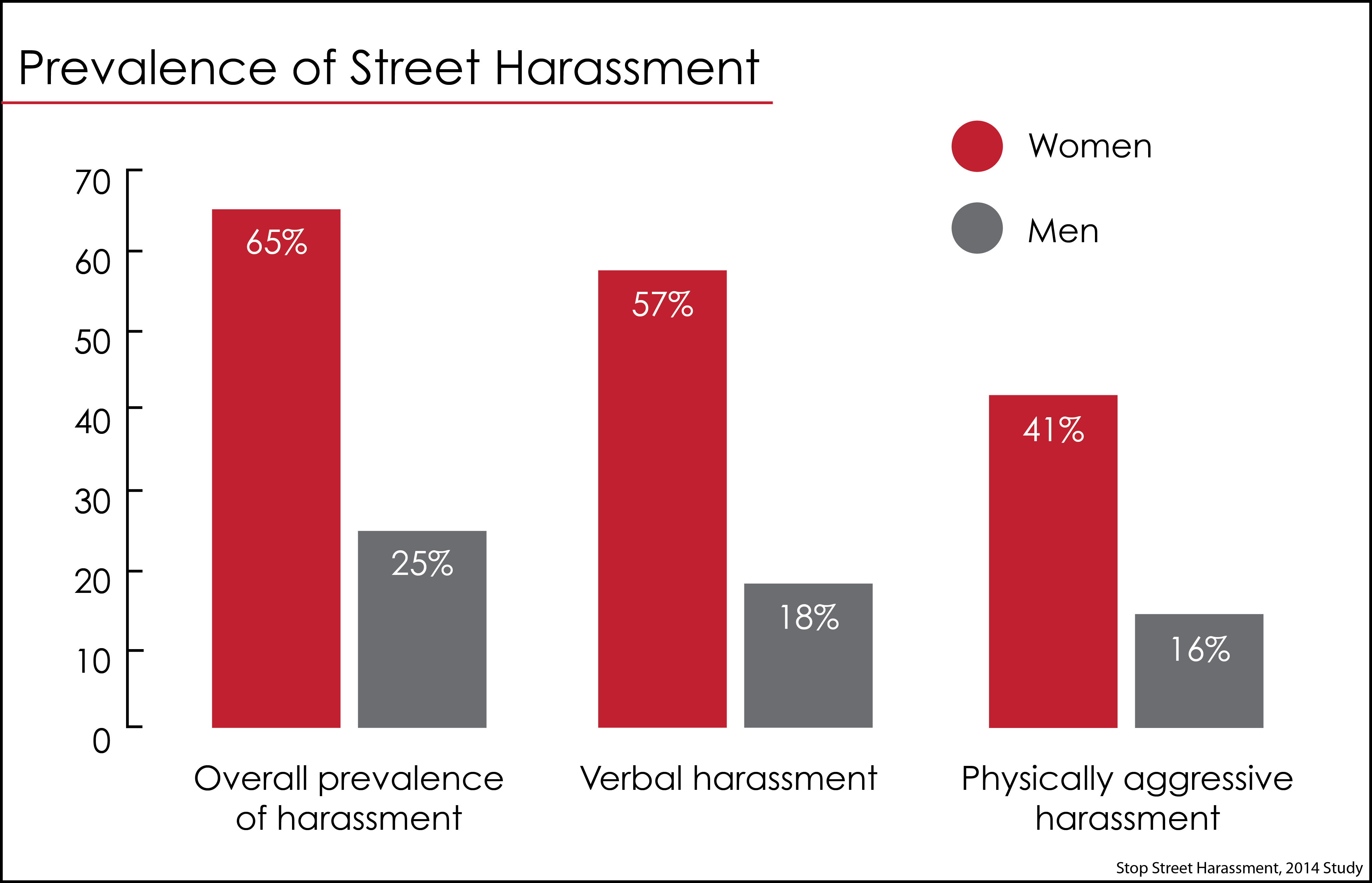
RESTON, VA — From “hey baby” to homophobic slurs, from following to groping, sexual harassment and assault in public spaces by strangers, or “street harassment,” is experienced by more than 107 million women in the United States, according to a study released today by the nonprofit organization Stop Street Harassment (SSH). GfK conducted the 2,000-person nationally representative survey in early 2014.

Half of all women had been harassed by age 17 and most women were somewhat or very concerned that the harassment would escalate into physical violence. Most harassed women also reported changing their lives in some way because of it, including avoiding locations where they had been harassed, no longer going places alone, and even moving neighborhoods or quitting jobs.

Some men also reported experiencing street harassment, especially men who identified as gay, bisexual or transgender. Being the target of a homophobic or transphobic comment (9%) was the most common experience for all harassed men. Half of respondents said their harassment started by age 17, and many men changed their lives because of the harassment they experienced.

The overwhelming majority of both women and men identified one man or a group of men as the perpetrator of harassment.

“It is shameful that millions of people are harassed by men simply for being in public spaces while they travel to and from school, work, stores, and events,” said Holly Kearl, executive director of Stop Street Harassment and author of two books on the subject. “If we want to see the United States achieve equality for all, it is imperative that communities — and we as a nation — address this pervasive human rights violation.”

While verbal comments were the most common form of harassment, an alarmingly number of women had faced more severe forms, too. Among all female respondents, 23% had been purposely sexually touched, 20% had been followed, and 9% had been forced to do something sexual.

“Street harassment is a pervasive form of sexual violence that has a profound impact for those who are harassed, their friends and families, and their community. Failing to address this systemic problem continues to perpetuate the belief that this behavior is acceptable,” said Michele Black, PhD, a SSH report advisor and the lead author of the U.S. Centers for Disease Controls (CDC) National Intimate Partner and Sexual Violence Survey 2010 Summary Report. “It is important that bystanders step forward and show that street harassment will not be tolerated,” the recently retired CDC epidemiologist said.

The report also includes stories from 10 focus groups conducted across the nation as well as recommendations for what we all can do to address this problem. There are separate recommendations directed to educators, community leaders, transit authorities, law enforcement, business owners, and individuals, complete with examples of promising and replicable initiatives.

The full report and a two-page executive summary are available for download on the SSH website.

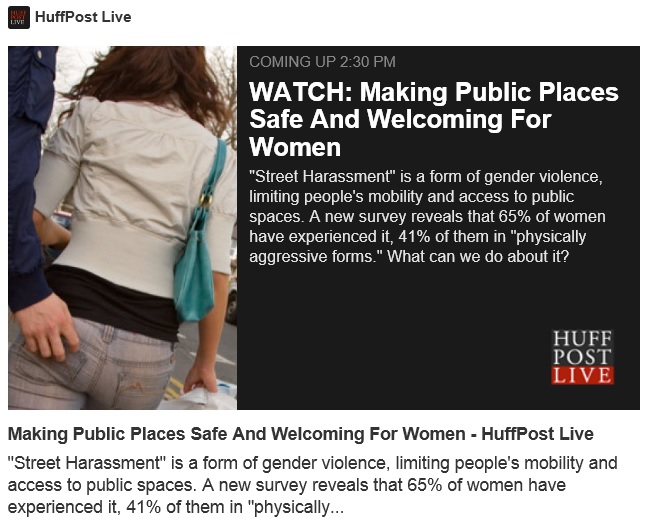
HuffPost Live will air a segment on the report at 2:30 p.m. EDT today.


Share

Filed Under: national study, SSH programs, street harassment

Hey Bloggers: Join the May – July Cohort!

May 12, 2014 By HKearl

DEADLINE EXTENDED TO MAY 28

Do you have something important and/or unique to write about street harassment?

Stop Street Harassment is now accepting applications for the second 2014 cohort of our Blog Correspondents Program. This is an unpaid, volunteer opportunity. It is a great resume-builder and chance to make a difference on an important global topic!  And your words will be read: the SSH blog has around 20,000 unique readers each month.

Assignment:

From May through July, correspondents in the second cohort must commit to writing one blog post per month about street harassment issues in their community, region or country. This means three posts total. The topics could include incidents of street harassment in the news, activism to stop it, interviews with activists, and street harassment in popular culture, traditions or the news.

We aim to have geographic diversity among our cohort members and people of all genders, ages, backgrounds and locations can apply.

Applying:

By May 26, 2014, please e-mail: 1) your name, 2) the region of the world or the USA where you’re from, 3) a writing sample of a blog post or article (in the range of 500-1000 words), and 4) a few sentences about why you want to be part of the Stop Street Harassment team.

If you prefer to write in a language other than English, please also indicate what language is most comfortable for you and you can send your writing sample in that language.

E-mail to: hkearl @ stopstreetharassment.org. Address it to me, Holly.

Applicants will be notified of the decision by May 28. Accepted applicants will then receive blogging guidelines, information about the submission process and a calendar to sign up for their dates each month.

Share

Filed Under: correspondents, SSH programs

Meet Us on the Street! March 30 – April 5

March 2, 2014 By HKearl

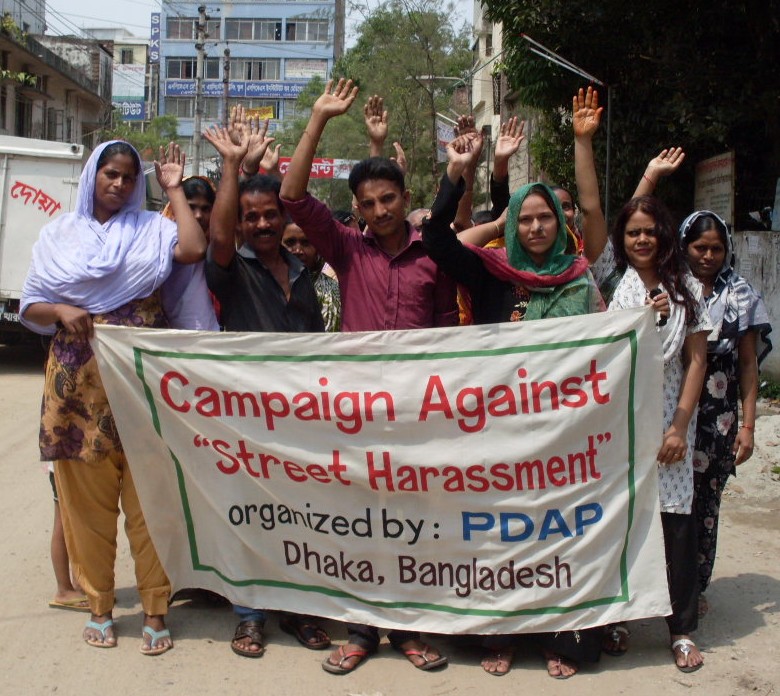
Bangladesh

No one should feel unsafe in their neighborhood, their local store or on a bus, but this is how countless people worldwide feel because of gender-based street harassment. This global problem is too often a hidden problem…. but by collectively speaking out against street harassment, we are making it visible.

From March 30 – April 5, Stop Street Harassment is organizing the fourth annual International Anti-Street Harassment Week and already more than 80 groups in 19 countries have signed on to participate.

This is a time for people worldwide to collectively raise our voices — both online and offline — to share our stories, bring attention to the issue of street harassment, and work toward safer public spaces for all.

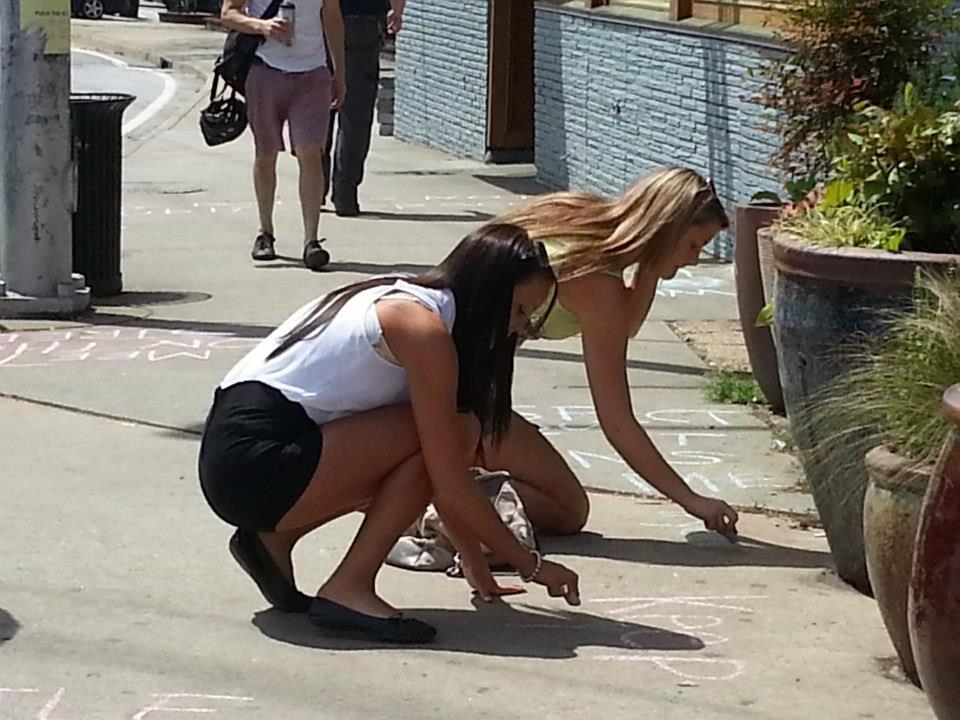
USA

Together we can let people affected by street harassment know it’s not their fault and they’re not alone. We can inform communities that this is a problem that we all need to care about and address.

During the week, groups, campuses, organizations and people around the world do something to raise awareness about street harassment, be it sharing a story with a friend, organizing or attending an event, or posting information on social media.


1. How to Participate:
There are many ways that you, anywhere in the world, can do to participate!

Here are 13 ideas. And, new this year –

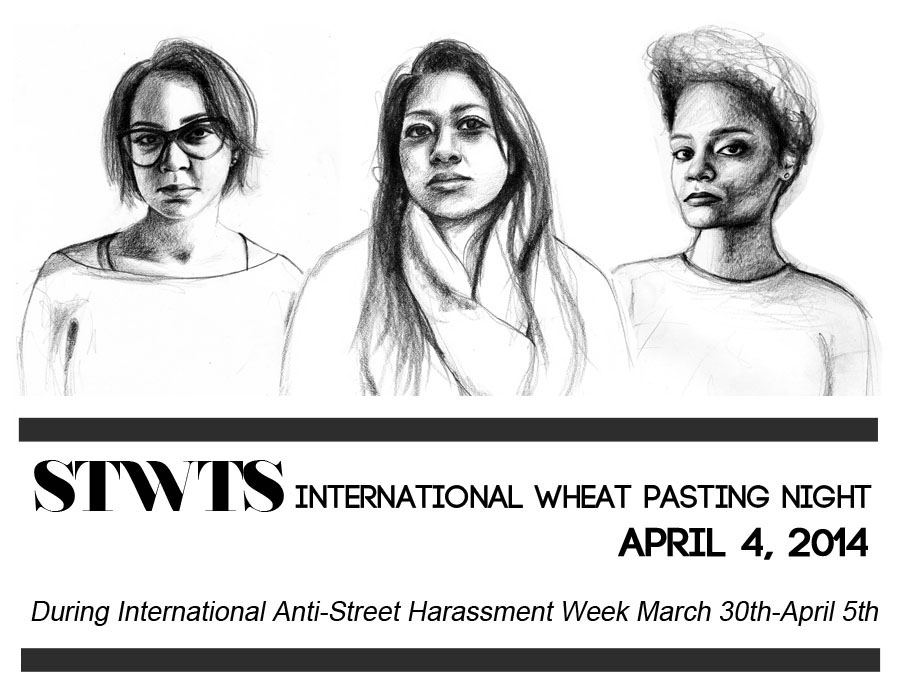
As part of International Anti-Street Harassment Week, Stop Telling Women to Smile (STWTS) is organizing an international wheat pasting night on April 4th, 2014. Individuals and organizations around the world can download and print STWTS posters, starting March 24 from stoptellingwomentosmile.com. The goal is that on April 5th, walls across the world will bear the faces and words from women protesting street harassment. No matter what else you plan that week, STWTS and SSH hope you can participate…and send in photos!


2. Flyers, Factsheets & Shareable Images:

Check out the images and flyers on the website that you can share online and at events.

Are you in the USA? Use the Stop Street Harassment toolkit Know Your Rights: Street Harassment and the Law and share your state’s laws!

3. Co-Sponsor:

If your group has not yet confirmed with me your participation, please do so (hkearl @ stopstreetharassment.org)! I will add you to the list.

4. Events:

If you’re planning an event, please send me the date/time/place and the activity that will happen and I will add it to the the website. If you have an events page you want me to link to, please also send it.

5. Tweet Chats:

There are four confirmed Tweet Chats for the week! Hope you can participate in at least one! Use #EndSHWeek

Monday, March 30, 1 p.m. EDT, four women of color will co-host a discussion about street harassment and race, @NualaCabral, @ZerlinaMaxwell, @RaquelReichard, @Besito86

Tuesday, April 1, 2 p.m. EDT, the National Sexual Violence Resource Center, @NSVRC, will host a chat about street harassment & sexual violence as well as community activism.

Wednesday, April 2, 12 p.m. EDT, @EverydayFeminism and @Fem2Pt0 will co-lead a discussion about how street harassment connects with broader issues of sexism and homophobia.

Thursday, April 3, 5 p.m. IST/7.30 p.m. MYT, @PixelProject and @Bell_Bajao will co-host a conversation about harassment on public transportation.

6. Need inspiration? 

View photos from our actions in 2013. Read the 2013 report about what happened last year.

Join us, speak out, make a difference!!

Share

Filed Under: anti-street harassment week, SSH programs

USA: Reflections on a Women Bike PHL Street Harassment Focus Group

March 1, 2014 By Correspondent

Katie Monroe, Philadelphia, PA, USA, SSH Blog Correspondent

Philly focus group. 2.25.14

This past week I had the opportunity to help orchestrate a focus group for the national study on street harassment currently being conducted by Stop Street Harassment. When Holly asked if I thought Philly bicyclists might make a good “group” for her study, I wasn’t completely sure if I could pull enough interested folks together on short notice. But I sent out a quick email to a small group of women bicyclists I know through Women Bike PHL (the women’s bicycling program I run at the BCGP) – and got an overwhelming response. At 6 p.m. this past Tuesday, almost everyone I emailed showed up to the Bicycle Coalition of Greater Philadelphia office to take part in the focus group – the first of its kind, as far as I am aware. The hour that followed was full of insights that are still bouncing around on my brain, but here are three reflections I felt most compelled to share:

1) While I took care to distinguish between gender-based and transportation-based harassment in my last post, the focus group reintroduced some gray areas to my thinking. Car-on-bike harassment can and does certainly take place with every combination of genders of driver and cyclist, and there can be situations of car-on-bike harassment that simply involve an assertion of power over lane space and nothing more. However, I got the sense in the focus group that for women, harassment because they’re riding a bike can often become increasingly gendered as a situation escalates – for instance, getting called a cunt or bitch by an aggressive driver was a common theme. In addition, it was pointed out that while there may be important distinctions between the two types of harassment, the “gut feeling” women get from being sexually street harassed is a very similar “gut feeling” to the one they get from an aggressive driver. Good food for thought.

2) A great point resurfaced in the focus group that I remember a few women mentioning in the Women Bike PHL Facebook page last fall. That is, the fact that harassment is a reason that people (particularly women) might choose to run a red light rather than waiting for the green at an intersection, even if they generally abide by traffic laws. When we talk in the bike community about following the rules, I don’t think we often acknowledge the different ways that folks of different gender and sexual presentations experience being still versus in motion on our streets and sidewalks. A woman standing with her bicycle waiting for a green light is a sitting duck when it comes to harassment – and when the choice is between standing and taking it or looking both ways and pedaling through the red, it’s hardly surprising that some women would choose to pedal on! I think this aspect of the experience of biking isn’t always understood widely within the bike and bike advocacy community, and it seems important to me.

3) In that vein, the whole conversation just made me realize even more deeply how much street harassment and transportation choices are fundamentally linked. I saw a lot of light bulb moments happen during the focus group – for me and for the rest of the attendees. It was fascinating to hear the stories of how bicyclists – who have made a very particular and still relatively rare transportation choice, to ride a bicycle – perceive their experiences of street harassment. A few of the varied perspectives: biking as a means to escape the harassment that walking entails, biking creating safer ways to interact with strangers because of increased speed, or biking entailing sacrificing the opportunity to tell off street harassers in a satisfying manner. And I’m sure that’s only the beginning!

I’m excited to read the report and hear what resonated with Holly about our discussions on Tuesday, and to read the report as a whole with questions of transportation in mind. I’m so glad I could contribute to this study in my own way and so grateful to the group who came out to discuss this topic – thank you!

Katie Monroe founded the Women Bike PHL campaign at the Bicycle Coalition of Greater Philadelphia and she works at the Philly nonprofit Gearing Up, which gives some of Philadelphia’s most marginalized women – those in transition from incarceration, addiction, and/or abuse – the opportunity to ride bicycles for exercise, transportation, and personal growth. Follow her on Twitter, @cmon_roe.

Share

Filed Under: correspondents, SSH programs, Stories, street harassment

« Previous Page
Next Page »

Share Your Story

Share your street harassment story for the blog. Donate Now

From the Blog

  • #MeToo 2024 Study Released Today
  • Join International Anti-Street Harassment Week 2022
  • Giving Tuesday – Fund the Hotline
  • Thank You – International Anti-Street Harassment Week 2021
  • Share Your Story – Safecity and Catcalls Collaboration

Buy the Book

  • Contact
  • Events
  • Join Us
  • Donate
  • Facebook
  • Instagram
  • Pinterest
  • Tumblr
  • Twitter
  • YouTube

Copyright © 2026 Stop Street Harassment · Website Design by Sarah Marie Lacy