• About Us
    • What Is Street Harassment?
    • Why Stopping Street Harassment Matters
    • Meet the Team
      • Board of Directors
      • Past Board Members
    • In The Media
  • Our Work
    • National Street Harassment Hotline
    • International Anti-Street Harassment Week
    • Blog Correspondents
      • Past SSH Correspondents
    • Safe Public Spaces Mentoring Program
    • Publications
    • National Studies
    • Campaigns against Companies
    • Washington, D.C. Activism
  • Our Books
  • Donate
  • Store

Stop Street Harassment

Making Public Spaces Safe and Welcoming

  • Facebook
  • Instagram
  • Pinterest
  • Tumblr
  • Twitter
  • YouTube
  • Home
  • Blog
    • Harassment Stories
    • Blog Correspondents
    • Street Respect Stories
  • Help & Advice
    • National Street Harassment Hotline
    • Dealing With Harassers
      • Assertive Responses
      • Reporting Harassers
      • Bystander Responses
      • Creative Responses
    • What to Do Before or After Harassment
    • Street Harassment and the Law
  • Resources
    • Definitions
    • Statistics
    • Articles & Books
    • Anti-Harassment Groups & Campaigns
    • Male Allies
      • Educating Boys & Men
      • How to Talk to Women
      • Bystander Tips
    • Video Clips
    • Images & Flyers
  • Take Community Action
  • Contact

Call for New Board Members!

November 4, 2013 By HKearl

Dear SSH Community,

We want to add two more people to our board of directors, in particular, we need people who have fundraising experience, fundraising connections, and the time to dedicate a few hours each month to helping me with fundraising and grant-writing. Additionally, all board members participate in quarterly conference calls (usually around 90 minutes) and email communications every 2-3 weeks.

Applicants can be located anywhere in the U.S.A.

If you (or someone you know) meet the qualifications and are interested, please send a resume and cover letter to hkearl @ stopstreetharassment . org. The cover letter should include why street harassment is an issue you care about and what fundraising experience you have.

Deadline is: December 10, 2013.

Thanks,

Holly

Share

Filed Under: SSH programs, street harassment

UNiTE to Make Public Places Safer!

October 25, 2013 By HKearl

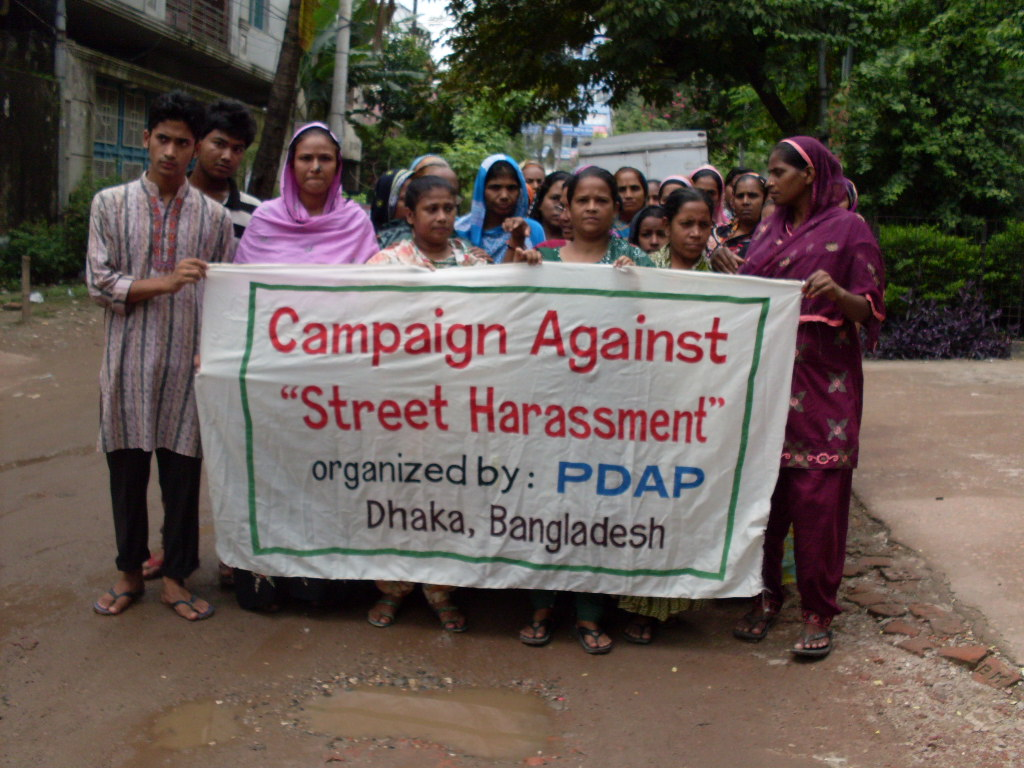
Community Members in Bangladesh recently met to discuss how to make their public places safer for girls & women.

On the 25th of every month, the UNiTE to End Violence against Women campaign focuses on different types of violence against women and girls. Today they are focusing on harassment and violence in public places and how we can make those spaces safer for women and girls. This is something we at Stop Street Harassment strive to do every day and we are happy to support the campaign!

From the UNiTE’s website:

“Violence and the fear of violence reduces women’s freedom of movement and rights to access education, work, recreation, and essential services, and can restrict their participation in political life. It also negatively affects their health and well-being. Despite these wide-ranging consequences, violence against women and girls in public spaces remains a neglected area, with few laws or policies in place to prevent and address it.

At the 57th Session on the Commission of the Status of Women, governments made specific commitments directed towards making public spaces safer for women and girls.

For the first time the Commission on the Status of Women, the highest global normative body on women’s rights, during its 57th Session specifically included several clauses in its Agreed Conclusions document devoted to safety of women and girls in public spaces, and particularly, in the cities.  It expressed “deep concern about violence against women and girls in public spaces, including sexual harassment, especially when it is being used to intimidate women and girls who are exercising any of their human rights and fundamental freedoms.”  (23, p4)

It called on the States “to increase measures to protect women and girls from violence and harassment, including sexual harassment and bullying, in both public and private spaces, to address security and safety, through awareness-raising, involvement of local communities, crime prevention laws, policies, programmes such as the Safe Cities Initiative of the United Nations. (ZZ, p13)“

What YOU can Do:

1. Learn more about the issue, why it matters, and what you can do about it. Here is an article I wrote for Ms. Magazine’s blog about how street harassment can escalate to assault – and three ideas for what we can do to change our culture so street harassment is no longer acceptable.

2. Join the Tweet chat throughout the day, led by UN Women and UN Habitat (#OrangeDay). Our friends at the Huairou Commission are hosting it at 10 a.m. EDT.

3. Donate to Stop Street Harassment — we’re working to fund the first-ever national study on street harassment. This data is sorely needed before we can adequately tackle the problem. We also do a lot of other work that is solely funded by donations.

 Update: Read what groups around the world did to speak out in support of space public spaces for women and girls!

Share

Filed Under: SSH programs, Stories, street harassment

Important Discussion with GBTQQI Men in D.C.

October 23, 2013 By Contributor

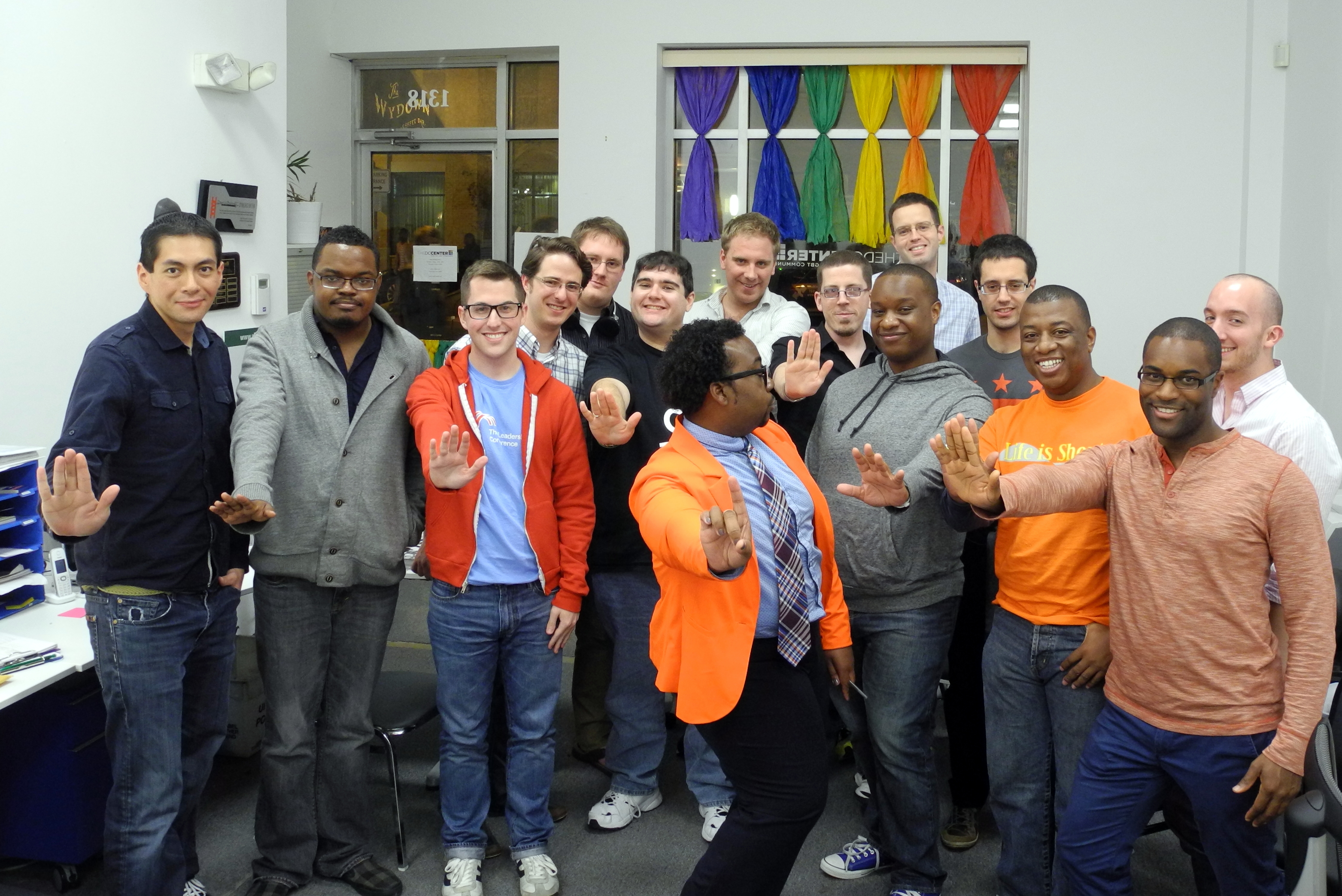
The Gay District says NO to harassment!

By: Patrick Ryne McNeil

On Friday, October 18, I joined Holly Kearl to co-facilitate a discussion group at Gay District, a “social and discussion group for 18-35-year-old GBTQQI men” that meets twice each month in Washington, D.C.

The discussion focused on sexual harassment and sexual violence experienced in public spaces specifically by this community of men in D.C. Stories about particular incidents of street harassment, how these experiences impact the way these men navigate public spaces, and solutions – both in D.C. and beyond – were of particular interest during the discussion.

I was incredibly appreciative for the number of men who attended this important discussion and was struck by just how many of them had stories to share. They underscored for me both how common this issue is for so many men in D.C. and just how many separate venues it permeates – not just on the street, but in stores, at bus stops, on the bus and on metro. And it starts so early. Several men discussed being harassed at alarmingly young ages, well before they identified as gay or some other non-normative identity.

One solution discussed that is specific to D.C. was making sure everyone knows they have access to WMATA’s anti-sexual harassment ad campaign, something that many men thought was really (perhaps exclusively) for the use of women. In addition, ensuring that everyone knows where they can report harassment is critical; one participant who experiences harassment at his bus stop was unaware that he could report harassment at that location, which is in fact an option on WMATA’s reporting page.

Friday’s discussion is one of ten taking place across the United States with various demographics as part of Stop Street Harassment’s national study on street harassment.

My master’s thesis focuses on how gay and bisexual men experience street harassment. To learn more about my research in particular, you can check out my op-ed from this year’s International Anti-Street Harassment Week, or contact me at patrickryne@gmail.com.

Patrick McNeil is finishing his master’s thesis at The George Washington University in Washington, D.C., where he is pursuing his Master’s in Women’s Studies. His work focuses on whether and how gay and bisexual men experience street harassment and how this form of harassment intersects with and diverges from the gender-based street harassment of women. Follow him on Twitter at @patrickryne.

Share

Filed Under: LGBTQ, SSH programs, Stories, street harassment

Simple Pickup REALLY Needs To Go: Breast Cancer Edition

October 18, 2013 By HKearl

A few weeks ago, SSH social media volunteer Julie Mastrine began a Change.org petition against Simple Pickup.

She wrote, “Simple Pickup is a YouTube channel that features three guys as they harass, sexualize and often downright grope women on the street, all in the name of “picking up girls” and “giving you tips to help guys like you, get laid,” according to the user description. Unfortunately, the channel has over a million subscribers, and the message it sends is clear: it’s totally okay to harass women on the street, sexualize them, make them uncomfortable, and touch them without their consent.”

The petition has 30,000 signatures and asks YouTube to take down this offensive channel. (Please sign!)

Today I found out that the guys at Simple Pickup have reached a new low… they filmed themselves “motorboating” random women on the street (they pressed a woman’s breasts together and shook their face back and forth between them, to make the sound of a motorboat) and then they tried to make this offensive act “better” by donating $20 per motorboat to the Breast Cancer Research Foundation. Once the Foundation learned about the origin of the funds, they refunded the donation, telling media:

“We appreciate efforts to raise money to advance breast cancer research, but out of respect for the community we serve, we have asked Simple Pickup to cease all references and associations to our organization and are refunding their donation immediately.”

Good for them. As Audra at the Daily Dot writes, “objectifying women was a disgraceful way to support the cause.”

I’m really alarmed that the Simple Pickup guys continue to make offensive videos that millions of people choose to watch. Sexually objectifying women, disrespecting them, and portraying street harassment as cool and okay is problematic, harmful and needs to end. I’m also disappointed in YouTube for continuing to host and support these videos.

Please, sign the petition, share the petition and tweet at @YouTube that this channel has to go!

H/T Renee at Collective Action for Safe Spaces

Share

Filed Under: SSH programs, street harassment Tagged With: petition

Bringing Peacebuilding Home: My Summer with Stop Street Harassment

October 11, 2013 By SSHIntern

Cross-posted with permission from SSH’s Intern Talia Hagerty’s personal blog

Once again, I inadvertently took the summer off of Theory of Change. That isn’t because I took any time off of social change – I just had to get outside. Summer in New York City has been beautiful, and Fall is looking the same. (It’s 80 and sunny today!) But with the warm weather has come something else that’s gotten a lot a play around the web the past few months – street harassment. Since June, I’ve been working for the organization Stop Street Harassment (SSH) on one of the human rights and peacebuilding issue that plagues my community.

What is street harassment? You know it when you see it: it’s gender-based harassment in public spaces and it looks and sounds like, “Hey, baby!”, “Nice ass!”, “MMmmhhmmm…”, and “Give me a smile!” (Newsflash: I’m not here to give you anything, mister.) Unfortunately, these not-compliments are only the beginning – street harassment is most often verbal (like, every time I walk outside in Brooklyn) but can also include groping or indecent exposure, and can quickly escalate to sexual assault.

And why is it a human rights issue? Because women and the LGBTQ individuals targeted by street harassment never know when a seemingly innocuous comment will escalate into something much more serious. It’s a subtle form of violence that impacts women psychologically, limits our mobility, and leads us to live in fear. And sadly, what we’re afraid of – being followed, attacked, or raped – happens all the time.

For me, street harassment started when I was young teenager. There’s a lot of landscaping work that goes on in the Floridian paradise where I grew up, and those guys were the worst – always yelling and whistling from yards or the back of their trucks. People said to ignore it, but I was just a kid and it made me feel gross. Earlier this summer I wrote for the SSH blog about the first time street harassment made me really afraid – and made me think of using violence in my own defense – in my neighborhood in Brooklyn.

I immediately made a plan. I was carrying my cell phone and wallet in one hand and my dinner and an umbrella in the other. If anyone – a sexual harasser or otherwise – wanted to take my wallet, it would have been easy. I’ve heard so many stories, and had so many men overreact when I told them to stop harassing me, that I knew, if he was following me, how this would play out. If this man wanted to intimidate me, the easiest thing for him to do would be to grab my wallet and phone and push me to the ground. He would walk away with some cash, an iPhone, and a renewed sense of his violent power.

So what are we doing about it? SSH founder Holly Kearl brought me on in June to build Know Your Rights Guide for dealing with street harassment in the 50 U.S. States. As far as I know, most people don’t report street harassment to the police, even when the harasser is doing something clearly illegal. Of course, yelling “Hey, baby!” isn’t illegal – and it shouldn’t be. But you can always call 911 if you think you’re being followed, and every state we’ve surveyed so far has laws that protect you from indecent exposure, groping, and other forms of assault. We’re collecting the relevant laws for each state and major city, and we aim to have the Guide online later this fall so that you can know your rights.

If this sounds familiar, because street harassment is part of your life, or if you’re a guy and didn’t know what your friends/sister/partner/mother/daughter might be going through, get involved and help out our effort. If you see street harassment, especially you men, intervene to stop it. There are plenty of creative, nonviolent and deescalating ways to do so. Share your stories – of street harassment and street respect – on the SSH blog. Follow us on Twitter and Facebook to keep up with our work and find the Guide when it goes live. And if you really want to make an impact, donate. It’s tax deductible, and it keeps activists like me housed, fed, and working for safer streets.

Share

Filed Under: SSH programs, Stories, street harassment

« Previous Page
Next Page »

Share Your Story

Share your street harassment story for the blog. Donate Now

From the Blog

  • #MeToo 2024 Study Released Today
  • Join International Anti-Street Harassment Week 2022
  • Giving Tuesday – Fund the Hotline
  • Thank You – International Anti-Street Harassment Week 2021
  • Share Your Story – Safecity and Catcalls Collaboration

Buy the Book

  • Contact
  • Events
  • Join Us
  • Donate
  • Facebook
  • Instagram
  • Pinterest
  • Tumblr
  • Twitter
  • YouTube

Copyright © 2026 Stop Street Harassment · Website Design by Sarah Marie Lacy