• About Us
    • What Is Street Harassment?
    • Why Stopping Street Harassment Matters
    • Meet the Team
      • Board of Directors
      • Past Board Members
    • In The Media
  • Our Work
    • National Street Harassment Hotline
    • International Anti-Street Harassment Week
    • Blog Correspondents
      • Past SSH Correspondents
    • Safe Public Spaces Mentoring Program
    • Publications
    • National Studies
    • Campaigns against Companies
    • Washington, D.C. Activism
  • Our Books
  • Donate
  • Store

Stop Street Harassment

Making Public Spaces Safe and Welcoming

  • Facebook
  • Instagram
  • Pinterest
  • Tumblr
  • Twitter
  • YouTube
  • Home
  • Blog
    • Harassment Stories
    • Blog Correspondents
    • Street Respect Stories
  • Help & Advice
    • National Street Harassment Hotline
    • Dealing With Harassers
      • Assertive Responses
      • Reporting Harassers
      • Bystander Responses
      • Creative Responses
    • What to Do Before or After Harassment
    • Street Harassment and the Law
  • Resources
    • Definitions
    • Statistics
    • Articles & Books
    • Anti-Harassment Groups & Campaigns
    • Male Allies
      • Educating Boys & Men
      • How to Talk to Women
      • Bystander Tips
    • Video Clips
    • Images & Flyers
  • Take Community Action
  • Contact

India: Public Transport, Private Harassment

August 15, 2013 By Correspondent

By Pallavi Kamat, Mumbai, India, SSH Correspondent

The most common and recurrent form of street harassment encountered by any woman in my community is when she chooses to take the public transport. In Mumbai, where I live, tens of thousands of women choose to travel by public transport where distances between one’s residence and one’s place of work/study are significant. Though Mumbai is by and large a safe city and women can travel at any time of the hour by the public transport, it is not completely immune to the phenomenon of street harassment.

When I speak of public transport, I refer to transport by the local bus, train, autorickshaw or cab. Let me elaborate each mode separately and in detail.

In Mumbai, the local buses are almost always crowded, especially during peak times. Though the first five seats are reserved for women, it is no guarantee that a woman who boards a bus will not be harassed. Often, due to the crowd, she is subjected to groping. I have experienced this: a man sits next to me on one of the unreserved seats and tries to fondle or grope. Other than remaining silent, I frankly have no other option. The most I do is get up and go find a separate seat or stand.

A survey conducted by We The People Foundation in early 2012 found that 80% of women in Mumbai faced sexual harassment with the maximum cases taking place in crowded areas such as trains and railway platforms.

One huge advantage of the local trains in Mumbai is that they have separate compartments for women. In addition, there are also ladies’ specials trains being run at specific times. Despite this, women continue to face harassment as they board the daily train. This could be in the form of the men’s compartment adjacent to the women’s compartment from which there is catcalling and verbal harassment. Often times, as a train stops at a particular station, the men on the platform pass lewd comments and whistle at women. Harassment also exists in the form of snatching of purses and bags of women who are perched on the entrance of the train as it approaches a station for alighting. The Central Railway has registered 215 cases of sexual harassment in January-2013 and 314 cases in February-2013.

Compared to the buses and the trains, travelling by autorickshaws or cabs seems safer since it is like a semi-private travel. However, both these modes are not completely harassment-free. Many times, when the rickshaw or the cab is stationary at a signal, men on bikes peep inside and pass comments or point fingers and giggle. There have also been instances of bikers snatching gold chains from female commuters in cabs or rickshaws.

Sometimes, the auto/cab driver has tried to molest the woman passenger. To deal with this menace, women-only cabs (such as Viira Cabs, Mumbai Gold Cabs, Priyadarshini Taxi Service, etc.) have been launched in Mumbai and heartily welcomed by women commuters especially when travelling during odd hours of the day or night. Additionally, when a woman hails a cab from the domestic/international airport, a police official notes down her phone number with her destination and the number of the taxi for security reasons.

While women continue to experience varied forms of street harassment, the important thing is not to get dejected or depressed but continue to find ways and means to deal with it. These could be in the form of raising an alarm, filing a complaint or helping out a woman in need. It could also be in the form of working with the local authorities to make public transport safer and enjoyable for women. Women have as much right to public transport as men and there is no reason why any form of harassment should discourage or scar them from using it.

And it is equally critical for men to pitch in as well. After all, a woman being harassed is somebody’s mother, daughter or sister. Both genders need to work together to eliminate the monster of street harassment specifically in public transport.

Pallavi is a qualified Chartered Accountant and a Commerce Graduate from the University of Mumbai, India, with around 12 years of experience working in the corporate sector. Follow her on Twitter, @pallavisms.

Share

Filed Under: correspondents, public harassment, Stories, street harassment

“Really know how to make him want it”

August 15, 2013 By Contributor

I was going out with my friends one day and was feeling pretty bad about how I looked so I put on a nice outfit and a little make up to hide the spots and its amazing what that can do for your self esteem.

On the street a guy comes up taps me on the shoulder looks at my chest and asks me if he can tap my ass as I’m a “damn girl and really know how to make him want it.”

I’m 14.

– Anonymous

Location: New Castle, UK

Share your street harassment story for the blog.

Share

Filed Under: Stories, street harassment

“I’m gonna enjoy having fun with you on here”

August 12, 2013 By Contributor

I am 44. I was waiting at a bus stop and a guy in a suit approached me and told me we could have fun together. He was invading my space so I moved away. He kept hassling me. He said he knew I wasn’t married as no-one would have me so why didn’t I hook up with him. As the bus approached he said, “I’m gonna enjoy having fun with you on here,” as I got on the bus he ‘accidently’ kicked my heel causing me pain and my shoe came off.

I felt really angry. I knew I was now on CCTV. I turned around and told him he’d gone too far and picked on the wrong person. I told the driver I was being harassed and if it continued I wanted him to call the police. The driver agreed.

My harasser starting shouting, “I never fucking touched her” to everyone on the bus.

I was embarrassed, upset and despite being fairly confident I just wanted to go home and cry.

– FR

Location: Birmingham, UK

Share your street harassment story for the blog.

Share

Filed Under: Stories, street harassment

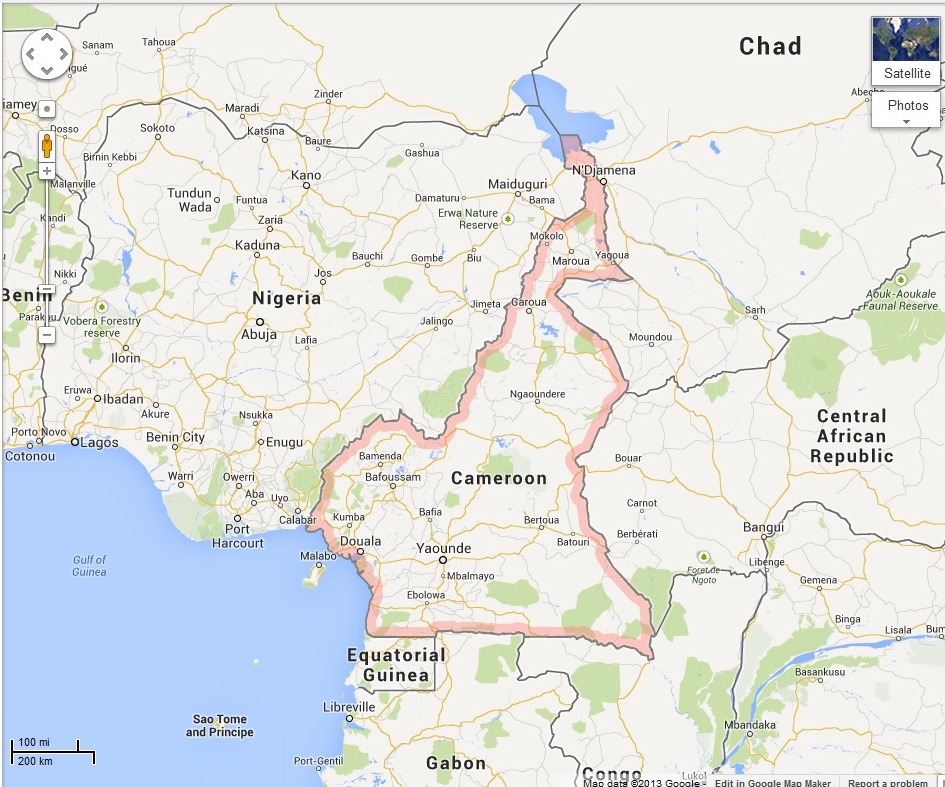
Cameroon: Understanding the different forms of street harassment

August 9, 2013 By Contributor

By Zoneziwoh Mbondgulo, Buea, Cameroon, SSH Safe Public Spaces Mentee

“In many cities women and girls face violence not only in their homes and in relationships, but also in public spaces,” said Anna Tibaijuka, Under-Secretary General of the United Nations, and Executive Director of UN-HABITAT, in the Women’s Audit Safety Report findings, 2008.

In Cameroon, street harassment is still an overlooked issue. It is a common sight to see men and even young boys behaving as though it is right to publicly assault or harass a lady.  And for so long, women have been the victims and not the perpetrator of harassment, so much such that most of them deeply believe that such acts of aggression towards women is innate in men, more or less a norm rather than a social issue that needs urgent attention.

During first week of August, I launched an informal online and offline conversation project as part of my SSH Safe Public Spaces Mentoring Program project to engage people in public conversation on street harassment. I collected individual stories of harassment experiences, the majority from Facebook and some from young women in my area. Likewise, I mapped out places/cities that are unsafe or feel unsafe for women and girls in my society. In addition, together with my teammate, Ngwentah Berlyne Ngwalem, we also observed critically how men and women both use the public space both in big cities and remote communities.

Inasmuch as it was difficult for some women to feel safe sharing their experience publicly. At least, it was obvious that many women have experienced one or two or more forms of street harassment, knowingly or unknowingly.  According to available research, as cited in Holly Kearl’s book Stop Street Harassment: Making Public Places Safe and Welcoming for Women, it has been proved that “starting at a young age, as many as 80 percent of women around the world face at least occasional unwanted, harassing attention in public places from men they do not know; some women face it daily.”

Young Women’s Experience with Street Harassment

To begin, Berlyne said, “Sometimes I feel like being a woman sucks. You have no say over anything, over your own body, choices etc but people make it seem like you do. There are guys who will tap your ass, touch your chest/breasts, pull up your bra and smile at you before you actually figure out what is happening etc.”

Like Berlyne, another young woman said, “There is this attitude common with bike riders each time they carry a female passenger. They will ride with you and get at some point, they intentionally hold the breaks, clutching back and forth and each time they do that, it is obvious, you fall and lean on their back. But what most female passengers don’t realized is that the whole bike clutching is a trick to have women’s breast pressing over these bikers back.”

For some wicked bikers, she added, “They will position their elbow in a way that as you fall on their back and your breast presses hard on their elbows. And this is really painful. They have done that to me and I felt terrible! I recalled the last time; my breast pained me for closed to a month.”

For another young lady in her late twenties, she explained to us that, “Around the parking lots in her neighborhood at Nsimeyong-damas, in Yaoundé, Centre Region, Cameroon, there is always this particular groups of young guys idling around, throughout the day,” and she has observed that “Each time, a lady pass by, one of those guys must throw a comment, words and / or beckon at the lady or make some funny sound to pull the lady’s attention or provoke her. And in the night,” she added, “These guys can be very aggressive; they have been noted for always attacking / harassing women.

Laura R. Ivy also explained, “Men whistle when you pass and if you don’t answer they insult you. It seems to lessen as you age or maybe you don’t pay attention anymore. The worse is the bikers if one of them asks you where you are going and you don’t answer you receive threats and insults name calling etc.”

“I experience this every day, and honestly it sucks, can men not leave us alone? We have reasons why we don’t want all these primitive guys around, we want mature and responsible men around us,” said Patience Flora.

To another young lady, Konda Delphine, public harassment from men is something that she’s experienced a countless number of times.

From what Berlyne and I observed, the experiences cut across. We saw the same behavior everywhere –  in big cities like Douala, Yaoundé, and in parts of a remote community in Mutengene and /or Buea. We also realized a common behavioral pattern among men of certain profession across the regions. E.g. almost all motor bikers, park loaders, market hustlers, hawkers, have similar attitude and behavior towards women.

Zoneziwoh Mbondgulo

This is article is the first of my #SSH Efforts in raising awareness and campaign against street harassment in Cameroon. Next will be a focus group discussion with some selected people who have already been contacted. And thereafter, there will be a workshop and also a public poster exhibition and flyers distribution.

Updates on this project can be found at: Women for a Change- Cameroon, or via Twitter @zofem.

Share

Filed Under: SSH programs, Stories Tagged With: cameroon, research, street harassment

High School Student’s Year-Long Project on Street Harassment

August 8, 2013 By Contributor

Cross-posted with permission from Surayya’s blog.

My name is Surayya I. Diggs, I am a recent graduate of Elizabeth Irwin High School, and I will be attending Cornell University in the fall at the College of Agriculture and Life Sciences.  I have an interest in science and agriculture, but since I can remember I have also had a tremendous interest in race, feminism, and social justice.  In the more recent future I have become very interested in fighting street harassment.

In early August 2012, I found an opportunity to do something about the issue of street harassment. The ELLA Fellowship Program, a part of the Sadie Nash Leadership Project was an opportunity to carry out a 9-month community development project.

At the beginning of my fellowship I knew I wanted to make a documentary.  I thought that a video would be a great way to reach people because the Internet is becoming such a relevant part of today’s society, but I had never made a film in my life.  I began searching on YouTube for videos about street harassment to find some inspiration and figure out what I wanted to do differently with my film.  One of the videos I came across was, Totally Biased: NYC Women Talk About Cat Calling.  This was a very comedic, and almost offensive, approach to the issue of street harassment, and it only gave examples of street harassment. After watching this video, I watched a few more, and they each seemed to do the same thing, simply talk about cat calling and give alternate ways of approaching women, when the real issue is men feeling like they have the right to talk to women on the street in the first place.  After watching those videos I knew that I wanted my video to strike a different cord, I wanted to paint the picture of street harassment for people living in NYC, then show why it is dangerous, and finally give solutions to combat and end street harassment.

In November 2012, I conducted the first interview for my film on street harassment.  I was able to set up and conduct an interview with Nefertiti Martin at her office at Girls for Gender Equity.  I then spent the next 6 months interviewing and editing my film, converting over 6 hours of footage into a 10-minute documentary.  During the process, I was able to interview and observe the work of many significant players in the fight against street harassment including Chair of the Women’s Issues Committee and Council Member, Julissa Ferreras, Manhattan Borough President, Scott Stringer, Founder of Stop Street Harassment, Holly Kearl, Co-Founder of Hollaback! Emily May, and many educated people that I interviewed on the street.

Here is my documentary:

Here is a shorter film that I made in December that shares the street harassment testimonies of students from my school:

Fishbowl

In addition to these films, I led several workshops in order to reach people on the ground.

On March 25, 2013, I guided a fishbowl at a Youth Summit for Street Harassment.  A fishbowl in simple words is a conversation; I called out different identities like gender, sexual orientation, and religion.  There was a small circle of 10 people in the center and over 100 people surrounding them that were listening to what was being said inside the smaller circle.  The fishbowl was a chance for people to share their personal experiences of street harassment and have people really listen to what is being said, this is something that can’t be accomplished with a simple discussion.  For most participants, their favorite part of the entire summit was the fishbowl.

IYLI workshopNext, I conducted a workshop on May 18, 2013 at the International Youth Leadership Institute where I talked to high schoolers from around NYC about the root issues and effects of street harassment, this was called the roots and branches activity, and then I had them think of an axe, a solution to the problem, which was meant to cut down the tree.   I did an identical workshop on May 20, 2013, for my old middle school, the Little Red School House.

Finally, on June 4, 2013, I directed an all-school assembly at my high school, Elizabeth Irwin High School.  During this assembly I screened my film and brought in Holly Kearl, founder of Stop Street Harassment, and community organizer at Girls For Gender Equity, Nefertiti Martin to speak on specific topics within the issue of street harassment.

Overall, it was a very successful fellowship and I learned a lot about filmmaking, planning, and street harassment.  I learned that filmmaking is about storytelling, which means not including everything even if you want to; because I had to cut out so much footage, there were some things I, regrettably, could not include, such as police harassment of men of color, sexualization of women in the media, and the power dynamic of women and men in society.  I learned that planning a youth summit and high school assembly requires great attention to detail and advanced planning.  I also learned that the most common form of street harassment is verbal, but it can escalate to the physical, such as groping and public masturbation.  Many people don’t understand the threat of violence that women have to deal with and the psychological effects of being called out at like a sexual object for the pleasure of heterosexual men.

The purpose of my fellowship was to educate participants and inspire them to do something about the issue of street harassment. I created my film in order to make men and women more sensitive to the effects of street harassment.  I want men to understand that most women do not appreciate being “complimented” and help women understand that you don’t have to just deal with street harassment, but you can do something about it.  Being able to show my video on the Stop Street Harassment website is a great opportunity and I hope there will be more platforms in the future to share my video.  In the mean time, please direct your family and friends to this article and YouTube to get my videoes out there and educate people on the issue of street harassment.

Share

Filed Under: Activist Interviews, SH History, Stories, street harassment

« Previous Page
Next Page »

Share Your Story

Share your street harassment story for the blog. Donate Now

From the Blog

  • #MeToo 2024 Study Released Today
  • Join International Anti-Street Harassment Week 2022
  • Giving Tuesday – Fund the Hotline
  • Thank You – International Anti-Street Harassment Week 2021
  • Share Your Story – Safecity and Catcalls Collaboration

Buy the Book

  • Contact
  • Events
  • Join Us
  • Donate
  • Facebook
  • Instagram
  • Pinterest
  • Tumblr
  • Twitter
  • YouTube

Copyright © 2026 Stop Street Harassment · Website Design by Sarah Marie Lacy