• About Us
    • What Is Street Harassment?
    • Why Stopping Street Harassment Matters
    • Meet the Team
      • Board of Directors
      • Past Board Members
    • In The Media
  • Our Work
    • National Street Harassment Hotline
    • International Anti-Street Harassment Week
    • Blog Correspondents
      • Past SSH Correspondents
    • Safe Public Spaces Mentoring Program
    • Publications
    • National Studies
    • Campaigns against Companies
    • Washington, D.C. Activism
  • Our Books
  • Donate
  • Store

Stop Street Harassment

Making Public Spaces Safe and Welcoming

  • Facebook
  • Instagram
  • Pinterest
  • Tumblr
  • Twitter
  • YouTube
  • Home
  • Blog
    • Harassment Stories
    • Blog Correspondents
    • Street Respect Stories
  • Help & Advice
    • National Street Harassment Hotline
    • Dealing With Harassers
      • Assertive Responses
      • Reporting Harassers
      • Bystander Responses
      • Creative Responses
    • What to Do Before or After Harassment
    • Street Harassment and the Law
  • Resources
    • Definitions
    • Statistics
    • Articles & Books
    • Anti-Harassment Groups & Campaigns
    • Male Allies
      • Educating Boys & Men
      • How to Talk to Women
      • Bystander Tips
    • Video Clips
    • Images & Flyers
  • Take Community Action
  • Contact

England: Street Harassment, sunshine, and… shorts?

July 26, 2013 By Correspondent

By: Levi Grayshon, Manchester, England, SSH Correspondent

Image via Denim Blog

Here in the UK, we are in the midst of a heatwave. The sticky, sunny days are sprawling in front of us, and have been rolling on for the last fortnight.

Sometimes, though, finding something sun-suitable is difficult. When the sun comes out, the clothes go away. Jeans and jumpers are stuffed into the back of the wardrobes and the skirts and shorts are dusted off and worn with pride. Or are they?

Two years ago, I was strolling down the street in a pair of shorts. I was alone. A pair of men walked up to me, sniggering and making comments on my legs. On the way home, another man stopped directly in front of me, looked me up and down and told me that my legs were “too pale to be wearing that.” Since that incident, I have been uneasy about exposing my legs on hot days. What gives people the right to act like this?

Nothing.

Seriously. Not only are magazines scaring us into doing 200 squats a day, and music videos convincing us that we must shave and apply sparkly goop to our legs in order to look passable, strangers feel need the to reinforce the idea that your body does not reach their standards. This is hideous. It is easy for others to tell you that their opinion does not matter. It is also easy for people to say “well why don’t you work out more/tan/go on a diet/stop wearing shorts?”

As simple as it sounds, the only person that you should listen to is yourself. No one has the right to make you feel uncomfortable about your body. It is hard to block out those voices when their words scratch and stab at your self-confidence, and feel as those they are branding themselves onto your thighs like a hot iron, but there is only one person that you should listen to when getting dressed in the morning, and only one question that you should ask: “Do I feel comfortable?”

Legs are legs. Shorts are shorts.

As Laura Bates from The Everyday Sexism Project quite rightly stated this week on Radio 2: “What women wear does not make them responsible for men’s reaction to them.”

She is spot on. If a person on the street harasses you over your outfit – whether honking their horn at you, shouting comments, or even following you – then they are the ones in the wrong. Don’t feel pressured to change anything about yourself – you are not to blame for their ill-judged actions, and don’t allow anyone else to make you feel that you are.

Levi graduated from university with a degree in Film and TV screenwriting this summer. As a freelance writer, she has been writing for The F-Word and Gamer-UK. You can follow her rants and ramblings on Twitter, @part_heart.

Share

Filed Under: correspondents, Stories, street harassment

South Africa: What men need to understand about street harassment

July 26, 2013 By Correspondent

Trigger Warning

By: Gcobani Qambela, South Africa, SSH Correspondent

Duduzile Zozo. Image from International Business Times

I spent much of this past week speaking to self-identifying lesbian women in the rural town of Peddie in the Eastern Cape, South Africa. South Africa, despite progressive same-sex legislation, still presents an extremely hostile environment for non-heterosexual sexualities. It was just two weeks ago when we heard of the brutal murder of Duduzile Zozo.

Zozo was a 26-year-old lesbian woman who passed away in a lesbian hate crime, and was found dead with a toilet brush stuffed into her vagina. Such crimes are however not primarily against lesbian women for heterosexual women too are often also victim to such violent crime. A few kilometres from Peddie for instance, in Grahamstown, Thandiswa Qubuda was beaten, raped and died after having been rendered brain dead after the assault on her.

The women I spoke to this past week were full human beings who possessed so much joy, love and happiness. They had sexuality, and were not afraid to express it both inwards and externally. They all however said showing their love and sexuality publicly was often eclipsed by complaints of men (and sometimes even women) that they say chase them in the streets harassing and doing other ignorant things. Thenjiwe* for instance told me that it is not uncommon for men to harass her in the streets asking things like, “How do you lesbians do it?”**, or men telling her that they can “fix” her from being a lesbian through their penis or even other women uttering homophobic remarks and threats at her.  As a result of this, she said her worst fear is rape for she often walks through a dark park home.

In South Africa it is often the major crimes that make the national headlines that are taken seriously, while the daily harassment which many women and (gay) men experience in the street falls to the side. It is important that the government and individuals make the connection between ‘everyday misogyny’ and the larger societal problems that we have in South Africa like rape and patriarchy.

Many people for example are shocked when there is news of lesbian women that have been raped and murdered and see this event as something that is separate from their lives – something that they would not do yet they participate in it daily.  Men who harass lesbian women in the streets uttering homophobic slurs do not seem to understand that they are participating in the same process as the person who eventually rapes and kills a woman.

Many men would say they would never rape a woman or have sex with a woman without her consent, yet why then is it okay to harass (and humiliate) lesbian women in the street when this is clearly something that they do not desire? Everyday misogyny experienced by many women from largely men who find it okay to whistle, harass and touch women inappropriately ultimately sends the message to other men watching that it is okay to mistreat women.

This creates an enabling environment for other opportunistic miscreants to take this mistreatment further by assaulting, raping and ultimately also murdering women. Men need to understand, stop and speak out against not only the ‘big’ crimes like rape, assault and murder, but also especially against the ones that are regarded as the ‘smaller’ one like street harassment which makes it difficult for so many people to enjoy their freedom of movement.

In South Africa where we have a painful history of oppression, we better than anyone else, should realise the importance of allowing people full freedom regardless of gender or sexual orientation to live peacefully and freely in the country. Until South Africans start seeing the connection between everyday street harassment and societal issues such as rape – we are not going to be able to get to the heart of these and we are unfortunately going to continue to see more of this patriarchal violence inflicted especially on women.

*Name has been changed.

**They are asking how lesbian women have sex for they do not have a penis.

Gcobani is completing his Masters in Medical Anthropology through Rhodes University, Grahamstown, South Africa. His research centres around issues of risk, responsibility and vulnerability amongst Xhosa men (and women) in a rural town in South Africa living in the context of HIV/AIDS. Follow him on Twitter, @GcobaniQambela.

Share

Filed Under: correspondents, LGBTQ, male perspective, News stories, Stories, street harassment

“He reached out and grabbed my breast”

July 24, 2013 By Correspondent

Near the beginning of seventh grade, I was walking home from school with a friend. A man in his early twenties, presumably a student at the community college a block away, rode down the opposite side of the sidewalk on a razor scooter. He was going south while we were walking north, and when he passed us, he reached out and grabbed my breast. It hurt a lot; he pulled on it and kind of twisted it around. He had red hair and pale skin, and wore a hoodie attached to a Jansport backpack. I remember him laughing as he scootered away. When I told someone, they asked me what I was wearing. I was 12.

– Anonymous

Location: Glendale, CA

Share your street harassment story for the blog.

Share

Filed Under: Stories, street harassment

Kyrgyzstan: Taxi Drivers Intimidate Women

July 24, 2013 By Correspondent

By: Salidat Hamilova, in collaboration with Aikanysh Jeenbaeva, Bishkek, Kyrgyzstan, SSH Correspondents

English Version:

Very often men see it as their duty to guide women “onto the right path”, viewing themselves as the great moralizers and protectors of women’s morality, thus attempting to justify their harassment of us.

This “steering onto the right way” is achieved through constant admonitions, warnings, shaming, and sometimes direct intimidation of women and girls. The city of Bishkek, for instance, has witnessed the emergence of entire groups of individuals who seek to correct the “immoral” behavior of young women using methods of explicit intimidation and blackmail.

In this regard I would like to share a story of one young woman who came directly face to face with one of these intimidators:

This happened to a friend of mine, a young woman, whom, for the purposes of the story, we will call A. One time, returning from a birthday party, A. decided to take a taxi home. It was late, but she found a taxi near the house rented for the party and feeling fortunate, immediately approached it. The driver, a man, seemed trustworthy to her, since he was wearing a small hat that is usually worn during prayers and a short beard, which in our society is mistakenly taken as a sign of piousness and, therefore, decency. Moreover, the taxi had a sign of a well-known Bishkek taxi service on it, which added to its credibility.

Totally unsuspecting, A., who was in a hurry to get home, got in the taxi and the car drove away. However, after a couple of minutes, the decent and pious (as it seemed) taxi driver began asking A. strange questions, such as: “Why aren’t you at home? It is very late…”, “Don’t you respect your parents?”

This of course made her suspicious; meanwhile the taxi driver began to recount a story of how he recently drove home another client — a young girl who came out of a night club. After talking to her briefly, he came to the conclusion that she was ‘depraved’ and ‘flawed’, and as a punishment, dropped her off in an abandoned area, as far away from the needed destination as possible. He was bragging that before that he reduced her to tears by threatening her with physical violence.

Very frightened A. was forced to agree with him and his criticisms of her “bad behavior” and, trying to de-escalate the situation, explain to the schmuck that this was the first time she stayed out so late.

Suddenly, the car swerved from the main road and stopped near one of the city parks. The taxi driver, saying that he needed to meet someone, got out of the car and disappeared in the grove with several other men, who seemed to be waiting for him there. A., who at this point was terrified, in complete despair and completely clueless as to where to run in the dark and empty streets, decided to jump start the car and drive away to escape potential violence.

But just as she was trying to move to the driver’s seat, the man came back. He looked at A and having decided that she had been frightened enough, declared that he will take her home, if she promises to never again stay this late outside of home.

When I try to imagine what my friend must have felt during those moments, I simultaneously feel and understand her fear and admire her courage and wit – the idea to jump start and drive away the car was simply brilliant. While analyzing the situation, I try to put myself in her place and think about what I would do, what I would reply to the taxi driver and how I would react and sadly, I understand that there was not much that could have been done.

Where could one run away to at 3 AM in the middle of an empty road? How could one, in such a situation, change the mind of a self-righteous scumbag who was so sure of his ‘great’ role of “improving the moral appearance of young women”? The statement to the police would simply be ignored, since such cases are considered to be insignificant occurrences that distract police officers from “real and serious”crimes.

And this is not an isolated incident; there are many such “taxi drivers” who move around the city and intimidate young women. However, these cases are seldom talked about, since most girls who come face to face with them refuse to talk about their experience due to fear, sense of false shame, the reluctance to think about and remember what happened and other reasons.

But the most terrible thing is that such harassment is often mistaken for an expression of care and concern. I can provide a direct example here. When I shared with our common friend (who also knows the story) that I would like to write about this incident, she looked perplexed and asked me: “Why?! It was not harassment, he just scared her a bit as an older brother or a friend would!” This again illustrates that in our society harassment (even in extreme forms) is taken as a norm and even care!

Therefore, it is so important to talk about the different forms of harassment that we experience, share our stories and methods of reacting and resisting them and through this change the overall perception of harassment among the people and change ourselves.

Salidat is an undergraduate student at Kyrgyz National University and a dedicated volunteer at the Bishkek Feminist Collective SQ. Aikanysh graduated from the University of Freiburg with a degree in European Literatures and Cultures and recently from the Diplomatic Academy of the KR with a degree in International Relations. Aikanysh is a co-founding member and coordinator of the Bishkek Feminist Collective SQ.

Bishkek Feminist Collective SQ was founded in 2012 by activists from various communities of Bishkek city. Follow BFC SQ on Twitter, @bish_feminists and on Facebook.


Russian Version:

Автор: Салидат, в сотрудничестве с Айканыш.

Очень часто мужчины считают своим долгом “наставить женщин на истинный путь”, видят себя в качестве великих “морализаторов” и “охранников нравственности” женщин, тем самым оправдывая и обосновывая свои домогательства по отношению к нам. Это “наставление” осуществляется посредством постоянных предупреждений, пристыживания, а иногда и через прямое запугивание женщин и девочек. В Бишкеке, к примеру, появились целые группировки людей, которые стремятся исправить “безнравственное” поведение девушек, используя методы откровенного запугивания и шантажа. В этой связи, я хочу поделиться историей девушки, которая напрямую столкнулась с данным явлением.

Одна моя знакомая, назовем ее А., задержавшись на вечеринке в честь дня рождения подруги, решила вернуться домой на такси. Время было позднее, но она увидела такси недалеко от арендованного для вечеринки дома и, обрадовавшись такой удаче, сразу же подошла к машине. Водитель – мужчина вызвал у нее доверие, так как был в шапочке, которую носят во время молитвы и с небольшой бородой, что у нас в обществе ошибочно воспринимается как признак религиозности и порядочности. Тем более на машине была шашка известной службы такси Бишкека.

Ничего не подозревающая и спешащая домой А. села в такси и машина тронулась. Однако, уже через пару минут благообразный и верующий (с виду) таксист начал задавать ей странные вопросы: “Почему ты не дома? Поздно ведь…”, “А родителей своих ты уважаешь?”.

Это конечно не могло не заставить ее насторожиться, а таксист тем временем начал рассказывать моей знакомой историю о том, как недавно подвозил одну клиентку – девушку вышедшую поздно вечером из клуба. Разговаривая с ней, он пришел к выводу, что она “испорченная” и в наказание за это решил высадить ее в пустынном месте, подальше от нужного адреса. Таксист похвастался, что перед высадкой он довел ее до слез, угрожая физической расправой. Сильно напуганная А. была вынуждена соглашаться с ним и с критикой своего поведения и, пытаясь выйти из ситуации, объяснять подонку, что впервые задерживается так поздно.

Внезапно, машина свернула с основной дороги и остановилась возле одного из парков города. Таксист, сказав что ему нужно кое с кем встретиться, вышел из машины и скрылся в роще с несколькими другими мужчинами, которые очевидно ждали его там. А., пребывая в ужасе и отчаянии, и не зная, куда бежать по темным и пустынным улицам, решила завести и угнать машину, чтобы избежать потенциального насилия.

Но как только она начала пересаживаться на переднее сидение, вернулся таксист. Посмотрев на А. и решив, что она достаточно напугана, он заявил, что передумал ее наказывать и отвезет ее домой при условии, что она больше не будет оставаться допоздна вне дома.

Когда я представляю себе, что пережила моя знакомая в те моменты, я одновременно понимаю ее страх и восхищаюсь ее храбростью и смекалкой – решением не увеличивать агрессию водителя и оригинальностью идеи угнать машину. Анализируя эту ситуацию, я пыталась поставить себя на ее место и предположить, что можно было ответить водителю, как среагировать, что сделать и поняла, что, к сожалению, вариантов было очень мало. Куда можно было убежать в 3 часа ночи на пустой трассе? Как можно было в такой ситуации переубедить ограниченного подонка, уверенного в свое правоте и в своей “великой” роли “улучшать моральный облик” девушек? Заявление в милицию проигнорировали бы сами сотрудники правоохранительных органов, так как такие происшествия считаются несерьезными и отвлекающими внимание милиции от “настоящих”, серьезных преступлений…

И ведь это не единичный случай: таких “таксистов” разъезжающих по Бишкеку и запугивающих девушек множество. Просто такие происшествия замалчиваются самими девушками из страха, нежелания вспоминать об этом, из чувства ложного стыда и т.д. Но самое ужасное то, что иногда такое домогательство вопринимается как опека и забота о тебе. Могу привести конкретный пример. Когда я рассказала нашей общей подруге о том, что хочу написать об этой истории, то она недоумевая ответила: “Зачем?! Это не было домогательством, он всего лишь припугнул ее как старший брат, как друг!”, что еще раз показывает то, что в нашем обществе домогательство (даже в самых крайних формах) воспринимается как норма и забота!

Поэтому нам так необходимо говорить о домогательствах, делиться историями и способами борьбы с ними, менять представление людей и меняться самим…


Share

Filed Under: correspondents, Stories, street harassment

USA: Why We Don’t Talk About Street Harassment Abroad

July 23, 2013 By Correspondent

By: Delia Harrington, Massachusetts, USA, SSH Correspondent

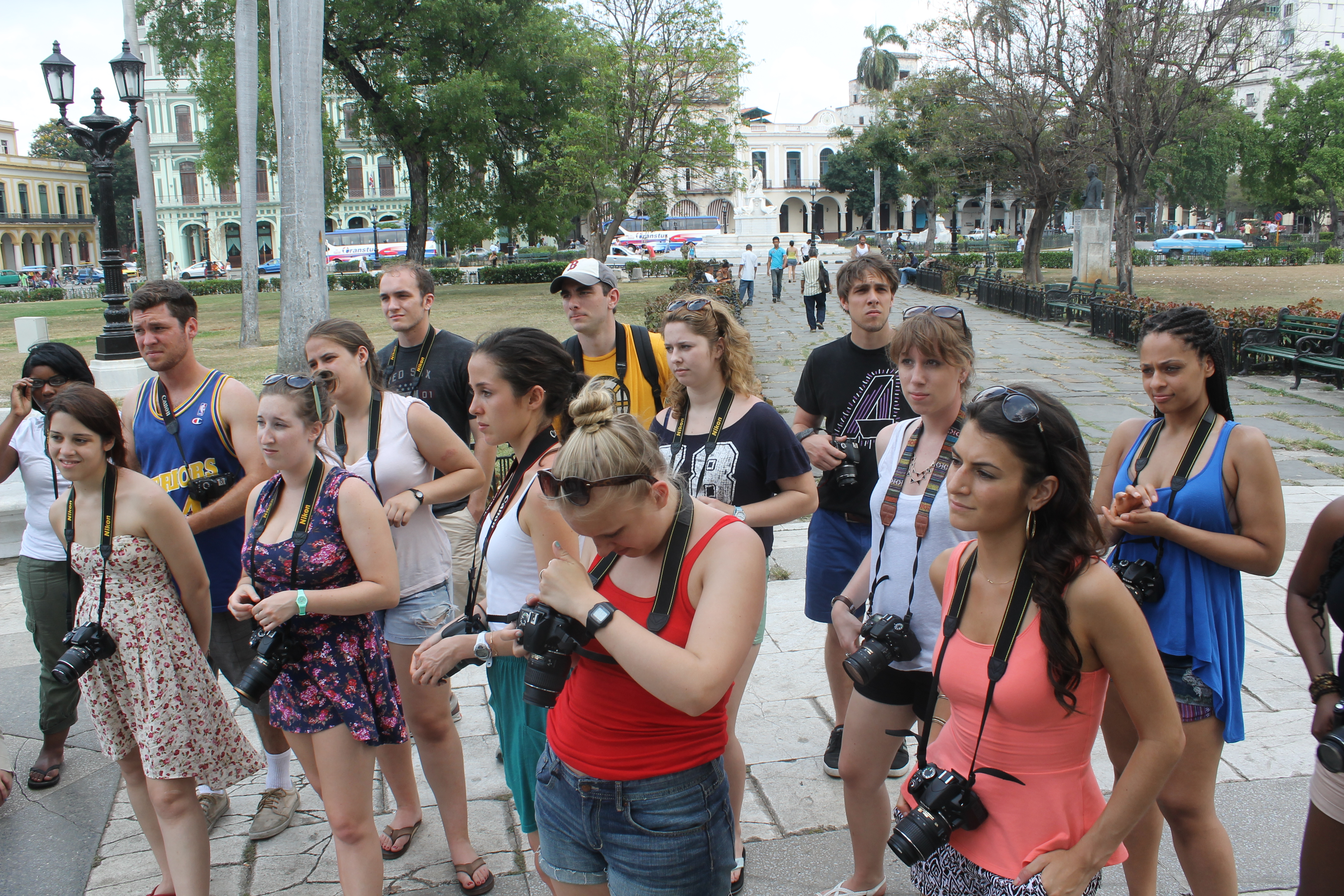
Some of my wonderful students in Havana, Cuba. Just trying to study abroad, not interested in getting harassed.

Recently I read an article on xoJane about street harassment while studying abroad.  It saddened me to hear how isolated the author felt, and how quick she was to cover her treatment  with a joke.  But I also recognized myself and my students in her.

I have been the girl who downplays street harassment abroad, even though I’m a vocal opponent of the same behavior when I am home.  So I started thinking about why we stay silent or laugh at off, and what makes street harassment different when studying or traveling abroad.

While there are some similarities, there are a few dimensions added to the reactions when a person is harassed outside of their own community.  Among these are ethnocentrism, racism, and a belief that women should not be traveling, especially not alone or somewhere dangerous.  The foreign nature of the location, culture, and perhaps language of the harasser can add a level of fear and doubt for the harassed person.  Some people who are not harassed at home will be harassed more frequently or for the first time abroad, because of how they are perceived in this new location.

We don’t speak up because we don’t want to hear from the naysayers back home.

If you’re traveling, you likely heard a bunch of horror stories about it before you left from everyone from your mom to casual acquaintances you meet at parties.  If you are female and going alone, you probably heard it more often and more stridently.  That goes double if you were going to a developing country, a Latin country, an Arab country, a Muslim country, or any place deemed otherwise “dangerous” or “culturally backwards.”

If we speak up about anything that is even remotely negative, these naysayers come back out of the woodwork.  See, it’s dangerous.  See, those people are terrible to women.  See, that’s why women shouldn’t travel alone.  See, you should have just stayed home.

We don’t speak up because we are given terrible advice.

As someone who has worked abroad, participated in five different study abroad programs, helped to lead three more study abroad programs, and worked as a study abroad administrator, I have heard it all when it comes to advising women on their safety abroad.  Some of the advice is incredibly helpful, but some of the advice is straight up apologist, victim-blaming crap.  Over the years I have heard faculty, staff, and administrators say things including:

* They should wear less revealing clothing
* That’s just the culture here so they should get used to it
* The men here just can’t help it
* That’s their problem and they need to handle it on their own
* They need to let it go–they shouldn’t react angry or cause a scene.

We don’t speak up because we aren’t taken seriously.

Perhaps worse than terrible advice is when someone laughs off your very real concerns.  I’ve seen this happen most egregiously when the bystander does not speak the language and therefore doesn’t actually have any idea what is being yelled.   It can also occur when bystanders so strongly identify with the host country that they are unable to speak critically about its shortcomings.  And finally if a bystander is never harassed themselves, they may give it little thought.  It is incredibly easy to say something is not a big deal or does not happen if it does not happen to you, and that makes it harder for someone to speak up the next time harassment happens.

I have stayed quiet for these reasons in the past. But I’m trying to speak up now, and I hope you will too. Chances are, others have experienced this type of behavior too.

In study abroad and international travel, we all think everyone else is having this perfect, fabulous time because that’s all anyone puts on Facebook.   We feel obligated to have a perfect time because of the effort and money we (and perhaps others) put into getting abroad.  Feeling like the only one who gets harassed can be isolating, shaming, or make a person believe they are overreacting.  Feeling like we can’t speak up because it will taint how people see our host country or it will seem ungrateful can make silence seem like the best option.

But remember: talking about street harassment is one of the only ways to diminish its power over us.

I don’t plan to ever stop traveling, and I cannot recommend enough that everyone study, live, work or volunteer abroad at some point if they are able to.  I won’t stop going to countries that are politically tumultuous, economically underdeveloped or culturally conservative compared to my home in the United States.  But I think it’s time that we are honest with ourselves and each other about what traveling abroad is really like for women, the good and the bad.  I believe that the only way to fully reclaim our right to explore this great big, wondrous world is to speak up and support each other, as loud and as often as we can.

Delia Harrington is a recent graduate of Northeastern University and calls Boston home. In recent years, she has found herself studying, working, and volunteering in Egypt, Cuba, France, Benin, the Dominican Republic, Turkey, Germany, and Greece.  You can read more of her writing on her blog, or follow her on Facebook and Twitter, @deliamary.

Share

Filed Under: correspondents, Stories, street harassment

« Previous Page
Next Page »

Share Your Story

Share your street harassment story for the blog. Donate Now

From the Blog

  • #MeToo 2024 Study Released Today
  • Join International Anti-Street Harassment Week 2022
  • Giving Tuesday – Fund the Hotline
  • Thank You – International Anti-Street Harassment Week 2021
  • Share Your Story – Safecity and Catcalls Collaboration

Buy the Book

  • Contact
  • Events
  • Join Us
  • Donate
  • Facebook
  • Instagram
  • Pinterest
  • Tumblr
  • Twitter
  • YouTube

Copyright © 2026 Stop Street Harassment · Website Design by Sarah Marie Lacy