• About Us
    • What Is Street Harassment?
    • Why Stopping Street Harassment Matters
    • Meet the Team
      • Board of Directors
      • Past Board Members
    • In The Media
  • Our Work
    • National Street Harassment Hotline
    • International Anti-Street Harassment Week
    • Blog Correspondents
      • Past SSH Correspondents
    • Safe Public Spaces Mentoring Program
    • Publications
    • National Studies
    • Campaigns against Companies
    • Washington, D.C. Activism
  • Our Books
  • Donate
  • Store

Stop Street Harassment

Making Public Spaces Safe and Welcoming

  • Facebook
  • Instagram
  • Pinterest
  • Tumblr
  • Twitter
  • YouTube
  • Home
  • Blog
    • Harassment Stories
    • Blog Correspondents
    • Street Respect Stories
  • Help & Advice
    • National Street Harassment Hotline
    • Dealing With Harassers
      • Assertive Responses
      • Reporting Harassers
      • Bystander Responses
      • Creative Responses
    • What to Do Before or After Harassment
    • Street Harassment and the Law
  • Resources
    • Definitions
    • Statistics
    • Articles & Books
    • Anti-Harassment Groups & Campaigns
    • Male Allies
      • Educating Boys & Men
      • How to Talk to Women
      • Bystander Tips
    • Video Clips
    • Images & Flyers
  • Take Community Action
  • Contact

“They continued trying to create a picture of me as the victim who deserved this act of violence”

July 6, 2016 By Contributor

I was driving into an outdoor shopping center a little after lunchtime when two men who were walking in my direction looked at me and yelled, “Hey” in a loud and not-so-friendly way.

When I didn’t look in their direction, they hit my car with metal pipes and yelled, “Hey, Bitch watch where you are going.”

I drove my car to a different area of the parking lot. When I walked out, they followed me in their car and yelled,”Hey, Bitch you really need to listen to us. You’re not that important.”

When I reported this incident to the police, they advised me to stay in the same parking lot while they sent a patrol car, which never arrived. They joked about it and asked me what I had done to encourage their behavior. When I finally decided to drive to the police station in Canoga Park on my own, the police officers asked me if I like it hard in the middle of their interview with me of the incident. They continued trying to create picture of me as the victim who deserved this act of violence. They behaved in the same way with another woman who was filing a report against a man who had assaulted her.

However, they were far too patient with a man who was talking about real estate laws because it allowed the police officer to gloat about the house he owned. It showed the dichotomy between the way the police officers treated the women and men in their precinct. There was not one single female police officer in the precinct and as I and the other woman told our story, the police officers in the front and back chuckled and laughed, because that is how much they valued our words.

Optional: What’s one way you think we can make public places safer for everyone?

Educate police personnel not to take this issue lightly. The police officers I spoke to on the phone joked about it and insinuated that it was somehow something I had done that caused the incident. Make sure there are enough female officers or well trained officers to deal with these types of incidents.

– Anonymous

Location: Shopping center on the corner of Topanga Ave in Woodland Hills

Share your street harassment story for the blog.
See the book 50 Stories about Stopping Street Harassers for more idea
s.

Share

Filed Under: Stories, street harassment Tagged With: police

“Hey, I don’t like being treated that way and I want you to stop”

July 1, 2016 By Contributor

Standing by the traffic light on my local college campus, I heard a loud scream behind me and whirled around to see two guys in a pickup. It was so random that I couldn’t think what to do–but next time I’d just go over and say, “Hey, I don’t like being treated that way and I want you to stop.” I don’t think it would actually stop them, but it would break the cycle where one person hurts another on purpose and nobody says anything.

Optional: What’s one way you think we can make public places safer for everyone?

Having websites like this is a great start. But I think it really starts at home. If kids learn by example that respect doesn’t involve fear or violence, and that safe spaces are “the norm” while attacking people–including verbally and emotionally–is socially damaging in a real and long-lasting way, they won’t grow think it’s funny, cool, impressive, or harmless to make random gestures of aggression at strangers. Obviously nobody taught these guys using that kind of example, so they’ll have to figure it out for themselves.

– Anonymous

Location: Chapel Hill, NC

Share your street harassment story for the blog.
See the book 50 Stories about Stopping Street Harassers for more idea
s.

Share

Filed Under: Stories, street harassment

“Are you really not ashamed at all?”

June 28, 2016 By Contributor

I was wearing shorts, a little above my knee length, and coming back from college that day. It was a hellish experience so I wrote this:

Those eyes,
When they move,
Don’t you know I see them?

I see them as they plunder my legs,
And slowly,
my whole body.

My body is mine.
“MINE!,” rings a bell?!

Those eyes,
Shameless, lustful,
Can you look at you with those same eyes?

Those same eyes,
That same face,
Are you really not ashamed at all??

Just so you know,
I see them.

Don’t you know?
I see them.

I see them
And I’m furious.

– Adishi

Optional: What’s one way you think we can make public places safer for everyone?

I believe there is a desperate need for more women to reclaim public spaces and fight against the “Why are you here?” stares that we get.

Share your street harassment story for the blog.
See the book 50 Stories about Stopping Street Harassers for more idea
s.

Share

Filed Under: Stories, street harassment

“I felt furious and afraid to go outside for the rest of the day.”

June 27, 2016 By Contributor

Yesterday I was walking home from the store and a man chased me down the street (running) and asked me to stop. He uncrumpled a dollar bill and awkwardly and without making eye contact said that he was conducting a survey and would pay me a dollar if I told him about the panties I was wearing. I told him I would not participate and dejectedly he asked if I still wanted the dollar. I said no and called the police as soon as I was home. I felt furious and afraid to go outside for the rest of the day.

I felt like a prisoner in my home who had no rights to go outside while someone else had the right to try to buy sexual fantasies from me. I also felt confused because when I refused that man my first thought was not to protect myself — it was that I would never sell such information and hurt my boyfriend. He’s a wonderful man and he deserves absolute loyalty. He helped me cope and feel safe after this event. But I should have thought of myself first.

Optional: What’s one way you think we can make public places safer for everyone?

I think that all public schools with children 13+ in them should have mandatory rape signage so people have resources and information. I remember that it wasn’t until years after being raped as a high schooler that I saw a poster that said, “It’s still rape even if they don’t say no.” and realized that I had in fact been raped even though I didn’t scream and fight back when I was ordered to have unwanted sex because I didn’t want to alert the perpetrator’s whole family.

– AN

Location: Mount Vernon, Washington

Share your street harassment story for the blog.
See the book 50 Stories about Stopping Street Harassers for more idea
s.

Share

Filed Under: Stories, street harassment

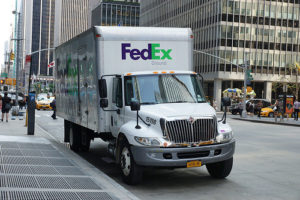
USA: A FedEx Driver Harassed Me

June 25, 2016 By Correspondent

Ginger Skinner, NY, USA, SSH Blog Correspondent

Image via photopin
Image via photopin

Last May, just seconds after hopping on my bike in front of my Brooklyn apartment, I hear, “Mmm. Can I go with you?” I slow my bike and turn around to see a FedEx driver staring back at me. I yelled, “You really shouldn’t harass people while you’re on the job.” His response: “F**k you.” Followed by several more “f**k you’s.”

The driver’s comments were no different than those hurled at me almost daily from row house stoops, in corner stores, supermarkets, parks, gyms, and on and around public transit. “Hey baby’s,” “How you doing’s,” and “Mmm mmm mmm’s,” that seem innocuous, yet too often leave long-term side effects: anger, anxiety, shame, and hypervigilance. Still those men had not delivered packages to my home. Packages I regularly signed for. I worried that my speaking up and defending myself might have inadvertently encouraged more harassment.

Five minutes later, I was on the phone with a FedEx “specialist.” After opening a claim that included a detailed description of the delivery person, the specific location, and time of day, she repeatedly assured me that FedEx would handle the situation according to their policies, and that they’d follow up with me. She ended the call with “FedEx takes these matters very seriously.” Weeks passed. No follow up.

Had I done the right thing in reporting the harassment? Yes. I think so. Street harassment is often a precursor to more aggressive forms of violence. Had I really wanted the driver to lose his job? Certainly not. What outcome had I expected? At the very least, I knew that I wanted to be listened to and believed—and for FedEx, as promised, to take the matter seriously.

A basic search of Twitter turned up people who clearly wanted the same. A jogger who was catcalled by a FedEx driver. A woman aggressively catcalled by a FedEx worker inside her apartment building. A man whose wife was sexually harassed by two FedEx drivers. A woman who tweeted at FedEx after one of their drivers made kissing sounds at her. Another woman who upon calling FedEx to complain about harassment was “pretty much laughed at” by the customer service rep. This story. And this one. And here’s one about a UPS driver.  And this incredibly disturbing story about a U.S. Postal Service worker.

No complain alert line for customers?

Like most companies, FedEx has an employee policy in place that addresses workplace sexual harassment. The anti-harassment policy on the company’s website states that:

Unwelcome sexual advances and other inappropriate personal conduct are prohibited. We strictly prohibit, and will not tolerate, any type of harassment or any acts that create the potential for harassment, either in terms of individual employee morale or in violation of applicable laws.

There’s also a mechanism for reporting violations – the FedEx Alert Line.

I wondered, did the same policy apply to customers? So I reached out to FedEx’s media department, but after two weeks and no response, I ended up on the phone with Dave from Customer Advocacy. I asked, “Does FedEx have policies or other measures in place that protect customers and communities members from harassment by FedEx employees?” Dave responded, “We are not able to reveal FedEx policies over the phone or on our website. Our policies are confidential.” Then a long pause, and, “We will deal with a situation when we have one.”

I ended the call with Dave, disappointed, but with a clear message for FedEx and other companies that claim to take harassment seriously:

Whether or not it affects to your bottom line, your employees’ actions directly impact your company’s reputation. At the end of the day, the employee that harassed me is wearing a uniform and driving a truck clearly marked with your company’s name. I urge you to consider stronger policies that discourage harassment by your employees and protect the communities you serve. By not addressing it, your company is essentially doing its part to preserve rape culture.

Ginger is a full-time reporter and long-time New Yorker with over 10 years of experience writing about health and wellness. Ginger is also a member of Brooklyn Movement Center’s No Disrespect anti-street harassment team, and is dedicated to deepening the conversations surrounding the causes of gender-based harassment and violence, and the intersections of race. Follow Ginger on Twitter at @ginger_skinner.

Share

Filed Under: correspondents, Stories, street harassment Tagged With: FedEx

« Previous Page
Next Page »

Share Your Story

Share your street harassment story for the blog. Donate Now

From the Blog

  • #MeToo 2024 Study Released Today
  • Join International Anti-Street Harassment Week 2022
  • Giving Tuesday – Fund the Hotline
  • Thank You – International Anti-Street Harassment Week 2021
  • Share Your Story – Safecity and Catcalls Collaboration

Buy the Book

  • Contact
  • Events
  • Join Us
  • Donate
  • Facebook
  • Instagram
  • Pinterest
  • Tumblr
  • Twitter
  • YouTube

Copyright © 2026 Stop Street Harassment · Website Design by Sarah Marie Lacy