• About Us
    • What Is Street Harassment?
    • Why Stopping Street Harassment Matters
    • Meet the Team
      • Board of Directors
      • Past Board Members
    • In The Media
  • Our Work
    • National Street Harassment Hotline
    • International Anti-Street Harassment Week
    • Blog Correspondents
      • Past SSH Correspondents
    • Safe Public Spaces Mentoring Program
    • Publications
    • National Studies
    • Campaigns against Companies
    • Washington, D.C. Activism
  • Our Books
  • Donate
  • Store

Stop Street Harassment

Making Public Spaces Safe and Welcoming

  • Facebook
  • Instagram
  • Pinterest
  • Tumblr
  • Twitter
  • YouTube
  • Home
  • Blog
    • Harassment Stories
    • Blog Correspondents
    • Street Respect Stories
  • Help & Advice
    • National Street Harassment Hotline
    • Dealing With Harassers
      • Assertive Responses
      • Reporting Harassers
      • Bystander Responses
      • Creative Responses
    • What to Do Before or After Harassment
    • Street Harassment and the Law
  • Resources
    • Definitions
    • Statistics
    • Articles & Books
    • Anti-Harassment Groups & Campaigns
    • Male Allies
      • Educating Boys & Men
      • How to Talk to Women
      • Bystander Tips
    • Video Clips
    • Images & Flyers
  • Take Community Action
  • Contact

Germany: Street Harassment in Germany – Current Situation

March 25, 2016 By Correspondent

ProChange, Germany, SSH Blog Correspondents
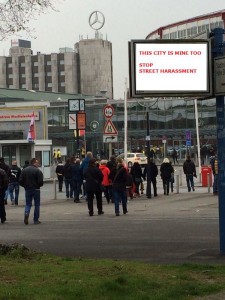
THIS CITYStreet Harassment, meaning the harassment in public space, is a problem in Germany that affects women* and girls as well as LGBTIQ*. It limits people in their participation in social life as it dictates when and where they leave their home and can even affect the choice of their place to live, their shopping opportunities, work options and hobbies.

According to a study conducted by the EU regarding sexual harassment, three out of five women* had experienced sexual harassment in Germany since they reached the age of 15. It is striking that according to that study, about one-third of the women experiencing sexual harassment did not regard it as “severe”; they accepted it without speaking about it to others. They mentioned shame as a reason for this, as well as a feeling of powerlessness for not being able to change something about their situation.

Street harassment is about power and control – and as the reality shows: street harassment is the entering crime and breeding ground for even more violent crimes.

Since the incidences on New Year’s Eve in Cologne and other cities, where women* were surrounded, sexually assaulted and robbed by supposedly brown men, street harassment and sexual assault are in the focus of public attention. The society is sensitized and the courage and willingness to report it has increased among the affected.

Maybe it is because of these circumstances that people did not turn their backs in this case: On the 25th of February, three young women* were observed, followed, photographed and filmed by two Afghan men*. The accused send the data to others, so that some time later up to 30 people showed up. It is not clear though if those people were further perpetrators or if they showed up out of curiosity. Physical assaults luckily did not occur. Attentive bystanders informed the security and called for police.

The extensive media response in politics and society is sadly not out of concern about the suffering and injustice against the affected. There is no outcry because we are suffering from diverse structures of power and hierarchy worldwide. Instead there is an outcry that those crimes are collectively committed allegedly by people described as foreign.

How about the law? What punishment do perpetrator have to expect?

Workplace

The General Equal Treatment Act (AGG) puts sexual harassment in the workplace under penalty. The employer has the duty to protect the affected employee from sexual harassment. Perpetrators can expect disciplinary consequences.
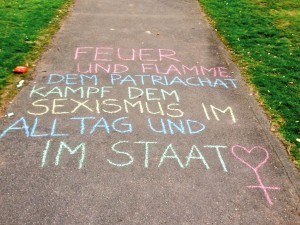
Köln KreidePublic Sphere/Street Harassment

In contrast, the public sphere is nearly a zone of impunity when it comes to the sexual harassment of women*. The penal code does not regard street harassment and sexual harassment as a criminal offence even though many organizations keep pushing for it for years now. The perpetrator who grabs under the skirt of a woman when getting on the metro does not, legally speaking, make use of coercion, nor does the one intentionally grabbing a woman’s breast in a crowded bus. When it comes to determining sexual attacks, it is not even always the offence of insult that can serve as catchall element.

Self-Defense?

Only few people know that the affected is allowed to defend her or himself during the attack. The right to self defense vanishes the very moment the attack is over and no further violations of the victim’s rights can be expected. If the perpetrator, for instance, kisses the affected on the mouth or touches her between the legs and then turns away, the affected, as long as no further attacks are to be expected, has no right to punish him or her back as the right for self defense has vanished. If the affected slaps the perpetrator in the face, this falls under the offence of bodily harm under the penal code.

If only the ones that recently proclaimed that women should button up their shirts^ , stood up for sexual self determination, the affected might have had the chance that perpetrators could be accused and sentenced.

Female Asylum Seekers in the New Asylum Legislation

Germany violates compliance with EU guideline 2013/33/EU of the European Parliament and the Council of Europe since July 2015 by not granting female asylum seekers the protection they deserve. The new asylum legislation (“asylum packet II”), overruled all protection measures, even intended minimum standards, although the existing shortcomings have been addressed over and over again. Women* do not only suffer sexual violence by fellow asylum seekers, but also employees of the security service can be perpetrators.

Our Conclusion
WirsehenunsaufderStrasse2016Street harassment cannot be reduced to certain cultural or religious groups. The reasons can in fact be found in domination of people over people and are a product thousands of years of patriarchy which exist in different manifestations worldwide.

We will continue to work for a change in the law and hope that the incidences of the New Year Eve and the resulting increase of public awareness will promote change.

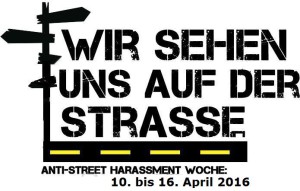
Next to legal measures, it is of high importance too that we work for long-term changes in the perception of justice and shared responsibility within communities. This can be achieved by solidarity, raising awareness, networking, campaigns such as International Anti-Street Harassment Week, from 10th to 16th of April, with information, actions against street harassment, against everyday sexism and sexual assaults.

———–
^ Birgit Kelle, Dann mach doch die Bluse zu: Ein Aufschrei gegen den Gleichheitswahn, 2013.

ProChange is a group of people between 20 and 64 years of age who have been active for several years or decades now. ProChange consists of a small group of core members (pictured left) in a network of other activists. Our main focus is on street harassment, sexism and sexualized violence. We are opposed to all forms of exploitation as we believe that they are all connected.

Share

Filed Under: street harassment

First Lady Michelle Obama Talks About Her Street Harassment Experiences

March 25, 2016 By HKearl

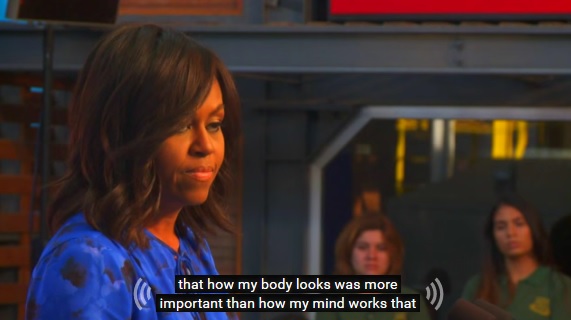
Last week, President Barack Obama talked about street harassment for perhaps the first time publicly… and then this week, it was First Lady Michelle Obama!

MichelleObamaTalksSHMarch2016

Via Huffington Post:

“First lady Michelle Obama spoke about her own experiences with sexism during a speech on the power of education and her “Let Girls Learn“ initiative in Argentina on Wednesday….

‘As I got older, I found that men would whistle at me as I walked down the street, as if my body were their property, as if I were an object to be commented on instead of a full human being with thoughts and feelings of my own,’ Obama said. ‘I began to realize that the hopes I had for myself were in conflict with the messages I was receiving from people around me.’

Obama said the comments made her question herself, telling the crowd she had doubts for years, until one day she grew tired of worrying about what others think.

‘I decided not to listen to the voices of those who doubted or dismissed me. Instead, I decided to listen to my own voice,’ she said.”

Share

Filed Under: News stories, street harassment Tagged With: First Lady, Michelle Obama

“I have my own battleground right here”

March 24, 2016 By Contributor

Welp, today’s “incident” stands apart in a crowded field of hostile encounters with men.

This one shook me to the core and forced me to surrender what little faith I had in the male species within a patriarchal society. At this point, you are all guilty until proven otherwise, until the day comes when I can enjoy a pastry or beverage in public without being forced to feel fear congealing in my bones or be made to cower in silence as my world is shrunk down to a suffocating zero.

F*ck men, f*ck every single man that has ever felt entitled to a woman’s time, her body or her life. I am so f*cking sick of these ritual humiliations. Of split-second decision making that has my life hanging in the balance. Do I engage or ignore? How quickly could this escalate? Does he have a gun? Are there witnesses? Will they come to my aid? AND f*ck having to ask another man to act like my minder or keeper and escort me to my car, like I had to do again today. (But thank you, whoever you were.)

Right now I have a friend visiting Turkey, a country where, due to political instability, bombings happen with enough frequency that it’s a place one might want to avoid. Yet, statistically, he is safer there, in a country on the brink of war, than I am here, in my OWN F*CKING CITY!

Thanks to the privilege of being a woman, I don’t have to fly anywhere, I have my own battleground right here.

Optional: What’s one way you think we can make public places safer for everyone?

Keep raising awareness, keep the conversation going. Tackle the problem at its root: get men and boys to hold themselves accountable. So long as men continue to be the chief purveyors of street harassment, victim-blaming won’t solve the problem. It’s a ‘men’s problem,” not a “women’s problem.”

– Michelle Ryder

Location: Seattle, WA

Share your street harassment story for the blog.
See the book 50 Stories about Stopping Street Harassers for more idea
.

Share

Filed Under: Stories, street harassment

Lakers Players Street Harass Advocate

March 23, 2016 By HKearl

Alexis Jones via her personal website

On Instagram this week, Alexis Jones posted photos of four men who street harassed her and her 68-year-old mother in Hollywood, California. The men were in a vehicle next to theirs and made “vulgar, sexual gestures”, causing the women fear and her mother to cry. Later they learned that two of the men were Lakers players Nick Young and Jordan Clarkson.

Ironically, Jones works to address sexual abuse in athletics. Lakers spokesman John Black told ESPN that the team takes this matter “very seriously” and she was invited to speak to the players. I applaud Jones for sharing her story publicly and Lakers leadership for their response.

I also see the incident as a teachable moment for people everywhere since the story connects to several important points about street harassment.

For instance, it’s not uncommon for people to tell harassed persons to not go places alone if they don’t want to be harassed. But even when one is not alone — Jones and her mother were together — street harassment can occur. On the extreme end, this month, two Argentinian women, María Coni and Marina Menegazzo, were killed by men while backpacking in Ecuador together. Telling women to travel in pairs or groups is not only often impractical and a far cry from equality, but it won’t necessarily achieve the objective.

Some people may also tell harassed persons, “If you don’t like it, then drive.” It’s true that for those with the means to access a car, driving may reduce the amount of street harassment they face, but clearly from Jones’ story, it does not stop it. As part of the research for a 2014 national study on street harassment, I conducted a focus group in Los Angeles, California, and the participants concurred that street harassment is a problem in car cultures. It happens at red lights, in parking lots, and even while driving down the freeway at 70 miles per hour. No mode of transportation is completely free from harassment.

While street harassment is seen by some as “a minor annoyance” or “no big deal,” a growing body of research proves it is serious. Street harassment negatively impacts women emotionally, just as this incident was upsetting to both Jones and her mother. It can be traumatic for women, especially for survivors of sexual abuse. It restricts women’s mobility, and thus their equality with men, a reality the United Nations recognized in 2013.

Further, “mild” street harassment can escalate into physical harassment without warning. This year there have been two cases where street harassment escalated into death. One incident was in Texas where a man in a vehicle shot into another vehicle, killing one of the woman, after her male friend told the men in the other vehicle to stop harassing his female friends.

As the laughing faces of the men Jones and her mother say harassed them suggest, often men — who are the main street harassers of both women and men — treat street harassment as a game or as a bonding experience. The limited research on street harassers, including in the documentary War Zone, shows that harassers usually are either trying to intimidate or humiliate their targets, or they don’t consider how the persons they harass feel, period.

Fortunately, sexual harassment is learned behavior and so it can be unlearned.

Share

Filed Under: News stories, street harassment Tagged With: Alexis jones, Lakers

Women Traveling – Recent News

March 22, 2016 By HKearl

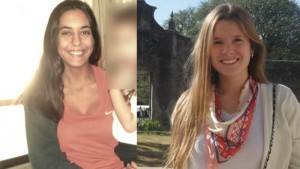
María José Coni y Marina Menegazzo. Imagen difundida en Twitter por diversas cuentas.

Recently, two young Argentinian women, María Coni and Marina Menegazzo, were killed while backpacking in Ecuador. In response to the horrific victim-blaming that followed, the phrase #viajosola (I travel alone) trended on Twitter, with more than 5,000 women using the hashtag to discuss their experiences.

Here’s mine. I have visited 19 countries and all 50 U.S. states (more than 40 of them at least twice) and have traveled alone for many of the trips. I began running alone in public spaces in middle school and I first flew on a plane solo as a teenager. Thus, combined, I have spent a lot of time alone in public spaces locally and while traveling. And yes, I have faced a lot of street harassment. I’m 33 now and I’m sure the figure is in the thousands.

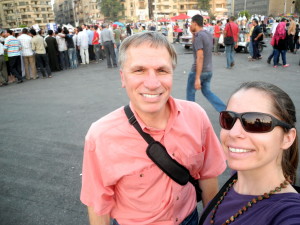
In addition to the scary experiences I’ve had in the U.S. of being grabbed, followed and chased, my worst experiences have been in the UK, Ethiopia, and India. Men made explicit comments to me, followed me, hounded me. I traveled with my dad in Egypt and if I ever left his side for a second in a public space, men would start in with catcalls. I specifically traveled with my dad to try to stay safe, especially as there were still mob attacks happening against women at Tahrir Square.

But I’ve had really wonderful solo travel experiences too, with my best experiences happening in Ireland, Iceland, Norway and Sweden (likely there’s no coincidence that they are countries with some of the highest gender equality rates in the world… it probably also helped that I didn’t look out of place as a white woman in those countries).

I was hesitant the first time I traveled completely alone in Ireland at age 21 while studying abroad. I stayed in hostels full of strangers, had to figure out bus schedules and debated ever eating in restaurants or just picking up snacks at a grocery store and eating on a park bench or hostel room bed. But overall it was a lovely trip. I saw major historic sites and national parks from coast to coast. I even kissed the Blarney Stone. Everyone I encountered was so nice and helpful. In my six days of solo travel I wasn’t harassed once. And I had the freedom to do what I wanted. I determined every aspect of my schedule. I could eat when I wanted, leave when I wanted, go to bed when I wanted, etc.

I wish every person — every woman — could have the experience to travel and to travel safely. To see the world, to meet its diverse people, and to expand their mind. But street harassment and the fear of it escalating to sexual assault and even murder puts a damper on things.

Going back to the two Argentinian women and the victim-blaming, here are excerpts from two excellent articles on the Guardian and NPR:

Guardian:

“The restriction of women’s solo travel remains a curiously acceptable form of victim-blaming. When Sierra was killed, for example, one headline read: “American’s death in Turkey puts focus on solo travel”. Compare this with a headline about the death of Harry Devert, a 32-year-old US citizen killed while travelling alone in Mexico: “The untimely death of world traveler Harry Devert.” When Australian Lee Hudswell died after an accident while tubing down a river in Laos, the press reported: “Fatal end to Lee’s overseas adventure”.

Female travellers have long been subjected to restrictions and double standards, with their gender emphasised over their capability and strength. Female travellers are much more likely to be categorised into reductive stereotypes – such as the glamorous adventuress – than their male counterparts. Think HG Wells in ‘Warehouse 13’, sexy Lara Croft, or the film portrayal of Adèle Blanc-Sec versus that of Tintin. When men travel in films, they are usually just travelling, but when women do, they are often running away from (or towards) a male romantic partner. (Compare The Holiday, Wild, Under the Tuscan Sun, Eat Pray Love, to The Motorcycle Diaries or Into the Wild.) There are, of course, welcome exceptions (take a bow, Dora the Explorer).

Travel has historically been, and to an extent still is, seen as a natural, bold activity for men, and a risky or frivolous pursuit for women. And as with so many other forms of low-level sexism, the knock-on impact is enormous. At a local level, curtailment of travel can prevent women from accessing healthcare, visiting family or taking job opportunities. When we restrict women’s wider freedom, we also curtail their ability to broaden their horizons and acquire valuable language skills. The impact on women’s careers can be clearly seen in the responses to female journalists who experience assaults while reporting abroad and face not only immense victim-blaming but also the curtailment of foreign assignments as a result.”

NPR:

“By the time I read about Marina Menegazzo and María José Coni, their bodies have already been found. They’d been missing for nearly a week and were discovered on Feb. 28, wrapped in plastic bags and dumped near a beach in Ecuador. One had her skull bashed in, the other had stab wounds and had bled to death. The two Argentine tourists, 22 and 23, had been vacationing in Ecuador. Their murder wasn’t reported much in English language media.

As is often the case with crime in Latin America, there’s been an array of versions of what happened shrouded in a cloud of doubt. Initially, Ecuadoran authorities detained two suspects and said one had confessed that he and his friend were drunk. One of them tried to touch one of the girls and she resisted. He then hit her on the head with a stick; the blow killed her. The suspect says her friend panicked, and the other murder suspect stabbed her.The families of the victims publicly questioned this version — they think both suspects might have had nothing to do with the murders and were being forced by authorities to confess.

In recent days another version of the story has surfaced: One of the suspects has linked the murders to a group of Colombian, Ecuadoran and Venezuelan drug traffickers, one of whom was arrested this week. Coni’s father has publicly speculated that “perhaps they kidnapped the girls to traffic them and killed them.” The Argentine Consul in Guayaquil, Ecuador, has said he does not discount that hypothesis.

Justicia por Marina Menegazzo y María José Coni!! pic.twitter.com/neUkxWYjFD

— Milagros Portioli (@Mili_Portioli) March 3, 2016

One thing is for sure: The murders have sparked outrage in Latin America, where there is a widespread crisis of femicide (the deliberate killing of women) and sexual violence. Central America has some of the highest rates. The 2012 Small Arms Survey, often cited by United Nations, surveyed murders of women around the world in the years 2004-2009. At a rate of 12 per 100,000, El Salvador is the country with the highest femicide rate, followed by Jamaica (10.9), Guatemala (9.7) and South Africa (9.6). Many of the deaths are related to gang violence that rages throughout much of Central America: In a recent series, NPR investigated the brutal effect gang violence has on young women, who are seen as sexual trophies and are targeted in sexual attacks.

Central American women who choose to leave the region and head north to the U.S. face a grim reality. Amnesty International estimates that 60 percent will be assaulted on the way. Activists report that many take birth control before the dangerous journey, in preparation for possible sexual assault.

And it’s a problem that extends far south. According to Argentine NGO “La Casa Del Encuentro” in 2014 nearly 300 murders in Argentina were considered hate crimes against women. All of this has led to a growing women’s rights movement, with the hashtag campaign #niunamenos (#notoneless) protesting the killing of women. It’s also led to femicide laws in several Latin American countries, including in Brazil, where the U.N. estimates that an average of 15 women a day are murdered in acts of gender violence. The new Brazilian law imposes jail sentences of up to 30 years for convicted offenders and longer sentences for criminals who attack girls under 14, women over 60 and pregnant women.

The outrage over the fate of the Argentine tourists goes beyond the killing itself. News articles about the murders are filled with reader comments like this one: “It’s terrible, what happened to them, but how irresponsible of their parents to let them travel alone, backpacking.” Another commenter writes: “the world is tough and their parents clearly didn’t teach them well … What did they expect?”

That line of questioning has launched a twitter hasthag #yoviajosola (#Itravelalone).”

There SHOULD be outrage. No woman should be killed simply for being female in public. Or for simply being female. (And ideally, no one should be murdered, period!).

Tahrir Square in Cairo with my dad, July 2012

When people have warned me to not travel someplace because it’s unsafe, I weigh the facts. I’ve never not gone somewhere, but twice I did adjust my plans. When I went to Egypt, I decided I’d feel safer with my dad. When I went to India for a conference and sightseeing, I decided I’d feel safer going with a friend than alone.

But generally, I realize that I have just as much chance of being street harassed near home (as I was earlier this month) as I do abroad or in other states. And it’s more likely that I’ll be hurt in a car accident here at home than that I’ll be raped while traveling.

So yes, harassment and worse are considerations, but they won’t stop me from traveling for work, for activism, and for my own education of the world.

We should not blame women who are traveling alone or with other women for the harassment or violence they face. We should instead do everything that we can to ensure that everyone can have the freedom to navigate our world safely, in their own communities and abroad.

Share

Filed Under: News stories, street harassment Tagged With: Argentina, ecuador, María Coni, Marina Menegazzo, travel alone, viajosola, victim blaming

« Previous Page
Next Page »

Share Your Story

Share your street harassment story for the blog. Donate Now

From the Blog

  • #MeToo 2024 Study Released Today
  • Join International Anti-Street Harassment Week 2022
  • Giving Tuesday – Fund the Hotline
  • Thank You – International Anti-Street Harassment Week 2021
  • Share Your Story – Safecity and Catcalls Collaboration

Buy the Book

  • Contact
  • Events
  • Join Us
  • Donate
  • Facebook
  • Instagram
  • Pinterest
  • Tumblr
  • Twitter
  • YouTube

Copyright © 2026 Stop Street Harassment · Website Design by Sarah Marie Lacy