• About Us
    • What Is Street Harassment?
    • Why Stopping Street Harassment Matters
    • Meet the Team
      • Board of Directors
      • Past Board Members
    • In The Media
  • Our Work
    • National Street Harassment Hotline
    • International Anti-Street Harassment Week
    • Blog Correspondents
      • Past SSH Correspondents
    • Safe Public Spaces Mentoring Program
    • Publications
    • National Studies
    • Campaigns against Companies
    • Washington, D.C. Activism
  • Our Books
  • Donate
  • Store

Stop Street Harassment

Making Public Spaces Safe and Welcoming

  • Facebook
  • Instagram
  • Pinterest
  • Tumblr
  • Twitter
  • YouTube
  • Home
  • Blog
    • Harassment Stories
    • Blog Correspondents
    • Street Respect Stories
  • Help & Advice
    • National Street Harassment Hotline
    • Dealing With Harassers
      • Assertive Responses
      • Reporting Harassers
      • Bystander Responses
      • Creative Responses
    • What to Do Before or After Harassment
    • Street Harassment and the Law
  • Resources
    • Definitions
    • Statistics
    • Articles & Books
    • Anti-Harassment Groups & Campaigns
    • Male Allies
      • Educating Boys & Men
      • How to Talk to Women
      • Bystander Tips
    • Video Clips
    • Images & Flyers
  • Take Community Action
  • Contact

Mexican Women Fight Street Harassment with Songs and Confetti

January 28, 2016 By HKearl

I love these anti-street harassment fighters in Mexico!!

Mexico's Harassment Issue

“You talk to me as if you were going to rape me.”These Mexican women are fighting street harassers with confetti guns and punk rock.

Posted by AJ+ on Wednesday, January 27, 2016

Transcript in English:

Ana Káren: We’re walking down the street, when we are harassed…we run to that person’s car, we grab the confetti gun, we turn on the speakers and we sing, “Sexist Punk.”

Song: “What you just did to me is called harassment, if you do that to me, this is how I respond.”

Ana Beatriz: We have to respond, and if with that response we can encourage more women yo do it, that’s the ideal.

Ana Káren: We recommend you that it should be fun, so that you keep that sensation of violence that you just experience, and you can leave in peace and know that you can still have a great day.

Ana Beatriz: We definitely don’t believe that we are going to change the world. But we certainly know we have changed ours.

Share

Filed Under: Resources, street harassment Tagged With: confetti guns, creative responses to street harassment, mexico

“I ran as fast I could and he was chasing after me”

January 19, 2016 By Contributor

I remember it very well, it was maybe 4-5 years ago and I was in 3rd grade. My mom allowed me to walk to school alone. Now I believe that was a mistake because as I turned the corner I heard the footsteps. I looked behind me and he put his head down I started to walk faster and so did he. I ran as fast I could and he was chasing after me. He attempted to grab me so I screamed and ran faster. I got close to the crossing guards and I told them I was being followed by a man and turned back to point at the man but he had disappeared. I told my principal and gave the police the best description I could.

Ever since then I’ve been traumatized and shakey. I know you’re saying it was five years ago, get over it. I just can’t as it’s extremely hard to. It was a traumatizing experience, but now I’m in 7th grade and I’ve had two other experiences. And that is my story.

– Anonymous

Location: Bellwood, IL

Share your street harassment story for the blog.
See the book 50 Stories about Stopping Street Harassers for more idea
.

Share

Filed Under: Stories, street harassment Tagged With: adult harasser, chasing, elementary school, stranger danger, trauma

Mid-January 2016 News Roundup

January 18, 2016 By HKearl

Here are some recent stories I thought were interesting and good:
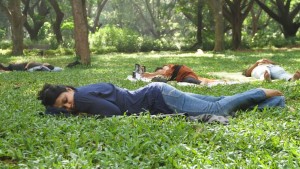
Via Broadly
Via Broadly

“When Taking a Nap Is a Political Act,” Broadly

“What is it like to sleep under a blue sky? To stretch out on the grass and feel the earth under you? To close your eyes and hear the quiet hum of traffic or the chirp of a sparrow?

I have no idea.

The freedom to rest or sleep in a public space is one that women in India don’t enjoy—being idle in public is not something we do. Not because it is illegal, but because we are vulnerable wherever we go. This is increasingly true in recent years,when the country has seen a spate of violent rapes and street harassment.

This weekend, small groups of women across the country (and in neighboring Pakistan) will fight their fear and vulnerability and head to a local park to do nothing but take a siesta. They will carry a mat, a bottle of water, perhaps a snack or a book to read. Then, they will then take a nap. Or try to.

Hosted by the Blank Noise Project, an all-volunteer collective that campaigns against street harassment, this seemingly subtle protest event is called “Meet to Sleep,” and it asks citizens to come together to reclaim public spaces and make cities safer. Started in 2003 by Jasmeen Patheja as part of her graduation project, Blank Noise mobilizes citizen “action heroes” through its projects, events, and campaigns, and it has played a major role in the snowballing discussion surrounding street harassment in India. The organization has been hosting Meet to Sleep events in cities across India since November 2014.”

“The Politics of Being “Ugly”: Between Being Catcalled and Erased,” For Harriet

“….There is a hierarchy of deservingness put on women, girls, femmes, and non-masculine bodies that delegate a culture of misogyny on a violent spectrum. Women who are categorized as beautiful should expect to be sexually harassed, while those who are categorized as ugly should be grateful for the attention and consideration. In addressing this spectrum of violence, we need to complicate our understandings of street harassment and catcalling. Erasure is an equally violent form of misogynistic brutality against our bodies.

We are affected everyday when our safety is based upon someone else’s sexualization or beauty positioning of our bodies in order to determine our worthiness and humanity. Let’s challenge spaces to include narratives and experiences that speak to being ignored, marginalized, or violated for not being “pretty enough” to be humanized. We must demand that our value as human beings—whether we identify as woman, girl, or femme—exist outside of the dominant scope and gaze of rape culture. Our humanity is not currency for survival. We deserve to exist free from fear, free from expectation, and free from misogynistic violence. “

“Uber Says It’s Fighting Sexual Harassment In Egypt But The Causes Aren’t Going Away,” BuzzFeed News

“This October, Uber Egypt partnered with Harassmap, one of the country’s pioneering anti-harassment organizations, to train drivers to fight against sexual harassment — a rarity in Egypt, where sexual harassment of women in Cairo’s chaotic and neglected public transportation is rampant.

“We know that there are big problems here,” Anthony Khoury, general manager of Uber Egypt, which provides only privately-owned cars, a service known as UberX, told BuzzFeed News. “We want to be the safest drivers around.”

Uber Egypt, based in Cairo, committed itself to a zero-tolerance policy against sexual harassment — a phenomenon criminalized under Egyptian law only in 2014, the same year Uber opened here. The move was also savvy branding for the popular car-hailing app, a more than $62 billion franchise, which worldwide has faced waves of legal cases and protests over drivers preying on female passengers and the company’s worker practices.

For Uber users in this megacity — where traffic is notoriously bad and taxis often a hassle — the app is a much-welcomed upgrade to safely navigate daily life. Since October, Khoury said his team has implemented the short anti-harassment training and even suspended and deactivated a few drivers for incidents of verbal harassment, follow-through unheard of with regular taxis, and had no reported cases of physical harassment.

In Egypt’s struggle against sexual harassment, it’s also still a drop in the bucket.

Uber is largely a luxury of the elite — most people in Cairo can’t afford private taxis — and the barriers preventing women from reporting and prosecuting sexual harassment remain terrifyingly tall.”

“‘Make a Grown Man Cry’ Pepper Spray CTA Ads Upset Women Commuters,” DNA Info

“While riding the CTA Blue Line on Tuesday, Jessica White, a Logan Square resident, spotted the ad for Sabre pepper spray.

White said she was “struck by the casual way the ad seemed to make light of violence against women, by not only cracking a joke about making ‘grown men’ cry, but also implying I would be interested in a powder blue keychain attachment as a form of necessary self defense.

“Considering how many assaults occur on and around CTA property, I would think the CTA wouldn’t post ads reminding women not only how dangerous it is to use their services, but also that they’re on their own when it comes to personal safety,” White said…

Kara Crutcher, an Uptown resident whose Courage Campaign tried to raise money to pay for ads to discourage harassment on public transit, said she is “very disappointed” to hear about an ad that makes light of having to use pepper spray.

“Nothing about a person, male or female, carrying mace as a form of protection in public spaces is comical,” Crutcher added. “I’d much rather see an ad that aims to move us past the existence of violence in public spaces, not an ad joking about mace sales, which is counterproductive to the goals of the ‘Courage Campaign: CTA’ and functions solely as a Band-Aid for the greater issue at hand.”

Good work Courage Campaign: CTA for speaking out.

“NYC police boss urges ‘buddy system’ for women in cabs,” AutoBlog

“14 of the city’s reported rapes last year, and two already this year, were committed by for-hire cabbies. And Police Commissioner William Bratton raised eyebrows with comments on the phenomenon that some felt blamed the victims.

‘One of the areas of concern that we have is particularly young women coming out of clubs and bars,’ Commissioner William Bratton said during a radio interview on WNYC. ‘They’re by themselves and intoxicated getting into a cab … and we’ve seen an increase in assaults in those instances. So we’re encouraging women to adopt the buddy system.’

Some women who spoke to The Associated Press about taxi safety said Bratton’s suggestion smacked of sexism.

“It’s the idea that somehow we have a hand in this,” said Jamie Lopez, 20, who works in retail and often takes cabs late at night because she finds them safer than the subway. “It’s not the victim’s fault.”

“Amsterdam men to don miniskirts in support of Cologne women,” NL Times

“Male members of the PvdA, D66, SP and GroenLinks’ youth movements will be protesting in mini-skirts on the Spui in the heart of Amsterdam on Saturday afternoon. They want to show support for women’s rights and their displeasure with Cologne mayor Henriette Reker’s statements following the large number of sexual assaults in the German city over New Year’s…

On Facebook the youth movements invite men, and women, to join their protest on Saturday, wearing miniskirts. “Not women, but men must keep away at arms length. Too often sexual violence against women is put down as a woman-problem: don’t wear short skirts. That is never the solution. Short skirts are not at fault.” they write.

“Therefore we are reversing the rolls and we celebrate the skirt and the freedom that goes with it. We deploy our hairy knees for a free society in which women can walk the streets undisturbed, day and night, on short-skirt day or in the middle of the winter.”

“One in three people in south east bullied in street over looks and weight,” Chichester Observer

“A third of adults living in the south east have received negative comments about their weight or appearance in the street, reveals a survey released this week.

The shocking results come from the survey “Fat Shaming Britain 2016”, for diet company LighterLife – which reveals the scale of the epidemic faced by those with weight issues, and the damaging impact this is having on their live.

The poll, which looked at 1,000 adults, revealed that more than a third of people (39 per cent) lack confidence due to their weight or appearance, which is made worse by the negative comments they have endured from strangers – face to face, via social media, by text and in the street.

And the accusers are closer to home than you might think. An alarming 78 per cent of people abused by strangers had also received derogatory comments, face-to-face, from someone they knew.

Weight was overwhelmingly the main subject of comments – good or bad – confirmed by two thirds (67 per cent). And almost one in three (31 per cent) felt the comments they had received were “maybe” or “definitely” street harassment.”

“This Is What A Feminist Cat Call Sounds Like,” Bustle

“Ubiquitous and nasty, street harassment is an experience most women are intimately acquainted with. Now, thanks to the incisive folks on Twitter, feminist cat calls are a thing, revealing the true absurdity of this misogynistic practice as only humor can. Although it’s unlikely real men out there will start yelling informed and intelligent twists on the usual sexist garbage talk, with enough support, maybe, just maybe, these tweets will start a revolution.”

Share

Filed Under: News stories, offensive ads, street harassment Tagged With: Amsterdam, chicago, CTA, Egypt, India, male allies, NYC, offensive ads, uber, UK, victim blaming, weight

“It haunts me to this day”

January 13, 2016 By Contributor

After a long day of fun, my father and I went to CVS. As I was looking in an aisle, I automatically felt a feeling of discomfort when I realized a man around his late 20’s had been looking at me. I’m sure everyone knows that look when a boy/man is looking you up and down.

Anyway, I continued to look for band-aids. As he walked closer and closer, I turned around and he said to me, “How are you?”. I knew better than to be rude, so I felt obligated to at least say something so I did. “Good, thanks” I responded. I turned my back on him and searched for those band-aids, when I suddenly hear, “Damn, you look good”.

The fact that he said those four words, knowing I felt uncomfortable made me lose it. I walked away, in full speed, practically sprinting. He followed me. Fortunately, I had found my father so I decided to just stay with him and get it over with, but he continued to follow me. My father sensed that something was wrong, so eventually I told him what had happened. Still, he followed us, and even laughed. We walked to the cash register, and then next thing I know, my father and the man were arguing. It all happened too fast. I became overwhelmed with fear. It’s not the first time this has happened, but it haunts me to this day.

– Anonymous

Location: Store

Share your street harassment story for the blog.
See the book 50 Stories about Stopping Street Harassers for more idea
.

Share

Filed Under: Stories, street harassment

Germany: In Cologne, Women’s Bodies Should Not Be Used to Promote Racism

January 12, 2016 By Correspondent

Editor’s Note: Our new Blog Correspondents ProChange in Germany wrote a piece for both Ms. Magazine’s blog and SSH… so this is cross-posted from Ms, with permission.

Following planned attacks on women on New Year’s Eve in Cologne, Germany, more than 500 reports have been made, 40 percent involving sexual assault. In other German cities such as Hamburg, Stuttgart and Düsseldorf, similar cases were also filed.

In Cologne, the police have arrested 21 suspects so far, most of whom have been identified as men from northern African or Arab regions.

Shockingly, in the beginning, there seemed to be no public outcry over the attacks. It was only on January 2, after the local media started covering the incidents and quoted eyewitnesses stating that the perpetrators looked northern Africa or Arab, that suddenly there was outrage.

But instead of turning the incident into an opportunity to stand up for women’s right to be safe in public spaces, many who are against the influx of refugees used the assaults to spread racist hate speech targeting asylum seekers, migrants and foreigners.

While there may have been asylum seekers among the perpetrators, as the newspaper die Welt reported, this racist response is unacceptable. The rhetoric is unjust to both the persons affected and to the many asylum seekers coming to Germany searching for a better life.

Certainly the perpetrators should be punished, no matter where they are from. The German state must use the rule of law to send a strong message that violence against women will not be tolerated. But it is disturbing to see that the body of the “German woman” is being used to promote racist hate speech, and it’s something that has been prevalent throughout the German debate on refugees.

For example, the philology association from Saxony achieved questionable fame for warning young girls against sexual adventures with Muslim men. Under the guise of protecting the young girls, racist stereotypes were promoted and combined with sexist ideas. While Muslim men were portrayed as a potential danger, young girls’ abilities to decide their own sexuality were denied. 

The wildest stories have circulated on social media. For instance, it was claimed that refugees were urinating on vegetables in supermarkets, and stealing goods worth several thousand Euros without punishment. When investigated, it turned out that those wild stories were lies. 

You might assume from scrolling through Facebook that crime has increased with the influx of refugees. But the image of the “criminal refugee” is not backed by crime statistics. In fact, refugees commit crimes at the same rate as the native German population, and the number of sex crimes committed by refugees is actually below 1 percent.

Right-wing political parties, such as the AfD (Alternative for Germany), warn against refugees as potential rapists of German women. Politician Björn Höecke, for instance, spoke about the special risk for blonde (!) German women.

It seems like the right-wing movements have finally discovered an interest in women’s rights. But while the potential rape of “our women” has stirred up hate for the “uncivilized other,” the fact that sexual violence is already prevalent within German society, or that it can affect non-German women as well, seems not to be of interest to them. 

In addition to racist backlash, there has also been a great deal of victim-blaming in the wake of these attacks. This was blatantly clear in the recommendation made by Cologne’s mayor, Henriette Reker, during a press conference following the New Year’s Eve attacks where she spoke about preventive measures for the upcoming carnival celebrations. When asked how women could protect themselves, she answered that it is always possible to maintain a certain distance of more than an arm length from men. Women turned to social media to mock her advice, using the hashtag #einearmlaenge (one arm length). She has since apologized, but the damage has already been done.

Following the attacks, this should be—and still can be—an opportunity to name street harassment and other forms of sexual violence as everyday sexism. It is also the right time to call for a revision of the German penal code to better address these types of offenses.

Every woman should have the right to safely be in public spaces, among men of all races, and in as close proximity as a crowded place dictates. The priority should be to ensure that that is the reality, not to punish the refugees, migrants and asylum seekers who are just as likely to be peaceful, law-abiding residents of Germany as those who are native-born, nor should it be the time to engage in needless victim-blaming.  

ProChange is a group of people between 20 and 64 years of age who have been active for several years or decades now. ProChange consists of a small group of core members (pictured left) in a network of other activists. Our main focus is on street harassment, sexism and sexualized violence. We are opposed to all forms of exploitation as we believe that they are all connected.

Share

Filed Under: correspondents, race, street harassment Tagged With: germany, mob attacks, racism, rape, sexual violence

« Previous Page
Next Page »

Share Your Story

Share your street harassment story for the blog. Donate Now

From the Blog

  • #MeToo 2024 Study Released Today
  • Join International Anti-Street Harassment Week 2022
  • Giving Tuesday – Fund the Hotline
  • Thank You – International Anti-Street Harassment Week 2021
  • Share Your Story – Safecity and Catcalls Collaboration

Buy the Book

  • Contact
  • Events
  • Join Us
  • Donate
  • Facebook
  • Instagram
  • Pinterest
  • Tumblr
  • Twitter
  • YouTube

Copyright © 2026 Stop Street Harassment · Website Design by Sarah Marie Lacy