• About Us
    • What Is Street Harassment?
    • Why Stopping Street Harassment Matters
    • Meet the Team
      • Board of Directors
      • Past Board Members
    • In The Media
  • Our Work
    • National Street Harassment Hotline
    • International Anti-Street Harassment Week
    • Blog Correspondents
      • Past SSH Correspondents
    • Safe Public Spaces Mentoring Program
    • Publications
    • National Studies
    • Campaigns against Companies
    • Washington, D.C. Activism
  • Our Books
  • Donate
  • Store

Stop Street Harassment

Making Public Spaces Safe and Welcoming

  • Facebook
  • Instagram
  • Pinterest
  • Tumblr
  • Twitter
  • YouTube
  • Home
  • Blog
    • Harassment Stories
    • Blog Correspondents
    • Street Respect Stories
  • Help & Advice
    • National Street Harassment Hotline
    • Dealing With Harassers
      • Assertive Responses
      • Reporting Harassers
      • Bystander Responses
      • Creative Responses
    • What to Do Before or After Harassment
    • Street Harassment and the Law
  • Resources
    • Definitions
    • Statistics
    • Articles & Books
    • Anti-Harassment Groups & Campaigns
    • Male Allies
      • Educating Boys & Men
      • How to Talk to Women
      • Bystander Tips
    • Video Clips
    • Images & Flyers
  • Take Community Action
  • Contact

USA: “The clothes we wear are not for you”

May 29, 2015 By Correspondent

Liz Merino, Massachusetts, USA, SSH Blog Correspondent
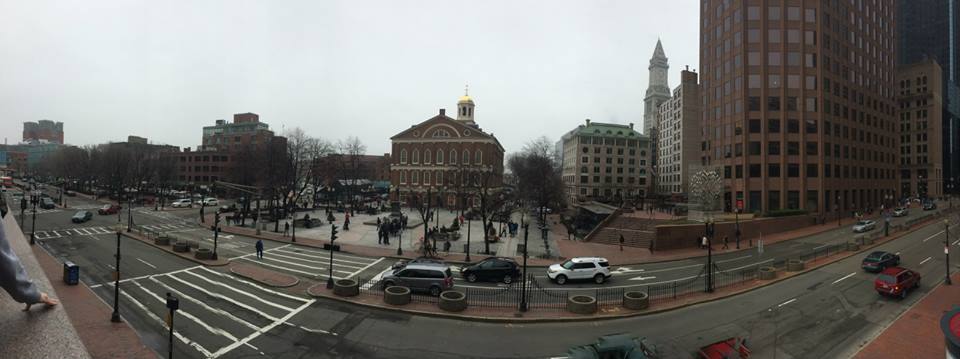
Boston, by Liz Merino

Nothing makes me happier than the time surrounding dusk on a summer night. Though quick to set, walking under the sun and into the stars is both a beautiful and humbling experience.

I walk my dog, Clancy, down a main street and into the surrounding neighborhood in Dedham, MA. One street in particular is my favorite, with a winding curve, a canopy of trees and the Charles River along its edges.

What I don’t enjoy, though, is the street harassment that accompanies my nightly walks. Beeping car horns, tires slowing down and yelling out of windows is not what I want, or need, when I leave my home. And I know I’m not alone.

“Everyone seems to go crazy in the summer… When I lived Downtown there was one day I got hit on 13 times, just wearing a white tank top and shorts. Half of the men were yelling at me from across the street, yelling ‘hey baby’…. after an hour and a half I just went home. Later on I changed my outfit,” said Boston resident Stephanie Pan.

According to 2014 Stop Street Harassment statistics, 65 percent of women have suffered from street harassment in the U.S.

Maybe I should just suck it up and ignore it. It becomes so routine that most of the time I do. But my mother always worries, and in that, I suppose I should remain aware. If I’m staring at the vivid blue sky as I leave my office in Boston for too long or gaze into the accompanying woods along my Dedham walk, who will be staring back unbeknownst to me? A stare? A long look of undressing, stripping layer of layer of my clothes off my body, is more what I should call it.

“When walking through Boston, I find ignoring it to be the best solution, but it’s not a panacea. The anxiety reverberates. I always have a plan of escape ready, and think of what items in my bag are easily accessible and can double as self-defense weapons. I understand that sometimes it’s meant to be harmless or a compliment, but that does nothing to pacify the fear because letting your guard down means being more vulnerable than you already are,” said Rachael Durant, a Framingham resident interning in Boston for the summer.

I don’t want to be called baby or sexy when I’m walking anywhere during my day or night. I definitely don’t need to be told to come over and f*** you either, because you’re sitting in the safety of your car, and the traffic light is turning green, and you’re gone but your words are still echoing around my ears.

I didn’t leave my house for you.

I walk three blocks on my way to work in the financial district. Some mornings are great, the sun shines and with an iced coffee in hand I enjoy a quiet walk before my day begins. Other days though, are not as pretty.

Instead of the beeping horns as in my walks in Dedham, I am accompanied by close, under the breath remarks and whistles I wouldn’t even use on my dog. It comes from all types of men, some my age, some old enough to be my father.

I usually return a hard stare, a few choice words of ‘don’t talk to me like that,” or ‘who do you think you are?’.

“I logically know that not every person I pass, specifically a man, is looking to attack me… I shouldn’t walk with headphones in so I can hear if someone’s coming up behind me. If I walk closer to the street, it’s easier to get away,” said Berklee College of Music student Kathlynn Sell about an area of Boston near her school.

I actually had a man almost follow me my whole way to work last week. I noticed him staring at me on the subway. After we made eye contact he looked away, but throughout the ride I could feel his eyes on me as I read my book. As I left the subway station and looked back he was there, and again when I looked back at the next corner. I walked into a Dunkin Donuts and prayed that when I came out, he would be gone. He was.

A million thoughts ran through my head. What if it wasn’t bustling Boston rush hour? Would someone have helped me if I screamed or caused a scene? What if it was night and I was alone?

“Before I left for college, my dad wanted me to take a self-defense class. I didn’t. But when I moved into my first apartment, he made me bring an aluminum bat that I kept near the door – so that should give you an idea of what he’s told me over the years: ‘Don’t throw the first punch, but come back swinging,’ said Boston resident Alex Lane.

As summer sets in, please remember that bare arms, naked legs and pretty dresses are not an invitation to make comments at me, or about me, or any other women you may see.

The clothes we wear are not for you. Like most people, I’m just trying to get to my job, back to my house, and enjoy my walk along the way.

When does street harassment start? Who does it happen to? Why does it happen?

In reality, it knows no age, color or sexual preference.

“My mother is very paranoid, she was so paranoid that when I was younger she made me take Tai Kwon Do classes, she made me carry an umbrella, knives. When I turned 16, my dad bought me a Taser,” said Pan.

The list of reasons why street harassment happens would be exhaustive to write, and for you to read. But the fact that it happens, I think, is enough to reflect on for now, and how you will challenge it next time it appears in front of your eyes, because it will.

Liz is a recent graduate of Hofstra University with a Bachelor of Arts Journalism degree. She is currently a staff writer for a marketing agency in Boston. Follow her on Twitter @slizmerino and Instagram @elizabethmerino93.

Share

Filed Under: correspondents, Stories, street harassment

USA: “Holding a man accountable for street harassment can be a dangerous game”

May 27, 2015 By Correspondent

Shyeta Williams, California, USA, SSH Blog Correspondent

Despite the raising awareness of street harassment, it is so unbelievably prominent in this urban jungle I call home. One contributing factor could be the striation of wealth, with many homeless and impoverished people being on the street at all times of the day. This is also an area with plenty of options for public transport, so many of us are walking at some point en route to our destinations. Between BART, Ac Transit, MUNI, Lyft, Uber, Leap, there is no shortage of opportunities for a catcaller to come into contact with anyone who dare cross them on the street. This is not to say that the area is any more prone than any other, but to illustrate the ways in which we are vulnerable to street harassment.

I’ve had this conversation many times with many friends and colleagues. Recently, a friend of mine, whom I’ll call Rona, decided for one week she would pull out her phone and take a photo of every man who catcalled her. She was interested to find out how men would react to her taking photos of them as they were harassing her. I had read about women doing this, to varied responses. Rona employed this technique for one week and was shocked at how quickly men attempted to remove themselves from the situation. She described men peeling out in their cars, and hiding behind friends.  Essentially after having the gall to harass her in public places, men were quick to retreat at the threat of being photographed.

Rona expressed that this caused a palpable shift in dynamics. It made her feel powerful. Her description was vivid and revealing. “Well it’s a pretty conscious effort, keeping your phone in hand to ward off creeps, so I don’t do it all the time, [but] it’s so noticeable how different you feel. When I’m doing it I walk taller. When I don’t I’m so scared of men walking past me. It’s only words but it’s so violating.”

Despite how powerful she felt, Rona was aware that this reaction was problematic. These men weren’t leaving her alone out of some sudden respect or realization of her personhood. They were doing it out of what she described as, “fear of repercussion, or fear of humiliation.” These men were looking to cover their own asses, removing themselves as a precaution not out of a sense of humanity. In fact it had very little to do with Rona as a person. They are much more concerned with their image being soiled, no matter how justly, than how they are treating another human.

After Rona told me the story, I called her a superhero. Holding a man accountable for street harassment can be a dangerous game. I’ve experienced and heard many stories about what can happen if dare to confront a man who is harassing you or someone in your vicinity. It is downright dangerous thing to do. It often shifts the focus to you, your vulnerability, and personally I’ve been completely verbally berated for it, only to have no one stand up for me for fear of the same. It’s saddening but this is part of why Rona had to try this tactic to begin with.

Women are being forced to come up with imaginative ways to combat their own harassment, and really just having to hope for the best in terms of outcomes. As often as we are on the sidewalk, our safety may be encroached upon, otherwise easy targets at their discretion.

Shyeta discovered her voice loud and clear amid the redwoods and fog at UC Santa Cruz, where she earned her BA in Politics. She’s currently enjoying the sound her pen makes against the wind chill in Oakland, CA.

Share

Filed Under: correspondents, street harassment

New HarassMap Campaign: ‘Harasser = Criminal’

May 23, 2015 By HKearl

From our friend HarassMap in Egypt:

“Our campaign ‘Harasser = Criminal’ (El Mota7aresh Mogrim) is live!

It is a campaign to motivate people to take action and stand up to sexual harassment when they see it happen, so that we can start building a society where sexual harassment is not tolerated and harassers do not get away with their crime.

We launched with a press conference on Thursday May 21 at the Goethe Institute in downtown Cairo. The launch was covered by MBCMasr, Mada Masr, Youm 7, and others. Check out our video from the press conference here. 

The campaign is now running online on Facebook, Twitter, and Instagram. Over the next week it will roll out on the streets in Cairo and other governorates around Egypt.

TV and radio ads will be aired on MBC Masr, CBC, El Nahar, Dream 2, and Radio Masr. Find the directors cut versions of the campaign ads here:

You can find more written information about the campaign on our website.”


Share

Filed Under: Resources, street harassment Tagged With: campaign, Egypt, HarassMap

The Netherlands: Female Hitchhikers Defy Highway Harassment (Part 1)

May 21, 2015 By Correspondent

Julka Szymańska, the Netherlands, SSH Blog Correspondent

Hitchhiking: it’s as old as the road itself, but not everyone feels comfortable with the idea of hopping into a stranger’s vehicle for a ride. This may especially be true for women who are warned about the possibility of harassment or assault while hitchhiking. Yet hitchhiking still has its popularity and plenty of women are hitting the road with their thumb or a sign. So who are these women and why are they getting into a car with complete strangers?

Paulina.

Paulina is a brave 21 year old, born in Poland and currently living in Denmark. Two years ago she embarked on her first hitchhiking journey and ever since that first trip she has used most of her time off school to travel, contributing to her 20.000 kilometers on the road with her thumb. She wanted to see more of Europe’s many different cultures, but didn’t have much money, so hitchhiking was the perfect solution for this desire to explore.

Out of many positive experiences, she did encountered one negative situation: while hitchhiking with her friend in Georgia she was groped by a man after accepting his apparent hospitality. Fortunately they could get away by excusing themselves.

“Hitchhiking is more dangerous for women, women aren’t as physically strong and we risk rape too of course”, Paulina explains. “But i have pepper spray to keep myself safe and I use the ring my grandmother gave me as a fake engagement ring to communicate that I’m not looking for sex. ”She takes pride in being a rule breaker and doesn’t think too deeply about harassment: “If I start worrying about this, I could as well just stop hitchhiking and I don’t want that.”

Paulina’s golden tip for hitchhiking as a woman: “Be careful, but don’t stop traveling. Take a friend with you and you’ll gather memories you will never forget.”

Marjan.

Founder of Dutch hitchhiking foundation Nederland Lift, 36 year old Marjan is a mother of two and hitchhikes to work every Wednesday. She writes about these weekly 15-minute trips on her Dutch-language blog LiftGeluk.nl. After 124 rides in one and a half years Marjan is still hopelessly addicted to hitchhiking and the spontaneous, fun, and sometimes touching encounters she has along the way.

Marjan has never personally encountered any harassment during hitchhiking, but attributes this to the time of day and the short drive to her destination. She also acknowledges that there’s a world of difference between a confident 36 year old woman with plenty of experience and –for example– an unprepared 18 year old.

“An interesting aspect of hitchhiking is the anonymous, yet very real contact you make with people who you would otherwise not have a conversation with, this is unique,” Marjan proclaims. “Hitchhiking negates prejudice: you share a car with people of all walks of life. I believe this brings people closer together.”

Marjan speaks out against the bad reputation hitchhiking has due to harassment by explaining that people often blame hitchhiking, but not trains or buses, where it happens too. The harasser is responsible, not the method of transportation.

“Hitchhiking is a lot like life itself: you never know what comes your way, but it sure is beautiful”, is her motto.

Elisa.

Spanish Audio-Visual Communication student, feminist and acting aficionado Elisa just returned from traveling around the USA by finding rides through word of mouth networking and the Internet. This 23 year old, armed with her camera, overcame her insecurity of traveling alone by deciding to ‘just do it’ and isn’t planning on stopping any time soon.

Elisa is very clear in her convictions: “I believe that discouraging women to travel alone for fear of harassment can lead to victim-blaming. We live in a sexist society where women are told that we cannot do the same things a man can do without hearing ‘I told you so’ if something bad happens.” She wants to disprove that point by doing exactly what people say she can’t do: hitchhike and travel alone, regardless of harassment. “We should do something about harassment and empower women to not be stopped by fear, because otherwise it will paralyze us. I think the solution is to put tools (such as feminism) in the hands of both women and men to prevent harassment.”

Harassment happens in your own neighbourhood too, Elisa calls this ‘the enemy at home’, an enemy women are less prepared for when crossing their own street. “Being scared all the time is no way to live, but during hitchhiking it is something you have more control over.” Elisa carefully selects who to accept a ride from and writes down license plates: she’s aware of the risks and has trust in herself and others.

Stay tuned for the second part of this series next month.

Julka is a 25-year-old feminist activist and soon-to-be Cultural Science student with a generous amount of life experiences -including street harassment – and even more passion for social justice.

Share

Filed Under: correspondents, Stories, street harassment Tagged With: hitchhiking, travel

#SafeCitiesBecause Campaign

May 20, 2015 By HKearl

Join ActionAid​‘s call for ‪#‎SafeCitiesBecause‬ EVERYONE deserves to go to work or university, use the bus, walk down the street – simply live their lives – without the threat of sexual attack.

Find out more, join the movement, sign the pledge, and Tweet #SafeCitiesBecause today to share why you believe we need safe cities. Read how women all over the world are reclaiming what is rightly theirs: the right to be in public spaces safely.

Share

Filed Under: Activist Interviews, Resources, street harassment Tagged With: ActionAid, global efforts, safe cities

« Previous Page
Next Page »

Share Your Story

Share your street harassment story for the blog. Donate Now

From the Blog

  • #MeToo 2024 Study Released Today
  • Join International Anti-Street Harassment Week 2022
  • Giving Tuesday – Fund the Hotline
  • Thank You – International Anti-Street Harassment Week 2021
  • Share Your Story – Safecity and Catcalls Collaboration

Buy the Book

  • Contact
  • Events
  • Join Us
  • Donate
  • Facebook
  • Instagram
  • Pinterest
  • Tumblr
  • Twitter
  • YouTube

Copyright © 2026 Stop Street Harassment · Website Design by Sarah Marie Lacy