• About Us
    • What Is Street Harassment?
    • Why Stopping Street Harassment Matters
    • Meet the Team
      • Board of Directors
      • Past Board Members
    • In The Media
  • Our Work
    • National Street Harassment Hotline
    • International Anti-Street Harassment Week
    • Blog Correspondents
      • Past SSH Correspondents
    • Safe Public Spaces Mentoring Program
    • Publications
    • National Studies
    • Campaigns against Companies
    • Washington, D.C. Activism
  • Our Books
  • Donate
  • Store

Stop Street Harassment

Making Public Spaces Safe and Welcoming

  • Facebook
  • Instagram
  • Pinterest
  • Tumblr
  • Twitter
  • YouTube
  • Home
  • Blog
    • Harassment Stories
    • Blog Correspondents
    • Street Respect Stories
  • Help & Advice
    • National Street Harassment Hotline
    • Dealing With Harassers
      • Assertive Responses
      • Reporting Harassers
      • Bystander Responses
      • Creative Responses
    • What to Do Before or After Harassment
    • Street Harassment and the Law
  • Resources
    • Definitions
    • Statistics
    • Articles & Books
    • Anti-Harassment Groups & Campaigns
    • Male Allies
      • Educating Boys & Men
      • How to Talk to Women
      • Bystander Tips
    • Video Clips
    • Images & Flyers
  • Take Community Action
  • Contact

#EndSHWeek Wrap-Up: Day 1

April 12, 2015 By HKearl

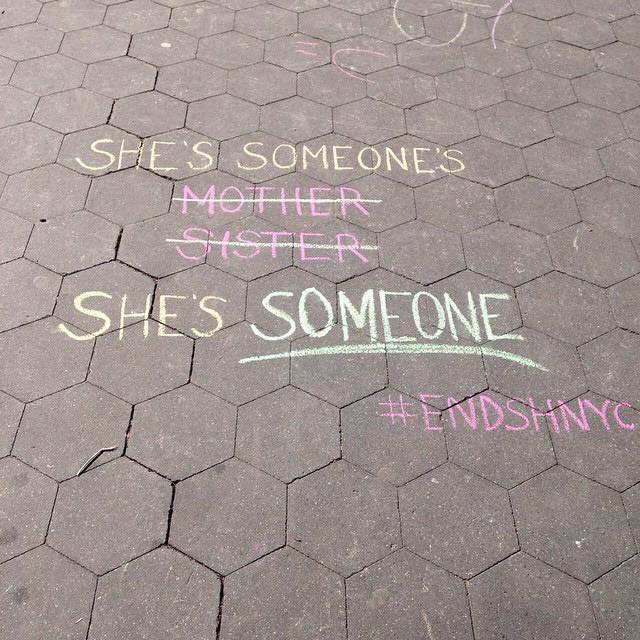
NYC rally

Hello! Thank you so much everyone who has participated so far in International Anti-Street Harassment Week!! This is our biggest week to date with groups in 36 countries confirmed to take action. The end of the day has been very exciting as I just got word that Fiona Patten, a member of Parliament in Victoria, Australia, will be raising the issue of street harassment in Parliament this week!!

So what happened on the first official day of the week of awareness? Here’s a recap of some highlights.

What Happened Today?

View more than 70 Photos!

* From Colombia to Nepal to the USA (including Baltimore, Des Moines, Miami, New Orleans, and Philadelphia), groups took to the streets today to raise awareness with sidewalk chalk and signs.

* Groups in Pakistan and Cameroon held community discussions.

* Hollaback! Vancouver debuted their interactive campaign and art show “What’s Your Number?”
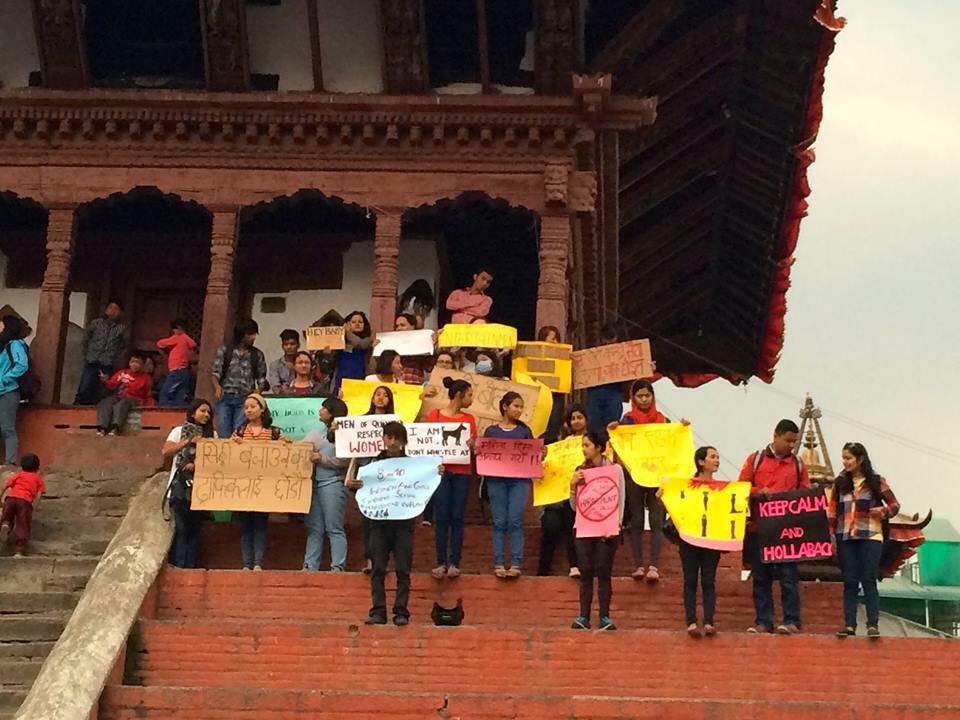
Nepal

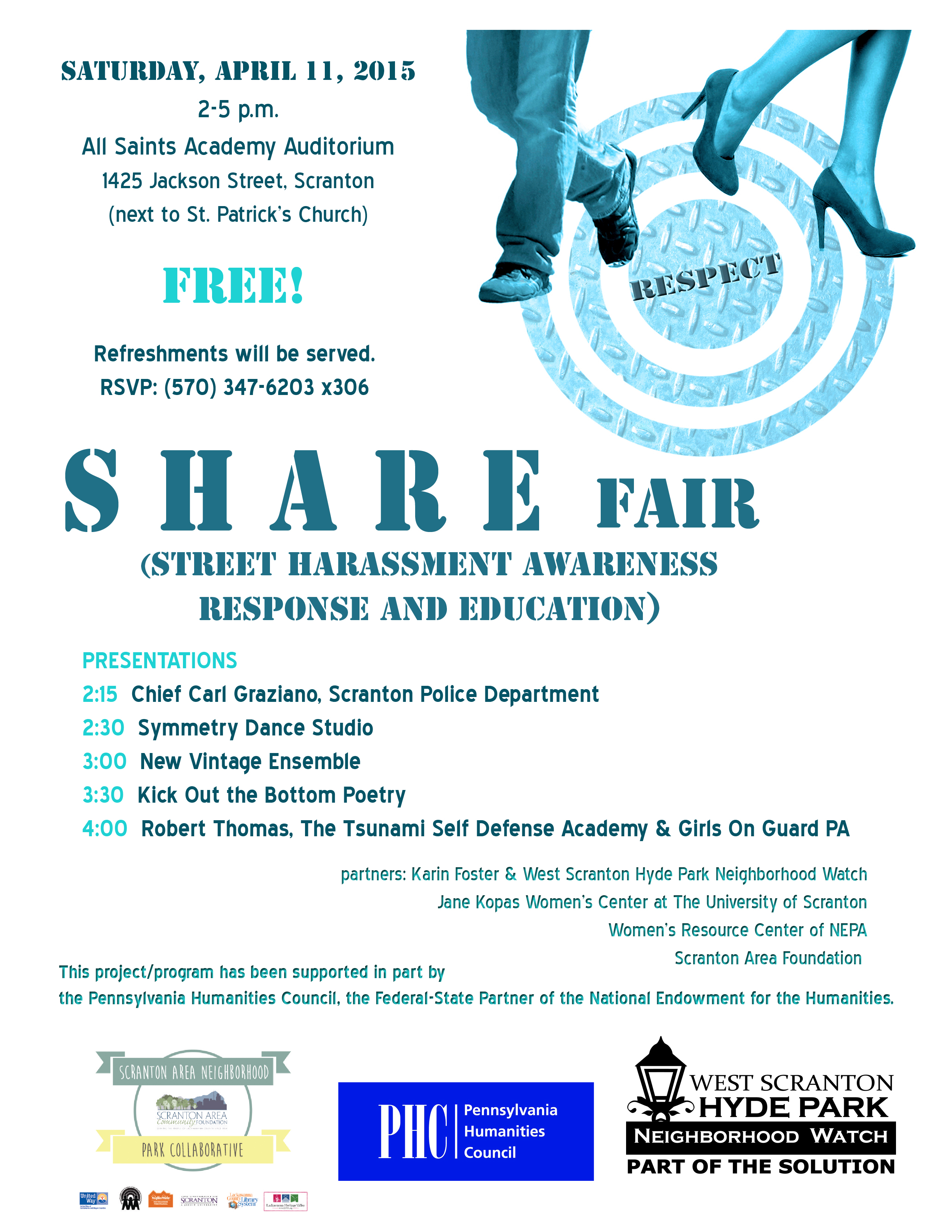
* Yesterday, a few groups got a jump start to the week, including the #ThisDoesntMeanYes street photo shoot in London, a rally with 200 people in New York City, and a street harassment resource fair at the University of Scranton, in PA, USA.

Two Virtual Events:

* Safe City in India hosted the first tweet chat of the week! Read a recap.

* The NOW Young Feminists & Allies virtual chapter hosted a google hangout about street harassment and multiculturalism. Watch it.


Two Articles:

* An op-ed about street harassment in the Pakistan Today newspaper.

* “This is what street harassment looks like in 16 languages” by Kristin Taylor (“What started out as a small project blossomed, as more and more women began to share their experiences with me. The ink of their markers bled into the fabric, permanently inscribing on my shirt thirty-eight stories of street harassment written in sixteen languages: Afrikaans, Amharic, Arabic, Chinese, Danish, English, French, Hindi, Jamaican Patoi, Lebanese, Italian, Moroccan, Nepali, Serbian, Spanish, and Tagalog.”)

Share

Filed Under: anti-street harassment week, street harassment

Australia: Is Street Harassment a Police Issue?

April 12, 2015 By Correspondent

Tara Willoughby, Canberra, Australia, SSH Blog Correspondent

[Content Note: links include descriptions of violence and harassment]

It is difficult to write about street harassment in Australia without writing about the criminal justice system and ultimately, police. Whether as responders or as harassers, police often take a central role in media discussions of street harassment. In my final post as a blog correspondent, I hope to outline where police fit in with people’s experiences of street harassment and also make an argument about what they should be doing to deal with this issue.

Do people report street harassment to police?

As has been discussed many times (including in my March blog correspondent article), the types of behaviours that constitute the majority of street harassment in Australia are often not easily reported to the police. Of the countless stories and conversations I have been a part of concerning street harassment, only once have I heard of someone reporting an incident of street harassment (being ‘egged’ from a moving car) to the police. And even in those serendipitous circumstances where the victim happened to have a notepad and pen on hand and the car happened to move away slowly enough to catch the licence plate number, the process of reporting was still a considerable investment of time and effort.

Do police act on street harassment?

Police can only take substantive action on individual instances of street harassment if they are against the law. While many types of harassment are crimes in Australia, many are not. The responses of police to reports of even criminal street harassment can be quite mixed. International law firm DLA Piper (writing in conjunction with iHollaback! And Thomson Reuters) note that “in practice, “one-off” incidents of minor street harassment, such as using offensive language in public which is not threatening, will often not be investigated by the police.” Police in the incident I described above spoke with the young man responsible for throwing eggs to tell him to ‘pull his head in’. Other reports describe police responses as anything from non-existent to actively hostile.

In a broader sense, police in Australia have taken some steps to address street harassment as a larger phenomenon. This includes speaking out about sexism and violence against women and acting in partnership with local government and communities to attempt to design safer public spaces. However, to date, police have not taken any high profile stances targeting street harassment specifically.

Do police commit street harassment?

Short answer, yes. Like any large group of people, within the police there are those who behave inappropriately and deliberately harm the people around them; at the beginning of 2014, 1 in 40 New South Wales police officers had been convicted of a criminal offense. Police forces around Australia have well documented issues with sexist, racist and homophobic violence.

What SHOULD police do?

There are two main reasons why police ought to take action on street harassment.

Firstly, addressing street harassment is within the stated goals of the police. NSW Police, as an example, states its goals thus: “We aim to protect the community and property by preventing, detecting and investigating crime [and]… maintaining social order”. The many forms of street harassment which constitute crimes in Australia fit directly into this credo, and if we acknowledge those which don’t as part of a self-perpetuating spectrum of violence, then addressing these forms of street harassment must be part of effective policing.

Secondly, interactions with police around harassment (either reporting harassment from other members of the public or experiencing harassment from police themselves) are identified as the key area where relationships between police and young people have become confrontational and hostile. Maintaining functioning relationships with the community is vital to effectively fulfilling the role of the police, since they rely on people trusting them and providing them with information.

How?

As addressed above, addressing individual instances of street harassment on a case by case basis has not been effective for police or victims so far, and it will not help to change the attitudes that allow people (including some police) to engage in street harassment with relative impunity. Police are one of many influential public entities that can help to create change in our society. In order to actually make a difference to this issue, they must commit to working with the wider community in partnership to eliminate the prejudices and violence-tolerant attitudes that support street harassment in Australia today.

Tara works with AWAVA (the Australian Women Against Violence Alliance) indulging her love of social media. You can find her on Twitter as @angelbird72 or @Tash_Because or being silly as one half of the ‘slice-of-life’ podcast Heaps Funny But.

Share

Filed Under: correspondents, street harassment

It’s International Anti-Street Harassment Week 2015!

April 12, 2015 By HKearl

From Afghanistan to Zimbabwe, street harassment is a global problem, but it is one that we will NO LONGER TOLERATE. Groups and people in 35 countries are banding together to speak out against sexual violence, sexism, and homophobia in public spaces during International Anti-Street Harassment Week!! Thank you to everyone who is part of it.

The Impact Will be HUGE
There are so many events happening, from a discussion with youth in Beau (Cameroon) to a new transit campaign in London (UK), from marches in the streets of Bogota (Colombia) and Kathmandu (Nepal). Sidewalk chalking, distributing information, and online discussions will take place in countries across six continents. We know the participants will make a difference.

The week is already having an impact; there have been 10 media hits so far, bringing more attention to the topic.

Get Involved
It’s not too late to get involved! Including by joining the Global Night of Action, April 17. Stop Telling Women to Smile (STWTS), an internationally-recognized art project that confronts gender-based street harassment, is organizing an international wheat pasting night on April 17. Those interested in participating can visit the website to request downloadable PDF’s (in their preferred language) of STWTS posters.

Join the Google Hangout taking place today at 7 p.m. EDT. Join our Tweet Chats and Tweetathon, every day from April 12 – 17.

Check out the shareable digital images and downloadable PDF flyers on the website!

Share your stories. In person. Online.

Share

Filed Under: street harassment

Bonus Day: Anti-Street Harassment Week 2015

April 10, 2015 By HKearl

A few groups are getting a head-start on International Anti-Street Harassment Week (April 12 – 18) and are holding events on April 11…Hundreds of people will gather in New York City for a rally, the University of Scranton is holding a resource fair, and the Rape and Sexual Abuse Support Centre in London is holding a street demonstration.

We wish them and everyone else who is participating great luck with their/your events and actions. Thank you for making the time for this. It is important. There is power in our collective outrage and voice. We hope it will be an empowering experience personally and one that positively impacts communities around the globe.

 
Share

Filed Under: anti-street harassment week, Events, street harassment

Brazil: When did we become enemies?

April 9, 2015 By Correspondent

Juliana Guarany, Brazil, Blog Correspondent

The discussion over street harassment – and violence against women in general – has grown to a level of insanity on the Internet. I have been watching several debates online ending in a series of mutual insults from men to women and vice-versa. On one side is the argument that men are only trying to give a compliment to a stranger. On the other side, women say that this behavior is invasive and annoying, to say the least.

Of course we can find women and men on both sides, but essentially, this has turned into a battle of the sexes in a very aggressive way. Whenever there is an argument against street harassment, a man shows up to show how offended he is by being accused of harassment just by saying a girl is pretty. Or even trying to prove he knows better and women should listen to him. On the other hand, women – mostly feminist activists – simply can’t deal with men anymore and the minute a man decides to talk he receives aggressive answers (not that they aren’t justifiable, this simply happens).

What I don’t understand is: if women are saying this behavior is bad, why is it so hard for men to acknowledge that and simply stop? Why do men counter-argue it by saying it wasn’t their intention to be mean?

Intention vs effect

I’m sure a strange man would not have the intention to hurt a strange woman on the street, but this is the problem right here: no matter what the intention is, the effect of it is unwanted by women. For that reason, and for that reason only, they should stop.

It’s like getting a meat dish for a vegetarian everyday because you think that dish is good, even though the vegetarian doesn’t like it. Just stop!

Instead of stopping, men become aggressive and Internet debates are filled with hate and we can see men and women growing apart. This movement is hurting both sides and not having much of an effect on those who actually practice violence.

So, what should be done?

First of all, if you are a man, think about your actions towards women in general and notice if, maybe, you tend to invade their personal space uninvited. It is important that you pay attention to it and respect a woman just as you would respect another man. Change that and you will be ok.

Now, if you are a man and you don’t catcall and you do respect everyone’s personal spaces, I guess there is no reason for you to be offended by it, is it? So don’t get offended if you’re not the target.

Now, if you’re a woman, know this: it’s hard not to get offended by hurtful responses online, but keep the debate to an upper level, otherwise aggressiveness will just take over.

It is important to understand that a message of respect is being passed here and if we act aggressively, the only message that goes through is more violence.

When we elevate the debate, there is a chance to get the message across and create collaboration. Let’s try not to look at every man as an enemy, so then we can get along and respect each other.

Juliana is a fellow from Alexander von Humboldt Foundation and, together with Hamburg University, in Germany, is creating a digital campaign to connect all feminist initiatives around the globe. Read her blog Whistleblower and follow her on Twitter, @juguarany.

Share

Filed Under: correspondents, street harassment

« Previous Page
Next Page »

Share Your Story

Share your street harassment story for the blog. Donate Now

From the Blog

  • #MeToo 2024 Study Released Today
  • Join International Anti-Street Harassment Week 2022
  • Giving Tuesday – Fund the Hotline
  • Thank You – International Anti-Street Harassment Week 2021
  • Share Your Story – Safecity and Catcalls Collaboration

Buy the Book

  • Contact
  • Events
  • Join Us
  • Donate
  • Facebook
  • Instagram
  • Pinterest
  • Tumblr
  • Twitter
  • YouTube

Copyright © 2026 Stop Street Harassment · Website Design by Sarah Marie Lacy