• About Us
    • What Is Street Harassment?
    • Why Stopping Street Harassment Matters
    • Meet the Team
      • Board of Directors
      • Past Board Members
    • In The Media
  • Our Work
    • National Street Harassment Hotline
    • International Anti-Street Harassment Week
    • Blog Correspondents
      • Past SSH Correspondents
    • Safe Public Spaces Mentoring Program
    • Publications
    • National Studies
    • Campaigns against Companies
    • Washington, D.C. Activism
  • Our Books
  • Donate
  • Store

Stop Street Harassment

Making Public Spaces Safe and Welcoming

  • Facebook
  • Instagram
  • Pinterest
  • Tumblr
  • Twitter
  • YouTube
  • Home
  • Blog
    • Harassment Stories
    • Blog Correspondents
    • Street Respect Stories
  • Help & Advice
    • National Street Harassment Hotline
    • Dealing With Harassers
      • Assertive Responses
      • Reporting Harassers
      • Bystander Responses
      • Creative Responses
    • What to Do Before or After Harassment
    • Street Harassment and the Law
  • Resources
    • Definitions
    • Statistics
    • Articles & Books
    • Anti-Harassment Groups & Campaigns
    • Male Allies
      • Educating Boys & Men
      • How to Talk to Women
      • Bystander Tips
    • Video Clips
    • Images & Flyers
  • Take Community Action
  • Contact

“That’s how I got catcalled because I got catcalled”

January 20, 2015 By Contributor

I was walking down the street, and ran into some friends who were waiting at a bus stop. We chatted for a couple minutes, and then I continued walking. I was about 30 feet away from them when a man yelled something unintelligible from a passing car. Reflexively, I turned around. He yelled, ʺHey! Are you going to go ‘do’ something? Your friends are looking at you like you’re about to go ‘do’ something.ʺ

He said the phrase ʺdo somethingʺ in a suggestive tone, and was staring at me creepily. I glanced back at my friends, who had witnessed the interaction, and we all kind of shrugged in confusion. I turned around and kept walking. I guess I was cracking up a little from the absurdity, and a man walking toward me yelled, ʺDamn, that’s a beautiful smile!ʺ I flipped him off (which probably wasn’t the smartest thing to do, but there were a lot of people around), and he yelled, ʺWell f*** you, too!ʺ

And that’s how I got catcalled because I got catcalled.

Optional: What’s one way you think we can make public places safer for everyone?

Raise boys to be respectful of girls and women. Educate men that it’s never, EVER ok to make any sort of comment to a woman you don’t know.

– Anonymous

Location: Seattle, WA

Share your street harassment story for the blog.
See the book 50 Stories about Stopping Street Harassers for more idea

Share

Filed Under: Stories, street harassment

USA: “Unwilling Undressing”

January 19, 2015 By Correspondent

Dr. Dena Simmons, New York City, USA, Blog Correspondent

By the time I arrive to my apartment,
I am already undressed,
my clothes,
scattered along Metropolitan Avenue.
The man in the brown business suit,
standing in front of Step-In Lounge starts
with my rubber rain boots,
one
by
one,
until another man cuts him off,
ripping my pants from my body
when he jerks off
at the sight of my thighs.
Right by Uno’s Bar and Grill,
another man peels off my shirt
with his “Take my number.”
In only panties and a bra now, I walk in the rain.
Before I know it,
a gang of teenage boys hiss at me,
leaving me
naked.
I look back at the trail my clothes have created
at each objectifying comment, and
like Hanzel and Gretel,
who used white pebbles to lead them home,
I hurry to gather my clothes,
searching for my dignity
along
the
way.

Dr. Dena Simmons serves as the Associate Director of Education and Training at Yale’s Center for Emotional Intelligence. She is a recent graduate of Teachers College, Columbia University, where her research focused on teacher preparedness to address bullying in the middle school setting.

Share

Filed Under: correspondents, street harassment

Street Harassment Weekly – Jan. 12-18, 2015

January 19, 2015 By BPurdy

In Less Than a Month, Cyberabad SHE Teams Arrest 50 Eve-Teasers – “A lady constable in plain clothes was standing at the KPHB bus stand when a 51-year-old man made a pass at her. A concealed video camera recorded the man’s every move so that he can’t deny it later. The constable is a member of a SHE team constituted by woman IPS officer R Rama Rajeshwari, deputy commissioner of police of Malkajgiri zone under Cyberabad Police, to keep an eye on eve-teasing, sexual harassment and stalking in the IT corridor, at bus stations, and in areas where working women and students travel alone.”

Teen Kills Youth for Harassing His Sister – “Annoyed over continuous eve-teasing of his sister, a 17-year-old boy (age yet to be verified) and his accomplice allegedly murdered a 21-year-old man working as a sanitation worker at a private college in Shivdaspura locality in the wee hours on Sunday.”

Alicia Wallace To Receive Queen’s Young Leader Award – “Alicia Wallace is the director of Hollaback Bahamas an organisation that works to end street harassment in the Bahamas, and co-founder of the Coalition to End Gender-based Violence and Discrimination. She is also launching a new 16-week programme to provide vital life skills education and mentoring to local high school students. As a child, Alicia grew up thinking she did not have a voice. Now she says, “I am no longer a quiet little girl. I am a force. My voice is powerful and I have learned to use it.””

Panti Bliss Just Made Another Important Statement About Street Harassment – “I am 45 years old and I have never once unselfconsciously held hands with a lover in public,” Bliss says. “I am 45 years old and I have never once casually, comfortably, carelessly held hands with a partner in public.” Why? Because around the world still today, street harassment is a major problem for women, LGBT people, people of color, people with disabilities, and low-income people.

Opinion: Harassment at School – “The connection between harassment and rape culture, then, becomes a matter of the beliefs that the perpetrators of these acts share. A culture in which harassment is normal directly contributes to a culture in which rape is common and permissible; in which Title IX is a joke, not a law that prohibits unsafe accommodations and environments for women; in which domestic violence leads three women every day to be killed by an intimate partner or former partner. It is important to take these abstract notions of gender and sexuality seriously because beliefs about gender and inequality influence women’s safety.”

Video: Street Harassment Is Even More Gross When It’s Scrawled On the Actual Street – “While traversing a jogging path in his hometown of Seattle, Marion spotted a message scrawled on the asphalt spelling out what your average catcaller shouts at female joggers — complete with the oh-so-wonderful command to smile (and some pretty dicey language — so be warned).”

Egyptian Women Take to Social Media to Expose Harassers – “Egyptian women have been using a number of hashtags — among them #Idon’tFeelSafeOnTheStreet, #AntiHarassment and #ExposeHarasser — on social networking sites to speak up about the daily sexual harassment they experience. These campaigns are part of an effort to expose harassers and break the silence surrounding their crimes, which are haunting women in Egypt. Women have tweeted myriad incidents along with advocating the courage to expose and confront harassers.”

Nashik Cops Launch Mobile App for Citizens – “The application helps citizens contact the police immediately, along with audio and video situational information. The app can be used to register incidents of robbery, accident, stalking, domestic violence, eve-teasing, unruly mob, road rage, security threat, medical emergency, sexual harassment, among others.”

#WhatMySHSaid Raises Awareness of Street Harassment – “California teen Chloe Parker came up with an idea to help combat the problem of street harassment. On her Instagram, @rebel.grrrl, women from all over the world submit pictures of themselves holding up a piece of paper. The words a street harasser said to them are written on the paper.”

The Bachelor Group Date That No One Is Talking About – “Let me repeat. The show’s producers (two out of three of whom are men, along with the show’s writer) equated ‘being country’ to women parading around downtown Los Angeles in only their bikinis while straddling tractor seats (no sexual innuendo there or anything). Not only this, but ‘being country’ also meant being subjected to street harassment as cars honked at them and men whistled at the nearly naked women – moments that have been conveniently edited out of the clip on YouTube.* Additionally, seeing as how Chris wore a zip-up sweatshirt on the date, one can assume that the weather was not conducive to swimsuit attire. Television at its finest.”

Walking Alone: Graphic Essay Takes on Street Harassment – “What seems like an erratic course through a familiar place is a way to survive. I walk through a city that is not made for me although I call it mine.”

Opinion: Why Good Men Catcall – “Guys – can we talk for a second? How is this normal? This is a big deal. Over the summer, I was talking with my fifteen year-old little sister and she told me that thirty and forty-year old guys harass and catcall her constantly. We have to do better than this. I have to do better than this.”

Share

Filed Under: News stories, street harassment, weekly round up

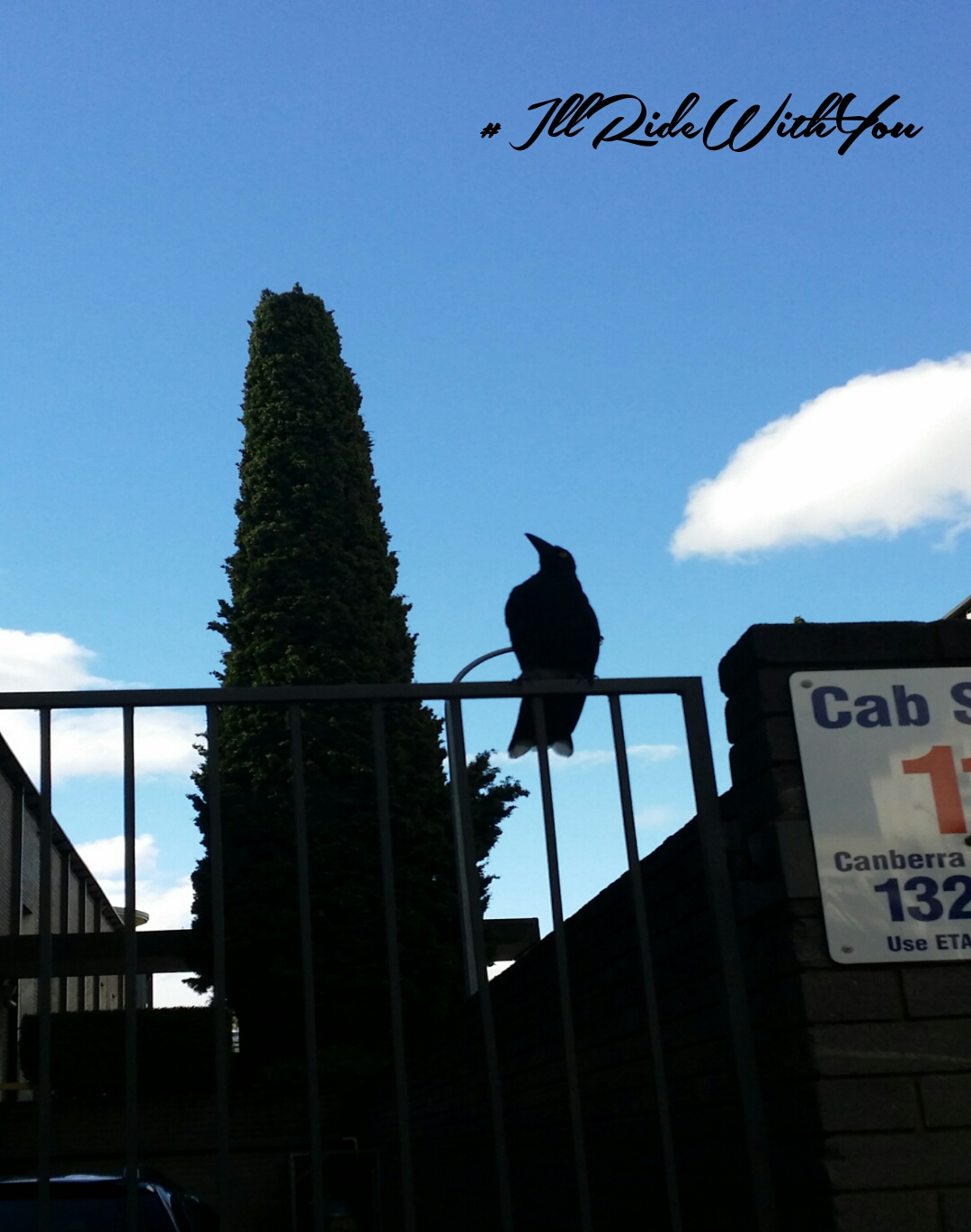
Australia: Was #IllRideWithYou Worth It?

January 18, 2015 By Correspondent

Tara Ashford, Canberra, Australia, SSH Blog Correspondent

On 15 December 2014, Man Haron Monis held eighteen people hostage in the middle of the Sydney. During the siege he forced several of the hostages to hold up a black flag with the shahādah on it in white lettering. Knowing and seeing that Muslims, especially women who wear the hijab or other religious garb, would likely experience an increase in street harassment, Tessa Kum created the hashtag #IllRideWithYou to express solidarity and offer what assistance she could to people feeling vulnerable. It trended globally on Twitter and all my friends were talking about it.

When the hashtag took off, opinions varied as to just what effect the hashtag was having. I know many of the first articles I saw referring to it had glowing praise for this ‘lesson in how to respond to terrorism’. That link showcases tweets from a number of Muslim people expressing the reassurance they took from seeing the hashtag, and indeed here’s another from lawyer Mariam Veiszadeh that describes some of her own experience of being visibly Muslim during this tragedy. On this measure, #IllRideWithYou is surely a success – its originator set out to offer some modicum of comfort, and that is what at least some people received.

However, there has also been no shortage of criticism as attention to this hashtag grew. These have come from two opposing directions. First up, there have been a few conservative politicians and commentators who contend that street harassment of Muslim women is not something that happens, or at least not with any frequency, and as such #IllRideWithYou is unnecessary and offensive. But, this point is not debateable. We know that street harassment is a major problem. We know that Muslim women, in particular, are subject to street harassment. And we know that Australia is no magical safe haven from racist and sexist abuse.

More worthy of our attention is criticism from members of the Muslim community. They seek to remind us that there are huge, insidious, systemic issues at play here, and we haven’t even come close to addressing the prejudices and hate that lead to street harassment. Some people lumped these criticisms in with the first group as ‘haters’ who ‘aren’t helping’. But that’s a mistake. In amongst the pride and satisfaction of feeling like we have made a contribution, we need to be reminded that a hashtag is not enough. We need to join in with the conversation that demands more. I disagree with those who would call #IllRideWithYou hollow, but there is truth in the sentiment that this is not a solution. I think that’s okay though. Few people using the hashtag set out to solve street harassment and discrimination, and so long as we remember that there is still a big problem that needs solving, we can also take joy in having made a positive contribution to our community.

It is clear to me that #IllRideWithYou has had a positive impact on many people – making them feeling safer when the tide of misogyny and islamophobia would have them forced out of public spaces with a million micro- and not so micro-aggressions. But the other step we need to take when we look back on this phenomenon, a truly vital step, is to consider the costs. There has been suggestion that some, in their ill-thought-out attempts to help, may approach people in public and put inappropriate pressure on them to ride together. In such an ungoverned and impromptu movement this seems inevitable to me, and creating a different kind of street harassment is certainly a cost. Likewise, in the link above, Tessa Kum has spoken about the overwhelming demands for interviews and massive amounts of aggressive harassment that people have directed at her after her coining of the hashtag. This personal cost has not changed her mind about the necessity of expressing compassion and solidarity in the way that she did, but it too is an important consideration for us when looking at the ongoing effects of #IllRideWithYou. Doubtless that strain will be with her longer than a fleeting hashtag.

This was not a huge organised campaign against street harassment and bigotry. In the scheme of things, a hashtag is just a small gesture. But small can still be valuable. If we have learnt one thing from street harassment, it’s that one interaction can flavour an entire day. It is my belief that #IllRideWithYou won’t continue as a massive movement for change, it won’t be a singular triumph in the history of Australian race relations or gender equality. But for at least a few days, people around Australia had days that tasted of solidarity and support. In France, where the recent attack on the Charlie Hebdo headquarters left journalists and cartoonists dead and communities growing more divided, #VoyageAvecMoi appeared briefly, although to much less fanfare and uptake. Strangers supporting each other is not new. If we take the time to shoulder part of the burden, we can make sure that the respect and compassion of strangers continues to be a roadblock to public hatred and street harassment.

Tara works with AWAVA (the Australian Women Against Violence Alliance) indulging her love of social media. You can find her on Twitter as @angelbird72 or @Tash_Because or being silly as one half of the ‘slice-of-life’ podcast Heaps Funny But.

Share

Filed Under: correspondents, street harassment

“I have countless examples of harassment from my time there”

January 16, 2015 By Contributor

I am 30 years old now, married and have a small baby.  When I was 19 or so, I went to Walmart one evening (not late).  In the parking lot a car drove past me and I could feel eyes/heard a comment but ignored it and walked into the store. Unbelievably, not 5 minutes later a man (from the car) walked up to me in one of the front aisles of the store.  He walked straight up to me and told me I looked like a slut and that my sister was a whore and sucked dick. (???).

So I got REAL loud with him, as we were near the entrance and there was enough people around.  I said, “What the f*** did you just say to me?”  as loudly as I could to draw attention, and he walked away.  I even yelled at him as he walked off.  I found a store manager and asked that they remove the man from the store.  I was too young to know that I should have dialed 911.  Always dial 911 if you feel threatened.  The manager said okay, and 15 minutes later the same man was 10 feet away from me in another aisle.  I was stunned, and immediately went to check out.  I made several calls to Walmart after that but they obviously didn’t care.  I am glad I no longer live in that city.  I have countless examples of harassment from my time there.

Optional: What’s one way you think we can make public places safer for everyone?

Billboards, tv/radio/paper ad telling me it is not ok to harass women.  State the legal consequences for harassment.

– Laura Q

Location: San Antonio, TX

Share your street harassment story for the blog.
See the book 50 Stories about Stopping Street Harassers for more idea

Share

Filed Under: Stories, street harassment

« Previous Page
Next Page »

Share Your Story

Share your street harassment story for the blog. Donate Now

From the Blog

  • #MeToo 2024 Study Released Today
  • Join International Anti-Street Harassment Week 2022
  • Giving Tuesday – Fund the Hotline
  • Thank You – International Anti-Street Harassment Week 2021
  • Share Your Story – Safecity and Catcalls Collaboration

Buy the Book

  • Contact
  • Events
  • Join Us
  • Donate
  • Facebook
  • Instagram
  • Pinterest
  • Tumblr
  • Twitter
  • YouTube

Copyright © 2026 Stop Street Harassment · Website Design by Sarah Marie Lacy