• About Us
    • What Is Street Harassment?
    • Why Stopping Street Harassment Matters
    • Meet the Team
      • Board of Directors
      • Past Board Members
    • In The Media
  • Our Work
    • National Street Harassment Hotline
    • International Anti-Street Harassment Week
    • Blog Correspondents
      • Past SSH Correspondents
    • Safe Public Spaces Mentoring Program
    • Publications
    • National Studies
    • Campaigns against Companies
    • Washington, D.C. Activism
  • Our Books
  • Donate
  • Store

Stop Street Harassment

Making Public Spaces Safe and Welcoming

  • Facebook
  • Instagram
  • Pinterest
  • Tumblr
  • Twitter
  • YouTube
  • Home
  • Blog
    • Harassment Stories
    • Blog Correspondents
    • Street Respect Stories
  • Help & Advice
    • National Street Harassment Hotline
    • Dealing With Harassers
      • Assertive Responses
      • Reporting Harassers
      • Bystander Responses
      • Creative Responses
    • What to Do Before or After Harassment
    • Street Harassment and the Law
  • Resources
    • Definitions
    • Statistics
    • Articles & Books
    • Anti-Harassment Groups & Campaigns
    • Male Allies
      • Educating Boys & Men
      • How to Talk to Women
      • Bystander Tips
    • Video Clips
    • Images & Flyers
  • Take Community Action
  • Contact

Legislators to address upskirt photos

November 24, 2014 By HKearl

Last week I co-led The OpEd Project seminar with 15 Hispanic legislators from across the country. Last Thursday, they read op-eds in breakout groups and one group read my op-ed on upskirt laws. I am thrilled that three of the group members (pictured) from New Jersey, New Mexico, and New York (go “New” states!) all immediately said they would work to amend their state’s invasion of privacy law to cover upskirt photos!! The New York legislator emailed his staff that day & they’re drafting language.
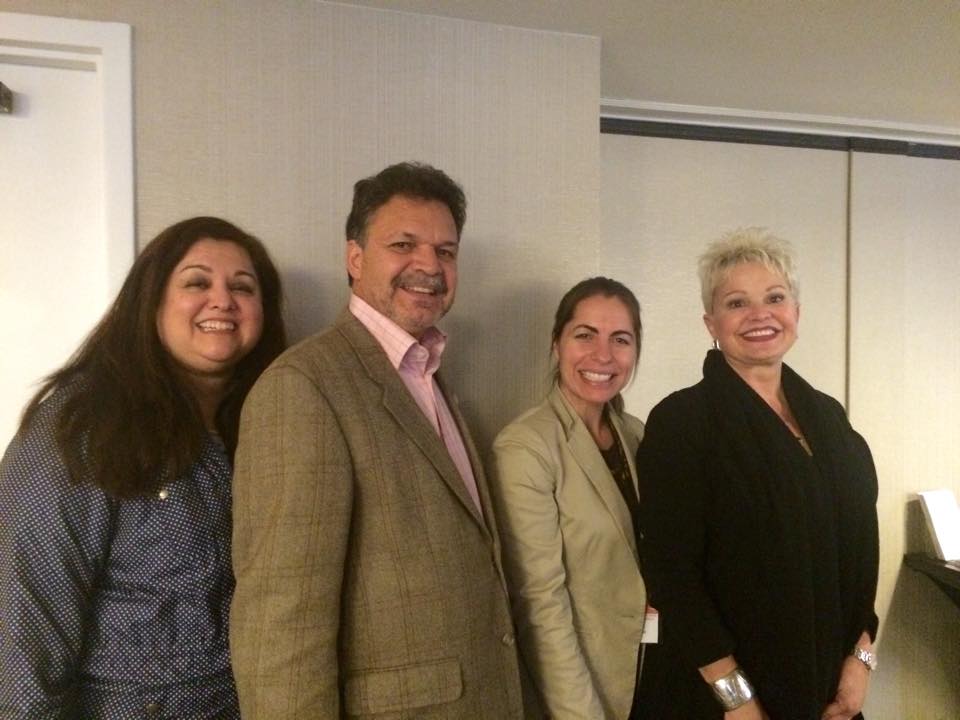

Annette Quijano (NJ), Felix Ortiz (NY) and Nora Espinoza (NM)
Share

Filed Under: SSH programs, street harassment

#16Days of Activism Against Gender Violence Starts Tomorrow

November 24, 2014 By HKearl

The 16 Days of Activism Against Gender-Based Violence Campaign starts tomorrow!

This is from UNiTE!:

“The iconic Empire State Building and the United Nations building and large screens in Times Square in New York City will be lit orange! From marathons to film forums and marches, orange events have been planned around the world.

Check out stories, videos and other resources at UN Women’s website: http://ow.ly/EDJGx Each day we will be looking at how violence against women impacts development in a host of areas, including poverty, environment, economy, health, conflict, education and more!

Join the conversation on social media using the hashtags #orangeurhood and #16days. Click here for messages and images that you can use on social media.

Orange your social media accounts! How? It’s quite simple – you can show your support and orange your Twitter and Facebook profile pictures by adding an orange Twibbon filter here: http://j.mp/twibbon16days

Take action locally and use the colour orange visibly and creatively. Orange iconic buildings in your community!

We would love to hear from you, so please share your actions and photos on our Facebook event page: http://ow.ly/EDK0P   

We can’t wait to orange all neighbourhoods with actions to end violence against women and girls! Let’s go!

Urjasi Rudra
Say NO – UNiTE Team, UN Women”

Share

Filed Under: 16 days, Resources, street harassment

Cameroon: Public Sexual Harassment – A Comparative Investigation of Muslim and Christian Cultures

November 23, 2014 By Correspondent

Ngwentah Berlyne Ngwalem, Buea, Cameroon, SSH Blog Correspondent

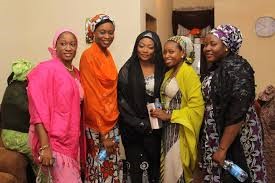
Muslim women after a party.

Many cultures have placed inconceivable restrictions on women’s choices and bodies. I remember being told firmly and reassuringly by men that I would never see a Muslim woman who is covered get sexually harassed. Of course with the knowledge and opinion I have about harassment – that it has to do with male dominant control over women — I knew their assumptions were ignorant. But it pushed me to want to understand more about why people think women in more conservative cultures like in the Cameroonian Muslim community and Muslim cultures globally still get harassed and have their bodies and dress code choices policed, which seems to be a progressive act.

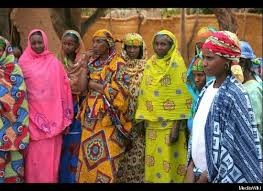
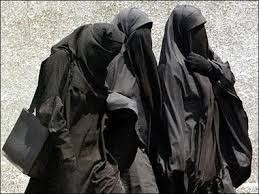
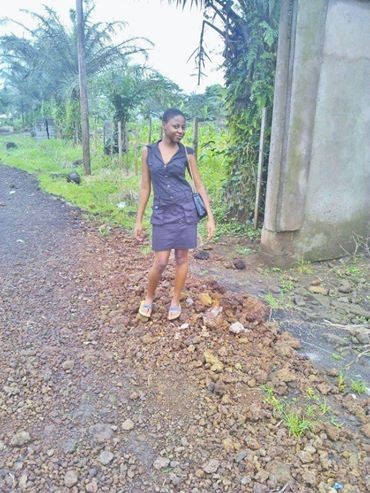
Daily wear for Cameroonian Muslim Bororo and Hausa women. This is what is termed modest for Cameroonian Muslim and other Central and West African Muslim women. Very few Muslim women in Cameroon wear Hijab and Niqab. Many more women in North Africa like in the Middle East wear Hijab.

I had no idea that women who got sexually harassed while wearing a hijab could still be told that they tempted men because they were not wearing the Nijab until an Egyptian-based women and human rights defender, Angie told me this recently. I was shocked to hear of the senseless demands placed on women by society, demands that keep increasing each day.

I’ve been holding discussion sessions with many individuals hoping to understand why the subject of women’s mode of dressing is usually used as an excuse to commit crimes against them and skillfully deny them access to enjoy public freedom and safety.

A reference was made to the recent law in Saudi Arabia banning women’s “tempting eyes” as a symbol of society’s desire to someday see women disappear from the surface of the earth. What I wanted to find out was exactly what the people in my society thought of these demands placed on women bymany societies which never seems to be good enough or act as an assurance that women will be secured and free in public space.

The way most men globally insinuate women should start dressing in order to not be a temptation to men.

Knowing the thoughts of our country’s peopleabout the fact that Muslim women still get sexually harassed while fully covered is also crucial in making my point that adress code policing women in Cameroon is senseless. Women are refused access into offices, churches, Universities and it is okay to catch and jail women with the excuse that they would cause men to lose focus and think only of having sex with these women.

“Muslim men have a very high libido, way higher than that of Christian men. Muslim men cannot control themselves with the kind of extremely high libido they have, that is why Muslim women need to cover their bodies completely so that they can be safe and not be sexually harassed by their men,”one young man explained to me.

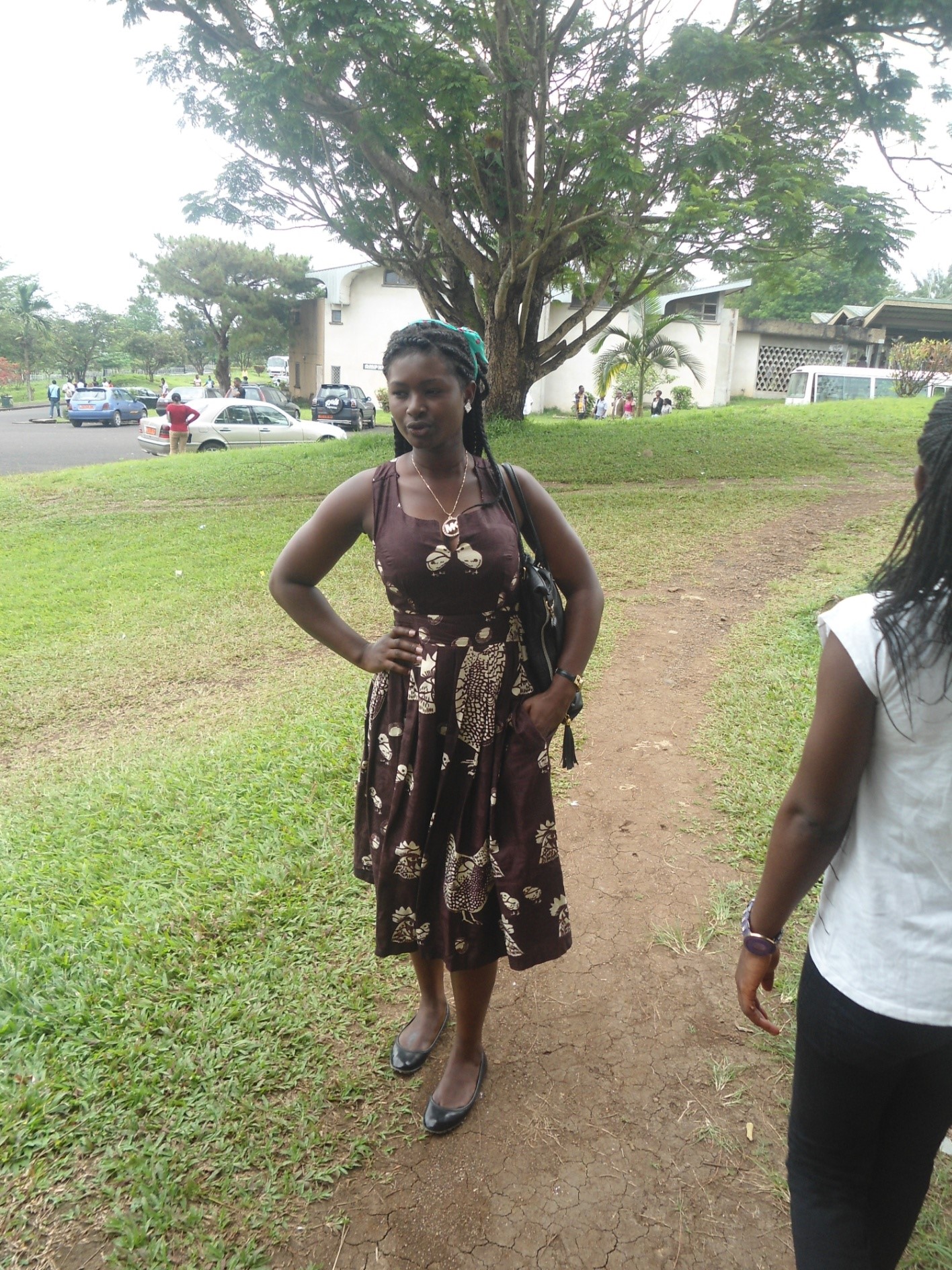
Daily wear for Cameroonian Christian women. This is a University of Buea student.

As if that was not a disturbing excuse which shows people’s lack of ability to question societal constraints placed on women for no befitting reason in many cultures- with no interest seeking to understand why these things happen mostly  to women globally and join in the fight against such norms that are put in place to ensure women know no peace, another young woman said,  “They get sexually harassed because though they cover their body, their faces are still exposed and since they are so pretty men get tempted by their beauty.”

There is a common believe in Cameroon that Muslim women generally are more attractive than any other race of women in the world. Muslim women both in and out of Cameroon are considered by many to have a certain facial structure which is usually long and small and considered to be a more attractive face type.

Another man explained to me that, a certain type of dressing in the Muslim culture signifies that a woman is single, so when she goes out men will likely sexually harass her because they are aware she is not married.

It is hard to explain how all the Christians I conversed with spoke of these Muslim men as if they know them so well. It is hard to comprehend how Cameroonians will condemn women for not dressing well as a reason they are sexually harassed.

I was recently sent out of the University of Buea by a male guard for supposedly being indecently dressed. No other person had a problem with my clothes.
And set an example for Cameroonian Christian women to follow by using the modest dressing of Muslim women, then when they are enlightened that Muslim women get sexually harassed despite the fact that they are covered, they still blame these Muslim women instead, not the men for not covering themselves well enough.

I was demoralized at the fact that most peoples’ responses just seemed to be making excuses for men except for one man who thought differently about harassment in the Muslim community being a symbol of masculine dominance. As he opines, “Muslim women still get street/sexually harassed because Muslim men believe that women were created for their pleasure so they assume they have full control over them.”

I was at least relieved that there was one person amongst the groups of people I spoke to who did not blame women for being the cause of their sexual harassment in public places.

Berlyne is a Cameroonian-based women’s human rights activist, passionate and determined to put an end to social injustice of any kind. You can find her on twitter @Luvequalityrule and Facebook.

Share

Filed Under: correspondents, street harassment

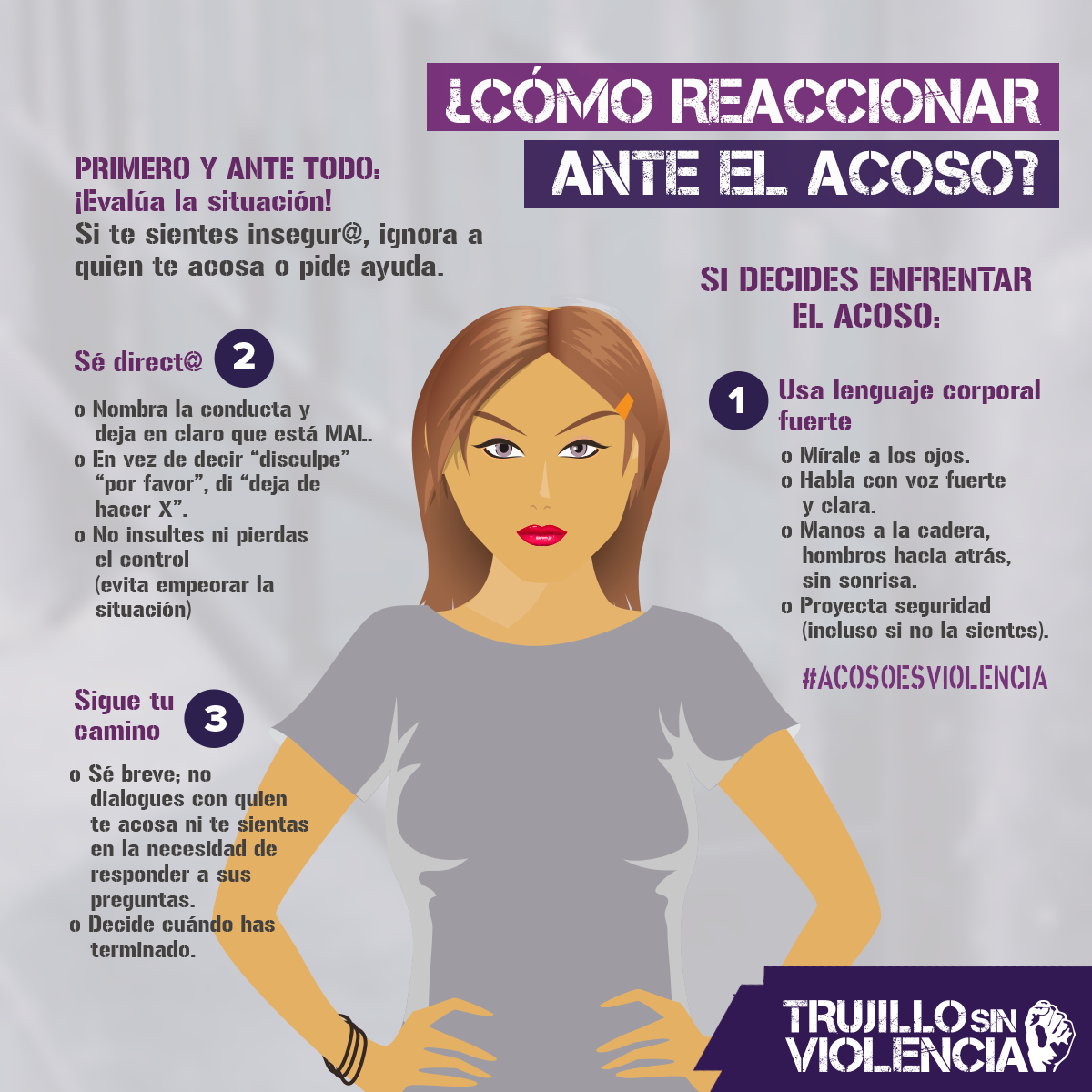
Como Reaccionar Ante El Acoso

November 23, 2014 By HKearl

The new Peruvian group Trujillo sin violencia asked if they could adapt our “Quick guide to addressing street harassment” graphic for Spanish speakers. Of course we said yes and here is the end product! Excelente!

By Trujillo sin Violencia
Share

Filed Under: Resources, street harassment

USA: A Brief History of Anti-Harassment Activism in Comics

November 22, 2014 By HKearl

Katie Bowers, NY, USA, SSH Blog Correspondent

As a community educator, I work with a wide range of people.  On any given day, I might spend the morning with adults talking about nutrition, the afternoon exploding homemade volcanoes with elementary students, and the evening working with high schoolers on a community change project.  I’ve got a Batman-level utility belt of tools and tricks to use whenever I’m teaching.  One of my favorite tools is comics.

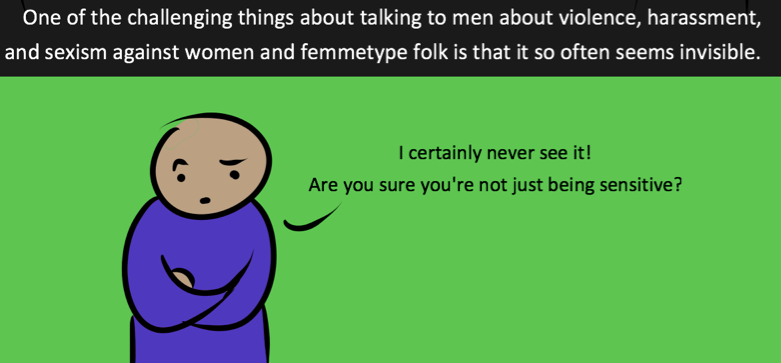
When we talk about social justice, we’re talking about complex systemic oppression, small, everyday injustices and big, in-your-face discrimination.  We’re talking about oppressions that, like street harassment, are only experienced by a portion of the population.  Other people may not even believe that a particular form of oppression is real.  As a result, social justice organizers and educators are often trying to make the invisible visible.

Comics are highly visible by nature.  Through rows of text on a screen or in a newspaper, comics jump out at us and demand to be read.  They are usually simple to follow and understand.  They are familiar and inviting, and can be made and distributed by anyone.  Most importantly, they have a long history of activism – including calling out street harassment.

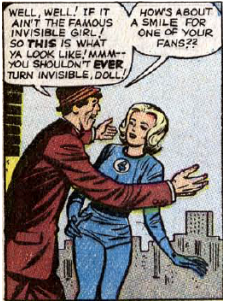
The first editorial or political cartoon dates back to 1720, and there are cartoons documenting women’s struggles in everything from the Triangle Shirtwaist Factory Fire to the fight for universal suffrage.  Comics have been talking about street harassment since at least the 1960’s.  In a Fantastic Four title from 1963, Sue gets accosted on the street by a man remarking on her looks and – of course – telling her to smile.  Being busy saving the city from peril apparently isn’t enough.  She also needs to look perky while doing it.  Fortunately for the Invisible Woman, her powers allow her to disappear – something many women wish they could do when they are catcalled.

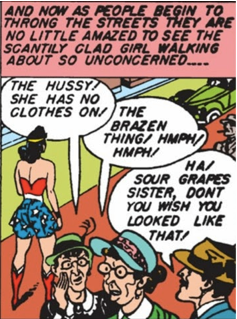
In 1974’s Wonder Woman Sensation comics, it doesn’t matter that Diana is new to the planet and already cleaning up criminals.  She immediately gets catcalled, with men ogling her and women calling her a “hussy”.  In one particularly poignant panel, one of her male catcallers manages to objectify Diana and the two women insulting her.  As early as 1974, comics were already showing how street harassment isn’t about how a woman looks or what she wears.

These days, more and more cartoonists are offering their commentary and personal experience with street harassment.  I believe that the reason for this is two-fold.  Firstly, the advent of the internet has made it much easier for women (and for all people) to start producing and distributing comics.  Cartoonists no longer have to break into newspapers or long-time comic publishers.  They can do themselves, and they can write about their own lived experiences.  Secondly, organizations like Stop Street Harassment, Girls for Gender Equity, Hollaback!, and many others have worked hard to get people talking about street harassment – and have they ever been successful.  With everyone from Fox News, The Daily Show, and Playboy talking about street harassment, it makes sense that artists are weighing in as well.

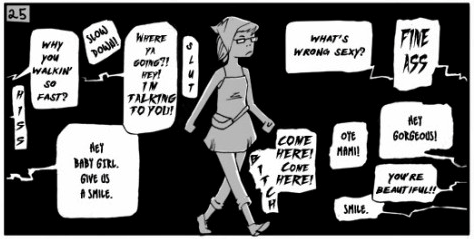
Many of the current cartoons are dedicated to making street harassment more visible.  Robot Hugs’ incredible long-scroll comic explores all sorts of different types of street harassment, as well the various things we say and do as a culture that make it possible to maintain a that harassment.

Lefty Comics also has a great example of what catcalling looks like on a day-to-day basis.  Ursa Eyer’s Cat Call takes it a step further to show how a lifetime of regular harassment leads women to be constantly defensive when out in public, and how even that becomes cause for harassment.

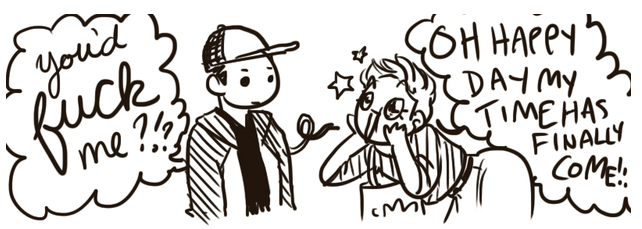
Other anti-harassment comics are those that explore the supposed thought process used by the men who street harass.  Kendra Wells’ comic looks at harassers and begs the question “What reaction did you expect to get?”


Some comics of this vein come from male allies who are asking their friends and fellow-Y-chromosome-havers the same question: why are you harassing women?  Check out Matt Bors for a good example, or xkcd’s take on bystander intervention.

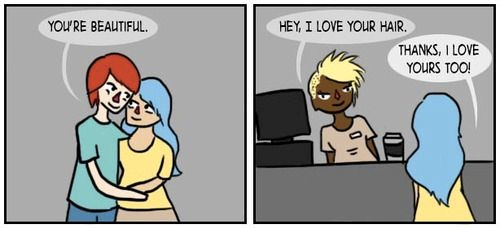
Finally, one of my very favorite anti-harassment comics is one that reminds us of the difference between a compliment and harassment.  Ultimately, whether or not it is harassment is up to the person on the receiving end of the action.  But as positivedoodles shows, there are a lot of ways to demonstrate your appreciation for others that aren’t derogatory, vulgar, or demeaning.


Comics are incredible tool for teaching social justice, and it’s fantastic to see so many artists speaking out against harassment.  Do you have a favorite anti-harassment comic you want share?  Send it to us on Twitter @StopStHarassmnt so we can share these tools with the world!

Katie is a social worker and community educator interested in ending gender-based violence, working with youth to make the world a better place, and using pop culture as a tool for social change. Check out her writing at the Imagine Better Blog and geek out with her on Twitter, @CornishPixie9.

Share

Filed Under: correspondents, Resources, street harassment

« Previous Page
Next Page »

Share Your Story

Share your street harassment story for the blog. Donate Now

From the Blog

  • #MeToo 2024 Study Released Today
  • Join International Anti-Street Harassment Week 2022
  • Giving Tuesday – Fund the Hotline
  • Thank You – International Anti-Street Harassment Week 2021
  • Share Your Story – Safecity and Catcalls Collaboration

Buy the Book

  • Contact
  • Events
  • Join Us
  • Donate
  • Facebook
  • Instagram
  • Pinterest
  • Tumblr
  • Twitter
  • YouTube

Copyright © 2026 Stop Street Harassment · Website Design by Sarah Marie Lacy