• About Us
    • What Is Street Harassment?
    • Why Stopping Street Harassment Matters
    • Meet the Team
      • Board of Directors
      • Past Board Members
    • In The Media
  • Our Work
    • National Street Harassment Hotline
    • International Anti-Street Harassment Week
    • Blog Correspondents
      • Past SSH Correspondents
    • Safe Public Spaces Mentoring Program
    • Publications
    • National Studies
    • Campaigns against Companies
    • Washington, D.C. Activism
  • Our Books
  • Donate
  • Store

Stop Street Harassment

Making Public Spaces Safe and Welcoming

  • Facebook
  • Instagram
  • Pinterest
  • Tumblr
  • Twitter
  • YouTube
  • Home
  • Blog
    • Harassment Stories
    • Blog Correspondents
    • Street Respect Stories
  • Help & Advice
    • National Street Harassment Hotline
    • Dealing With Harassers
      • Assertive Responses
      • Reporting Harassers
      • Bystander Responses
      • Creative Responses
    • What to Do Before or After Harassment
    • Street Harassment and the Law
  • Resources
    • Definitions
    • Statistics
    • Articles & Books
    • Anti-Harassment Groups & Campaigns
    • Male Allies
      • Educating Boys & Men
      • How to Talk to Women
      • Bystander Tips
    • Video Clips
    • Images & Flyers
  • Take Community Action
  • Contact

USA: #NotJustHello: What’s so bad about starting a conversation?

July 3, 2014 By Correspondent

Lorna M. Hartman, Spokane, WA, SSH Blog Correspondent

Twitter has provided women worldwide with an avenue for mass sharing of harassment and assault experiences.

It seems easy for some men to hear a story from a woman and simply dismiss it, as many women can testify. When hashtags go viral with dozens or even hundreds of women sharing these experiences, though, it’s much harder for people to simply dismiss them.

It’s harder to say, “You must have overreacted. It doesn’t sound like that big a deal,” when you’re saying it to several hundred or several thousand women from all over the world citing similar experiences.

Writer Aja Romano of The Daily Dot published “#NotJustHello identifies a troubling trend in street harassment” on June 22. She reported, “We’re sure Twitter user UJohnsmeyer probably meant well. But his defense of men who talk to women on the street may have sparked the weekend’s most engaging social commentary hashtag.”

Here’s a piece of the Twitter conversation that led to #NotJustHello:

@UJohnsmeyer  @Feminist_Inti @Karnythia ever think that maybe a guy sees a chick he thinks is hot and just wants to try to start up a convo?

@Karnythia  @UJohnsmeyer @Feminist_Inti Ever think women don’t want to strike up convos with strange men?

More women joined the conversation, telling about their experiences. Finally, @Karnythia said:

@Karnythia We do understand that it’s #NotJustHello right? That street harassment is never that calm or polite?

The new hashtag took off. Here are some samples of both women’s experiences, and of men’s reactions to the hashtag:

@dale_in_denver @KaeAltoBella @AJStream If there is an expectation of a response, then it’s #notjusthello. Ignoring isn’t working or this wouldn’t be a #.

@notallmikaylas Your desire to hit on me does not trump my right to be left alone. #NotJustHello

@hannaheff When I refused to acknowledge a stranger’s compliment, he invaded my personal space and said, “I’m stronger than you.” #NotJustHello

@UJohnsmeyer How do you get women if you can’t say hello to them? #notjusthello

@theamandabatty ‘Hello’ is a smile or a respectful nod, not a catcall, a jeer, a crude gesture or name calling when I don’t respond. #NotJustHello

‏@BettorOffSingle [this individual posted several dozen times, attempting to monopolize the hashtag—his post below is representative]

Hey stupid women: #yesallwomen #notjusthello #feminism all lesbian constructs for seducing gullible str8 women by turning them against men.

@cameralinds_ It’s #notjusthello, it’s fear of retaliation for both responding and not responding.

@RynJ21 It’s #NotJustHello when I have a smile I created specifically to deal with street harassment. I call it, “Please don’t kill me.”

Male allies posted as well:

@HolzmanTweed When I was a teen, a guy tried to “teach” me how to catcall, explaining “the rules:” (1/x) #NotJustHello

@HolzmanTweed He told me look for a ring, an ankle chain, something that flagged her as taken so that I wouldn’t disrespect her man. (2/x) #NotJustHello

@HolzmanTweed There’s no pretense on the guy side that it’s about anything but establishing & confirming power, a compliance check. #NotJustHello

@wisemath Brothers, go read the #NotJustHello tag. If that doesn’t move something in you, I’ll pray for you.

@RobScowen For the male “not allowed to flirt” whiners, please read #NotJustHello *carefully* without feeling like the [f******] victim and educate self

As some women tweeted, if men understood the humiliation and the fear women feel when they are harassed on the street, fewer men would do it. Women’s personal risk in possibly being verbally or physically assaulted by a displeased harasser is real.

Last September, blogger UnWinona told of one terrifying experience while commuting on the Metro in California.

On this occasion a bicyclist brought his bike in with him. Despite an empty car, he sat across from her. When he started talking to her, she calmly told him to leave her alone as she was reading.

He walked to his seat in a huff, muttering about it not being his fault she was pretty. But he didn’t stop there; he continued to mutter and complain, and after a few minutes he got back up and started pacing. Then he started screaming at her, and then punching the train.

She was terrified. She froze in her seat, ready with her feet up in case he attacked her, certain that if she got up and walked away she’d be attacked when she turned her back to leave.

For two stops he kept this up. No one came to her aid; no one even came to see what was happening. The second she reached her station, she ran out the door.

She concluded [emphasis hers], “So when people (men) want to talk about ‘legitimate’ forms of assault, tell girls they should be nice to strangers and give men the benefit of a doubt, tell them to consider it a compliment, tell them to ignore the bad behavior of men, I want them to be forced to feel, for even one minute, what it feels like to have so much verbal hatred and physical intimidation thrown at them for nothing more than being female and not wanting to share.”

Lorna is raising three young, kindhearted male allies and has worked on rape and interpersonal violence since the 1990s, including serving on the local rape hotline, answering calls, and driving to emergency rooms to advocate for victims and connect them with resources they needed.

Share

Filed Under: correspondents, street harassment

“I’m not merely an object.”

July 3, 2014 By Contributor

I was walking to meet my husband at his work for his lunch break. I crossed a busy street to get to his work and noticed a car full of shirtless guys. I was passing their car when the driver started honking at me and yelling “Hey baby” at me. I ignored him for a while but when he did not stop I flashed my left hand (with my wedding ring on it) at him.

I could hear from the open windows the chorus of “OHHHHHH” from his friends as they saw I was taken. After that they left me alone and drove off.

I was very insulted that these young men would have the audacity to continue honk at me and try to grab my attention even when I wasn’t interested. I was later ashamed and disappointed that I had to use my status relative to another man to stop the harassment.

I’m not merely an object. Just because I am with another man shouldn’t change the level of respect I’m given. Even married I belong to no one but myself.

– Anonymous

Location: Provo, Utah

Share your street harassment story for the blog.
See the book 50 Stories about Stopping Street Harassers for more ideas

Share

Filed Under: Stories, street harassment

Street Harassment in Boston

July 2, 2014 By Contributor

Sarah Chang, Guest Contributor
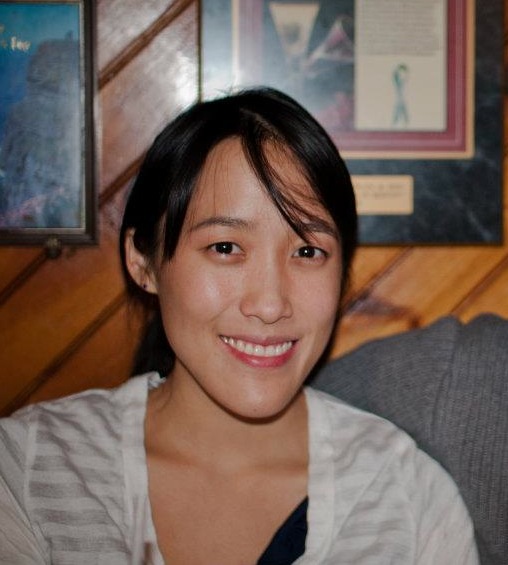
Sarah

I returned home from work on a late afternoon, parked my car on the street, and as I was getting out of my car, a man walking by and said, “Will you suck my dick? as he passed. The words didn’t even register until a few seconds later. He kept walking, and after I realized what he said, I looked in his direction to see who he was. I suddenly realized this man had actually made “suck my dick” comments to me previously, both times on the street by my residence. I felt angry that I was unsafe in my own neighborhood, and paranoid that perhaps this man was targeting me and knew where I lived.

I emailed the residents in my building to inform my neighbors about this person. With my description of the man and incident, another woman in my building said he had also said inappropriate things to her and her sister, and that they had filed a police report. This made me feel better, knowing he wasn’t targeting just me, but obviously it was equally unfortunate that this man felt entitled to indiscriminately harass women all the time. I followed suit and went to the police station to file a report.

At the station, the police took my report but said they could do nothing because I didn’t know the man’s name and could only provide a general physical description. I asked them what I should do the next time it happened. The officer said to call 911, and if possible, follow the man from a safe distance and wait for the police to arrive.

A few months later, I was walking by this same police station and the man that harassed me actually walked out of the police station. I waited for him to leave before walking into the station, letting the officer there know that he was the man I filed the police report on. The officer said that he knew who the man was, said that he was harmless, and said that he’d talk to his parole officer. The officer didn’t seem to take me very seriously.

I then contacted my neighbor to tell her that I had identified the man and asked if she would come down to the police station with me to corroborate and press the issue. My neighbor didn’t want to do much more other than to leave it be and just avoid the man whenever she ran into him.

I am an Asian American woman, and I experience street harassment all the time. Sometimes it’s just the leering, or just the “hey baby”s or the explicit sexual requests like the example above. But more often than not, it turns race-related: “Love me longtime?”, “Sucky sucky, five dollar”, and the “ni-haos” in my face that sound like meowing. The race-related street harassment is a one-two punch because it thinly veils hatred behind sexual subjugation. It’s common and it happens frequently enough that I’m habitually on edge when I walk outside by myself.

My natural defense mechanism against street harassment and unwanted attention is to have a scowl on my face. This scowling defense mechanism affects my day-to-day public interactions. A recent example of this is that my husband, an Asian American man, will often recount all the people he encounters when he is out taking the dog for a walk. These encounters however, consist of friendly hellos to him (and the dog) and remarks about how cute our dog is. Hardly anyone ever greets or tells me how cute my dog is when I take her for a walk. I attribute this difference to my scowl and general “don’t bother me” attitude, which I’m not even aware of. Walking the dog while male and walking the dog while female shows how street harassment makes a deep impact on seemingly trivial activities.

Speak up about and against street harassment. It’s not ok and I’m still going to report it to the police. I’d really like to enjoy a walk my dog sans scowl, the way that it’s supposed to be.

Sarah Chang is a middle and high school math teacher in the Boston Public Schools.  She resides in Boston’s South End and is passionate about education and social justice.

Share

Filed Under: Stories, street harassment

“They stayed silent and I continued walking home”

July 2, 2014 By Contributor

I was walking home from University when I heard a man shout out “Hey, Shorty!”

I was furious. I turned to find a group of big men sitting on the front steps of their apartment building. I was tired of being harassed and so I decided to say something.

The first thing that I could think of came out of my mouth. With dominating body language and a firm voice I asked back, “Excuse you?”

They stayed silent and I continued walking home. I have walked past that building many times and never again was I called out to.

Do you have any suggestions for dealing with harassers and/or ending street harassment in general?

If you are in a safe area it has always worked to question someone’s motives. Phrases such as “excuse you” have worked for me in the past.

– Anonymous

Location: Ogden, Utah

Share your street harassment story for the blog.
See the book 50 Stories about Stopping Street Harassers for more ideas

Share

Filed Under: Stories, street harassment

The USA will never be “land of the free” if there is street harassment

July 2, 2014 By HKearl

My latest op-ed on #streetharassment:

“…Street harassment isn’t merely a quality of life issue; this is a human rights issue and the United States needs to treat it that way.

At the national level, this could mean the Obama administration and national advocacy groups include it as a form of discrimination and gender violence in the work they do.

At the state level, governments could become more uniform in outlawing up-skirt photos, following, and hate crimes, each types of serious harassment that are perfectly legal in some states.

Locally, mayors, city council members, and transit agencies should work with citizens on efforts to make their communities safer. Boston, Philadelphia, New York City, and Washington, DC, are leaders in this, each having held a city council hearing on street harassment and/or launched an anti-harassment campaign on their transit system. A few months ago in New York, Mayor de Blasio promised to address street harassment during his term in office. Hopefully he will keep that promise.

We also need more education about what street harassment is and to teach the next generation how to interact with each other in public spaces with respect and consent.

In the United States, we like to see ourselves as a leader in the world, a nation of freedom and equality, but to me and to millions of people who feel unsafe in public spaces, that will never ring completely true until we address and end the widespread problem of sexual harassment and assault in public spaces.”

Share

Filed Under: street harassment

« Previous Page
Next Page »

Share Your Story

Share your street harassment story for the blog. Donate Now

From the Blog

  • #MeToo 2024 Study Released Today
  • Join International Anti-Street Harassment Week 2022
  • Giving Tuesday – Fund the Hotline
  • Thank You – International Anti-Street Harassment Week 2021
  • Share Your Story – Safecity and Catcalls Collaboration

Buy the Book

  • Contact
  • Events
  • Join Us
  • Donate
  • Facebook
  • Instagram
  • Pinterest
  • Tumblr
  • Twitter
  • YouTube

Copyright © 2026 Stop Street Harassment · Website Design by Sarah Marie Lacy