• About Us
    • What Is Street Harassment?
    • Why Stopping Street Harassment Matters
    • Meet the Team
      • Board of Directors
      • Past Board Members
    • In The Media
  • Our Work
    • National Street Harassment Hotline
    • International Anti-Street Harassment Week
    • Blog Correspondents
      • Past SSH Correspondents
    • Safe Public Spaces Mentoring Program
    • Publications
    • National Studies
    • Campaigns against Companies
    • Washington, D.C. Activism
  • Our Books
  • Donate
  • Store

Stop Street Harassment

Making Public Spaces Safe and Welcoming

  • Facebook
  • Instagram
  • Pinterest
  • Tumblr
  • Twitter
  • YouTube
  • Home
  • Blog
    • Harassment Stories
    • Blog Correspondents
    • Street Respect Stories
  • Help & Advice
    • National Street Harassment Hotline
    • Dealing With Harassers
      • Assertive Responses
      • Reporting Harassers
      • Bystander Responses
      • Creative Responses
    • What to Do Before or After Harassment
    • Street Harassment and the Law
  • Resources
    • Definitions
    • Statistics
    • Articles & Books
    • Anti-Harassment Groups & Campaigns
    • Male Allies
      • Educating Boys & Men
      • How to Talk to Women
      • Bystander Tips
    • Video Clips
    • Images & Flyers
  • Take Community Action
  • Contact

USA: Safe Streets and Reproductive Rights

January 22, 2014 By Correspondent

Heather Frederick, USA, SSH Blog Correspondent

Via http://www.wwmt.com

Today is the 41st anniversary of Roe vs. Wade, the Supreme Court ruling that legalized abortion in the United States. As the U.S. waits for the Supreme Court to issue a ruling on the “Buffer Zone” laws regarding how close to an abortion clinic entrance protesters can be, I was struck by the fact that I have never heard anyone describe what goes on outside these medical facilities as street harassment. I know that abortion is a difficult and controversial subject but what we’re talking about here is the right to exist in public free from violence.

Women and their partners, clinic workers, and even delivery drivers get yelled at as they enter offices where abortions are performed. Even if we completely disregard the fact that anti-choice protesters take pictures of patients, post employee names and personal information (license plate number, address, phone number, picture, etc.) in public forums ripe for digital harassment, and write threatening letters to businesses that provide services to clinics, just the yelling alone makes everyone uncomfortable. And let’s not forget that most clinics do not only provide abortion care, they provide cancer screenings, breast exams, birth control and all manner of reproductive healthcare, including abortions.

In his dissent against the Buffer Zone law passed in 2000 Justice Antonin Scalia seemed disgusted at the“unheard of right to be let alone on the public streets.” If this is the mindset of one of the men whose decisions shape not only the law of the land but public opinion in the U.S., we’re screwed. Even if what protesters are yelling is not violent or mean, even if they are yelling that they will pray for you, even if the signs they are holding are of Jesus and not aborted fetuses, they are harassing women in public spaces. Stopping street harassment is about respecting everyone’s bodily autonomy, as is the Reproductive Justice Movement.

News outlets around the country failed to remain unbiased in their reporting on this issue. Many prominent news sources like The New York Times and NPR interviewed “cheery” old ladies who try to convince women that they aren’t making the best choice for themselves. The truth is anti-choice groups like Operation Rescue, of which NPR’s interviewee Eleanor McCullen is a member, are domestic terrorists, responsible for verbal and physical assaults, bombings and murders. Her suggestion that she “should be able to walk and talk gently, lovingly, anywhere with anybody,” just makes my skin crawl.
No, ma’am. You should not be able to walk and talk in any way anywhere you want to with whomever you want to. People have a right to be left the hell alone! When we speak out against street harassment and claim we want the streets to be safe for all people I hope that we mean safe for women seeking abortions, sex workers, women of color, disabled women, trans* folk and women whose religious expression is in the minority too. Every single individual deserves to be able to move through the public safely and without fear. It’s our job to make it happen.
Heather Frederick works a Supervisor for The National Dating Abuse Helpline, www.loveisrespect.org. Her passions include intersectional feminism, reproductive justice, languages, travel, blogging at www.FeministActivism.com (@FeministSNVA) and bringing an end to human rights abuses.
Share

Filed Under: correspondents, street harassment

Digest of Street Harassment News: January 20, 2014

January 20, 2014 By SSHIntern

** Sign up to receive a monthly news e-newsletter from Stop Street Harassment **

Street Harassment Stories:

Share your story! You can read street harassment stories on the Web at:

Stop Street Harassment Blog

Bijoya in Bangladesh

Collective Action for Safe Spaces

The Hollaback sites

Ramallah Street Watch in Palestine

Resist Harassment in Lebanon

Safe City India

Safe Streets in Yemen

Street Harassment in South Africa

Street Harassment In the News, on the Blogs:

* Hollaback, “Week In Our Shores: Getting the Word Out Edition!”

* Hindustan Times, “Street art takes on sexual harassment”

* Al-Monitor, “Sexual harassment in Egypt still widespread”

* Authint Mail, “In Kasmir, parents of victim girls seek punishment for “drunk” eve-teasers”

* The New Indian Express, “Were You Asking to be Eve-teased in That Dress?”

* EurasiaNet, “More Reflections on Azerbaijan: When Will the Catcalls Stop?”

* RH Reality Check, “PSA Raises Awareness of Street Harassment in Egypt”

* CBC News, “Sexual harassment on the rise on transit, say police”

* Greater Greater Washington, “Raising awareness can curb street harassment”

* Jezebel, “Philly Has a Street Harasser Who Drapes His Dick in Swiss Cheese”

* Huffington Post, “Here’s The Best Way To Holler At A Woman On The Street”

* Hollaback, “Street Harassment and Internet Harassment: One and the Same?“

Announcements:

* We’re collecting stories about the street harassment of LGBQTAI people for a new web section — please consider sharing yours, if relevant!

* Meet SSH’s newest board member, Patrick Ryne McNeil, who specializes in the street harassment of gay and bisexual men.

* Welcome SSH’s spring intern Kendra Corbin!

* SSH’s first Blog Correspondents cohort of 2014 launched this month. They will write monthly articles through April.

10 Tweets from the Week:

* @Dontharassmebro “Hey mama, why are you angry? You’re beautiful. How about a smile?” 1. Not your mom. 2. No one asked your opinion. 3. No. #streetharassment

* @itnlpolitical “Ohh, I really want to marry that guy that whistled to me from his car!” .. said no girl ever. #streetharassment

* @sadiasmusings #lifeofamuslimfeminist #streetharassment listening to drunk white men catcall me as Muslim men on the side do nothing

* @rrachaelrae @EverydaySexism walking with boyfriend wearing shorts and a t-shirt, guy driving past yells at me “SLUT!” #everydaysexism #streetharassment

* @Sharon_Haywood when I askd my harasser if he was talking to me he said no-after getting over the shock that I actually have a voice

* @hollabackmumbai I was walking with my dad & a guy casually walks past us & knocks his elbows on my breasts #stories #harassment #endSH

* @msbrandiebrown Wish I was paying attention and said/did something 🙁 #EndSH #MBTAcreeps

* @maria_delrio I’ve just been catcalled in Catalan. It is still not ok. No matter the language you use, its discomforting and intrusive #EndSH

* @RSwirling Obviously we’re all obliged to listen to #streetharassment too – it’s their free speech rights to call me a whore all day

* @manda4444 Catcalling and street harassment is just that–harassment. Telling someone to take it as a compliment is ignorant and degrading.

Share

Filed Under: News stories, Resources, street harassment

A Message to Street Harassers

January 20, 2014 By SSHIntern

By Kendra Corbin, SSH Intern
Via Hollaback!

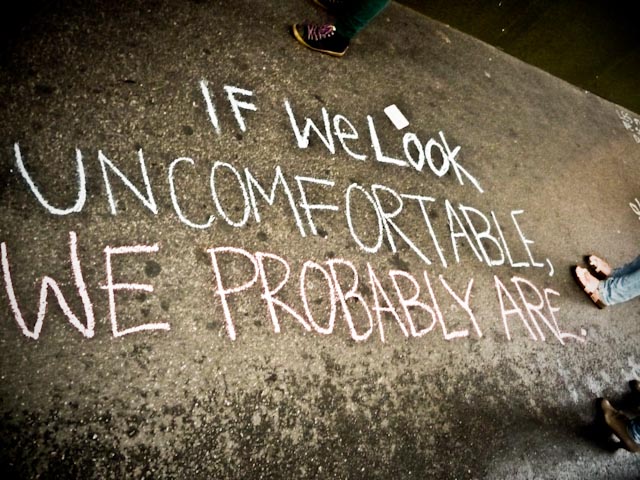
As a young woman, I’ve experienced my fair share of street harassment. I’ve been dealing with it for most of my life. For a long time, I tried to blow off the whistles and “hey baby” comments as just part of being a woman. Now I know better. Despite the lackluster belief that “it’s not a big deal,” it IS a terrifyingly big deal.

My most frightening experience happened when I was only 13-years-old. My older sister was 16 at the time. She had offered to drive my friend and I home late at night. We accidentally locked ourselves out of the car in an empty parking lot. As we waited for my parents, a group of men in a truck began to drive around us in circles while they honked, whistled, and laughed. Frightened and alone, we huddled together while we waited for them to lose interest and leave.

In retrospect, it disgusts me that those men found amusement in harassing terrified children. I also find myself growing angry, but I become angrier because I recognize that my experience is not uncommon. Street harassment is a subject that most women can relate to because they’ve experienced it themselves. Whenever I bring the subject up with friends or acquaintances, the conversation seems to flood with stories that all begin with, “Well, this one time…” In honor of these stories that have been shared with me, I would like to acknowledge just a few of the harassers that either I or my loved ones have encountered.

The man that yelled, “I didn’t know they made tits that big” to me as I walked to class, then demanded that I show him that “cherry pie under there.”

The man that tried to yank up my friend’s skirt while she was visiting DC.

The man that leered at my sister, then commented on her “nice ass legs.”

The boy on my school bus who was dared to grope my breasts when I was 14 (who was not successful because I promptly shoved back into his seat).

The man that slapped my friend’s behind as she walked to the beach.

The group of men that thought it would be hilarious to pretend to masturbate as they drove by sister.

The young men that held a sign on the highway to my mother and other female drivers that read, “Show us your hooters.”

And finally, that very first man that honked and whistled at me when I was only 11-years-old.

To all of these harassers and the many others out there, we have a clear message: We are not required compliment your male ego. Your advances are not welcomed. Your words are not flattering. Your behavior is intolerable.

To every woman that has had her day interrupted by rude comments, uncomfortable gazes, unwanted touching, or any other form street harassment, you are not alone. Familiarize yourself with ways to respond to street harassers. You’ll thank yourself for it later when you’re prepared with a witty response for someone’s barbaric behavior.

Please share your story.

Kendra Corbin is senior at Shenandoah University. She is majoring in Mass Communications and minoring in Women’s Studies.

Share

Filed Under: SSH programs, Stories, street harassment

If Beyonce Isn’t Safe, Is Any Woman Safe?

January 18, 2014 By SSHIntern

In the midst of Beyonce’s album release, through all of the fanatic and media frenzy, one thing stuck out to me in her visual album: Harassment.

It ranged from being followed or harassed by fans when trying to take a walk and clear her mind, as seen in “Jealous” to the more abrasive, familiar form of harassment in “Blow”: being pulled forcefully by a male aggressor when walking.

This is the form of harassment that I’m most familiar with. Catcalls are definitely one form, but I’m often grabbed and pulled off my path, whether I’m walking down the street, through the transit center, or in a hallway.

This scene, less than five seconds of the video, was left unaddressed and hardly served as a major plot point. So I couldn’t help but wonder why she included it. Was it real and unprompted? Or was it so commonplace to her, the way it is to me, that there was nothing to say about it. That’s it’s just what happens?

I then remembered her having her butt slapped by a male audience member recently during her world tour. I wondered if that was related.

While she received both praise and criticism for how she responded in the moment, I wondered if and how this affected her relationship with her fans. She has been known to create intimate venues, or to get close enough to shake hands, touch shoulders or share the microphone. Did being groped while trying to create intimate entertainment impact her willingness to do this?

Yes, five seconds in a video left me with all of these questions: questions about authenticity, harassment, and traumatic experiences. But that five seconds also left me with arguably the biggest question of all:

If someone of her status and power gets groped and harassed, is anyone safe?

Rickelle Mason was the Stop Street Harassment intern in fall 2013. She is an undergraduate senior at the University of North Carolina at Charlotte. With a major in Psychology and a minor in Women’s and Gender Studies, she has a passion for feminist psychology, and using community-based participatory research to dismantle gender-based violence. She has worked for several years in the university’s Community Psychology Research Lab, which was recently the recipient of the “Outstanding Training in Community Psychology” International Award.

Share

Filed Under: street harassment

Let’s keep fighting for equality!

January 17, 2014 By HKearl

If you missed it earlier this month, Amanda Hess’s essay for the Pacific Standard titled “Why Women Aren’t Welcome on the Internet” is an important read. Her thorough article looked at both the harassment that women endure and the toll it takes on them, both mentally and financially.

Amanda Marcotte wrote an excellent response piece for The Daily Beast that connects well to the issue of street harassment. Here is an excerpt:

“If we understand online harassment to be an outgrowth of other forms of abuse of women, from cat-calling to rape and domestic violence, then the pat assertion that it’s a modern, Western phenomenon is much harder to pull off. That’s particularly true when trying to claim sexual liberation somehow causes the harassment. Countries that have a more sexually repressive culture than the U.S. —think Egypt or India—have plenty of sexual harassment and assault problems to go around. The blunt truth is that why some men harass women—or beat women or rape women—is not at all complicated. They do it because it makes them feel powerful. They do it because they want women to be submissive, second-class citizen. They want women to know our place is as servants and sex objects instead of real people, and are willing to resort to violence and harassment to get their way. This is true whether your society is feminist or patriarchal, sexually liberated or repressed.

This is not a matter of speculation. Studies show a strong link between a man’s embrace of traditional gender roles and his propensity for domestic violence. Even just exposing a man to sexist jokes is linked to that man expressing more tolerance for violence against women. Violence and harassment against women is not some inexplicable phenomenon of nature, but an expression of an ideological belief that women should be subservient. The Internet doesn’t create the urge to harass women, and it probably doesn’t even magnify it. What it does is it makes harassment more efficient and personal, all at the same time. A man who likes to abuse and harass women is limited by physical proximity, time restraints, and legal considerations in the real world. There are only so many waitresses whose butts you can pinch in a day, especially without being thrown out of restaurants or even having the police called. You can holler at women on the sidewalk, but they can move along. Online, however, a man who enjoys harassing women can attack dozens in a very short period of time. He can recruit his friends to make the attacks more intense and has a lot more avenues for attack, going through email, Facebook, Twitter, and blog comments. It’s harder for women to just walk away from your cat-calling online; they have to actively block the harasser. (Which in turn is also exciting for the harasser, who can use the blocking as evidence that he successfully got under his victim’s skin.) Following women without getting the cops called on you is much easier online than in public. If a particular woman catches a harasser’s attention in public, odds are low he will be able to figure things like her name and how to find her. But online, you not only have all sorts of details about the object of your obsession’s life, but you have multiple venues to get to her.

While these specifics can and should be addressed through technological and legal means, we also need to understand that none of this online harassment is happening in a vacuum. It’s all just a new way of expressing a very old—indeed, an ancient—sentiment, that a woman’s place is to be silent, submissive, and servile to men and that any women who disagree are to be put down with violence. The long-term solution to the problem is to fight for women’s equality, and keep fighting until the idea that a woman is anything but equal to a man is a relic of the past.”

AGREED!! Street harassment, online harassment, sexual violence and rape are largely symptoms of gender inequality. Any effort we can make to close the equality gap will lead to a decrease in these issues. How will you help?

Share

Filed Under: News stories, street harassment

« Previous Page
Next Page »

Share Your Story

Share your street harassment story for the blog. Donate Now

From the Blog

  • #MeToo 2024 Study Released Today
  • Join International Anti-Street Harassment Week 2022
  • Giving Tuesday – Fund the Hotline
  • Thank You – International Anti-Street Harassment Week 2021
  • Share Your Story – Safecity and Catcalls Collaboration

Buy the Book

  • Contact
  • Events
  • Join Us
  • Donate
  • Facebook
  • Instagram
  • Pinterest
  • Tumblr
  • Twitter
  • YouTube

Copyright © 2026 Stop Street Harassment · Website Design by Sarah Marie Lacy