• About Us
    • What Is Street Harassment?
    • Why Stopping Street Harassment Matters
    • Meet the Team
      • Board of Directors
      • Past Board Members
    • In The Media
  • Our Work
    • National Street Harassment Hotline
    • International Anti-Street Harassment Week
    • Blog Correspondents
      • Past SSH Correspondents
    • Safe Public Spaces Mentoring Program
    • Publications
    • National Studies
    • Campaigns against Companies
    • Washington, D.C. Activism
  • Our Books
  • Donate
  • Store

Stop Street Harassment

Making Public Spaces Safe and Welcoming

  • Facebook
  • Instagram
  • Pinterest
  • Tumblr
  • Twitter
  • YouTube
  • Home
  • Blog
    • Harassment Stories
    • Blog Correspondents
    • Street Respect Stories
  • Help & Advice
    • National Street Harassment Hotline
    • Dealing With Harassers
      • Assertive Responses
      • Reporting Harassers
      • Bystander Responses
      • Creative Responses
    • What to Do Before or After Harassment
    • Street Harassment and the Law
  • Resources
    • Definitions
    • Statistics
    • Articles & Books
    • Anti-Harassment Groups & Campaigns
    • Male Allies
      • Educating Boys & Men
      • How to Talk to Women
      • Bystander Tips
    • Video Clips
    • Images & Flyers
  • Take Community Action
  • Contact

“I should also be allowed to ride the bus in peace”

July 30, 2013 By Contributor

Maybe this is not the worst kind of occurrence, but I would still call it harassment.

I look alternative, with piercings and ear tunnels, and although this should not even be an issue, I tend to dress in a way that covers me up pretty much.

So, I was on the bus, minding my own business, surfing the Internet on my phone, when this posh guy sat down one seat away from me and put his man-bag on the seat beside me. He asked me where the bus was going, and I told him very, very curtly. It was pretty obvious I am not a person up for small talk. Two minutes later, he asked me where I was from, and he had to ask, like, 3 times until I even looked up, startled, because I was so immersed in texting a friend. I started shouting at him so that the whole bus would hear and I told him to stop harassing me. Of course, the inevitable nonsense followed, he called me rude and badly educated (as if that mattered) and made it seem like I was the aggressor.

Maybe I don’t get something here, but I was quiet, I was sitting in the corner minding my own business, and I paid for the bus ticket like everybody else, so I should also be allowed to ride the bus in peace. It was so clearly a power thing, because that type of person would probably call the police if an alternative/goth etc person moved in next to them.

We must react, we must shame these men, let everyone know their real face, and we need laws to protect us, asap!

Do you have any suggestions for dealing with harassers and/or ending street harassment in general?

We need laws, simple as. Behavior like this must be punished. There should be a class for boys only in school teaching them to behave properly, so they don’t grow into creeps. We need to scream, shout and do everything possible to alert everyone around us to these men. Don’t be afraid to voice your feelings!!! We need to show that we can retaliate!!!

– Anonymous

Location: London, UK

Share your street harassment story for the blog.

Share

Filed Under: Stories, street harassment

Canada: They Asked for the Numbers

July 29, 2013 By Correspondent

By: Lisane Thirsk, Ottawa, Canada, SSH Correspondent

Last week, Hollaback! Ottawa released Our city, our space, our voice: A report on street harassment in Ottawa. The report is based on an online survey with more than 300 respondents, as well as testimony from an open forum.

Among other findings, it revealed that:

* 97% of respondents had experienced a form of street harassment in the past year
* 44% of respondents had experienced street harassment at least once on public transportation
* Only 10% of respondents had reported an incident of street harassment

The report has prompted some important conversation among Ottawa residents. It’s a conversation Hollaback! Ottawa’s site director Julie Lalonde initiated with city officials back in February after noting a trend in the stories submitted and mapped on the Hollaback! Ottawa website: street harassment was often taking place on buses or at bus stops.

But at the initial meeting requested by Julie, local government and public transit officials maintained that she didn’t have enough quantifiable evidence to show that street harassment is frequent on buses in Ottawa.

Julie isn’t one to be deterred. She wasted no time in calling on other local feminist organizations and Hollaback! volunteers, including myself, to help organize the forum, design the survey, and analyze the findings to better understand the problem and potential solutions.

The data compiled sheds light on a diversity of experiences (many truly horrifying), reveals other ‘hot spots’ where harassment occurs (libraries and parks), and captures the community’s determination to put an end to street harassment by engaging bystanders (amazing!).

In the lead-up to the report’s release, I had the opportunity to attend a series of follow-up meetings with Julie and city officials. The meetings became more productive and were likely granted urgency by the city following news coverage about a series of sexual assaults on buses.

Throughout these processes I kept reflecting on how the problem of street harassment was at first dismissed by officials claiming that the stories submitted to Hollaback! Ottawa weren’t themselves legitimate enough to justify further conversation.

Yet there are too many successful initiatives out there to ignore the benefits of crowdsourcing this type of information about violence against women.

Whenever skepticism about these types of initiatives blocks or delays action to stop violence, we need to ask some questions. Are women being silenced, either in person or online? Are we erasing the meaning survivors attribute to their own experiences? Why are those in positions of power so inclined to say, “But someone could have just fabricated those online submissions”?

I do understand the necessity of more traditional data-collection methods. Are there downsides to drawing conclusions from crowdsourced data? Yes. But are there also drawbacks to sexual violence data collected through formal surveys, interviews, focus groups or police records? Absolutely.

Above all, we can’t assume that all women feel safe and empowered to speak out and report street harassment, especially to authority figures. As in any country, survivors in Canada face both social and institutional barriers to reporting sexual violence. Here in Ottawa we heard over and over at the forum and in the survey responses, “Reporting is really hard.”

Hopefully the results of Hollaback! Ottawa’s report will spur more efforts to address street harassment throughout the city. The results paint a discouraging but unsurprising picture, considering the available statistics on the prevalence of street harassment globally. The low level of reporting in Ottawa is also in line with government studies showing that about one in ten sexual assaults are reported to police (Statistics Canada). With this in mind, the official number of reported sexual assaults on transit, for example, represents only a fraction of the problem in Ottawa.

What kinds of numbers will we require before taking concrete action to prevent street harassment?

To me, it’s not just the numbers that speak for themselves. The stories submitted online also speak volumes about the need for action. Let’s trust those voices too.

Lisane works in the non-profit communications sector and supports local anti-street harassment advocacy through Hollaback! Ottawa. In 2012, she completed a Master’s in Socio-Legal Studies at York University in Toronto, where she wrote her Major Research Paper on gender-based street harassment. She holds a B.A. in Latin American Studies and Spanish from the University of British Columbia.

Share

Filed Under: correspondents, hollaback, street harassment

“My clothes do not define who I am”

July 28, 2013 By Contributor

I am a dancer who is fairly curvaceous for my age (15) and tend to walk to my dance classes. The weather is usually nice and I really don’t see a problem with it.

Because I’m going to a dance class it’s uniform to wear tight fitted clothes to show muscles as we work and stretch, unfortunately this has made me a target.

It can be something as a wolf whistle or a ‘ay baby’ to something as full on as being smacked on the ass and it terrifies me. I am not your property, I am not something you can touch or look at. You have NO right to make me feel scared.

My classes tend to be pretty late and I would not classify were I live as a dodgy area but something happened a few nights ago that has changed the way I act.

I was walking home, hot, tired, sweaty and in a pretty good mood. I saw a group of teenage boys, older and taller then me sitting near the place I had to walk. I made it clear that I didn’t want to be talked to, stuffed my headphones in my ears, pulled my jacket together all the while thinking, “You’re being paranoid, they’re probably decent human beings,” I was wrong.

As I walked past I felt a hard smack across my butt, I whipped around angry, ashamed and humiliated, I yelled at them asking them, “Who the hell do you think you are? What gives you the right to touch me in that way? Oh right NOTHING!” I was about to continue when a passing woman intervened.

I thought she was going to help, instead she yelled at me, saying it was my fault for dressing that way, my fault. They were just innocent boys that I had seduced. I was crying by now and so mad. I turned to keep walking home only to be followed by the woman for half a block still yelling at me called me a whore, slut, a skank.

I am embarrassed. How dare you call me out for clothing that was simply a pair of leggings and a tight fitting t-shirt, how dare you yell at me, how dare you support blatant sexual harassment.

I told my parents this story only to be asked, “What were you wearing?”

No, that doesn’t matter, that shouldn’t matter. My clothes do not give ANYBODY the right to touch or speak to me in a manner that’s different to their peers.

My clothes do not define who I am, my clothes are not consent.

– Anonymous

Location: Auckland New Zealand

Share your street harassment story for the blog.
Share

Filed Under: Stories, street harassment

USA: Empowerment Through Solidarity at Holla:Revolution

July 28, 2013 By Correspondent

By: Maggie Freleng, NYC, USA, SSH Correspondent

Hollaback! Brussels

“Say thank you, bitch, when I compliment you!”

I was walking to my house and walked past a group of men foaming at the mouth for anything with a vagina. In my normal fashion I did not acknowledge their comments and kept walking, not skipping a beat. Just brush it off and get from A to B. Numb. When I did not respond, their desperation turned to something different. They tried to break me. I was verbally assaulted as they screamed after me.

I am never the kind of person in my personal life to stand by when I feel attacked, wronged, and taken advantage of — but this time I did.

Not only did I feel violated by their comments when I was minding my own business, but I felt disgusting for letting it happen so easily.  I should have fought. I felt hopeless. Helpless. Disempowered. Most of all, I felt alone.

Alone is when you down the street and are powerless against being an object of fair game for whoever feels like spewing crap out of their mouth at with slim to no repercussions.

Alone is when it feels like there is no justice and there will be no justice, we just have to live in constant fear, shame, guilt and disgust.

We all share our stories of street harassment to aware others of the problem, but many of us also just want to say: hey, you’re not alone.

Instead of just sharing my street harassment story, I want to share where I found community and solidarity and empowerment. I want to let everyone know they have a support group — an international support group. We are not alone
.
Thursday July 25 was history. It was the first ever international speakers series on ending street harassment hosted by Hollaback!, a network of international activists dedicated to ending street harassment across the globe.

I have never felt such a strong sense of empowerment, community and solidarity as I did being there.

“It’s definitely really empowering,” Rachel Morillo, a student at Swarthmore College attending the event told me. “Especially to see that women are interested in discussing street harassment. Even when I try discussing street harassment with my friends it is sort of brushed off. It is great to see that there is a community of people interested in ending this.”

The community of people attending involved everyone from feminist media critic Jennifer Pozner, to Jimmie Briggs, human rights activist and founder of Man Up Campaign, to the amazing Nicola Briggs who became an icon of the movement when she went viral on YouTube after confronting her violator on a NYC subway in 2010.

These people showed me there is solidarity in the fight to end the torment many of us experience on a daily, hourly basis.

They showed me that there are people taking action and making an initiative towards change and building communities for people like myself to join to take back our pride, our power, and our streets.

Nefertiti Martin, community organizer for Girls for Gender Equity taught me, “Sticks and stones can break your bones, but the words used to hurt you can be transformed to heal you.”

Rokafella, female breakdancer, taught me that breakdancing is a way to feel empowered against sexual harassment. “Breakdancing was my answer to being grabbed while dancing. You might get kicked in the neck,” she said.

Ryann Holmes co-founder of Brooklyn Boihood, an organization empowering queer and trans bois* of color, taught me that we can join or start groups like his to undo stereotypes of masculinity and masculine privilege, including misogynistic views of women.

Samhita Mukhopadhyay, editor at Feministing.com, taught me that every small act, every story, can create a movement.

Genevieve “Danger” Berrick, roller derby enthusiast and founder of Hollaback! LA, taught me derby is about bodies in space and bodies in contact, just like street harassment, and to vent those frustrations, join a group where women make their own rules about their own bodies.

Julie Lalonde, social justice advocate and feminist, taught me haters are gonna hate, and the only way not to be silenced is through solidarity.

Pamela Shifman, director of initiatives for girls and women at the NoVo Foundation, taught me the epidemic of violence against women is starting to make its way into the public consciousness because of groups like these. “If we combine the true potential of philanthropy, the love of all people, with the transformative power of women and girls organizing for justice, we will see change.”

And finally, Rochelle Keyhan, a member of the board of directors of Hollaback! taught everyone that as long as we have been street harassed we have demanded the right to equality in public life, including the right to feel safe in public spaces.

Street harassment is not a new thing. But now that there is a mobilized campaign against it, as Keyhan said, we will end “this long lived chapter of our collective history.”

Being part of this movement makes it impossible to feel alone. This community of men and women make me feel like I have a team, a crew, an entire posse of allies across the globe standing behind me, telling me not to break and keep my head up, every time I am invaded, violated, and harassed on the street.

In the words of Emily May, founder of Hollaback!, “You’re witnessing the birth of a global movement that will change the way we walk down the street.”

For me, just knowing I am a part of this movement gives me power.

Maggie is a Brooklyn based freelance writer and photographer focusing on social justice and women’s issues. She currently writes for Vitamin W. Maggie graduated with a B.A in Journalism and English from the University of Massachusetts, Amherst in 2011, concentrating on dystopian literature. You can read more of her writing on her blog or follow her on Twitter, @dixiy89.

Share

Filed Under: correspondents, hollaback, street harassment Tagged With: holla:rev, hollaback, hollarevolution

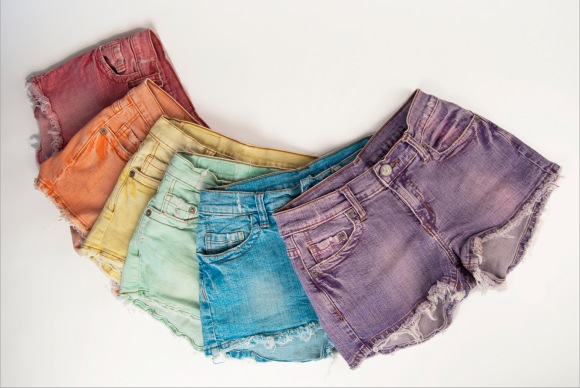
England: Street Harassment, sunshine, and… shorts?

July 26, 2013 By Correspondent

By: Levi Grayshon, Manchester, England, SSH Correspondent

Image via Denim Blog

Here in the UK, we are in the midst of a heatwave. The sticky, sunny days are sprawling in front of us, and have been rolling on for the last fortnight.

Sometimes, though, finding something sun-suitable is difficult. When the sun comes out, the clothes go away. Jeans and jumpers are stuffed into the back of the wardrobes and the skirts and shorts are dusted off and worn with pride. Or are they?

Two years ago, I was strolling down the street in a pair of shorts. I was alone. A pair of men walked up to me, sniggering and making comments on my legs. On the way home, another man stopped directly in front of me, looked me up and down and told me that my legs were “too pale to be wearing that.” Since that incident, I have been uneasy about exposing my legs on hot days. What gives people the right to act like this?

Nothing.

Seriously. Not only are magazines scaring us into doing 200 squats a day, and music videos convincing us that we must shave and apply sparkly goop to our legs in order to look passable, strangers feel need the to reinforce the idea that your body does not reach their standards. This is hideous. It is easy for others to tell you that their opinion does not matter. It is also easy for people to say “well why don’t you work out more/tan/go on a diet/stop wearing shorts?”

As simple as it sounds, the only person that you should listen to is yourself. No one has the right to make you feel uncomfortable about your body. It is hard to block out those voices when their words scratch and stab at your self-confidence, and feel as those they are branding themselves onto your thighs like a hot iron, but there is only one person that you should listen to when getting dressed in the morning, and only one question that you should ask: “Do I feel comfortable?”

Legs are legs. Shorts are shorts.

As Laura Bates from The Everyday Sexism Project quite rightly stated this week on Radio 2: “What women wear does not make them responsible for men’s reaction to them.”

She is spot on. If a person on the street harasses you over your outfit – whether honking their horn at you, shouting comments, or even following you – then they are the ones in the wrong. Don’t feel pressured to change anything about yourself – you are not to blame for their ill-judged actions, and don’t allow anyone else to make you feel that you are.

Levi graduated from university with a degree in Film and TV screenwriting this summer. As a freelance writer, she has been writing for The F-Word and Gamer-UK. You can follow her rants and ramblings on Twitter, @part_heart.

Share

Filed Under: correspondents, Stories, street harassment

« Previous Page
Next Page »

Share Your Story

Share your street harassment story for the blog. Donate Now

From the Blog

  • #MeToo 2024 Study Released Today
  • Join International Anti-Street Harassment Week 2022
  • Giving Tuesday – Fund the Hotline
  • Thank You – International Anti-Street Harassment Week 2021
  • Share Your Story – Safecity and Catcalls Collaboration

Buy the Book

  • Contact
  • Events
  • Join Us
  • Donate
  • Facebook
  • Instagram
  • Pinterest
  • Tumblr
  • Twitter
  • YouTube

Copyright © 2026 Stop Street Harassment · Website Design by Sarah Marie Lacy