• About Us
    • What Is Street Harassment?
    • Why Stopping Street Harassment Matters
    • Meet the Team
      • Board of Directors
      • Past Board Members
    • In The Media
  • Our Work
    • National Street Harassment Hotline
    • International Anti-Street Harassment Week
    • Blog Correspondents
      • Past SSH Correspondents
    • Safe Public Spaces Mentoring Program
    • Publications
    • National Studies
    • Campaigns against Companies
    • Washington, D.C. Activism
  • Our Books
  • Donate
  • Store

Stop Street Harassment

Making Public Spaces Safe and Welcoming

  • Facebook
  • Instagram
  • Pinterest
  • Tumblr
  • Twitter
  • YouTube
  • Home
  • Blog
    • Harassment Stories
    • Blog Correspondents
    • Street Respect Stories
  • Help & Advice
    • National Street Harassment Hotline
    • Dealing With Harassers
      • Assertive Responses
      • Reporting Harassers
      • Bystander Responses
      • Creative Responses
    • What to Do Before or After Harassment
    • Street Harassment and the Law
  • Resources
    • Definitions
    • Statistics
    • Articles & Books
    • Anti-Harassment Groups & Campaigns
    • Male Allies
      • Educating Boys & Men
      • How to Talk to Women
      • Bystander Tips
    • Video Clips
    • Images & Flyers
  • Take Community Action
  • Contact

Sexism in Movies

October 13, 2011 By Contributor

I am writing in to tell you what I think of movies which sexualise women. Yesterday I watched a movie called “Grown ups”. It was supposed to be a comedy, yes some parts were funny. But I noticed there was some sexism in it too. And when putting it all together, I don’t think the movie sends a good message out to young men. (or women)

Heres what I noticed. In one scene, two men are talking and the one man asks the other man if the woman by the car is his nanny. The other man denys she is, claiming she is just “someone his wife knows” who is staying at their home.Then the other man said, “Your wife’s into chicks? Nice.”

Another scene later on in the movie features two young women (possibly teenagers) whom look like super models. Both are skinny with perfectly toned bodies, flawless skin, beautiful hair etc. Then theres a third girl who looks different, sslightly bigger in size, plainer but still pretty. However, the third girl is painted as unattractive whist the other two are “hot” and are sexually objectified by the men in the movie.

Theres also a child in the movie whom keeps mentioning “boobies,” which I felt was inappropiate for his age.

I generally felt that these scenes in the movie were sexist and rather degarding towards women. I particularly disliked how the two “hot” women were deemed as sexually appealing but the third girl was “fugly”. I feel that this gives out a message that all women should have super model looks otherwise you are not socially accepted. The movie also gives out an example that women are sexual objects to be enjoyed by men. I know there are lot’s of movies with sexism towards women but I just wanted to have my say on this one.

– Clarice

Share your street harassment story today and help raise awareness about the problem.
Find suggestions
for what YOU can do about this human rights issue.

Share

Filed Under: street harassment Tagged With: sexism in movies

Street harassment keeps her home

October 11, 2011 By Contributor

I live on a busy high street and experience some level of sexual harassment pretty much everyday. Sometimes I find it so depressing it stops me from leaving the house. There is a butchers right next to my door, and the men who work there always like to leer and comment when I walk past.

One time I was walking on my own, in the day time, through a park nearby, and was confronted by one of these men who insisted that ‘he knew me’ and would not leave me alone. I responded, as I largely do, by ignoring him, which left me feeling frustrated and powerless. Luckily on this occassion he did not pursue me, but I still felt vulnerable and somewhat violated.

Sometimes I lose it, and have formerly told street harassers to ‘fuck off’, but that only seems to instigate some sort of self righteous or aggressive response where I get called a bitch or told that it was just a compliment.

To be honest I never really know what to do, and find myself walking on with my head down, humiliated. Recently at a party I was chatting to a man who found my stories of sexual street harassment completely incredulous, asking me in a bemused fashion ‘what? these can’t be English men…’.

I have experienced sexual harassment from every kind of man imaginable- of course including English men- alone and in groups. It is a male-wide epidemic. The lack of comprehension as to the daily experiences of so many women seems completely inaccusable to me, and I full heartedly support any endeavour that aims to not only stamp out street harassment, but educate men as to the full implications such behaviour have upon women.

– Anna

Location: London, UK

Share your street harassment story today and help raise awareness about the problem.
Find suggestions
for what YOU can do about this human rights issue.

Share

Filed Under: Stories, street harassment

Snapshot of street harassment stories, news, & tweets: October 9, 2011

October 9, 2011 By HKearl

Read stories, news articles, blog posts, and tweets about street harassment from the past week and find relevant announcements and upcoming street harassment events.

** Sign up to receive a monthly e-newsletter from Stop Street Harassment ***

Street Harassment Stories:

Share your story! You can read new street harassment stories on the Web from the past week at:

Stop Street Harassment Blog | “Street Respect” stories

Hollaback

Hollaback Berlin

Hollaback Buenos Aires

Hollaback Chandigarh

Holla Back DC!

Hollaback France

Hollaback Israel

Hollaback London

Hollaback Mumbai

Hollaback NYC

Hollaback Philly

Hollaback Puerto Rico

Hollaback Queretaro

Activism High-Fives:

* Safe Streets AZ in USA

* The Pixel Project in Malaysia (they have an international scope)

* Gawaahi in Pakistan

In the News, on the Blogs:

* Splatter Zone, “On Street Harassment“

* Nicole Clark, “Street Harassment Stops When Men Says it Stops“

* Pink News, “Transgender woman tells of street abuse“

* NPR, “Violent Attacks On Transgender People Raise Alarm“

* The Age, “Sexual harassment in clubs seen as ‘normal‘”

* Venus Genus, “Is Street Harassment a Punishable Crime? Yes it is“

* Daily News & Analysis, “Mumbai girl stabbed for resisting eve-teasing attempt“

* Black Feminists, “Street Harassment Part 1?“

* The Gloss, “NerdGlam: How to Shut Down Street Harassers“

* But I Love Me More, “Street Harassment“

* Women News Network, “INDIA: Mumbai college women shame men who perpetrate ‘eve-teasing’ – sexual harassment“

* NDTV, “‘Offended’ eve-teasers try to abduct girl“

* Sketchbook Radical, ““Hey Baby/Bitch/Slut-” or, I Wish I Could Say Hello To Strangers (Part 1)*triggers*”

* D for Dalrymple, “Picture This“

Announcements:

New:

* Congratulations to Liberian President Ellen Johnson Sirleaf, women’s rights activist Leymah Gbowee from Liberia, and democracy activist Tawakkul Karman of Yemen for being awarded the Nobel Peace Prize for their women’s rights activism!

Reminders:

* Last Monday, Stop Street Harassment launched a new weekly “Street Respect” series highlighting the type of stories we want to see instead of street harassment stories!

* Call for men to share views/stories about street harassment

* Sign Mend the Gap’s petition to address subway harassment in Delhi, India

* Are you in Egypt? Use HarassMap to report your street harassers

* Have an iPhone? Download the Hollaback iPhone app that lets you report street harassers

15 Tweets from the Week:

1. grrrlrevolution *sigh* i love how, without fail, i go from “sexy” to “bitch” in the span of five seconds as soon as i stand up for myself #streetharassment

2. LikeaStar1032 When men catcall/make lewd comments they’re generally trying to assert dominance. When you bring yourself to their level they lose interest.

3. msorvam: also…i find that being “plus sized” street harassment comes w/the attitude of “you should be happy to be getttin ne att”

4. nawaf11g @MunaAbuSulayman in Saudi we need a secret police that handles street sexual harassment. Secret police that doesn’t look religious.

5. grrrlrevolution writing to @hollabackdc about my street harassment experiences really does make me feel better and more empowered. Thanks!

6. ruthie_dee Oh lovely. The builders outside my window have just realised I exist and started making crude gestures. Street harassment in my own room!

7. TeslaDethray Note to people driving around at night: Don’t catcall the running woman all by herself. It makes her feel very vulnerabile. *sigh*

8. vawmonth: Day 8- Our topic for today is Street Harassment and Eveteasing. #VAWAM #takebackthetech #Pakistan

9. Hollaback_DSM #Top10Lies Street harassment is flattering to women.

10. KimFoxWOSU Today was a milestone: walked through the Khan el Khalili by myself and didn’t get sexually harassed! A-maze-ing! #Cairo #Egypt #EndSH #wwpw

11. debzalebz The best thing about cycling is it reduces street harassment and limits opportunities of eating junk food.

12. ConnellAnnie Dear dirty ass man on the street, just because you’re giving me compliments doesn’t mean it’s not verbal harassment #getthefuckouttahere

13. thetrudz @AsiaBrown I face less street harassment when I wear makeup; it’s not the lie that men don’t like it b/c harassment isn’t about “liking.”

14. Salencita Three run-ins with street harassment in two blocks. This is not okay.

15. mishsolomon “Rape culture is street harassment and groping on public transportation…”

Share

Filed Under: Stories, street harassment, weekly round up

Talking Street Harassment with a Congresswoman and an NPR host

October 6, 2011 By HKearl

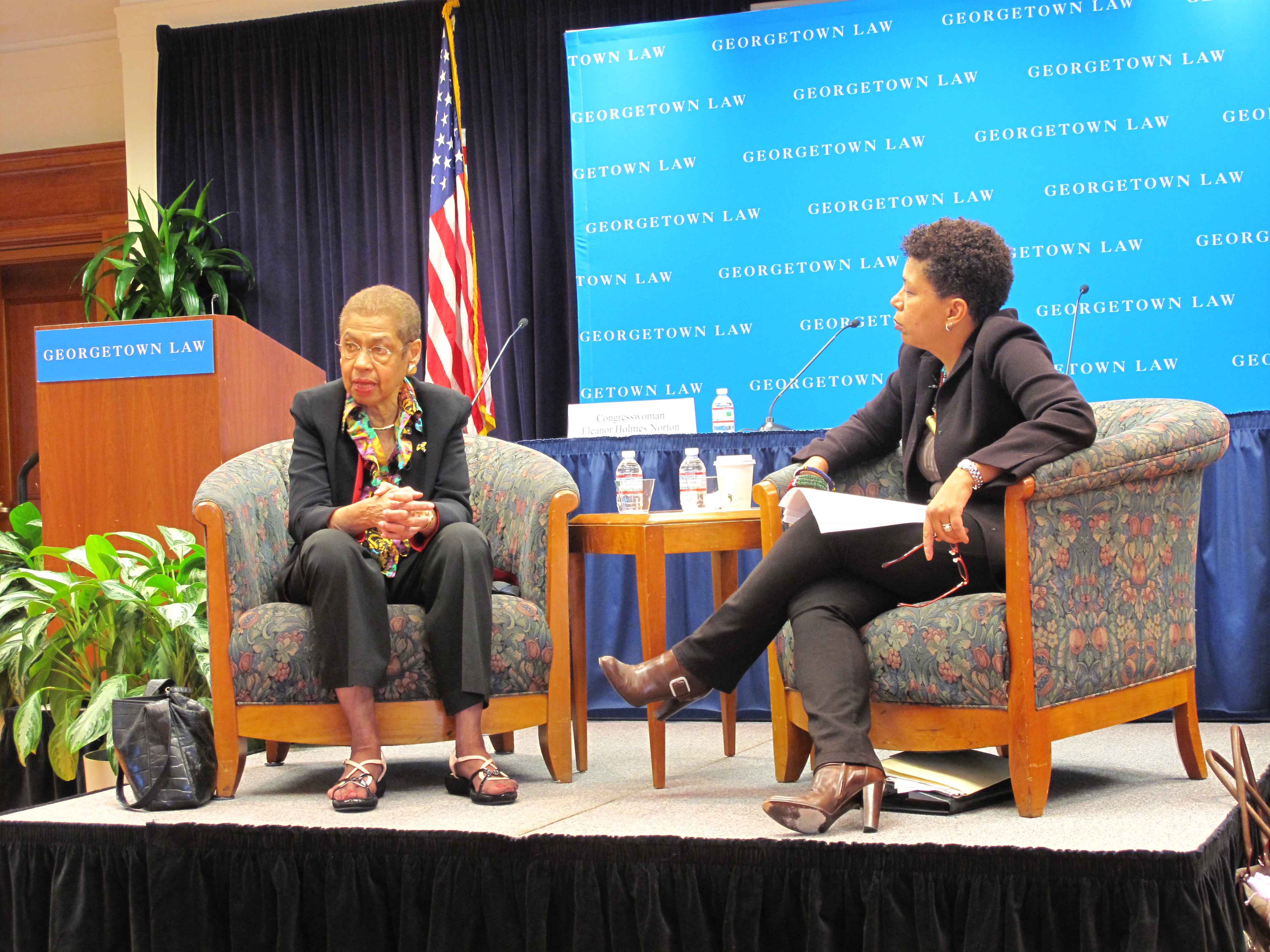
Eleanor Holmes Norton and Michel Martin

Today I talked about street harassment with Delegate Eleanor Holmes Norton (DC) and NPR’s Michel Martin, host of the afternoon show Tell Me More.

How did I get to have a conversation about street harassment with such amazing women?

Well, I had the privilege of attending a conference at Georgetown Law Center that commemorates the 20 years since Professor Anita Hill testified to the Senate Judiciary Committee about how Clarence Thomas sexually harassed her when she worked for him. Her testimony was part of his confirmation hearings for the U.S. Supreme Court. The Senators treated her abominably, and Thomas was appointed as a Justice.

Working women across the nation identified with what Hill said and seeing her talk about something so personal and taboo on live television opened up the floodgates.

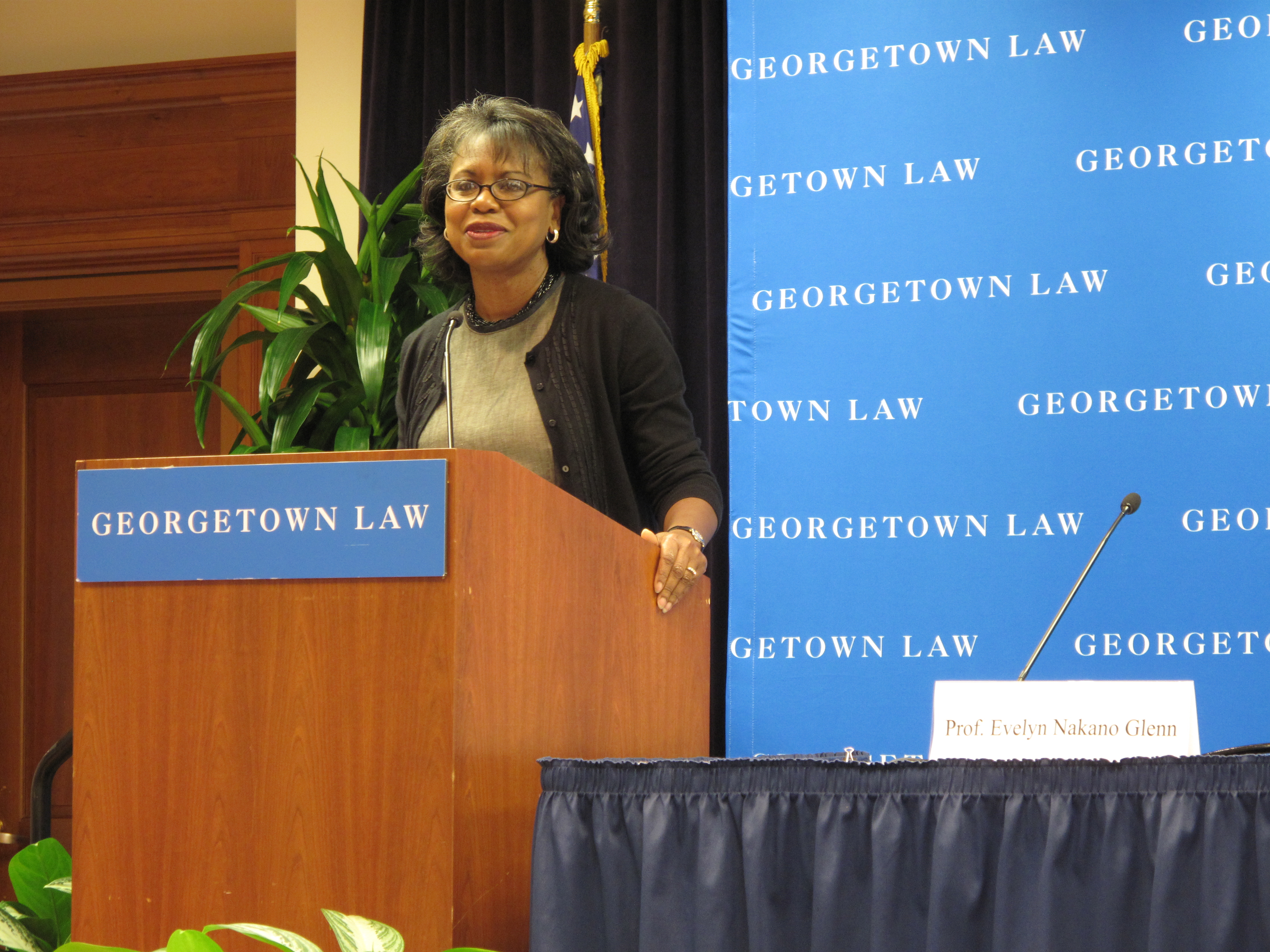
Anita Hill

Women started sharing their sexual harassment stories too. Hill’s testimony ultimately changed how we think about sexual harassment and it was a pivotal moment in our nation’s history. Plus, the way the men in the Senate treated Hill led women to vote women candidates into political office in numbers that have never been matched.

Today at the conference, law professors, media experts, and feminist activists talked about where we are today with regards to workplace sexual harassment and the impact the hearings has had on race and gender in our society. Hill was the closing speaker and it was an honor to hear from her.

But this post focuses on my conversation with Delegate Norton and Ms. Martin.

In the mid-afternoon, Martin sat down with Norton and asked her questions about what the hearing was like from her perspective as a new Congresswoman and as the former head of the Equal Employment Opportunities Commission (EEOC) who helped draft the original workplace sexual harassment policies. Martin was a white house correspondent at the time of the hearing and she shared a bit about her perspective. Both women provided fascinating insight into a national event I did not know was occurring at the time (I was eight years old) but one that paved the way for my anti-street harassment activism and the work I do at AAUW on sexual harassment in schools and the workplace.

After their illuminating conversation, there was time for questions from the audience. Without formulating my thoughts, I jumped up, amazed to have an opportunity to ask them their thoughts on applying lessons learned from workplace sexual harassment to current efforts around street harassment. I was not my most articulate and flubbed a bit, but I got into a grove during some of my responses back to them.

Norton spoke first. It quickly became clear she didn’t understand what I meant by “sexual harassment that happens in public places” and so I had to explain street harassment to this long-time feminist and leader in the sexual harassment movement. It reminded me just how normalized street harassment is and/or how rarely it must happen to someone of Norton’s privileged position if she did not know much about it despite working on sexual harassment issues, often in a leadership position, since the mid-1970s.

Martin, on the other hand, knew exactly what I was talking about and helped me explain it to Norton. In fact, Martin helped everyone in the room understand the issue vividly by sharing a story. She said when she was a white house correspondent she regularly plotted her route through Lafayette Park based on how many potential harassers she saw. She’d forgotten about having to do that, she said, but today her memory of that experience seemed to help her understand why ending street harassment matters.

While I didn’t mean for Norton to solely talk about how to use laws to address street harassment, once she knew what I was talking about, that is where her mind went because of her legal background. She said verbal comments are protected by The First Amendment (freedom of speech) and it would be difficult to prosecute strangers. A few legal scholars have written compelling articles about the law and street harassment and The First Amendment barrier can be overcome. Fighting words, hate crimes, intention to inflict emotional distress: none of these are protected by The First Amendment and a lot of street harassment could be considered one or all of those. (I wasn’t fast enough on my feet to respond with this information but Martin noted the fighting words exception and compared men calling a woman “bitch” to using racial slurs.)

Further, why is it yelling, “Fire” in a building unprotected by the First Amendment (and illegal), but a middle-age man is allowed to walk behind a college-age young woman and say, “This is what I like right here, these are the kinds of girls I want to f*ck right here. This ones’ gonna get it” and then threaten to rape her and pull down her shirt before two bystanders intervened? That’s protected by the First Amendment? By the way, even with two witnesses, the police said nothing “serious” had happened and the poor student had to continue on to class and take an exam.

That is not right.

Additionally, Independence and Columbia, Missouri, passed a city ordinance against harassing pedestrians and bicyclists from cars and Los Angeles passed one against motorists harassing pedestrians. It can be done if we want it to be done. (Again, I didn’t think fast enough to respond with this information.)

I don’t think a law would be the most effective way to stop street harassment and I know there are a lot of valid concerns with using laws to regulate street harassment and racial-profiling-happy police to enforce them. But I also think a carefully worded law could help change social attitudes and it may give some people cause to pause before harassing.

When I mentioned groping in my definition of street harassment, Norton said that was already illegal and women should report gropers. Then she stated how lots of groping occurs in “Arab countries” where women face so much oppression. I was taken aback. Yes, groping is a big problem in countries like Egypt and Yemen but, as I discuss in my book and as stories submitted to my blog regularly show, it also is in countries like Japan, Italy, and, PS, the USA! Street harassment is a global problem.

She concluded by saying she doesn’t think there can be a law to regulate street harassment, but she thinks consciousness-raising is the key and that things like SlutWalks are best because they tell men that “the behaviors are forbidden.”

While I appreciate SlutWalks (and spoke at SlutWalk DC) and love consciousness-raising tactics, they can’t be the only solution! So many street harassers are grown men who harass teenage girls. They know their behavior is wrong and that it is, in Norton’s words, “forbidden.” They are not held accountable; there are no consequences, so they continue to harass. SlutWalks alone will not change that.

I didn’t want to take up more time because others had questions but WOW was there a lot I would have liked to say.

Fortunately, Martin really did seem to understand what I was talking about and she said she’d be interested in having me on her show. I’m mailing her a copy of my book tomorrow and I hope she will decide to have me (and possibly some other local DC street harassment activists) on her show.

And if am on her show, I hope Norton will listen so she can learn more about street harassment. More importantly, I hope one day Norton can have time to speak to youth in her community who face street harassment daily so she can understand its prevalence and impact. If she understood, I think she’d be a big ally. After all, she’s been a leader on the issue of sexual harassment for nearly 40 years.

With the growing number of commemorations of the Hill-Thomas hearings (I’ll attend another conference about workplace sexual harassment with Hill as the keynote at Hunter College on October 15), I hope anti-street harassment activists can find similar opportunities to draw attention to street harassment and hopefully inspire major feminist leaders to learn more and address it, too.

Share

Filed Under: street harassment Tagged With: anita hill, eleanor holmes norton, michel martin, sexual harassment, street harassment, tell me more

Pakistan: Two films about street harassment

October 6, 2011 By HKearl

What does street harassment look like in Pakistan? Does wearing a burqa reduce street harassment?

Find out the answers in the two short films created by Naveen Naqvi, Executive Director of Gawaahi. In the text of the films “Stop Staring!” and “Stop Street Harassment,” she writes:

“Street Harassment is a global phenomenon that is largely overlooked, and even considered acceptable despite there being laws against it in many places including Pakistan. Street harassment includes making sexually explicit comments, ogling, whistling, following and groping.

In the making of these videos, we found that many Pakistani women, especially from the lower-middle classes began wearing burqas because they found the additional garment enabling in many ways. However, they find that the problem of street harassment has worsened, and even in burqas, they are harassed as they wait for buses, rickshas, taxis, or walk down the street. We found that this intimidation was experienced by women across class, age, religion and ethnicity.”

View the films (you can choose the “closed captions” option to read English subtitles) and stay tuned for an interview with Naqvi about her work to make public places safer for women in Pakistan!


Share

Filed Under: Activist Interviews, Resources, street harassment Tagged With: Gawaahi, Naveen Naqvi, sexual harassment, street harassment

« Previous Page
Next Page »

Share Your Story

Share your street harassment story for the blog. Donate Now

From the Blog

  • #MeToo 2024 Study Released Today
  • Join International Anti-Street Harassment Week 2022
  • Giving Tuesday – Fund the Hotline
  • Thank You – International Anti-Street Harassment Week 2021
  • Share Your Story – Safecity and Catcalls Collaboration

Buy the Book

  • Contact
  • Events
  • Join Us
  • Donate
  • Facebook
  • Instagram
  • Pinterest
  • Tumblr
  • Twitter
  • YouTube

Copyright © 2026 Stop Street Harassment · Website Design by Sarah Marie Lacy