• About Us
    • What Is Street Harassment?
    • Why Stopping Street Harassment Matters
    • Meet the Team
      • Board of Directors
      • Past Board Members
    • In The Media
  • Our Work
    • National Street Harassment Hotline
    • International Anti-Street Harassment Week
    • Blog Correspondents
      • Past SSH Correspondents
    • Safe Public Spaces Mentoring Program
    • Publications
    • National Studies
    • Campaigns against Companies
    • Washington, D.C. Activism
  • Our Books
  • Donate
  • Store

Stop Street Harassment

Making Public Spaces Safe and Welcoming

  • Facebook
  • Instagram
  • Pinterest
  • Tumblr
  • Twitter
  • YouTube
  • Home
  • Blog
    • Harassment Stories
    • Blog Correspondents
    • Street Respect Stories
  • Help & Advice
    • National Street Harassment Hotline
    • Dealing With Harassers
      • Assertive Responses
      • Reporting Harassers
      • Bystander Responses
      • Creative Responses
    • What to Do Before or After Harassment
    • Street Harassment and the Law
  • Resources
    • Definitions
    • Statistics
    • Articles & Books
    • Anti-Harassment Groups & Campaigns
    • Male Allies
      • Educating Boys & Men
      • How to Talk to Women
      • Bystander Tips
    • Video Clips
    • Images & Flyers
  • Take Community Action
  • Contact

New campaign to make Tahrir Square safe for women

June 7, 2012 By HKearl

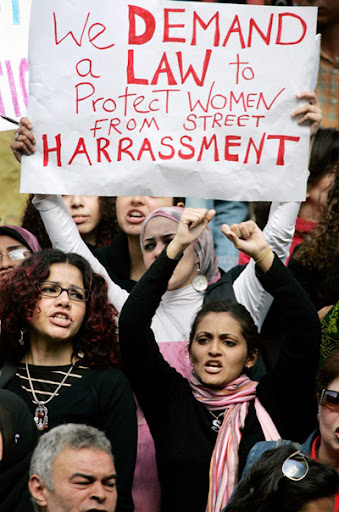
Women protest in Egypt in 2006. Image from International Museum of Women

Stomach sinking. Outrage growing. Another recorded sexual assault committed by a group of men against one woman at Tahrir Square in Egypt.

Associated Press journalist Sarah El Deeb writes:

“Her screams were not drowned out by the clamor of the crazed mob of nearly 200 men around her. An endless number of hands reached toward the woman in the red shirt in an assault scene that lasted less than 15 minutes but felt more like an hour.

She was pushed by the sea of men for about a block into a side street from Tahrir Square. Many of the men were trying to break up the frenzy, but it was impossible to tell who was helping and who was assaulting. Pushed against the wall, the unknown woman’s head finally disappeared. Her screams grew fainter, then stopped. Her slender tall frame had clearly given way. She apparently had passed out.

The helping hands finally splashed the attackers with bottles of water to chase them away.

The assault late Tuesday was witnessed by an Associated Press reporter who was almost overwhelmed by the crowd herself and had to be pulled to safety by men who ferried her out of the melee in an open Jeep.

Reports of assaults on women in Tahrir, the epicenter of the uprising that forced Hosni Mubarak to step down last year, have been on the rise with a new round of mass protests to denounce a mixed verdict against the ousted leader and his sons in a trial last week.

The late Tuesday assault was the last straw for many. Protesters and activists met Wednesday to organize a campaign to prevent sexual harassment in the square. They recognize it is part of a bigger social problem that has largely gone unpunished in Egypt. But the phenomenon is trampling on their dream of creating in Tahrir a micro-model of a state that respects civil liberties and civic responsibility, which they had hoped would emerge after Mubarak’s ouster.

“Enough is enough,” said Abdel-Fatah Mahmoud, a 22-year-old engineering student, who met Wednesday with friends to organize patrols of the square in an effort to deter attacks against women. “It has gone overboard. No matter what is behind this, it is unacceptable. It shouldn’t be happening on our streets let alone Tahrir.”

Journalists Lara Logan, Mona Eltahawy, and Caroline Sinz; Egyptian actress Sherihan; the woman in the blue bra, and countless other women have lived through mass gropings and sexual assaults simply for being women protesting or reporting on the protests at Tahrir Square. Hundreds (thousands?) of women have lived through verbal sexual harassment in a place that is supposed to symbolize freedom, revolution, and safety.

Women have not been silent. They’ve gone public with their stories of assault, they’ve organized marches, and they’ve shared stories online. They’ve experienced backlash and harassment for speaking out and marching.

But still, the assaults and harassment continues.

Maybe with more men and women speaking out together to create a campaign to stop harassment specifically in the Square, complete with a patrol, things will be different…?

HarassMap, the Egyptian Centre for Women’s Rights, and other activist groups have been active on this issue for years (including by recently organizing nearly 100 people in a Human Chain), but clearly a targeted campaign is necessary. This is happening too often at Tahrir Square when one incident would be outrageous enough.

When will men allow women in Egypt be safe to protest, to participate in the political process, to be in public places? What will it take?

Update #1, via Mona Eltahawy: Tomorrow in Cairo there is a protest planned against sexual assault

Update #2: Follow @HarassMap to see their brainstorm for dealing with the harassers/assaulter, including by encouraging women to use spray cans to mark the perpetrators.

Share

Filed Under: Stories, street harassment Tagged With: Caroline Sinz, Egypt, freedom, Lara Logan, Mona Eltahawy, sexual assault, Tahrir Square, woman in the blue bra

NYTimes interview with director of anti-street harassment film

May 22, 2012 By HKearl

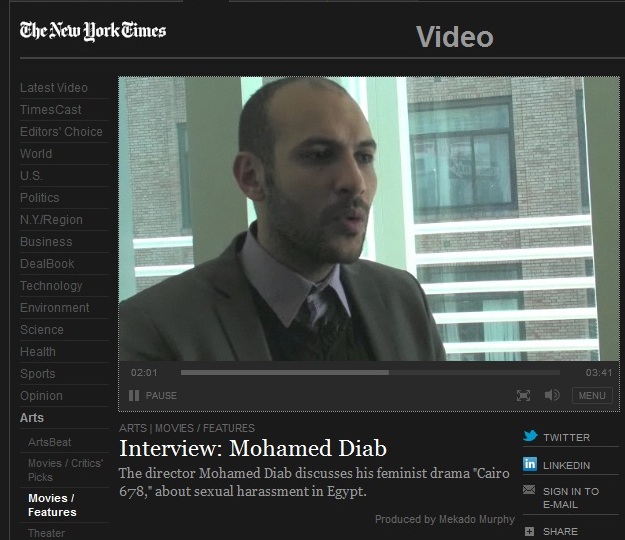
The director Mohamed Diab discusses his feminist drama “Cairo 678,” about sexual harassment in Egypt. Only by stabbing harassing men in the groin do the men start paying attention.


Share

Filed Under: male perspective, street harassment Tagged With: 678 film, Egypt, HarassMap, Mohamed Diab, sexual harassment, street harassment

A Human Chain Against Street Harassment in Egypt

May 20, 2012 By HKearl

Via Facebook:

مجموعة من المبادرات المصرية قررت التصدي للتحرش الجنسي في شوارع مصر من خلال سلاسل بشرية تعكس الواقع “نفسي”. أول فاعلية كانت في شارع جامعة الدول العربية في 16 مايو 2012

هيئة الأمم المتحدة للمرأة توضح إنها لم تكن وراء ترتيب أو تنظيم الوفقة ( السلسلة) وأي مشاركة فيها كانت بشكل فردي. مشاركة هيئة الأمم المتحدة كانت بالتصوير فقط.

An independent group of Egyptian initiatives decided to take an active step to stand against sexual harassment in Cairo by organizing the first human chain that reflects their views “Nefsi” ( I wish). The first street campaign was in Gam’et El Dewal Street in Mohandessin Cairo on 16 May 2012…UN Women’s contribution was to photo documentation the event through pictures and videos. Photos by: Fatma El-Zahraa Yassin

Share

Filed Under: News stories, street harassment Tagged With: Egypt, human chain, sexual harassment, street harassment

“I am a feminist, yet I am a victim”

April 30, 2012 By Contributor

This article excerpt is cross-posted with permission from the blog Organica: The Story of an Arab American Girl.

I am writing about my everyday experiences as a single woman living in Cairo, Egypt. I travel independently, run my own life and refuse to allow harassment or male behavior hinder my life. I am writing about the price I pay for braving the road, the protests, the streets, and the sit-ins. I am writing about how my feminism feels helpless and often afraid.

Here it goes: my name is Hana and I am an empowered victim.

When I lived in the United States between 2006 and 2011, I used to dream about the day I’d move back to Egypt so that I could yell and shame every man who sexually harassed me on the street. I thought it would feel empowering. I was wrong. Not only is it extremely draining and tedious, it quite often takes a scary turn. Sexual harassers thrive on getting a rise out of their prey.

This is not an article on sexual harassment, but a glimpse of my life.

On the Road:

Everyday my mother looks at me with terror: ‘khali balak men nafsik winabi ya benti’ [take care of yourself my daughter] before I leave the house, and my response is ‘Mami haye7sali eh ya3ni? Mate2la2eesh’ [Mom, what do you think could possibly happen to me anyways? Stop worrying!]. But in reality, I’m wrong and she’s right. She should be worried for my safety. I am often instructed to reconsider my outfits when I am driving alone and I argue that I am not going to let men affect my choices.

The driver-to-driver harassment is rampant in Cairo. One time while in stagnant 6th of October bridge traffic, I was texting on my phone (traffic was at a complete standstill).

The driver in the car next to mine said: “I hope this phone falls on the car mat, so that you may bend down to get it, and I’d drive into you, ya know what I mean?”

I yelled “balash elit adab w 2araf’ [I don’t want disrespect and disgust], which he responded “ba2a keda?” [Like that, eh?] – And then he followed me to my house all while making further obscene comments.

There was nothing I could do to protect myself from this bully – I was helpless.

Protests:

I moved back to Egypt on July 5th. On July 8th there was a million man march and the beginning of a sit-in. That Friday was my first ever protest in Egypt. I dressed appropriately and took to the streets with immeasurable excitement. Given that I moved back to Egypt for the revolution, I thought nothing could taint my first experience in a protest – I was wrong.

A man approached with his three friends and asked about the color of my bra – apparently he preferred white ones. I yelled and said that I would scream if he said anything which made him and his friends laugh loudly – at me – declaring that I am crazy but a ‘hottie,’ and a crazy-hottie combo would be great in bed. I pulled out my pepper spray but it failed to reach my monsters.

The day continued along the same lines, I got groped several times, one of which was actually from the front (I did not know that was even possible), and another by a 12 year old CHILD who I caught and yelled at. I was scared and felt vulnerable although equipped with my knife and pepper spray. There was nothing I could do and it felt awful.

The Streets:

There is no ‘that street’ story because there are countless street stories. They all revolve around the same thing: being verbally and quite often physically assaulted by men. Forget the catcalls, and the comments (I was once told that I am attractive, but would be much more attractive if I lost some weight), but the physical harassment is unbearable.

My street story is by no means special. I was walking home, turning at a corner, when a man’s hand came out of a car window and groped me (it was painful). The car had 4 or 5 guys and I could hear them laugh at my humiliation. I continued walking, feeling disgusted when the car appeared again, and one of the guys in the car so kindly suggested that it was obvious that I wanted to get groped again.

Yeah, that felt awful too.

…

Reality:

The worst thing that I face as a woman who refuses to let such actions hinder or inhibit her is the feeling of helplessness. I am a feminist, yet I am a victim. I know for a fact yelling back or even screaming at harassers is effective, some do actually apologize when shamed, but I also know that NOTHING will stop these men except actual punishment. I am a woman who never uses the metro, microbuses, buses and I rarely use taxis, yet I face this much harassment. I can only imagine what the women who do use public transportation face on a daily basis. I presume I’d have to multiply my experiences by a hundred.

I do not pray often, but I pray that the day comes when I feel safe walking the streets of Egypt; I walk them now anyway, but I feel weak, vulnerable and helpless and it feels awful.

–An Egyptian Woman.

Share

Filed Under: Stories, street harassment Tagged With: Egypt, groping, hana elhattab, sexual harassment, Stories, street harassment

From Cairo to DC: A Discussion on Street Harassment

March 28, 2012 By HKearl

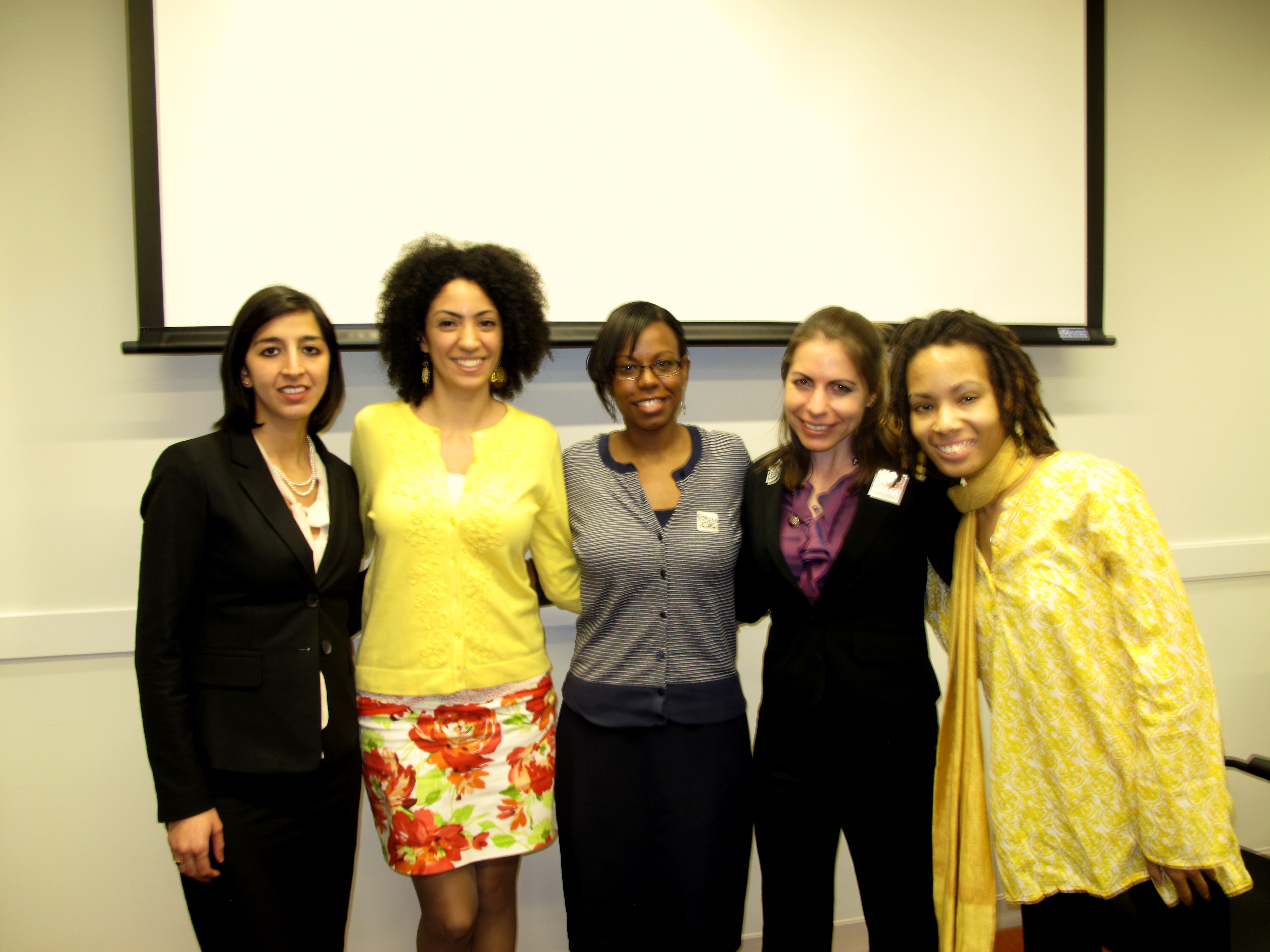
On March 19, 2012, in  Washington, DC, for an International Anti-Street Harassment Week event, five activists (including myself) talked about issues of street harassment abroad and in Washington, DC. Countries we covered included Afghanistan, Egypt, Iran, and the United Kingdom. The YWCA-National Capital Area hosted the talk.

L to R: Layla Moughari, Sawsan Gad, Twanisha Mitchell, Holly Kearl, Dienna Howard

I had enough space on my camera to video tape three of the talks. I hope you have time to watch them and learn about how harassment in Iran is similar or different to harassment in the USA; what activists with HarassMap are doing to combat street harassment in Egypt; and what same-race harassment looks like in the USA.

Share

Filed Under: anti-street harassment week Tagged With: Egypt, HarassMap, iran, ywca-nca

« Previous Page
Next Page »

Share Your Story

Share your street harassment story for the blog. Donate Now

From the Blog

  • #MeToo 2024 Study Released Today
  • Join International Anti-Street Harassment Week 2022
  • Giving Tuesday – Fund the Hotline
  • Thank You – International Anti-Street Harassment Week 2021
  • Share Your Story – Safecity and Catcalls Collaboration

Buy the Book

  • Contact
  • Events
  • Join Us
  • Donate
  • Facebook
  • Instagram
  • Pinterest
  • Tumblr
  • Twitter
  • YouTube

Copyright © 2026 Stop Street Harassment · Website Design by Sarah Marie Lacy