• About Us
    • What Is Street Harassment?
    • Why Stopping Street Harassment Matters
    • Meet the Team
      • Board of Directors
      • Past Board Members
    • In The Media
  • Our Work
    • National Street Harassment Hotline
    • International Anti-Street Harassment Week
    • Blog Correspondents
      • Past SSH Correspondents
    • Safe Public Spaces Mentoring Program
    • Publications
    • National Studies
    • Campaigns against Companies
    • Washington, D.C. Activism
  • Our Books
  • Donate
  • Store

Stop Street Harassment

Making Public Spaces Safe and Welcoming

  • Facebook
  • Instagram
  • Pinterest
  • Tumblr
  • Twitter
  • YouTube
  • Home
  • Blog
    • Harassment Stories
    • Blog Correspondents
    • Street Respect Stories
  • Help & Advice
    • National Street Harassment Hotline
    • Dealing With Harassers
      • Assertive Responses
      • Reporting Harassers
      • Bystander Responses
      • Creative Responses
    • What to Do Before or After Harassment
    • Street Harassment and the Law
  • Resources
    • Definitions
    • Statistics
    • Articles & Books
    • Anti-Harassment Groups & Campaigns
    • Male Allies
      • Educating Boys & Men
      • How to Talk to Women
      • Bystander Tips
    • Video Clips
    • Images & Flyers
  • Take Community Action
  • Contact

SAAM 2012: “Violence against women is as American as apple pie”

April 2, 2012 By HKearl

Rep. Gwen Moore (D-Wis.) recently gave an eloquent speech advocating for the re-authorization of the Violence Against Women Act (VAWA). In addition to sharing her own stories of sexual abuse she said, “Violence against women is as American as apple pie.”

And she’s right. A December 2011 study by the Center for Disease Control and Prevention found that as many as many as 1 in 3 women have experienced rape, physical violence or stalking by an intimate partner in their lifetimes. And as more and more men come forward with their sexual abuse stories, it’s clear that sexual abuse in general is an epidemic problem.

This is an outrage. Everyone should have the right to lives free from sexual violence. This should not be an American tradition. April is Sexual Assault Awareness Month, and there are a lot of ways you can be involved in speaking out and creating change. Here are 10 ideas for 2012.

1. Believe/help survivors. Believe survivors when they confide in you. Visit the website of the Rape, Abuse & Incest National Network to find information to help you help the survivor. And to find information to help yourself.

2. Find help. If you are a survivor who isn’t sure where to turn to or how to get help, I highly recommend visiting the RAINN website. I volunteered with them for 2.5 years and applaud their work. You can find information about a phone or online hotline and information about recovery.

* Are you male? Visit the website 1 in 6 for resources specifically for you.

* Are you in the military? RAINN has a helpline called Safe Helpline specifically for survivors in the military.

3. No victim-blaming. Don’t engage in victim-blaming. For example, don’t ask about or comment on what a survivor was wearing or  ask if they were drunk or if they were out late at night. On April 3 (tomorrow), Slutwalk Toronto is hosting a day of action for the first-ever International Day Against Victim-Blaming. They say to participate, “start conversations, take a stand, and take up space on April 3rd to fight for our right to live free of violence and victim-blaming. Join us in our mission to spread the word that those who experience sexual violence are never the ones at fault.” Use the twitter hashtag #EndVictimBlaming.

4. Write your Senators. Send a quick e-mail or make a quick phone call to your Senators asking them to re-authorize the Violence Against Women Act.

5. #TweetAboutIt. The National Sexual Violence Resource Center provides a variety of resources each year for Sexual Assault Awareness & Prevention Month, including free reports and manuals and campaign materials. This year, they’re hosting a Tweet About It Tuesday every Tuesday at 2 p.m. EST throughout the month. Various people will lead the tweet-chat on a different topic each week, using the hashtag #TweetAboutIt. Read more and join in.

6. Wear jeans. Make a social statement by wearing jeans on April 25 as part of Denim Day in LA & USA. The day is a visible way to protest against misconceptions that surround sexual assault. Order their Denim Day Action Kit and raise awareness at your workplace, neighborhood, or community. Encourage each person who participates to donate one dollar to Denim Day to fund prevention programming. (I just ordered my kit.)

7. Work to prevent sexual abuse of Native Americans. Native American women face the highest rates of rape of any demographic: 1 in 3 will be raped in their lifetime.

* Learn more and read about the maze of injustice that keeps survivors from finding justice.

* Donate to Project Respect, an organization that works to combat sexual and gender based violence amongst South Dakota’s Native American youth. The funds will go toward creating a youth shelter/programming area and a summer mentoring program that pairs Native American teens with adolescents entering middle school.

8. Advocate against military sexual assault. Sexual assault in the military is a well documented problem, yet the military does very little to truly address or prevent it.

* Sign a petition addressed to the U.S. Senate asking them to support H.R. 3435, The STOP Act, and H.R. 1517, The Holley Lynn James Act, legislation that would require the military to do more.

* Watch the trailer for a Sundance Film Festival Award-Winning documentary called The Invisible War about military sexual assault. It will be released on June 15, 2012.

* Donate to AAUW, an organization where I work in my day job, which provides financial support to two sets of plaintiffs who are former service members who were raped or sexually assaulted by their co-workers and are bravely suing the Department of Defense.


9. Use the arts or march
.
Take part or organize arts-based initiatives or a march to raise awareness about sexual assault. Examples of initiatives include:

* The Clothesline Project, an initiative to bear witness to violence against women. Women affected by violence decorate a shirt and hang the shirt on a clothesline to be viewed by others as testimony to the problem of men’s violence against women.

* V-Day event offers several performance and film screening options for groups to implement in their community in February, March, and April. The purpose of these events is to raise awareness about violence against women and girls as well as raise money for local beneficiaries that are working to end violence. There is no theater or producing experience necessary. Visit the V-Day website to learn how to organize a V-Day event.

* Story of a Rape Survivor (SOARS) is an award winning multimedia performance you can bring to your community that entertains as well as educates the audience about sexual assault prevention. Featuring the music of Nina Simone, Maxwell, and Sade, SOARS tells one woman’s story about how she reclaimed her body, sexuality, and self-esteem after being sexually assaulted in college. SOARS is a cutting-edge theatrical experience that stars a diverse cast of women, combining photographs, dance, spoken-word poetry and music as a way to educate about healing from sexual violence.

* By wearing a white ribbon, White Ribbon Campaign members make a personal pledge to “never commit, condone or remain silent about violence against women and girls.” You can order materials to help challenge the community to speak out on the issue, learn about sexual violence, and raise public awareness.

* Organize or participate in a Take Back the Night March in your community or on campus and make a statement that women have the right to be in public and to go about their lives without the risk of sexual violence. Order a kit with resources for the event.

10. Support consent. One fun way to work to prevent sexual assault is to talk about and emphasize consent in all sexual activities. Here are two amazing initiatives you can bring to your campus or community to do that:

* The Consensual Project is an interactive, sex-positive, fun workshop during which participants can learn why consensual hooking up is hotter hooking up. College students are an ideal audience for this workshop.

* The Line is a film that explores the intersection of sexual identity, power, and violence. How do we negotiate our boundaries as sexually liberated women? How much are we desensitized to sexual violence? Through conversations with football players, educators, survivors of violence, prostitutes, and attorneys, this personal film explores the “grey area” and the elusive line of consent.

(And if you’re unsure about the connection between street harassment and sexual assault, listen to a CALCASA Prevention podcast where I talk about the connections. Briefly, some of the connections are that both behaviors fall on the same spectrum of gender violence; street harassment sometimes escalates into sexual violence; and street harassment can be re-triggering for survivors of sexual abuse.)

Share

Filed Under: Resources, street harassment Tagged With: a long walk home, april, CDC, clothesline project, denim day, gwen moore, native american youth, project respect, rape, sexual abuse of boys, sexual assault, Sexual Assault Awareness Month, slutwalk toronto, take back the night, the invisible war, V-Day

Discussions, rallies, photography competitions: Anti-Street Harassment Week in Delhi, India

March 29, 2012 By Contributor

(Editor’s Note: This guest blog post was written by the Safe Delhi Campaign Team to recap their efforts during International Anti-Street Harassment Week in Delhi, India)

CONTEXT:

Delhi has changed a lot in the past decade. Skyscrapers, flyovers, shopping complexes rapidly covered the city making it for a particular section of the society. But, a general animosity and a sense of belongingness lacks in the city. Equal participation in the city and the right to ownership is not guaranteed for women. The sense of enjoyment, of loitering and of using public places in the way they desire are very limited and at times non- existent. Their presence in this ‘urban city’ has to be constantly negotiated and compromised. The fear of and the incidence of being sexually harassed in public spaces have unfortunately become a part a woman’s experience in the city.

Women’s access to safe and violence free public spaces is her right. Sexual harassment in public spaces restricts choices and opportunities for women in education, livelihood, health and decision making. The gendered nature of public spaces not only denies their access but also ‘legitimizes’ the invisibility of women after a particular hour of the day. It is the right of every citizen to enjoy public spaces irrespective of gender, caste, class, sexuality, disability or any other social identity. The responsibility of society to ensure equal rights for all has to increase. Safety and right to the city can be guaranteed with a more sensitive and effective service delivery for all the citizens. It is time to understand and address factors of safety and make the city accessible and inclusive for all.

Global Week on Anti Sexual Harassment and Safe Delhi Campaign:

Delhi University 2011

100 co-sponsors across the world have joined hands to mark the International Anti-Street Harassment Week, a program of Stop Street Harassment . A core team of activists led by Holly Kearl volunteered their time to make the campaign possible. Last year, the first Anti Street Sexual Harassment Day was celebrated in Delhi and saw the largest turn out worldwide. The march coordinated by Safe Delhi Campaign and a group of students from University of Delhi,  saw participation from students, faculty and police constables. This year the plan has been expanded for a week.

Safe Delhi Campaign co-sponsoring the event in India called for action from different partners across the city -from individuals, to organizations to media houses. The intent was to involve people from different walks of life to talk about the issue and address it in their own way.

Objective of the Campaign:

  • To initiate dialogues and discussions among students in different colleges and universities on safety in public spaces.
  • To spread awareness on factors of safety through advocacy materials of the campaign.
  • To initiate and moderate discussions on social media platforms on safety in public spaces and right to the city.

Campaigning On Streets:

Dialogue with Students: ‘Let’s Reclaim Public Spaces’

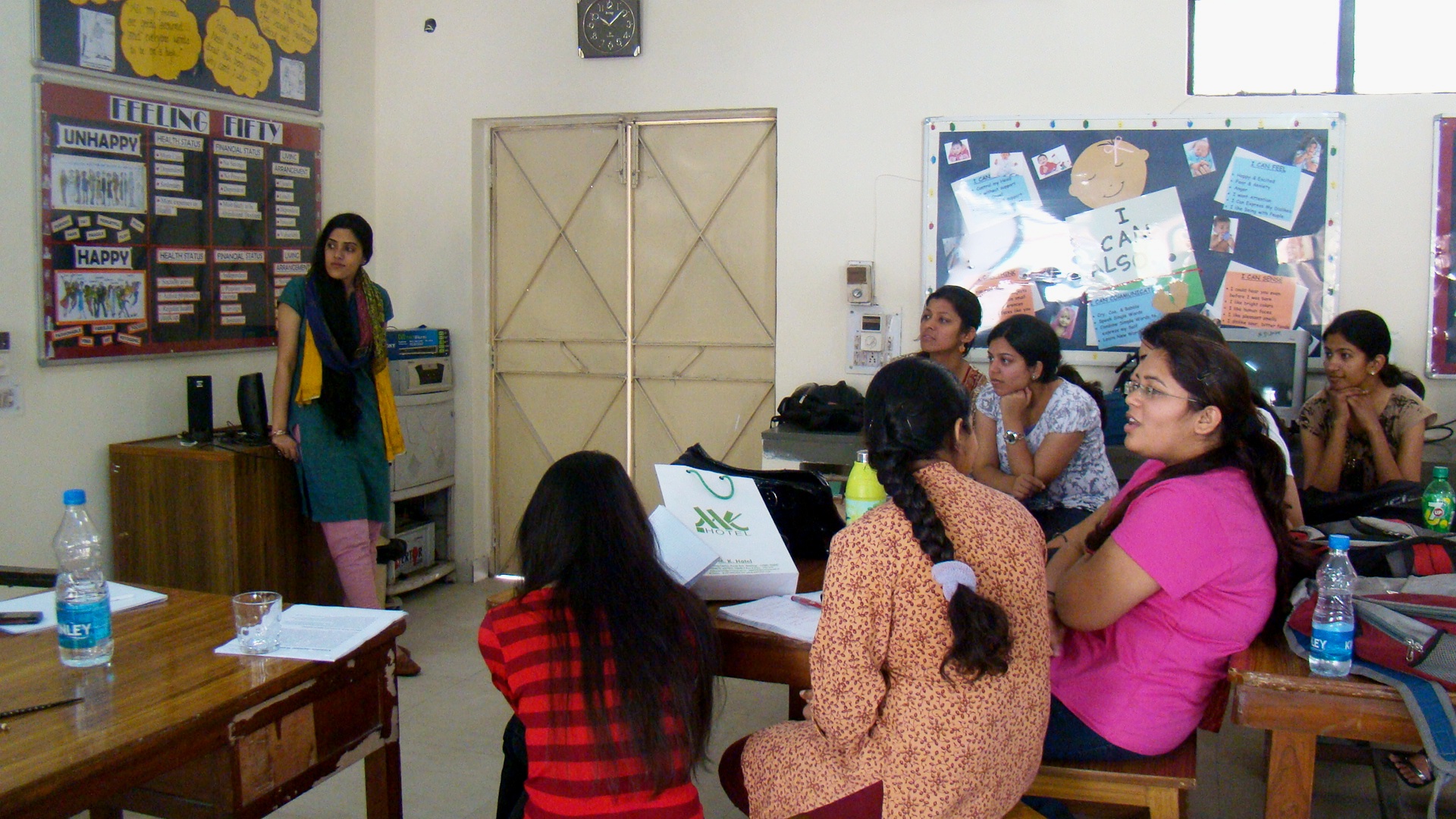
The first day of  The Global Anti Street Harassment Week 2012 was marked by an extensive discussion on gendering of public spaces with students from the Department of Human Development of Institute of Home Economics. Students shared their personal experiences of ‘gender’ as an identity that impacts their choices and opportunities to live equally in the city. The students deliberated on gaps in emergency helpline numbers for women.

Service provisions like public toilets or well lit parks to also talking about the role of larger society to create an enabling environment for all. With the remark that safety is a woman’s right to the city, the students undertook a ‘class to class campaign’, sharing with students the message against sexual harassment on streets and also sharing some.

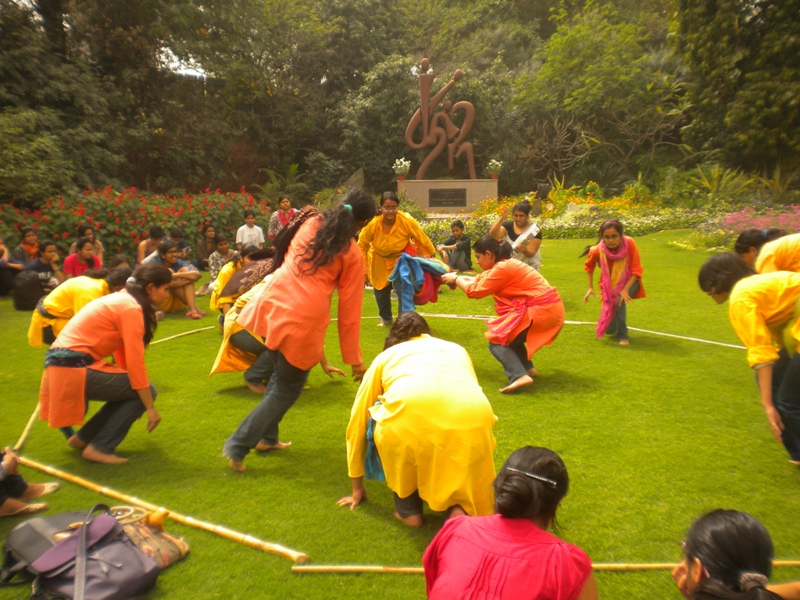
An open lawn discussion at Lady Sri Ram College for Women on ‘Reclaiming Right to Public Spaces’ was called by students from National Service Scheme on Tuesday, the 20th of March, 2012.  There was an interesting discussion on the factors that attribute a place as being safe and unsafe. A street play by the college theatre society marked the beginning of the discussion.  The students were shared helpline booklets, poster and other relevant material after the discussion. More than 100 students participated in the discussion.

Let’s Make Delhi Safe for Women! Reclaiming Right to Public Spaces:

The recent weeks in the National Capital Territory of Delhi has seen an sudden increase of reported sexual assaults on women, mostly while their presence in public spaces. Following such incidences were remarks given to women to not work after 8 p.m. or to not wear “revealing clothes.”

The blame of these and many more incidences was left on the woman. This led to agitation not just among the civil society group of the city but also individual masses. Everybody across the city decided to stand against violence on women and say no to unsafe public spaces.

The first public protest was called in Gurgaon as a response to the incident that took place outside one of the malls in the area following which remarks by police representatives on girls should stay home after 8:00 pm was called for. The protest was joined by women’s groups, youth organisations, individuals from the city and several media houses as well.  Following the first protest, a Citizen Charter of Demands was drafted and a petition to state agencies to implement the same was circulated all across. Social networking pages to public campaigns to meeting individuals where ever possible, the petition was taken all across the city.

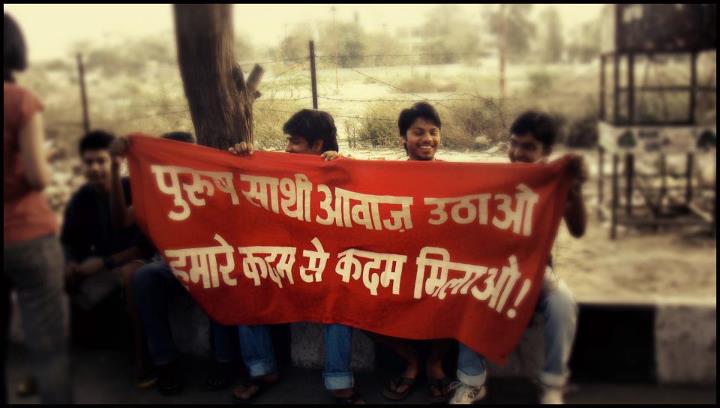
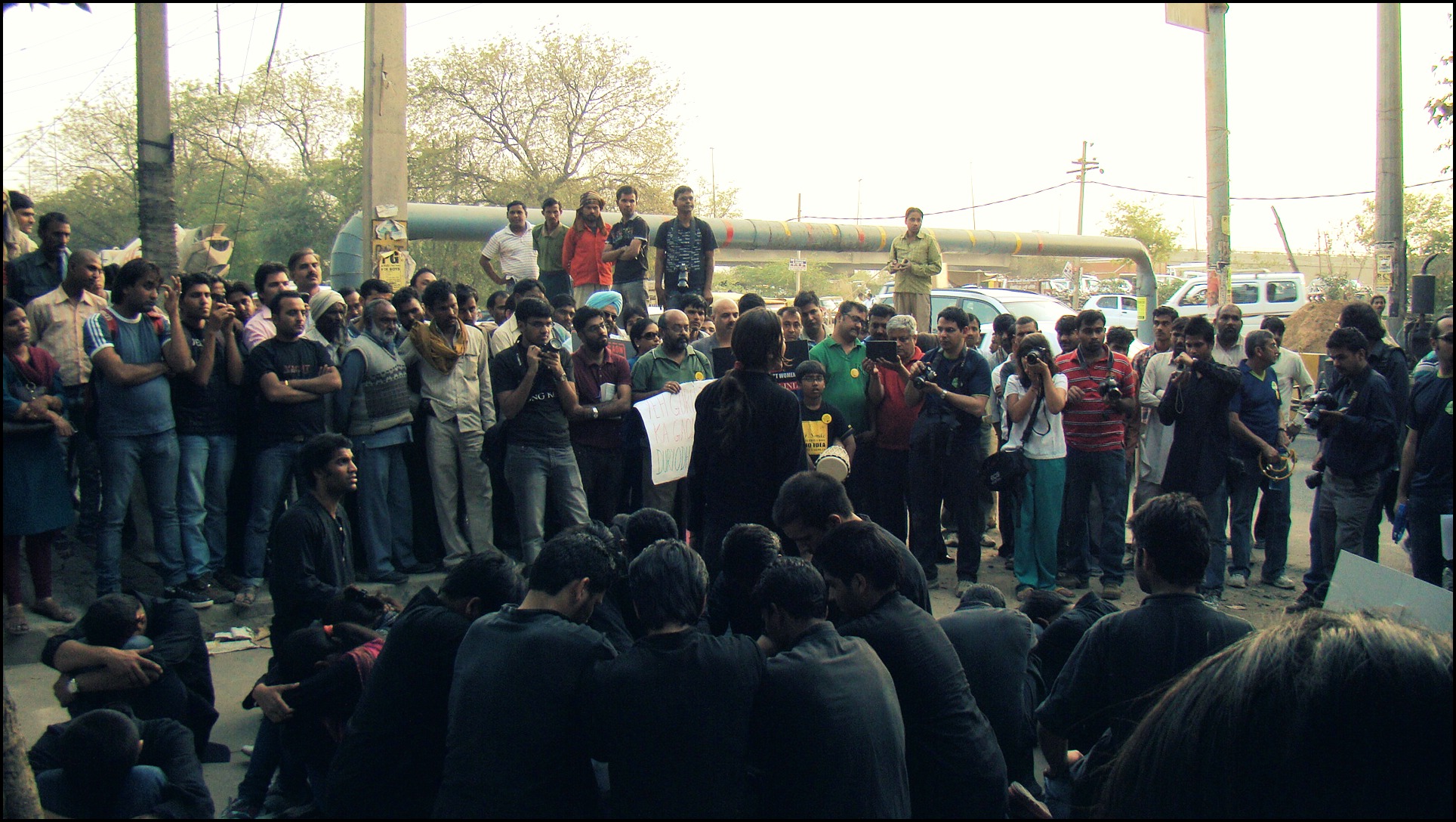
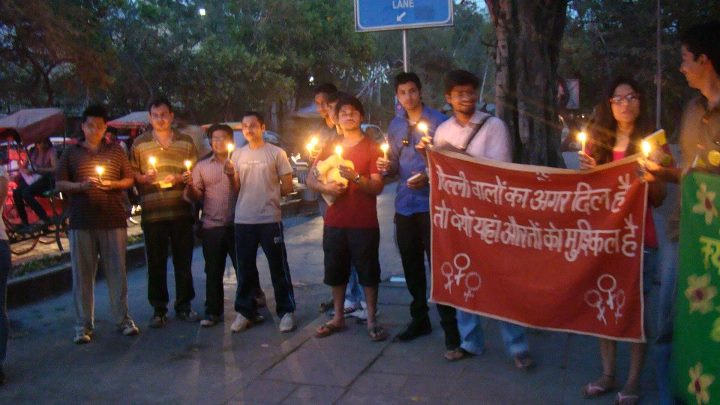
The city saw a series of public protests in different places and through different forms. To mark the end of the Global Week, the students from  the University of Delhi called for a candle light vigil to “Reclaim your Right to Safe and Violence free City for Women.”  The vigil was held on March 24, 2012, in the evening and was participated by residents of the area, students, individuals from the city asking for a right to safe public spaces. An appeal to more men to join

Winning entry by Aranyaka Verma.

and for police support was constantly being made during the protest and that actually led to more people joining in the middle of the protest. More than 100 hundred people signed the petition and participated in the march.

CAMPAIGNING ONLINE

Photography Competition on Right to A Safe And Inclusive City

An online photography competition in solidarity with the Global week was hosted on the Safe Delhi Campaign Facebook page. The competition was well received and saw multiple entries. A panel of judges was formed to choose the winning photograph. Discussion around factors to make city safe was also initiated online.


Share

Filed Under: anti-street harassment week, street harassment Tagged With: global activism, Jagori, rape, Safe Delhi, sexual harassment, street harasment

10 Ideas for Sexual Assault Awareness & Prevention Month 2011

April 1, 2011 By HKearl

Do you care about ending sexual assault and helping survivors? I know many of you do because my 2010 post listing 10 ideas for action has been well viewed! Well, I care, too and fortunately for us there are tons of resources, activities, and initiatives this month (and most are applicable beyond the month) that make it really easy for us to do something.

Before I give you 10 of those resources and initiatives (most of them are new for 2011), here is a powerful excerpt from President Obama’s proclamation for Sexual Assault Awareness and Prevention Month 2011:

“Despite reforms to our legal system, sexual violence remains pervasive and largely misunderstood.  Nearly one in six American women will experience an attempted or completed rape at some point in her life, and for some groups, rates of sexual violence are even higher.  Almost one in three American Indian and Alaska Native women will be sexually assaulted.  Young women ages 16 to 24 are at greatest risk, and an alarming number of young women are sexually assaulted while in college.  Too many men and boys are also affected.  With each new victim and each person still suffering from an attack, we are called with renewed purpose to respond to and rid our Nation of all forms of sexual violence…

Each victim of sexual assault represents a sister or a daughter, a nephew or a friend.  We must break the silence so no victim anguishes without resources or aid in their time of greatest need.”

So what can we do about it?

1. Believe/help survivors. I loved a tweet earlier this week from Students Active for Ending Rape (SAFER). At minimum, they noted, believe survivors when they tell you. I’ll add, visit the website of the Rape, Abuse & Incest National Network to find information to help you help the survivor. And to find information to help yourself.

2. Find help. If you are a survivor who isn’t sure where to turn to or how to get help, I highly recommend visiting the RAINN website. I volunteered with them for 2.5 years and applaud their work. You can find information about a phone or online hotline and information about recovery.

  • Are you in the military? RAINN has a new helpline called Safe Helpline specifically for survivors in the military.
  • Are you male? Visit the website 1 in 6 for resources specifically for you.

3. Play BINGO.  The Washington Coalition of Sexual Assault Programs developed a new thought and conversation provoking game of Bingo! They filled each square with ways in which participants can be part of the solution to end sexual violence.

4. Use the arts. Take part or organize arts-based initiatives to raise awareness about sexual assault. Four examples of initiatives include:

  • The Clothesline Project, an initiative to bear witness to violence against women. Women affected by violence decorate a shirt and hang the shirt on a clothesline to be viewed by others as testimony to the problem of men’s violence against women.
  • V-Day event offers several performance and film screening options for groups to implement in their community in February, March, and April. The purpose of these events is to raise awareness about violence against women and girls as well as raise money for local beneficiaries that are working to end violence. There is no theater or producing experience necessary. Visit the V-Day website to learn how to organize a V-Day event.
  • Story of a Rape Survivor (SOARS) is an award winning multimedia performance you can bring to your community that entertains as well as educates the audience about sexual assault prevention. Featuring the music of Nina Simone,Maxwell, and Sade, SOARS tells one woman’s story about how she reclaimed her body, sexuality, and self-esteem after being sexually assaulted in college. SOARS is a cutting-edge theatrical experience that stars a diverse cast of women, combining photographs, dance, spoken-word poetry and music as a way to educate about healing from sexual violence.
  • By wearing a white ribbon, White Ribbon Campaign members make a personal pledge to “never commit, condone or remain silent about violence against women and girls.” You can order materials to help challenge the community to speak out on the issue, learn about sexual violence, and raise public awareness.

5. Wear jeans. Make a social statement by wearing jeans on a designated day in April (this year it is April 27) through Denim Day in LA & USA as a visible means of protest against misconceptions that surround sexual assault. Order their Denim Day Action Kit and raise awareness at your workplace, neighborhood, or community. Encourage each person who participates to donate one dollar to Denim Day to fund prevention programming. (I just ordered my kit.)

6. Make a pledge. This month, Students Active for Ending Rape encourages college students, alumni, parents, faculty, and administrators to transform their awareness into activism by pledging concrete action toward ending college sexual assault.

7. Tweet or Write Facebook Posts. The National Sexual Violence Resource Center provides a variety of resources each year for Sexual Assault Awareness & Prevention Month, including free reports and manuals and campaign materials. This year, they’ve created social networkers with 30 suggested tweets/posts to publish, one per day in April. (I just tweeted the suggestion for April 1.)

8. March. Organize or participate in a Take Back the Night March in your community or on campus and make a statement that women have the right to be in public and to go about their lives without the risk of sexual violence. Order a kit with resources for the event.

9. Support consent. One fun way to work to prevent sexual assault is to talk about and emphasize consent in all sexual activities. Here are two amazing initiatives you can bring to your campus or community to do that:

  • The Consensual Project is an interactive, sex-positive, fun workshop during which participants can learn why consensual hooking up is hotter hooking up. College students are an ideal audience for this workshop.
  • The Line is a film that explores the intersection of sexual identity, power, and violence. How do we negotiate our boundaries as sexually liberated women? How much are we desensitized to sexual violence? Through conversations with football players, educators, survivors of violence, prostitutes, and attorneys, this personal film explores the “grey area” and the elusive line of consent. This April, 16 participating Hollaback! chapters will show The Line and host community events, screenings and parties in cities around the globe.

10. Do something about campus sexual assault. The rates of campus sexual assault are quite high, yet very rarely are there adequate prevention programs or proper channels for handling perpetrators. AAUW and SAFER created a Program in a Box toolkit with ideas for concrete action that can lead to concrete change, tailored for audiences of students, faculty, alumni, and parents of students. Download the free toolkit and find out what you can do to make campuses safer for all.

Share

Filed Under: Resources Tagged With: prevention, rape, SAAM, Sexual Assault Awareness Month

Take one minute to join a virtual campaign to help women in Congo

December 8, 2010 By HKearl

Around the world, public places are less safe and welcoming for women than for men. This often is because of street harassment but it’s also because of rape or the fear of rape. In no region on earth is the reality of rape more prevalent than in the Congo, the worst place on earth to be a woman.

For the last several months I’ve become more educated about and involved in addressing the atrocities in the Congo, from participating in programs by Women for Women International and Enough,to meeting/brainstorming action with East Congolese immigrants who have lived and seen first-hand the atrocities in their communities, to reading Lisa Shannon’s book A Thousand Sisters: My journey into the worst place on earth to be a woman.

For six hours yesterday after work, I joined Lisa, who is also the founder of Run for Congo Women, and several other courageous women and men outside the State Department in Washington, DC, as part of public outcry to ask the State Department to take more action in Congo, including to create a Congo Plan.

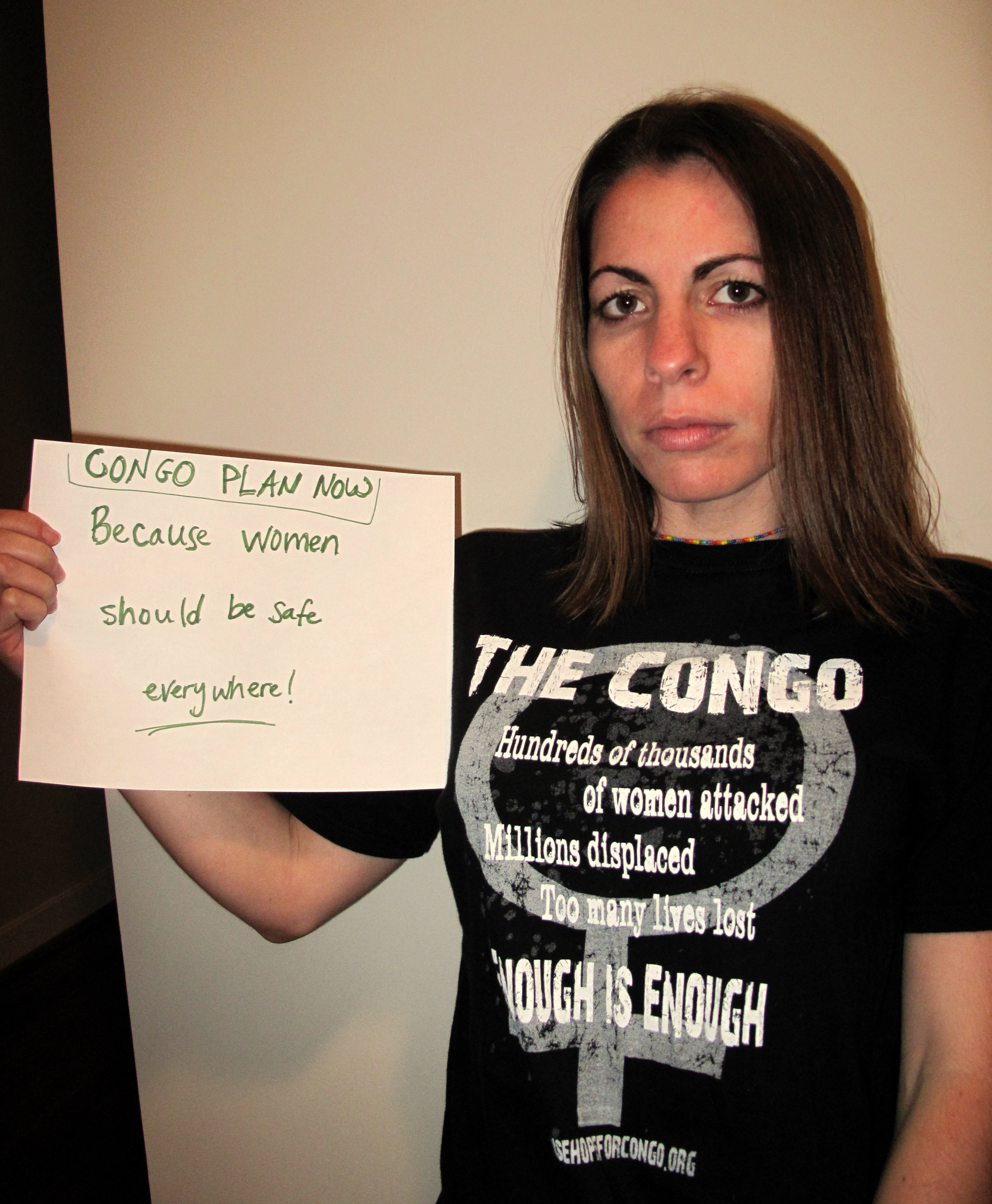
Lisa and several others are camping out all week, 24/7 (in very cold weather: at night the windchill has been single digits) and also are orchestrating a virtual protest. They are asking individuals to take photos of themselves holding signs with messages to the State Department and posting those photos on Facebook.

12-7-10 around 8 p.m. outside the State Deptartment

Lisa is meeting with members of the State Department today and she hopes to meet with Secretary Clinton next week. Regardless of whether or not she can do this in person or will have to drop it off for Sect. Clinton, Lisa will print all of the photos from the virtual protest and put them in a booklet for Sect. Clinton so she knows how many people care about this issue.

It literally only takes a minute to join the Virtual Campaign and another couple of minutes to add your photo message if you have easy access to a digital camera and computer or to a camera/scanner/computer. (And if you want to do more or want to do something else, check out the organizations I linked to above to find out how you can become involved).

Out Cry for Congo

Here is the full information about the Virtual Campaign:

Date: Monday, December 6, 2010 – 12:15am – Friday, December 10, 2010 – 12:15am
Location: Washington, DC

With 5.4 million Congolese dead as of January 2008, it is high time to treat Congo as the emergency it is!

-The State Dept has told us repeatedly they need a public outcry in order to act.  This is it!

-Since August, we have hammered the State Department and prompted 21 members of the U.S. House of Representatives to write a “Dear Colleague” letter to Secretary Clinton urging well-vetted, stronger U.S. policies and international leadership to help stabilize Congo.

-A few dedicated women will be spending a long, cold, sleepless week outside of the State Dept. in D.C., from 6 AM Dec. 6th thru 11:59 PM Dec. 10th, demanding a comprehensive Congo Plan.  And we are calling on people across the country to join us in a virtual campaign supporting those efforts in the cold.

-For background on our well vetted policy asks, see www.athousandsisters.com/blog:   a)  Dear Colleague Letter to Secretary Clinton;  b) Eastern Congo Initiative White Paper; c) Nicholas Kristof’s 4-point plan for Congo d) anything on the Enough Project or Raise Hope for Congo websites.

-Our efforts will count ONLY IF YOU, YOUR FAMILY & FRIENDS join us virtually on the internet!  Please help us create an internet firestorm of support for Congo!  The time is now! Take a photo of yourself and your message to the State Dept and upload it here: http://www.facebook.com/#!/pages/Outcry-for-Congo/166647026706786.

Share

Filed Under: street harassment Tagged With: A Thousand Sisters, Congo Plan, Lisa Shannon, Outcry for Congo, rape

Terrible predator, good bystander, useless police

July 10, 2010 By Contributor

[Story may be triggering]

I was walking to the subway on the way to class (college) at 930 am last week. On a tuesday. An older gentleman, maybe in his mid-50’s, appeared to be on the phone, but started getting closer to me commenting about my breasts and my face saying into the phone “this is what i like right here, these are the kinds of girls i want to f*ck right here. this ones’ gonna get it”.

i started walking faster. i was shocked that the street was full of people but he would say such disgusting things. he followed me, saying similar things for two more blocks. I didn’t want him to follow me into the subway station, because i’d be trapped with him down there. So i finally worked up the nerve and turned around and yelled, “Can you just leave me alone??? you’re scaring me and you’re disgusting!”.

at about the same time i started screaming, a street sweeper pulled over and the driver jumped out and ran up to the pervert. the pervert started screaming about how he was going to rape me, leaned forward, and pulled my shirt down almost tearing it off. at this point, the street sweeper grabbed him in a head lock and a grocery owner ran outside saying he had called 9-11.

i was late for class, and the police refused to take a report saying nothing ‘serious’ had happened. i spent the day in class shaking. took an exam almost crying. it was awful. thank god for the man who intervened while everyone stood by staring.

– anonymous

Location: Brooklyn, NY

Share your street harassment story today and help raise awareness about the problem. Include your location and it will be added to the Street Harassment Map.

Share

Filed Under: Stories, street harassment Tagged With: bystander, rape, sexual harassment, street harassment

« Previous Page
Next Page »

Share Your Story

Share your street harassment story for the blog. Donate Now

From the Blog

  • #MeToo 2024 Study Released Today
  • Join International Anti-Street Harassment Week 2022
  • Giving Tuesday – Fund the Hotline
  • Thank You – International Anti-Street Harassment Week 2021
  • Share Your Story – Safecity and Catcalls Collaboration

Buy the Book

  • Contact
  • Events
  • Join Us
  • Donate
  • Facebook
  • Instagram
  • Pinterest
  • Tumblr
  • Twitter
  • YouTube

Copyright © 2026 Stop Street Harassment · Website Design by Sarah Marie Lacy