• About Us
    • What Is Street Harassment?
    • Why Stopping Street Harassment Matters
    • Meet the Team
      • Board of Directors
      • Past Board Members
    • In The Media
  • Our Work
    • National Street Harassment Hotline
    • International Anti-Street Harassment Week
    • Blog Correspondents
      • Past SSH Correspondents
    • Safe Public Spaces Mentoring Program
    • Publications
    • National Studies
    • Campaigns against Companies
    • Washington, D.C. Activism
  • Our Books
  • Donate
  • Store

Stop Street Harassment

Making Public Spaces Safe and Welcoming

  • Facebook
  • Instagram
  • Pinterest
  • Tumblr
  • Twitter
  • YouTube
  • Home
  • Blog
    • Harassment Stories
    • Blog Correspondents
    • Street Respect Stories
  • Help & Advice
    • National Street Harassment Hotline
    • Dealing With Harassers
      • Assertive Responses
      • Reporting Harassers
      • Bystander Responses
      • Creative Responses
    • What to Do Before or After Harassment
    • Street Harassment and the Law
  • Resources
    • Definitions
    • Statistics
    • Articles & Books
    • Anti-Harassment Groups & Campaigns
    • Male Allies
      • Educating Boys & Men
      • How to Talk to Women
      • Bystander Tips
    • Video Clips
    • Images & Flyers
  • Take Community Action
  • Contact

New U.S. Transgender Survey

December 8, 2016 By HKearl

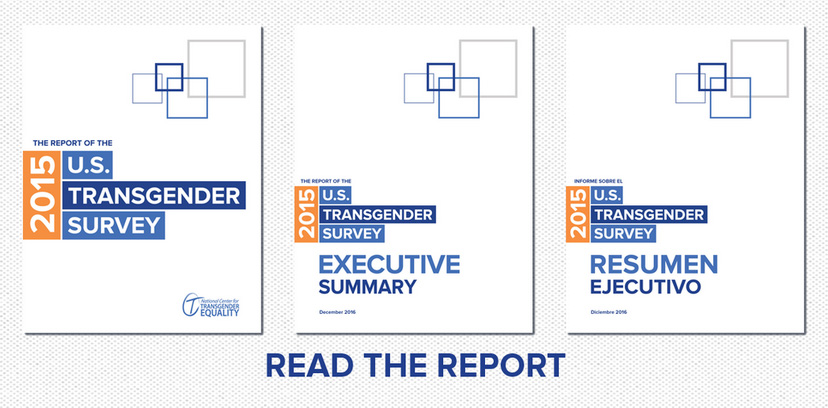
transgenderreportThe U.S. Transgender Survey was released today by the National Center for Transgender Equality. Among the findings are alarming ones relating to discrimination and harassment in public spaces:

Public accommodations and bathrooms

“Accessing basic goods and services is also a major hurdle for transgender people:

  • 31 percent of trans people experienced mistreatment in the past year at a place of public accommodation (stores, hotels, etc.), including being denied equal service (14 percent), verbal harassment (24 percent), or physical attack (2 percent).
  • 20 percent avoided at least one type of public accommodation because they feared mistreatment.
  • 9 percent of respondents were denied access to a restroom in the past year.
  • Restrooms were often unsafe, with 12 percent experiencing verbal harassment, 1 percent experience physical attacks, and 1 percent experience sexual assault when accessing a restroom.
  • 59 percent avoiding a public restroom in the last year out of fear of confrontations, with 32 percent actually limiting what they ate or drank to avoid the restroom.
  • 8 percent reported a urinary tract infection, kidney infection, or other kidney-related problem in the past year as a result of avoiding the restrooms.”

And…

  • “46 percent of trans people experienced verbal harassment in the past year.
  • 9 percent of trans people experienced a physical attack in the past year.”

H/T our board member Patrick

Share

Filed Under: LGBTQ, Resources, street harassment Tagged With: research, transgender

UK Study Shows Objectification, Street Harassment Affects Girls

October 3, 2016 By HKearl

Each year, Girlguiding, the UK’s leading charity for girls and young women, asks girls what they think through our Girls’ Attitudes Survey. They collect the views of over 1,600 girls and young women aged 7 to 21 across the country.

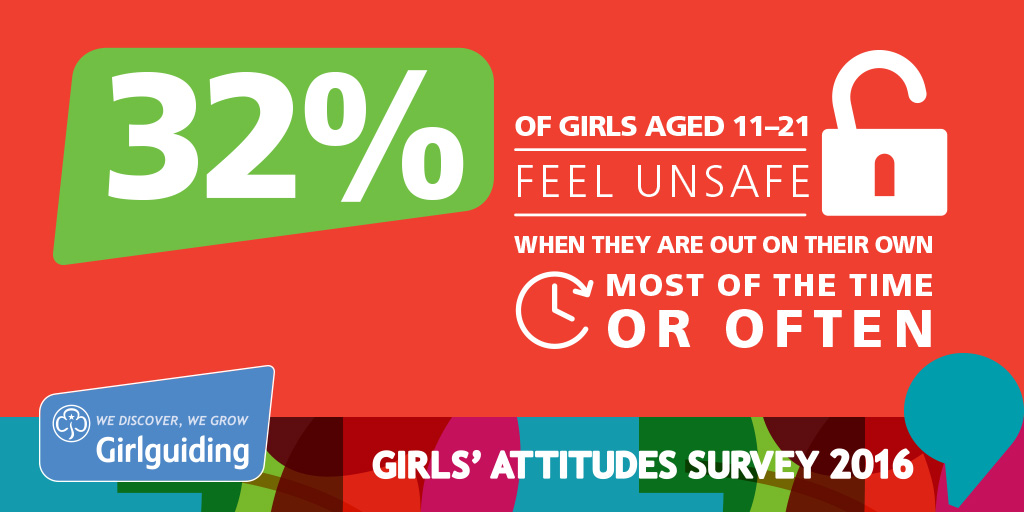
This year’s report shows that safety in public spaces is a big concern.

girlguiding-research-2016-unsafe-on-own

So is objectification. Sadly, 36% of seven to 10-year-old girls believe they are rated more on their looks than their abilities.

Overall, Girlguiding says its survey shows girls and young women face “multiple, compound pressures” including exposure to images that objectify women, sexist online abuse and street harassment.

Share

Filed Under: Resources, street harassment Tagged With: girls, objectification, research, UK

Tunisia Street Harassment Study

June 11, 2016 By HKearl

In 2016 in Tunisia, the Center for Research, Studies, Documentation and Information on Women interviewed 3,000 randomly selected women, aged 18 to 64, from 200 urban and rural geographic areas across the country. 53.5 percent experienced psychological or physical violence at least once in public spaces between 2011 and 2015. Their experiences included being followed by men to being insulted or sexually harassed. 41 percent of women reported having experienced physical violence in public.

“A recent international study found that Tunisia is the only country in the Arab world and Africa where women report being harassed both for dressing religiously and for dressing too liberally. Street interviews conducted by Tunisia Live in April found that Tunisian women of various backgrounds consider street harassment “part of our daily lives.” “

Share

Filed Under: Resources, street harassment Tagged With: research, tunisia

Part 2: Sexual Harassment of Women in India: A Violation of Personal and Public Space

May 25, 2016 By Correspondent

Manish Madan, Ph.D, USA, SSH Blog Correspondent

[This is continued from Part 1]

The next part of my write-up is on a recent research study that I conducted with my co-author Mahesh K. Nalla, understanding the nature of sexual harassment of women in public places with a focus on the capital city, New Delhi, India. I enumerate a few of the key findings below:

  • Nearly 2 out of 5 women (40 percent) reported to being sexually harassed (from being catcalled, whistled at to being physically groped, poked etc.) in the year prior, and
  • About 3 out of 5 women (about 58 percent) had experienced the harassment at least once in their lifetime.
  • Nearly 56 percent of the women said, they knew someone (friend/family) who has been harassed at least once in their lifetime.
  • About 80 percent of the women reported to have experienced victimization while waiting for a bus at a bus-stop, and about 60-70 percent reported victimization at a roadside; pubic park/public areas such as market place, shopping complex etc.
  • Majority of the women had experienced it in the daytime compared to after dark hours. This in our view was not too surprising given that the most women tend to access public spaces or use the public transportation for their daily business during the daytime.
  • Women find public mode of transportation (busses, metro etc.) and public spaces as less accommodating for them compared to the men.
  • Women were less likely to report feeling of safety in public spaces compared to men.
  • Finally, there is a significant gap in how men and women view sexual harassment.

Most of these finding should find much attention with policy makers in Delhi government or with the Delhi Women Commission given the context of the study post Delhi Gang Rape that questioned the women’s safety in the capital city.

Interestingly, there was not much gap in women’s experience of actual victimization versus their perception of victimization at specific public locations – call it a woman’s instinct, and on a much serious note, admit our inability in ensuring a safer and/or accommodating environment for women.

The significant gap in gender views on sexual harassment opens an important array of discussion points given the dynamics of sexual harassment. For example, nearly one-third to one-fourth of the men did not view whistling, catcalling, brushing up against a women or leaning closely as a constituting sexual harassment while nearly all women found them to be very serious instances of sexual harassment. It is therefore an important take-home for us – the education, awareness needs to be initiated in identifying actions that constitute sexual harassment. We have to be on the same page.

The UN Millennium Project suggested eight goals that quantify as well as qualify toward “basic human rights – the rights of each person on the planet to health, education, shelter, and security.” Promoting gender equality and empower women is one of those eight basic human rights goal that the large gathering of world leaders adopted as part of the UN Millennium Declaration in September 2000. Just like any project deadline, the participating nations committed to the deadline of 2015. Are we there yet, or do we really need a deadline extension in ensuring women safety?

The 2013 Charter of Public Space recently adopted in Rome stated public spaces to be as accessible and enjoyable by all for free … “Public spaces are a key elements of individual and social well-being, the places of a community’s collective life, expression of the diversity of their common natural and cultural richness and a foundation of their identity.” Can we ask the Government to ensure that public spaces are equitable and inclusive to all genders? I see a prominent role of urban city planners, who also understand the concepts of gendered spaces and can advise the government in relevant light.

Finally, as suggested by the study, the inadequate or distressed access of public space to women is not only contrary to the UN Millennium Development Goal on the Status of Women but at a fundamental level challenges the constitutional and basic human rights of women in our society. Eight out of 10 women waiting at a bus stop recognize that they will likely be experiencing or witnessing some form of sexual harassment. Is it supposed to be the new normal? I believe we as a community of responsible citizens can do better, isn’t it?

The Road Ahead

Like any other social menace, sexual harassment of women in public spaces is an issue that needs a collective effort where all stakeholders such as government, legislators, urban planners, criminal justice system, advocacy groups, NGOs, schools, media, researchers and finally, men and women work together. The remedial may not be prompt but with sustained efforts backed by research, we can hope to have lesser instances of sexual harassment.

Citizen-driven initiatives backed by organizations, government will be at the heart of this, in my view. As clichéd as it may sound, I am neither the first one nor will be last to say, the public discourse on sexual harassment must initiate at an early educational level within schools and within homes. Furthermore, attitudinal change is a must toward gender sensitization. Every time there is an instance of sexual harassment, someone’s right to personal and public space is getting violated. Someone’s constitutional right to be a free citizen is getting violated and it is not cool.

I encourage initiating cross-gender dialogue #WhatIsSexualHarassment to understand and raise awareness about what indeed sexual harassment is. Trust me, there will be far too many definitions emerging from this proposed dialogue, however, my hope will be the sensitization and education of many men and women alike about what all constitutes sexual harassment.

Sexual harassment of women is not a women’s issue anymore. As a society we have to work collectively toward addressing the prevalence of sexual harassment and envision a community that refuses any form of violence against women. I do want to put a special emphasis that this article is put in no way to single out one gender over another or to draw a generalization of men versus women. I hope you all join my vision.

Manish is a Professor of Criminal Justice at Stockton University where his research focuses on examining sexual harassment, gender empowerment, spousal abuse and policing issues. You can follow him @Prof_Madan or reach out to him at www.manishmadan.com.

Share

Filed Under: correspondents Tagged With: India, research

Survey about African American Women’s Experiences in Public Spaces

April 24, 2016 By HKearl

4/29/16 UPDATED: Women ages 18-40 may take the survey.

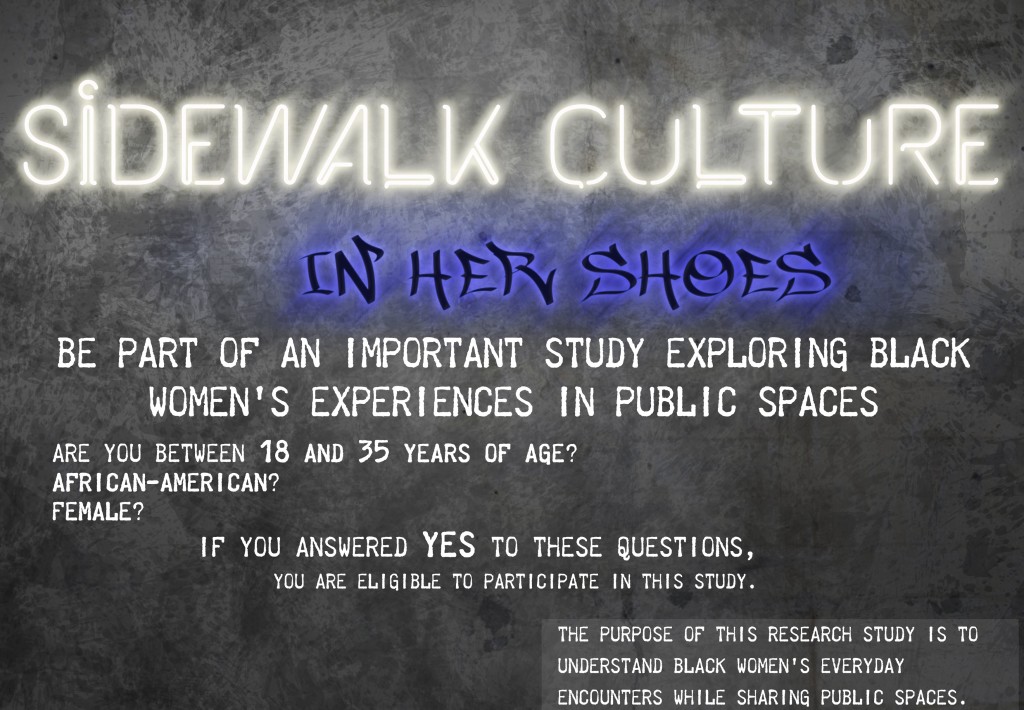
Attention African American women ages 18-35 years old, female African American researchers at Yale University are studying YOUR experiences in public spaces and would love to hear from you.  The survey will take 22-25 minutes of your time. The researchers believe that everyone has a unique story to tell, and they would like to help tell your story. Get updates via the Sidewalk Culture Facebook page.

sidewalkposter

Share

Filed Under: race, Resources, Stories Tagged With: african american women, research, yale

« Previous Page
Next Page »

Share Your Story

Share your street harassment story for the blog. Donate Now

From the Blog

  • #MeToo 2024 Study Released Today
  • Join International Anti-Street Harassment Week 2022
  • Giving Tuesday – Fund the Hotline
  • Thank You – International Anti-Street Harassment Week 2021
  • Share Your Story – Safecity and Catcalls Collaboration

Buy the Book

  • Contact
  • Events
  • Join Us
  • Donate
  • Facebook
  • Instagram
  • Pinterest
  • Tumblr
  • Twitter
  • YouTube

Copyright © 2026 Stop Street Harassment · Website Design by Sarah Marie Lacy