• About Us
    • What Is Street Harassment?
    • Why Stopping Street Harassment Matters
    • Meet the Team
      • Board of Directors
      • Past Board Members
    • In The Media
  • Our Work
    • National Street Harassment Hotline
    • International Anti-Street Harassment Week
    • Blog Correspondents
      • Past SSH Correspondents
    • Safe Public Spaces Mentoring Program
    • Publications
    • National Studies
    • Campaigns against Companies
    • Washington, D.C. Activism
  • Our Books
  • Donate
  • Store

Stop Street Harassment

Making Public Spaces Safe and Welcoming

  • Facebook
  • Instagram
  • Pinterest
  • Tumblr
  • Twitter
  • YouTube
  • Home
  • Blog
    • Harassment Stories
    • Blog Correspondents
    • Street Respect Stories
  • Help & Advice
    • National Street Harassment Hotline
    • Dealing With Harassers
      • Assertive Responses
      • Reporting Harassers
      • Bystander Responses
      • Creative Responses
    • What to Do Before or After Harassment
    • Street Harassment and the Law
  • Resources
    • Definitions
    • Statistics
    • Articles & Books
    • Anti-Harassment Groups & Campaigns
    • Male Allies
      • Educating Boys & Men
      • How to Talk to Women
      • Bystander Tips
    • Video Clips
    • Images & Flyers
  • Take Community Action
  • Contact

Two New Books

September 10, 2018 By HKearl

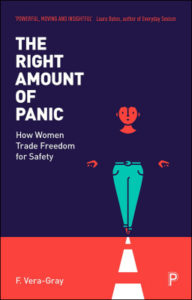
Dr. Fiona Vera-Gray has a new book about street harassment out called The Right Amount of Panic: How Women Trade Freedom for Safety. I got to offer a review for the jacket back: “By reinterpreting women’s daily safety strategies as successful forms of resistance, this book presents fresh ideas for sexual violence prevention.”

Soraya Chemaly, a long-time supporter of SSH, has a new book out tomorrow called Rage Becomes Her, and in one chapter (“Smile, Baby”) she writes about street harassment. It is a book we all need to understand our anger and “transform it into meaningful change.” #RageBecomesHer

 

Share

Filed Under: Resources, street harassment Tagged With: books, panic, rage, safety

You Can’t Keep Women Runners Safe By Only Talking to Women

August 12, 2016 By HKearl

Cross-posted from Huffington Post

Three young women were killed while running alone in Michigan, Massachusetts and New York across the past two weeks. Each case is under investigation with no clear motives or suspects. Police believe they are unconnected cases.

But there are connections. In each tragedy, the victim was female and she was alone in a country that is unsafe for women. It’s quite likely that another connection is that their killers were male. Women are most often killed by men; just as men are most often killed by men.

In the regions where the attacks happened, some women feel nervous about going running alone, so more of them are joining running groups and changing their running routes. There’s been an increased interest in safety phone apps and a spike in sales for “booby trap bras,” a product that was developed by a female runner after she was attacked.

I empathize with these women runners’ concern.

I am 33 years old and I have been a long distance runner for 20 years. I ran my first marathon when I was 14. When I was 13, I attended a week-long cross country camp. The camp was for both girls and boys, ages 13 to 18, and we were together for all of our runs, clinics and social activities. But one morning, the boys went outside to for a fun activity while the girls stayed inside and listened to the male coach’s wife talk to us about safety.

She told us how she used to run the same route at the same time of day and a man she sometimes passed began to take notice. One day, he physically attacked her. She was able to escape. She told us we could be at risk if we ran alone, if we wore headphones, and if we ran at the same times along the same routes. Her story scared me. What I took to heart the most from her talk was to never become predictable. I have never run the same route at the same time two days in a row if I am running alone.

Aside from when I ran on school teams in high school and college, I have largely chosen to run alone. I am often the only woman I see running alone, especially on bike trails and wood paths. I actually feel the safest in the woods or on a mountain path compared with running by roads.

Across the more than 30,000 miles that I have run, hundreds of men I do not know have verbally harassed me from their moving vehicles and from sidewalks as I pass by. Men have harassed me in many other situations too, but as I am alone the most while running, that is when I have faced the most harassment.

My experience is not unusual. A 2014 national study found that 65% of American women had experienced verbal or physical harassment by men they do not know. This included a national statistic of 1 in 4 women having been sexually touched and 1 in 5 having been followed.

The first time a man followed me in his car, I was 14 years old and on a mid-morning summer run near my house in California. I was able to dart down side streets and lose him. When I was 22 years old, a man chased me through a park in Virginia one evening during my run after work. I have never been more terrified. I’m grateful I could will my legs to move fast and I outran him.

All women runners have been warned about the potential dangers of men harming us when we run alone. We read stories like these recent ones and we know there are risks. But for most of us, it’s a risk we continue to take because the benefits of running, including alone, outweigh those risks. And that’s how I hope it can be; that we keep on running, that we claim these public spaces as our own, because that’s how it should be. We belong and we should have that right.

Looking back at the running summer camp I attended, I am frustrated that the discussion was only for the girls. While both women and men are at risk of being hurt and even killed by careless drivers, predatory attackers primarily target girls and women. And those predatory attackers are primarily boys and men, yet the premise of the discussion — and of so many discussions and articles since — was to teach us girls that it was our responsibility to stay safe, rather than the boys’ responsibility to work with us to create a world where we could be safe. To their credit, I have yet to be harassed by a male runner, but I still think they should be part of this conversation.

Overall, I want to see more accountability placed on boys and men. Yes, #NotAllMen attack and kill women, in fact a very, very small portion do. But quite a lot of men verbally harass women, demean them, and make sexist slurs and jokes. Those behaviors create a world in which women are valued less and they provide a context for attacks to happen. Women cannot truly be safe on the trails or in any other public space until those behaviors end.

Share

Filed Under: News stories Tagged With: killed, runners, safety

USA: What Would the World Be Like If All Women Were Safe?

November 15, 2015 By Correspondent

Sara Conklin, Washington, DC, USA, SSH Blog Correspondent

1234695_627388203960774_255348182_n
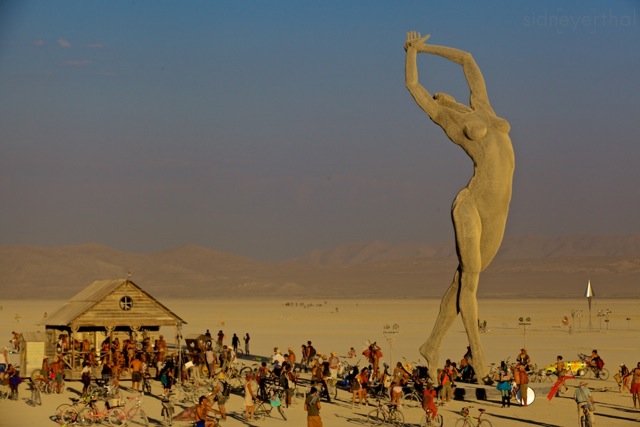
Truth is Beauty | Marco Cochrane

What would that be like? I’ve spent the past several days in quiet contemplation on the matter. After “planning” (read: pinterest’ing) my probably-not-happening-anytime-soon trip to Burning Man, I came across this striking art installation by The Bliss Project, of a 40-foot woman that poses the question, what would the world be like if all women were safe?

Well, for starters, my world would be drastically different. I have built a life around women survivors; women who have braved incomparable odds and battled life’s challenges. I work in a community center and housing complex for women experiencing homelessness. I drum alongside an all-women’s cohort of marching percussionists. I keep a tight-knit group of women warrior friends. And I champion daily, my mother and grandmother who came before me and all they’ve taught me about strength and veracity. (Heck, I even write for this blog.)

What I love the most about this sculpture of the female form is that you can’t hide from it. She is vivaciously and fiercely alive. Her presence is notably dominant on the landscape. But, as the artist Ian Mackenzie mentions, “that very energy is dangerous for women to do in the real world.”

If I closed my eyes and imagined a world in which all women were safe, I see a huge void. Would my all-women’s drumline have the same necessary element of female empowerment? Would my girlfriends have the same compassion and vitality each time we meet? And more interestingly, would the organization I work for simply exist?

Perhaps this speaks more to the lifestyle I’ve chosen, then the dramatic question the artist poses. Nonetheless, it got me thinking about my daily environment and mainly that the threat of being unsafe is what permeates my everyday life.

And what an interesting thought that is – Do you pity the person who lives with that in mind each passing day, or in solidarity, do you choose to champion her?

These are a lot of questions that I do not have the answer to. But, what I can begin to conclude is that if we are faced with a world where women will not, have not, and cannot always be safe, then I am proud there are so many sisters with me. If the impossibility is permanent, together we can lessen it. If we do indeed share the burden, I’m happy at least to know I am sharing it. For being alone in a fight is a scary thing.

Sara works in fundraising events at an organization that empowers women who face homelessness through recovery, wellness training, and housing. She runs her own photography company (saraconklinphotography.com) and a popular website that seeks to connect the world through pictures, sarapose.com.

Share

Filed Under: correspondents Tagged With: safety, solidarity, violence

Denied Peace of Mind

August 20, 2009 By HKearl

I’m skipping work for a few days to write a few chapters of my street harassment book. Near the hotel where I’m staying (to flee distractions), there is a beautiful trail alongside the Potomac River and before buckling down to write yesterday and today I went for a run on it. Having never run there before though, I ran with my phone and kept alert and I ran in a different direction each day. I quickly found out that the trail was isolated, deserted, and mostly far from any roads, buildings, or even people. The beauty of the scenery was dimmed by my hyper awareness of every unusual sound and nervousness when I passed by a few lone men because of the isolation. No one harassed or attacked me but, as any woman who is out alone in a deserted area knows, there is rarely relief from the fear that one day you’ll be the wrong woman in the wrong place at the wrong time.

This afternoon, after more than six hours of writing and a self-imposed internet ban, I came online to do a bit more research for the chapter I’m writing. When I also checked e-mail, I saw a friend had sent me a relevant link to an article in the Phildalphia Daily News called “Staying safe on the run” about the harassment and risk of assault women runners, including the article author, regularly face. She shares a recent story about being harassed while on a run and then highlights some of the women who have been in the news recently because they were abducted or assualted while running.

Ugh. As a runner, I have had men honk and whistle and make kissing noises at me, some have said sexually explicit comments, and two men followed me on two separate occasions, one by car and another on foot. As precautions against assault, I rarely run with music, I mix up my routes and the time of day I run so I don’t become predictable, I don’t run in the dark, and if I am running somewhere new, I usually run with my phone. Sometimes I wish I was a man because that would make being a runner so much easier.

Aside from my own experiences and those detailed in the Philly article, in the last few months I’ve reported on a female runner being attacked in New York, followed in Delaware, and murdered in Vancouver. I plan to address the particular issues that face women runners – and walkers and cyclists – in my book in a chapter that details ways women alter their lives because of actual or feared harassment.

Wouldn’t it be nice if men never harassed or assaulted women? Then we could run in peace and with peace of mind.

Share

Filed Under: News stories Tagged With: attack, philadelphia, rape, safety, sexual assault, street harassment, women runners

North London

June 29, 2009 By Contributor

The road close to my street in London is a constant location for harassment. Men hang out in the cafes on the road and leer at passing women in a sometimes threatening, always horrible way. My housemate understandably refuses to walk down the road, I refuse not to.

On Friday night I was walking home at 1 a.m and I was pursued by a man who kept calling out to me. He then started shouting abusively when I became nervous and sped off home, somehow he was offended that a woman walking home late alone would become nervous when pursued by a random stranger. On Sunday, returning from the shops a couple of guys harassed me and turned verbally abusive when I told them where to get off. Action really needs to be taken about this, I’ve considered complaining to my local council. Otherwise I might end up flykicking a stranger in the street!

-anonymous

Location: North London, England

(Submit your stories here)

Share

Filed Under: Stories Tagged With: gender violence, London, restricted in public, safety, sexual harassment, stalking, street harassment

Next Page »

Share Your Story

Share your street harassment story for the blog. Donate Now

From the Blog

  • #MeToo 2024 Study Released Today
  • Join International Anti-Street Harassment Week 2022
  • Giving Tuesday – Fund the Hotline
  • Thank You – International Anti-Street Harassment Week 2021
  • Share Your Story – Safecity and Catcalls Collaboration

Buy the Book

  • Contact
  • Events
  • Join Us
  • Donate
  • Facebook
  • Instagram
  • Pinterest
  • Tumblr
  • Twitter
  • YouTube

Copyright © 2026 Stop Street Harassment · Website Design by Sarah Marie Lacy