• About Us
    • What Is Street Harassment?
    • Why Stopping Street Harassment Matters
    • Meet the Team
      • Board of Directors
      • Past Board Members
    • In The Media
  • Our Work
    • National Street Harassment Hotline
    • International Anti-Street Harassment Week
    • Blog Correspondents
      • Past SSH Correspondents
    • Safe Public Spaces Mentoring Program
    • Publications
    • National Studies
    • Campaigns against Companies
    • Washington, D.C. Activism
  • Our Books
  • Donate
  • Store

Stop Street Harassment

Making Public Spaces Safe and Welcoming

  • Facebook
  • Instagram
  • Pinterest
  • Tumblr
  • Twitter
  • YouTube
  • Home
  • Blog
    • Harassment Stories
    • Blog Correspondents
    • Street Respect Stories
  • Help & Advice
    • National Street Harassment Hotline
    • Dealing With Harassers
      • Assertive Responses
      • Reporting Harassers
      • Bystander Responses
      • Creative Responses
    • What to Do Before or After Harassment
    • Street Harassment and the Law
  • Resources
    • Definitions
    • Statistics
    • Articles & Books
    • Anti-Harassment Groups & Campaigns
    • Male Allies
      • Educating Boys & Men
      • How to Talk to Women
      • Bystander Tips
    • Video Clips
    • Images & Flyers
  • Take Community Action
  • Contact

“Hey bitch, didn’t you hear what I said?”

February 22, 2010 By Contributor

As I was walking home from school I passed by a liquor store. There were men hanging out there and they started whistling at me. One man called out excuse me miss. I continued to ignore him and he got mad at me and said, “Hey bitch didn’t you hear what I said?”

I kindly told him that I was on my way home and leave me alone. Then he started coming towards me like he was going to do something. I ran and he chased after me. I pulled out my cell and said, “Hey I’m going to call the cops you keep on fucking with me.”

Him and friends decided to leave. I told my dad and mom they told me I should have not said anything at all d kept on walking. Now I’m so scared. I try to travel different ways so I wouldn’t have to pass by that liquor store.

– anonymous

Location: Los Angeles, CA

Share your street harassment story today and help raise awareness about the problem. Include your location and it will be added to the Street Harassment Map.

Share

Filed Under: Stories, street harassment Tagged With: catcalling, predators, sexual harassment, Stories, street harassment, walking home from school

Men think that my body is public property

February 21, 2010 By Contributor

I go to school in Seattle, Washington, US. I have always lived in Washington. For me, street harassment started when I was in high school.

I started riding public transportation when I was 17, because I was in a program at my high school where I could take college classes and receive credit for both high school and college. I couldn’t get a car so I had to ride the bus. Over my time in high school, I was followed off the bus by grown men and harassed by a bus driver and several passengers.

I am 21 now, I go to school in Seattle, and the harassment has only gotten worse. I have been followed down the street by a man screaming at me and calling me a bitch because I wouldn’t stop to talk to him. I’ve been groped, grabbed by the arm, cornered on the bus, catcalled, honked at and yelled at from cars, you name it. Men have tried to get up close and invade my personal space when I refuse to talk to them.

The time I was groped, I was waiting at my bus stop in the International District. A man came up to me and started introducing himself and trying to have a conversation with me. I can’t remember what I said to him, but I made my answers short and tried to brush him off. When I went to put my headphones on, he tried to reach down the front of my shirt. At first I was so shocked that I couldn’t think of what to do, but then I managed to yell “Don’t touch me!” Other people waiting at the stop looked my way, the guy got embarrassed and left.

I have gotten increasingly wary of strangers because of this and the fact that I am catcalled two or three times a week.

So what I have been doing now is holding my head high, walking with a strong, purposeful gait, and trying to appear intimidating (which is hard to do when you’re 5′ 2″). I thought maybe that would make me less of a target. I yell back and I give people the middle finger. So far it hasn’t changed anything.

Everyone spends all this time telling us we should watch what we wear, where we go, what time we go out, etc. I just want to live my life and not worry if the guy that groped me would have stopped if no one had been around to see. Or if something worse will happen.

I am so sick of taking their shit. I’m sick of these men that think they are entitled to treat me however they want. Men that think my body is public property. I just want to walk down the street in peace.

– Lisa

Location: Seattle, WA

Share your street harassment story today and help raise awareness about the problem. Include your location and it will be added to the Street Harassment Map.

Share

Filed Under: Stories, street harassment Tagged With: groping, seattle, sexual harassment, Stories, street harassment, Washington

Crank up the Ipod

February 19, 2010 By Contributor

Harassment started for me at a really young age. Around nine, perhaps. All of the harassers were in their twenties, thirties, forties, or fifties. It was a scary thing to have to be faced with every day as a kid.

My street is residential and I used to go pretty far out of my way to avoid a house where street harassers lived, and hung out in front of, in order to get to the nearest commercial street where businesses are. I had to get to this street multiple times a day for the bus, grocery store, bank, drug store, etc. Now I have an ipod and just crank it up as loud as I can and wince as I go by.

– anonymous

Share your street harassment story today and help raise awareness about the problem. Include your location and it will be added to the Street Harassment Map.

Share

Filed Under: Stories, street harassment Tagged With: catcalling, creepy older men, ipod, pretending to ignore harassers, sexual harassment, Stories, street harassment

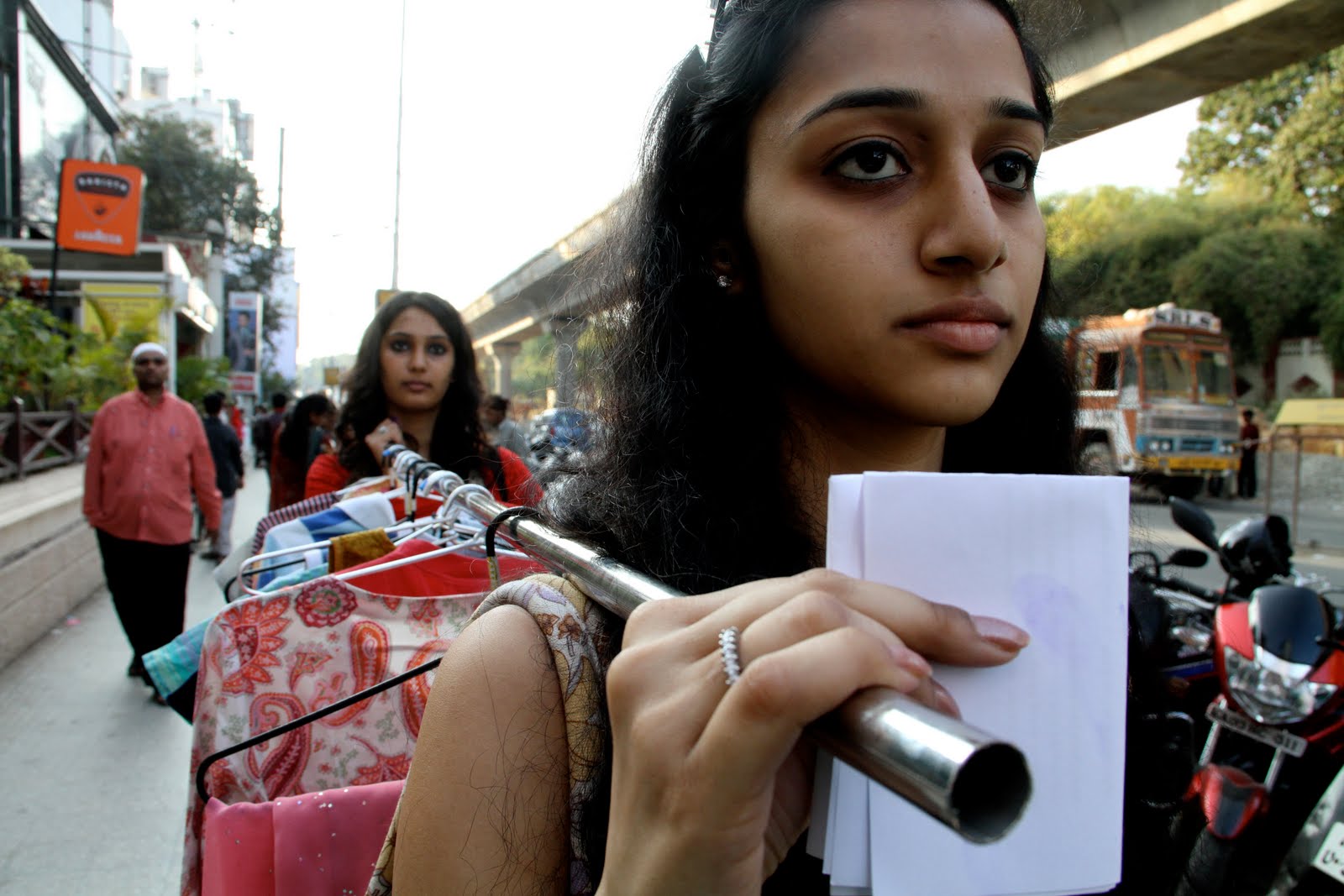
Tweet #ineveraskforit

February 17, 2010 By HKearl

Image from Blank Noise

Blank Noise is in the midst of a new component of their “I Never Ask for It” campaign.

Background: To counter the insane amount of victim-blaming that goes on in India (and most other countries, including the USA) when women are sexually assaulted and harassed (or eve teased), they are collecting clothing to show the range of clothing women are wearing when they are harassed. People who engage in victim-blaming tend to say women were wearing Western or revealing clothes.

Image from Blank Noise

Latest campaign info: Anyone with a twitter account can help with their campaign by tweeting what they wore when they experienced any kind of sexual harassment, along with #ineveraskforit. They also offer a range of background images you can use for your twitter account. The campaign starts today and continues until Feb. 27.

If you are in India, here is information about how to be involved:

METHOD 1
1. collect clothes from friends and family
2. bring them to the venue
venues will be updated on the blank noise blog:
http://blog.blanknoise.org/2010/02/clothes-collection-drive-date-location.html

METHOD 2

1. organize a clothes collection drive in your college, city, office, neighbourhood
2. give us venue details and we will send you material required for an event.
3. inform us a week in advance
Method 2 is most challenging and Action Heroes will be given a certificate for participation.

METHOD 3
take a photo of the garment you wore when you experienced harassment. make that your facebook profile photo + status should read : I never ask for it.
Please upload the photo in the event’s album too and spread the word- I never ask for it.

Next clothes collection drives are on Feb 20, Bangalore, and Feb. 27, Delhi.

Share

Filed Under: street harassment Tagged With: Blank Noise, eve teasing, i never ask for it, sexual harassment, street harassment, twitter

Stop the victim-blaming

February 16, 2010 By HKearl

The Internet is a-buzz over the findings that a majority of men and women in a survey of 1000 people in London believe some rape victims should take responsibility for “what happened” (ie, an illegal, traumatic, horrible action).

First of all, I am not surprised. Unlike most other crimes, people tend to blame those who are victims of rape, sexual harassment, and street harassment instead of, you know, the people who do those things.

In my forthcoming book on street harassment, I explore how street harassment – and rape – take place in the context of gender inequality and a rape culture and how victim-blaming seems to be one outcome of that horrible mix. I look at how the victim blaming of women who are street harassed is inappropriate and wrong, as some simple research and logic can attest.

For example, men in countries where women are completely veiled and otherwise wear “conservative” clothing harass women, too. The problem is not women’s clothing or how much or how little skin they are showing; it is the ignorance, disrespect, and arrogance of harassing men.

Also, not all men rape or harass, nor do most women, so it is not innate human behavior. It is learned behavior and it is behavior that thrives because people focus the blame on the victims, not the perpetrators.

Second, the other question is why are there so many women blaming other women for “being” rape (and I’ve heard women blame other women for experiencing street harassment)? Cara Kulwicki gives a great response to that question in a Guardian article:

“Women are given further incentive to blame victims of sexual assault through the myth that if they follow ‘the rules’ – don’t go out alone at night, don’t get too drunk, don’t wear anything too revealing, don’t flirt too much – they themselves are safe from becoming victims.

Most women are told how to avoid sexual assault from the time they start going through puberty (if not sooner), in ways that men are not. We’re careful about how we dress, we monitor our drinks, we make sure to have our keys out and ready before we reach the car, we use the buddy system. The idea that we do all of these things because we were taught to, and yet are only provided minimal protection by them (the vast majority of rapes being committed not by strangers but by people victims know and already trust on some level) is both humiliating and infuriating. The fact that women who do all of these things are still raped can also be downright terrifying.

So many women reason, albeit probably unconsciously, that if rape victims have done something ‘wrong’ which makes them responsible, they themselves are protected. If rape victims are viewed as stupid and irresponsible, every woman who thinks of herself as smart and level-headed is reassured that she won’t become one of them.

Reasons why women might be more likely to blame rape victims aside, all of this talk on the subject has a sinister result. When headlines blare that ‘more than half of women’ blame rape victims, we overlook that almost as many men responded the same way. When we say that women are less ‘forgiving’ of rape victims, we ignore that being raped is not something for which one needs to be forgiven. And while being blamed for your own rape is an incredibly traumatising experience, we forget in this discussion that there would be no victim to blame if there wasn’t a rapist committing assault first.

Here, we draw ourselves back to where the high rates of victim-blaming begin: the idea that when it comes to rape, women’s behaviour is more interesting and important than that of male rapists. In the process, we forego the more worthwhile conversation about why there are so many rape victims whose behaviour we can discuss.”

Exactly. The focus should be on answering why people rape, sexually harass and street harass others. The scary reality that many people do not want to face is that no matter how hard women try to “avoid” being raped or harassed, we are never guaranteed safety or peace. Safety and peace only will be achieved once we live in a world where no one is a rapist or a harasser, or at least once we live in a world where those crimes are taken seriously and the blame is placed appropriately.

Share

Filed Under: News stories, street harassment Tagged With: guardian, rape blaming, rape study, sexual harassment, street harassment, victim blaming

« Previous Page
Next Page »

Share Your Story

Share your street harassment story for the blog. Donate Now

From the Blog

  • #MeToo 2024 Study Released Today
  • Join International Anti-Street Harassment Week 2022
  • Giving Tuesday – Fund the Hotline
  • Thank You – International Anti-Street Harassment Week 2021
  • Share Your Story – Safecity and Catcalls Collaboration

Buy the Book

  • Contact
  • Events
  • Join Us
  • Donate
  • Facebook
  • Instagram
  • Pinterest
  • Tumblr
  • Twitter
  • YouTube

Copyright © 2026 Stop Street Harassment · Website Design by Sarah Marie Lacy