• About Us
    • What Is Street Harassment?
    • Why Stopping Street Harassment Matters
    • Meet the Team
      • Board of Directors
      • Past Board Members
    • In The Media
  • Our Work
    • National Street Harassment Hotline
    • International Anti-Street Harassment Week
    • Blog Correspondents
      • Past SSH Correspondents
    • Safe Public Spaces Mentoring Program
    • Publications
    • National Studies
    • Campaigns against Companies
    • Washington, D.C. Activism
  • Our Books
  • Donate
  • Store

Stop Street Harassment

Making Public Spaces Safe and Welcoming

  • Facebook
  • Instagram
  • Pinterest
  • Tumblr
  • Twitter
  • YouTube
  • Home
  • Blog
    • Harassment Stories
    • Blog Correspondents
    • Street Respect Stories
  • Help & Advice
    • National Street Harassment Hotline
    • Dealing With Harassers
      • Assertive Responses
      • Reporting Harassers
      • Bystander Responses
      • Creative Responses
    • What to Do Before or After Harassment
    • Street Harassment and the Law
  • Resources
    • Definitions
    • Statistics
    • Articles & Books
    • Anti-Harassment Groups & Campaigns
    • Male Allies
      • Educating Boys & Men
      • How to Talk to Women
      • Bystander Tips
    • Video Clips
    • Images & Flyers
  • Take Community Action
  • Contact

Discussions, rallies, photography competitions: Anti-Street Harassment Week in Delhi, India

March 29, 2012 By Contributor

(Editor’s Note: This guest blog post was written by the Safe Delhi Campaign Team to recap their efforts during International Anti-Street Harassment Week in Delhi, India)

CONTEXT:

Delhi has changed a lot in the past decade. Skyscrapers, flyovers, shopping complexes rapidly covered the city making it for a particular section of the society. But, a general animosity and a sense of belongingness lacks in the city. Equal participation in the city and the right to ownership is not guaranteed for women. The sense of enjoyment, of loitering and of using public places in the way they desire are very limited and at times non- existent. Their presence in this ‘urban city’ has to be constantly negotiated and compromised. The fear of and the incidence of being sexually harassed in public spaces have unfortunately become a part a woman’s experience in the city.

Women’s access to safe and violence free public spaces is her right. Sexual harassment in public spaces restricts choices and opportunities for women in education, livelihood, health and decision making. The gendered nature of public spaces not only denies their access but also ‘legitimizes’ the invisibility of women after a particular hour of the day. It is the right of every citizen to enjoy public spaces irrespective of gender, caste, class, sexuality, disability or any other social identity. The responsibility of society to ensure equal rights for all has to increase. Safety and right to the city can be guaranteed with a more sensitive and effective service delivery for all the citizens. It is time to understand and address factors of safety and make the city accessible and inclusive for all.

Global Week on Anti Sexual Harassment and Safe Delhi Campaign:

Delhi University 2011

100 co-sponsors across the world have joined hands to mark the International Anti-Street Harassment Week, a program of Stop Street Harassment . A core team of activists led by Holly Kearl volunteered their time to make the campaign possible. Last year, the first Anti Street Sexual Harassment Day was celebrated in Delhi and saw the largest turn out worldwide. The march coordinated by Safe Delhi Campaign and a group of students from University of Delhi,  saw participation from students, faculty and police constables. This year the plan has been expanded for a week.

Safe Delhi Campaign co-sponsoring the event in India called for action from different partners across the city -from individuals, to organizations to media houses. The intent was to involve people from different walks of life to talk about the issue and address it in their own way.

Objective of the Campaign:

  • To initiate dialogues and discussions among students in different colleges and universities on safety in public spaces.
  • To spread awareness on factors of safety through advocacy materials of the campaign.
  • To initiate and moderate discussions on social media platforms on safety in public spaces and right to the city.
Campaigning On Streets:

Dialogue with Students: ‘Let’s Reclaim Public Spaces’

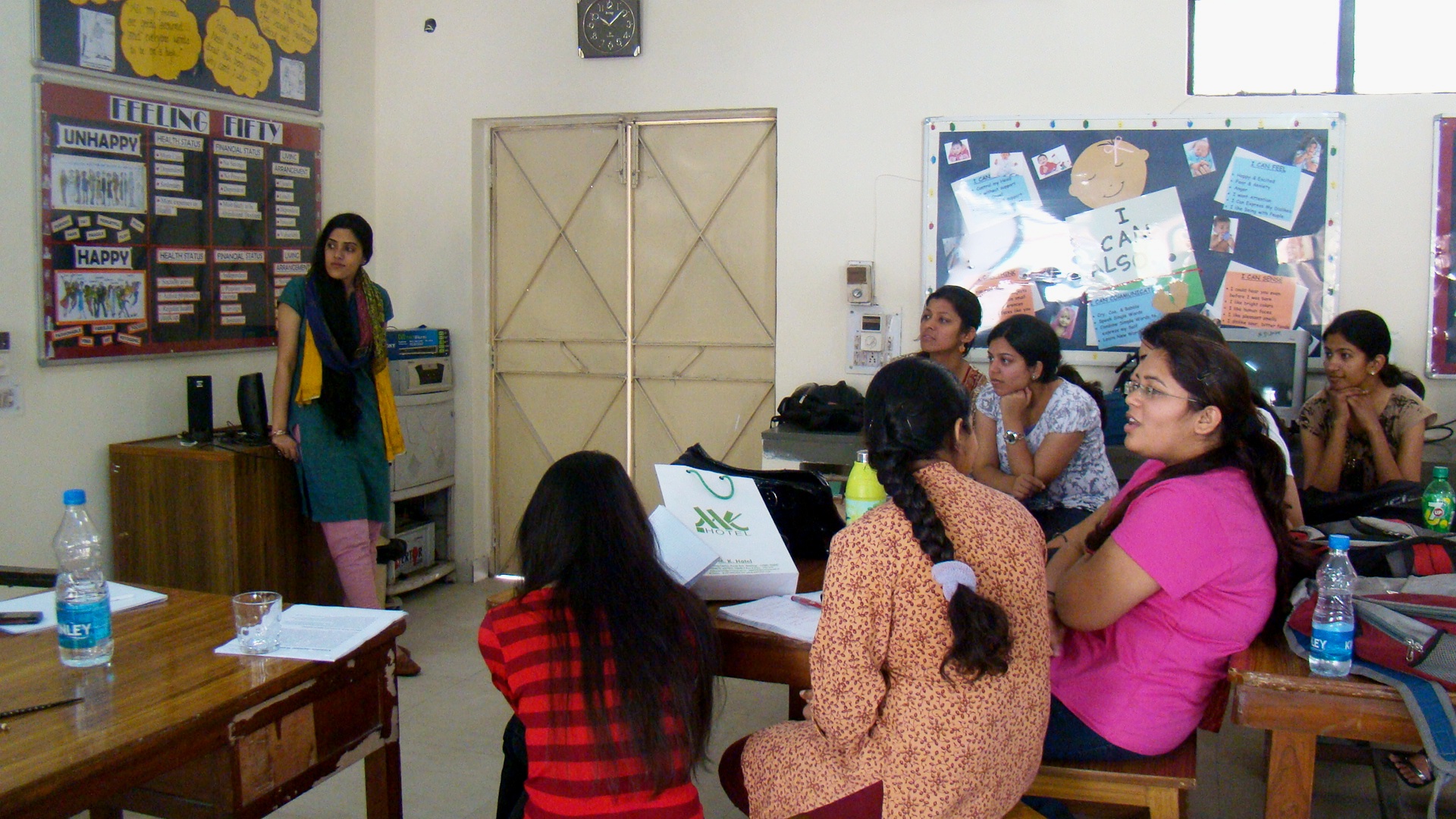
The first day of  The Global Anti Street Harassment Week 2012 was marked by an extensive discussion on gendering of public spaces with students from the Department of Human Development of Institute of Home Economics. Students shared their personal experiences of ‘gender’ as an identity that impacts their choices and opportunities to live equally in the city. The students deliberated on gaps in emergency helpline numbers for women.
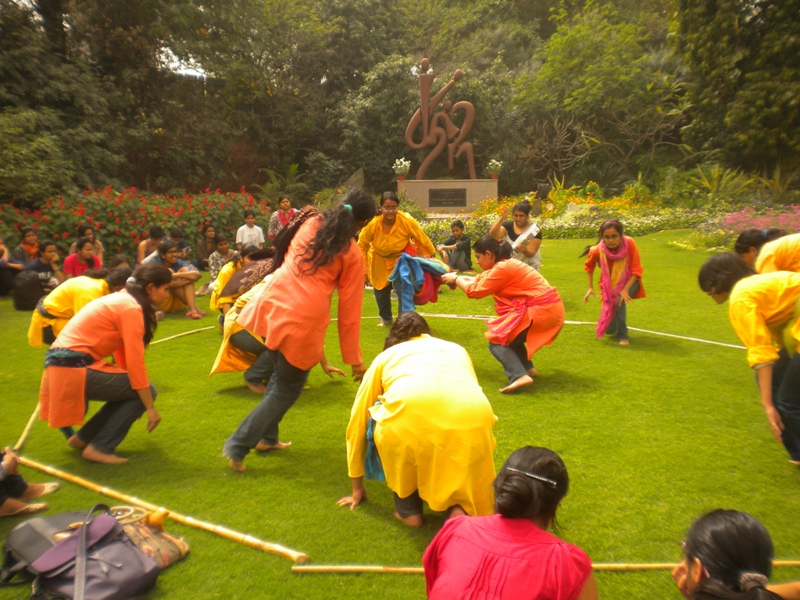
Service provisions like public toilets or well lit parks to also talking about the role of larger society to create an enabling environment for all. With the remark that safety is a woman’s right to the city, the students undertook a ‘class to class campaign’, sharing with students the message against sexual harassment on streets and also sharing some.

An open lawn discussion at Lady Sri Ram College for Women on ‘Reclaiming Right to Public Spaces’ was called by students from National Service Scheme on Tuesday, the 20th of March, 2012.  There was an interesting discussion on the factors that attribute a place as being safe and unsafe. A street play by the college theatre society marked the beginning of the discussion.  The students were shared helpline booklets, poster and other relevant material after the discussion. More than 100 students participated in the discussion.
Let’s Make Delhi Safe for Women! Reclaiming Right to Public Spaces:

The recent weeks in the National Capital Territory of Delhi has seen an sudden increase of reported sexual assaults on women, mostly while their presence in public spaces. Following such incidences were remarks given to women to not work after 8 p.m. or to not wear “revealing clothes.”
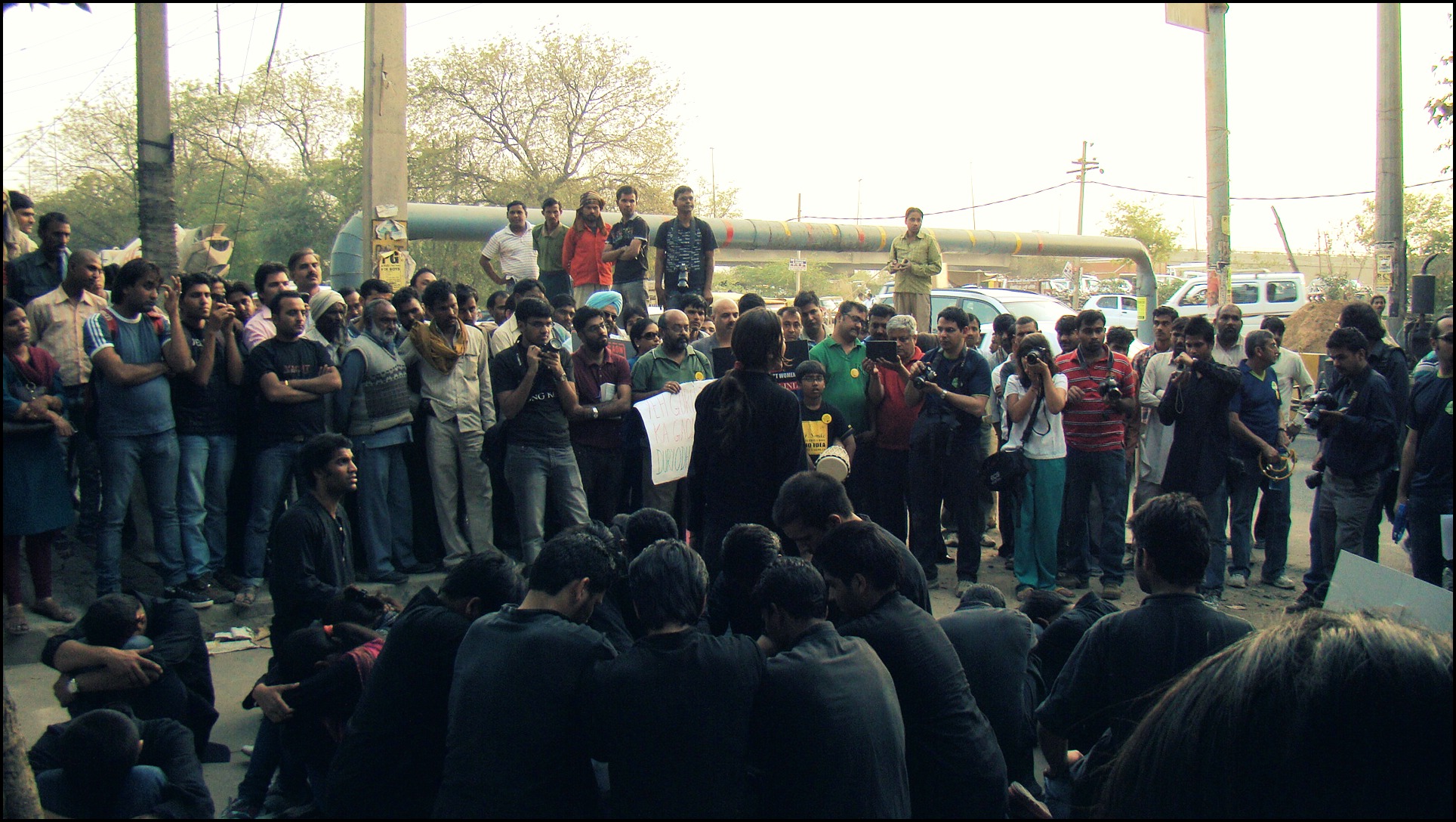
The blame of these and many more incidences was left on the woman. This led to agitation not just among the civil society group of the city but also individual masses. Everybody across the city decided to stand against violence on women and say no to unsafe public spaces.

The first public protest was called in Gurgaon as a response to the incident that took place outside one of the malls in the area following which remarks by police representatives on girls should stay home after 8:00 pm was called for. The protest was joined by women’s groups, youth organisations, individuals from the city and several media houses as well.  Following the first protest, a Citizen Charter of Demands was drafted and a petition to state agencies to implement the same was circulated all across. Social networking pages to public campaigns to meeting individuals where ever possible, the petition was taken all across the city.
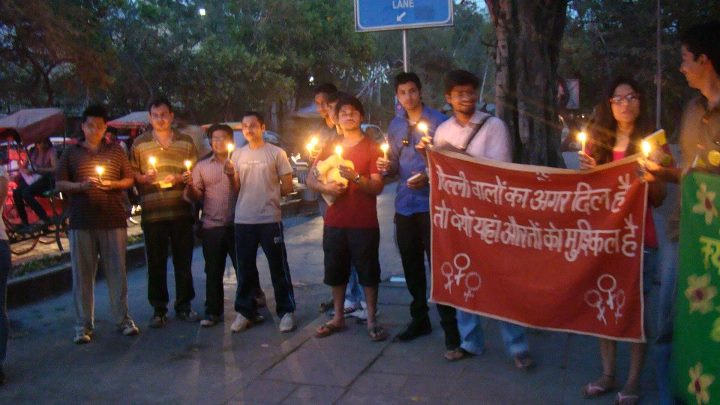
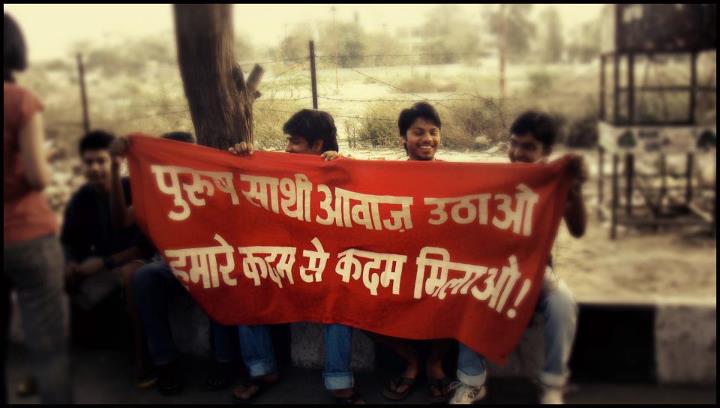
The city saw a series of public protests in different places and through different forms. To mark the end of the Global Week, the students from  the University of Delhi called for a candle light vigil to “Reclaim your Right to Safe and Violence free City for Women.”  The vigil was held on March 24, 2012, in the evening and was participated by residents of the area, students, individuals from the city asking for a right to safe public spaces. An appeal to more men to join

Winning entry by Aranyaka Verma.

and for police support was constantly being made during the protest and that actually led to more people joining in the middle of the protest. More than 100 hundred people signed the petition and participated in the march.

CAMPAIGNING ONLINE

Photography Competition on Right to A Safe And Inclusive City

An online photography competition in solidarity with the Global week was hosted on the Safe Delhi Campaign Facebook page. The competition was well received and saw multiple entries. A panel of judges was formed to choose the winning photograph. Discussion around factors to make city safe was also initiated online.

 

Share

Filed Under: anti-street harassment week, street harassment Tagged With: global activism, Jagori, rape, Safe Delhi, sexual harassment, street harasment

Anti-sexual harassment law finalized in Saudi Arabia

March 26, 2012 By HKearl

Image via Arabian Business

The Shura Council in Saudi Arabia has finalized the draft of an anti-sexual harassment law that they started working on in December. Before the law can become legislation, it must be approved by the 150-member Shura Council within 30 days. Then it will go to ruler King Abdullah, who has the ultimate say.

Via The Saudi Gazette:

“The law classifies harassment violations and imposes penalties ranging from warnings and reprimands to fines, lashes and jail, Dr. Fadil was quoted by Al-Eqtisadiya Arabic newspaper as saying.

Dr. Fadil also said that the Council suggested that emirates of regions be responsible for enforcing the law; however, this suggestion is being revised and the Council will appoint another body to discover violations and enforce the law.

“We need such law in the light of the fact that women labor force has increased. Besides, directives allowing young men to enter malls have been issued recently. The law will fight any form of sexual harassment and put an end to it.”

The law regulates mixed environments where men and women interact whether in workplaces, malls or other places and protects freedoms safeguarded by Islam, Dr. Fadil pointed out.”

All of this sounds fine, better in some respects than what we have in the United States since public spaces are included i the law. In the United States, our sexual harassment laws are restricted to schools that receive federal funds and to workplaces.

But then, this part of the article threw me off:

“The law calls for separating men and women in workplaces including public facilities such as recreational areas, restrooms etc.”

Wait, so they are going to further gender segregate people? Is this one step forward, two steps back?

What do people who are familiar with Saudi culture and laws think about this proposed law?

Share

Filed Under: News stories Tagged With: gender segregation, law, saudi arabia, sexual harassment

Will Street Harassment be Outlawed in the UK?

March 8, 2012 By HKearl

Executive Director of UN Women Michelle Bachelet at the Convention opening signing in 2011. Image via UN

Today the United Kingdom becomes the 19th country and Turkey the 20th country to sign the “Council of Europe Convention on preventing and combating violence against women and domestic violence,” which was written in April 2011. (See which countries have already signed it.)

The Convention states that gender-based violence is a “violation of human rights and a form of discrimination against women and shall mean all acts of gender-based violence that result in, or are likely to result in, physical, sexual, psychological or economic harm or suffering to women, including threats of such acts, coercion or arbitrary deprivation of liberty, whether occurring in public or in private life.”

Countries that sign the Convention agree to pass legislation or criminalize or impose sanctions against different types of gender violence, including domestic violence, honor killings, stalking, and sexual harassment. Here’s the exact language about sexual harassment, which presumably includes street harassment since it does not say the sexual harassment must occur in workplaces or schools:

“Parties shall take the necessary legislative or other measures to ensure that any form of unwanted verbal, non-verbal or physical conduct of a sexual nature with the purpose or effect of violating the dignity of a person, in particular when creating an intimidating, hostile, degrading, humiliating or offensive environment, is subject to criminal or other legal sanction.”

Given this language of this article in the Convention, anti-street harassment activists in the UK are lobbying for new legislation against street harassment. Way to go!

But of course, they’re getting pushback.Via the Guardian:

“Former attorney general Baroness Scotland, who worked on the convention for four years under the Labour government, said the clause on sexual harassment was not intended to cover less serious incidents such as wolf-whistling and public teasing. However, campaigners on the issue said the convention was “what we’ve been trying to get for years”.

Julia Gray, founder of the London branch of US movement Hollaback, dedicated to getting rid of street harassment, said: “The way we see it is if you want to tackle it you tackle all of it – you say no to all forms of unwanted sexual harassment; that includes wolf-whistling, comments, everything.”

A Downing Street spokesman said it was too early to discuss possible sanctions for sexual harassment.”

With all due respect to Baroness Scotland, why isn’t the Convention supposed to include “less serious incidents”? Those are the incidents that are the most common. They are the incidents which annoy, degrade and anger us, and which allow harassers to become emboldened to escalate to more serious crimes. I agree with Julia Gray, it’s only a half-hearted attempt to address this form of gender discrimination unless it includes all forms of sexual harassment!!

Even though this is a Convention for European Countries, countries like  Canada, Mexico, and the U.S. could sign it too as they are “Non-Member States of the Council of Europe.” But considering how the U.S. still has not signed the Convention on the Elimination of All Forms of Discrimination against Women (CEDAW), adopted in 1979 by the UN General Assembly, I doubt the U.S. will sign this Convention either.

Clearly, we still have a lot of work to do to change attitudes about sexual harassment, especially “less serious forms.” So let’s keep speaking — share your street harassment stories and talk about the ways in which street harassment impacts your life.

UPDATE: Read an op-ed by Hollaback London founders Bryony Beynon and Julia Gray in the Guardian

Share

Filed Under: News stories Tagged With: Council of Europe Convention on preventing and combating violence against women and domestic violence, hollaback london, sexual harassment, street harassment, turkey, united kingdom

Big News – WMATA will Address Sexual Harassment

March 8, 2012 By HKearl

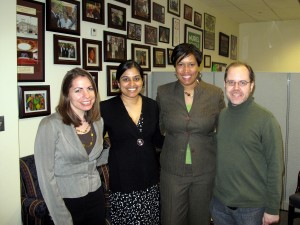
L to R: Holly Kearl, Chai Shenoy, Council Member Muriel Bowser, Ben Merrion

Exactly two weeks after several people in Washington, DC, gave public testimony about sexual harassment on the DC transit system and offered recommendations, WMATA has swiftly taken steps to make our recommendations happen!

Chai Shenoy, co-founder of Collective Action for Safe Spaces/Holla Back DC!, CASS board member Ben Merrion, and I learned about these initiatives yesterday. First we met with Ward 4 City Councilmember Muriel Bowser and two hours later, we met with about 10 staff at WMATA.

When we went into the meeting with WMATA, we had low expectations. In the days leading up to the hearing, WMATA said statements like, “one person’s harassment is another person’s flirting” and had given the impression that they thought sexual offenses weren’t a big deal. We were pleasantly surprised by what they had to say.

Chai wrote about what happened at the meetings on the CASS blog:

On the eve of International Women’s Day (ahem, yesterday), we met with Council Member Bowser and WMATA in two separate meetings. It was a day of follow-up meetings. We were interested to know if CM Bowser had heard back from WMATA. We were also curious as to what, if anything, WMATA was planning on doing to address our concerns about public sexual harassment and assault on the transit system.

CM Bowser expressed her commitment to push WMATA to do something, at minimum the public service awareness campaign and trainings. We talked to her about our concerns about the gap in law where in DC police (not true in MD/VA) have to see someone committing a misdemeanor to arrest them. This affects individuals who report indecent exposure, public masturbation, etc. Unless the cops see it, nothing can happen. Even if the person took a picture of the perpetrator in action. It’s essentially a free pass to perpetrators: Come to DC! Yikes. CM Bowser wants to address this issue and is figuring out ways to do so.

After that meeting, we had a lunch break. Thank goodness for the great weather yesterday that kept us company.

As we walked over the WMATA headquarters for our 2P meeting, we kept wondering outloud what WMATA would share with us. We were escorted to a conference room where some Senior level WMATA officials were sitting including Lynn Bowersox (Director of Communications), Dan Stessel (Chief Spokesperson), Regina Sullivan (Director of Government Relations), Michael Taborn (Chief of Transit Police), and others.

After an hour and half, we walked away with WMATA pledging to do a public service awareness campaign, launching as soon as April, technology upgrades to include a webportal for individuals to submit their experiences with harassment and assault, a newly dedicated email address on this issue (where people can upload pics/video), new trainings to ALL staff, and quarterly data reports on harassment and sex crimes.

Yeah, you read that correctly.

A PSA.

Data collection on harassment and sex crimes.

A dedicated email address and webportal (and specialized hashtag and possibly other techie things).

More & better trainings.

YEAH. yeah. yeAH!

You did it. Your tenacity to share stories of harassment and assault everywhere, including those that happen on the metro, is creating a culture of change in the nation’s 2nd largest transit system. That is big, really boombastic B.I.G.

Of course, our work isn’t done (this is not a Mission Accomplished moment). They have to launch it. It has to succeed. But, instead of being critical, let’s pause and celebrate this first step.

Have a glass of wine, bubbly water, beer or two in celebration of this on International Women’s Day.

In solidarity,

Chai, your humble servant.

P.S. Feel moved and want to get involved? Shoot us an email at info at collectiveactiondc.org.

You can also donate to CASS. Right now, our work is unpaid, volunteer driven. We took time off from work to attend the meetings and testify at the hearing, but we could do so much more with funds to hire at least one staff person to work on these issues full time.

This is HUGE news.

I am really proud of our city. Many people do not take these issues seriously so I applaud WMATA and also Councilmember Bowser (she’s up for re-election – vote for her if you can!) and her staff for listening to our testimonies, taking our concerns seriously, and then immediately taking action. They plan to include CASS and Stop Street Harassment in the whole process so we can have input on messaging and implementation, which of course is key. Come to a forum with Metro on March 22, 5:30 p.m. at AAUW, 1111 Sixteenth St, NW, Washington, DC, and share your thoughts with them, too.

WMATA is now on target to be the nation’s leader for addressing sexual harassment on the transit system and they hope to be a model for transit systems across the country.

And, as Chai mentions, WMATA’s decision to address this issue is in great part because of all of the people who shared their harassment stories at the hearing and on the CASS blog over the last three years and also thanks to the two dozen people who wrote to WMATA after the hearing to share their stories. Having media coverage highlighting our concerns from the Washington Post, ABC news, and WAMA didn’t hurt either.

Stay tuned for more updates on our progress. And please be in touch if you want to see something happen in your city. We’re happy to chat and offer advice.

Share

Filed Under: street harassment Tagged With: collective action for safe spaces, muriel bowser, PSA campaign, sexual harassment, street harassment, WMATA

Activists in DC testify about sexual harassment on the transit system

February 23, 2012 By HKearl

This is partially cross-posted from the guest post I wrote for Greater Greater Washington earlier today.

Unwanted sexual comments, indecent exposure, groping, and public masturbation: sexual harassment happens often on transit in Washington, DC, just as it happens in cities around the world. Local grassroots activist group Collective Action for Safe Spaces (CASS)/Holla Back DC! has been tracking and speaking out on this issue for 3 years.

Of the hundreds of stories of street harassment submitted to their blog, 30% take place on the transit system or at Metro platforms or bus stops.

After unsuccessfully trying to meet with WMATA and not receiving responses to inquiries about statistics of sexual harassment, CASS board members, including myself, decided to organize a group of people to testify at yesterday’s WMATA oversight hearing at the DC Council, chaired by Ward 4 Councilmember Muriel Bowser.

Six of us testified and we were the only members of the public who testified about anything relating to WMATA, so we had their attention and the attention of the media. After laying out the facts, sharing stories of harassment, and informing them about what transit systems in Boston, New York City and Chicago are doing to address sexual harassment that WMATA is not, we gave our recommendations.

1. Better tracking and reporting of incidents

2. A public service awareness campaign so people know what their rights are and how to report incidents

3. Better training of Metro employees so they don’t harass passengers and so they respond to reports of harassment more appropriately.

Councilmember Bowser was very receptive to these suggestions, especially the PSA campaign. WMATA CEO Richard Sarles said he would talk with his counterparts in the three cities that have PSA campaigns, to get advice on how to bring one to DC. Their responses were very encouraging, but of course we won’t call it a success until we actually have a campaign.

And there is still work to do around WMATA’s responses to and treatment of harassment.

While WMATA keeps painting harassment as flirting in their statements to the press, we’re not talking about flirting, and the testimonies illustrated what’s really going on.

You can watch our testimonies and/or click on the links of our names below to read each of our testimonies. They illustrate the real harassment that goes on the Metro and sadly show Metro employees either mishandling or being the harassers.

Chai Shenoy, co-founder of Collective Action for Safe Spaces (4:23:17 on the video)
Ami Lynch, private citizen (4:30 on the video)
Pascale Leone , private citizen (4:34:05 on the video)
Karen Starr, private citizen (4:38:25 on the video)
Ben Merrion, private citizen (4:52 on the video)
Holly Kearl, Stop Street Harassment (4:55:32 on the video)

Dienna Howard, private citizen, could not attend but submitted her testimony for the record.

At minute 5:16:45, WMATA CEO Richard Sarles begins his response to our concerns.

Metro says they are doing a good job addressing sexual crimes since there were only 84 reported “sexual offenses” last year. We disagree. We know that sexual crimes are vastly under-reported to begin with and then, when people do try to report it, how many of them are like Ami and Pascale? Instead of having their incident handled and recorded, they’re met with laughter or disbelief and their incident is left off the record.

Additionally, after our testimonies, we were told by someone in from the transit police office, that unless verbal harassment is directly threatening, it is not recorded at all and is a matter of free speech. So none of the verbal sexual harassment that we know is so prevalent is tracked.Also,  we learned that if someone exposes themselves to you, unless a transit police officer sees it too, it’s doubtful you’ll be able to see any action taken because it will be a “he said, she said” situation.

It’s funny how unwanted sexual comments constitute sexual harassment in the workplace and schools, but, according to the police officer, they are free speech on the Metro system.

While both Councilmember Bowser and the Metro Police said they want to work with us, we know it will not be easy and that our work is just beginning. Especially since Metro continues to not apologize for the harassment and crimes taking place but instead continues publicly to equate harassment with flirting.

We plan to bring a larger group to testify at the WMATA budget hearing in April and we likely will launch a petition or advocacy campaign in March, so stay tuned.

Share

Filed Under: Activist Interviews, public harassment, street harassment Tagged With: collective action for safe spaces, muriel bowser, richard sarles, sexual harassment, street harassment, WMATA

« Previous Page
Next Page »

Share Your Story

Share your street harassment story for the blog. Donate Now

From the Blog

  • #MeToo 2024 Study Released Today
  • Join International Anti-Street Harassment Week 2022
  • Giving Tuesday – Fund the Hotline
  • Thank You – International Anti-Street Harassment Week 2021
  • Share Your Story – Safecity and Catcalls Collaboration

Buy the Book

  • Contact
  • Events
  • Join Us
  • Donate
  • Facebook
  • Instagram
  • Pinterest
  • Tumblr
  • Twitter
  • YouTube

Copyright © 2026 Stop Street Harassment · Website Design by Sarah Marie Lacy