• About Us
    • What Is Street Harassment?
    • Why Stopping Street Harassment Matters
    • Meet the Team
      • Board of Directors
      • Past Board Members
    • In The Media
  • Our Work
    • National Street Harassment Hotline
    • International Anti-Street Harassment Week
    • Blog Correspondents
      • Past SSH Correspondents
    • Safe Public Spaces Mentoring Program
    • Publications
    • National Studies
    • Campaigns against Companies
    • Washington, D.C. Activism
  • Our Books
  • Donate
  • Store

Stop Street Harassment

Making Public Spaces Safe and Welcoming

  • Facebook
  • Instagram
  • Pinterest
  • Tumblr
  • Twitter
  • YouTube
  • Home
  • Blog
    • Harassment Stories
    • Blog Correspondents
    • Street Respect Stories
  • Help & Advice
    • National Street Harassment Hotline
    • Dealing With Harassers
      • Assertive Responses
      • Reporting Harassers
      • Bystander Responses
      • Creative Responses
    • What to Do Before or After Harassment
    • Street Harassment and the Law
  • Resources
    • Definitions
    • Statistics
    • Articles & Books
    • Anti-Harassment Groups & Campaigns
    • Male Allies
      • Educating Boys & Men
      • How to Talk to Women
      • Bystander Tips
    • Video Clips
    • Images & Flyers
  • Take Community Action
  • Contact

You think you’re better than me?

June 12, 2009 By HKearl

“Stuck up bitch, don’t let me catch you on this block again”

This week, I read Melinda Mills’ 2007 master’s thesis “‘You talking to me?’ Considering Black Women’s Racialized and Gendered Experiences with and Responses or Reactions to Street Harassment from Men.” (An aside: I think I like Hawley Fogg-Davis’s “A Black Feminist Critique of Same-Race Street Harassment” (2005) better).

Something Mills wrote about which was new to me as far as the experience of women of color is how she (mixed race: black and white) and a few of the ten black women she interviewed have been called “white bitch” when they reject the advances of black men on the street. She says:

“For many of the black women who refused to respond to a variety of men’s attention, they often faced accusations of being another race, presumably because women perceived as the same race as the harasser would have enough respect to respond to a man of the same race. Thus, when black men interpellated black women as similar, familiar, and likewise, but the black women hailed as such rejected this interpellation, the black men attempted to restore their black masculinity by interpellating these women as white. For example, a black-identified (though admittedly black and Latina) woman noted that she faced accusations of being white simply because she refused to respond to the unsolicited attention of a black man” (Mills 77).

Reading this reminds me of a story someone shared at a NY Street Harassment Summit I attended in 2007. The young woman identified as being half white, half Chinese. An African American man was harassing her while she was outside on her lunch break. She said it happened so quickly that she didn’t have time to respond to him before he called her a “white bitch.” She said her first reaction was, “but I’m mixed” before feeling frustrated and upset about the whole incident.

I’ve read about white women being called “white bitch” immediately after they ignore or otherwise reject a man of color’s advance whereas before he hadn’t mentioned their race.

The usage of “white bitch” by men of color toward women of different races is very interesting and it does seem to imply that these men equate “white” with “stuck up” or women who think they’re better than them. In fact, these women in all likelihood don’t think that at all, but instead they simply don’t want to be approached and harassed by a random man on the street or the subway, etc!

Similar to the issues Mills addresses in her paper, today I came across a slideshow on YouTube called “Why do Black men harass Black women in the street?” The creator also talks about how badly black men have reacted when she’s ignored or otherwise rejected their advances on the street, in particular she notes how ignoring a catcall can escalate the incident to verbal and physical violence. She has had men say the following to her after she refused to give them her phone number:

“You think you better than me?” “Fuck you shorty, someone needs to cut your face up!” “I could have that ass if I really wanted it” “Stuck up bitch, don’t let me catch you on this block again” and “You are an ugly whore.”

[youtube=http://www.youtube.com/watch?v=EnCV9r1X134]

Those responses are frightening and disturbing in so many ways!

She states that young black women Adilah Gaither and Tanganika Stanton were both shot and killed by black men because they turned down their advances. The next slide says, “And Black men wonder why we cross the street when we see them coming or standing in groups.” The last slide says, “You don’t have a monopoly on all Black women! Black women are tired of your ape-like aggression on the street. LEAVE US ALONE…”

Also similarly, different women in Tracey Rose’s documentary “Black Woman Walking” touch on how black men target them for harassment. One woman (at around minute 7) says she usually ignores the men, acts like she doesn’t hear them, or is polite. She said, “I’ve heard about women getting hit over the head with bricks because they rejected dudes on the street and so I kind of limit my comments and say, oh, no thank you.” Another woman (around minute 7:20) says that “it’s not so much the fear that you’re walking and you’re afraid and you’re looking over your shoulder during the day, it’s the, okay, if i don’t respond right, what will happen then?”

Clearly, not all black men harass black women or pose a threat, but there does seem to be a common experience among many black women that they expect to be harassed by black men and that they are fearful of how those men will react – will they escalate to violence or insults – should they reject their advances. The answer to the question “why does this happens?” still seems to be at large…

What are your opinions and/or experiences?

[Disclaimer: I’m white and I’ve been harassed by white, black and hispanic men and men in a few different European countries while traveling. I’ll never know what it’s like to be a woman of color harassed by men, particularly men of the same race. In my street harassment work, one of my goals is to understand and represent as many experiences as I can but I recognize that my white perspective and privilege is always present and unfortuantely it can be a barrier to my ability to achieve this goal.]

[And another aside, I just discovered that Hawley Fogg-Davis published an article in Politics and Gender in 2006 based on the presentation she gave in 2005 which I cited above. Not sure why I didn’t find it before. It’s available in its entirety online.]

Share

Filed Under: street harassment Tagged With: better than me, black feminist critique of same-race street harassment, Black Woman Walking, hawley fogg-davis, melinda mills, mixed race, sexual harassment, street harassment, tracey rose, white bitch, white privilege, you shorty, you talking to me

Salt Lake City Groper May Have Other Victims

June 12, 2009 By HKearl

I’m a few weeks late with this, but I just came across a news story about a man who was arrested in May for groping two women (two different incidents) in public in downtown Salt Lake City, Utah. The police believe he may have groped other women and are asking for anyone he targeted to come forward. The two women he groped were both 28 years old with blond hair who looked similar, so they think he may have been targeting specific women.

Share

Filed Under: News stories Tagged With: arrest, groping, salt lake city, sexual assault, sexual harassment, utah

Ban Jeans to Curb Eve Teasers?

June 11, 2009 By HKearl

Okay, this is just stupid (via Fox News):

“More and more colleges in the Uttar Pradesh state are prohibiting jeans, miniskirts and tight blouses to combat ‘Eve-teasing,’ a term for sexual harassment in India. Violators face expulsion.

‘Girls who choose to wear jeans will be expelled from the college,’ Meeta Jamal, principal of the Dayanand girls’ college in Kanpur city told AFP. ‘This is the only way to stop crime against women.’

But women said that they are being wrongfully targeted by the new rules, which should really go after the men who are sexually harassing them.

‘Banning any clothing will certainly never solve the issue of sexual harassment,’ a Lucknow University grad student, who didn’t want to be identified, told AFP.

Other colleges in India have tried to prohibit jeans on women, according to the AFP, but rescinded the ban after protests from students.”

Hopefully this ban will also be rescinded. Kudos to the students who are standing up to this idiocy.

Geez, I can’t get over the guy who said the only way to stop harassers is to make women stop wearing certain clothes. They should talk to the women in Eygpt and Yemen who said that they got harassed by men on the streets even when they were veiled!

If harassment is a problem, the focus should be on getting the men who are engaged in the harassing to stop.

Share

Filed Under: Administrator Tagged With: eve teasing, fox news, India, jeans ban, sexual harassment, street harassment, uttar pradesh

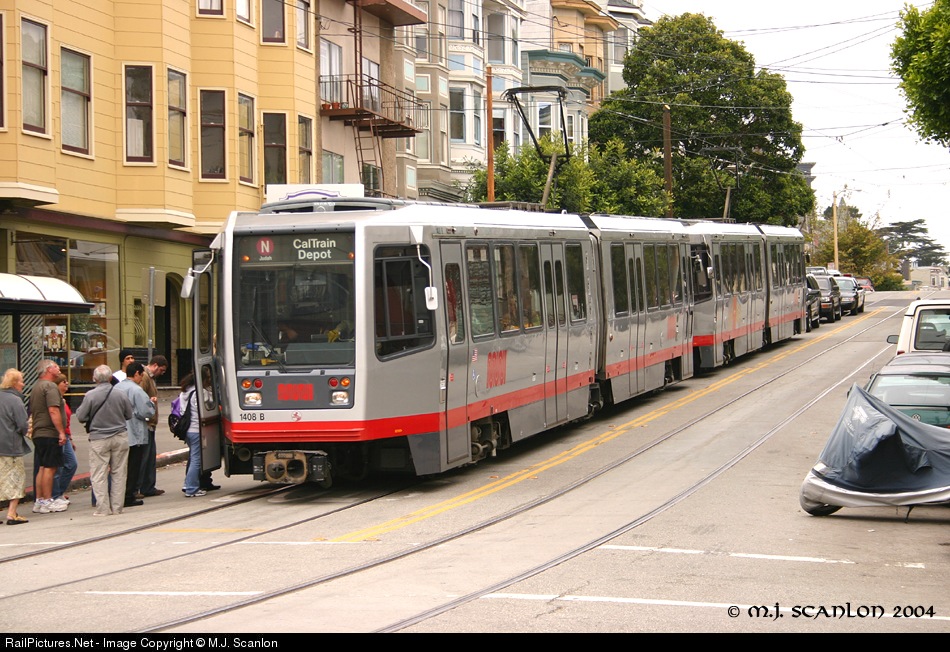
A Message to Muni Passengers

June 9, 2009 By HKearl

Picture from M.J. Scanlon via railpictures.net

Via Silicon Valley’s Mercury News:

“Police in San Francisco on Friday asked for the public’s help locating Muni passengers that may have been victims of sexual harassment or assault while using the city’s transit system.

Police reported that on the morning of May 8, a man was witnessed rubbing his pelvis against a woman on the inbound N-Judah rail line. The same suspect was witnessed committing a similar assault on the outbound N-Judah line later that evening. The victim has not been located.

The witness who reported the incidents to police said the suspect exited the train at the Powell Street station.

Police believe the suspect has been committing similar sexual batteries that have not been reported, and are asking anyone who has been a victim of such a crime to contact the San Francisco Police Department as soon as possible at (415) 553-1651.”

Share

Filed Under: News stories Tagged With: california, grinding, groping, mercury news, Muni, n-judah rail line, san francisco, sexual assault, sexual harassment, silicon valley, subway

Butt Slap Leads to Activism

June 8, 2009 By Contributor

Recently I was slapped on the butt by a teenager on a bicycle while I was jogging in my neighborhood. He simply came up behind me, spanked me, and furiously pedaled away. I was wearing sweatpants and my little brother’s oversized soccer jersey. No makeup, greasy ponytail – I looked like crap (though, even if I had been provocatively dressed, it would be no excuse for this boy’s behaviour).

After screaming profusely at the kid and his friends, who rode away laughing like hyenas, I walked home almost in tears, feeling so violated and frustrated with society in general. I can’t stop asking myself how somebody, especially at such a young age, would think that he has the right to act like that towards another person. It’s scary. I feel as though women over the age of 12 can rarely step outdoors wearing anything less than a parka without being jeered at by creepy men anymore. And I’m frustrated.

[As a result], I am working on a story for a school assignment on the subject of street harassment…Street Harassment is positively rampant in London, [Ontario,  Canada], and I think that my campus community would respond positively to an article like this. Hopefully, it will inspire girls in London to start fighting back against the creeps that scream at us from their cars. At the very least, it can raise awareness about the fact that street harassment isn’t a harmless game.

– L.O.

Share

Filed Under: Stories Tagged With: activism, articles, canada, jogging, London, ontario, sexual harassment, Stories, street harassment

« Previous Page
Next Page »

Share Your Story

Share your street harassment story for the blog. Donate Now

From the Blog

  • #MeToo 2024 Study Released Today
  • Join International Anti-Street Harassment Week 2022
  • Giving Tuesday – Fund the Hotline
  • Thank You – International Anti-Street Harassment Week 2021
  • Share Your Story – Safecity and Catcalls Collaboration

Buy the Book

  • Contact
  • Events
  • Join Us
  • Donate
  • Facebook
  • Instagram
  • Pinterest
  • Tumblr
  • Twitter
  • YouTube

Copyright © 2026 Stop Street Harassment · Website Design by Sarah Marie Lacy