• About Us
    • What Is Street Harassment?
    • Why Stopping Street Harassment Matters
    • Meet the Team
      • Board of Directors
      • Past Board Members
    • In The Media
  • Our Work
    • National Street Harassment Hotline
    • International Anti-Street Harassment Week
    • Blog Correspondents
      • Past SSH Correspondents
    • Safe Public Spaces Mentoring Program
    • Publications
    • National Studies
    • Campaigns against Companies
    • Washington, D.C. Activism
  • Our Books
  • Donate
  • Store

Stop Street Harassment

Making Public Spaces Safe and Welcoming

  • Facebook
  • Instagram
  • Pinterest
  • Tumblr
  • Twitter
  • YouTube
  • Home
  • Blog
    • Harassment Stories
    • Blog Correspondents
    • Street Respect Stories
  • Help & Advice
    • National Street Harassment Hotline
    • Dealing With Harassers
      • Assertive Responses
      • Reporting Harassers
      • Bystander Responses
      • Creative Responses
    • What to Do Before or After Harassment
    • Street Harassment and the Law
  • Resources
    • Definitions
    • Statistics
    • Articles & Books
    • Anti-Harassment Groups & Campaigns
    • Male Allies
      • Educating Boys & Men
      • How to Talk to Women
      • Bystander Tips
    • Video Clips
    • Images & Flyers
  • Take Community Action
  • Contact

Police arrest suspected groper

August 9, 2011 By HKearl


Via ABC News

Police have finally arrested a suspect in the Upper East Side groping case in New York City.

Via NBC news:

“Sources say Jose Hernandez, an 18-year-old restaurant worker at Antonucci Cafe on East 81st Street, was taken into custody overnight at his Queens home after police got a tip.

He stopped showing up for work about 10 days ago, near when the time police released an image of his face captured on surveillance video. Police believe the groper is responsible for as many as a dozen groping incidents...

He would come up behind women and grab them in the groin, breasts or rear end. He often reached up their skirts.

In recent days, the suspect has moved away from buildings, striking on a No. 6 train at 68th Street and Lexington Avenue last week, and inside Central Park on Friday.

The police tip came from a man who works in the Upper East Side building that houses the restaurant where Hernandez was employed.”

Hopefully they’ve caught the right man and his groping days will end. Because the commonality for all of his targets was their sex, it wasn’t just the 12 targets who’ve been impacted by this. A woman-hating crime spree like this can make all women living in the area wary and on edge.

Though for too many women in New York City who face daily harassment, knowing a groper was out there probably wasn’t any different from their regular life. They’re always wary. In my research, I found that more than 50 percent of women have been groped by men in public places and a lot of my respondents came from New York City. Men who aren’t labeled “groper” like this suspect are still out there freely groping…

One thing about this story that stood out to me is the importance of reporting our harassers, especially if they touch us. Most women don’t report their gropers (I didn’t when a man groped me near my college campus when I was 18). They may be too stunned, second-guess themselves, blame themselves, or believe that nothing will be done by reporting it.

And you know what, those are reasonable concerns, especially the latter. Nothing may be done initially because of one report. But, what we have to consider is, if our report is the second or third one describing the same type of behavior in the same area, or if later on a second or third person reports something similar to what you said, then the police may do something.

So keep that in mind if someone ever gropes, grabs, or inappropriately rubs up against you, or if they expose themselves. Consider taking the time to report it…your report may be the key that prompts an investigation and action.

Share

Filed Under: News stories, street harassment Tagged With: groping, NYC, sexual assault, street harassment, UES groper

Somali women harassed, raped en route to Kenya

August 8, 2011 By HKearl

Via Capital FM News

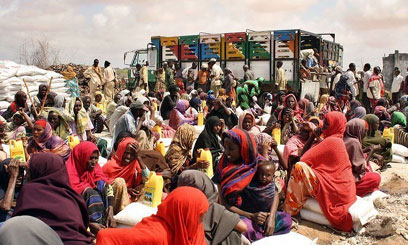
As if having to flee your home and your country because of famine isn’t enough, many Somali women and girls experience street harassment and even rape en route to refugee camps (and then at the camps) in Kenya.

Via Capital FM News:

“The United Nations Population Fund (UNFPA) Regional Director for Africa Bunmi Makinwa has expressed concern that women and young girls are being subjected to rape and other forms of sexual harassment when fleeing from Somalia to camps in Kenya.

Mr. Makinwa who visited the Dadaab Camp to assess the condition on Friday urged aid partners to also focus on helping victims and survivors of sexual abuse since they require medical attention and psychosocial assistance.

‘UNFPA is working with partners to offer lifesaving psychosocial assistance to women who have survived sexual violence. Indeed, UNFPA was informed by partners that many women had been subjected to rape and sexual harassment during their long journey to the camp,’ he said….

Dadaab remains the world’s largest refugee settlement. Its Somali population has risen to over 400,000 people since famine was declared in the Horn of Africa. The crisis continues to affect 12.4 million people in Djibouti, Ethiopia, Kenya and Somalia.

Malnutrition rates continue to rise, deaths increase day by day as people fleeing the famine in Somalia enter the Kenyan border at estimates of 1,300 every day.”

Additionally, Voice of America reports that women and girls also face sexual assault at the refugee camps and when they leave camps to gather firewood. In response, UN workers are providing women with firewood (something the UN often does at refugee camps for this very reason) and moving women who are located on the outskirts of the camps into more populated areas where they may be safer.

But aside from providing much-needed assistance to women and girl survivors who arrive at the camps, it doesn’t sound like the UN – or any other group – is trying to prevent the harassment and assaults women and girls face on the roads as they flee Somalia…Surely something can be done?

Share

Filed Under: News stories, street harassment Tagged With: kenya, sexual assault, somali refugees, street harassment, UNFPA, voice of america

Video clip: anti-street harassment march in Afghanistan

August 3, 2011 By HKearl

Here’s a dose of inspiration this Wednesday:

As I’ve written about before, on July 14, 50 women and men marched against street harassment in downtown Kabul, Afghanistan. To learn more about why and what happened during the march, here’s a good news clip from an Australian station. It includes an interview with the march organizer.


To gain even more inspiration from their march, here’s an article for The WIP that I wrote about the march, which includes quotes from an organizer and participant. Here’s an excerpt (full article):

“Carrying banners and signs with messages like, “We will not tolerate harassment,” “Islam forbids men from insulting women,” and “I have the right to walk freely in my city,” on July 14, 50 brave women and men marched together from Kabul University to the Afghanistan Independent Human Rights Commission. As they marched, they handed out fliers to raise awareness about the problem of street harassment in their country.

Most of the bystanders stood shocked, openly staring as the marchers passed by. It is not common to see women and men marching together through Kabul, nor is it typical to hear people speak out on an issue like street harassment. Despite the presence of a police escort, some men even heckled the marchers and called them names. Others were supportive and took fliers or started walking with the marchers.Tabasum Wolayat, a student at Middlebury College in Vermont, said that she was both excited and nervous to participate in the march. “As an Afghan woman who is harassed on a daily basis in the public sphere, I thought, ‘it is me who has to fight for myself, my mother, and my sisters’ safety, dignity, and rights.’”

She noted that her family was very supportive of her participation, but some of her female friends were not. They worried about her safety.

March organizer Noorjahan Akbar, a 19-year-old student at Dickinson College in Pennsylvania, also received support from her family. Her entire family, including her mother and father who both have health issues, participated in the march with her. A few days after the march, Akbar said it had gone better than she expected and that she feels “so much stronger” because of the outpouring of support for their efforts.

In the spring of 2011, Akbar founded the Kabul-based group Young Women for Change (YWC) to help increase the political, social, economic and cultural participation of women across the country. Through discussions at their first meetings, it quickly became clear that the sexual harassment women experience on the streets hinders their participation in all these areas. In collaboration with another group, Hadia, they decided to launch an anti-street harassment campaign that began with the march.” (full article)

I look forward to reading about what the women do next!

Share

Filed Under: Stories, street harassment Tagged With: Afghanistan, kabul, street harassment

Builders in the UK Suspended for “Wolf-Whistling”

July 29, 2011 By HKearl

The building site Fish Hill Square, via Daily Mail Online

Ahh, so classic and stereotypical…

Two builders (construction workers) in the UK were suspended from work for harassing a woman walking by their work site at Fish Hill Square. The woman felt so uncomfortable, she told her husband how she didn’t want to walk past there again. That led him to write a complaint to the construction company.

This part is less stereotypical and very laudable on the part of the company: the men were identified and taken off the job for a few days.

Via the Daily Mail Online:

“They will now be allowed back after their accuser decided not to take matters further, although they are still facing a ‘discussion’ with bosses today. Maylim yesterday insisted sexist behaviour was ‘terrible for the company image’ and it was taking the allegations seriously.

Managing director Thomas O’Mahony said: ‘We acted within half-an-hour of being alerted to the complaint. It’s company policy to immediately suspend anyone who is made the subject of a complaint by the public.

‘We don’t tolerate wolf-whistling or any form of sexual harassment. It’s unacceptable – we are in the public eye and our image is important.

‘The two men are in their mid-20s and they have been invited in for a discussion. They denied the allegations and were frustrated to be off work. Now we know that the complainant doesn’t want to take this further the men will be allowed to go back to work.’”

It’s great to hear that sexual harassment is not tolerated at that workplace, by that company. A few local residents were interviewed for the Daily Mail article and everyone cited agreed with the harassers:

“Hairdresser Jane Westley said: ‘I don’t think wolf-whistling’s too much of an issue. If I got wolf-whistled I think I’d find it a compliment. It’s just what builders do.’

Another woman, who asked not to be named, said: ‘I guess it’s their bit of harmless fun while working – to admire girls walking past in the summer.’ A 34-year-old man added: ‘Everyone thinks it’s a strange complaint to make. I feel bad for the guys off work.’”

I find the comments from the residents to be unsurprising since so many people construe sexual harassment as a compliment (in neighboring Ireland, they even had a wolf-whistling contest a few years ago) or not a big enough deal for men to have to lose pay over. But it IS a big deal. Sexual harassment in public places has a very real impact on women’s lives and their perceptions of themselves and of their worth. It needs to stop.

I hope the construction company will stand firm to its policy and that the men will stop harassing women in the future!

(Many thanks to Vicky Simister at the UK Anti-Street Harassment Campaign for the story tip!)

Share

Filed Under: News stories Tagged With: builders suspended, sexual harassment, street harassment, UK

Live Tweet of Anti-Street Harassment Event

July 22, 2011 By HKearl

This is cross-posted with permission from Hey Shorty on the Road, written by Mandy Van Deven, co-author of the book Hey, Shorty! A Guide to Combating Sexual Harassment and Violence in Schools and on the Streets. Last evening, it was my honor to co-present with her, Rochelle Keyhan the founder of HollaBackPhilly, and filmmaker and educator Nuala Cabral.

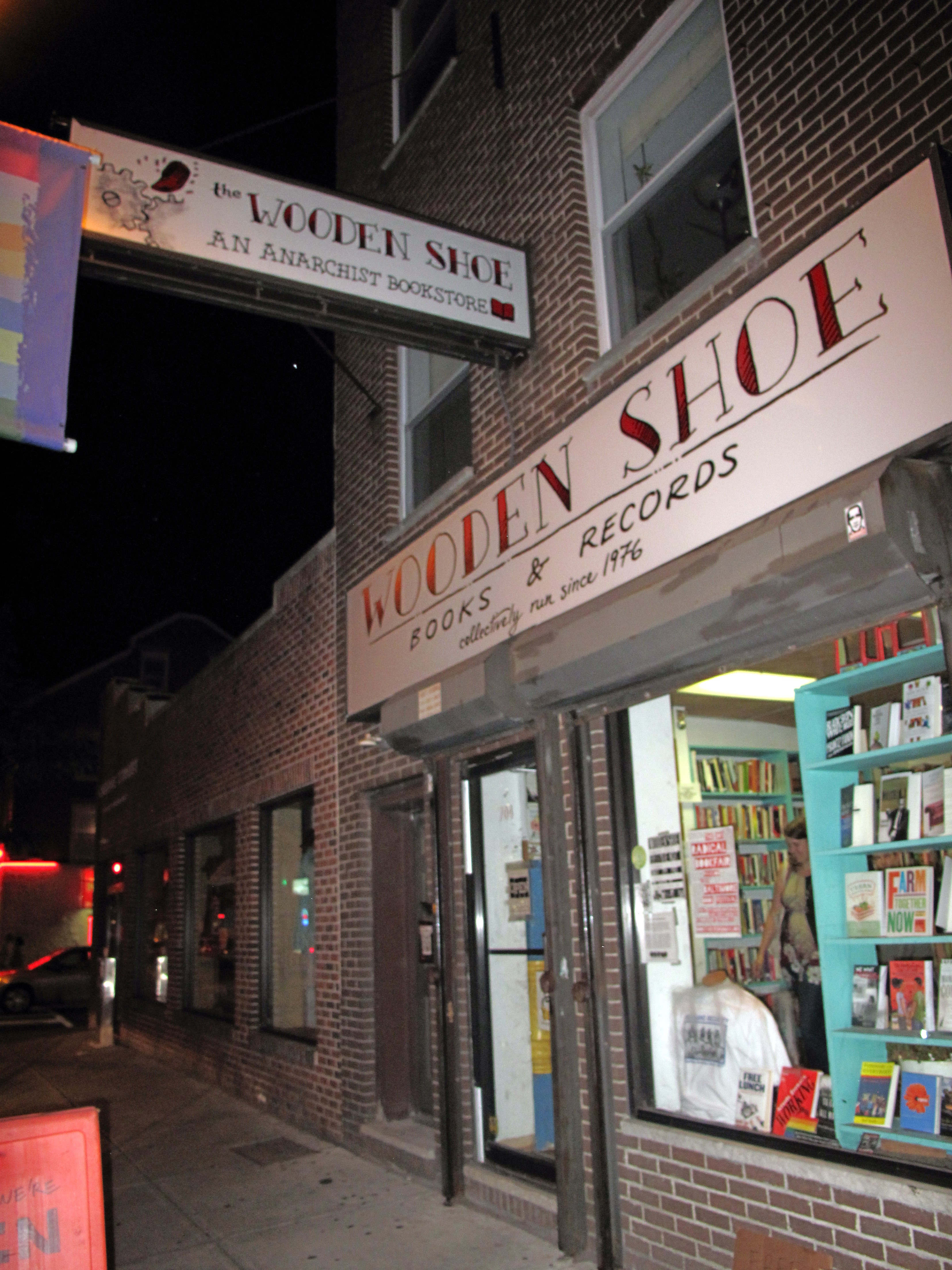
Many moons ago I met Matt Dineen through some mutual friends and our shared work in independent media. A passionate activist and all-around lovely guy, Matt currently works at Wooden Shoe Books as a collective member and event organizer. After hearing about Hey, Shorty!’s release, Matt invited me to Philadelphia to do a reading — and I enthusiastically accepted.

Technically speaking, I’d never actually met filmmaker and educator Nuala Cabral in person until yesterday, but it felt like we were old friends since we’ve been in touch with each other for years via the Internet — again because of shared interests and community-based work with youth to end gender-based violence — and follow each other’s work. Nuala’s short film, Walking Home, has garnered a lot of attention online for its criticism of street harassment. Wanting to share the opportunity with local activists, I invited Nuala to be a part of the Wooden Shoe event and asked if there were other folks in Philly I should reach out to. This is how Hollaback! Philly’s Rochelle Keyhan, a lawyer by trade, came to be added to the list.

Holly Kearl is someone who has shared the stage with me and Girls for Gender Equity on several occasions. From Holly’s book release event at Bluestockings to the first-ever New York City Council Hearing on street harassment to the the National Conference for Women Student Leaders, our work coincides with great frequency — much to my delight. Five smarty pants activists deep, this is how the Wooden Shoe Books event drew over 40 people to talk about violence against girls, women, and LGBTQ folks in public spaces.

If you weren’t able to make it there, you’re in luck!  Hollaback! Philly’s Research Assistant Elizabeth Welsh live tweeted the event from beginning to end. Here’s a taste of what you missed:

Welcome to the live-tweet of our anti street harassment panel! We’ll be getting started in just a minute.
—
Introductions! @mandyvandeven @nualacabral and @hkearl are all here with us.
—
@mandyvandeven is telling us about getting involved with Girls for Gender Equity in Brooklyn: ggenyc.org
—
It quickly became clear to Mandy and to ggenyc.org that sexual harassment is rampant in kids’ lives – and seldom gets talked about.
—
Moving on to @hkearl talking about her street harassment experiences, starting as a 14-year-old runner
—
Many women end up altering the activities they choose to participate in in an effort to avoid street harassment
—
This is why Holly frames it as a quality of life issue. Discovering the term “street harassment” led her to begin speaking out.
—
32% of women choose outfits that will attract less attention on a monthly basis – planning for street harassment before leaving the house!
—
45% of women avoid being out after dark on a monthly basis – what does this mean we’re missing out on? Classes, socializing, campaigning…
—
1 in 5 women have moved to a different neighborhood; 1 in 10 have changed jobs/commute in an effort to avoid street harassment.
—
Street harassment negatively affects men who are not harassers – women are often wary of interacting with them.
—
Holly’s tips for helping to stop street harassment: Share your story, end the silence!
—
Sharing our stories breaks down stereotypes about who gets harassed and helps increase solidarity with other women (and men!).
—
Some women have had success asking harassers to repeat themselves, or repeating harassers’ words back to them, loudly, if in a crowded place
—
Turning it around like this often embarrasses harassers by emphasizing how stupid they sound.
—
If someone is harassing on the job, complaining to the parent company can lead to great results!
—
Bystanders can also reach out to victims, asking “Are you okay?”
—
The Young Women’s Action Team fought neighborhood street harassment by alerting business owners where groups of men were loitering outside.
—
Neighborhood business owners banded together to create respect zones and not tolerate loiterers (who were also bad for business!)
—
More on the Young Women’s Action Network in Chicago: http://t.co/MCl17ly They harnessed the power of data, no matter how informal.
—
You can see more from Holly at her website: stopstreetharassment.org
—
We’re up now! Hollaback! is everywhere! Because, unfortunately, street harassment is everywhere.
—
We encourage you to report street harassment: philly.ihollaback.org Young Women’s Action Network showed what a difference data can make.
—
Don’t forget, all reports submitted to our website are anonymous. Build solidarity between people who want to walk the street unharassed.
—
We’re also working for LGBTQ people, who also unfortunately get harassed.
—
Next up: Local filmmaker and activist @nualacabral. While living in Brooklyn she bumped up against street harassment on a daily basis.
—
Check out Nuala’s Walking Home: vimeo.com/user1897188
—
When Nuala put her film on YouTube, it connected her with a movement that was even more empowering than creating the film.
—
Nuala: “Those moments of being street harassed feel really lonely and disempowering.”
—
Now we are opening up for questions. Please @ us with any questions you’d like to ask!
—
Question about addressing street harassment with school kids. Nuala: Too much victim-blaming from both boys and girls. Also: Responsibility.
—
Nuala: “If we care enough to want change, we need to think about responsibility and what we’re going to do to make change.”
—
International Stop Street Harassment day is the first day of spring – March 20th.
—
This year it will be Anti-Street Harassment Week, by popular demand!
—
Mandy: “Girls for Gender Equity wrote Hey Shorty! as a way for other organizations to see our growth thru failures as well as successes!”
—
GGE grew over 9 years. This is NOT a rule-book, but suggestions for other organizations. http://www.feministpress.org/books/girls-gender-equity-gge/hey-shorty
—
A question now from the Anti-Violence Partnership of Philadelphia avpphila.org
—
We’re saying: Queer and trans folks tend to get harassed not only sexually, but also with words involving more violence.
—
Holly: Street harassment of trans women tends to often be about gender policing, and is threatening to men who think they’re very masculine.
—
Us: Our official stance is not to differentiate between race or class – everyone harasses.
—
Holly: Most harassment is same-race, especially the more severe forms. There needs to be education around what constitutes harassment.
—
Mandy: The emphasis has been put on perception and not intent, and that’s wrong. Intent does matter – it’s racist/classist to say otherwise
—
Mandy has written extensively on street harassment for Bitch Magazine: http://bitchmagazine.org/profile/mandy-van-deven
—
Mandy advocates for street harassment to be addressed on a community level rather than by criminalizing it.
—
Question: A favorite activity of K-2nd graders at the recess program I ran was standing by the fence and yelling at women on the street.
—
Us: A lot of the time it’s about impressing other dudes more than interacting with women.
—
Questioner: It started with the 2nd graders, and after a couple of weeks trickled down to the kindergartners.
—
Mandy: In schools, a big problem is institutional support for addressing these things – Figuring out what the policies are, if they exist.
—
Mandy: We talk about socialization as adults, but it’s process that starts as young people. An 8-year-old boy hollering at women on the street doesn’t even know what he’s looking at.
—
@hkearl: I’ve actually started getting more questions from parents’ of 9- 10-year-olds. Anyone know any good resources?
—
Questioner: This is a cultural problem, and people should be boycotting sexist/misogynist music I’d classify as hate speech.
—
Questioner: I can’t understand how other males aren’t seeing this and don’t have empathy for this situation.
—
Questioner: We need to teach men how to talk to women. I don’t want to hear about how my outfit makes me look sexy.
—
Questioner 2: I think there are a lot of men out there who think that’s the way you talk to a women.
—
Holly: Sexualization from a young age makes this seem normal.
—
There’s a whole section on Holly’s website for and by men: stopstreetharassment.org/male-allies/
—
Nuala: Guys say things like, 2 out of 25 women will respond, so I’ll still yell at the other 23.
—
Nuala: In order to reach men, I’ll also talk to women. We need to be clear about the distinction between a complement and harassment.
—
Nuala: No women wants to get harassed, but some women and girls like getting attention. Those are the girls these guys are trying to reach.
—
A lot of @nualacabral’s work with young girls involves building self-esteem when talking about street harassment.
—
Nuala: For some girls, their body is the only thing they get complemented on. We need to address that.
—
Nuala has gotten a lot of pushback from her video because it shows men of color. As a woman of color, she wanted to break the silence.
—
Nuala: We have to acknowledge that there are some complexities there. You have to be sensitive, but it’s a fine line to be neutral.
—
Nuala: If you look at the media, the bodies of women of color are more consistently exploited.
—
Nuala’s recent blog post about a NYC newsstand that illustrates the problem “All black booties, all white faces.” http://nualacabral.wordpress.com/2011/05/23/the-news-stand/
—
Nuala: “It’s just more acceptable for certain women to be degraded.” Questioner: “It’s not acceptable, it’s normal.” Nuala: “Normalized.”
—
Nuala: “I like that you also brought up the self-esteem of a man, especially for men of color. We know that oppression breeds oppression.”
—
Holly: “For some men it’s about oppression, for others it’s because some men feel so entitled.”
—
Holly: “My research has shown that black women are more likely to be approached as prostitutes. It’s this history of exploitation.”
—
Questioner: Men and women are taught that the only relationships we can have are sexual or more, that we can’t have friendships.
—
Questioner: A lot of men can’t relate to women as another human being, a person with morals and goals and a future.
—
Mandy: For any kind of change to happen, there has to be an education piece on the larger framework of sexual violence in our culture.
—
Mandy: We have this impression in our minds of how violence happens and who the victims are, but it’s completely separate from reality.
—
Us: If you don’t have a smartphone, you can submit via email, or by texting to our email address, or manually uploading on the website.
—
Questioner: Why are women okay on the streets of certain international large cities, but not here?
—
Holly: My theory is that street harassment is less likely in countries with more gender equality.
—
Questioner: I thought in those other countries women are treated with more respect. Us: More, but it’s not perfect.
—
Questioner: There were a number of women in the black revolution movement who acted out strongly against sexual harassers.
—
Questioner: Women are getting hurt because of harassment. Are you aware of any men who have been hurt as a result of being harassers?
—
Mandy: I know there are a lot of women who are in prison for killing domestic abusers and rapists…
—
Mandy: There’s very little documentation of violence in response to street harassment, but that would be interesting.
—
Questioner: I struggle with the polarity between public accountability and shaming. I dreamed of putting up flyers about the same man who was harassing me all the time, but could never go through with it.
—
Questioner: Do you think public shaming has a place in this movement, or is that counterproductive?
—
Us: Even imagining what you would have said and done can be theraputic, even knowing that you never would have done it.
—
Us: Psychologically, it’s really helpful for women to know there are other people thinking about and struggling with the same thing.
—
Holly: People in DC banded together to say “Stop harassing women” to one man who was always in the same place. A lot of these harassers are repeat harassers who always stand in the same place. It’s not very many men.
—
Mandy: The anthology “The Revolution Starts at Home” has a lot of suggestions for community-based steps to take toward accountability without shame http://www.southendpress.org/2010/items/87941
—
Questioner : How does sexual harassment compare with harassment of other groups, like Muslims, especially right now.
—
Mandy: The way all groups are affected creates potential to reach across boundaries, but I don’t think they’re all the same.
—
Mandy: The manifestation, function, and social acceptability greatly vary. It’s dangerous to say that they’re the same.
—
Holly: Women of all backgrounds who took my survey felt harassed because they were female; men mentioned all the other factors first.
—
Questioner: The economic impact on women’s lives is amazing! Imagine if it were something men had to deal with. What areas are under-researched?
—
Holly: That’s why we need to capture that data, because then we have some idea of what we can do.
—
And it’s a wrap! Many thanks to @mandyvandeven @nualacabral @hkearl and of course to YOU for coming along with us!

Check out the remaining dates of the Hey, Shorty! tour here.

Thanks @HollaBackPhilly & thanks Elizabeth for the amazing and thorough livetweet of the event!

Share

Filed Under: Events, hollaback, street harassment Tagged With: anti-street harassment, book store, hey..shorty, hollaback, Mandy Van Deven, Nuala Cabral, street harassment, wooden shoe

« Previous Page
Next Page »

Share Your Story

Share your street harassment story for the blog. Donate Now

From the Blog

  • #MeToo 2024 Study Released Today
  • Join International Anti-Street Harassment Week 2022
  • Giving Tuesday – Fund the Hotline
  • Thank You – International Anti-Street Harassment Week 2021
  • Share Your Story – Safecity and Catcalls Collaboration

Buy the Book

  • Contact
  • Events
  • Join Us
  • Donate
  • Facebook
  • Instagram
  • Pinterest
  • Tumblr
  • Twitter
  • YouTube

Copyright © 2026 Stop Street Harassment · Website Design by Sarah Marie Lacy