• About Us
    • What Is Street Harassment?
    • Why Stopping Street Harassment Matters
    • Meet the Team
      • Board of Directors
      • Past Board Members
    • In The Media
  • Our Work
    • National Street Harassment Hotline
    • International Anti-Street Harassment Week
    • Blog Correspondents
      • Past SSH Correspondents
    • Safe Public Spaces Mentoring Program
    • Publications
    • National Studies
    • Campaigns against Companies
    • Washington, D.C. Activism
  • Our Books
  • Donate
  • Store

Stop Street Harassment

Making Public Spaces Safe and Welcoming

  • Facebook
  • Instagram
  • Pinterest
  • Tumblr
  • Twitter
  • YouTube
  • Home
  • Blog
    • Harassment Stories
    • Blog Correspondents
    • Street Respect Stories
  • Help & Advice
    • National Street Harassment Hotline
    • Dealing With Harassers
      • Assertive Responses
      • Reporting Harassers
      • Bystander Responses
      • Creative Responses
    • What to Do Before or After Harassment
    • Street Harassment and the Law
  • Resources
    • Definitions
    • Statistics
    • Articles & Books
    • Anti-Harassment Groups & Campaigns
    • Male Allies
      • Educating Boys & Men
      • How to Talk to Women
      • Bystander Tips
    • Video Clips
    • Images & Flyers
  • Take Community Action
  • Contact

#BeThatGuy at the Super Bowl

February 1, 2015 By HKearl

From our friends at Breakthrough:

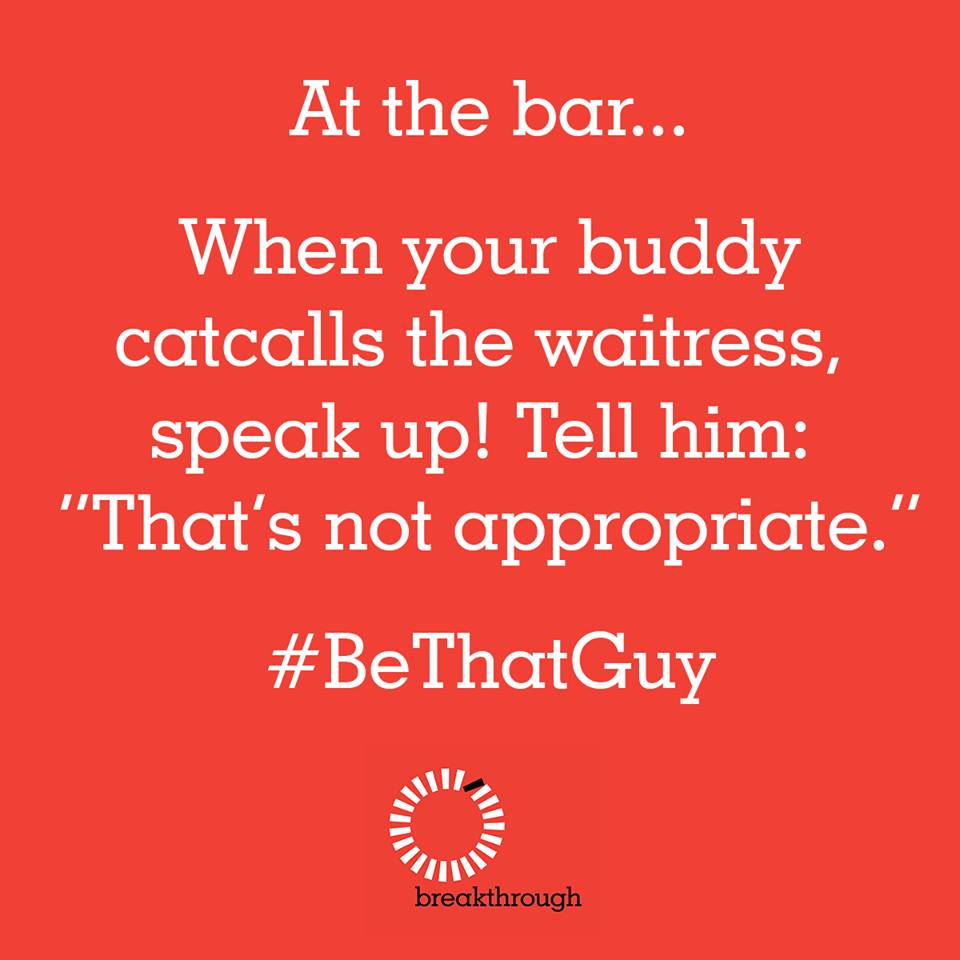
“Going out to a bar or restaurant can be a great way to celebrate the #SuperBowl. You’re with tons of people and have tons of TV screen options. But for many waitresses and bartenders, there’s also tons of sexual harassment.

So what can …you do about it? #BeThatGuy who treats your servers with respect, and call it out when a friend or fellow customer doesn’t. Lead the way in making the game should be fun–and free of sexual harassment–for everyone.

Here are 7 WAYS to #BeThatGuy at the #SuperBowl”

Share

Filed Under: male perspective, Resources

POP to STOP Street Harassment

January 22, 2015 By HKearl

Rachelle in CA has a new resource for you! Check it out. 

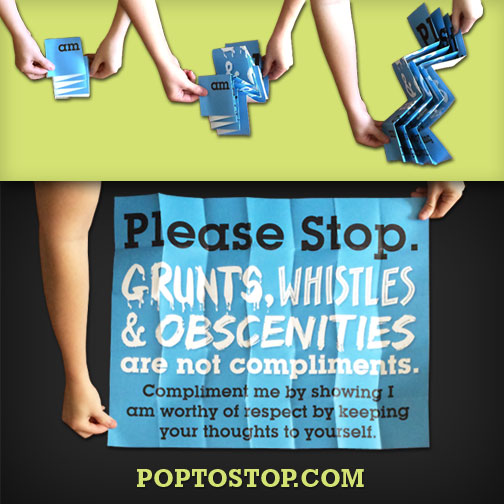
“I’m a graphic designer living in California. This last summer, after experiencing repeated harassment while walking around my hometown, I had enough and decided to come up with my own ‘designer’ way to combat street harassment.

As a naturally happy, non-confrontational person, I needed a solution that fit my personality. Verbally confronting a harasser or taking their photo as revenge is not something I can do. I’m sure there are other victims of harassment who share my desire for peaceful expression so I decided to provide my creation (100% FREE) to others via my site http://poptostop.com.

The uniquely folded, pocket-sized Pop to Stop poster expands and contracts in one fluid motion providing a convenient, non-verbal, and non-aggressive way for victims of street harassment to respond to their antagonizers.”

Share

Filed Under: Activist Interviews, Advice, Resources, street harassment

Gender and Public Transportation

January 21, 2015 By HKearl

Here’s an interesting article from the World Bank about transportation and gender. Excerpt:

“One World Bank Group report, Mainstreaming Gender in Road Transport, highlights the differences between men and women in travel patterns in relation to trip purpose, frequency, and distance of travel. It finds that women make more and more complex trips than men.

These differences stem from differences in the social and economic roles of men and women. For women, transport provides access to various resources and opportunities, such as jobs, childcare, education, and health facilities, whereas men are far more likely to rely on private vehicles. Yet women’s safety is most often overlooked….

Safe roads and transportation rank as a top priority globally. UN-led polling as part of consultations on what targets will succeed the anti-poverty Millennium Development Goals, “better transport and roads” was listed in the top 10 by more than 7 million men and women who voted.

The message is getting through. In Washington this week, for example, the U.S. National Academy of Sciences convenes the world’s largest meeting of transportation experts, with a number of gender-related sessions on the agenda.”

Share

Filed Under: News stories

“The objectification of women increases their fears of sexual assault”

January 20, 2015 By HKearl

Via Vocativ:

“In a study published late last week, researchers found the treatment of women as sexual objects has been shown to contribute to anxiety over their physical safety.

“Our research supports previous findings that the rampant sexual objectification of women, an act of sexual terrorism, can heighten women’s fears of incurring physical and sexual harm,” says lead author Dr. Laurel Watson, a psychology professor specializing in traumatology at the University of Missouri-Kansas City…

The study looked at a sample of 133 African-American and 95 white female undergraduates—a demographic for which the incidence of rape is believed to be five to seven times higher than the general population. The African-American respondents reported more sexual objectification experiences and fear of crime than white women, and therefore experienced more psychological stress.

Regardless of race, though, all women (consciously or not) took various measures to alleviate their fears, from avoiding walking alone at night to carrying pepper spray in their handbags. And while such behaviors may be seen as common sense, Watson argues they should not be misinterpreted as solutions because they place the burden of maintaining safety on women, rather than on the perpetrators themselves.

“Partnerships with men in stopping violence may help transform unequal power distributions between men and women—a chief reason why violence against women occurs in the first place,” says Watson says.

Share

Filed Under: News stories, Resources, street harassment

Harassment for Holding Hands

January 14, 2015 By HKearl

Check out the latest Huffington Post article by our board member Patrick McNeil. Here’s an excerpt:

“During a talk called “All The Little Things” posted on the TEDx Talks YouTube channel last week, Irish drag queen Panti Bliss – appearing before a crowd in Dublin last September – explained why an act like holding your partner’s hand isn’t so thoughtless for everyone.

“I am 45 years old and I have never once unselfconsciously held hands with a lover in public,” Bliss says. “I am 45 years old and I have never once casually, comfortably, carelessly held hands with a partner in public.”

Why? Because around the world still today, street harassment is a major problem for women, LGBT people, people of color, people with disabilities, and low-income people. Bliss’ focus is on homophobia, as was her similarly personal and impassioned speech about a year ago when she asked, “Have you ever been standing at a pedestrian crossing when a car drives by and in it are a bunch of lads, and they lean out the window and they shout “fag!” and throw a milk carton at you?”

“Now it doesn’t really hurt. It’s just a wet carton and anyway they’re right – I am a fag. But it feels oppressive.”

Bliss’ experiences aren’t unusual. Actually, they’re common. In the United States, LGBT people are more likely than straight people to report experiencing street harassment (both verbal and physical), according to a national study released last year by the nonprofit organization Stop Street Harassment. And the harassment starts young: 70 percent of LGBT people said they experienced it by age 17, compared to 49 percent of straight people (still a significant figure).”

Share

Filed Under: LGBTQ, street harassment

« Previous Page
Next Page »

Share Your Story

Share your street harassment story for the blog. Donate Now

From the Blog

  • #MeToo 2024 Study Released Today
  • Join International Anti-Street Harassment Week 2022
  • Giving Tuesday – Fund the Hotline
  • Thank You – International Anti-Street Harassment Week 2021
  • Share Your Story – Safecity and Catcalls Collaboration

Buy the Book

  • Contact
  • Events
  • Join Us
  • Donate
  • Facebook
  • Instagram
  • Pinterest
  • Tumblr
  • Twitter
  • YouTube

Copyright © 2026 Stop Street Harassment · Website Design by Sarah Marie Lacy