• About Us
    • What Is Street Harassment?
    • Why Stopping Street Harassment Matters
    • Meet the Team
      • Board of Directors
      • Past Board Members
    • In The Media
  • Our Work
    • National Street Harassment Hotline
    • International Anti-Street Harassment Week
    • Blog Correspondents
      • Past SSH Correspondents
    • Safe Public Spaces Mentoring Program
    • Publications
    • National Studies
    • Campaigns against Companies
    • Washington, D.C. Activism
  • Our Books
  • Donate
  • Store

Stop Street Harassment

Making Public Spaces Safe and Welcoming

  • Facebook
  • Instagram
  • Pinterest
  • Tumblr
  • Twitter
  • YouTube
  • Home
  • Blog
    • Harassment Stories
    • Blog Correspondents
    • Street Respect Stories
  • Help & Advice
    • National Street Harassment Hotline
    • Dealing With Harassers
      • Assertive Responses
      • Reporting Harassers
      • Bystander Responses
      • Creative Responses
    • What to Do Before or After Harassment
    • Street Harassment and the Law
  • Resources
    • Definitions
    • Statistics
    • Articles & Books
    • Anti-Harassment Groups & Campaigns
    • Male Allies
      • Educating Boys & Men
      • How to Talk to Women
      • Bystander Tips
    • Video Clips
    • Images & Flyers
  • Take Community Action
  • Contact

#WhatMySHSaid

January 13, 2015 By HKearl

Jessica Frankovich wrote a great article about street harassment for GirlSpeak.org and in it she highlights this new awareness-raising project. Here’s an excerpt, but check out her whole piece!

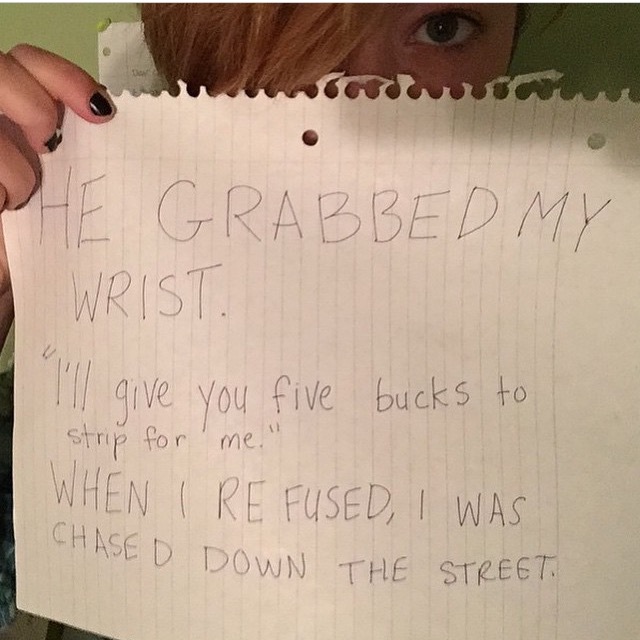
“California teen Chloe Parker came up with an idea to help combat the problem of street harassment. On her Instagram, @rebel.grrrl, women from all over the world submit pictures of themselves holding up a piece of paper. The words a street harasser said to them are written on the paper. (Here’s your warning: they get pretty creepy.)

The project has helped Chloe, who was first street harassed at the age of 12, feel less alone. ‘I hope this will open people’s eyes to the trouble women so often face on a daily basis,’ she said.

You can submit your own #WhatMySHSaid to Chloe through Instagram direct message or by posting the picture on Instagram with the hashtag #WhatMySHSaid. She asks that you include your location (state, province, city, county or whatever else) and age, if possible, tag her in the photo you post, and let her know if you’d like to remain anonymous.”

Share

Filed Under: Activist Interviews, street harassment

Street harassment and women’s equality in Africa

January 11, 2015 By HKearl

There have been numerous incidents of men scrutinizing, harassing, and stripping women of their clothing in the streets from Cameroon to Zimbabwe, from Kenya to South Africa as “punishment” for dressing “immodestly.” Sisonke Msimang writes about this alarming practice in a very powerful New York Times piece today and how street harassment is connected to women’s equality. This is an excerpt:

“Public strippings represent the front lines of a cultural war against women’s advancements in traditionally conservative but rapidly urbanizing societies. They aren’t really about what women are wearing. They are much more about where women are going.

And many African women are going places quickly. Ngozi Okonjo-Iweala became the first female finance minister in Nigeria; Liberia’s president, Ellen Johnson Sirleaf, is one of a handful of elected female heads of state in the world. Lupita Nyong’o’s Oscar win and Chimamanda Ngozi Adichie’s literary successes have brought attention to the artistic triumphs of a younger generation of women.

Nowhere has progress been more remarkable than in Africa’s legislatures. Africans have significantly outpaced their female peers in America and Europe. In the United States, women hold less than 20 percent of the seats in Congress; similarly, in Britain, women make up just over one-fifth of the members of the House of Commons. Compare this to South Africa, where more than 40 percent of representatives in the National Assembly are women, or Rwanda, where 64 percent of all members of Parliament are women — making it the only country in the world where women outnumber men in the legislature.

Beginning in the 1980s, many African countries started to invest in girls’ education and in small enterprise projects. A generation later, an equal number of girls and boys are enrolled in primary schools across the continent. Many women are successful entrepreneurs and, of course, politicians. Precisely because of these rapid changes in women’s status, the backlash from churches, political parties, traditional leaders and rural officials has been forceful. Outrage at bold women is both spontaneous and organized. The mob mentality that leads to public strippings arises in urban milieus where male aggression against women is seen as acceptable. Meanwhile, many churches systematically preach female subservience, while traditional tribal leaders often blame women for dislodging men from their rightful places in modern societies…

Ordinary African women, it seems, are bearing the brunt of their sisters’ progress. Street harassment is often a sign of deep-seated resentment of women’s changing status in society. For men who were raised to believe that they are entitled to be breadwinners and receive sexual gratification and domestic subservience from women, the shift hasn’t been easy. For younger men, modern values have jostled sharply against the lessons about manhood they learned at home. With high levels of unemployment and gaping inequalities, old conceptions of masculinity die hard.”

Share

Filed Under: News stories, street harassment

The First Blog Correspondent Cohort of 2015!

January 8, 2015 By HKearl

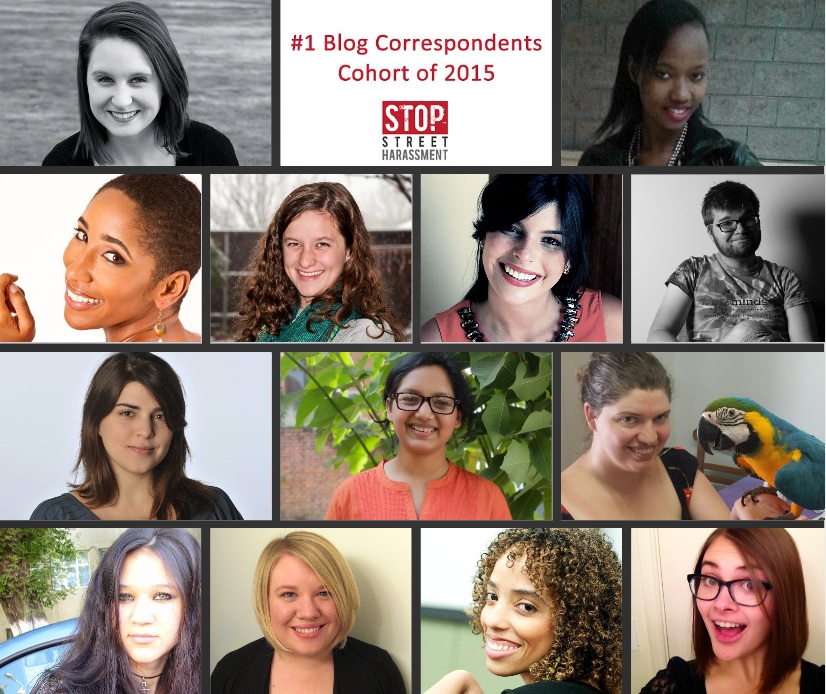
This is the third year of our volunteer blog correspondents program. The first cohort of 2015 (not all are pictured) will be writing about street harassment issues in their communities for the next four months. They hail from nine countries and six continents and will bring great global perspectives to the blog. Here is the first post, by LB in the USA.  

Share

Filed Under: correspondents, street harassment

Three new street harassment videos

January 8, 2015 By HKearl

Phew, it’s hard to keep up with the number of street harassment videos being made these days! Here are three that were published over the past 24 hours:

1. Through Immediate Justice, teenage girls share their street harassment and sexual harassment in school stories in this video and say, “I am not a cat.”

2. Camonghne Felix performed the spoken word piece “Meat: A Reflection on Street Harassment” at The Strivers Row #BlackLivesMatter Benefit Show.

3. Hollaback! commissioned filmmaker Aden Hakimi to make a video in which Michelle shares her street harassment stories.

A Hollaback! email about the video included this from Aden, the filmmaker:

“After speaking at length with Michelle about her life and her experiences with harassment, I decided to shift the focus from watching her to listening to her. I was struck by the often ignored reality that even when harassment isn’t happening in the moment, the possibility of it, the reminders of it, and the fear of it is ever present. Some have said the video may not go as “viral” as the first and I found that a powerful commentary on its own; that people would be willing to watch a woman get harassed over and over again but then not be interested in listening to her talk about those experiences. We all hope the video continues to open up the dialogue about the various forms of harassment that women, women of color, queer women, and feminine presenting people deal with on a daily basis.”

Share

Filed Under: street harassment

From NYC to Nepal: New Transit Campaigns

January 8, 2015 By HKearl

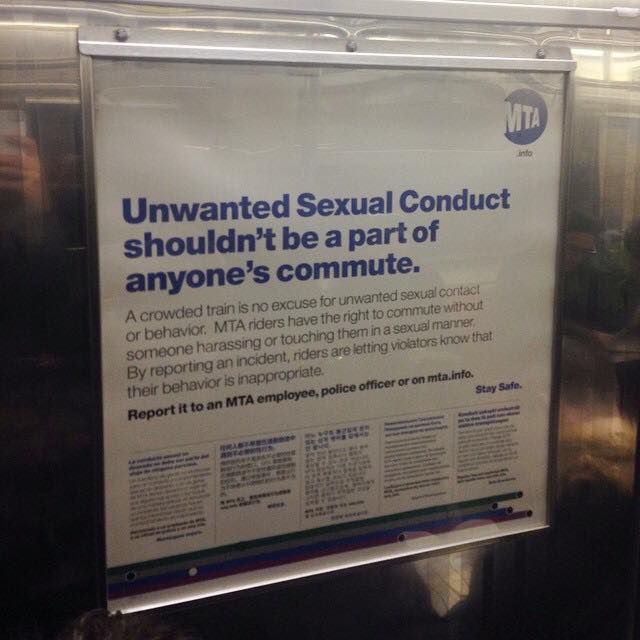
As part of the revived anti-harassment subway campaign launched in the fall, New York City has new anti-harassment PSAs.

Meanwhile, in Kathmandu, Nepal, there is a new women-only minibus service that is in part in response to a World Bank survey showing that a quarter of young Nepalese women had experienced sexual harassment on public transport. As I’ve shared on this blog many times (including when I wrote about riding a women-only subway car in Cairo) and discuss in my first book, sex-segregated public transportation is in several cities worldwide but it is a sexist, gender-normative band-aid solution at best and at worst, it simply doesn’t work. You can read Jessica Valenti’s take on it at The Guardian.

Share

Filed Under: News stories, public harassment

« Previous Page
Next Page »

Share Your Story

Share your street harassment story for the blog. Donate Now

From the Blog

  • #MeToo 2024 Study Released Today
  • Join International Anti-Street Harassment Week 2022
  • Giving Tuesday – Fund the Hotline
  • Thank You – International Anti-Street Harassment Week 2021
  • Share Your Story – Safecity and Catcalls Collaboration

Buy the Book

  • Contact
  • Events
  • Join Us
  • Donate
  • Facebook
  • Instagram
  • Pinterest
  • Tumblr
  • Twitter
  • YouTube

Copyright © 2026 Stop Street Harassment · Website Design by Sarah Marie Lacy