• About Us
    • What Is Street Harassment?
    • Why Stopping Street Harassment Matters
    • Meet the Team
      • Board of Directors
      • Past Board Members
    • In The Media
  • Our Work
    • National Street Harassment Hotline
    • International Anti-Street Harassment Week
    • Blog Correspondents
      • Past SSH Correspondents
    • Safe Public Spaces Mentoring Program
    • Publications
    • National Studies
    • Campaigns against Companies
    • Washington, D.C. Activism
  • Our Books
  • Donate
  • Store

Stop Street Harassment

Making Public Spaces Safe and Welcoming

  • Facebook
  • Instagram
  • Pinterest
  • Tumblr
  • Twitter
  • YouTube
  • Home
  • Blog
    • Harassment Stories
    • Blog Correspondents
    • Street Respect Stories
  • Help & Advice
    • National Street Harassment Hotline
    • Dealing With Harassers
      • Assertive Responses
      • Reporting Harassers
      • Bystander Responses
      • Creative Responses
    • What to Do Before or After Harassment
    • Street Harassment and the Law
  • Resources
    • Definitions
    • Statistics
    • Articles & Books
    • Anti-Harassment Groups & Campaigns
    • Male Allies
      • Educating Boys & Men
      • How to Talk to Women
      • Bystander Tips
    • Video Clips
    • Images & Flyers
  • Take Community Action
  • Contact

India: Report street harassment by ATM

January 7, 2015 By HKearl

Really interesting innovation out of India. I’d like to learn more about the process after someone makes the report.

Via CityMetric:

“In the Indian state of Odisha, the state government estimates that around 60 per cent of sexual assaults against women go unreported…

For Joydeep Nayak, the head of the state’s police human rights unit, part of the problem lies in the practical barriers preventing women from reporting assault and harassment…So, spurred on by reports of the gang-rape and death of a Delhi woman in Deceber 2012, Nayak came up with a solution, in the form of what looks like a police-sponsored ATM machine.

The ICLIK, developed by the Odisha government and OCAC, a local computer company, allows women to log a report of assault or harassment while appearing to visit a bank machine. The machine is located inside a Bank of Baroda indoor ATM area in Bhubaneswar, the state capital…

Users start by choosing a category of assault. They then leave further details…by typing on the screen, scanning a written report or recording an oral message. The information is sent directly to the local police control room, for officers to investigate.

The machine’s location in an ATM area means it’s open 24 hours a day, and is under the watchful eye of a security guard. Since its introduction in January 2014, the ICLIK has reportedly received around five reports a day, with harassment being the most commonly reported crime.”

Share

Filed Under: News stories, street harassment

Video: Fashion Institute of Technology Project

January 6, 2015 By HKearl

Devon is a student at the Fashion Institute of Technology. This past semester, her class was given the task of creating a video about a social cause of their choosing. Being a young woman living in New York City, she felt the topic of street harassment was a personal and meaningful cause she wanted to address in hers.

Share

Filed Under: Activist Interviews, Resources, street harassment

Street Harassment Cartoon: Deafening Voices

January 5, 2015 By HKearl

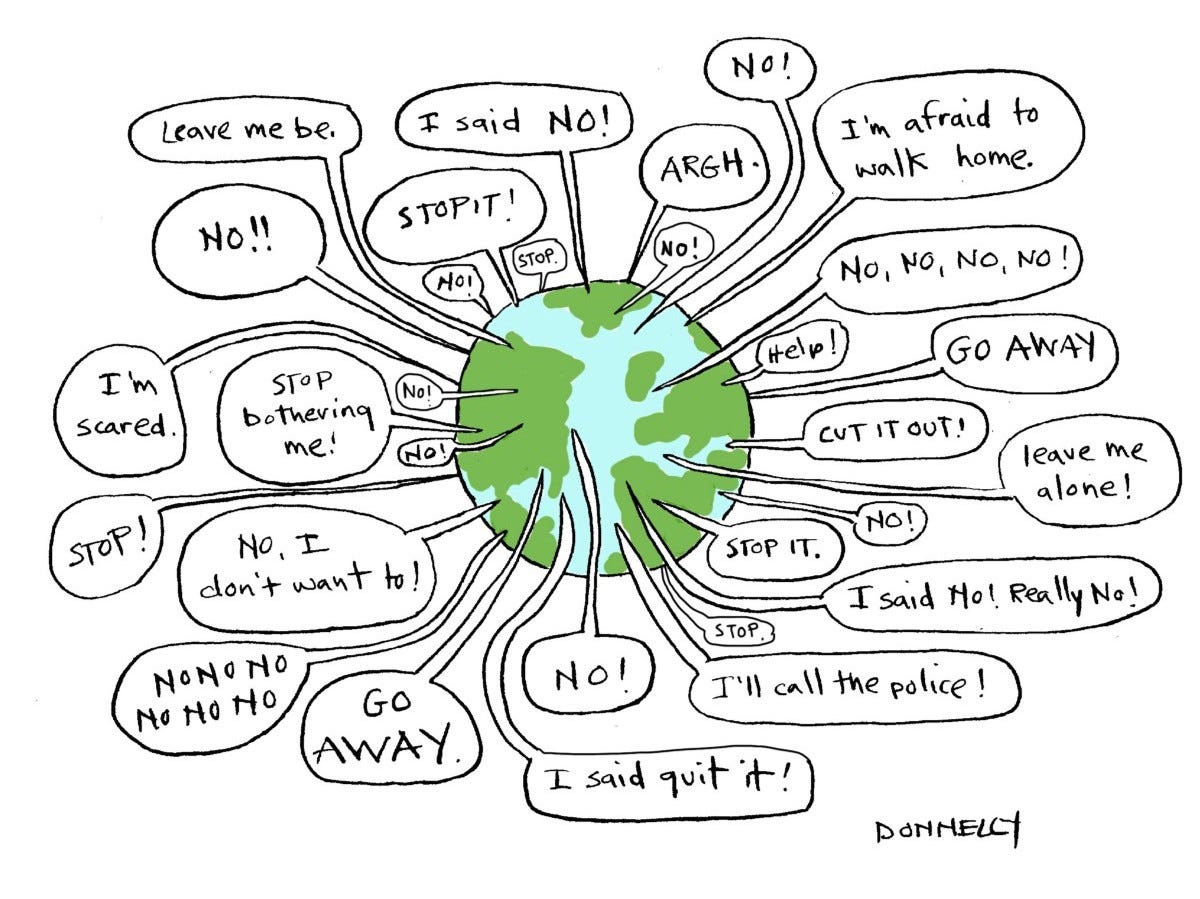
Liza Donnelly is a prolific cartoonist. Her latest cartoon, published on Medium’s The Nib today, is about street harassment, a topic she has addressed before. She gave me permission to share it here —

Thanks for using your talents to raise awareness about street harassment, Liza!

Share

Filed Under: Resources

Mexico: Six women murdered per day

January 4, 2015 By HKearl

Trigger Warning…Upsetting news out of Mexico.

Via Al Jazeera America:

“According to the National Citizen Femicide Observatory, a coalition of 43 groups that document the crime, six women are assassinated every day.

Yet only 24 percent of the 3,892 femicides the group identified in 2012 and 2013 were investigated by authorities. And only 1.6 percent led to sentencing.

“Femicides are a pandemic in Mexico,” asserts Ana Güezmes, the local representative of United Nations Women, the agency devoted to gender issues.

The word “feminicidio” first entered the vernacular in the 1990s, with explosive rates of disappearances and murders of women in the border town of Ciudad Juárez. In fact, more women have been killed in the state of Mexico, which surrounds the capital city of the same name. The number doubled from 2005 to 2011, when the current national president, Enrique Peña Nieto, was governor of the state. Today he has pledged to combat drug violence overall but has not spoken out against femicides.

Impunity is the main motor of the gender crime, Güezmes says, as well as social norms that allow the violence to be ignored or accepted as a normal part of life. She describes femicides as the extreme end of a society where 63 percent of women have suffered abuse by male hands. She estimates that maybe a third or half of the cases involved sexual partners. The balance — abductions, rapes and  discarding the bodies like garbage — are probably linked to the generalized drug violence that is tearing Mexico apart.”

If you want to learn more about this on-going and horrific tragedy, I recommend the book The Daughters of Juarez: A True Story of Serial Murder South of the Border.

Share

Filed Under: News stories

DC’s New Mayor is a Safe Public Spaces Champion!

January 2, 2015 By HKearl

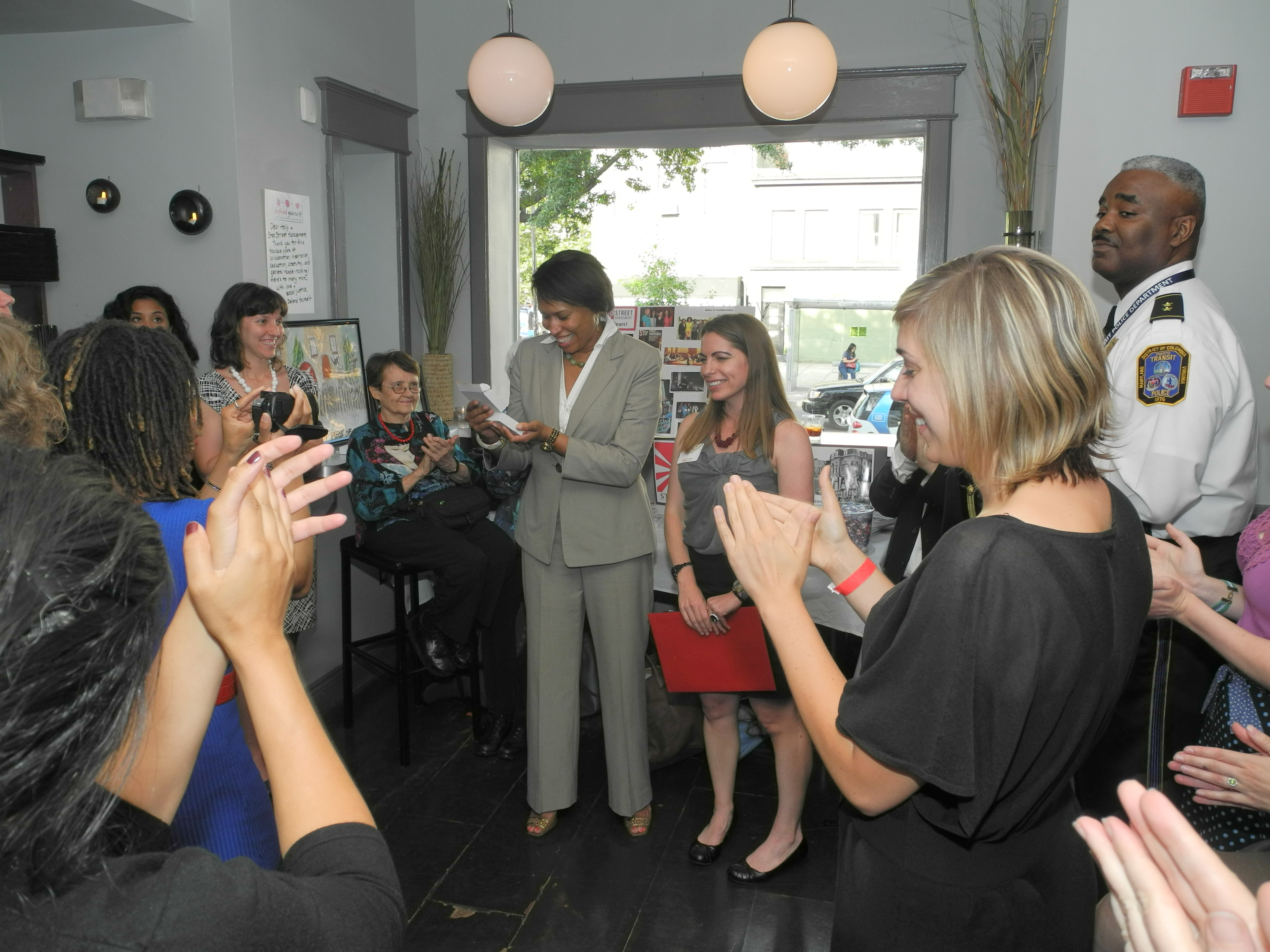
I’m so excited that our Safe Public Spaces Champion awardee Muriel Bowser is MAYOR of Washington, DC!

Via NBC News:

“”It’s my charge to make [D.C.] greener, healthier, safer and more fiscally stable than we find it today,” she said.

Formerly D.C.’s Ward 4 councilmember, Bowser is now just the second woman to lead the District. Early in her inaugural remarks, she thanked the female mayors of other major cities, saying, “Today, because of you, I am one too.”

It’s in large part thanks to her that the Washington Metropolitan Area has an anti-harassment transit campaign. In 2012 when I was part of a group organized by Collective Action for Safe Spaces (I was one of their board members at the time) that testified about harassment before the DC city council and the all male WMATA leadership responded by saying harassment wasn’t a problem, Bowser told them “as a woman I feel differently” and told them to do something. And they did. #WomenLeaders

Share

Filed Under: News stories, SH History, SSH programs, street harassment

« Previous Page
Next Page »

Share Your Story

Share your street harassment story for the blog. Donate Now

From the Blog

  • #MeToo 2024 Study Released Today
  • Join International Anti-Street Harassment Week 2022
  • Giving Tuesday – Fund the Hotline
  • Thank You – International Anti-Street Harassment Week 2021
  • Share Your Story – Safecity and Catcalls Collaboration

Buy the Book

  • Contact
  • Events
  • Join Us
  • Donate
  • Facebook
  • Instagram
  • Pinterest
  • Tumblr
  • Twitter
  • YouTube

Copyright © 2026 Stop Street Harassment · Website Design by Sarah Marie Lacy