• About Us
    • What Is Street Harassment?
    • Why Stopping Street Harassment Matters
    • Meet the Team
      • Board of Directors
      • Past Board Members
    • In The Media
  • Our Work
    • National Street Harassment Hotline
    • International Anti-Street Harassment Week
    • Blog Correspondents
      • Past SSH Correspondents
    • Safe Public Spaces Mentoring Program
    • Publications
    • National Studies
    • Campaigns against Companies
    • Washington, D.C. Activism
  • Our Books
  • Donate
  • Store

Stop Street Harassment

Making Public Spaces Safe and Welcoming

  • Facebook
  • Instagram
  • Pinterest
  • Tumblr
  • Twitter
  • YouTube
  • Home
  • Blog
    • Harassment Stories
    • Blog Correspondents
    • Street Respect Stories
  • Help & Advice
    • National Street Harassment Hotline
    • Dealing With Harassers
      • Assertive Responses
      • Reporting Harassers
      • Bystander Responses
      • Creative Responses
    • What to Do Before or After Harassment
    • Street Harassment and the Law
  • Resources
    • Definitions
    • Statistics
    • Articles & Books
    • Anti-Harassment Groups & Campaigns
    • Male Allies
      • Educating Boys & Men
      • How to Talk to Women
      • Bystander Tips
    • Video Clips
    • Images & Flyers
  • Take Community Action
  • Contact

New Studies: Power and Inequality

November 3, 2014 By HKearl

Two new reports/studies illustrate important points relating to street harassment.

1. Street harassment, like all forms of sexual harassment, is about power/control, not about attraction or someone just trying to be nice to someone else. A new study provides more evidence that this is true.

“Adolescent boys who bully peers and engage in homophobic teasing are more likely to perpetrate sexual harassment later on, suggests a new study of middle-school students conducted by researchers at the University of Illinois and the U.S. Centers for Disease Control and Prevention…

The association between bullying and sexual harassment may be indicative of a developmental pathway for some bullies and warrants greater prevention and intervention efforts in schools, said Dorothy L. Espelage, who is among the first researchers to investigate these problems in middle-school populations.

Primary prevention efforts may need to begin even earlier than middle school – in late elementary school – and focus on gender-based aggressive acts that precede sexual harassment perpetration, especially homophobic name-calling, Espelage said.”

The existence of a “bully-sexual violence pathway” among boys is shows that sexual harassment/street harassment is about power and itis behavior that can and should be prevented at a young age.


2. Street harassment reinforces and is a by-product of gender inequality.

The World Economic Forum released their annual Global Gender Gap Report a few days ago. Yet again, no country has achieved gender equality. Street harassment perpetrated by men against women is one more indicator and manifestation of this inequality. No country will ever achieve gender equality until street harassment ends and street harassment will not end as long as women are second-class citizens globally.

Share

Filed Under: News stories, Resources

Harassment on Public Transportation News Round-up

November 3, 2014 By HKearl

In the last two weeks there have been several new articles and initiatives around sexual harassment on public transportation. Here’s a sampling:

GLOBAL:

YouGov polling conducted in 16 major cities worldwide asked participants about how safe they feel at night, their experiences with verbal harassment and physical abuse, the public response to abuse, their confidence in authorities, and their overall feelings of safety in the city. They then ranked the 16 cities safest (New York City) to least safe (Bogota). Read more here.

ENGLAND:

Via Independent:

“In September 2013 London launched Project Guardian, a collaborative effort by the British Transport Police, the Metropolitan Police, the City of London Police and Transport for London, to boost levels of reporting of sexual offences.

The Everyday Sexism Project, the End Violence Against Women coalition and Hollaback advised the police on the project, which saw 2000 officers receive special training and 120 officers – both in uniform and plain clothes – carry out daily patrols on the transport network. Since the launch of the initiative, there has been a 20% increase in the reporting of sexual offences, and a 32% increase in the number of cases where offenders have been charged or summoned.”

FRANCE:

Osez le Féminisme (Dare Feminism) launched a campaign on Friday in support of women’s right to be un-harassed on public transportation in Paris

Via rfi:

“‘When you are a woman on the subway in Paris, you are often the victim of different types of sexual aggression […] We have done a study in the metro this summer in Paris, and the study showed that three out of four women were adapting their behaviour or their clothes and their way of dressing when they were going to take the metro.’

The group asks that the RATP, the French public transportation operator, will join in the fight against gender-based violence.”

INDIA:

Via New India Express:

“Thus was born Safe Safar, a campaign started in 2010, to make travel in autorickshaws in Lucknow safe for women, by creating awareness among auto drivers. The campaign blossomed into a full-fledged, successful project that was awarded the IIM-L Manfest Prerna Fellowship Award-2013 by IIM-Lucknow.

“Our survey prior to the campaign revealed that while about 97 per cent of women were sexually harassed at some point of time while travelling in autorickshaws, drivers often chose not to stand up against the crime, considering it none of their business. So, we decided to address the crime at its root by making the driver aware,” says Zeeshan, 30, a postgraduate in social work, who has been extensively working on gender and youth-centric issues for the past four years.

Besides sensitising auto-drivers to play a pro-active role in ensuring security of women commuters, the campaign involved persuading them to stop playing pulsating music and removing pictures of scantily clad women from their vehicles.

Spanning two successful years, the campaign reached out to over 2,000 auto-rickshaw drivers while training 350 of them. Owing to its success, Zeeshan converted it into a full-time programme under his NGO Yeh Ek Soch, which he runs along with partner Shariq Ahmad.”

Share

Filed Under: News stories, public harassment

SlutRock DC

November 1, 2014 By HKearl

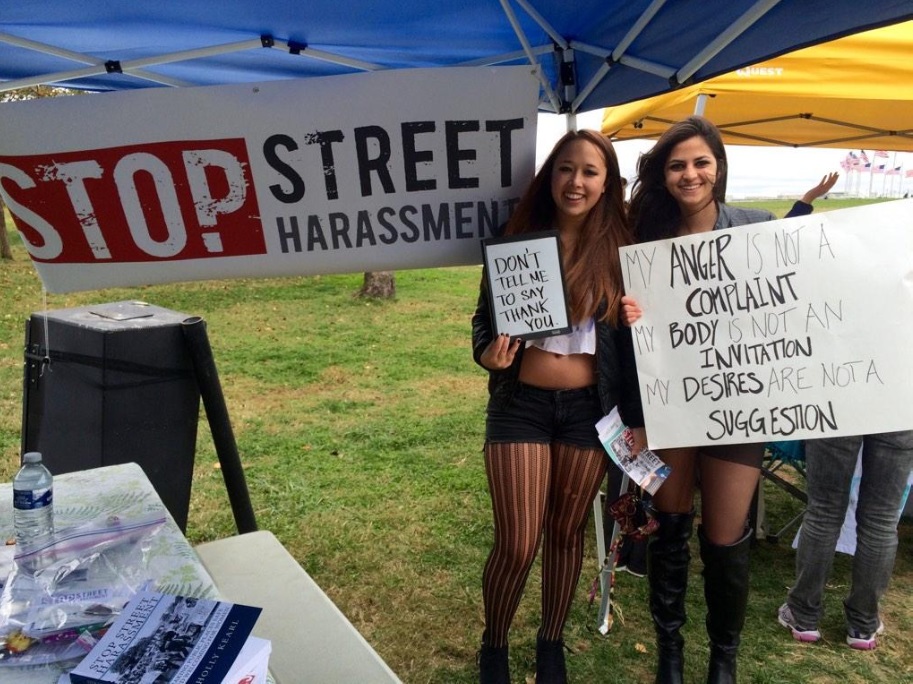
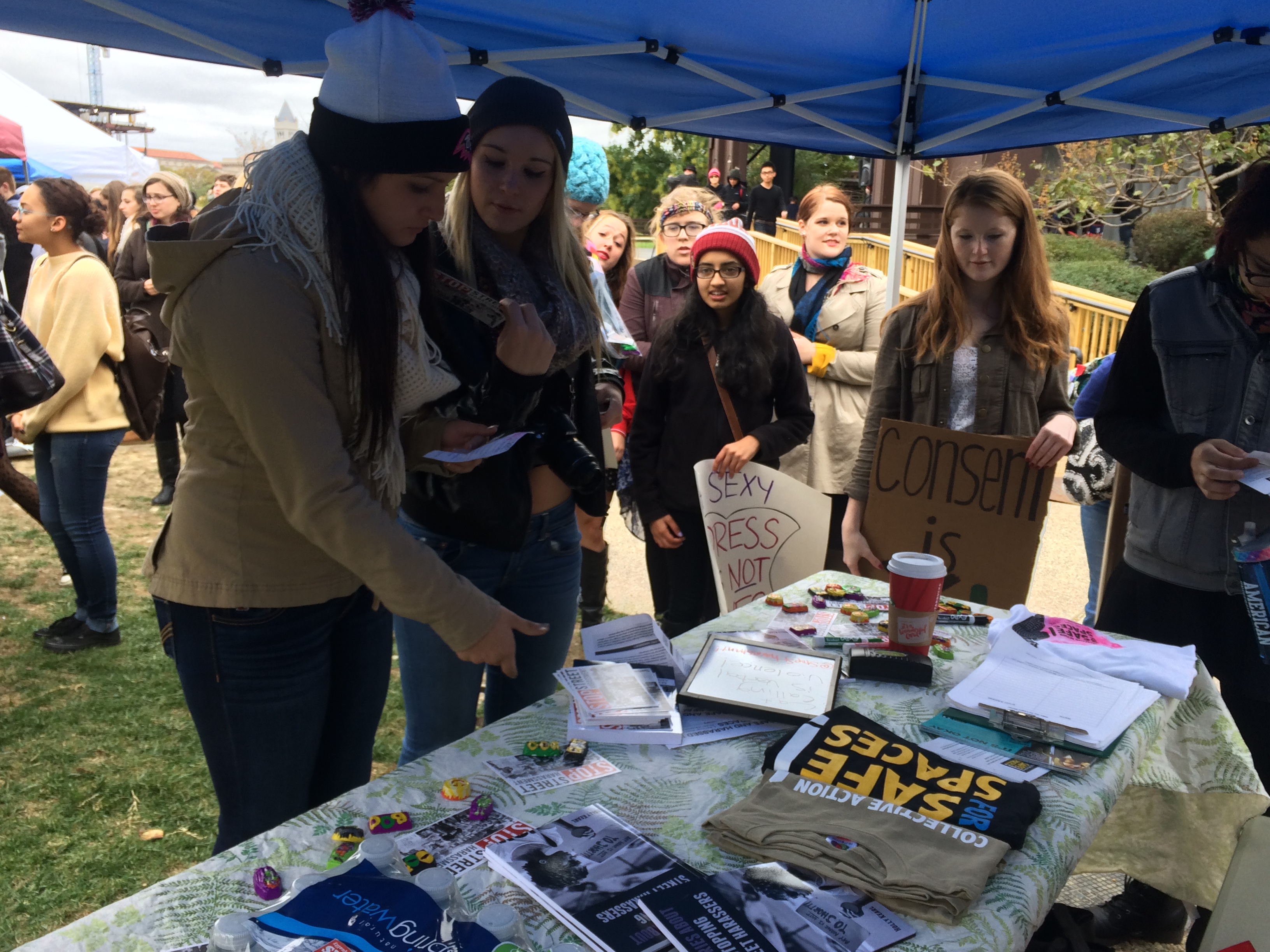
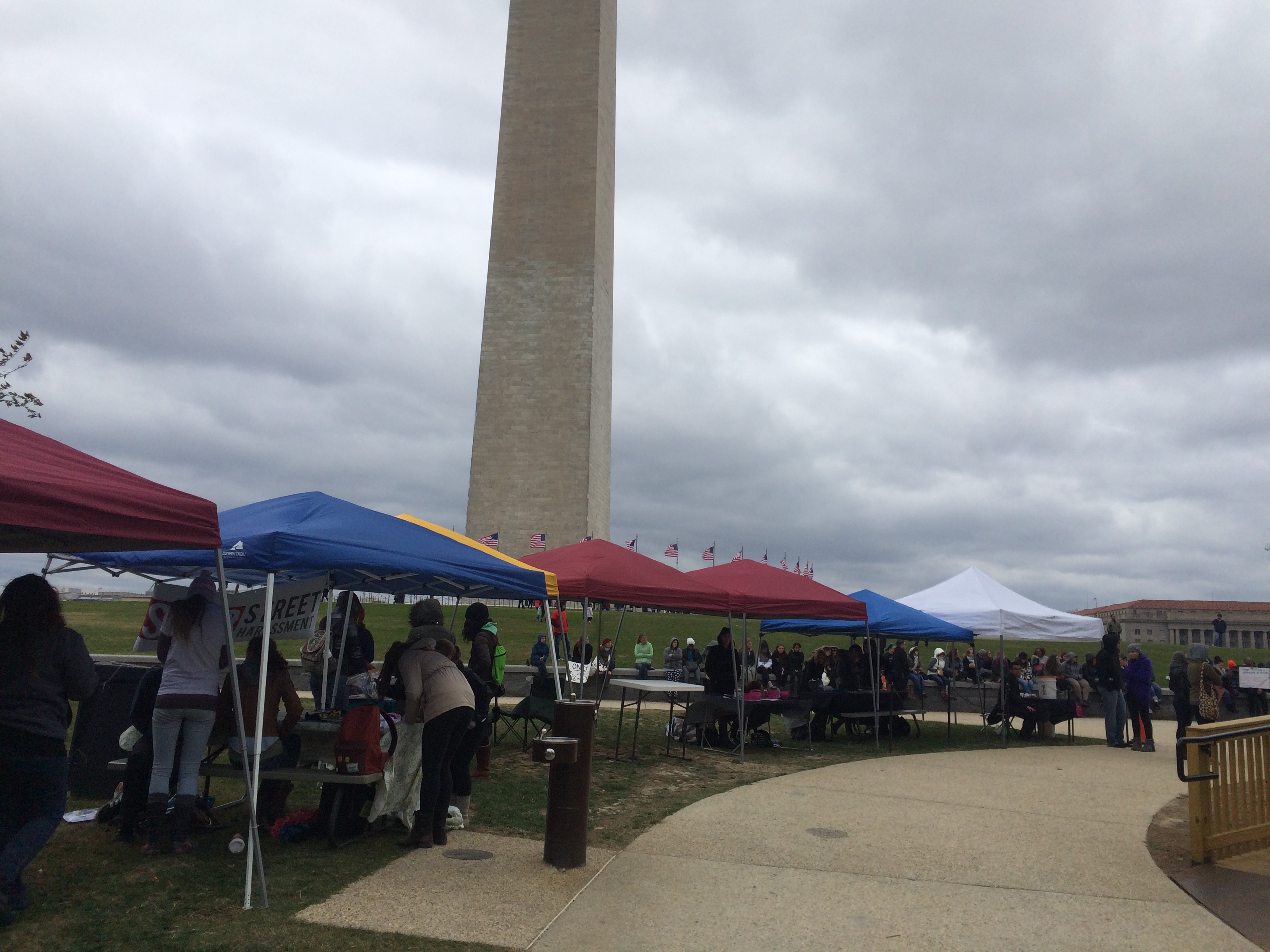
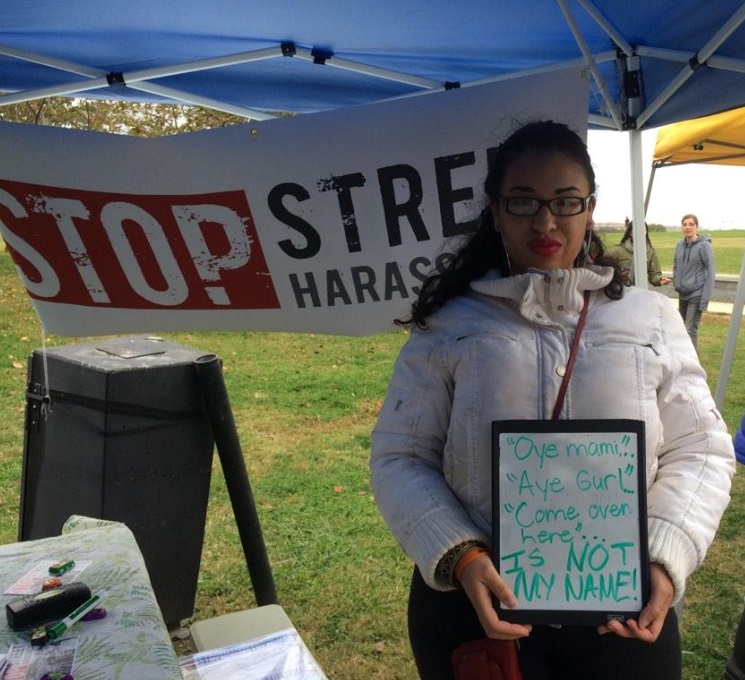
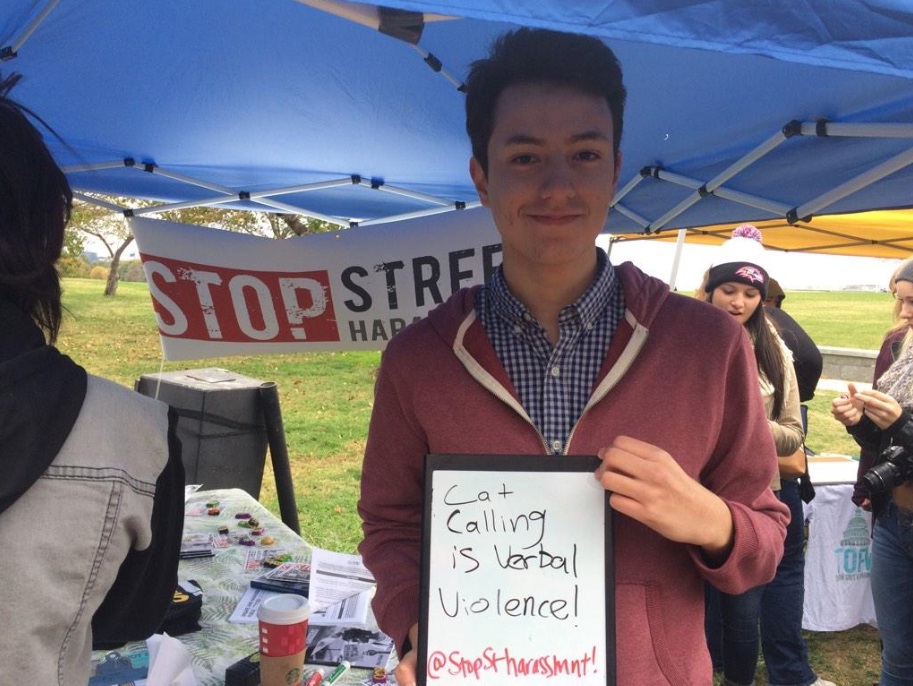
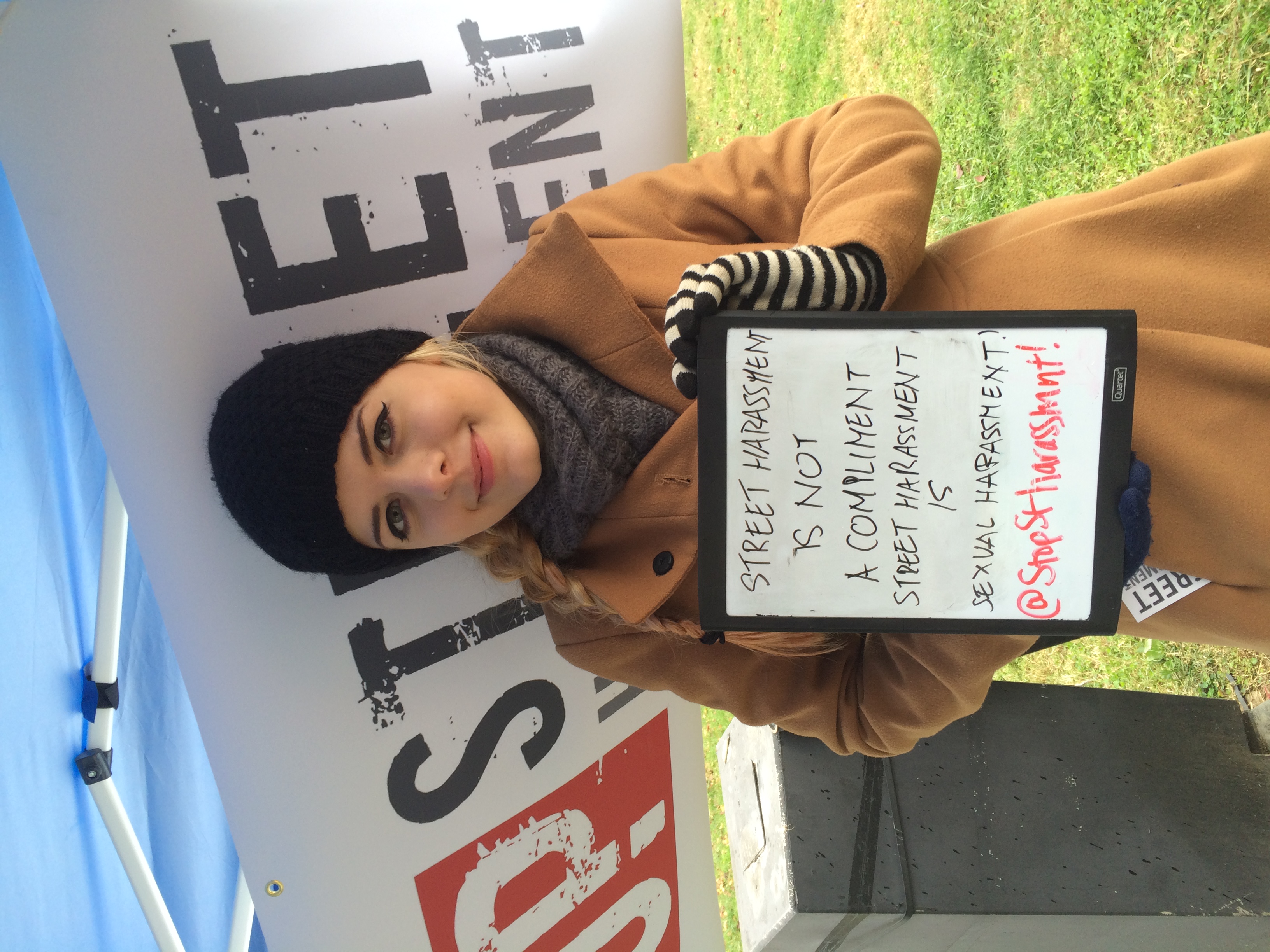
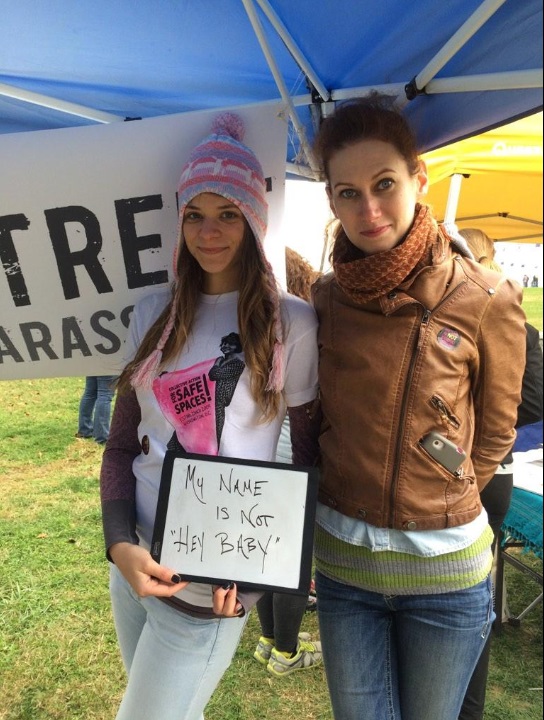
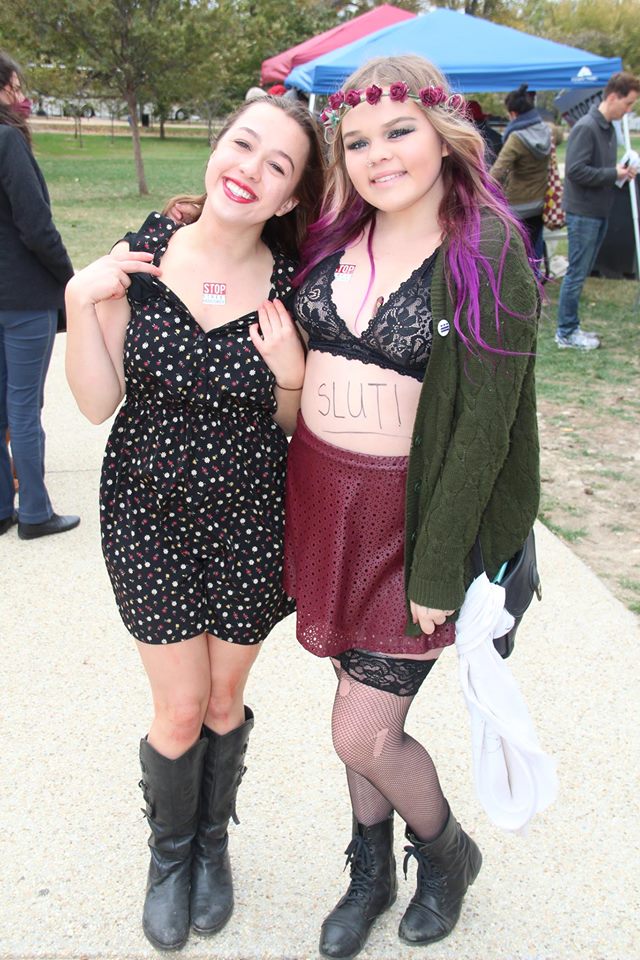
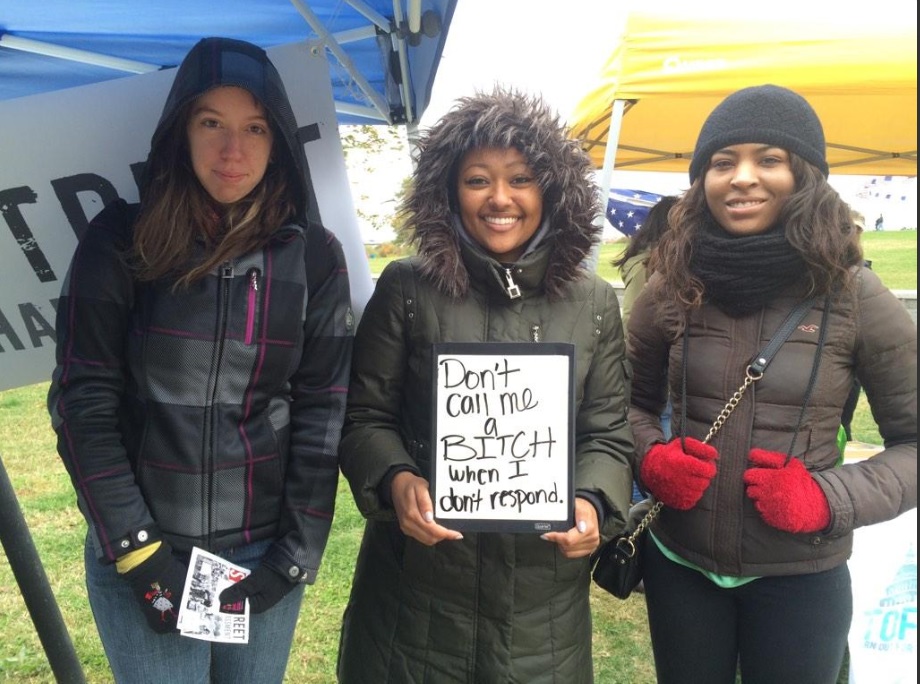
Despite chilly, extremely windy fall weather and a periodic light drizzle, around 150 people marched in the fourth annual SlutWalk/SlutRock DC today. This is the fourth year I’ve tabled at the event and I really love it. I spent three hours talking to people about their street harassment experiences, brainstorming strategies, and sharing stickers, resources and leftover trick-or-treat candy.

So much of the work I do is from behind my computer, emailing people, tweeting, writing here, and even when I give talks, there isn’t always time to have many one-on-one conversations with participants so it was a real treat. Here are a few of the photos, with credit to Mark Webster for the last two.


Share

Filed Under: Events, SSH programs

What is street harassment & what can I do?

October 31, 2014 By HKearl

Street harassment is the top story on The Today Show this morning and has been covered by every major media outlet this week.

So if you’re just learning about this issue and/or us, welcome. Here are a few quick things to know:

What it is:

Street harassment is any unwanted action or comment between strangers in public places that is disrespectful, unwelcome, threatening and/or harassing and is motivated by gender or sexual orientation or gender expression. It happens in every country and disproportionately to all women and to men in the LGBQT community.

It impacts harassed persons’ ability to navigate through and be in public spaces and thus is a human rights violation. It is part of the same continuum as sexual violence as it can escalate into it (and we never know when) and it can be retriggering for survivors of sexual violence.

History of the Issue:

Since at least the late 1800s, women have been speaking out and challenging street harassment. The term was first used in 1981 and the first website about it where women could share their stories launched in 2000 by the Street Harassment Project.

Women of color have led many of these efforts, in more recent times, they have done amazing work through the Rogers Park Young Women’s Action Team, Girls for Gender Equity, Stop Telling Women to Smile, Brooklyn Movement Center, the Window Sex Project, and #YouOkSis?

History of Stop Street Harassment:

This website began in 2008 to fill a gap in information/resources about the topic — it grew from my master’s thesis on the subject at George Washington University, which I began research for in 2006. I wrote one of the only books on street harassment in 2010, Stop Street Harassment: Making Public Places Safe and Welcoming for Women, and commissioned a nationally representative survey on street harassment this year.

What we Do/Get involved:

Currently, SSH does a lot of education and community mobilization work.

* You can share your story.

* You can find suggestions for dealing with street harassers as well as the relevant USA laws

* You can find information on being a male ally and how to talk to women with respect.

* You can find toolkit guides for taking action in your community on this topic.

* You can read articles from our blog correspondents in 9 countries to learn about the problem globally. (We will be recruiting a new cohort of correspondents in December.)

* You can get an update on the community projects our Safe Public Spaces teams are doing in this fall in 6 countries and DONATE to support the 2015 programs (and apply to be one of those programs in 2015).

* You can plan to participate in the 5th annual International Anti-Street Harassment Week.

* You can request me to lead a workshop or give a talk in your community, to your business, or in your school or community (in 4 years I’ve given 130+ talks).

* You can donate to support our work, which currently is largely done on a volunteer-basis and anything we do fund comes solely from individual donors.


Share

Filed Under: street harassment

A viral video cannot be the only way to understand street harassment

October 30, 2014 By HKearl

Whenever I left my college campus in California, inevitably at least once man would honk, whistle or call out to me from his car. Usually it was several. It annoyed me, it made me dread going places, and I felt there was little I could do about it as these men whizzed by, safely removed from me in their cars.

I will never forget the day a man harassed me while I was on the phone with my dad and my dad heard it. He asked me in surprise if that man was talking to me. I said something like, “Yes, dad, it happens all the time when I’m walking along this street.”

He was shocked. In that moment I realized he had no idea how many times men harassed me.

At that time, I didn’t know the term “street harassment” but a few years later in 2006, I found the term on the Street Harassment Project website and wrote my master’s thesis on it. During the course of my research, I began not only educating myself about the issue, but also the men in my life, like my dad and my male partner.

They, like many straight men, were clueless about how often the women they knew faced unwanted comments, following and even touching in public spaces. So I made it a point to mention when and where I was harassed to help them understand. They believed me, they cared, and now they are outspoken against it.

In the nearly 8 years that I’ve been studying, writing and speaking out about this topic, I’ve encountered countless people who similarly have no idea how common street harassment is or how bad it can be and also those who willfully believe it doesn’t happen and that we are exaggerating or lying.

Over the past four months, there have been four different viral videos of street harassers filmed with hidden cameras on the streets of Washington, DC, Minneapolis, Cairo, Egypt, and this week, New York City. Two years ago, there was a similar video made in Brussels, Belgium. They show just how common street harassment is and provide visual examples of what it looks like. These videos are easy to digest and they are raising many people’s awareness about the problem. They prove street harassment is not made up.

But these hidden camera videos only go so far and they cannot and should not be the only way to understand the problem and raise awareness about it. This is why.

First, the women who are the subjects of these films comprise just one demographic: they are all young adult, able-bodied, seemingly heterosexual, attractive women walking alone in big cities, and the three women in the USA and in Belgium are all white. Collectively, they make the experiences of everyone else invisible. To help see the bigger picture of who experiences harassment, you can turn to Twitter, blogs, art projects, and to a nationally representative survey conducted earlier this year by GfK.

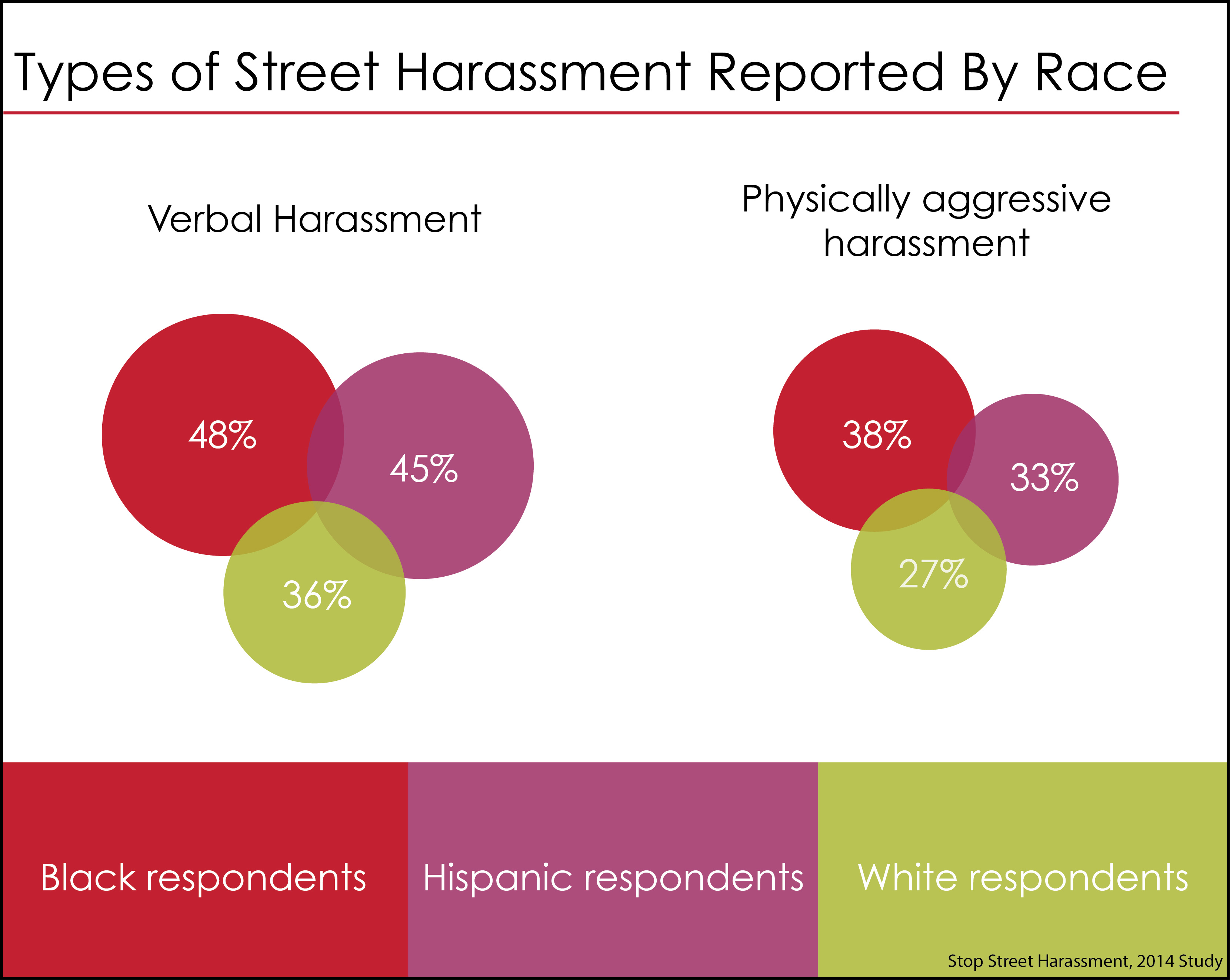
In the survey, 25% of men – largely in the LGBQT community – said they had been street harassed, as had 65% of women. Half of all harassed persons said it began before they were age 17, so lots of teenagers are harassed. Persons of color were more likely than white people to say they had been harassed. People from every region of the country and every income level reported experiencing harassment. While the survey did not ask specifically about disability or include enough transgender individuals to speak about their experiences statistically, there is no doubt from people’s stories that that they face a lot of street harassment, too.

Second, the videos do not show the full extent of harassment people experience, like being grabbed or flashed or assaulted. In the national survey, nearly one in four women had been sexually touched or groped, one in five had been followed, and nearly one in ten had been forced to do something sexual. Recently, a woman in Detroit was murdered by a harasser, while a woman in New York City was slashed by another. These scary, violent experiences is what makes a lot of the “just verbal” experiences upsetting. And of course that underlying discomfort and fear is hard to depict in a short video.

Third, by limiting the video taping to the streets, you don’t see the full range of harassers. Like men – and most harassers of women and men are male — who harass from their vehicles. Men who harass on public transportation. Men who harass in stores, restaurants, clubs, bars, parks, movie theaters, and beaches. Men who stand outside their college fraternity house or sports field and harass women walking by. I believe there would be more racial diversity, age diversity and income-bracket diversity among the harassers than the viral videos depict if it was possible to capture harassment in all of these places.

Since it is impossible to video tape every type of harasser and harassee to document – to prove – this is a problem, we need to listen to and believe everyone who speaks out to share their stories. Believe the gay man who says he is called a fag or queer; believe the transgender person who says they are called tranny and he/she; believe persons of color when they say they are called racial slurs, misidentified as a criminal or as a sex worker; believe persons with disabilities when they say they are laughed at, pointed at, and harassed; believe the teenagers who say they are harassed while commuting to and from school.

Then go a step further beyond belief, try to empathize with their experiences — even though they are not like your own — and commit to helping create a world that is safer and more welcoming for them.

Share

Filed Under: street harassment

« Previous Page
Next Page »

Share Your Story

Share your street harassment story for the blog. Donate Now

From the Blog

  • #MeToo 2024 Study Released Today
  • Join International Anti-Street Harassment Week 2022
  • Giving Tuesday – Fund the Hotline
  • Thank You – International Anti-Street Harassment Week 2021
  • Share Your Story – Safecity and Catcalls Collaboration

Buy the Book

  • Contact
  • Events
  • Join Us
  • Donate
  • Facebook
  • Instagram
  • Pinterest
  • Tumblr
  • Twitter
  • YouTube

Copyright © 2026 Stop Street Harassment · Website Design by Sarah Marie Lacy