• About Us
    • What Is Street Harassment?
    • Why Stopping Street Harassment Matters
    • Meet the Team
      • Board of Directors
      • Past Board Members
    • In The Media
  • Our Work
    • National Street Harassment Hotline
    • International Anti-Street Harassment Week
    • Blog Correspondents
      • Past SSH Correspondents
    • Safe Public Spaces Mentoring Program
    • Publications
    • National Studies
    • Campaigns against Companies
    • Washington, D.C. Activism
  • Our Books
  • Donate
  • Store

Stop Street Harassment

Making Public Spaces Safe and Welcoming

  • Facebook
  • Instagram
  • Pinterest
  • Tumblr
  • Twitter
  • YouTube
  • Home
  • Blog
    • Harassment Stories
    • Blog Correspondents
    • Street Respect Stories
  • Help & Advice
    • National Street Harassment Hotline
    • Dealing With Harassers
      • Assertive Responses
      • Reporting Harassers
      • Bystander Responses
      • Creative Responses
    • What to Do Before or After Harassment
    • Street Harassment and the Law
  • Resources
    • Definitions
    • Statistics
    • Articles & Books
    • Anti-Harassment Groups & Campaigns
    • Male Allies
      • Educating Boys & Men
      • How to Talk to Women
      • Bystander Tips
    • Video Clips
    • Images & Flyers
  • Take Community Action
  • Contact

World Bank Meeting about Harassment on Public Transportation

October 28, 2014 By HKearl

Today I joined Joe Vess from Promundo at the World Bank offices to discuss how to create an effective anti-harassment campaign on public transportation. The World Bank is preparing to launch a pilot campaign on 30 buses in Mexico City this winter.
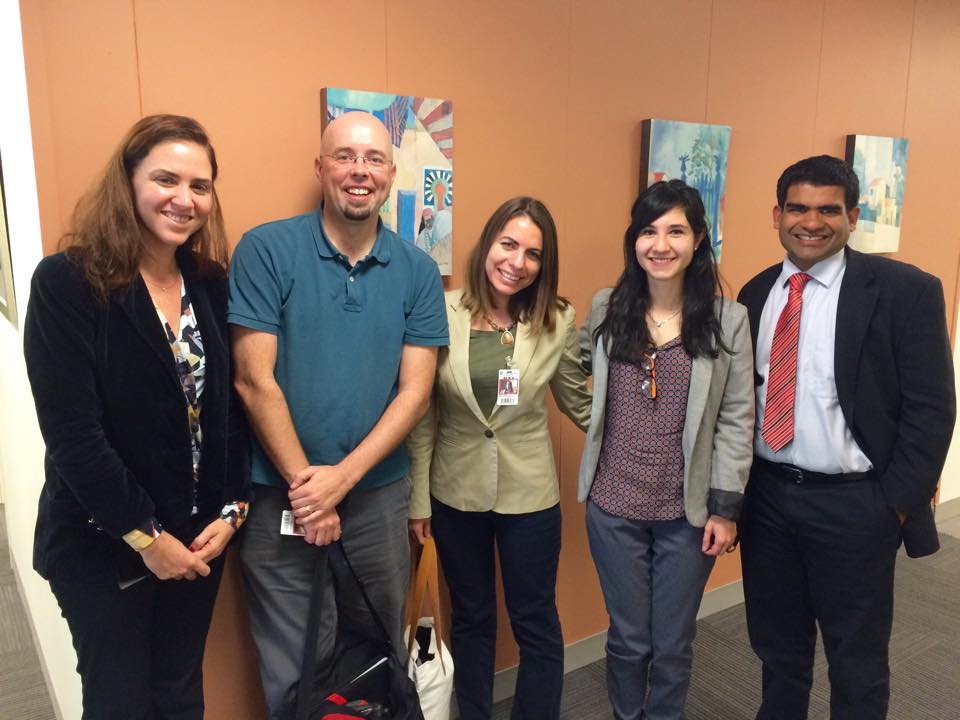
Here is more about what and why they plan to do. Stay tuned for more updates:

“In Mexico City, 65 percent of women have been victims of some type of gender violence on public transportation or at mass transport stops, terminals or platforms, according to government figures.

It is a reality repeated in other countries of the region. A survey by the non-governmental organization Action Aid in four Brazilian states revealed that 44% of women had suffered sexual harassment on public transportation.

In the first eight months of 2014, 129 people have been arrested for this type of conduct on mass transport systems in Bogota, Colombia, according to police records….

The World Bank and local organizations are developing a pilot program to implement effective measures to combat the problem of sexual harassment on public transportation and mass transport stops in Latin America.

Preliminary research identified four common denominators in interviews with users and public transport officials:

* Reporting is not easy: there is an overall sense that it is not worth reporting incidents because it is a complicated procedure that almost never produces results.

* There is little solidarity among strangers: if there were more of a sense of community, people would speak up when an incident occurs and would be more likely to support victims.

* Segregation is not enough: many users consider segregation a stopgap measure that does not address inappropriate behavior. Some even believe that it is another way to victimize women since it suggests that they “choose” to subject themselves to harassment if they do not travel in the women’s sections.

* Improved infrastructure = more security: participants feel safer when stations and platforms are in good condition.

Based on these results, experts recommend several measures to address the problem.

These include a public awareness campaign to encourage users to join forces against perpetrators, and new services to make users feel safer (for example, night buses that go to users’ houses, in the manner of the San Francisco system). Recommendations also include the development of mobile apps to report harassment, seek help or information.”

Share

Filed Under: public harassment, SSH programs

Video: 10 Hours of Walking in NYC as a Woman

October 28, 2014 By HKearl

UPDATE: I posted this before I had a chance to watch it. After watching it and reading comments about it, two things come to mind:

1- I agree with some people who are saying that not everything depicted looked like harassment, but I think the point was to show the accumulation of how often men were speaking to her on the street, unsolicited, in a single day. I doubt they were all saying good morning and bless you to men walking by so in that sense, they are still treating her like public property that they can interrupt at any time. 

2 – I am disappointed that the clip reinforces the stereotype that street harassment is men of color harassing white women when men of all races harass and women of all races are harassed… And some women harass and some men are harassed!! What would be more useful is a video that follows five different people of different backgrounds/identities in different parts of the country for a day to show the different types of harassment they each experience.

But that said, this video is getting a lot of views and attention and that is something this issue needs!

Via CNN.com:

“God bless you, mami,”

“Hey baby.”

“DAMN.”

“You don’t wanna talk?”

This is just a sampling of the taunts one woman experienced in 10 hours of walking though the streets of New York. Her experience was filmed and edited into a 1:56 public service announcement for anti-street-harassment group Hollaback!

Street harassment disproportionately impacts women, people of color, LGBTQ individuals, and young people, the group says on its website: “Although the degree to which Shoshana gets harassed is shocking, the reality is that the harassment that people of color and LGBTQ individuals face is oftentimes more severe and more likely to escalate into violence.”

Inspired by the experiences of his girlfriend, shooter Rob Bliss reached out to Hollaback! to partner on a PSA highlighting the impact of street harassment. For 10 hours, he walked with a camera in his backpack in front of volunteer Shoshana B. Roberts, who walked silently with two microphones in her hands.

The impact? You’ll have to see it for yourself.”

Share

Filed Under: Resources, street harassment

India: “SHE” teams to stop harassers

October 26, 2014 By HKearl

Via The Hindu:

“Cracking the whip on men sexually harassing women in public places by passing lewd comments or making indecent gestures, the city police on Friday formed ‘SHE’ teams to catch such persons.

‘Hundred of these teams, each comprising policewomen and policemen carrying secret video cameras, will look out for men harassing women at bus-stops, colleges, and junctions,’ said Hyderabad Police Commissioner M. Mahender Reddy at a press conference.

‘Clad in plainclothes, members of ‘SHE’ teams will mix with the general public and lay in wait searching for men stalking or pestering women. They will videotape them and then two members will catch the person while the other will stand by in support in case of emergency,’ the Commissioner said.”

Share

Filed Under: News stories, public harassment

Iran: 2000 People Speak out Against Acid Attacks on Womem

October 25, 2014 By HKearl

There are many reasons why people engage in street harassment. One reason is to reinforce existing power dynamics (such as sexism, homophobia, racism) and social norms. For example, someone who feels more powerful than another person may feel entitled to comment on and evaluate that person’s appearance or actions (“nice ass” “ugly cow” “should you really be eating that?” “you should let your hair grow out” “you have too much make-up on”). It might mean trying to make someone feel unsafe in the space you are so that they will leave and the space can “belong” to you.

In Iran recently there are men who have taken this to extreme. They are splashing women with acid (to hurt and disfigure them) if they don’t like what the women are doing or how they look (not wearing a veil).

Via Feministing:

“Over the past few weeks, at least eight women have been attacked in Isfahan, Iran, by men on motorcycles who splashed them with acid. In response, more than 2,000 Iranians in the city came out to protest yesterday, denouncing Islamic extremism and calling on the authorities to end the attacks. 

The attacks came amidst debate over a new law that, according to the New York Times, is ”aimed at protecting citizens who feel compelled to correct those who, in their view, do not adhere to Iran’s strict social laws”–essentially empowering extremist vigilantes to act as the “morality police” on their fellow citizens. Like, perhaps, by blinding and disfurging women wearing “un-Islamic” dress. Indeed, protestors say that the women attacked were targeted because they were “improperly veiled.” Iranian authorities have forcefully denied that–no doubt less than eager to have the attacks linked to the country’s mandatory veiling policy.

Iran’s president has spoken out against the new law, saying, “May such a day never come that some lead our society down the path to insecurity, sow discord and cause divisions, all under the flag of Islam.” The protestors yesterday were even more clear: “Freedom and security are the rights of Iranian women.”

Bravo to everyone who is speaking out. No one should fear having acid thrown at them for simply going about their day and occupying public space.

Share

Filed Under: News stories, public harassment

#OrangeDay Chalking for Safe Public Spaces

October 25, 2014 By HKearl

Message from board member Erin

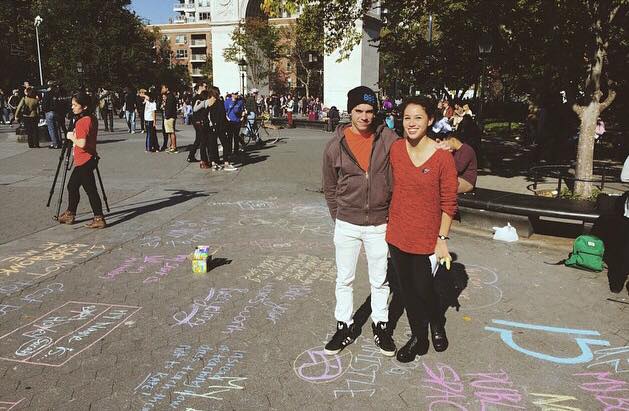
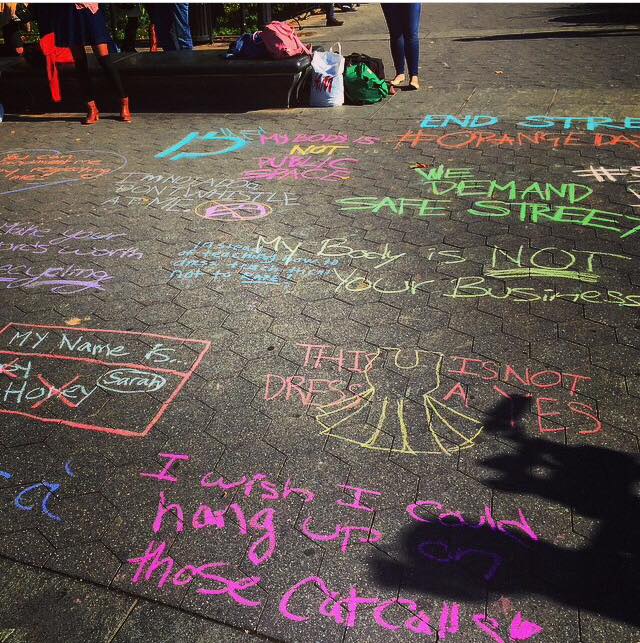
On the 25th of every month, the UNiTE Campaign hosts #OrangeDay to raise awareness about gender issues. Today, 25 October, focuses on “Safe and Empowering Public Spaces with and for Women and Girls.”

Stop Street Harassment held a chalk walk and flyering in New York City this afternoon for it, led by our co-social media manager Khiara. Thanks to her and to everyone who participated!


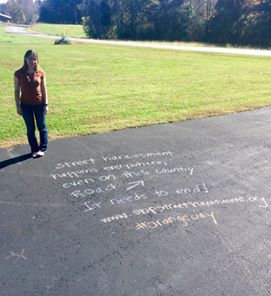
I’m visiting relatives on a farm in southern VA and wrote my own chalk message next to a road where I’ve been harassed while running during past visits.

I am so grateful the UN is bringing attention to this issue today to show it’s a serious global problem. And we at SSH are committed to speaking out about this problem today and every day.


Share

Filed Under: street harassment

« Previous Page
Next Page »

Share Your Story

Share your street harassment story for the blog. Donate Now

From the Blog

  • #MeToo 2024 Study Released Today
  • Join International Anti-Street Harassment Week 2022
  • Giving Tuesday – Fund the Hotline
  • Thank You – International Anti-Street Harassment Week 2021
  • Share Your Story – Safecity and Catcalls Collaboration

Buy the Book

  • Contact
  • Events
  • Join Us
  • Donate
  • Facebook
  • Instagram
  • Pinterest
  • Tumblr
  • Twitter
  • YouTube

Copyright © 2026 Stop Street Harassment · Website Design by Sarah Marie Lacy