• About Us
    • What Is Street Harassment?
    • Why Stopping Street Harassment Matters
    • Meet the Team
      • Board of Directors
      • Past Board Members
    • In The Media
  • Our Work
    • National Street Harassment Hotline
    • International Anti-Street Harassment Week
    • Blog Correspondents
      • Past SSH Correspondents
    • Safe Public Spaces Mentoring Program
    • Publications
    • National Studies
    • Campaigns against Companies
    • Washington, D.C. Activism
  • Our Books
  • Donate
  • Store

Stop Street Harassment

Making Public Spaces Safe and Welcoming

  • Facebook
  • Instagram
  • Pinterest
  • Tumblr
  • Twitter
  • YouTube
  • Home
  • Blog
    • Harassment Stories
    • Blog Correspondents
    • Street Respect Stories
  • Help & Advice
    • National Street Harassment Hotline
    • Dealing With Harassers
      • Assertive Responses
      • Reporting Harassers
      • Bystander Responses
      • Creative Responses
    • What to Do Before or After Harassment
    • Street Harassment and the Law
  • Resources
    • Definitions
    • Statistics
    • Articles & Books
    • Anti-Harassment Groups & Campaigns
    • Male Allies
      • Educating Boys & Men
      • How to Talk to Women
      • Bystander Tips
    • Video Clips
    • Images & Flyers
  • Take Community Action
  • Contact

Round-Up: Egyptian Protests & More

June 20, 2014 By HKearl

Two weeks ago, Egypt passed an anti-sexual harassment law that encompasses street harassment. Sexual violence in Egypt has ironically been in the news in the weeks since….because it’s happening so much, law or no law. Here’s a round-up of some of the articles on our radar:

New  York Times:

“There, in the middle of throbbing mass of celebrators reveling in President Abdel Fattah al-Sisi’s recent inauguration, a woman was stripped naked days ago and sexual assaulted by a mob of men. Her backside, as shown in a now-viral YouTube video, was bruised and blackened before her limp form was carted off to a waiting vehicle.

A TV host, who later said she was misunderstood, brushed off the assault as “fun.”

“They are happy,” she giggled. “The people are having fun.”

The video illuminated what almost every woman in Egypt already knew: Sexual assault and harassment is endemic regardless of a recent law that criminalized it. Ninety-nine percent of Egyptian women say they have experienced sexual harassment and 97 percent say men have lewdly touched them without permission. At least 250 cases of “mass sexual rape and mass sexual assault” occurred between late 2012 and January of 2014, a cadre of 29 women’s rights groups said following the recent Tahir Square attack.”

Albawaba:

“Egyptian Interior Minister Mohamed Ibrahim has ordered a new department formed to combat crimes of violence against women in collaboration with the ministry’s department of human rights, a security source told Al-Ahram Arabic news website.

The source said the new department will receive complaints of assaults or violence against women and take the needed legal action, especially in cases of mass assault.

Forces of the new department should be present in crowded places, public transportation, festivals, sporting matches and other places where women are especially exposed to assault.

The decision on the new department comes after cases of mass sexual attack in Cairo’s iconic Tahrir Square during celebrations of the presidency of Abdel-Fattah El-Sisi. The president himself and his wife visited one of the victims in hospital, where El-Sisi apologised to Egyptian women and vowed to take strong action to confront increasing violence against women.”

Middle East Eye:

“Protesters took to the streets of Cairo on Saturday to call for more protections against sexual harassment which is seen as a critical problem the country.

The marchers’ demands included stricter punishment for sexual offenders, and an end to sexual violence as well as discrimination against women.

The protest was sparked by the uploading of a recent video on YouTube which showed a mob of men surrounding a 19-year-old woman and gang raping her in Tahir Square where crowds had gathered to celebrate the election of the President Abdel Fattah al-Sisi earlier this month.

The protest movement is being spearheaded by Deena al-Shabba a student who set up the “Walk like an Egyptian Woman” campaign in response to the video.”

New York Times:

“Mohamed Ibrahim, the interior minister, said this week that he would create a new department to combat violence, including sexual assault and harassment, against women. But throwing men in jail must not be considered a panacea. Accountability is necessary, but we also need a societal shift that aims for both justice and respect for women. I know that will take a long time.

We must connect domestic violence, marital rape and female genital mutilation with street sexual violence and clearly call them all crimes against women. And just as we stood next to men to overthrow President Mubarak, we need men to stand alongside us now. Where is their outrage? Do they want to be synonymous with a hatred of women?”

Human Rights Watch:

“This is what the Sisi government and the new committee should do:

First, enact further legal reforms. The Penal Code needs a comprehensive, modern definition of rape and a clear definition of sexual assault. Article 267 of the Penal Code refers to rape as “whosoever has sexual intercourse with a female without her consent.” The term “rape” should include all forms of penetration without consent or in coercive circumstances that negate consent, including vaginal, anal, and oral penetration by any body part or by other instruments. Articles 268 and 269 of the Penal Code criminalize “indecent assault,” but do not define “indecent assault.” The government should also enact legislation on all forms of violence against women which address prevention of violence, and protection and support of survivors, including for instance domestic violence.

Second, formulate a comprehensive national strategy on violence against women to implement such legislation. This should include a monitoring mechanism to oversee implementation of legislation which reports to Parliament, and craft national protocols and strategies for all relevant ministries. The authorities should consult with Egyptian women’s rights groups and survivors when drafting the strategy and any new legislation, and coordinate with all components of society in a position to raise awareness. There should be a mechanism to fund implementation of the legislative reforms and strategy.

Third, the government needs to develop protocols on ensuring adequate medical and psycho-social support for victims of sexual assault. These should address confidentiality, dealing with trauma, referring victims for other services, and providing timely treatment. Training should be provided to police and medical officials on all such protocols and laws.

The authorities can look to the United Nations Handbook for Legislation on Violence against Women which sets out components on combating violence against women.

The Egyptian authorities are required to act—both under the Convention on the Elimination of All Forms of Discrimination against Women, to which Egypt is a state party, and Egypt’s new constitution, to protect “women against all forms of violence.”

Share

Filed Under: News stories

Will a fake phone number keep you safer?

June 15, 2014 By HKearl

Via Yahoo! Shine:

“The Rejection Line, and others like it, play kiss-off messages when would-be suitors call. The person (or people) behind a new fake number had a different idea: every text or call is responded to with a quote from feminist activist bell hooks, such as “Whenever domination is present, love is lacking.” hooks is a respected professor, writer, and critic whose best-known book is “Feminism Is for Everybody.” She often talks about the intersection of race, gender, and class issues.

The number, (669) 221-2651, was created by an unknown feminist activist and started gaining attention on Thursday. So far, the creator is remaining anonymous, but she has posted a message on Tumblr. “Next time someone demands your digits and you want to get out of the situation, you can give them this number,” she wrote. “Protect your privacy while dropping some feminist knowledge when your unwanted “suitor” calls or texts.”…

While it may seem mean to give a guy your number only to have it turn out to be a feminist prank, many women have spoken out about the importance of having a fake number. “Oftentimes men become more aggressive when women say they’re not interested,” Jessica Gonzalez-Rojas, executive director of the NLIRH, tells Yahoo Shine. “[Giving out a fake number] is a safety mechanism to avoid any aggressive behavior.”

Sadly, there are many examples of women fearing for their lives simply because they said “no” when a guy asked them out. In April, a Connecticut teen was murdered by a male classmate when she turned down his request to go to the prom with him because she already had a date. Last month, a California man named Elliot Rodger shot and killed six people and injured many others because he was angry about girls not wanting to date or have sex with him.

Holly Kearl, founder of the organization Stop Street Harassment, agrees that many women feel scared to say no to a man. “During one of the 10 focus groups Stop Street Harassment held as part of our new national study on street harassment, a woman in Brooklyn said, ‘I’ve seen a guy knock a girl’s head into a brick wall that she was leaning on behind them because she did not want to talk to him. She was gushing blood. It’s unacceptable.'” Kearl reports. “Sometimes the safest way for a woman to get out of a situation is, sadly, to humor the harasser and if he wants a phone number, to give him a phone number.”

Would you use this fake phone number? Do you think it will help? I love bell hooks but I think perhaps a more direct message to the harasser would sink in beter?

Share

Filed Under: News stories, Resources, Stories, street harassment

High School Student’s Embrodiery Project Raises Awareness

June 12, 2014 By HKearl

Muneera is a graduating high school student who reached out to SSH about her senior project that in part addressed street harassment. She agreed to an interview to share more about it.

SSH: Why did you choose to do a senior project that included street harassment? 

Muneera: Prior to this year, my awareness of sexual harassment was pretty limited. I knew the basic mantras we had learned growing up–don’t let anybody touch you but your parents or your doctor (a luxury, I learned through my project, many girls don’t even have), if you are uncomfortable tell an adult you trust– but I had assumed it was some horrible, distant tragedy that happened to a few, unfortunate, choice girls.

It wasn’t until I became familiar with feminism (through social media and my AP Literature class) that I began to notice something was amiss. “Shrinking Women,” a slam poem by Lily Myers especially pushed me to expect better for myself. I wanted to do a project that would be as important to others as the role of social media has been in my development in how I see myself and the world. The culture that enables street harassment functions entirely on a lack of respect, and I think it is so pervasive that women, including myself, begin to expect it, to make excuses for it.

Sometimes we even try to convince ourselves that we deserve harassment, when the only thing we “deserve” is the right to be respected and to feel safe. If people get anything out of my project, I hope it is the idea that you, your mother, your sisters, friends and neighbors all deserve better, and everyone can be a part of that shift.

SSH: How did you come up with the embroidery idea? Who did you ask to share their stories?

Muneera: Embroidery is something that has been on my radar as of late. I love the fairly recent trend of expressing some not-so-traditional values (Grrl power patches, anyone?) through a very traditionally “gender-safe” activity. Embroidery can be traditional or “confrontational,” and the versatility of it made it the perfect medium with which to express such a universal topic. I tried to embroider the pieces as if I were the girl in each story, which brought about the issue of gender roles and gender appropriated activities. For some girls, going home and working on something intricate may be comforting, for others, it may be too confining. Not only can limiting certain things to certain genders deprive someone of a positive coping mechanism, it can muffle what it is they are trying to express.

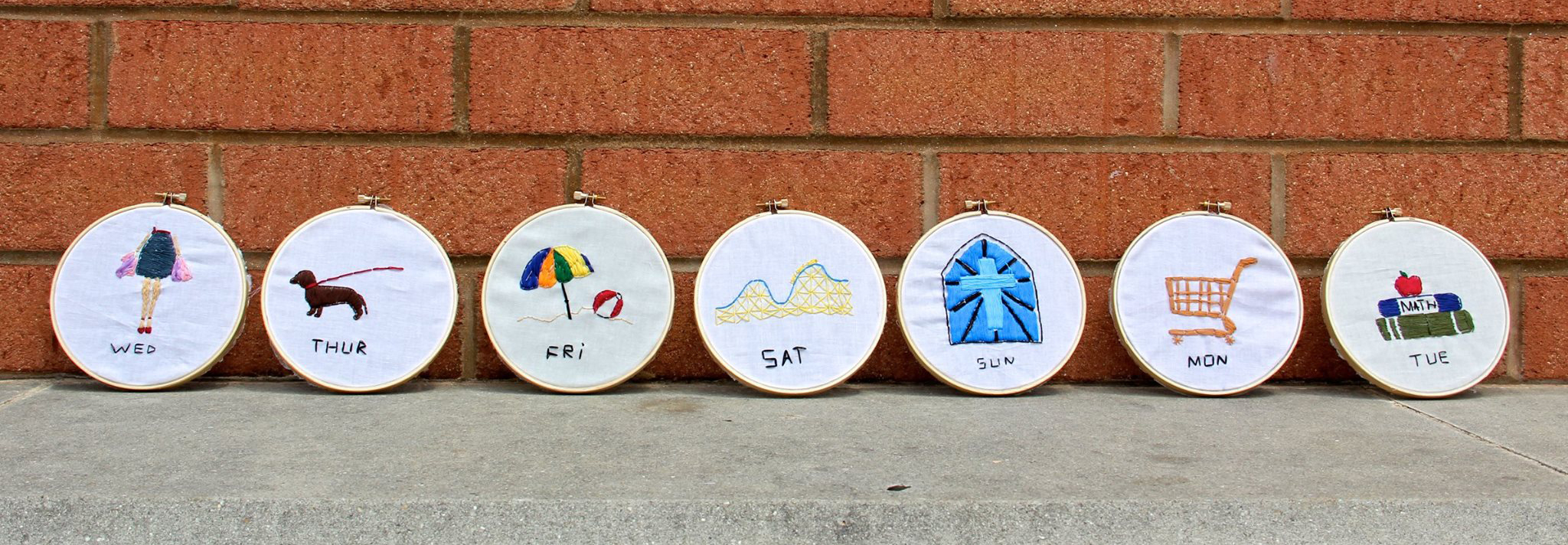
I started with just my friends and ended up branching out to many of my classmates. Not one of the approximately 30 female classmates interviewed did not have a story to tell. I narrowed it down to seven stories about quintessential summer activities; the days of the week are supposed to represent the last week of summer. Although I did not discriminate with gender when it came to who I asked, I was unable to find stories to share from any of my male classmates (which does not imply that it does not happen to men, but rather that either my classmates were fortunate or not comfortable sharing their stories with me). Since I did only have stories from people who identified as girls, I decided to do my project from that perspective, hence, Diary of a Girl.

SSH: Would you mind sharing another example of what one of the embroideries is of/the story behind it?

Muneera: Sure! Monday is about a girl walking to a grocery store. When she was crossing the street, multiple men at the stoplight got out of their car and began to make obscene gestures at her. Thursday is about being stalked while walking the dog. All seven experiences happened when the girls were considerably young, nine to fourteen at most.

SSH: What kind of response have you gotten to your project?

Muneera: Surprise. Always surprise. A few tears. I ask people to guess what the project is about from the front before flipping to the back, and you can almost see the flip switch in their head when it goes from quintessential last-week-of-school activities to something just as integral but much more insidious in any girl’s life. It’s not a fun thing to do, but it opens up a discussion about what happened and what can be done to prevent it again, which for now, is more than worth it.

Muneera is from Lowell, MA, a small city outside Boston. She currently resides outside of DC with her cat and plans to attend college in Richmond in the fall. The embroideries were photographed by Ariadna Rigol Prat

Share

Filed Under: Activist Interviews, Resources, Stories, street harassment

Meet Our Correspondents for June – Aug 2014!

June 5, 2014 By HKearl

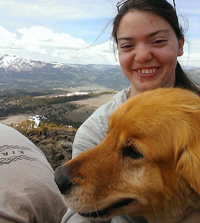
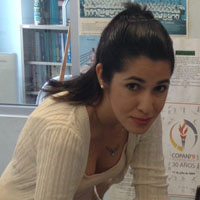
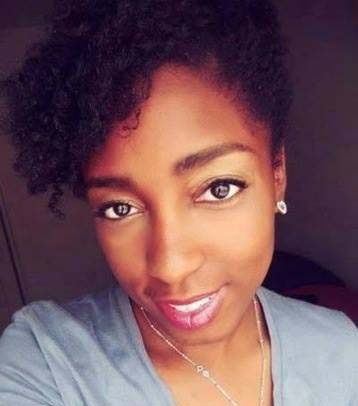
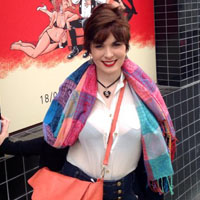
I am thrilled to announce our new Blog Correspondents cohort! These passionate women will spend the next three months writing about street harassment in their communities/countries, including various aspects of the problem and initiatives underway to see the end of street harassment. You will be able to read their blog posts here, starting next week.

Lorna M. Hartman, Spokane, WA, USA

Lorna has studied and written about rape and interpersonal violence since she was a teenager. In the 1990s she spent a year in Thailand as a teacher. She will never forget some of the things she experienced and saw Thai women experience that year. She has a bachelor’s in journalism, and this past June she graduated with a second bachelor’s in interdisciplinary studies, taking classes in journalism, computer programming and design. She is raising three young, kindhearted male allies. In between babies she served on the local rape hotline, answering calls and driving to emergency rooms to advocate for victims and connect them with resources they needed. She likes singing and playing music, traveling, and constantly learning new professional skills. Her favorite dessert is sticky rice with mango and coconut milk.

Kasumi Hirokawa, State College, PA, USA

Kasumi is a recent graduate from Penn State with a BA in journalism. Her writing has been published in Valley Magazine, City Weekend Shanghai, Penn State GeoBlog and Shanghai Daily. Kasumi speaks Japanese, English, Mandarin and Shanghainese. She has lived in Japan, China and the United States and visited many more including Morocco, UK and Thailand. She is obsessed with everything Mediterranean and Maghrebi. Her life goal is to visit every single country in the world and perhaps acquire a new language. In her spare time, she can be found either curling up with books, experimenting on a new recipe, hanging out with fellow feminists or belly dancing. You can follow her on Twitter, @kasumihrkw

Kirstin Kelley, Monterey, CA, USA

Kirstin is a Master’s Student in Nonproliferation and Terrorism Studies at the Monterey Institute of International Studies and a news editor at the Women’s International Perspective (The WIP). She discovered her passion for feminism while studying Psychology and Sociology and Anthropology at Green Mountain College. Kirstin has been a human rights and environmental activist since early childhood. Her research focuses on how otherwise normal people can treat others inhumanely, with a focus on stereotypes. Now she is most interested in how ecofeminism can pave the way to a better world, transactional feminism, and deep ecology. You can follower her on Twitter at @KirstinKelley1, where she regularly posts about human rights issues around the world.

Jessie Koerner, Denver, Colorado, USA

Jessie is a longtime human rights activist with a feminist focus. She’s been involved with multiple organizations, including founding the Amnesty International chapter at her undergrad, being an active participant in JustWorld International, and managing the social media accounts for the Global Women’s Network and winnovating.com, where she also blogs. In addition, Jessie will also be part of the Hollaback! fall class, and starting a chapter of the anti-street harassment group in Denver in late 2014. With an M.A. in Global Health and International Security, she’s committed to making this world a better place. Jessie is also an expert in cheap red wine, Pinterest crafts, and over-sharing on Twitter. Find her @pearlsandspurs there and on Instagram, or at pearlsandspurs.com, where she swears she’s going to start writing more.

Cristina del Mar Quiles, San Juan, Puerto Rico

Cristina es una periodista y productora de noticias de San Juan, Puerto Rico. Posee un bachillerato de la Universidad de Puerto Rico, Recinto de Río Piedras, donde también completa su maestría en Consejería. Ha trabajado como reportera para medios impresos y digitales. Actualmente, es una de las productoras de Hoy en las Noticias de Radio Universidad de Puerto Rico. Su interés en luchar contra el acoso callejero comenzó durante sus años como estudiante universitaria, cuando lo sufrió, más que nunca, mientras caminaba desde su hospedaje hasta el campus. Le apasionan los temas relacionados con la justa representación de la mujer en los medios, la alfabetización mediática y la educación. Además, disfruta de viajar y de la jardinería. Cree en un Puerto Rico y en una sociedad entera libre de prejuicios, donde las oportunidades sean accesibles para todas las personas, sin importar su clase, raza o género. Puedes seguirla en Twitter en @cristinadelmarq.

Cristina is a journalist and a radio producer. She holds a Bachelor’s degree in Journalism and is finishing her Master’s in Counseling, both from the University of Puerto Rico, Río Piedras Campus. She’s worked as a reporter for print and web media and now she is news producer at Radio Universidad de Puerto Rico. Her interest in fighting sexual and street harassment started through personal experience as a student living at one of the main urban areas in San Juan, where she walked everyday from home to college campus. She’s passionate about the equal representation of women in media, education, media literacy, storytelling, traveling and gardening. She envisions a Puerto Rico and an entire society where opportunities are available for everyone, despite the class, race or gender. Follow her on Twitter @cristinadelmarq.

Brittany Oliver, Baltimore, MD, USA

Brittany is a recent graduate of Towson University and holds a B.S in Mass Communications with a focus in Public Relations. She is an advocate and thought leader for civic and societal issues related to feminism, social justice and civil rights. Brittany works in the non-profit communications sector and supports local anti-street harassment advocacy through Hollaback! Baltimore. She is also an organizer for One Billion Rising 2014 and is an avid volunteer within in community. Her goal in writing for SSH is to educate people about the harassment that takes place on the streets of Baltimore, which she’s experienced her whole life. Her offline activities include salsa dancing, arts & crafts, reading and attending local community events. She blogs at brittuniverse.wordpress.com and publicly rants on Twitter, @btiara3.

Dearbhla Quinn, Dublin, Ireland and Brussels, Belgium

Dearbhla (pronounced Der-vla) loves the four ‘Fs’ -Food, film, fiction and feminism. She graduated from BESS (Business and Sociology), in Trinity College Dublin, last year. Since then she’s been deciding what to do with her life, and that journey has brought her to Brussels, Belgium where she is in the midst of a think-tank internship working in the areas of gender, equality and employment. On the weekends she’s a tour guide and enthusiastic wine and Belgian beer drinker. She’s decided to combine here love of books and feminism into the novel idea of, during June, reading exclusively women authors. Feel free to join #WomenAuthorMonth and tweet your experience. You can find her discussing her life, politics and the four F’s on Twitter @imoshedinheels and her blogs. Au Revoir!

Corina Thorose, Melbourne, Australia

Corina is a journalist who is currently in a Masters’ program in Professional Writing. In addition to writing for Stop Street Harassment, she volunteers with White Ribbon Australia and the Women’s Domestic Violence Crisis Service. Her passions include music, literature and pyjamas, and she spends her free time reviewing theatre and film. Corina’s creative and critical work can be found at Thehumbleopinion.me and her women’s opinion pieces can be found at Theirownbells.com. You can also view her articles on social media: @BrandosBride, www.facebook.com/theirownbells, instagram.com/theirownbells.

Suzanne Vyborney, Oakland, CA

Born in South Korea and raised in Northern California, Suzanne studied philosophy and environmental ethics in college and is currently plotting ways to make the corporate world more socially responsible. Often found ranting about the patriarchy, racism, and the prison industrial complex, what Suzanne loves most about her social justice work is connecting with and being inspired by her amazing community in Oakland and beyond. Suzanne is also an editorial board member of the Ella Baker Center for Human Rights’ blog, Ella’s Voice, the special events chair for the brand new Oakland chapter of the national progressive leadership training institute New Leaders Council, and a volunteer for the nationally renowned anti-street-harassment campaign, Stop Telling Women To Smile. In between, Suzanne can be found making mosaics, working on social justice-infused comedy sketches, sending many an unsolicited cat video and recovering from brunch. You can follow her on Twitter @zantropa.

Share

Filed Under: correspondents, street harassment

Street Harassment Documentary Premiers TODAY!

June 5, 2014 By HKearl

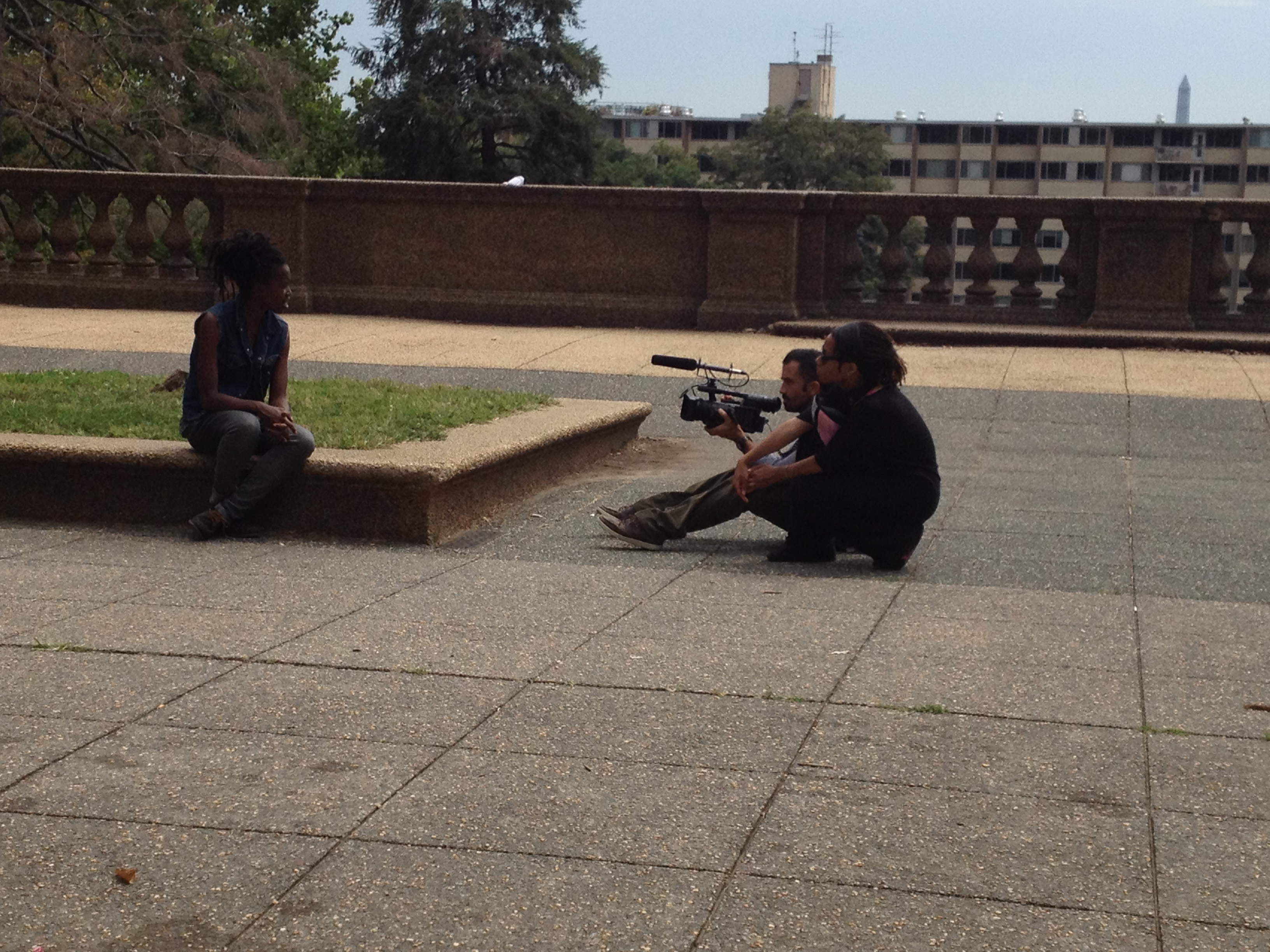
One of our long-time supporters (and a role model for me) Dienna Howard has spent the last year filming and editing a documentary about street harassment. She’s worked extremely hard to learn all of the skills and components necessary to make a documentary and I’m so proud of her!

Her documentary premieres TODAY on Arlington Independent Media!

You can live stream it here : https://www.arlingtonmedia.org/programming/live-stream

Thursdays 6:30 p.m.
Saturdays 3 p.m.
Sundays 8 a.m. (Starting 6/15 due to another show being aired in that slot on 6/8)

If you live in Arlington, Virginia, you can watch it on tv, too. These are AIM’s channels: Comcast-69 | Verizon-38

Share

Filed Under: Resources, street harassment

« Previous Page
Next Page »

Share Your Story

Share your street harassment story for the blog. Donate Now

From the Blog

  • #MeToo 2024 Study Released Today
  • Join International Anti-Street Harassment Week 2022
  • Giving Tuesday – Fund the Hotline
  • Thank You – International Anti-Street Harassment Week 2021
  • Share Your Story – Safecity and Catcalls Collaboration

Buy the Book

  • Contact
  • Events
  • Join Us
  • Donate
  • Facebook
  • Instagram
  • Pinterest
  • Tumblr
  • Twitter
  • YouTube

Copyright © 2026 Stop Street Harassment · Website Design by Sarah Marie Lacy