• About Us
    • What Is Street Harassment?
    • Why Stopping Street Harassment Matters
    • Meet the Team
      • Board of Directors
      • Past Board Members
    • In The Media
  • Our Work
    • National Street Harassment Hotline
    • International Anti-Street Harassment Week
    • Blog Correspondents
      • Past SSH Correspondents
    • Safe Public Spaces Mentoring Program
    • Publications
    • National Studies
    • Campaigns against Companies
    • Washington, D.C. Activism
  • Our Books
  • Donate
  • Store

Stop Street Harassment

Making Public Spaces Safe and Welcoming

  • Facebook
  • Instagram
  • Pinterest
  • Tumblr
  • Twitter
  • YouTube
  • Home
  • Blog
    • Harassment Stories
    • Blog Correspondents
    • Street Respect Stories
  • Help & Advice
    • National Street Harassment Hotline
    • Dealing With Harassers
      • Assertive Responses
      • Reporting Harassers
      • Bystander Responses
      • Creative Responses
    • What to Do Before or After Harassment
    • Street Harassment and the Law
  • Resources
    • Definitions
    • Statistics
    • Articles & Books
    • Anti-Harassment Groups & Campaigns
    • Male Allies
      • Educating Boys & Men
      • How to Talk to Women
      • Bystander Tips
    • Video Clips
    • Images & Flyers
  • Take Community Action
  • Contact

A Grandpa Against Harassment

October 10, 2013 By HKearl

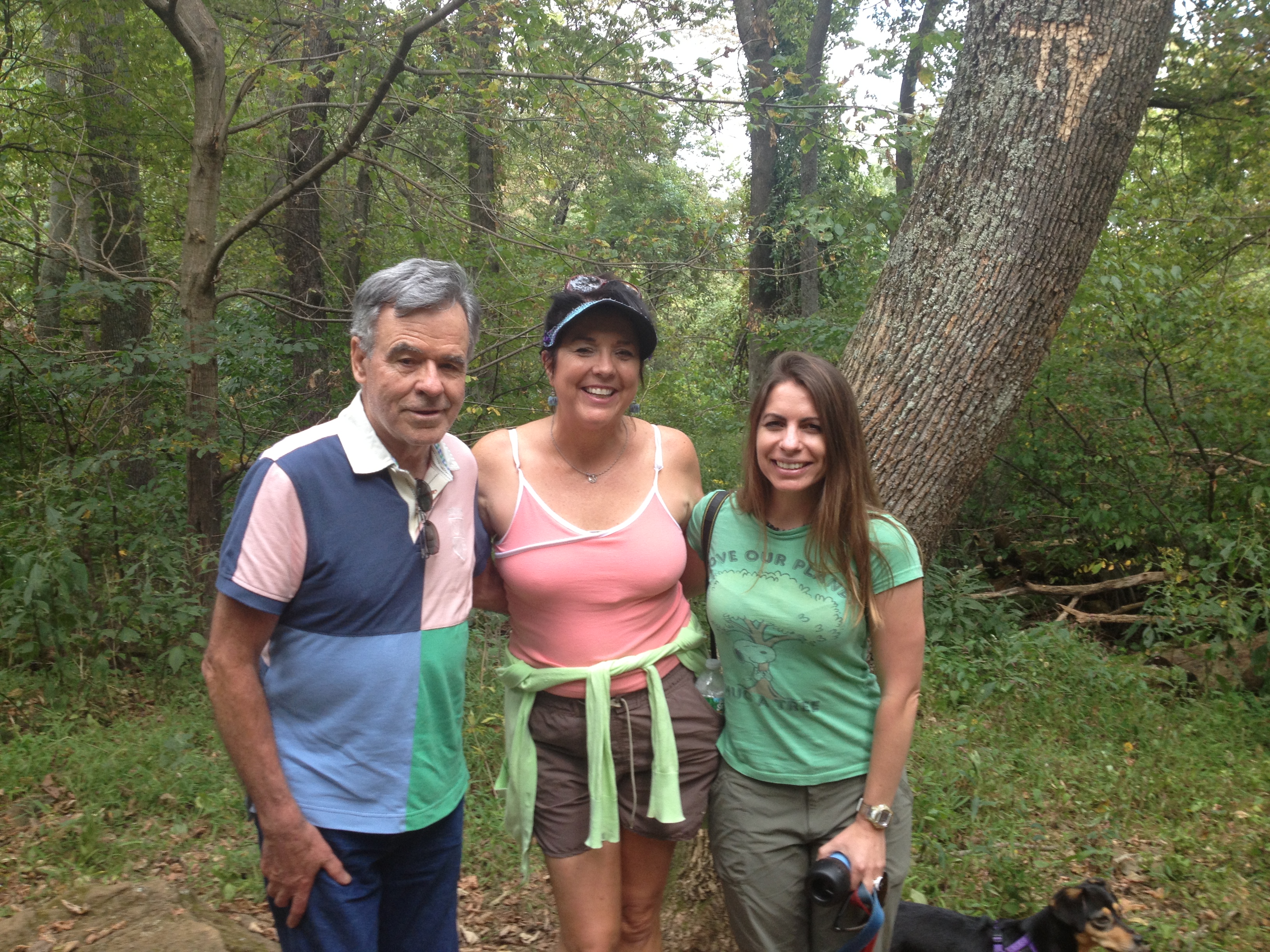
Three generations of people speaking out against sexual harassment! Gerald Weinheimer, Beckie Weinheimer, Holly Kearl

[Note: I forgot to post this two weeks ago when I wrote it!]

My 84-year-old grandpa is visiting me and he gave me permission to share this on the blog.

One night when he was in college in Utah, he was invited to the girls’ dorm. He went into the dorm cafeteria with a friend and there were about 300 girls there and he was the only guy. He had asked ahead of time if any other guys would be there and his friend said usually there were 4 or 5 men, but it turned out that there were none there that night.

He felt uncomfortable as the only man there and then he can still remember one woman from Wyoming whistling at him and saying things like, “Hey good looking.”

He felt really uncomfortable and even though he knew they wouldn’t hurt him, he hated it.

That experience helped him better understand how girls and women feel when they’re harassed and it’s stuck with him for more than 60 years.

He is an ally in working to end harassment.

Share

Filed Under: Stories, street harassment

Chicago — Fun Event on Sunday!

October 10, 2013 By HKearl

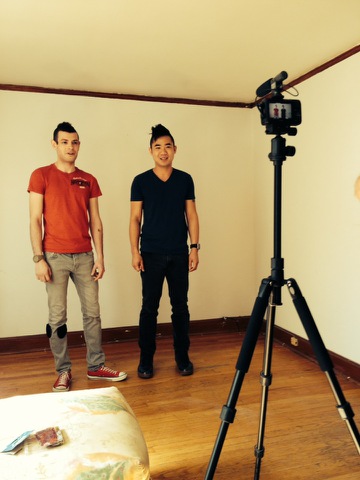
Chicago SPS Mentoring Site Filming

Dear Chicago Supporters,

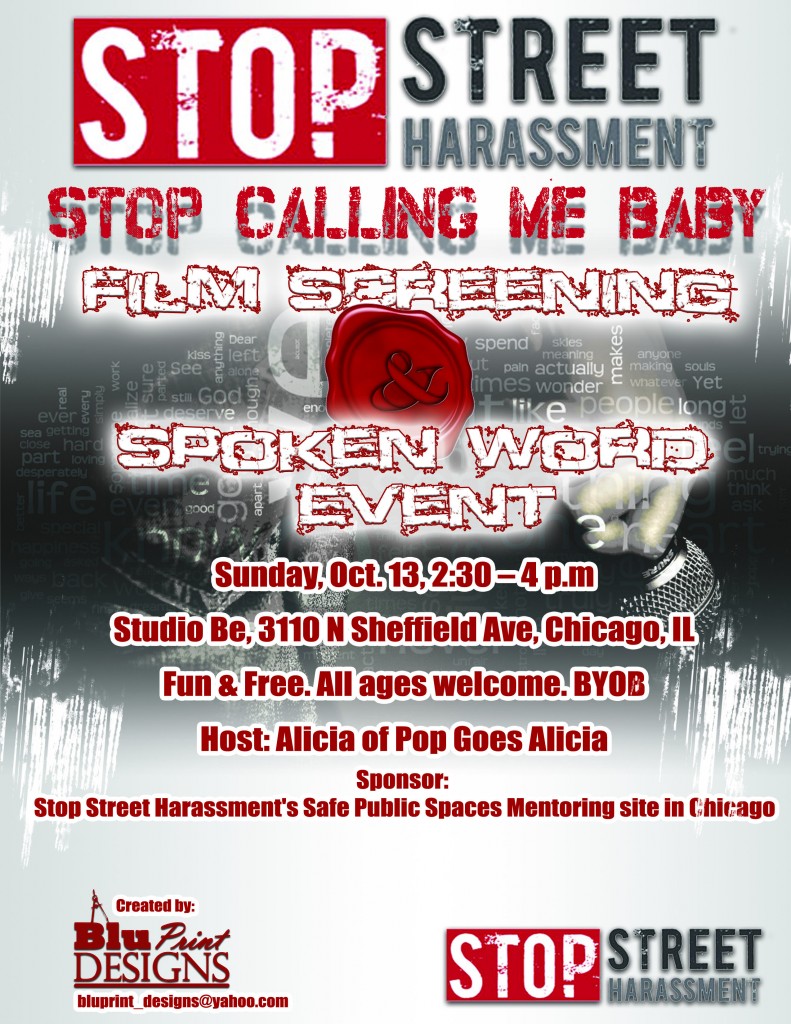
If you’re free on Sunday afternoon, you won’t want to miss our Safe Public Spaces Mentoring Site’s event that includes comics, spoken word, and the premiere of their film which is a parody of dating commercials.

Three couples (including one gay couple) pretend they met through street harassment. Check out a photo from the film shoot —>

Please RSVP and spread the word about the event!

Shout-out to site lead Phaydra Babinchok for all of her hard work and to BluPrint Designs for volunteering their talents to create the flyer.

Share

Filed Under: Events, SSH programs

Street Harassment in Giza

October 9, 2013 By HKearl

Thanks to a viral video showing street harassment in Giza, a conversation about street harassment – and sexual harassment more generally – is happening.

Via Al-Monitor:

“There are many untold stories about sexual harassment in Gaza, home to 1.7 million Palestinians. In a conservative society such as Gaza’s, female victims of sexual harassment seldom speak out, and when she does, society usually places the blame on her. Although Hamas-affiliated media hid Abu Salama’s face due to such concerns, she bravely disclosed her identity on her Facebook page, acknowledging that she was the person videotaped. “I’m not the one who should feel ashamed, only him and everyone like him,” read Abu Salama’s post….

“A 24-year-old teacher who spoke on condition of anonymity said that no matter how much people in Gaza try to deny the existence of sexual harassment in their community, every single girl in Gaza has experienced some type of harassment.

“I get verbally harassed many times every single day. I even was physically harassed many times by passengers while using public taxis,” she said. The teacher admitted that she never acted against those who abused her in taxis, fearing how the other passengers might react.

“I don’t expect anyone to stand by me. All they will do is to look at me as a bad girl and start gossiping. I don’t want this.””

Share

Filed Under: News stories, street harassment

Don’t Call Me a Faggot Campaign

October 8, 2013 By HKearl

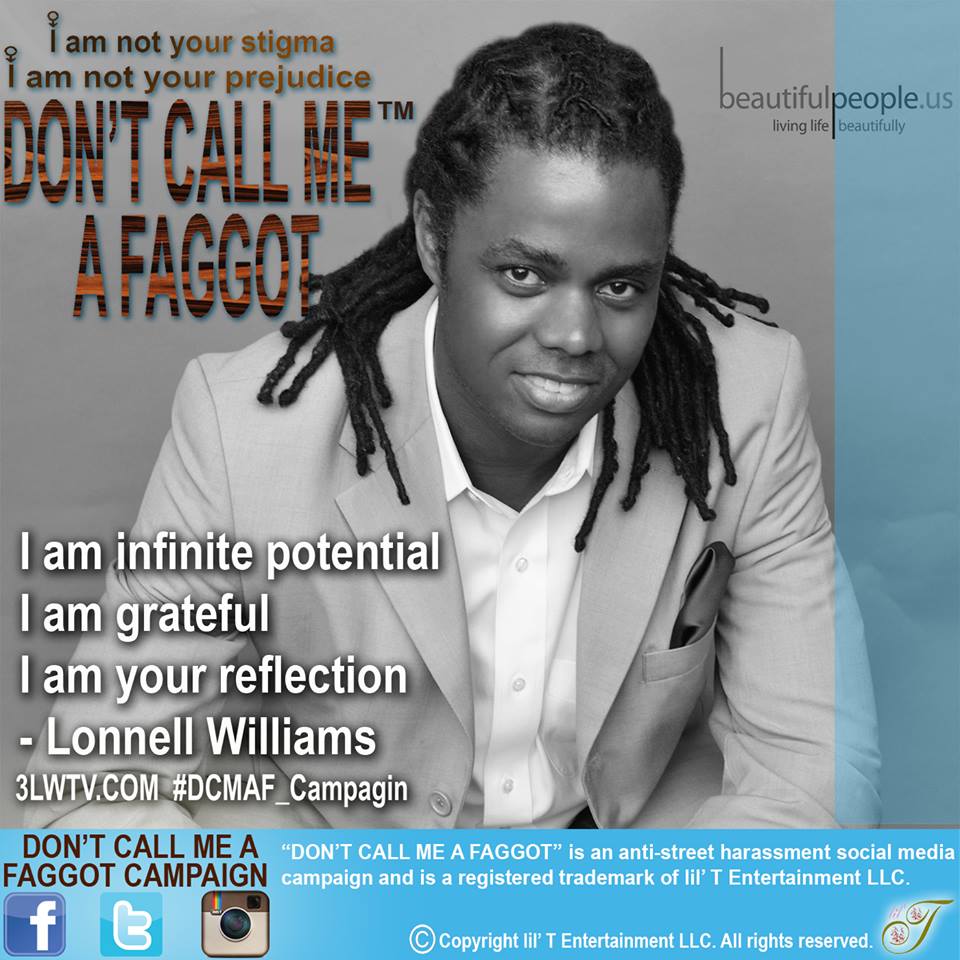
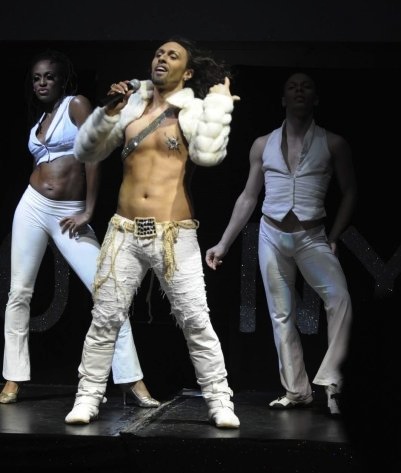
International Pop Recording Artist Tony Enos has a new anti-street harassment campaign! He kindly agreed to an interview to tell SSH readers all about it.

SSH: You’re tackling street harassment with a new campaign, what is that campaign?

TE: The campaign is called “Don’t Call Me A Faggot” and it’s an anti-street harassment campaign. Each person featured in the campaign ads states 3 things that define them as a person. In a sense saying, “I’m not define by your ignorance or your stereotypes. In fact it has nothing to do with me. THESE are the things that define me.”

SSH: What inspired the campaign?

TE: I endured bullying and harassment as a kid. Just walking down the street in my own neighborhood was a nightmare. 29 years later i’ts still happening to out LGBTQ youth and it’s unacceptable. Everyone is represented in this campaign but in my heart, this is for them (our youth).

SSH: What do you hope to achieve?

TE: I hope that the LGBTQ Community and youth will draw strength from this campaign and feel empowered to stand up against stereotypes. I hope that they’ll adopt this campaign as their own, and I hope that it will cause our heterosexual counter parts to rethink their actions and words.

SSH: How can people get involved?

TE: Anyone can get involved by liking the Facebook page, following us on Twitter and Instagram, and submitting a photo of themselves they authorize the campaign to use, their name and profession and 3 things that they “are” or that they feel define them (to lilt_entertainment_llc@yahoo.com).

Thank you!

Tony Enos is hailed as “the most exciting performer to come out of Philadelphia since Patti LeBelle” by gbmnews.com. His albums have sold units around the world and his electrifying live performances have made him one of the most sought after Entertainers in “out” music. He is the CEO of lil’ T Entertainment LLC. Visit him at www.tonyenos.com.

Share

Filed Under: street harassment

Part 1: Redefining Rape and Street Harassment: 1880-1920s

October 3, 2013 By HKearl

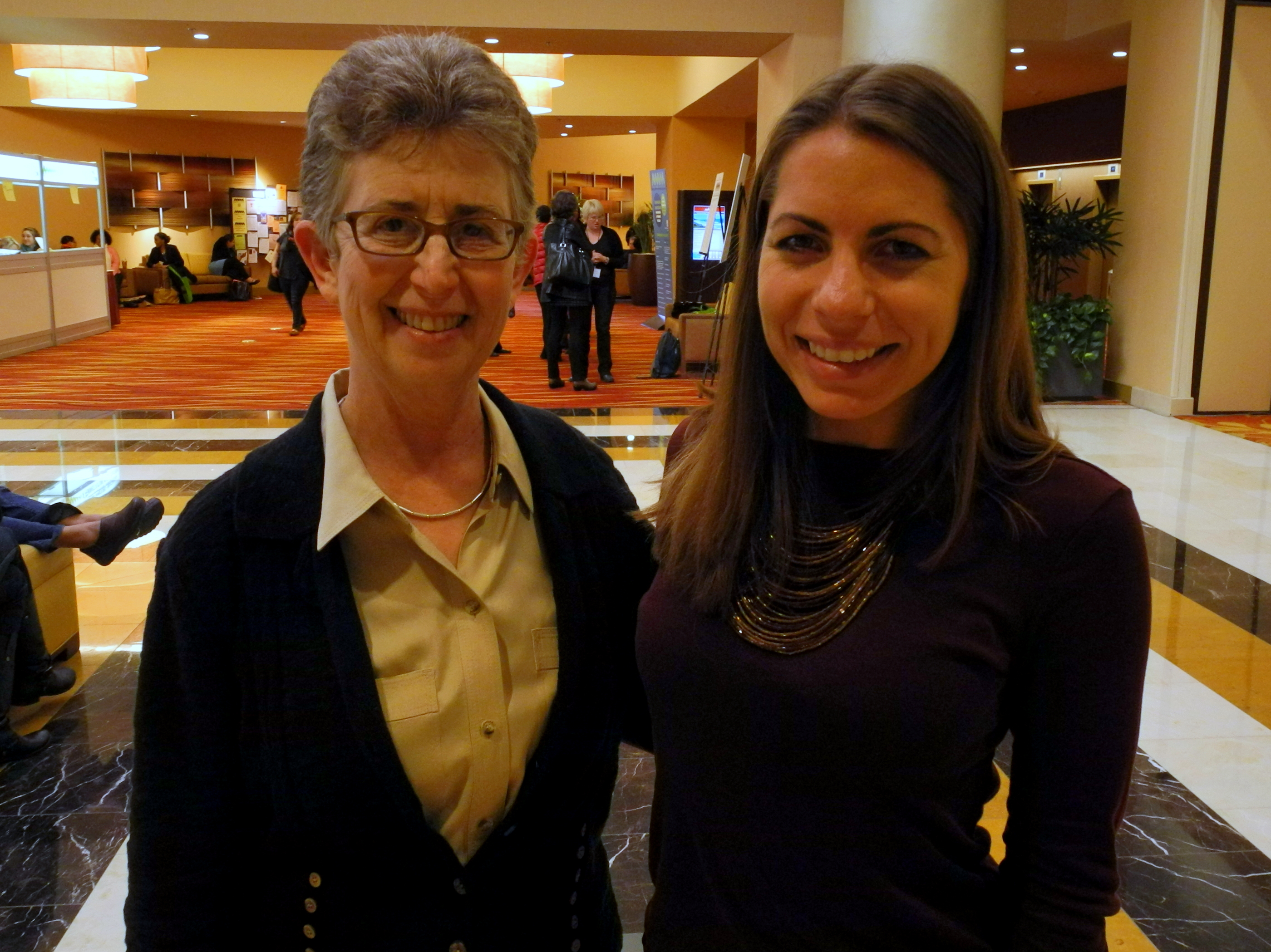
I loved meeting Dr. Freedman in CA last year at the National Women’s Studies Association Conference!

In college, I double majored in history and women’s and gender studies, and I also regularly faced street harassment when I left campus. I had no language to talk about it at the time and I often changed my life to try to avoid it.

Fast forward to present day, and as a history and women’s studies nerd and a street harassment activist, I was so thrilled to meet Stanford University Professor Estelle Freedman last year at the National Women’s Studies Association Conference and hear her presentation about street harassment in the 1880s to 1920s, based on a chapter in a forthcoming book.

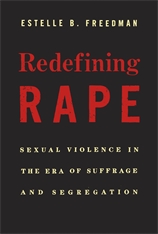
That book is now out, Redefining Rape: Sexual Violence in the Era of Suffrage and Segregation (Harvard Press). While I bought her book because of the street harassment chapter, I read it cover-to-cover and literally underlined and made margin notes on every page.

In approachable language, she examines women’s (and their male allies’) efforts to strengthen laws against rape, marital rape, and incest, and the parallel and intersecting movements by persons of color (and their white allies) to gain more legal rights and end lynching. I highly recommend her book if you’re interested in ending sexual violence, seeing racial equality, and if you care about social justice in general.

She graciously agreed to a phone interview to discuss the mashers chapter, and that is found in Part 2. First, I want to share the overall themes of her book and their lessons for today.

Book Themes:

White men fear losing power:

A core theme of her book is white men’s fear of losing power, be that sexual power or political power. There were white men who openly fought against the passage of stronger rape and incest laws and laws that raised the age of consent. They used their position as the primary lawmakers, judges, and jury members to make decisions that best served their interests, and used their roles as journalists, newspaper owners, physicians and scholars to try to sway public opinion toward maintaining their rights at the expense of all women and all persons of color. White men were even faster to prosecute men of color for same-sex relationships than they were white men, allowing white men who had same-sex relationships (consensual or non-consensual) to rarely face consequences, even in states where those sex acts were illegal.

As one way to keep sexual power, some white men portrayed women and children (of both sexes) as unreliable, seductive, and sexually promiscuous. They also used “scientific” arguments similar to today for dismissing rape claims. For example, in 1862, Dr. Edmund Arnold testified in court that it was very improbable that pregnancy could result from rape because in “truly forcible violations…the uterine organs cannot well be in a condition favorable to impregnation.” In 1913, Dr. Gurney Williams wrote that if women just crossed their knees, they would be able to prevent rape.

Racial justice and sexual violence are connected:

Another major book theme was how racial justice and sexual violence are intertwined. For a long time, white men wrote laws in such a way that in some states, women of color could not legally be raped; they were seen as always sexually available. This made life extremely unsafe for them, especially in public places where white (and sometimes black) men could harass them and attack them and rarely face any consequences. Similarly, for decades, rape was called “The Negro Crime,” and classifying African American men as the rapists of white women gave white people the justification for lynching them and restricting their legal rights. Tactics for fighting lynching included showing that African American men were not sexual predators, and strategies for improving rape laws meant making sure women (and men) of all races were protected.

Lessons for Today:

Today, the legacy of racial injustices live on: women of color experience higher rates of sexual violence than white women and many men of color are falsely locked up for sex crimes they did not commit. The legacy of victim-blaming sexual assault survivors and debates over “legitimate rape” also sadly continues on.

The two most important lessons I took away are that we need:

1. Racial Allies. Throughout Redefining Rape, white women rarely addressed the sexual violence black women faced, especially at the hands of white men, nor did many of them join forces with African Americans to increase their legal rights or stop lynching. This sadly continues today. Most white people think racism isn’t a problem and so they don’t work to address it (and obviously many of us are perpetrators of racism), even within the feminist movement. The #solidarityisforwhitewomen hashtag on Twitter a few weeks ago made this clear. It was an online discussion led by women of color that called out white women for ignoring and silencing of women of color’s voices and issues within the feminist movement. This is something I’m personally working on as a white ally.

Racism and sexism and sexual violence are all intertwined. Those who are most marginalized and impacted need to have their voices heard; their experiences matter the most if we truly want to strive for equality.

2. Non-White Male Leaders: It is imperative to have more women of all races and men of color in leadership roles and positions of power. Until that happens, white men’s views, interests, and rights will continue to take precedent over everyone else’s, even if it is in lesser ways than 100 or 200 years ago. It will be hard to eradicate racism, sexual violence, street harassment, and victim-blaming until our leaders truly reflect all people, not just one segment of the population.

Part 2:

As Dr. Freedman conducted the research for her book, she kept coming across the term “mashers” and when she looked into it more, she realized these were street harassers. There were so many references to them during this time period that she devoted a whole chapter to the subject. Read my interview with her in Part 2.

DRAWING:

Dr. Freedman donated a copy of her book (value $35) for me to give away in a drawing! Because of the cost of shipping the heavy book internationally, I am limiting this to people with U.S. addresses.

There are two ways to enter your name into the random drawing, you can:

1. Tweet out an article or resource from the SSH blog and add @stopstharassmnt #Mashers to it.
2. Submit a street harassment story or street respect story to the blog (include an email address and note in the “other” field you want to be included in the drawing).

I will hold the drawing on October 18.

Read an excerpt of the book on Salon.com | Read an interview on the Hairpin. | Read a review in the SF Chronicles

Share

Filed Under: Activist Interviews, SH History, street harassment Tagged With: Estelle Freedman, mashers, Redefining Rape

« Previous Page
Next Page »

Share Your Story

Share your street harassment story for the blog. Donate Now

From the Blog

  • #MeToo 2024 Study Released Today
  • Join International Anti-Street Harassment Week 2022
  • Giving Tuesday – Fund the Hotline
  • Thank You – International Anti-Street Harassment Week 2021
  • Share Your Story – Safecity and Catcalls Collaboration

Buy the Book

  • Contact
  • Events
  • Join Us
  • Donate
  • Facebook
  • Instagram
  • Pinterest
  • Tumblr
  • Twitter
  • YouTube

Copyright © 2026 Stop Street Harassment · Website Design by Sarah Marie Lacy