• About Us
    • What Is Street Harassment?
    • Why Stopping Street Harassment Matters
    • Meet the Team
      • Board of Directors
      • Past Board Members
    • In The Media
  • Our Work
    • National Street Harassment Hotline
    • International Anti-Street Harassment Week
    • Blog Correspondents
      • Past SSH Correspondents
    • Safe Public Spaces Mentoring Program
    • Publications
    • National Studies
    • Campaigns against Companies
    • Washington, D.C. Activism
  • Our Books
  • Donate
  • Store

Stop Street Harassment

Making Public Spaces Safe and Welcoming

  • Facebook
  • Instagram
  • Pinterest
  • Tumblr
  • Twitter
  • YouTube
  • Home
  • Blog
    • Harassment Stories
    • Blog Correspondents
    • Street Respect Stories
  • Help & Advice
    • National Street Harassment Hotline
    • Dealing With Harassers
      • Assertive Responses
      • Reporting Harassers
      • Bystander Responses
      • Creative Responses
    • What to Do Before or After Harassment
    • Street Harassment and the Law
  • Resources
    • Definitions
    • Statistics
    • Articles & Books
    • Anti-Harassment Groups & Campaigns
    • Male Allies
      • Educating Boys & Men
      • How to Talk to Women
      • Bystander Tips
    • Video Clips
    • Images & Flyers
  • Take Community Action
  • Contact

End of August News Round-Up

August 20, 2015 By HKearl

Here are the articles I’ve been reading over the past two weeks!
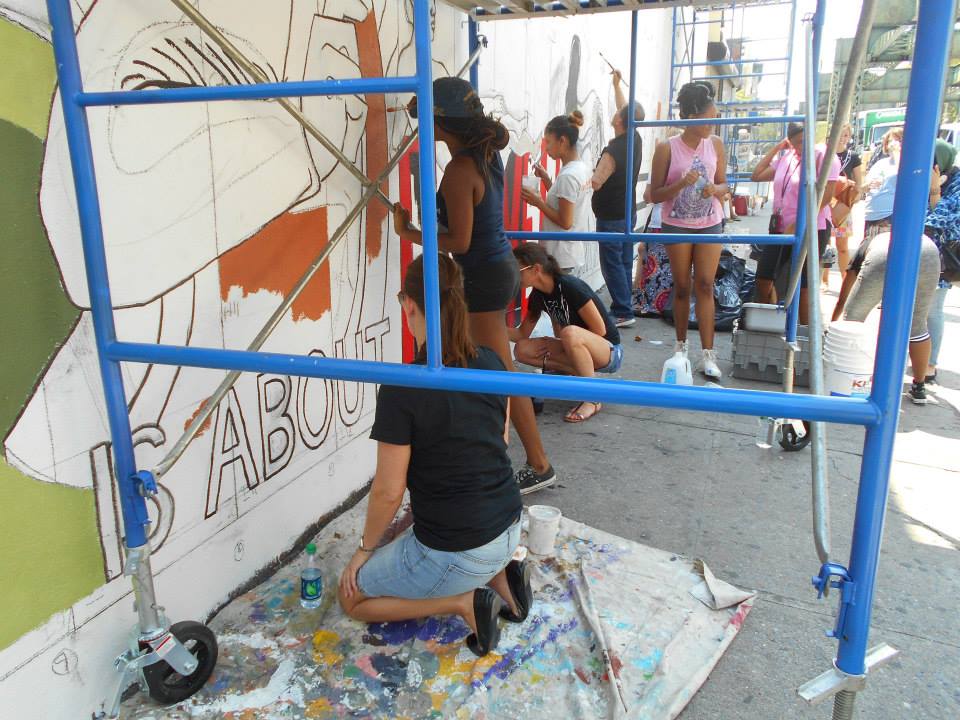
Aug2015BrooklynTeenageGirlMural

Check out the photos of teenage girls in Brooklyn as they create a mural depicting street harassers as zombies!

BK Magazine: “Catcallers Turn into Zombies in this Anti-Street Harassment Mural”

“Painted by 20 young women, ages 15 to 21, the mural depicts catcallers as drooling packs of undead, saying things like “God bless those legs” and “Hey yo, ma” and “I told you to smile.” They stagger towards frightened women–both female figures from art history and artists’ self-portraits–saying “Stop” and “I object to objectification.”

Perhaps predictably, the teenagers say they’ve been constantly getting sexually harassed while painting this mural fighting sexual harassment. “Every day we always get catcalled, or there’s always comments, people whistling at us,” Violet Ponce, a 17-year-old from Bushwick, told the Bed-Stuy Patch…

“We wanted to show that the feeling of being catcalled or when someone says something disturbing, it causes fear,” Danielle McDonald, an art teacher overseeing the project along with assistant artist Jazmin Hayes, told the Brooklyn Paper. “So that’s where the zombies came from–something scary and mindless.” They cite feminist activist graphic art as inspiration, from political posters and comic books to works by the likes of Guerrilla Girls and Jenny Holzer.”

Guardian: “I’m tired of being kind to creepy men in order to stay safe”

“We’ve all been bothered by persistent guys who pester us relentlessly, believing themselves to be entitled to our company and more. We’re under pressure to be polite and manage their expectations. Ignored men are angry men, and it’s horrible to sit silently while a man shouts at a packed carriage: “She thinks she’s too good to talk to me!”

When it comes to responding to harassers, you’re damned if you do and damned if you don’t – and sometimes it gets to the point when dealing with entitled idiots is so exhausting that you feel safer staying at home…

[We need] to create spaces where all women feel they are safe to look their harasser in the eye and say: “Leave me alone. I do not want to talk to you.” Because I’m tired of being kind to the creeps in order to stay safe. And I don’t want to stay in.”

BBC: “Struggling with Sexism in Latin America”

“Whether it is honour or so-called machismo, the end result is the same. Women become second-class citizens…

Since moving back to Latin America, I have lost count of the times I have been asked what it was like as a woman living in the Middle East. “It must have been so hard,” people say. To be honest, living in cities such as Mexico City can often feel harder.

While many of my female friends have smiled knowingly at my response, others flatly reject it. “Women here are free,” said one. “What’s wrong with being complimented in the street? They are appreciating our beauty,” said another.

If your “freedom” on the way to work is curtailed by threatening sexual comments, and you are made to feel like an object and not a human being, I question whether that is true liberty.”

Vancouver Observer: “An ‘unwanted kiss’ may seem innocent but has larger consequences”

“Early on the Friday (Aug. 7) evening of the Squamish Valley Music Festival, Megan Batchelor was reporting live — sounds like a fun assignment, right? Well, maybe for a man.

As Batchelor was talking about the threat of rain, a young man ran up behind her, planting a kiss on her cheek. She was clearly startled; one can imagine how it might feel for a strange man to come up behind you, aggressively touching or grabbing you, unannounced. Even if you can’t, Batchelor said the incident “rattled” her and she decided to file a report with the Squamish RCMP…

This kind of behaviour serves a purpose and it is to put women in their place. To say, ‘You don’t belong here and while you can play at ‘gender equality,’ we still don’t respect you.’ It intends to humiliate and demean, but even more than that: It is a threat. These public displays of misogyny and harassment send the message to all women that they aren’t safe in public places and that no matter what they do, they are always at risk of sexual assault….

There need to be real consequences and men need to be held accountable for their behaviour. If we continue to brush it off or to tell women to just ‘deal with it’ we are saying that the behaviour is okay and, in doing so, are actively working against gender equality and women’s safety.”

Vice News: “Indian Teenager Dies After Setting Herself on Fire Over Alleged Sexual Harassment”

Trigger Warning. Another life senselessly ended. May she rest in peace.

‪#‎India‬: “The girl was Dalit, from the lowest hierarchy of India’s caste system. In a statement that she gave late on Monday to a judicial magistrate, she accused four local boys of stalking and tormenting her relentlessly over recent weeks with indecent remarks and lewd conduct. She endured the mistreatment along the roughly six miles that she walked daily to school.

“I couldn’t bear the humiliation. They crossed all limits,” she reportedly told the magistrate. “They did things I can’t even share with you.”

Daily Life: “Alicia Keys says she developed tomboy style to avoid street harassment from men”

“To this day, Keys says, each morning she wonders what she can wear that won’t draw too much attention when she goes grocery shopping or to pick her son Egypt.

But, the other day, she says, she had a realisation, wondering “Why are you choosing to be that person?”

She listed all the things she no longer wants to feel ashamed to be.”

Morocco World News: “Moroccan Women Affected by Sexual Harassment Share Their Views”

“Women share their stories and views with ‪#‎streetharassment‬, including Fouzia R., a high-school student from Casablanca who says: “In my opinion, men harass women because they have some problems with their self-confidence. I once talked to my elder brother about this and he told me, ‘I would never run after a woman on the street that clearly feels uncomfortable with the situation, nor would I give compliments to a stranger. I have pride.’

So, I think that if men would think more like my brother, sexual harassment in Morocco could be lessened. Parents have to teach their sons respect and values at ayoung age… I guess a lot of parents don’t have those conversations with their sons in their early stages of puberty, in regards to sex, women and respect…”

Wicked Local: “The reality of ‘on street harassment'”

“This summer I am interning at the Center for the Study of Sport in Society at Northeastern University. In a recent project, we discussed the lagging participation and retention rates of middle and high school female athletes nationwide. Although our sports culture is slowly becoming a more inviting space for young women, there are still many barriers. Street harassment is just one of them — imagine being 14 again, still adjusting to your body as it rapidly moves through puberty, trying to train it to compete and feel healthy. While this happens, you are focusing on the road, on your breathing, on your body, when someone suddenly violates your space and concentration by screaming a comment at you, or takes it a step further by invading your physical space and running alongside you.”

DNAinfo: “Edgewater Woman Fed Up With Street Harassment Chases Attacker”

“Four years to the day after surviving a brutal attack in a Lincoln Square alley, an Edgewater woman out for her daily run said she was forcibly “kissed” on the cheek by a man who she later learned — after chasing him for several blocks — is accused of assaulting other women in the neighborhood.”

Trigger Warning: The Independent: “Teenager requires surgery after being attacked by cat-calling men for ‘wearing a bikini’”

“A teenager from Louisiana will require surgery after being attacked by a group of men who had harassed her while she was wearing a bikini.

Jessica Byrnes-Laird, 18, was sitting in her car while her boyfriend entered a store in Shreveport after the pair had spent the day swimming.

The four men started harassing her and fought with her boyfriend after he emerged from the shop.”

al Bawaba, “A viral video highlights Saudi’s sexual harassment problem — again”

“A video appeared on YouTube this week showing a woman in eastern Saudi Arabia fending off a potential sexual harasser with a broom.”

CityLab: “Talking to My Son About Street Harassment”

“My kid is a gentle soul and a generally decent young man. I trust his instincts and his heart. But that doesn’t mean I don’t feel the need to be quite direct and explicit about his responsibility to be a young man who always treats girls and women with respect—on the street and everywhere else. It’s his responsibility to be conscious and empathetic about what women deal with every day. We talk about it the way we talk about any other duty he has to be a good citizen of the world, and while he occasionally rolls his eyes when I get going on the topic (yes, he is a teenager), I feel confident that he’s listening.”

All Africa: “Zambia: Street Harassment – Women Fight Back”

“The day of the march was one of the best days of my life, partly because I felt we had achieved something against the odds, but most of all I realized just how wonderful it felt to finally speak out and stand up for myself and for what was right. It was as though with every chant I was getting back bits of dignity that had been stripped away from me, for myself and for other women.”

Daily News Egypt: “Feminist author Mona Eltawahy gives account of Cairo sexual harassment”

“Mona Eltawahy, a well-known Egyptian writer who has long-spoken out against sexism, reported a minor sexual assault online and her decision not to press charges against her harasser.”

Daily Times: “Surviving street harassment: An introductory guide”

“As a teenage girl, having been born and bred in Lahore, Pakistan, I crave a society where I can venture to Liberty Chowk without a man’s company and return in the wee hours of the morning, completely unharmed, with all my errands having been run without having faced any difficulty, except perhaps at the hands of a procrastinating darzi.”

Mic: “Men Only Care About Catcalling When It Affects Women They Know”

“A wave of new videos seeks [to force] men to witness the harassment the women in their lives face — but is this really changing their minds, or just momentarily grabbing their attention? …

In order to understand women’s issues, men are commonly encouraged to consider how gender-based discrimination ultimately effects them. Educators prompt men to imagine how they would feel if their mothers, wives, daughters or sisters were subjected to the treatment they either perpetuate or allow to persist by remaining silent. This mentality is implicitly evident in the premise of these videos, and even referenced outright….

Multiple studies capture that [empathy] gap: Women are trained to empathize with others, while men must feel motivated to do so: To truly care about the experiences of others, men may require proof that those experiences directly, negatively effect them, too. In this case, the proof is provided by actual visual documentation of women they know being harassed….

Ideally, our society would recognize that street harassment is unacceptable based on the sexist way it objectifies and demeans women. We’re not there yet, though, and that’s why these videos — flawed as they are — still have some value.

Metro UK: “‘There would be a fistfight’: Dads react to their daughters getting catcalled”

“Sure, it’s a shame that men have to relate catcalling to a relative to really get why it’s so bad, but if this video works towards making guys a tiny bit more understanding about street harassment, it can only be a good thing.”

Obvi We’re the Ladies: “I’m Always Aware, But Should I Have To Be?”

“As women, what we can do is support other women. When someone speaks up about their experience we can listen first, and act second. We can be there for women who have experienced the trauma of sexual assault, and we can be there for women who haven’t. We can share our stories, and we can help one another heal. We can refuse to be silent, and we can refuse to be ignored.”

TripIt: “How to deal with street harassment when traveling“

Share

Filed Under: News stories

On a day of happiness, I could not escape street harassment

August 20, 2015 By HKearl

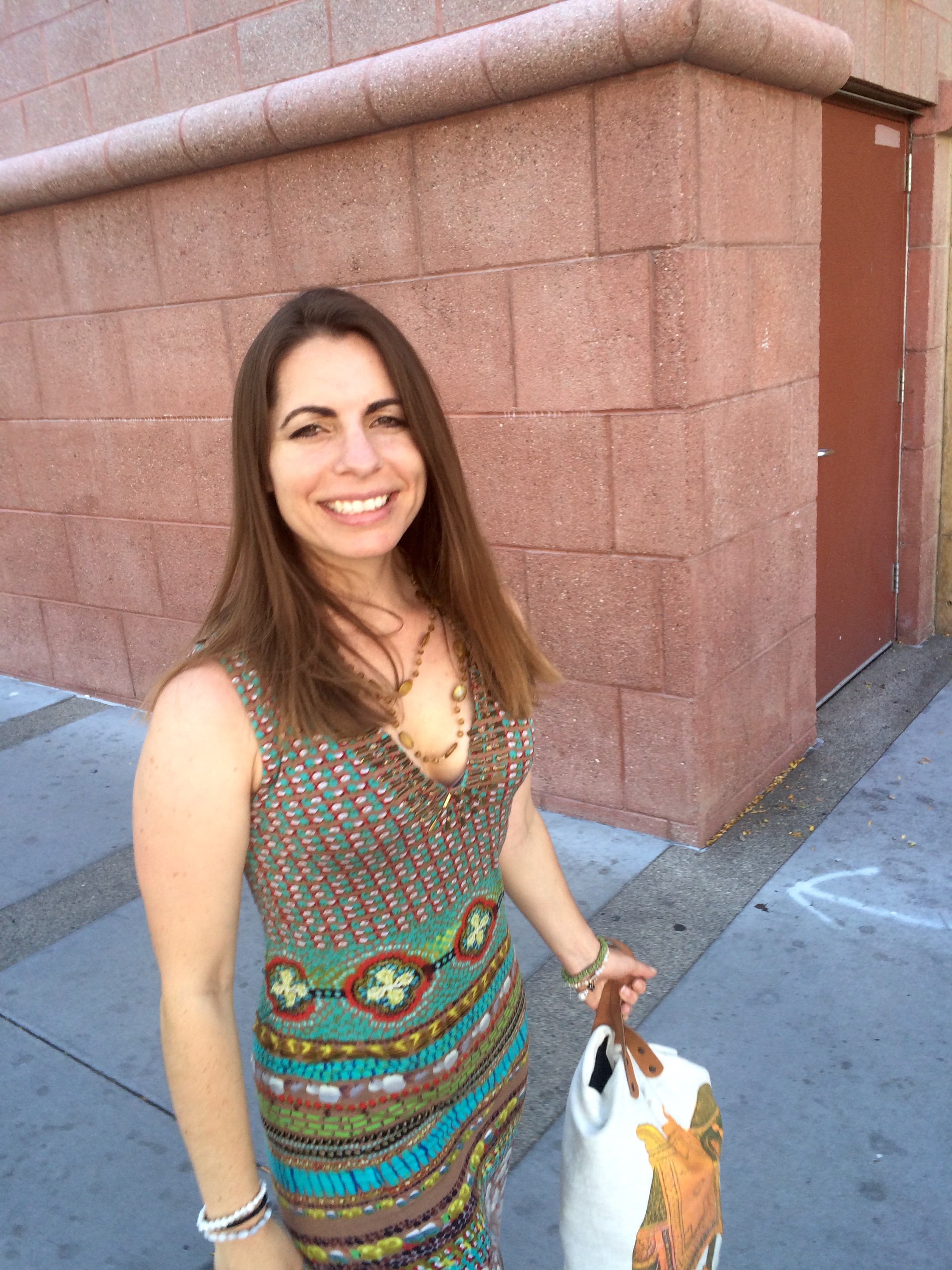
Me on this day, about an hour or so before the men street harassed me.
Walking to get married, about an hour before the men street harassed me.

My partner and I have been together for more than 12 years. For a number of reasons (including same-sex marriage now being legal across the USA) we did a civil service to legally marry earlier this month in Las Vegas, Nevada, while my partner was there on business. We got our license, walked a building over for a civil service ceremony and it was all done in an hour. Easy, low-cost.

My uncle lives in Las Vegas and after our ceremony (only attended by our witness, one of my cousins), my partner and I went to a grocery store to get food for dinner at his house. I didn’t wear a “wedding dress” but I was wearing a dress I bought for $25 at TJ Max.

We got back to the car and I had forgotten hummus. I went back inside alone.

On my way out of the store alone, two men told me I looked beautiful. It felt like the lead up to harassment but I thought, give them the benefit of the doubt, “you look beautiful” on it’s own isn’t really harassment (though since men don’t hear that as they walk around, it does reinforce sexism and that women’s value is our looks)… so I smiled and I said thanks… and they immediately launched into loud sexually explicit descriptions of my body as they disappeared into the grocery store. I cringed. I felt violated and dirty. And – because internalized victim blaming is hard to overcome – I thought, why didn’t I change out of my dress before walking around in public alone?

It upsets me that even on a day of happiness with my best friend, I could not escape street harassment. There is NO escape. I’m now in my 30s. I live in the suburbs and mostly work from home and mostly drive places. Compared to a decade ago, I can go days and sometimes weeks without facing street harassment. But there is still no way to permanently escape it. That makes me feel really angry, frustrated, and sometimes defeated.

This incident also reminded me that if it’s not blatant harassment at the onset, it’s hard to know how to deal with it, especially when you have 1 second to decide and can’t formulate a super clever retort. Should I have ignored them? Told them “that’s harassment” for simply saying I was beautiful? I doubt it would have mattered how I responded.

Ultimately it wasn’t about me, it was about them. They probably could care less how I felt or responded…. just like most harassers. They just felt entitled to my attention, my space, for their own reasons. And women are often raised to be polite, so we mostly put up with it, demure, deflect, appease, and avoid, especially when it starts off with something as seemingly innocent as “you look beautiful,” “what are you reading” or “what’s your name?”

This happened more than two weeks ago. I only decided now to write about it after reading this excellent Guardian article by Daisy Buchanan, “I’m tired of being kind to creepy men in order to stay safe.” This is an excerpt:

“We’ve all been bothered by persistent guys who pester us relentlessly, believing themselves to be entitled to our company and more. We’re under pressure to be polite and manage their expectations. Ignored men are angry men, and it’s horrible to sit silently while a man shouts at a packed carriage: “She thinks she’s too good to talk to me!”

When it comes to responding to harassers, you’re damned if you do and damned if you don’t – and sometimes it gets to the point when dealing with entitled idiots is so exhausting that you feel safer staying at home…

[We need] to create spaces where all women feel they are safe to look their harasser in the eye and say: “Leave me alone. I do not want to talk to you.” Because I’m tired of being kind to the creeps in order to stay safe. And I don’t want to stay in.”

The full article is worth a read.

This is my message to men: Please think twice before approaching a woman you don’t know in a public space. Think twice before you open your mouth. I don’t care if you’re not a harasser. Too many of you are and every woman has been harassed before. Unless she’s in danger or dropped something, just think twice about it. We don’t owe you our attention nor should we have to be polite to you even if we’ve and you’ve been raised to think that we should.

Share

Filed Under: Stories, street harassment

New Stop Global Street Harassment Book!

August 17, 2015 By HKearl

Street_Harassment
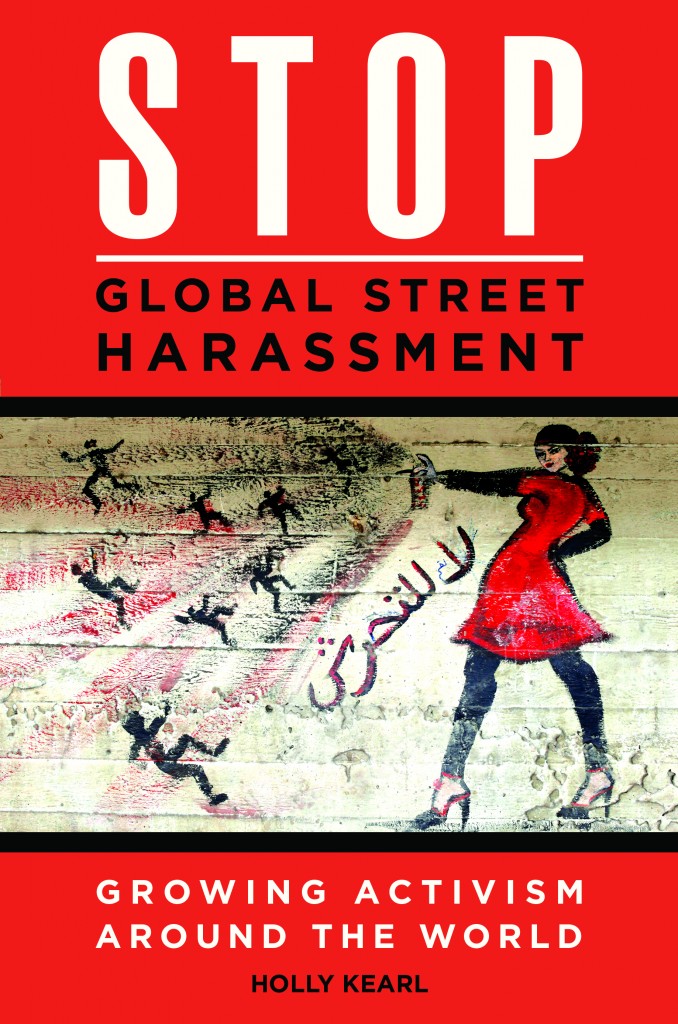
Stop Global Street Harassment: Growing Activism Around the World book cover

UPDATE: THE BOOK IS OUT!

You can purchase it here. Google is selling ebooks for 20% off!

Read an excerpt from the introduction.

Out of the heightened media attention to the issue of street harassment last fall following the “10 Hours of Walking in NYC as a Woman” video, I signed a contract for a second book with Praeger Publishers, the publisher of my 2010 book Stop Street Harassment: Making Public Places Safe and Welcoming for Women.

When that book was released exactly five years ago, it was one of the only books available on the topic and entities like the NYC City Council and United Nations immediately used it to inform new efforts to address the problem. Five years later, the landscape has changed a lot (for the better) when it comes to how people understand the issue, how it is covered in the media, and what is being done about it.

My new book looks at the time period of 2010 – February 2015 and highlights what individuals, grassroots organizations, international entities, and governments are doing to address street harassment. The final chapter suggests what else needs to be done. Around 75 activists are quoted, featured, or have essays in the book and it covers the issue on six continents and numerous countries. I am grateful to everyone who was involved.

GET THE BOOK:

You can purchase it here. Google is selling ebooks for 20% off! You also can request a copy or copies of the book for your local bookstore or library or personal use from Praeger directly. If you are a journalist who would like a review copy, please contact me, hollykearl AT yahoo DOT com.

BOOK EVENTS:

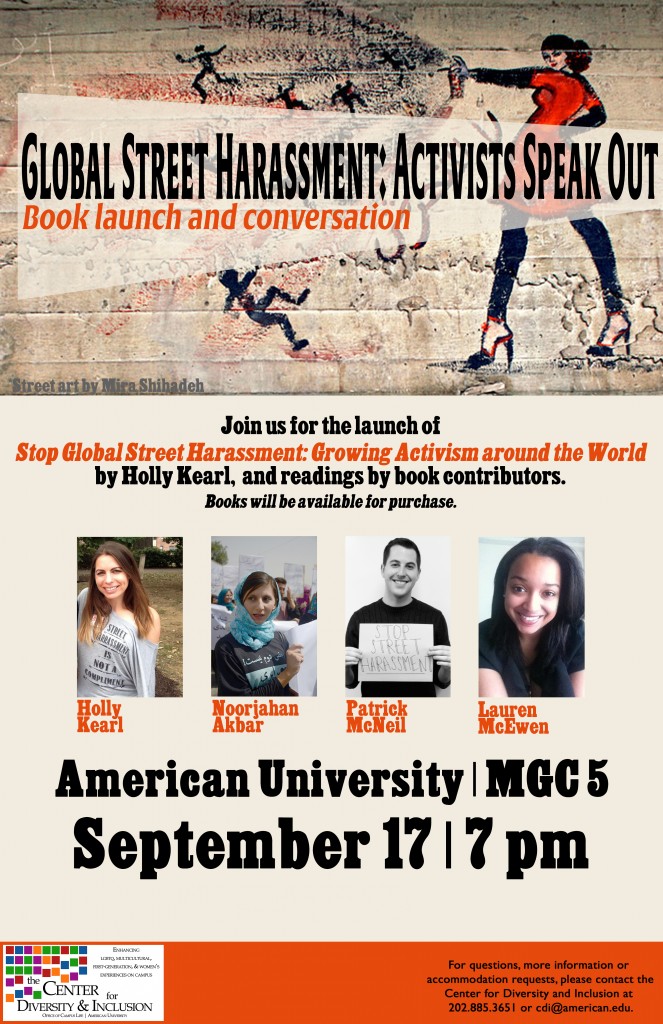
Stop Global Street Harassment event in Washington, DC on September 17, 2015
Image created by Noorjahan Akbar

September 17, Washington, DC book launch event. It was at American University. I was joined by activists from Afghanistan, Egypt and the USA and local anti-street harassment groups had resources and were available to answer questions. Read the recap of the event and watch videos of my four co-presenters.

September 30, I will be a speaker at George Mason University’s Fall for the Books event in Fairfax, VA, 1:30 p.m. It is free and open to the public.

November 5: New York City book launch event. It will be at the famous feminist bookstore Bluestockings at 7 p.m. I will be joined by activists from the Netherlands, Nigeria, and NYC. The event is free and open to the public. Facebook RSVP page.

November 14: I will have a book signing at the Winchester Book Gallery, Winchester, VA, 4-6 p.m.

Contact me if you are interested in hosting me for a book event! Here is information about campus talks.

THE TWITTER CHAT:

On September 1st at 11 a.m. EDT/3 p.m. GMT, activists from around the world who are featured in the book tweeted about street harassment in their area and what they are doing to stop it. Read the Storify of the conversation.

BOOK REVIEWS:

“In Holly Kearl’s new book, she powerfully and compellingly analyses the scale and breadth of the problem of street harassment and presents the reader with an uplifting snapshot of the activism being undertaken to tackle it. This is a hugely important global exploration of a seismic shift in our attitudes and responses to a universal experience. For some readers, the scale of the problem as Kearl describes it will be shocking. For others, it will be horribly familiar. But the campaigns and strategies she outlines for taking back the streets will fill every reader with hope, energy, and a powerful urge to be part of the solution. This is an important book and a compelling call to arms.”

—Laura Bates, Founder of The Everyday Sexism Project

“This book represents a major breakthrough in exposing the pernicious, prevalent, but long-ignored form of oppression that is a barrier to freedom and full equality for women around the world. It offers comprehensive analysis and research, is clearly written, and presents useful tools and information for those seeking change. It addresses misogyny and the related issues of race, culture, and gender identity with great insight and originality.

In the mid-1970s when my colleagues and I were defining and organizing around the issue of sexual harassment in the workplace, the problem of street harassment seemed too complicated and daunting for us to tackle. I am grateful to Holly and a new generation of women activists and researchers who have taken the fight to a new level to raise public awareness and change public policy and ingrained prejudice and behavior.”

—Susan Meyer, Former executive director of Working Women United Institute

“As Holly Kearl documents, street harassment is not a new problem. What is new is the strength of community activism and government support to end street harassment. This book updates us on the current fight against street harassment and the progress that has been made in the last five years. Understanding the role street harassment plays in perpetuating gender inequality and patriarchal power is crucial to improving women’s lives across the globe.”

—Kimberly Fairchild, Associate Professor of Psychology, Manhattan College, Riverdale, NY

“Stop Global Street Harassment is a sensitive and harrowing examination of the frequency, severity, and implications of a global pandemic disproportionately impacting girls and women: street harassment. Holly Kearl, activist and founding leader in the Stop Street Harassment movement, interweaves a powerful narrative combining global perspectives from social science research, personal narrative, and journalistic/social media accounts, resulting in an intersectional pièce de résistance. Kearl’s work is the most comprehensive work on the issue of global street harassment to date.

A compelling read and a brave indictment of hegemonic privilege, Stop Global Street Harassment represents a living account possessing the power to ignite a global audience by underscoring the experiences of untold activists, researchers, students, and parents throughout the world. This crucial work culminates with practical solutions and policy prescriptions that will not only inform NGOs and governmental entities, but also serve to inspire those individuals who live with street harassment on a daily basis, most of whom possess non-dominant identity statuses. This work is a call to action. Readers will be inspired not only to listen for the untold voices that have yet to be heard, telling their tales of the daily harassment they face in simply navigating public spaces, but also to work for change within their own communities. Stop Global Street Harassment is a must read.”

—Dr. Jennifer L. Martin, Assistant Professor of Education, University of Mount Union

“What an excellent resource Kearl’s book is for activists and scholars! Stop Global Street Harassment: Growing Activism Around the World should be read by feminist leaders far and wide; it would be a great reading selection for those teaching courses that address global issues, social problems, social movements, and gender issues. Holly Kearl has written an easy-to-read, engaging book about street harassment and the movement she helped develop to document and end it.”

—Laura S. Logan, Assistant Professor, Hastings College

Share

Filed Under: Resources, street harassment

Meet our 2015 Safe Public Spaces Mentoring Program Teams

August 16, 2015 By HKearl

Meet our 2015 Safe Public Spaces Mentoring Program mentees! They come from four countries, three continents.

Through the end of 2015, we will hold weekly check-ins, offer advice, materials and a small monetary stipend for the projects they proposed. Each team will write at least two blog posts about their projects (mid-way and at the conclusion) so you all will have a chance to hear from them directly.

These are the mentees and their projects!

1. Stop Harcèlement de Rue – Lyon will host an exhibition of drawings against street harassment in a number of locations in Lyon, France, including a high school, city square, and bar. Members of the group will be on hand at various times to discuss street harassment with passersby.

2. In India, the Safe Safar: Safe Streets project will entail gender-sensitization and anti-harassment trainings with auto rickshaw drivers in Uttar Pradesh. The team will also hold monthly awareness campaigns with street plays, signature campaigns, and public dialogue around the issue.

3. FILIA Centre will hold a three workshop series about street harassment at a high school in Bucharest, Romania. The students will have the opportunity to create art, videos, or write an essay on the topic during the process.

4. A high school student-led group Me=You: Sexual Harassment Awareness will engage in a number of actions in Florida, USA, around street harassment, including writing letters to the school board, writing articles for the school newspaper, and holding anti-harassment events for the local libraries’ monthly teen programming.

We are excited about the big impact we know they will each have in their communities.

Share

Filed Under: SSH programs, street harassment

NYC Street Harassment Play on Sept. 2, 2015

August 13, 2015 By HKearl

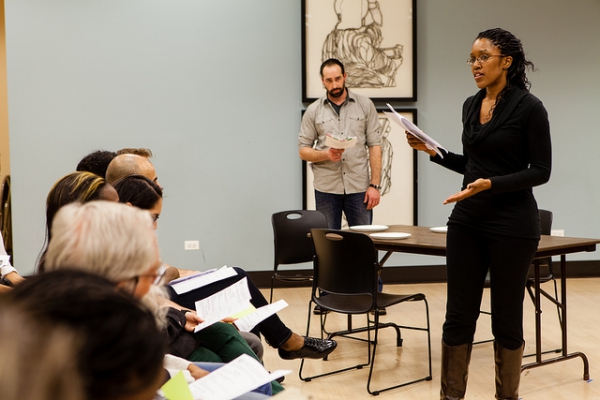
Shaun, via Flux Theatre’s website

Shaun Bennet Fauntleroy is a theatre artist in New York City who is producing an event focused on street harassment in collaboration with Flux Theatre Ensemble. The event is called #SpeakUp: The Street Harassment Plays and it features five monologues written by playwrights who have been asked to reflect on their feelings as victims of street harassment.

Where: Judson Memorial Church’s Assembly Hall, 239 Thompson St, NYC

When: September 2, 2015 at 7:30 p.m.

RSVP here

You can read more about the event here. (The following is an excerpt of that article.)

“Earlier this spring, a man walked up to me on a subway platform, complimented me rather aggressively, and then punched me repeatedly when I didn’t respond favorably. It happened during a rather hectic period in my life so I didn’t have time to dwell much on it. I did, however, have a strong impulse to write my thoughts about the incident down. I shared those thoughts on social media, because that’s what you do these days, and followed it up with a blog post. Doing so was cathartic, not only because I’d purged my thoughts on what happened, but I’d reclaimed my voice, the voice and agency that this unknown man had attempted to silence.

Over the next few months I was both heartbroken and inspired by two separate incidents. First, a friend e-mailed me to tell me that she had just been similarly attacked and was re-reading what I’d written as she processed her own feelings. Not long after that, a different man attacked another woman (whom I didn’t know) on a subway platform after she rejected his advances. I was becoming enraged.

The second thing that occurred was that I had the privilege of witnessing New Black Fest’s HandsUp: 6 Playwrights⎪6 Testaments , which featured six powerful and evocative monologues written by emerging black male playwrights that reflect on being an American black male in a culture of racial profiling (I believe they have plans to remount this, so if you get the chance to see it I highly recommend it. You can read excerpts here. ) HandsUp gave a personal voice to a national ache and I was reeling from what I’d heard/seen.

After my friend’s e-mail I knew that I wanted to do something. Being a thespian, the theatre was the battleground I chose and with HandsUp fresh in my mind I had an urge to create something similar to New Black Fest’s stunning piece: a handful of plays that reflect on the playwright’s feelings of being the targets of street harassment and catcalling.  Almost instinctively, I contacted Gus Schulenburg from Flux Theatre Ensemble and said, “Gus, this just happened. Let’s make some theatre.” Gus shared the vision with the rest of the team and they, being all Fluxy and fabulous, said, “Yes, let’s.” Together we have created #SpeakUp: The Street Harassment Plays. I hope you’ll join us.”

Share

Filed Under: Events, street harassment

« Previous Page
Next Page »

Share Your Story

Share your street harassment story for the blog. Donate Now

From the Blog

  • #MeToo 2024 Study Released Today
  • Join International Anti-Street Harassment Week 2022
  • Giving Tuesday – Fund the Hotline
  • Thank You – International Anti-Street Harassment Week 2021
  • Share Your Story – Safecity and Catcalls Collaboration

Buy the Book

  • Contact
  • Events
  • Join Us
  • Donate
  • Facebook
  • Instagram
  • Pinterest
  • Tumblr
  • Twitter
  • YouTube

Copyright © 2026 Stop Street Harassment · Website Design by Sarah Marie Lacy