Great news from France!
“France unveils plan to tackle sexual harassment [on public transportation]”
“On Wednesday the government came up with their answer when Ministers unveiled a series of measures aimed at cracking down on harassment.
They included exploring the possibility of allowing passengers on night buses to get on and off where they want and a campaign to remind the general public that groping, verbal harassment and other forms of intimidation are punishable by law.
The measures include:
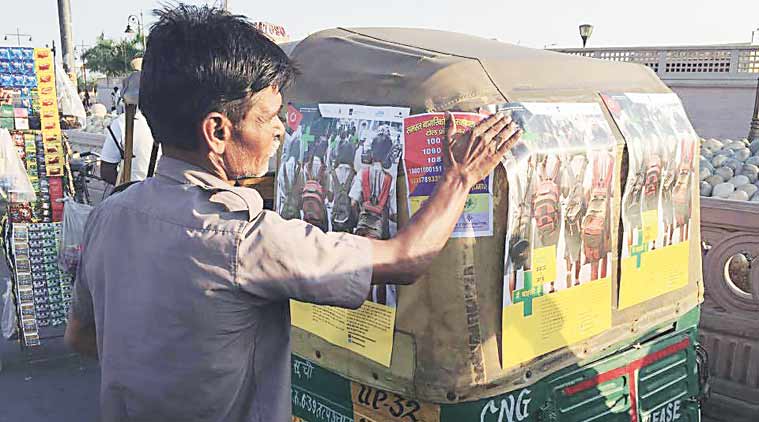
* A campaign this autumn that will use advertising space on the transport network to remind travellers that harassment and gender-based violence are punishable by law (up to five years in prison), and to encourage witnesses to show solidarity with victims in harassment situations.
* A trial, to take place in Nantes that will allow passengers on night buses to stop the bus on demand rather than only being able to board and alight at bus stops.
* Developing new digital tools to report harassment including text alerts.The emergency number 3117 will be introduced before the end of this year, which can be used to report cases of harassment, and to trigger the intervention of security staff. An app will be created that will allow for reported incidents to be geo-localized.
* Training of transport staff and promoting gender equality within transport companies.Transport staff will attend training modules designed to improve empathy with victims.
* Transport chiefs will work with advertising agencies to prevent adverts using sexist imagery being displayed on the transport network….”
“French campaign against sexual harassment on public transport launched”
“As part of its 12-point plan, the government is inviting passenger groups to visit rail and train stations to identify areas where they feel unsafe and that require more lighting or human presence….This autumn, an awareness campaign will also be launched on how to react to such harassment and what the punishment is for offenders, which will be relayed in schools.
The campaign following a shock survey that found that “every female user of mass transit has been a victim” of “gender harassment or sexual assault” – even though some are “unaware” of this because they have been conditioned to accept low-level abuse.”
Comic-Con is this weekend in San Diego and addressing harassment is on the agenda of Geeks for CONSent.
“Dear Comic-Con attendees, grabbing the lycra-clad backside of a cosplayer is not ok”
“A survey by Bitch Magazine last year revealed that 13 per cent of respondents had received unwanted sexual comments at a convention, while 8 per cent had been groped, assaulted or raped at a convention. 130,000 people attended the San Diego Comic-Con (SDCC) last year. That means that around 10,000 people could have been sexually harassed during the convention.
There was a campaign last year for SDCC to revise their harassment policy to have clearer guidelines as to how sexual harassment will be treated. However, there has been no change to the SDCC code of conduct policy, merely stating that ‘Harassing or offensive behavior will not be tolerated.’ It advises anyone who feels ‘their safety is at risk’ to report the incident to a member of staff. Anyone in breach of the code of conduct can be removed from the convention immediately.”
“Women Are Being Sexually Harassed at Comic-Con—but One of Them Is Making It Stop”
“In 2013, Geeks for CONSent started collecting stories from women who were harassed—it has about 30 formal reports and hundreds of informal complaints to date—and found some organizers were doing “almost nothing” to prevent such behavior. So Geeks for CONsent is pushing Comic-Con International to clearly spell out what counts as harassment (currently, its code of conduct includes one sentence that only generally addresses it); to post the policy prominently online, on social media, and on large posters at the event; and to create an app attendees can use to report incidents.
For its part, Comic-Con International said, via e-mail, “We take any report of harassment very seriously.” But until Keyhan sees more action, she’s vowed to keep fighting. To make sure attendees get the message, Geeks for CONSent members will again add a special touch to their costumes this year: signs reading “Cosplay ≠ Consent.”
Read more about Geeks for CONSent’s campaign via San Diego City Beat
Two important pieces on race + street harassment
“The Right to Be a Black Girl”
“It wasn’t until I started paying attention to the way my white friends spoke about street harassment that I realized what they went through was totally different than what I experienced. When they complained about being catcalled, some of them bragged about telling guys to ‘fuck off.’ What happened to them is terrible, but it made me realize that the street harassment that I and other black girls experience is a lot more aggressive. Being considered a well-spoken, ‘alternative’ black girl didn’t stop boys from telling me, ‘Black girls are good at sucking dick, cuz they got them DSLs,’ meaning ‘dick-sucking lips.’
Street harassers, particularly black men who have internalized white oppression in a way that causes them to devalue black girls in turn, think because I am a black girl, I should be grateful that any man is giving me attention, and they take it as an insult whenever I reject them. This is an obvious form of misogynoir, as I discovered through @feministajones’s hashtag #YouOKSis, a thread where black women discuss their experiences with street harassment. Before I found that hashtag, I thought it was completely normal for men to curse me out or grab me when I didn’t reply to their advances. I quickly learned to smile and respond back when they said hi so I wouldn’t be yelled at or shoved.”
“This is What the N-Word Feels Like”
“Speaker 1: Why can’t I walk from the corner where the cab dropped me off to my apartment without someone yelling the N-word at me outside of a car? Why is that a thing I’m dealing with?
Text: What the N-Word Feels Like
Text: We asked some of our colleagues about the first time they remembered being called the N-word.
Speaker 2: I was eleven years old. I was at a convenience store.
Speaker 3: I was eighteen. I was experimenting with YouTube.
Speaker 4: I was between seven and nine years old, and I was with my mother.“
Last week there was a big rodeo in Calgary, Canada, and a group of women organized a #SafeStampede campaign.
“Does Calgary need #SafeStampede initiative for a harassment-free week?“
“It’s been three months since Calgary streets were filled with a Flames-inspired sea of party-goers, but the stories of sexually-charged street harassment and obscene pranks are still fresh in the minds of some residents, who don’t want to see a repeat this week at Stampede. And so, another campaign has been born out of #SafeRedMile for the Greatest Outdoor Show on Earth: #SafeStampede.
“#SafeRedMile was when the Flames were in the playoffs, and it was very effective in really talking about some of the less positive experiences that people had on the Red Mile,” said Pam Krause, president and CEO of the Calgary Sexual Health Centre.
“Some women got together, talked about repeating that with #SafeStampede, and a lot of the work at Calgary Sexual Health Centre is around issues like consent, so we proudly helped with the campaign.”
Along with the hashtag, the campaign consists of a website with information about sexual harassment, consent and links to resources for support. There’s also a Tumblr account, where you can submit a story of sexual harassment during Stampede week.
The campaign has been endorsed on Twitter by the official event account, Mayor Naheed Nenshi and Stampede CEO Warren Connell.”
“Rodeo, rides and sexual harassment: It’s about time for Calgary to hold a #SafeStampede“
“Some men, instead of embodying Western hospitality, transform into dude-bros who feel entitled to disrespect or harass women. Catcalls. Ass- grabbing. Name-calling if you look less than pleased by these charming advances.
For those who question whether this is really a problem, I conducted a (very unscientific) survey of 10 female friends in their 20s and 30s, all of whom attend Stampede annually, before writing this column. Half of these women — HALF! — have been grabbed at over the years while walking through crowded party tents. The most recent incident occurred Friday at Cowboys, the club with the slogan “The most fun you can have with your boots on.” A guy grabbed under a friend’s skirt. I’m told he got a lecture.
I’ve had my butt grabbed at the Stampede twice. One time, it happened so quickly I couldn’t pick the offender from the jeering herd; the other time, I was told I “overreacted” for telling the guy off.
So I tip my hat to the Calgary Stampede for jumping on the anti-sexual-harassment wagon. It’s about time.
The city’s top brass, including the Stampede CEO and Mayor Naheed Nenshi, quickly endorsed the #SafeStampede campaign, which was created by a group of women to encourage respect and share information about consent and sexual harassment.
Thanks for the leadership, folks. It sends a message to people attending one of Canada’s largest events that harassment isn’t condoned and that donning a plaid shirt and cowboy boots isn’t a licence to make women feel unsafe.”
“‘Just be respectful:’ Calgary Stampede on board with #SafeStampede initiative“
“While it’s hoped the initiative will grow in coming years, for now the #SafeStampede campaign is about raising awareness and starting a conversation, said Pam Krause, executive director with the Calgary Sexual Health Centre.
“It’s really to provide people with a forum to talk about negative experiences but also positive,” Krause said.
Krause pointed to a successful educational program the Calgary Sexual Health Centre runs for junior high boys called WiseGuyz. The program has teens openly discuss consent, and Krause said it’s an important conversation she hopes more people can partake in, especially during Stampede.
“If 14-year-old boys can do this and 14-year-old boys can get a crystal clear understanding of what consent is, my hope is that can start spreading out into the rest of society,” she said.
At this year’s Stampede, a ‘Don’t Be That Guy’ ad campaign (similar to a 2010 campaign launched by Sexual Assault Voices of Edmonton) will be on display at popular party and music destination Nashville North.”
And here are some stories about street harassment:
“Street Harassment & Body Art In The Public Space“
“A heavily tattooed young woman recently recorded all of the unsolicited compliments she got on the street. The video led to the hashtag #tatcalling. We discuss the lines between harassment, compliment and acknowledgment.”
“Morocco joins the miniskirt wars“
“On June 14, Sanae and Siham, 23 and 29 years old respectively, identified as students and professional hair stylists, went to shop in Inezgane, south of Agadir, on the southern part of Morocco’s Atlantic Ocean coast. A shopkeeper attacked them, claiming their skirts were too short. Soon they were surrounded by a more than threatening mob. Terrified, they sought shelter in a boutique and waited for the police to arrive. The police did arrive … and arrested them for “indecent exposure”, or “gross indecency.” Their trial was heard Monday, June 6. If convicted, the two women face up to two years in prison.…
In Morocco, the real story is once more that of women organizing, pushing back and pushing forward, creating new spaces precisely where others try to shut them down. Moroccan women, with male supporters, organized a campaign, using the hashtag #mettre_une_robe_nest_pas_un_crime. Wearing a dress is not a crime. First, they pushed to have the police investigate those who had harassed and threatened the two young women. Finally, the police gave in, investigated and arrested two young men. Demonstrations were organized all over Morocco. Women organized July 6 as a National Day for Our Individual Freedoms, with demonstrations in Rabat, Casablanca, Marrakech, Agadir, Tangiers, and beyond.”
“Moroccan girl tells off man over ‘indecent’ comment“
“In the midst of a busy street in Tangier, Morocco, a man shouts at a passing woman, yelling at her that she’s dressed indecently. Unfortunately, this kind of harassment occurs all the time—it’s a common scenario. Except that, this time, the victim was ready with a comeback. Social media users have gone crazy over this video since it was first posted on June 25. It currently has more than 150,000 views on YouTube.”
“Rachel Colias: Feminist Killjoy“
“I’d say the daily basis of dealing with men is brief, public interactions. If I were to pick one thing that I really do have to deal with on a daily basis, it’ sexual harassment. Any woman who doesn’t have a car, has to take public transportation or has to walk more than two blocks to her job, there’s going to be sexual harassment. For a while when I first started going to college in Chicago I became more aware of it. I don’t want anyone to think living in a small town there wasn’t any of that. I remember being, I don’t know, 15, and one of my female friends hit puberty a lot sooner than I did and was a bustier person. When I would hang out with her and hadn’t hit puberty yet, we would still get yelled at. Men would still bother us. I remember some guy trying to get me into his car when I was a younger kid. That’s something I think about.”
“An Open Letter to My Harasser“
“When you follow me I don’t feel honored, I feel afraid. When you stare at my body while standing next to me, I don’t feel wanted, I feel disgusted by you. As you open your mouth to say something crass, I already turned up the music on my phone because I know you’re about to be rude. I have to turn my back on my senses in order to walk to the train so often that I don’t even notice it. That should not be the norm. This is a problem. And sadly, you will have to take all the first steps for this to have an impactful change.”
“Catcalling is not a compliment: Why men catcall brings up bigger issues than just sexuality“
“Actually, public street harassment is part of a larger effort to make public spaces uncomfortable for women,” said UH Professor of Women’s Studies Meda Chesney-Lind.
She recently collaborated on article about violence against women with student Gita Neupane. The authors explore male harassment of women in public and its underlying meaning.
According to the article, “[Catcalling] is designed to undermine the recipient’s image and self-confidence by sexualizing them, and this is more, the enforcement of gender expectations rather than seeking sexual favors.” Catcalling is a form of street harassment and has little to do with sexual acts, but rather, establishes the domination a man has over a woman. It is anything but a compliment.
“It is an assertion of male privilege [and power],” Chesney-Lind said.
“The Fear Factor” (Runner’s World)
“Katie gave me a look that our government should immediately weaponize and use against our enemies. “Men,” she said evenly, “are in danger of, at worst, being laughed at by a woman. Women are in danger of being killed by men.”
It is odd to be shocked by something you already know. Of course, male on female violence is a horrendous problem, but at the same time, to be told that this statistic means a friend sees herself as prey, and your own kind as the predator, is disorienting. We protest and sputter, “But I never would do anything like that…” or “I can’t imagine…” But other men would, and Katie and other women can easily imagine it. We encourage women to “choose not to be a victim,” but when has it ever been their choice?
We left the ugly threat of violence behind and talked further about the intricacies of male and female interaction. According to Katie, it’s not that intricate: If you know a woman and she’s dressed to impress, and you’re in a safe mutually chosen environment for such things (a party, a date, your wedding to her), you can let her know she’s succeeded. Katie further says that if you happen to see her running, and you don’t know her, you should feel free to compliment her pace or strength. Katie remembers—fondly—an old man on a bus which she’d been racing for blocks, who shouted out a window: “Goddamn, you’re fast!” Other women told me, however, that they strongly disagree—when they’re running, well or poorly, fast or slow, they would very much like to be left alone. In general, you might want to follow Katie Prout’s First Principle, when encountering a woman on the road or trail: “Don’t be a douche. I’m not here for you.”
And never ever suggest to her that she should exercise indoors, or keep herself off the roads to avoid trouble. “I am afraid,” she says, “but I’m not going to let my fear keep me from moving.”
“Why Do (Some) Guys Turn Into Pervs The Minute the Sun Comes Out?”
“You know what I’m really not in the mood for? Catcalls. Street harassment. Random guys’ shades bobbing up and down as they take in my legs. Admittedly, there’s never yet been a day when I’ve skipped down the street longing for a stranger to give me a verbal appraisal of my buttcheeks, but there’s something about the hot weather that really brings them crawling out of the woodwork. Unwanted attention, it seems, goes up with the thermometer’s reading.”
“The Girls Behind The Viral Drive-By Street Harassment Video Tell Us What They Learned”
“We’ve seen the more serious video, and have read the statistics. But unfortunately sometimes these campaigns don’t drive the message home enough. That’s where entertainment and humor can play a role other mediums and industries cannot.
Just recently, two awesome women Ginny Leise and Soojeong Son who founded comedy troupe The Shame Game, created a viral video about street harassment but with a decidedly different perspective and outcome. Their video went viral with close to 2 million views (1.7+ at the time of writing this).
They wanted to shed light on the drive-by street harassment phenomenon where men walk up to women and throw a sexual phrase or two at them. They did this by having SJ walk up to random men around New York serving up one-liners such as “uh dat ass!” and “mmm that dick” and observing their reactions…
Street harassment is something that pretty much every woman in her life has faced at some point, what are some of your personal experiences?
G: Ugh, comments and stares every time I leave my apartment. It sounds like an exaggeration, but I think that is most women’s experience.
SJ: You’d think that the konichiwa’s, ni-hao’s, and ching-chongs wouldn’t happen anymore. How old-fashioned! No, but seriously a group of white male 20-somethings in Williamsburg street harassed me that way a few weeks ago. And really I try not to give a shit cuz this stuff happens all the time, but it still sets me off sometimes.”