• About Us
    • What Is Street Harassment?
    • Why Stopping Street Harassment Matters
    • Meet the Team
      • Board of Directors
      • Past Board Members
    • In The Media
  • Our Work
    • National Street Harassment Hotline
    • International Anti-Street Harassment Week
    • Blog Correspondents
      • Past SSH Correspondents
    • Safe Public Spaces Mentoring Program
    • Publications
    • National Studies
    • Campaigns against Companies
    • Washington, D.C. Activism
  • Our Books
  • Donate
  • Store

Stop Street Harassment

Making Public Spaces Safe and Welcoming

  • Facebook
  • Instagram
  • Pinterest
  • Tumblr
  • Twitter
  • YouTube
  • Home
  • Blog
    • Harassment Stories
    • Blog Correspondents
    • Street Respect Stories
  • Help & Advice
    • National Street Harassment Hotline
    • Dealing With Harassers
      • Assertive Responses
      • Reporting Harassers
      • Bystander Responses
      • Creative Responses
    • What to Do Before or After Harassment
    • Street Harassment and the Law
  • Resources
    • Definitions
    • Statistics
    • Articles & Books
    • Anti-Harassment Groups & Campaigns
    • Male Allies
      • Educating Boys & Men
      • How to Talk to Women
      • Bystander Tips
    • Video Clips
    • Images & Flyers
  • Take Community Action
  • Contact

UN Safe Cities Global Forum

June 11, 2015 By HKearl

I am in India for the UN Safe Cities Global Forum. Today I presented on my two year UN, Microsoft-funded project on women’s access to mobile technology + the potential to use mobiles to respond, document and prevent sexual harassment and sexual violence against women and girls in urban public spaces. Reps from Microsoft & cities where the research happened (Delhi, Marrakech, Rio de Janeiro) spoke too. The findings will be released publicly in the coming weeks. 
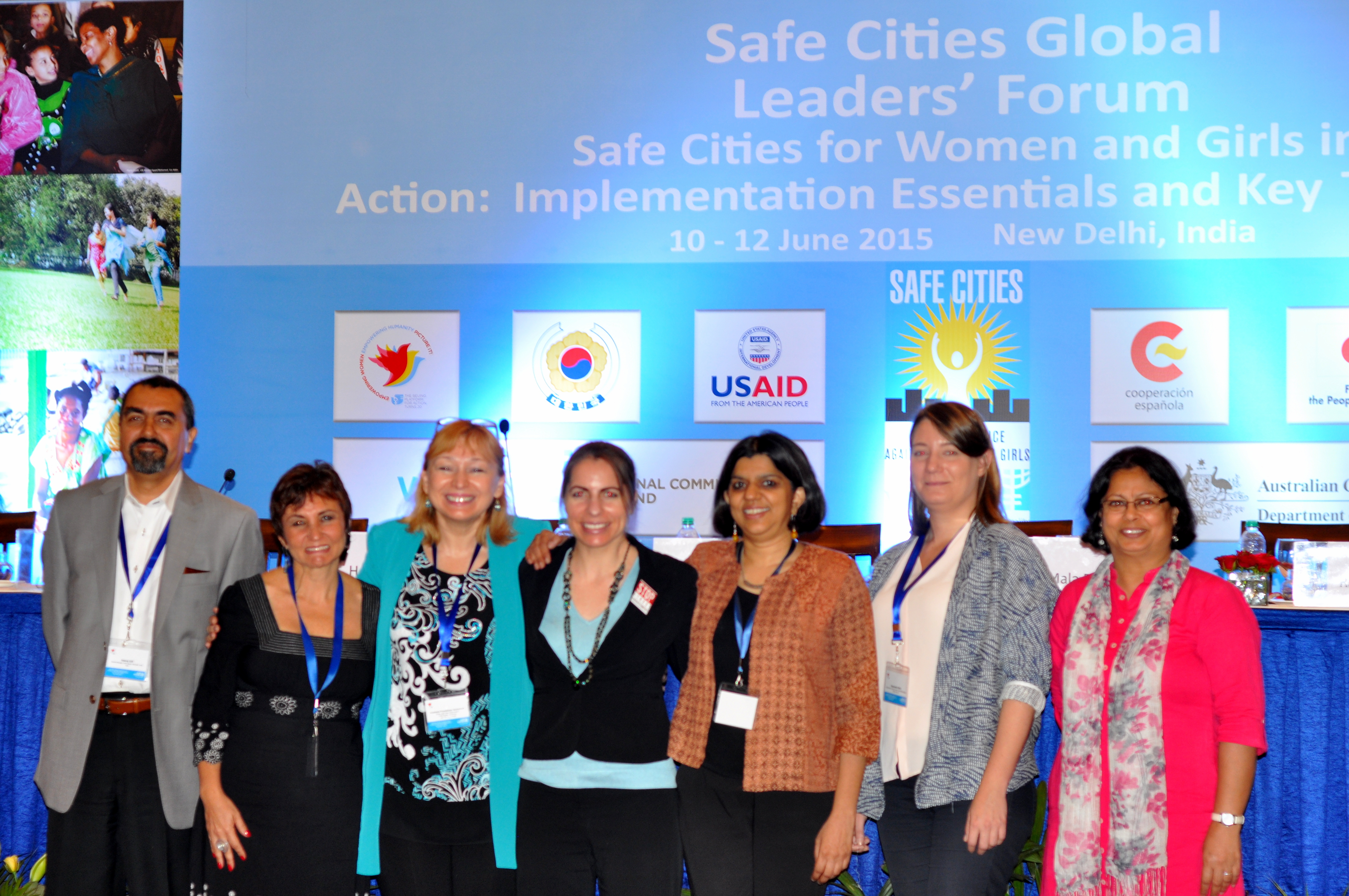
6.11.15 Mapping presentaiton - UN women forum in India 2
The Forum has been an amazing opportunity to hear about what Delhi organizations & government have been doing since the publicized gang rape in Dec. 2012, learn about safe city efforts in 24 countries, and connect with groups like ActionAid, Jagori, SafeCity and Women in Cities International as most of them I have never met in person (or rarely see in person) though we collaborate online.

I will blog more about it all when I’m home.

Share

Filed Under: SSH programs Tagged With: India, safe cities, United Nations

June 9 news round-up

June 9, 2015 By HKearl

Via Huffington Post:

“There is a moment in the McKinney, Texas pool party video that’s both horrifying and absurd: when Cpl. Eric Casebolt manhandles, violently restrains, then sits on top of an unarmed, 15-year-old, bikini-clad black girl as she cries for her mother.

The absurdity, of course, lies in how unnecessary and over-the-top Casebolt’s behavior is (earlier in the YouTube clip, he barrel rolls across a lawn for no reason in particular). But the horror emerges from the undertones of sexual violence in that instant. Casebolt pulls the girl by her hair, forces her face against the ground and presses his knee into her back — all while she pleads for him to stop. Here’s a grown man, forcing a young girl into submission against her will. The video acts as a prime example of the inherent reality of both physical and sexual harassment against black women and girls at the hands of cops.”

NT sign

Via ABC

“The Northern Territory Anti-Discrimination Commission [in Australia] has placed advertisements in Darwin city backpacker hostels and job centres after a number of reports of females being propositioned.

“There was a report of a business man who was offering employment and accommodation [to female travellers] and then propositioning them for sex,” Sally Sievers, NT anti-discrimination commissioner, said.

A notice about the man was posted on a hostel noticeboard purportedly by another female traveller, describing the incident and the alleged perpetrator.”

Via Stanford Medicine:

“In Kenya, where rape and violence against women are rampant, a short educational program produced lasting improvements in teenage boys’ and young men’s attitudes toward women, a study from the Stanford University School of Medicine has found. The boys and men in the study also were more likely to try to halt violence against women after participating in the program.”

Via Arab News:

“The Passport Department is currently drafting regulations that would see women travel without the permission of their guardians [in Saudi Arabia]. Maj. Gen. Sulaiman Al-Yahya, director general of the department in Riyadh, said the rules would be based on the reasons for travel, not age. The procedures to allow women to travel without permission include the interior, justice and social affairs ministries, and other bodies, he said. He added that the passport department complies with court decisions that allow women to travel abroad, or get passports issued and renewed without the approval of their parents or guardians. These were in line with laws in “advanced countries,” he said.”

Via US News & World Report:

“There are many contradictions in Argentina when it comes to gender equality. Women have equal rights under the law and there are more women than men enrolled in college. The country’s most powerful person is a woman — President Cristina Fernandez. But the macho culture of many Latin American countries is pervasive here as well….

Many men, from taxi drivers to construction workers to white collar workers, frequently whistle or say things when women walk by. ‘Lewd comments are just the tip of the iceberg that manifests itself in domestic violence,’ said opposition congresswoman Victoria Donda, who has put forward legislation making such verbal taunts a crime.

Under Donda’s bill, which includes funds to raise awareness about abuse in schools and workplaces, women could report sexual harassment in public places. A judge would then review the complaint, interview any witnesses, and decide whether a fine should be levied. The law is aimed at combatting aggressive sexual comments, not compliments about nice hair or clothes.”

Via The Guardian:

“Police in Nepal have started self-defence lessons for women and girls in camps for people displaced by massive earthquakes earlier this year after concerns about a number of sexual assaults and an increase in reports of sexual harassment.”

Via Van City Buzz:

“B.C. [Canadian] Transit Police assisted a young woman online Sunday night after she reportedly experienced sexual harassment on board the number 19 bus heading to Metrotown.

The 20-year-old woman was on the 19 bus when a man allegedly began verbally assaulting and threatening her. She later took to social networking site Reddit to ask whether or not she should report the man to police.

“I was sexually harassed on the 19 bus late last night heading East to Metrotown. Had an older black, skinny male tell me how he was ‘going to follow me home, find where I live, and give me the love I deserve.’ He then told me ‘I couldn’t escape him and he’d find me someday.’”

She then notes the bus driver had to physically restrain the man from following her off of the bus.

Transit Police were quick to comment on the women’s post, giving her a phone number and text number she could call to report the incident. A number of other commenters also mentioned the police authority as a resource.”

Via CBS News:

“Legislation that would make “upskirt” photographs illegal passed through the New Jersey Assembly’s judiciary committee on Thursday, reports CBS Philly. ‘They can take their cell phones and a camera and take pictures and it’s called upskirting because the pictures are taken underneath the ladies’ dress,’ said Assemblywoman Cleopatra Tucker, who introduced the legislation. ‘It’s an invasion of someone’s privacy.’ … The measure reportedly makes upskirting a fourth-degree offense, and makes sharing the photos online a third-degree offense. The bill now heads for a vote in the full Assembly.”

Teenage girls share their street harassment experiences in this imMEDIAte Justice video.

Share

Filed Under: News stories, street harassment

Traveling Alone as a Woman in India

June 8, 2015 By HKearl

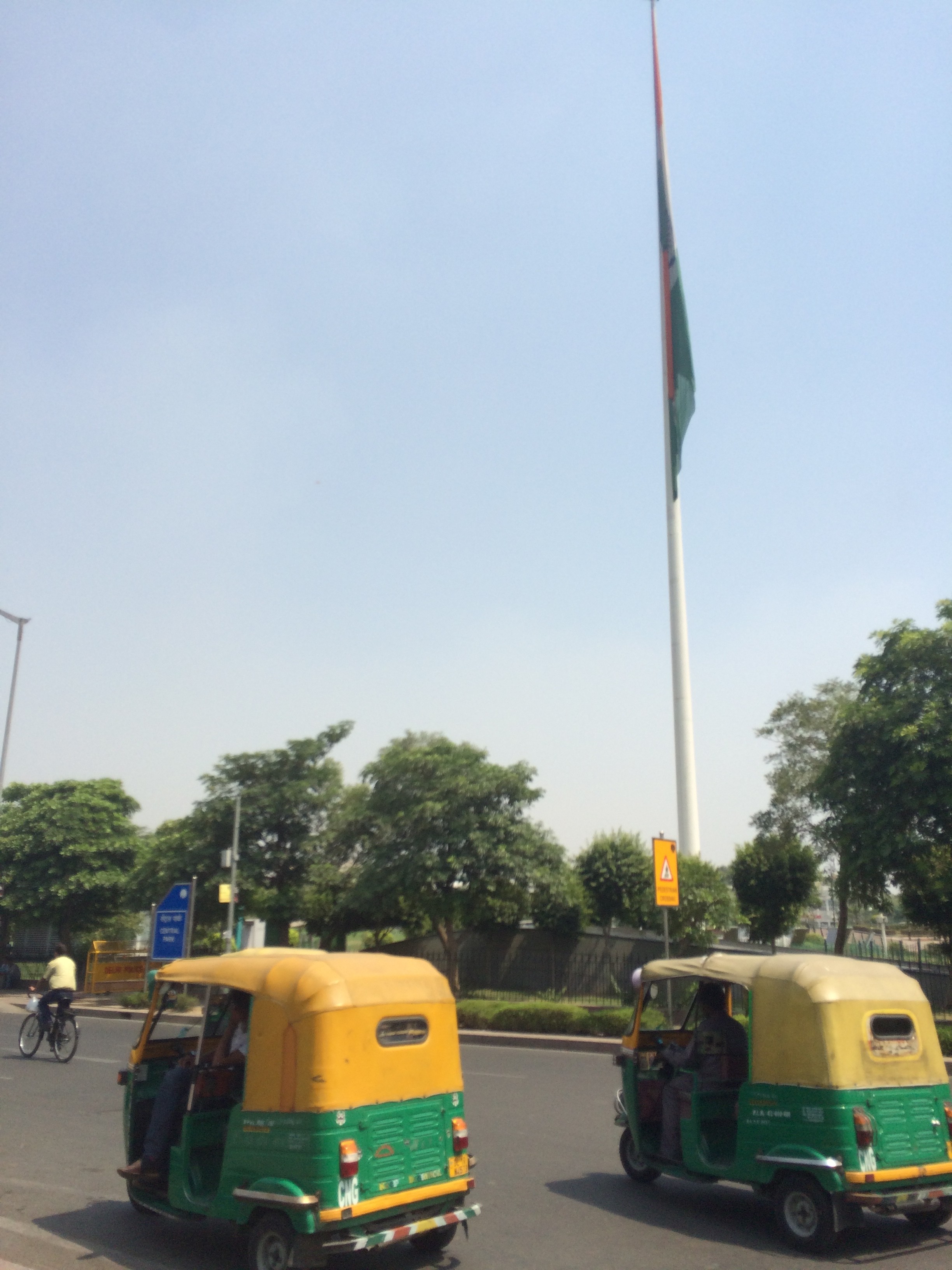
The park I walked to was across the street.

I have traveled to 50 U.S. states and 17 countries (excluding countries where I’ve only been to the airport). Mostly I’ve traveled with my family, friends, colleagues, or my male partner. It’s, of course, when I travel alone that I face the most street harassment.

My current trip to India to attend and present at a convening of UN Global Safe Cities partners from 24 countries later this week is no exception.

I know this, of course. I only traveled to Egypt three years ago once my dad agreed to go with me. If I was ever not by his side for an instant, I was usually harassed immediately. In Ethiopia last year, I presented at a conference for the US State Department. One afternoon when I walked on the streets near the hotel, I was accosted and followed several times by men. (“I just want to make friends. It’s the African way.”)

I was in India five years ago for another UN safe cities conference and I did not book a flight until I had found someone with whom to travel. She was a female friend my age. We faced some harassment during our three days of sightseeing, especially when we went to Agra, but it was mostly “just” excessive staring. I think we were a buffer for each other in a sense. This time, if I venture in public I do not have that buffer.

I arrived in India last night and the conference is at a very nice hotel near the embassies and government buildings in Delhi. It’s a much less crowded and more upper-scale area than much of Delhi, it’s also not very residential. So it’s not super crowded and I also thought it might be “safe” for me to take a walk this morning when I had down time. I will be primarily at the hotel without time to get around the city, so I at least wanted to see the surrounding streets. I kept telling myself, the women here do this every day. I can do it, too.

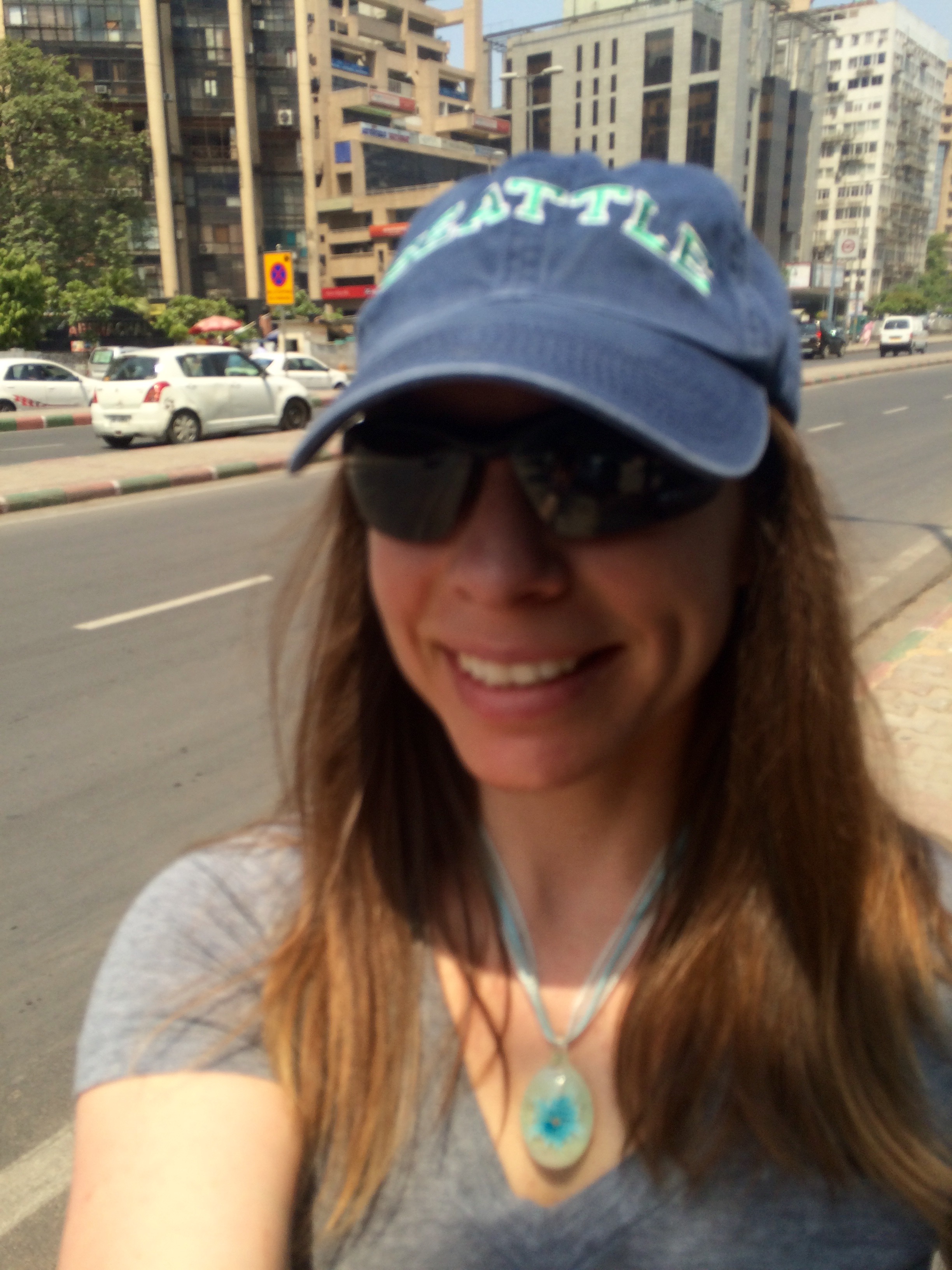
On Google Maps, I spotted a park about 3/4ths of a mile away. It was just two turns to get there, so I didn’t bring a map or hefty guide book and knew if I just paid attention, I could easily get there and back. It was over 100 degrees and bright out, so I donned a hat and sunglasses and dressed in pants and a tshirt. I didn’t see any other non-Indians around and instead of being able to blend in and walk unobserved, several men picked me out and picked on me. Men in auto-rickshaws tried to get me in their vehicle, promising to take me to the best shopping. One man on foot followed along side me for nearly 10 minutes (maybe less, but it felt that long), telling me there were political demonstrators the direction I was headed and it would be dangerous and that I should go with him to the tourist office to book travel to Agra or to go with him to the shopping area. It took a long time to shake him off, he was so insistent on telling me the right thing for me to do. And he straight up lied. There was no political demonstration.

A few other men approached me to ask personal questions and try to tell me where to go or what to do. I persevered to my destination only to find that, like the museums, it was closed on Mondays. Gardeners were doing yard work. I had no interest in continuing to be accosted and harassed and turned around and went directly back to my hotel. I was harassed up to within a block of the compound. I was so relieved to be back.

Walking in 100+ degree heat

I thought perhaps the harassment was more because I was white/Western = someone with money than because I was female, but my gender certainly played a role. At dinner, I found out that a white male colleague had also taken a walk this morning – for two hours – without incident. And I think if I had been with someone else, we may have still been approached, but I think the first time we said no, that would be it. All but one of the men who approached me were very persistent and insistent on interrupting me and bossing me around and disregarded my “no thank you’s” until I straight up became rude and shouted no or ignored them. I also don’t think I would have been asked personal questions if I was with someone else or if I were a man.

For more context, there were probably 50 men to every one woman I saw during my walk, so I certainly stood out simply for being female. But I did not observe any men harassing the women I saw. Twice men literally bee-lined for me instead of an Indian woman nearby. (This is in contrast to my last visit when my friend and I witnessed several Indian men harassing Indian women. One was the driver of our auto-rickshaw who swerved to the sidewalk to harass a young woman waiting alone for a bus.)

One of my other colleagues who arrived this afternoon from NYC said she was harassed by the customs officer at the airport. He began persistently interrogating her about her marital/relationship status because she too was traveling alone.

Street harassment is a problem everywhere and in my experience, it is certainly always more pronounced when I am alone, no matter the country. I hate that I need an escort to feel safer.

I am sorry to be missing out on seeing more of Delhi, but I’d rather be un-harassed, especially during a week when harassment is a focal point of my thoughts and work. Especially in an unfamiliar area and country, it is draining and exhausting to deal with it and you have to be on 100% high alert, unsure about anyone’s intentions or for how long they will follow you or what they may escalate to doing.

I am grateful for the privilege to be staying in a hotel where, so far, I have not faced harassment and feel relatively safe. I hate that havens like that are necessary (and that many women do not have places they can go to feel safe). I wish that everyone could feel safe everywhere, myself included.

Share

Filed Under: SSH programs, street harassment Tagged With: India, solo traveling, traveling

How Men React to “Drive-By” Harassment

June 5, 2015 By HKearl

Your (semi) comedic relief for this Friday.

Share

Filed Under: street harassment

Marching in Argentina, Phone App in Brazil

June 4, 2015 By HKearl

A few more important news stories —

Argentina march. Via BBC

Via Global Voices Online:

Argentinian women are rallying under the hashtag ‪#‎NiUnaMenos‬ against an alarming increase of femicides in the country after a pregnant 14-year old was murdered by her boyfriend.

Via BBC:

Additionally, yesterday people across Argentina, Chile & Uruguay marched in the streets in outrage over violence against women!

Via All Africa:

“A team of four young women coders from Porta Allegra in Brazil has won the IGNITE International Girls Hackathon with an anti-harassment app called Não Me Calo, which means “I will not shut up”.

Não Me Calo allows users to review restaurants based on how they treat women. The data then helps other patrons decide which restaurants are safest for women, and publicly encourages restaurant owners and government officials to fix harassment hotspots.”

Via MSP Magazine:

Our amazing board member Lindsey Middlecamp, founder of Cards Against Harassment, is featured this month and this is my favorite quote from her article: “We’re acculturated to see street harassment as a petty annoyance, but it reflects some fundamentally concerning cultural themes. If people would see a woman on the street as a person with her own motivation and intent, if women were allowed to make noise, take up space, and pursue their own path freely, the world would be a better place.”

Share

Filed Under: News stories

« Previous Page
Next Page »

Share Your Story

Share your street harassment story for the blog. Donate Now

From the Blog

  • #MeToo 2024 Study Released Today
  • Join International Anti-Street Harassment Week 2022
  • Giving Tuesday – Fund the Hotline
  • Thank You – International Anti-Street Harassment Week 2021
  • Share Your Story – Safecity and Catcalls Collaboration

Buy the Book

  • Contact
  • Events
  • Join Us
  • Donate
  • Facebook
  • Instagram
  • Pinterest
  • Tumblr
  • Twitter
  • YouTube

Copyright © 2026 Stop Street Harassment · Website Design by Sarah Marie Lacy