• About Us
    • What Is Street Harassment?
    • Why Stopping Street Harassment Matters
    • Meet the Team
      • Board of Directors
      • Past Board Members
    • In The Media
  • Our Work
    • National Street Harassment Hotline
    • International Anti-Street Harassment Week
    • Blog Correspondents
      • Past SSH Correspondents
    • Safe Public Spaces Mentoring Program
    • Publications
    • National Studies
    • Campaigns against Companies
    • Washington, D.C. Activism
  • Our Books
  • Donate
  • Store

Stop Street Harassment

Making Public Spaces Safe and Welcoming

  • Facebook
  • Instagram
  • Pinterest
  • Tumblr
  • Twitter
  • YouTube
  • Home
  • Blog
    • Harassment Stories
    • Blog Correspondents
    • Street Respect Stories
  • Help & Advice
    • National Street Harassment Hotline
    • Dealing With Harassers
      • Assertive Responses
      • Reporting Harassers
      • Bystander Responses
      • Creative Responses
    • What to Do Before or After Harassment
    • Street Harassment and the Law
  • Resources
    • Definitions
    • Statistics
    • Articles & Books
    • Anti-Harassment Groups & Campaigns
    • Male Allies
      • Educating Boys & Men
      • How to Talk to Women
      • Bystander Tips
    • Video Clips
    • Images & Flyers
  • Take Community Action
  • Contact

Afghanistan: Words Matter

April 16, 2015 By Contributor

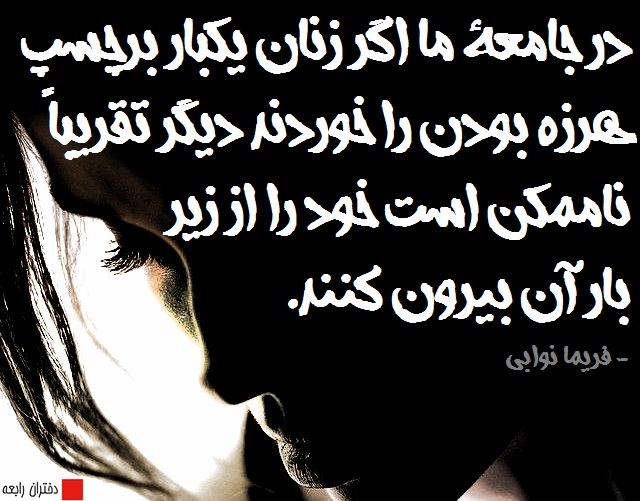
In our society, if a woman is known as being promiscuously or immoral, it is nearly impossible for her to free herself of that label.

Guest Blog Post for International Anti-Street Harassment Week 2015

When I speak about street harassment, I notice the ears of men go red. I wish it was out of shame or fear of it. Women face many different kinds of harassment and abuse in our society: physical, sexual and or mental.

I have often thought about how mental abuse and harassment can be one of the worse methods of marginalizing women. This kind of harassment cannot be seen and pointed to, but it can leave a lasting impact on people’s emotional and mental health. Unfortunately, I have also noticed that most women tolerate this kind of abuse in silence for many difference reasons. One of the reasons may be that they feel standing up to defend themselves is not effective. Especially in Afghanistan where religion and traditions have been mixed and hard to distinguish from one another, it is hard to prove to men that their behavior and the harassment they perpetuate is unjustified. In addition, these men have access to many different weapons to justify their behavior and silence anyone who objects. When it comes to shutting women up, the most efficient weapon has been character assassination.

Opinionated and educated women are more likely to be hunted down by this weapon because they are viewed as a threat to patriarchy. The men who attack these women know very well that if a woman is known as being promiscuously or immoral, it is nearly impossible for her to free herself of that label. Therefore, it is not a coincidence that usually women are attacked when they disobey the laws of our patriarchal society and stop bowing their head to misogynistic systems and structures. When women don’t submit to men’s power and desires, take ownership of their own bodies, view themselves as more than commodities and things or speak up using logic, their character is immediately assassinated.

The literature of this form of terror is simple, but specific. It is enough to call a woman certain things over and over at different settings and venues in order for her to be delegitimized. These words include but are not limited to promiscuous, immoral, prostitute, whore, infidel, man-hatter, angry, bitch…. Isn’t it fascinating that there are no male equivalents for the words bitch, whore, slut…?

If one tries to fight harassment by talking to misogynists as two fully developed human beings who are deserving of equal rights, if one decides to respect oneself and not give into this myth of female inferiority, one is immediately labeled shameless. If one uses logic, she is called infidel. If one points out to inappropriate behavior by men, she is called a man-hater.

Standing strong despite the devastating effects of these words is not easy, especially if a woman wants to have some public approval and impact. These words cause long term emotional and mental issues. They destroy women’s confidence and exhaust them. They break women’s spirits and tear them to pieces. Perhaps that is why one should learn how to gather one’s pieces and stand against the angry wave of misogyny.

By Farima Nawabi, cross-posted from the Dukhtarane Rabia (Daughters of Rabia): A blog on social justice in Afghanistan

Poster text: In our society, if a woman is known as being promiscuously or immoral, it is nearly impossible for her to free herself of that label.

Share

Filed Under: anti-street harassment week Tagged With: #EndSHWeek, Afghanistan, Daughters of Rabia, Dukhtarane Rabia

Kenya: “Because I Speak Out, I Feel Safer”

April 16, 2015 By Contributor

Guest Blog Post for International Anti-Street Harassment Week 2015

Setting up Hollaback! Nairobi dates back to late 2013. I was harassed by two drunk men on my way home. I was actually on my street surrounded by people that had known me since I was a child and it hurt that none of them did anything to help me. The two men were walking behind me and saying a lot of nasty things because I had a long slit in the back of my dress that showed my thighs. I tried to ignore them and kept walking. I don’t really remember the details of the altercation now but what I will never forget is that one after the other they put their hands up my dress and though I did manage to hit one of them before they ran off I was violated. I have never been able to forget what that few seconds felt like and I have never been able to wear that dress again. I told many of my friends about it and it was one of them told me about Hollaback and the work they do. It was very easy to make the decision to sign up and setup a site for Nairobi.

A lot of things happened in my life that made it difficult to setup immediately but every new experience I had or heard about from a friend strengthened my resolve to make sure it was actually set up. Hollaback! Nairobi’s official launch was in January 2015.

Three months later I am still a one woman team and it’s a little daunting since I also have a full time job. I am often second guessing myself about whether to speak out about an issue or stay quiet and there is also some procrastinating on whether to advertise, print out stickers and flyers but I believe in time it will all get easier and I will find a couple of team members willing to join the movement for all the right reasons. So far in the recruitment process, I have encountered two types of people. Type 1 wants to take over and turn the movement into something it’s not; a full time job with massive donors and trips abroad. Type 2 are interested in taking part but don’t really want to put in the time.

Unfortunately, getting people to speak out and share their stories has been very slow despite the growing number of rape cases, and other forms of gender based violence. In fact two of my school mates, one from primary school and another from law school were killed by their boyfriends in 2014. Additionally, in November and December 2014 videos were shared all over social media of men publicly stripping women on the streets for what they call dressing indecently that went viral and had many Kenyans take to the streets to protest against these actions. In 2015 public a member of parliament has been accused of raping a journalist in his publicly funded office.

The need for activism on any form of gender based violence in this country grows every single day and it will only be a matter of time before people are able to speak out more on the issue, before people are able to share their stories and maybe even put their names and faces on their experience.

Before that day comes, Hollaback! Nairobi’s main focus is education. People have yet to accept that street harassment is a violation, that it causes harm to the victims, eating into their self-confidence little by little. It certainly isn’t rape but that doesn’t make it any less important. Besides, if we were to teach people to respect us on the streets in broad daylight they will certainly respect us even in the dead of night.

Getting victims to speak out in a society where people say they have larger problems to deal with like terrorism and starvation will be an uphill task but I think it can be done. Building a society where people feel safe and respected is an all rounded affair. We cannot focus on one and ignore the other.

What I have loved most since joining Hollaback! is the support this community provides. It’s like having a personal team of cheerleaders every step of the way. As a person, I feel more confident about myself because I can speak out. And because I can speak out I feel safer. I had completely stopped taking any public means of transport but it’s now the exact opposite. I rarely drive myself anywhere on weekends. Life is so much better when you can walk and enjoy the sunshine.

My community hasn’t yet accepted our existence here but if it has had this effect on me, I am sure it will spread.

Wacu Mureithi Directs Hollaback! Nairobi

Share

Filed Under: anti-street harassment week, hollaback Tagged With: #EndSHWeek, anti-street harassment week, EndSH, Hollaback! Nairobi, kenya

“Rhett Butler Is a Jerk”

April 16, 2015 By Contributor

Guest Blog Post for International Anti-Street Harassment Week 2015

When I was little, I loved the movie Gone With the Wind. The idea of slow, Southern charm infiltrated my little girl brain. I wanted to live like Scarlett O’Hara and find my Rhett Butler (not Ashley, obviously, because the dude was a wimp and married to his cousin). Rhett Butler, though, was that ideal Southern gentleman, all charm and big smiles. He doted on Scarlett and challenged her, too. At least, that’s how I saw it when I was little. But, let’s face it. Rhett Butler was kind of a jerk.

Where am I going with this little rant? Well, when you think about the South, you don’t automatically think of the kind of street harassment you see in New York (those Yankees!). The notion of the perfect, Southern gentleman permeates through society. He’s slow-talkin’ with perfect manners. He would never cat-call a lady as she’s walking down the street. No, no, he holds the door for them when they walk into a store. Maybe tips his hat and offers a small smile. It’s a nice image, but it’s that chivalry that’s exactly the problem.

Street harassment definitely does happen in the South. It’s just slyer, more insidious. It’s coated with a particular politeness. It’s the subtle “Hey, darlin’, you sure would look prettier if you smiled.” It’s that “Miss, you are so pretty.” One time, I was standing at the bus stop and a man come up to me, smiled and said “Ma’am, I just had to come over here and tell you, you have one of the nicest asses I’ve ever seen.” It’s always phrased as a compliment. Heck, they give you the courtesy of a nickname or a “ma’am.”

But at its root, it’s the same exact cat-calling, just dressed up in nicer clothes. It’s not propelled by chivalry; it’s propelled by sexism. A woman is an object, something for entertainment. Even though it seems like a compliment, it’s not. It’s unwanted, uncalled for. I’m not standing at the bus for anyone’s entertainment. I’m just trying to get home from grocery shopping. But it’s not coming from a place of flattery. It comes from a place of needing to be acknowledged, and, if I don’t, I’m not the obliging Southern lady I should be. I’m not Scarlett O’Hara.

So, yeah, Rhett Butler was a jerk who forced himself on Scarlett O’Hara. Just check out this scene. He brings her back that bonnet from Paris, and, then, immediately comments on her underwear. Gross. And he’s just the beginning. Southern street harassment is born out of the notion of Southern manners, but, overall, it’s the same old misogyny. It’s just dressed up in a waistcoat.

 Taylor Brannan is a University of Mary Washington alumna

Share

Filed Under: anti-street harassment week Tagged With: catcalling, chivalry, Gone With The Wind, Rhett Butler, Scarlett O'Hara, Southern Charm, Southern gentleman, Yankees

Afghanistan: Dignified Men

April 15, 2015 By Contributor

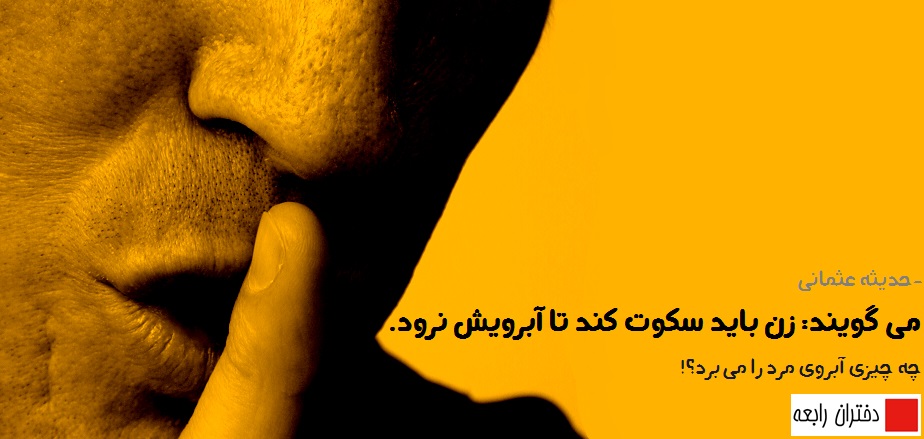
They say women should remain silent to remain dignified. Is there anything that could take a man’s dignity and respect away?

Guest Blog Post for International Anti-Street Harassment Week 2015

A few days ago, I watched a man, who was about 20 years old, pinch a 10-year old girl’s bottom in public. When I defended her, the man looked at me and said, “Shut up, bitch.”

One fight got loud and passersby noticed, but what was surprising was that they were looking at me and the young girl with hatred and disbelief. As usual, in their eyes, it was the women who were at fault, not the perpetrator of this ugly act. Every day, through their words and actions, people tell women to be ashamed of themselves while their violators walk away with pride. Women must keep silent to remain dignified. To be respected, we must be silent. Is there anything that could take a man’s dignity and respect way?

When we read news, we all speak against the sexual assault of young girls, but is there a big difference between the violation of girls’ and women’s bodies in their homes versus when it is done in public on a daily basis? What makes one worthy of our condemnation and another our protection? Isn’t it that we tell women who have been raped to be silent as we do with women who are harassed? The harassment of women in public spaces is a manifestation of rape culture and a serious issue. It is true that street harassment is much more common, but this is no reason to think it is “natural” and “justified.” To end street harassment, we need to support women who are harassed- not silence them or shame them.

Our streets are not safe for women and this is a problem. It prevents girls from going to school, women from going to stores, and all from being independent human beings. Street harassment prevents women from working and becoming economically self-reliant. But most importantly, it makes women’s bodies public property- not their own. If something is deemed public, it will be abused and raped. We must fight this mindset. We must fight street harassment so that women are the owners of their own bodies and the sole decision makers for them. We must realize that existing in public does not make women’s bodies’ public property. Just like men, women can exist in public spaces while owning their bodies. We must recognize that women own their bodies and no one has the right to touch their bodies or talk about it without their permission.

By Hadisa Osmani, Dukhtarane Rabia (Daughters of Rabia): A blog on social justice in Afghanistan

Poster text: They say women should remain silent to remain dignified. Is there anything that could take a man’s dignity and respect away?

Share

Filed Under: anti-street harassment week Tagged With: #EndSHWeek, Afghanistan, Daughters of Rabia, Dukhtarane Rabia

Don’t Ignore the Harassment Stories of Young Girls

April 15, 2015 By Contributor

Guest Blog Post for International Anti-Street Harassment Week 2015

When I was 12, I faced my first street harasser. This is never easy for anyone to go through, let alone a young girl. Women and even girls 10 and younger can, have, and likely will face street harassment. But harassment has always been dealt with as a “term of endearment,” or just a fact of life when it really isn’t. According to Stop Street Harassment, 99% of women have been or will be harassed, and harassment can be anything from leering to physical touching. Is this really something we want 12 year old girls to face regularly?

This is an epidemic that we blindly pass off. Some of these girls are so young, they haven’t even entered middle school. I know all of this personally through the hashtag I started on Instagram, #WhatMySHSaid, where people from all over the world tell my followers and me the horrible experiences they’ve had with street harassers. The average age is twelve and the average reaction is disbelief, but with the topic comes horrible responses as well. I have heard people defending these pedophiles who creep on these girls, or say that street harassment is because of what the girl was wearing.

We live in a culture of blaming the victims, and by saying a twelve-year-old is asking to be followed as she walks home from school is a testament to this. We as a society can and should change this culture that we promote and live in. It should not be up to the victims to change their lives and patterns to make harassers comfortable. This is not a problem that should be ignored. Women and girls should not have to be confined in their homes just so they avoid getting harassed because that is not fair, and that is what’s being promoted by blaming the victims of street harassment.

If you’re being harassed, please let someone you trust know about it. Report it on websites and apps such as Hollaback!, and please be careful. Know that there is no right or wrong way to deal with harassment. Some women yell at the person who harassed them, some ignore them entirely. It’s truly up to you and whatever makes you feel comfortable.

The epidemic of street harassment is moving quickly towards underage girls and we should not be ignoring their stories and what is happening to them. As someone who is now seventeen, I can tell you personally that I have been harassed ever since I was twelve, even if I was wearing a hoodie and jeans, and even when I was in my own driveway. Harassment is so very real, and more and more girls and women are dealing with it everyday. Now is not the time to ignore it, but now is the time to fight it.

Chloe Parker, from @rebel.grrrl

Share

Filed Under: anti-street harassment week, Stories, street harassment Tagged With: @rebel.grrrl, #EndSHWeek, #WhatMySHSaid, adolescents, EndSH, hollaback, sexualization

« Previous Page
Next Page »

Share Your Story

Share your street harassment story for the blog. Donate Now

From the Blog

  • #MeToo 2024 Study Released Today
  • Join International Anti-Street Harassment Week 2022
  • Giving Tuesday – Fund the Hotline
  • Thank You – International Anti-Street Harassment Week 2021
  • Share Your Story – Safecity and Catcalls Collaboration

Buy the Book

  • Contact
  • Events
  • Join Us
  • Donate
  • Facebook
  • Instagram
  • Pinterest
  • Tumblr
  • Twitter
  • YouTube

Copyright © 2026 Stop Street Harassment · Website Design by Sarah Marie Lacy