• About Us
    • What Is Street Harassment?
    • Why Stopping Street Harassment Matters
    • Meet the Team
      • Board of Directors
      • Past Board Members
    • In The Media
  • Our Work
    • National Street Harassment Hotline
    • International Anti-Street Harassment Week
    • Blog Correspondents
      • Past SSH Correspondents
    • Safe Public Spaces Mentoring Program
    • Publications
    • National Studies
    • Campaigns against Companies
    • Washington, D.C. Activism
  • Our Books
  • Donate
  • Store

Stop Street Harassment

Making Public Spaces Safe and Welcoming

  • Facebook
  • Instagram
  • Pinterest
  • Tumblr
  • Twitter
  • YouTube
  • Home
  • Blog
    • Harassment Stories
    • Blog Correspondents
    • Street Respect Stories
  • Help & Advice
    • National Street Harassment Hotline
    • Dealing With Harassers
      • Assertive Responses
      • Reporting Harassers
      • Bystander Responses
      • Creative Responses
    • What to Do Before or After Harassment
    • Street Harassment and the Law
  • Resources
    • Definitions
    • Statistics
    • Articles & Books
    • Anti-Harassment Groups & Campaigns
    • Male Allies
      • Educating Boys & Men
      • How to Talk to Women
      • Bystander Tips
    • Video Clips
    • Images & Flyers
  • Take Community Action
  • Contact

Five Ways for Men to Fight Street Harassment

April 14, 2015 By Contributor

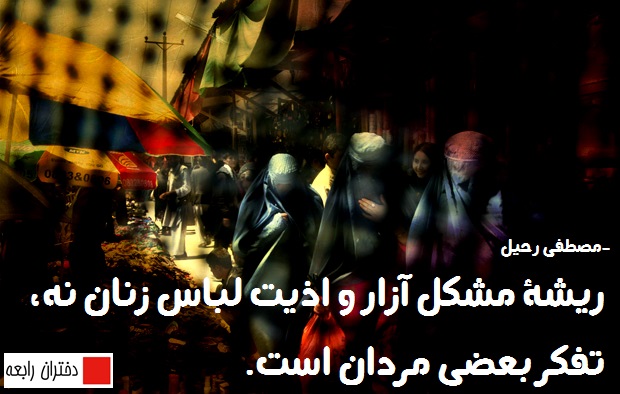
The cause of street harassment is not in the way women dress, but in the way some men think.

When I was in middle school, our Islamic Studies teacher always told us about the concept of Enjoining good and forbidding evil, however he only applied the concept to women. We were 12 to 17 years old. Mere boys. He would tell us that if we saw women going to bazar too often or wearing bad hejab and “improper” clothes, we could prevent them from doing so. He would tell us to tell the women to stay at home, hit them or even kick them. He would tell us that it has sawab: that we would be reward. For a really long time, I really thought the teacher was right. I believed that women who didn’t dress “properly” were the only ones to be harassed and that they deserved it. Since then, I have opened my eyes and look around for myself. I have realized how wrong his teachings were. I have learned that it is not about what women are wearing because I have seen men harass girls who were wearing burqas. For many men harassment has become a hobby. I have realized that the problem is in the minds of these men. Street harassment is a men’s issue. I know that even now many of my classmates still think the teacher was right so contribute to a system that perpetuates women’s harassments and protects harassers. To fight harassment, we must understand it.

One of the worse things we could do is belittle the problem of street harassment. This is a very big problem for women in our country and we know who causes it. Ultimately, the problem will not end until those men who engage in it, stop harassing women. Some of these men do not realize what impact their actions have on women. They do not know that women don’t enjoy harassment. Some men seem to think that they have a right to make comments about women’s appearances. As a man, I know that no one gave them such a right. Not religion, not the Holy Quran, not even traditions. Nothing allows men to behave in this way. We should also realize that it doesn’t matter what women are wearing.

In addition to being inaccurate, it is simply presumptuous and rude to justify men’s behaviors because of women’s clothing. We, men, are not animals. We can control our mouths, our bodies and our thoughts. A woman’s clothing should not drive us wild. Another important part of the problem is the way in which people try to fight harassment. Rarely does anyone say, “stop harassing me because I am person and I want to be treated with respect.” Rather, people say, “would you want someone to treat your sister or mom this way?” The problem is that harassers don’t care about this. Many of them don’t even allow their own family members outside. Also, we shouldn’t respect women because they are sisters or mothers, but because they are human. We must emphasis our common humanity.

Instead of belittling the problem or telling women to dress differently, if you want to do something to stop harassment as a man in our country do the following five things.

1: Start from yourself and recognize that no one has the right comment or harass women based on their clothing.

2: If someone is harassing a girl or a woman don’t be a silent bystander.

3: Use your words and show with your actions that harassment is not something you will accept or ignore.

4: If women are having a problem with men in public, don’t automatically assume they need your help. They might not feel safe getting your help. They might be afraid of creating a fight.  Don’t immediately act like a hero and start hitting people. Ask the women if they need help. If they said, “no.” Respect that. You don’t want to make things worse.

5: Using social media and other media to advocate against street harassment. Every man can campaign to change the views of other men. This will create a ripple effect.

By Mustafa Raheel, Dukhtarane Rabia (Daughters of Rabia): A blog on social justice in Afghanistan

Poster text: The cause of street harassment is not in the way women dress, but in the way some men think. 

Share

Filed Under: anti-street harassment week Tagged With: #EndSHWeek, Afghanistan, Daughters of Rabia, Dukhtarane Rabia, Islam

I Was 12

April 14, 2015 By Contributor

Guest Blog Post for International Anti-Street Harassment Week 2015

“Hey baby,” leered the greasy man on the public street in broad daylight

I am 12

Why is no one stopping him?

I walk

“I’m talking to you, bitch” he progressed

There are people around

I am 12

I walk, feeling his gaze imagining what’s underneath my clothing

Six and a half out of ten and I am one of them

I am 12

I faced my first harasser

I felt his gaze linger

I felt the sweat droplets roll down my face. It was hot. It was summer.

I was taught to dress modest though it is 100 degrees

I am 12

I am being sexualized

I am being called a slut and a whore and a cunt for ignoring these greasy men

I am “asking for this attention” and this “attention is a compliment” and “how are men supposed to meet women if they can’t yell obscenities at them from the street?”

How is a 12 year old supposed to walk down a street alone?

Why am I expected to carry pepper spray with me at 12?

Why was it that I got pepper spray for Christmas when I was 15?

Why do I have to change my habits to accommodate these grown greasy men?

Why is this happening to 11 and 12 and 13 and 25 year olds?

Why is it that our walk has to be commented on?

Why is our body being treated like a public display?

Why are girls constantly sexualized unwillingly?

What is appealing about lack of consent?

Why am I being sexualized at 12?

“Hey baby” is a phrase that haunts many women

“Hey baby” perpetuates the culture that shames women’s natural bodies while simultaneously sexualizing them

“Hey baby” has been said to roughly 65% of women

“Hey baby” is not my name

I was 12

I am 17 and I’ve been harassed ever since.


Chloe Parker, from @rebel.grrrl

Share

Filed Under: anti-street harassment week, Stories, street harassment Tagged With: @rebel.grrrl, #EndSHWeek, adolescent, EndSH, harassment, poem, slam poetry, teenage

Hollaback! Amsterdam: Starting, Launching and Sustaining a Movement

April 14, 2015 By Contributor

Guest Blog Post for International Anti-Street Harassment Week 2015

In December 2014, I was sitting in front of my computer scanning for resources for research I was conducting on street harassment in Amsterdam. What I found was a few scattered blog posts about individuals’ experiences being catcalled or groped throughout the city and their frustrations with the lack of attention and action around the issue.

I kept searching and came across a current campaign by a local group called Straat Intimidatie (Street Intimidation). Their goal is to demand legislation against street harassment from Dutch politicians. This seemed very promising. I reached out to the founder of the group, Gaya Branderhorst and as we spoke, it became clear: Amsterdam has a big problem. A problem that many of its residents, including women, people of color and LGBTQI people, don’t feel safe or comfortable in public spaces.

I put out a feeler through local activist circles and social media networks. Within just a few months, the Hollaback! Amsterdam was team was formed. There are five of us of four different nationalities, including Dutch, German, Honduran and American.  Some of us identify as LGBTQI, some as feminists, and all have at least a handful (if not several handfuls) of stories of experiencing street harassment. These experiences are what inspired us to join the movement in Amsterdam and are what motivate us to fight street harassment in our city.

Because we are an all-volunteer group, launching a brand new site and preparing for a major launch event this week (April 14) has been incredibly rewarding, but also not without challenges.  We have met some amazing and dedicated people through this process who are working on issues of street harassment, domestic violence, gender equality, humanitarian response and human rights. We have had a lot of interest in what we are doing expressed through our Facebook page and Twitter feed. However, every one of us, besides launching Hollaback! Amsterdam, is also working full-time, a full-time student or both working and studying.

Despite each of us juggling Hollaback! with our busy lives, it has been truly inspiring to work with a group of people so committed to such an important cause. As we approach our launch event in April, we are motivated by all of the support, engagement and inspiration we’ve received from residents of Amsterdam, communities within the Netherlands and supporters worldwide.

Eve Aronson is the Co-director of Hollaback! Amsterdam

Share

Filed Under: anti-street harassment week, hollaback Tagged With: Amsterdam, multinational, new organization, Straat Intimidatie

Afghanistan: Invisible Wounds

April 13, 2015 By Contributor

Guest Blog Post for International Anti-Street Harassment Week 2015

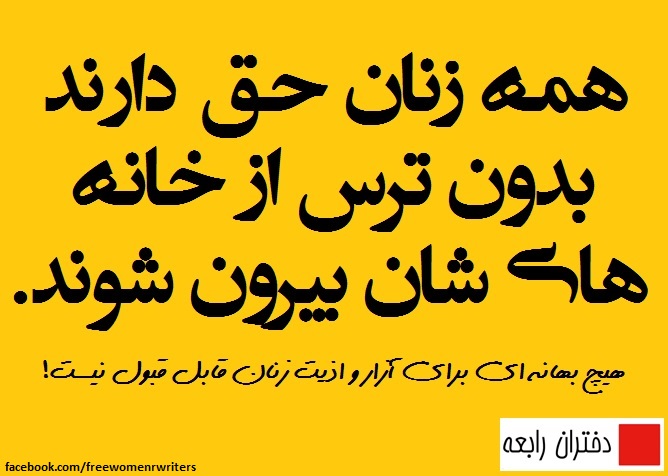
All women have the right to exit their homes without fear. Nothing justifies street harassment.

Being harassed in public is a type of humiliation most women are familiar with. Many have felt the weight of its trauma on their shoulders every day. All the while, the majority of men are unaware of the social, mental and physical impact of street harassment on women.

For many, being harassed is so belittling that they don’t dare talk about it fearing being blamed for it. Many women in Afghanistan don’t speak because they are afraid they will lose the few freedoms they have if they admit to the existence of this issue. This is not a rare occurrence.

Here, in Afghanistan, especially in big cities, the vast majority of women face verbal and physical harassment. No group of women- old, young, hejabed, non-hejabed, burqa-wearing, student, teenaged- are spared. Few women don’t carry the invisible wounds of trauma that harassment has inflicted upon them.

I too am one of the millions of women around the world who has had scary experiences with harassment. They hurt my spirit and torture me and I can’t forget them.

One of the freshest wounds is from a few days ago. A friend and I were walking home from the university and busy discussing our lessons. We were so warmed up that, unlike usual, we did not notice the lustful looks and comments of the men around us.

Suddenly, someone forcefully hit my friend’s leg. She screamed and hit the attacker with her books. We realized he was an old man. We were both shocked and scared. My entire body was shaking. I didn’t know what to say. My friend’s screaming gathered a crowd around us. She was angry, shaking and cursing. I held her hand and pulled her away from the crowd. One of the men had begun hitting the man who touched my friend.

Startled, we had forgotten what we were talking about. We were close to bursting into tears for being belittled publicly. I felt tiny. My friend looked at me and said, “This is Afghanistan. You can’t expect more than this.”

I didn’t know where to dump the flood of pain I felt as a woman who has been denied the bare minimum safety to go to school. How could I become a shoulder for my friend and relief her pain? I looked ahead and stared at the cloud that was swallowing the sun. I held my friend’s hand harder. We walked home in silence with the weight of hatred pulling us to the ground.

I felt terrible. All night I thought about what happened. The more I thought, the more it made me sick to my stomach because this wasn’t the first time I had witnessed, experienced or heard about street harassment.

One after another, my experiences populated by mind. I remembered every detail. I could not forget.

Deh Afghanan Bazaar, crowded streets and the man who had forcefully pushed his body against a young girl’s and then ran away. The girl had run behind him, screaming, cursing.

I had just hit puberty. I did not understand all this, but slowly I had begun to hear words of caution from older girls at school.

“When you go to bazaar walk when one hand in front of you and another in the back so that no one can touch you,” they said. I had gotten confused and terrified. Until I finished school, I had been fearful of crowded spaces and tried to avoid them.

I remember my friend’s tearful eyes who told me of the fear she felt when a man on a motorcycle had stopped her and pulled her scarf away from her head. She was swallowing her tears as she spoke.

I know a taxi driver who tried to abduct a female university student and drove through a crowded street full of cars.

I remember the day one of my female students came to class angry. She hit her books against the desk and cursed “all those who can’t shut their mouths.” She had asked her harassers if they didn’t have mothers or sisters of their own that they were harassing someone else’s sister and mother. They had told her they had mothers and sisters. Not wives.

Her pride was hurt, but perhaps in this world pride is a privilege we only allow for men.

I cannot forget the faces, whistles and words of my fellow university classmates at the academic setting of the university, where we are all supposed to be safe.

I cannot forget these memories. Many people don’t know that it is not just suicide attacks that cause mental issues in our societies. Lack of security, fear that someone will touch and violate your body, or verbally harass you can also cause you mental unrest and pain.

….but forgetting these stories is the only option. In this world, where many fathers don’t see their daughters as humans and brothers their sisters, what can one expect of strangers.

Poster text: All women have the right to exit their homes without fear. Nothing justifies street harassment. 

Wahida Mehrpoor, Dukhtarane Rabia (Daughters of Rabia): A blog on social justice in Afghanistan

Share

Filed Under: anti-street harassment week Tagged With: #EndSHWeek, Afghanistan, Daughters of Rabia, Dukhtarane Rabia

“I still get the shivers thinking about that horrifying moment”

April 13, 2015 By Contributor

A rickshaw-puller touched my leg and moved his hand up on my thigh in a crowded market. I still get the shivers thinking about that horrifying moment! I was 13.

– Anonymous

Location: Bareilly, Uttar Pradesh

Share your street harassment story for the blog.
See the book 50 Stories about Stopping Street Harassers for more idea

Share

Filed Under: Stories, street harassment

« Previous Page
Next Page »

Share Your Story

Share your street harassment story for the blog. Donate Now

From the Blog

  • #MeToo 2024 Study Released Today
  • Join International Anti-Street Harassment Week 2022
  • Giving Tuesday – Fund the Hotline
  • Thank You – International Anti-Street Harassment Week 2021
  • Share Your Story – Safecity and Catcalls Collaboration

Buy the Book

  • Contact
  • Events
  • Join Us
  • Donate
  • Facebook
  • Instagram
  • Pinterest
  • Tumblr
  • Twitter
  • YouTube

Copyright © 2026 Stop Street Harassment · Website Design by Sarah Marie Lacy