• About Us
    • What Is Street Harassment?
    • Why Stopping Street Harassment Matters
    • Meet the Team
      • Board of Directors
      • Past Board Members
    • In The Media
  • Our Work
    • National Street Harassment Hotline
    • International Anti-Street Harassment Week
    • Blog Correspondents
      • Past SSH Correspondents
    • Safe Public Spaces Mentoring Program
    • Publications
    • National Studies
    • Campaigns against Companies
    • Washington, D.C. Activism
  • Our Books
  • Donate
  • Store

Stop Street Harassment

Making Public Spaces Safe and Welcoming

  • Facebook
  • Instagram
  • Pinterest
  • Tumblr
  • Twitter
  • YouTube
  • Home
  • Blog
    • Harassment Stories
    • Blog Correspondents
    • Street Respect Stories
  • Help & Advice
    • National Street Harassment Hotline
    • Dealing With Harassers
      • Assertive Responses
      • Reporting Harassers
      • Bystander Responses
      • Creative Responses
    • What to Do Before or After Harassment
    • Street Harassment and the Law
  • Resources
    • Definitions
    • Statistics
    • Articles & Books
    • Anti-Harassment Groups & Campaigns
    • Male Allies
      • Educating Boys & Men
      • How to Talk to Women
      • Bystander Tips
    • Video Clips
    • Images & Flyers
  • Take Community Action
  • Contact

USA: Gender Essentialism, Engaging Men in Sexual Assault Awareness, & Walk a Mile in Her Shoes©

April 27, 2016 By Correspondent

By LB Klein, Jen Przewoznik, & Jeff Segal
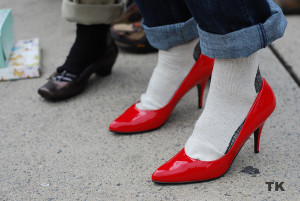
3973726431_718ce14cc5_bEvery April, for Sexual Assault Awareness Month (SAAM), men all over the country stumble through public parks in high heels to raise awareness for the gender-based violence movement. Walk a Mile in Her Shoes© has been a staple of SAAM programming since 2001, and has been touted as “a world-wide movement” engaging “tens of thousands of men” in conversations on difficult topics like gender, power, and sexual assault in an accessible and fun way.

Men have embraced Walk a Mile in Her Shoes© – it’s very often the most well-attended SAAM event by men, and its popularity has helped raise tremendously needed funds for rape crisis centers and other anti-violence organizations nationally and internationally. However, many activists and organizers have begun to voice serious concerns over the popular event.

It is vital that we consider not only the intent but the impact of our sexual assault awareness events. In Walk a Mile in Her Shoes©, men step into high heels to show their solidarity with women. High heels are therefore held as emblematic of “women.” But while some women wear high heels, many women do not, and furthermore, women are often targeted specifically because they express themselves outside of the normative societal expectations of their gender. By equating high heels with “women,” we remove gender non-conforming women from our conversations about sexual violence entirely, and reinforce the common myth that people who present in ways that are considered masculine are not vulnerable to violence. Walk a Mile in Her Shoes© positions women as victims and men as perpetrators, but we need to also acknowledge that there are survivors of all gender identities, including men.

Walk a Mile in Her Shoes© also creates spaces that further marginalize transgender people. Forge, a national transgender rights organization, says activists should consider “whether they are re-victimizing more than a third of all victims by ignoring their very existence.” According to the National Transgender Discrimination Survey, 64% of transgender people have been sexually assaulted in their lifetime. Transgender women are often incorrectly and offensively described as “men wearing women’s clothing,” which is often used to justify violence against them. Transgender women, especially those of color, face not only an incredibly disproportionate risk of experiencing sexual and intimate partner violence but also street harassment, police brutality, homelessness, joblessness, incarceration, and murder. It is vital for people working to end gender-based violence to closely ally with transgender and non-binary people instead of holding events that exclude and further marginalize them.

It is evident that Walk a Mile in Her Shoes© has raised attention, awareness, and funds, but at what expense? We cannot afford to raise awareness by perpetuating an essentialist view of what people should wear, how they should look, act, and be. The Walk a Mile in Her Shoes© narrative is accessible because it is reductive, and oversimplification in our work is, quite literally, dangerous. Of course, communities should still hold awareness raising events, but we must be intentional about changing the exact norms that perpetuate violence instead of reinforcing them. Events that re-victimize, erase, or marginalize survivors in their very concept do not have a place in our field.

So, what else can we do instead to engage men during SAAM?

We can hold events that encourage folks of all genders working together. We can bring smaller groups of men together for meaningful conversation or larger groups for fundraisers that are not built around reinforcing harmful gender norms. Perhaps, as Forge suggests, we should hold events that encourage everyone to break stereotypes about gender and discuss how harmful gender norms perpetuate violence. Then, we will be raising awareness of the true message of the movement to end sexual assault: that to end sexual assault, we must change culture.

LB Klein, MSW has dedicated her professional and academic life to ending gender-based violence, supporting survivors, and advancing social justice. She is a Consultant and Lead Trainer for Prevention Innovations Research Center at the University of New Hampshire. She is based in Atlanta, GA and will begin pursuing a doctorate in the School of Social Work at the University of North Carolina at Chapel Hill this August.

Jen Przewoznik, MSW has over 15 years of experience working with/in women’s and LGBTQ communities as an educator, trainer, technical assistance provider, practitioner, and programevaluator. She is founder of the Queer Research Consulting Collaborative, a project designed to consult with researchers studying LGBTQ issues. Jen is currently the Director of Prevention & Evaluation at the North Carolina Coalition Against Sexual Assault and co-chairs the NC Sexual Violence Prevention Team and the NC Campus Consortium.

Jeff Segal, BS resides in NYC, where he works in the tech sector and moonlights as a professional dancer. He has been a part of the movement to end sexual violence for ten years. Jeff has four years of experience as a sexual violence crisis counselor, and currently is leading initiatives to make social dancing in New York a safer space.

Share

Filed Under: correspondents Tagged With: engaging men, male allies, Sexual Assault Awareness Month, walk a mile in her shoes

USA: A Response to Rush Limbaugh’s Comments on Street Harassment

March 26, 2016 By Correspondent

Kathleen Moyer, Philadelphia, Pennsylvania, USA, SSH Blog Correspondent

On Wednesday, First Lady Michelle Obama delivered a powerful speech in Argentina for her “Let Girls Learn” initiative. During the speech, she shared her experiences with street harassment and how she overcame those experiences by strengthening her voice through education. While her speech inspired people around the world, conservative radio host and infamous misogynist Rush Limbaugh felt that he had to set the record straight about women and street harassment.

Whether the issue is street harassment, birth control, domestic violence, abortion, our appearance, or our needs, Limbaugh always seems to know what’s best for women. Below are four comments made by Limbaugh during his radio show on Thursday, in response to Obama’s speech and the issue of street harassment, as well as my responses to those comments.

“She’s sitting as first lady of the United States and she can’t get past it, she can’t get over it, I’m telling you these people are bitter. They have not gotten over it, all of this is personal, and they haven’t gotten rid of their anger.”

Yes, we’re bitter. If Limbaugh were ogled, groped, and followed down the street by strangers, from the time he hit puberty, he would understand why we’re bitter. The reason why we don’t “get over it” is because it seems to be a never-ending problem. Women of all ages, in all areas of the world are affected by street harassment, to the point where it’s just seen by many as part of being a woman. We can’t get over a problem when that problem, itself, is never over.

First Ladies, like Michelle Obama, are not free from harassment either. With her Secret Service detail, she may not have people yelling obscene things at her anymore, but she still has many strangers commenting on her body and her clothing on the internet regularly. Limbaugh says that she hasn’t been able to “get past it”, but he seems to have missed the point she was making. Although she has experienced street harassment throughout her life, she has not allowed the way others have viewed her to define her. Instead, she has listened to her own voice, and I believe that’s how many women overcome the harassment they are faced with.

“Here’s the bit about sexism, do you know how many women would love being whistled at walking down the street?”

Probably the same number of women who enjoy listening to this sexist drivel. Believe it or not, women like to walk in public without being objectified and threatened by strangers. Some women find it irritating, some find it aggravating, and some find it frightening, but very few women find it flattering. Having to hold your keys like a weapon or carry pepper spray or a taser in order to walk safely in public is not an enjoyable experience.

If Limbaugh’s claim that women love street harassment were correct, I wouldn’t be writing this and organizations like Stop Street Harassment wouldn’t exist.

“Okay you have your average American construction site, and you have your average American construction worker, and every woman in the world knows you go walking by there, you’re going to get whistled at. And yet they walked by.”

If a woman happens to be walking by a construction site, why should she have to go out of her way in order to avoid being the target of sexual comments? This statement clearly exhibits victim blaming. Limbaugh’s logic that it’s a woman’s fault if she is harassed at a construction site is the same logic that has been perpetuating rape culture for years. If street harassment at construction sites is so common that Limbaugh just assumes that it will happen, women walking by are not the problem. In addition to this comment fueling the toxic practice of victim blaming, it is also an unfair generalization of construction workers. Surely not all construction workers share the misogynistic beliefs of Limbaugh. I’d like to believe that the majority of people agree that no one asks to be harassed by simply existing in public.

“I’m sorry, Mrs. Obama, but God made me a man, and as such I can’t help noticing a woman who I think is attractive. And I’ll be damned if I’m going to shut up and not tell her so.”

Everything about this argument is wrong. Firstly, the idea that men cannot help harassing women is harmful and completely ungrounded. Plenty of men go out in public, every day, and manage not to harass anyone. It’s called being a decent human being. Implying that men are incapable of this is sexist and promotes the practice of not holding harassers and abuses accountable for their actions.

Secondly, Limbaugh’s refusal to stop harassing women is despicable. If someone does something that makes another person feel uncomfortable or threatened, he/she should stop immediately, without question. Limbaugh’s inability or unwillingness to grasp this shows that he puts his desire to reduce women to sexual objects above women’s safety. This idea is at the core of the problem of street harassment.

While reading Limbaugh’s comments, it occurred me that he may have simply said these reprehensible things for publicity. Despite this, I chose to write a response to his remarks, because I’ve heard his arguments echoed by others on a regular basis. If these ideas were limited to Limbaugh, they would not have a significant impact, but because many others share these adverse opinions, they must be addressed and debunked.

The first step in ending street harassment is thinking critically about this issue and making our voices heard, as suggested by Michelle Obama.

Kathleen is a full-time graduate student studying professional and business communication. She plans initiatives to increase awareness of sexual assault, domestic violence, and other related issues through her university’s anti-sexual violence group, Explorers Against Sexual Violence.

Share

Filed Under: street harassment Tagged With: Argentina, Michelle Obama, rush limbaugh, street harassment

Germany: Street Harassment in Germany – Current Situation

March 25, 2016 By Correspondent

ProChange, Germany, SSH Blog Correspondents

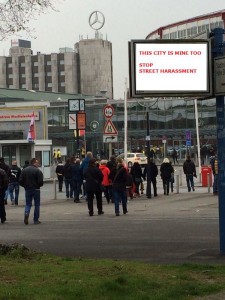
THIS CITYStreet Harassment, meaning the harassment in public space, is a problem in Germany that affects women* and girls as well as LGBTIQ*. It limits people in their participation in social life as it dictates when and where they leave their home and can even affect the choice of their place to live, their shopping opportunities, work options and hobbies.
According to a study conducted by the EU regarding sexual harassment, three out of five women* had experienced sexual harassment in Germany since they reached the age of 15. It is striking that according to that study, about one-third of the women experiencing sexual harassment did not regard it as “severe”; they accepted it without speaking about it to others. They mentioned shame as a reason for this, as well as a feeling of powerlessness for not being able to change something about their situation.

Street harassment is about power and control – and as the reality shows: street harassment is the entering crime and breeding ground for even more violent crimes.

Since the incidences on New Year’s Eve in Cologne and other cities, where women* were surrounded, sexually assaulted and robbed by supposedly brown men, street harassment and sexual assault are in the focus of public attention. The society is sensitized and the courage and willingness to report it has increased among the affected.

Maybe it is because of these circumstances that people did not turn their backs in this case: On the 25th of February, three young women* were observed, followed, photographed and filmed by two Afghan men*. The accused send the data to others, so that some time later up to 30 people showed up. It is not clear though if those people were further perpetrators or if they showed up out of curiosity. Physical assaults luckily did not occur. Attentive bystanders informed the security and called for police.

The extensive media response in politics and society is sadly not out of concern about the suffering and injustice against the affected. There is no outcry because we are suffering from diverse structures of power and hierarchy worldwide. Instead there is an outcry that those crimes are collectively committed allegedly by people described as foreign.

How about the law? What punishment do perpetrator have to expect?

Workplace

The General Equal Treatment Act (AGG) puts sexual harassment in the workplace under penalty. The employer has the duty to protect the affected employee from sexual harassment. Perpetrators can expect disciplinary consequences.

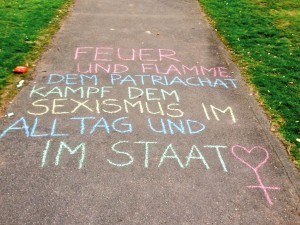
Köln KreidePublic Sphere/Street Harassment

In contrast, the public sphere is nearly a zone of impunity when it comes to the sexual harassment of women*. The penal code does not regard street harassment and sexual harassment as a criminal offence even though many organizations keep pushing for it for years now. The perpetrator who grabs under the skirt of a woman when getting on the metro does not, legally speaking, make use of coercion, nor does the one intentionally grabbing a woman’s breast in a crowded bus. When it comes to determining sexual attacks, it is not even always the offence of insult that can serve as catchall element.

Self-Defense?

Only few people know that the affected is allowed to defend her or himself during the attack. The right to self defense vanishes the very moment the attack is over and no further violations of the victim’s rights can be expected. If the perpetrator, for instance, kisses the affected on the mouth or touches her between the legs and then turns away, the affected, as long as no further attacks are to be expected, has no right to punish him or her back as the right for self defense has vanished. If the affected slaps the perpetrator in the face, this falls under the offence of bodily harm under the penal code.

If only the ones that recently proclaimed that women should button up their shirts^ , stood up for sexual self determination, the affected might have had the chance that perpetrators could be accused and sentenced.

Female Asylum Seekers in the New Asylum Legislation

Germany violates compliance with EU guideline 2013/33/EU of the European Parliament and the Council of Europe since July 2015 by not granting female asylum seekers the protection they deserve. The new asylum legislation (“asylum packet II”), overruled all protection measures, even intended minimum standards, although the existing shortcomings have been addressed over and over again. Women* do not only suffer sexual violence by fellow asylum seekers, but also employees of the security service can be perpetrators.

Our Conclusion

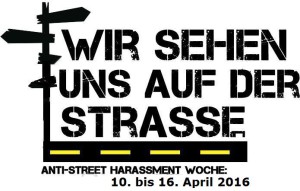
WirsehenunsaufderStrasse2016Street harassment cannot be reduced to certain cultural or religious groups. The reasons can in fact be found in domination of people over people and are a product thousands of years of patriarchy which exist in different manifestations worldwide.
We will continue to work for a change in the law and hope that the incidences of the New Year Eve and the resulting increase of public awareness will promote change.

Next to legal measures, it is of high importance too that we work for long-term changes in the perception of justice and shared responsibility within communities. This can be achieved by solidarity, raising awareness, networking, campaigns such as International Anti-Street Harassment Week, from 10th to 16th of April, with information, actions against street harassment, against everyday sexism and sexual assaults.

———–
^ Birgit Kelle, Dann mach doch die Bluse zu: Ein Aufschrei gegen den Gleichheitswahn, 2013.

ProChange is a group of people between 20 and 64 years of age who have been active for several years or decades now. ProChange consists of a small group of core members (pictured left) in a network of other activists. Our main focus is on street harassment, sexism and sexualized violence. We are opposed to all forms of exploitation as we believe that they are all connected.

Share

Filed Under: street harassment

USA: Honor Killings

March 16, 2016 By Correspondent

Rupande Mehta, New Jersey, USA SSH Blog Correspondent

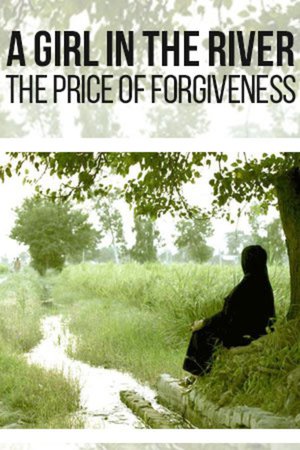
a-girl-in-the-river-the-price-of-forgivenessRecently I watched HBO’s premiere of the Oscar-winning documentary A Girl in the River: The Price of Forgiveness about honor killings in Pakistan.

Being born in India and having extremely controlling parents, I have seen a lot. Most attitudes I have encountered in my life are far from progressive. They demand women not leave the house, not have friends or not to be social in any way. Otherwise, you are punished and subjected to the worse kind of emotional assault and physical pain.

“I gave you life, I can take it away as well,” is a threat I am very familiar with. These same threats I heard last night on the movie. The main character Saba’s father proudly proclaimed them when she married against his will. Then in an outrage, he and an uncle shot Saba and threw her in the river leaving her to die there alone. But she survived.

I left India 15 years ago, and I wish more had changed than has. Although Saba’s case happened in Pakistan, make no mistake that events like this transpire in other parts of the world. They have for decades and will continue to happen every day in the life of innocent women and girls whose only crime is to have a male friend.

In the Name of Honor

I was 13 or maybe 14 and had a boyfriend – my first love, the love of my life. We met seldom so this particular evening I was very excited to see him. We were walking on the street – not holding hands, not in any physical proximity – only walking and talking like two friends would.

Suddenly, I looked sideways and saw my father’s car racing towards me at full speed. I froze not knowing what to do. My father knocked me over with his white Maruti van. I lay on the street with my knee badly bruised and bleeding while he got out of the car and started beating my boyfriend. Luckily, I wasn’t seriously hurt but he almost went to the same extent Saba’s father did.

Why did he do that? Well, he was trying to protect his honor. It was not acceptable to him that I talked to a male friend in the presence of “society”. What would they think of him, letting him run his women loose like that? Mind you, the entire incident, for him, had nothing to do with what he did to me and how he hurt me but how I went against his will and hurt his feelings. That day, I stopped believing that my father could protect me. I lost all faith in him and his love for me. And of course, I never got over it. I don’t think I ever will.

My crime was talking to someone who did not belong to my gender and could have the propensity to take away my father’s “honor.” And for my father, protecting his honor came above everything else. Even above that daughter he claims, even today, to love more than anyone else.

Saba’s story made me want to bawl as I saw my own experiences and those of thousands of others who are yet to come face to face with their fathers’ wrath. Our society is a dim, hopeless place that not only denies women basic freedom, including to roam safely in public spaces, but also honors those fathers who commit such horrendous acts against their daughters. No one speaks a word, no one stands with us. We are left with our trauma to deal with the ugly scars these “parents” throw on us, and to hear that we do not deserve to be loved because we did not abide by their rules.

Saba was forced to forgive those who almost killed her. She did not want to but she had to. Why? Because our society does not give women rights to make up their own mind either. She is the only one who knows what she went through in that river and how she made it out and sought help. Yet, no one asked her what she wanted to do. They all wanted sulah (reconciliation) and for Saba to realize that her father is the sole bread winner.

What’s Honor Killing?

For those who are unfamiliar with it, honor killings are acts of vengeance, usually murder, committed by male members against female members who are held to have brought dishonor upon the family. According to the International Honor Based Violence Research Center, 5,000 honor killings take place throughout the world, with 1,000 each occurring in India and Pakistan alone.

This happens because we believe women are men’s property and daughters have to abide by every rule in the codebook. If not, they are tarnishing the family’s honor and deserve to die.

Our attitude that women are objects, not humans, is wretched. We kill them if they do not listen to us, pour acid on their bodies if they reject us, harass them on the streets if they pass us and then blame them if they complain or fight against us.

Last night, after watching Saba I felt hopeless – the fight to changing minds and outlooks is so long; some days it makes me not want to get out of bed. But despite the harrowing battle that lies ahead, the future of our daughters depends on it. I hope Saba has a daughter as she wishes and I hope that little girl can fight her way through building a beautiful life and living the way she wants to – the same wish I have for my little girl.

Rupande grew up in Mumbai, India, and now resides in the U.S. She has an MBA and is currently working towards her MPA, looking to specialize in Non Profit Management. You can find her writing on her blog at Rupande-mehta.tumblr.com or follow her on Twitter @rupandemehta.

Share

Filed Under: correspondents Tagged With: A Girl in the River, acid, honor killings, India, Pakistan

USA: Five Ways People are Fighting Street Harassment

February 28, 2016 By Correspondent

Julia Tofan, Connecticut, USA, SSH Blog Correspondent

Street harassment is terrifying. It can start with catcalling and stalking, and can quickly escalate to threats and violence if a victim shows anything but submission and compliance. It can be so pervasive in daily life that it’s expected. It’s not a question of whether it will happen, but when and where. It’s an issue people around the world share and fight against. Here’s a list of recent initiatives and how they’re working.

  1. Social Media: Street harassment campaigns and organizations quickly immerse social media with hashtags and headlines. Social media has the power to educate the masses, show victims of street harassment that they are supported, and change the status quo of accepted societal behavior, like catcalling. One example is Brazil’s Carnival Campaign, advocating for #CarnivalSemAssedio, or #CarnivalWithoutHarassment. Social media doesn’t offer victims legal protection or end street harassment, but it makes a difference.
  2. Bringing Attention in the Moment: Who would’ve thought punk music and confetti could be used to fight street harassment? That’s exactly what women in Mexico City, one of the most dangerous places in the world for women according to the UN, are doing. The ladies of Las Hijas de Violencia, or Daughters of Violence, shoot confetti and play loud punk after an incident of street harassment. It’s dangerous and can escalate the situation if the street harasser feels attacked or shamed, but the women report that it helps them move on and take control of the situation.
  3. Scooter Gangs: Women in Cairo are frequently victims of street harassment, but scooters are providing women with a safer means of transportation than public transportation or walking. Girls on Wheels has recruited more than 300 girls, taught many girls how to scooter, and gained the support of girls’ families. It doesn’t get to the root of street harassment and stop perpetrators, but it empowers girls and improves safety, and that’s a step forward.
  4. Women only Transportation: Public transportation is a common location of street harassment, and it’s also a necessity for getting to and from different places. Women-only transportation implies all men are dangerous, places the onus on women to stay safe, and isn’t perfectly enforced, which allows males to occasionally enter the buses with the intention to harass women. Also, it isn’t always available. However, it can temporarily improve safety conditions for women traveling using public transportation, as Mexico is trying to accomplish with a new program.
  5. Apps: Street harassment is vastly under reported. Whether it’s fear, lack of support and trust, or shame, victims oftentimes don’t report street harassment incidents. Apps like Ec Shlire, an app designed by a Kosovo woman, are fighting that by giving women a community specifically for reporting street harassment and putting the incident on the map. It’s bringing the attention to light and giving victims a sense of solidarity, but it doesn’t report incidents to the police and enable police involvement.

People have had controversial reactions to the various programs and campaigns fighting street harassment. Every program and campaign has drawbacks, but something is being done, and along with the drawbacks, there are benefits. Whether programs and campaigns blame victims, solve the root of the problem, take street harassment seriously, and keep women safe are important questions to keep on asking, but recognizing the positive impact different projects are showing is also vital.

Julia is a student in a rural town in Connecticut. She writes for Givology, a nonprofit dedicated to improving access to education, and Dreams That Could Be, an organization telling the stories of students facing great challenges but persevering in their education. Read her blog posts on Givology and Dreams That Could Be and follow her on Twitter @Julia_Tofan!

Share

Filed Under: correspondents, street harassment Tagged With: apps, bicycle, brazil, Egypt, kosovo, mexico, women-only transit

« Previous Page
Next Page »

Share Your Story

Share your street harassment story for the blog. Donate Now

From the Blog

  • #MeToo 2024 Study Released Today
  • Join International Anti-Street Harassment Week 2022
  • Giving Tuesday – Fund the Hotline
  • Thank You – International Anti-Street Harassment Week 2021
  • Share Your Story – Safecity and Catcalls Collaboration

Buy the Book

  • Contact
  • Events
  • Join Us
  • Donate
  • Facebook
  • Instagram
  • Pinterest
  • Tumblr
  • Twitter
  • YouTube

Copyright © 2026 Stop Street Harassment · Website Design by Sarah Marie Lacy