• About Us
    • What Is Street Harassment?
    • Why Stopping Street Harassment Matters
    • Meet the Team
      • Board of Directors
      • Past Board Members
    • In The Media
  • Our Work
    • National Street Harassment Hotline
    • International Anti-Street Harassment Week
    • Blog Correspondents
      • Past SSH Correspondents
    • Safe Public Spaces Mentoring Program
    • Publications
    • National Studies
    • Campaigns against Companies
    • Washington, D.C. Activism
  • Our Books
  • Donate
  • Store

Stop Street Harassment

Making Public Spaces Safe and Welcoming

  • Facebook
  • Instagram
  • Pinterest
  • Tumblr
  • Twitter
  • YouTube
  • Home
  • Blog
    • Harassment Stories
    • Blog Correspondents
    • Street Respect Stories
  • Help & Advice
    • National Street Harassment Hotline
    • Dealing With Harassers
      • Assertive Responses
      • Reporting Harassers
      • Bystander Responses
      • Creative Responses
    • What to Do Before or After Harassment
    • Street Harassment and the Law
  • Resources
    • Definitions
    • Statistics
    • Articles & Books
    • Anti-Harassment Groups & Campaigns
    • Male Allies
      • Educating Boys & Men
      • How to Talk to Women
      • Bystander Tips
    • Video Clips
    • Images & Flyers
  • Take Community Action
  • Contact

USA: “Tough but Necessary Conversations”

January 13, 2015 By Correspondent

Dylan Jane Manderlink, Arkansas, USA, SSH Blog Correspondent

As a recent transplant to the rural south from Boston, MA, I have experienced a great deal of shock that comes from the geographical and cultural differences between a northern city and a rural town in the south. I have also faced differences in human experiences that have propelled me into conversations that I never thought I’d have.

One of the biggest changes I noticed in my new life is how I now felt while walking through a public space. Walking along my town’s quaint Main Street, I am greeted with warm southern hospitality and have not been subjected to catcalls, leery eyes, and unwanted attention. Now, that’s not to say that catcalling doesn’t exist in southern areas, but at least in my personal experience so far, I have not yet been exposed to it. My existence in a public space feels different now and because of that, I feel motivated to speak out about the street harassment that plagues urban environments and spread awareness of it in my new community.

As a 20-something first-year teacher, my students feel very comfortable seeking advice from me, sharing their concerns, venting about their stressors, and updating me on their lives. I have been grateful for the opportunities I’ve had to build meaningful relationships with my high school students. The connections I’ve been able to make with my students have helped us develop a common ground, despite our geographical and cultural differences. Through establishing this common ground, an important dialogue has been opened between me and my students concerning a variety of hard-hitting and sensitive issues.

Recently, one of my female students expressed frustration and discomfort with the way male students look at her and talk about her outfits and body. She asked me if I had ever experienced uninvited and uncomfortable situations like that. I told her that because of street harassment I had, especially while living in Boston.

Despite living in very different regions of the United States, the conversations I have had about street harassment with my students have helped develop a vital and ongoing dialogue about female empowerment and the unfortunate objectification of female bodies in the public and media. Most of my students were unaware of street harassment until I opened up to them about my personal experiences, the experiences of my friends, and the reality of it in our society today. Through these productive conversations and teachable moments, I have realized how important opening up a channel of dialogue amongst young people in a rural area about street harassment, gender-based violence, and the treatment of self-identified women in society can be.

Our geographical differences should not equate to an unawareness of social injustice. I believe it is our duty as civilians and social activists to generate meaningful conversations that spark change, awareness, and genuine concern for the well-being of others across our nation’s zip codes and beyond our country’s borders. Of course it’s important to note that there are many regional differences in our nation that bring about challenges, injustices, and ailments that are unique to that environment, but I think we are doing a disservice to our nation and world’s social injustices by not equalizing awareness and attention to these issues. The injustices that plague one community, affect us all.

The more we are unafraid to approach these tough but significant conversations, the more we can   rally around solutions to issues that are debasing populations and the basic humanity of people. These cross-cultural and cross-geographical conversations have the potential to defy the physical barriers that separate us and create more unity than we may have thought.

As a teacher, I have the privilege of initiating and partaking in important conversations like these everyday with my students. But I understand that some careers don’t allow this to happen as frequently or accessibly as mine. With that said, my charge to you is to fearlessly approach these conversations with people who you share commonalities with but also differ greatly from. Often, it’s through our differing human experiences that we can construct a diverse, deep, and productive conversation that has the potential to lead to solutions to some of our society’s most complex and murky problems. Despite my students not having been exposed to street harassment before, they have gained a new perspective on a societal injustice that impacts us all.

Dylan is a recent graduate of Emerson College and currently teaches 8th, 10th, and 11th grade Digital Communications and Audio/Visual Technology in an Arkansas high school. You can visit her personal blog and follow her on Twitter @DylanManderlink.

Share

Filed Under: correspondents, street harassment

Nepal: Separate buses now, separate walking lanes in the future?

January 9, 2015 By Correspondent

Aakriti Karki, Kathmandu, Nepal, SSH Blog Correspondent

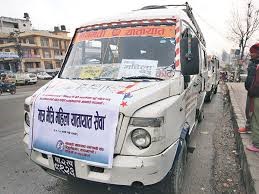
Image via ekantipur.com

Recently, a female only bus service launched in Nepal. The idea behind this service is to provide more safety to women from harassment.

When I read about it in the morning paper, I smiled. I was glad that the public transport authorities were finally paying heed to our concerns. Moreover, to know that the bus services would soon have lady drivers and lady conductors meant that more opportunities were going to be provided to women. Also, this would break the gender stereotypes in our society. We don’t see women as bus drivers or as conductors in Kathmandu even though there is a rise in the number of women who drive their own cars. Even the tempos have more female drivers compared to bus drivers. As for conductors, I’ve seen only a handful in Kathmandu so far. So I was really happy about the news that morning.

That very day, while I was returning home, I was treated rather rudely by a male bus conductor. As soon as I took my seat next to a window, he stared at me. A few other passengers gave me quizzical looks. A few minutes later, the conductor started yelling and pointing his finger at me. I had my earphones in so I removed them in time to hear him yell at me for not sitting in the “women’s seating area,” meaning the few seats designated for women-only on the bus.

I apologized and sat where he wanted me to be seated. Throughout that ride I kept questioning myself – Why could I not sit any other place? Wasn’t this “seat reservation” system put in place for the ladies who couldn’t find a seat in a packed buses? Why did I have to sit here if I could sit anywhere else? The bus wasn’t completely occupied! I didn’t have to sit just there. I knew I could sit anywhere else. But how was I supposed to explain it to them? The conductor followed the system. But was that the right way? He just did that to avoid the scolding from the police in case there was an inspection.

This is where our problem lies. No matter how much our society chants “women equality”, “women empowerment”, “women safety”, we never manage to make that happen. Will females not be allowed to travel in regular buses because there are “all-women buses” available for us? What if I want to travel someplace with my guy friends? Will we have to use separate buses? I hope this doesn’t become another misinterpreted system or another excuse for people to tell me where to sit. The last thing I need now is people telling me which bus to travel in and whom to travel with.

The new women-only bus “tactic” will surely help physically challenged women and older women. It’ll definitely put parents with young daughters at ease. But not me. I don’t mind defending myself when someone makes lewd comments about me or even stares me with that grin on his face. I like fighting with perverts and harassers. I like my freedom and I want all that any guy in my society gets.

I also like making people aware about the inequalities and dangers our society holds for girls. I like it when men show some respect to women – not because they are women but because they are humans. I like it when one human respects another human.

With these new buses, maybe we’ll be safe. But what about the “perverted” minds that will still wander free? Will we start having separate lanes to walk in? Because hey! We aren’t safe on the streets either, are we?

Aakriti is a student at Jalalabad Ragib Rabeya Medical College and member at Women LEAD Nepal – the only leadership development organisation for young women in Nepal. You can follow her on Twitter @karki_aakriti or Facebook.

Share

Filed Under: correspondents, public harassment, Stories, street harassment

USA: Three Problems with the “Slap Her” PSA

January 8, 2015 By Correspondent

LB Klein, Georgia, USA, SSH Blog Correspondent

**Trigger Warning** for themes of gender-based violence, nonconsensual touching, adults asking children to commit violent acts

Near the end of a new Italian viral video dubbed “Slap Her: Children’s Reactions,” a man off camera asks boys to slap a girl. They refuse. Then comes the tagline “In the kids’ world, women don’t get hit.”

In theory, I would be ecstatic to see a PSA on this topic reach 12.5 million viewers, particularly one that engages young people, especially boys, in the conversation.  But “Slap Her” is not that video, it only masquerades as a PSA about gender-based violence. In reality, it doesn’t actually address the critical global public health problem of gender-based violence. Instead, it trivializes the issue while it perpetuates the exact cultural norms that perpetuate violence.

I watched this video and felt emotional, not because I was moved by the message of “Slap Her,” but because I was deeply uncomfortable. Here are three reasons why:

1. Martina is depicted as a prop, not a person.

The video begins on a light note with the boys answering questions about their names, their ages, what they want to be when they grow up, and why they want to pursue those careers.  There is significant time dedicated to helping us get to know the boys and who they hope to become.   It’s impossible not to like them and feel a connection.

Romantic music swells, and–enter Martina.  Martina isn’t asked any questions, and we are not given exposition to see her as a real person. She is literally voiceless.  We hear about her only through the boys’ descriptions of her appearance. The one adjective used to describe her (repeatedly) is “pretty.”  We don’t find out about Martina’s goals for the future.  While the boys are full characters in the story, Martina is just a prop.

The off-camera male voice asks the boys to talk about what they like about Martina, to caress her, and to make funny faces at her. In the video’s climax, they are asked to “slap her, hard.”  The boys are depicted as having the agency to obey or disobey the voice, but what about Martina’s agency?  She is not asked for her consent. In fact, she is completely silent and looks nervous throughout. While the video sends a message that even young boys know that hitting a girl is wrong, it also depicts girls as lacking in bodily autonomy.  What if this so-called “social experiment” had gone the way of Milgram, and the boys had obeyed the authority figure and hit Martina? Does anyone ask her how she feels?

2. Gender-based violence is oversimplified to a slap.

This video reduces gender-based violence to a slap. In reality, abusers would rarely, if ever, (knowingly) slap a woman on camera.  Abusers are also rarely strangers.  I am NOT relieved that the boys don’t hit Martina on cue. I would be truly shocked if one of them did.

Gender-based violence involves power and control and abuse that is not only physical but emotional, psychological, economic, and spiritual.  Physical violence can certainly be a part of abuse, but it is used as one tactic to gain control and dominance.  Abuse typically escalates over time and includes dominance, humiliation, isolation, threats, intimidation, and denial.  A small percentage of men hit their partners, but they are allowed to get away with it because of the exact culture of male dominance that “Slap Her” perpetuates.

The boys say they don’t slap Martina because men shouldn’t hit (pretty) girls, and they’re “real men.”  The moral of the video seems to be that even young boys know it’s not okay to hit women, thus shaming any adult who would think gender-based violence is acceptable.  By framing the boys’ responses in this way, the video uses the exact gender stereotypes that perpetuate violence to speak out against it. Violence is reduced to a slap, and the boys are not called to question their power.  These gender stereotypes limit children of all genders and can be, quite literally, deadly for women and trans people.

The same logic that keeps these boys from slapping Martina props up male entitlement.  Street harassment is so often dismissed because women and girls should “take it as a compliment.” This video endorses Martina as a pretty thing for the boys to desire, admire, and even touch, as long as they don’t hit her on command.  That is not revolutionary. That’s patriarchy.

3. It’s not a PSA; it’s Clickbait.

I asked an Italian friend to help me wade through information about this site and video, as I don’t speak Italian beyond what I’ve learned visiting the restroom at Macaroni Grill.  It appeared so abruptly that I needed to know its origins.

“Slap Her” is not a PSA created in partnership with survivors or violence prevention organizations. Fanpage.it is a news site focused on generating clickbait. Luca Iavatore, who has been identified as the off-screen voice, is a video journalist/cultural media reporter for Fanpage.it.

There is no trigger warning. There are no resources listed for survivors, abusers, or folks who are triggered by its content. There are no links to websites to learn more about the issue. There is no call to action.  There is not context or discussion of who debriefed with the boys or Martina. In fact, there is no other information on Fanpage.it about gender-based violence. This video is generating profit for Fanpage.it, and there is no information on their site about proceeds going to benefit gender-based violence advocacy or prevention causes.  The intentions of folks at Fanpage.it might be excellent.

However, without further information, I can’t help but think “Slap Her” is a publicity stunt. The children in this video, and the viewers’ emotions, are being exploited, and Fanpage.it is pocketing advertising dollars.  It would be a truly brilliant marketing ploy, if it weren’t completely unethical. The creators of this video owe its viewers, the children who were filmed, and survivors an apology.

One small edit could have taken this video from harmful to thought-provoking. The video ends, seemingly for comic relief, with one of the boys asking the off-camera man “Can I kiss her on the cheek or on the lips?”  One line of additional dialogue could have completely changed the message to one of liberation. “Slap Her” could have simply added: “Why don’t you ask Martina?” That one line could have taken the boys’, and the audience’s, commitment to ending violence one step further by acknowledging Martina’s bodily autonomy and humanity.  Without this addition, “Slap Her” is a missed opportunity at best and a harmful perpetuation of status quo at worst.

LB is an Atlanta-based advocate and educator dedicated to ending gender-based violence, supporting survivors, and advancing social justice.  You can follow her on twitter @LB_Klein.

Share

Filed Under: correspondents, street harassment

Bulgaria: Running while female – public response

December 3, 2014 By Correspondent

Diana Hinova, Sofia, Bulgaria, SSH Blog Correspondent

In an earlier post I outlined the findings from the Runners’ Survey on perceptions of safety in Bulgaria. In short, when asked about specific forms of street harassment while running, 15% of men and 51% of women report having experienced at least one form.

A lively discussion followed when the results were shared in the public Facebook group Running for fitness. Competitions. Below are some excerpts of the public discussion, in my own translation, names removed.

In my opinion there are some downright absurd interpretations, delusions and overblown comments (oh, the internet). Many runners were open to a discussion of the topic and its gender dimension, and it is encouraging to see some male runners sensitively try to understand where such concerns come from.

But please: take a look and make your own conclusions. One final word before I leave you to it – @takebackthetech is running an open video campaign on whether and how women’s voices and women’s issues around violence are silenced online.

A (man): This seems to me like a serious issue. 50% of women have been harassed in one way or another…

B (woman): Absolutely. It happens to me all the time, especially when running after dark.

C (man): I think it’s no smaller problem that it’s happened to 15% of men also?!?

D (man): And I worry that I startle people when I’m running in the park… haha. There’s no way to eliminate these obnoxious guys. If you encounter them, signal to the nearest fellow-runner! He will help you. After all not many women run after dark. Ladies, I suggest you run with a friend! Thank God I’m a man!

E (woman): That percentage among women seems exaggerated to me. I mean I take it many of them are just lying.

F (woman): Why would they lie ???

E (woman): Hahaha why do you think? For attention and to be popular. I’m at the gym right now. No one ever bothers me and in the gym.

There’s no unwanted attention. There are subconscious signals for attention, and poor selection of the place and time for sports. Well I’m not going to the local gym at Lavov most with the arabs and the gypsies. I’m not making sexy eyes at every man and I’m not “fearing rapists”. I’m not picking crappy clothes. Things like that.

G (man): Imagine someone has recently started running. They’re not sure what they’re doing to begin with, let alone look convincing to others. Usually it shows and maybe this contributes to malicious interest. People who have ingrained training habits since childhood probably don’t have this problem, but there are others too.

H (woman): [E], unfortunately no one is 100% safe. I’ve been assaulted twice (luckily with no consequences apart from the fright) and both times it was daylight and in populated areas. I wasn’t dressed provocatively, nor did I look insecure.

F (woman): I agree with [H], just didn’t want to argue with [E] because that’s a lost cause. Both assaults on me happened in daylight during the summer. […]

C (man): If the goal was rape, then that sounds really scary, not that getting mugged is a picnic, but…

If this is really the case and you encounter these guys so often … I don’t know, but somehow we have to bring attention to this matter. It may already be known, but not acknowledged…

Diana has a Master’s in Public Policy from Georgetown University and works as a consultant to INGOs. Follow her on Twitter @dialeidoscope or letnimletni.blogspot.com.


България: Да си тичаща жена – обществен отзвук

Според Анкета на тичащите за усещането за безопасност (виж тук), 15% от мъжете и 51% от жените са срещали уличен тормоз по време на тичане в България.

Данните провокираха разгорещена дискусия в публичната група във Фейсбук Бягане за здраве. Състезания. По-длу са някои от коментарите в публично достъпната доискусия, имената са премахнати.

Според мен има някои направо абсурдни реакции, илюзии, и преувеличени коментари (е, това е интернет все пак). Други бегачи са по-открити за обсъждане по темата и ролята на пола в нея. Окураващо е, че някои бегачи мъже се опитват наистина да разберат причините за подобни протеснения.

Но моля: прочетете и си напрвете свои изводи.

А (мъж): Top of Form

АА Това на мен ми изглежда като огромен проблем. 50% от жените са били закачани по един или друг начин…

Б (жена): Абсолютно. И на мен ми се случва постоянно, особено като бягам вечерно време

В (мъж): На мен ми се струва не по-малък проблем, че 15% от мъжете – също ?!?

Г (мъж): Aз пък се притеснявам, че понякога бягайки стряскам хората в парка…  haha Няма начин такива нахални субекти да липсват. Ако видите такива подайте сигнал на най-близкия колега-бегач!Той ще ви помогне. Все пак не са много бягащите жени в тъмното. Госпожиците, съветвам, да бягат с другарче! Господи благодаря ти че съм мъж!

Д (жена): За мен този процент при жените изглежа завишен.
Т.е. приемам че доста от тях просто лъжат .

Е (жена): Защо им е да лъжат ???

Д (жена): Хахаа а защо според теб ?
За внимание и за да се правят на интересни .
В момента съм в залата . Сама . Никой никога не ме закача и в залите .
Няма нежелано внимание. Има несъзнавани знаци за внимание , и лоша подборка на местата и времето за спорт . Е няма да ида в кварталната зала на Лъвов мост при арабите и циганите .
Няма да гледам прелъстително всеки мъж .няма да се “страхувам от насилници ” .няма да подбирам кофти дрехи . Е такива неща .

Ж (мъж): Предтавете си, че човек тича от скоро. Той самия още не е сигурен какво прави, камо ли да изглежда убедителен за околните. Обикновенно това личи и може би създава повод за злонамерен интерес. Хора с изградени спортни навици от деца едва ли имат този проблем, но има и други.

З (жена): [Д] , за съжаление никой не е застрахован. Мен са ме нападали 2 пъти (за щастие без последствия като изключим страха) и и 2та пъти беше през деня и на места, на които има хора. Нито съм била облечена предизвикателно, нито съм изглеждала неуверена.

Е (жена): Съгласна съм с [З] просто не исках да споря с [Д], защото там каузата е загубена. И моите две нападения са били по светло и през лятото. Едното на пътя след табелата Стара Загора, а другото в града по път, по който минават сравнително малко коли и който води до парка. Добре, че бягам сравнително бързо както вече казах…. Радвай се [Д], че не са те нападали…..

В (мъж): Какво значи нападали са ви? Искали са да ви оберат или нещо по-лошо? Ако целта е била насилване, това звучи доста страшно, не че обира е нещо незначително, но …

Ако на истина е така и ако такива индивиди са толкова често срещани … не знам, но трябва по някакъв начин да се привлече внимание към проблема. Ако и той да е негласно известен …


Share

Filed Under: correspondents, street harassment

Peru: Cuando son otras mujeres las que te silencian

November 28, 2014 By Correspondent

Laura Bustamante, Lima, Peru, SSH Blog Correspondent

Conversando con una compañera canadiense me dijo: “en Perú el acoso sexual callejero es muy fuerte, lo peor es que te acostumbras, te cansas y quedas en silencio”. Es verdad, una se cansa, se acostumbra, lo toma como parte de su vida, como este tipo de violencia sexual no es tan atroz se vuelve tolerable y aceptable, “así es pues”, te dicen, “que vas a hacer”, es decir, como mujer no puedes hacer nada y te debes conformar.

La exaltación de la pasividad femenina

Entiendo que muchas mujeres callen cuando son acosadas debido a la naturalización, pasividad y el miedo. Se educa niñas pasivas, delicadas y dulces, y a niños competitivos y agresivos, no se enseña a los hombres a no violar pero se enseña a las mujeres a cuidarse. Además, una mujer piensa: “si este hombre me falta el respeto así, puede hacer algo peor si respondo”, tiene miedo ante el riesgo de violencia física porque un hombre tiene más fuerza física y los cobardes aprovechan eso.

Pero no siempre se justifica el silencio, se trata de saber en qué momento defenderte, y no sobrevalorar el peligro, en una calle solitaria es mejor callar, pero si es día con gente alrededor es un derecho y deber contigo misma el defenderte. Que el acosador te puede insultar o gritar para silenciarte, si, puede… pero peor es cuando quien te violenta y te silencia es otra mujer.

Hay que reemplazar la pasividad por sororidad

Es paradójico que tu primer modelo de mujer sea la primera en silenciarte. La primera vez que me enfrenté a mi acosador callejero estaba con mi madre, pensé: con ella somos dos, pero ella me calló y llamó la atención porque él me podía hacer algo peor. ¡Gracias madre! me enseñaste que 2 mujeres ante un hombre somos menos.

El otro día, 6 chicas se quejaban que un profesor acosaba a sus alumnas, una no denunció porque su mamá le dijo “sin pruebas es tu palabra contra la de él, no te van a creer y vas a pasar un mal rato” WTF!! Hasta que una genio opinó “el profesor no haría eso si las chicas no le siguen el juego, yo pongo mi cara de trasero y no se me acerca”.

¿Poner tu cara de trasero? La lógica que debes andar con cara anti-violación #MyAntiRapeFace para no ser violada, culpabiliza a las chicas ignorando que se quejaban por el “coqueteo” indeseado y olvida que el profesor está abusando de su autoridad.

Culpar y humillar a la mujer acosada es público, cuando una chica se quejó porque le metieron la mano, una señora le recriminó “por salir con esa falda provocas a los hombres”. Mientras, una estúpida conductora de TV opina “chicas hay que entender a los ‘pobres caballeros’ que nosotras también provocamos con esas falditas”… WTF!!

Bajo la cultura de la violación el acoso no es violencia, normaliza y justifica la violencia sexual, culpa o silencia a la víctima, y hasta bromean, una vez dos mujeres decían riéndose de una chica con short y tacones: “si yo me visto así por mi casa, me violan y termino con un hijo” ¿Mujeres en serio?, la violación da risa… mi culpa por vestirme así.

Otra genio dice “Pierdes tu tiempo cuando respondes, con mi silencio les doy indiferencia, mejor ignorarlos”. Pobre ilusa confunde la pasividad con defensa, olvida que una realidad no se cambia con el silencio y que la violencia no se acaba hasta que dices ¡basta!

Y es contradictorio como esta pasividad se torna en agresividad, cuando culpan y censuran a las mujeres que protestan y no cumplen con el rol pasivo, como una mujer que comenta en un fan page “Adáptense viven en Perú, a mí me dicen cosas horribles en la calle y no ando quejándome, dejen de hacerse las víctimas, no sean hipócritas, muchas mujeres buscan la atención de los hombres para sacarles plata”.

Esas malas compañeras te silencian a viva voz cuando te defiendes porque ellas no lo hacen, parece que vuelcan su frustración y miedo contenidos en su pasividad contra las que no siempre callamos, como la vez que respondí cuando un taxista nos gritó cosas sexuales, y una de las chicas con la que estaba me llamó la atención diciendo “¡ya Laura cállate no grites!”

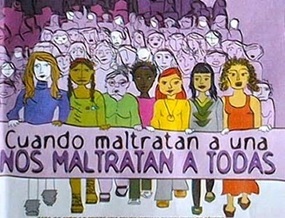
Ya es tiempo que las mujeres abracen la sororidad, que significa hermandad, unión y apoyo mutuo, defendernos y empoderarnos, pensar en colectivo. Estas mujeres deben entender que cuando nos acosan en la calle no es porque me visto así. Nos acosan porque somos mujeres. Cuando atacan a una nos atacan a todas, y es absurdo que una mujer ataque a otra.

La mayoría de mujeres peruanas que conocí no consideran el acoso sexual callejero como violencia, porque eso sería reconocer que son víctimas, no quieren ser vistas como exageradas que se quejan de naderías, piensan que ser víctima es vergonzoso y de cobardes, pero al contrario “pecar por silencio cuando deberíamos protestar es lo que nos hace cobardes”.

Nuestro miedo está sobredimensionado por la pasividad femenina como modelo de mujer, y es preocupante porque esa es la estrategia para mantener el círculo de violencia machista, nos hace tener más miedo y callar cuando deberíamos denunciar, o peor aún, cuando no nos defendemos, callamos a las compañeras que lo hacen, olvidamos que cuando una mujer se defiende nos defiende a todas, está avergonzando y debilitando al acosador que mañana podría acosarte a ti, a tu hija, hermana o amiga, está generando un cambio, porque él lo pensara dos veces antes de acosar a otra mujer porque se dará cuenta que no todas callamos.

Sororidad en vez de pasividad compañeras, ¡sororidad!

Laura ha estudiado Administración en Turismo en Universidades de Perú y Barcelona, y Estudios de Género en la ONG Flora Tristán. La puedes seguir en Twitter en @laeureka.

 When the Ones who Silence You are other Women

A Canadian acquaintance told me, “In Peru the street sexual harassment is very strong; the worst of it is when you get used to it, you get tired and at the end you stay silent.” Truth! One gets used to, tired and takes it as part of her life. As this type of sexual violence is not too terrible it becomes tolerable and acceptable, “this is the way it is”, they say, “what can you do,” that is: as a woman you can do nothing and you must resign yourself.

The praise of female passivity

I understand why many women keep silence when they are harassed due to naturalization, passivity and fear. Society educates passive, delicate and sweet girls, and competitive and aggressive boys. Guys aren’t taught not to rape but women are taught to take care of themselves. At the end, a woman thinks, “If this man is so disrespectful with me like this, he can harm me if I respond,” and, fearing the risk of physical violence, she won’t say a thing because a man has more physical strength and some cowards abuse that.

But to remain in silence is not always justified. It is about knowing when to defend yourself, and not overestimating the danger. On an empty street it may be better not to say anything. But if the harassment happens in the daylight with people around, it is right and a duty to defend yourself. The harasser could insult or shout you louder to silence you, but the worst is when the one who silences you is another woman.

We must replace passivity for sisterhood

Ironically your first female model is likely the first woman to shut you up. The first time I confronted my street harasser I was with my mother, I felt more secure with her and I thought, with she by my side we were two, but she told me off me because according to her, “I was risking myself and he could do something worse.” Thanks mom for teaching me that two women are less than a man.

The other day, six students complained of a teacher who “flirts” with his students. One student told me that she didn’t accused him because her mother told her “you have no evidence, it is your word against his, they won’t believe you and you will have a rough time.” WTF! And a “genius” student said, “The teacher would not do that if the girls didn’t go with it. I give him my pissed off face and he doesn’t approach me.” To put a pissed off face!! The logic seems like practicing #MyAntiRapeFace to not be raped; she blames the students, ignoring that the teacher is abusing his authority.

Humiliation and victim-blaming is a public practice, when a young woman complained that a guy groped her in the bus, an old woman reproached, “You provoke men if you wear that skirt.” While a female TV presenter recently said, “Girls you need to understand these ‘poor gentlemen’ that we (women) also provoke them by wearing those little skirts” … WTF !!

Under rape culture, street harassment is not a type of violence, it is normalized and justified sexual violence. Rape culture guilts or silences the victim, and even people joke about it. Once, I heard two women laughing at a woman in shorts and heels, saying: “If I dress like that in my neighborhood, I’d get raped and pregnant, ahah.” Seriously women? Being raped is a joke…  and my fault for dressing in a certain way.

Another “genius” said, “You are wasting your time when you respond to them. With my silence I give them indifference, so it’s better to ignore them.” This deluded young woman confuses passivity with defense, forgetting that reality is not changed with silence and violence does not end until you say stop!

It is contradictory how some women turn their passivity into aggression toward their female peers by blaming and criticizing other women who protest and don’t meet the passive role. A woman wrote on a street harassment fan page, “You have to adapt to our reality, we live in Peru, men tell me horrible things in streets but I’m not complaining. Stop playing the victim, you are hypocrites when many women seek the attention of men to get money from them.”

These kind of women silence you loudly when you defend yourself because they don´t do it. It seems that they turn their frustration and repressed fear against the women who do not always remain silent, like that day when I responded to a taxi driver who shouted at sexual things at us and one of the young women that I was hanging out with yelled at me, “Enough Laura, don´t shout!”

It is time that women embrace sisterhood, which means unity and mutual support, defend and empower us. These women should understand that when we are harassed on the street it is not because of what we’re wearing. We get harassed because we are women and it is absurd when a woman mistreats another woman over it.

Most Peruvian women with whom I talked do not consider street harassment as violence, because that would imply to recognize themselves as victims and they don´t want to be seen as exaggerated girls who complain about nothing. They think that being a victim is shameful and cowardly, but they forget that “To sin by silence when we should protest make us cowards.”

When we denounce, or worse, when we do not defend, we silence other women. We forget that when a woman defends herself, she is defending all of us, she is shaming and weakening the street harasser that tomorrow might harass you, might harass your daughter, sister or friend. She is making a difference, because that man will think twice before harass another woman because he will realize that not all women remain silent.

We need sisterhood rather than passivity women, sisterhood!

Laura has studied Tourism Management in Universities of Peru and Barcelona, and Gender Studies at the NGO Flora Tristan. You can follow her on Twitter at @laeureka.

Share

Filed Under: correspondents

« Previous Page
Next Page »

Share Your Story

Share your street harassment story for the blog. Donate Now

From the Blog

  • #MeToo 2024 Study Released Today
  • Join International Anti-Street Harassment Week 2022
  • Giving Tuesday – Fund the Hotline
  • Thank You – International Anti-Street Harassment Week 2021
  • Share Your Story – Safecity and Catcalls Collaboration

Buy the Book

  • Contact
  • Events
  • Join Us
  • Donate
  • Facebook
  • Instagram
  • Pinterest
  • Tumblr
  • Twitter
  • YouTube

Copyright © 2026 Stop Street Harassment · Website Design by Sarah Marie Lacy