• About Us
    • What Is Street Harassment?
    • Why Stopping Street Harassment Matters
    • Meet the Team
      • Board of Directors
      • Past Board Members
    • In The Media
  • Our Work
    • National Street Harassment Hotline
    • International Anti-Street Harassment Week
    • Blog Correspondents
      • Past SSH Correspondents
    • Safe Public Spaces Mentoring Program
    • Publications
    • National Studies
    • Campaigns against Companies
    • Washington, D.C. Activism
  • Our Books
  • Donate
  • Store

Stop Street Harassment

Making Public Spaces Safe and Welcoming

  • Facebook
  • Instagram
  • Pinterest
  • Tumblr
  • Twitter
  • YouTube
  • Home
  • Blog
    • Harassment Stories
    • Blog Correspondents
    • Street Respect Stories
  • Help & Advice
    • National Street Harassment Hotline
    • Dealing With Harassers
      • Assertive Responses
      • Reporting Harassers
      • Bystander Responses
      • Creative Responses
    • What to Do Before or After Harassment
    • Street Harassment and the Law
  • Resources
    • Definitions
    • Statistics
    • Articles & Books
    • Anti-Harassment Groups & Campaigns
    • Male Allies
      • Educating Boys & Men
      • How to Talk to Women
      • Bystander Tips
    • Video Clips
    • Images & Flyers
  • Take Community Action
  • Contact

On World Kindness Day – Ask if They are Okay

November 13, 2015 By HKearl

Eight years ago when I conducted research on street harassment for my master’s thesis, I attended a Street Harassment Summit in New York City organized by Girls for Gender Equity. During a breakout session, the women in the room, from various diverse backgrounds, took turns sharing a story.

While each story was moving and infuriating and I included several in my thesis, one woman’s story still stands out to me today. She shared this:

“Street harassment is a huge part of my day and it makes me very angry and I think it’s always tied in with my racial identity. The worst thing that happened to me lately was I was on my way to work at a new job and I was very happy, and this guy said something to me and I kept walking. Then he came up around me in my face and said, ‘You look just like Bin Laden’s sister.’

My mouth was closed, and I was like, why aren’t I responding? He continued to scream at me and I kept walking, and he said, ‘You should get home, women like you don’t work. Don’t your men keep you locked up? Oh that’s right, your men aren’t real men. I’ll show you what a real man is.’ And he proceeded to tell me the actions that real men do to their women.

People on the street were stopped and were staring at me but no one said anything.”

As terrible as every part of her experience was, I will never forget the pain and betrayal she voiced at the end: that no one said anything.

In the years since then, I have heard her hurt echoed in so many people’s stories who feel doubly traumatized by the lack of kindness or even simple acknowledgement from the people around them. The sentiments also appear in stories submitted to my blog Stop Street Harassment, including incidents in Denver, London, and the Bahamas.

Street harassment can be annoying and upsetting, but it can also trigger deeper concerns. A study released last year by researchers at the University of Mary Washington found that sexual harassment is often traumatizing for women, especially for those who have experienced sexual abuse. A 2014 national study on street harassment in the USA showed that it can be frightening; 69% of harassed women and 49% of men said they feared the harassment would escalate into something worse.

Feeling alone and as if there must be something wrong with you since no one around you is speaking up can add to these feelings of trauma and fear.

There are many reasons why people may not speak up when they see street harassment happening. They may not be sure it IS harassment. They may not know what to do. They may think someone else will intervene. They may fear for their own personal safety. Those are all legitimate concerns and organizations like Green Dot and government entities like New York Department of Health provide tools and trainings to walk people through them.

Image via http://bitsofpositivity.com

But as we commemorate World Kindness Day, in addition to the obvious request to be kind and NOT harass others, the plea that I have to bystanders is a simple one: Ask the person if she or he is okay.

I am not the first to say this, of course, and last year social worker and avid Twitter user Feminista Jones launched the hashtag #YouOkSis? to especially encourage persons of color to reach out to women of color who are being harassed to check in and possibly interrupt a street harassment situation. But it warrants repeating.

What I want to emphasize is that if you feel too unsafe or cannot react in time to interrupt harassment, you can still check in with the person after the harasser is gone or the harassment has stopped. Let the person know you saw what happened and that you understand it can be upsetting. Let them know what happened is not okay.

A woman named Sara recently penned an open letter to her street harasser, a man in a car who told her to “move her fat ass along” as she walked through a crosswalk. Included in her piece was this: “To the woman on the sidewalk who said, ‘that’s so rude’ and shook her head when he drove off, thank you. Your three simple words in solidarity were my saving grace and snap back to reality, that no one, not even myself, has the right to disrespect my body.”

After hearing so many stories about the devastation people felt when no one around them acknowledged what was happening or how much of a difference it made when someone did, whenever I overcame my shyness and began asking women I saw if they were okay.

The first time I did this was in 2011 in Florida. I was attending a conference and I was out on a run. As I approached a bus stop where a young woman was waiting alone, men in a car swerved over and it looked like they yelled at her. When I reached her, I stopped and asked, “Hey, were those men bothering you? Are you okay?” She said that the men had circled around and harassed her three times. I told her how sorry I was and offered to wait with her. The bus came around the corner then, so she said it was okay, she could get on the bus now. I told her about my website and told her to reach out if I could help.

The next time I did it I was in New York City at Penn Station. A woman and a man were walking toward me and he was gesturing and talking loudly and she looked very uncomfortable and like she was trying to inch away from him. As they approached, I said, looking directly at the woman, “Are you okay? Is he bothering you?” She thanked me and laughed and said he was her coworker and he was just messing around and being annoying but she was fine.

I felt a little foolish — and that’s a perfect example of not knowing if someone is a harasser or not – but I have no regrets about asking. What if she had needed help?

The third time I spoke out I was walking from my office in Washington, DC to the Metro and I could see that as a woman ahead of me passed by a man, he reached out to touch her and talk to her and she recoiled. By the time I caught up to her, he was gone, but I told her I saw what had happened and that I was sorry – she shouldn’t have to deal with that. I asked if she was okay. She gave me a quick yes and thank you before she hurried on to catch her bus.

Street harassment, especially the accumulation of it, can be so tiring. So upsetting. With the three kind words of “Are you okay” or “You ok sis?”, you can help lighten someone’s load just a bit and let them know they are not alone.

Share

Filed Under: Resources, street harassment Tagged With: bystander

Two Women in Washington, DC Sexually Assault a Man

November 11, 2015 By HKearl

womengropemanWhile the street harassment usually centers around women because we experience it and are usually impacted by it the most, some men experience street harassment and violence too. In our 2014 nationally representative study, 25% of men said they’d experienced it, with a disproportionate number of them identifying as LGBQT. While most said other men harassed them, there were some who said the perpetrators were women. This recent news story in Washington, DC, is an example of what that can look like:

Via NBC Washington:

“Ayanna Marie Knight, 22, of Las Vegas, was charged with third-degree sexual abuse, police said late Tuesday, explaining that an “observant pedestrian” alerted them of Knight’s location. Police are still looking for the second woman.

Video released Monday by the Metropolitan Police Department shows the man waiting in a checkout line at a gas station on the 1700 block of New York Avenue NE about 4 p.m. Oct. 7 when a woman in front of him begins to dance and rub her body against him. A second woman, dressed in red, follows the man and appears to grope him repeatedly.

According to a police report, the women “used force and grabbed (the victim’s) groin and buttocks multiple times in a very aggressive manner without his permission and without his consent.”

The victim told News4 he was humiliated by the attack. “I was assaulted sexually,” he said, asking that his name be withheld. “I felt 100 percent violated. I felt really humiliated also, because when someone is just grabbing your body parts without your permission, no matter who it is, that’s just a violation completely.”

The man said he tried to back away, but the woman continued to advance. “As they were grabbing me, it wasn’t like they were grabbing pants or anything like that,” he said.

The victim asked two cashiers at the gas station to call police, but they “just sat there,” he said. Frustrated, he walked outside and started dialing the number himself. He said he tried to get into his car, but the women grabbed his arm and in an effort to prevent him from leaving. He broke free, walked into the gas station’s car wash and called police. The women eventually left, he said.”

Groping, assault, and sexual harassment are never okay. Everyone should be treated with respect and should be asked for consent before anyone does anything physical (even for a hug). I hope he will be okay.

Share

Filed Under: male perspective, News stories, Stories

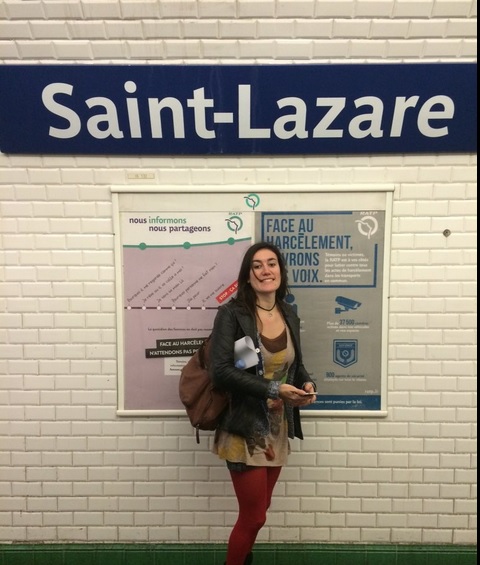
France: New Anti-Harassment Transit Campaign

November 9, 2015 By HKearl

A member of Stop Harcèlement de Rue - by the new French anti-harassment transit campaign
A member of Stop Harcèlement de Rue – by the new French anti-harassment transit campaign

France just rolled out a nationwide anti-harassment transit campaign!

Info via The Local FR:

“Stop – That’s Enough!”

This is the tagline used by the French government in an active push to stop sexual harassment on public transport.

The government launched the awareness campaign on Monday together with rail operator SNCF and Paris transport chiefs RATP.

It will see flyers handed out and a set of posters put up in key places around the capital, encouraging victims and witnesses to speak out with confidence about sexual harassment.

The campaign also aims to remind the culprits that sexual harassment is punishable by law and groping can lead to five years in prison….

Outspoken French feminist group Osez le Féminisme! was one of the organizations behind the push to get authorities to take notice, and welcomed the move on Monday.

“I’ve seen the posters everywhere in the subway now, it’s great that the public service takes this point so seriously,” one of the group’s members, named Aurelia Speziale, told The Local on Monday…

The campaign has taken to several channels to push the message, including encouraging women to share their experiences on social media with the hashtag #HarcèlementAgissons (“Act now against harassment”). The topic was trending on Twitter in Paris on Monday morning.

Other measures saw the implementation of the emergency number 3117, which can be used to report cases of harassment, and to trigger the intervention of security staff. It will soon work via text message too for situations when women aren’t able to speak on the phone.
Night buses in western France’s Nantes have also introduced “on demand” bus stops, meaning people can get off the vehicle as close to their home as possible rather than at the bus stop with everyone else….

When its survey of 600 women in Seine-Saint-Denis and Essonne, two areas in the outer suburbs of Paris, revealed shocking responses. It found that 100 percent of the women said they had experienced at least some form of gender-based sexual harassment in their life while riding the train.”

In Lille in northern France, Ville Sans Relou released a video showing some of the comments that people have been subjected to while out and about in Lille. The video, with English subtitles below, sees one woman recount how someone asked her “Hi, can I rape you please?”…

 

Share

Filed Under: News stories, public harassment Tagged With: france, transit campaign

India: Are we supporting all survivors of sexual violence equally?

November 9, 2015 By Correspondent

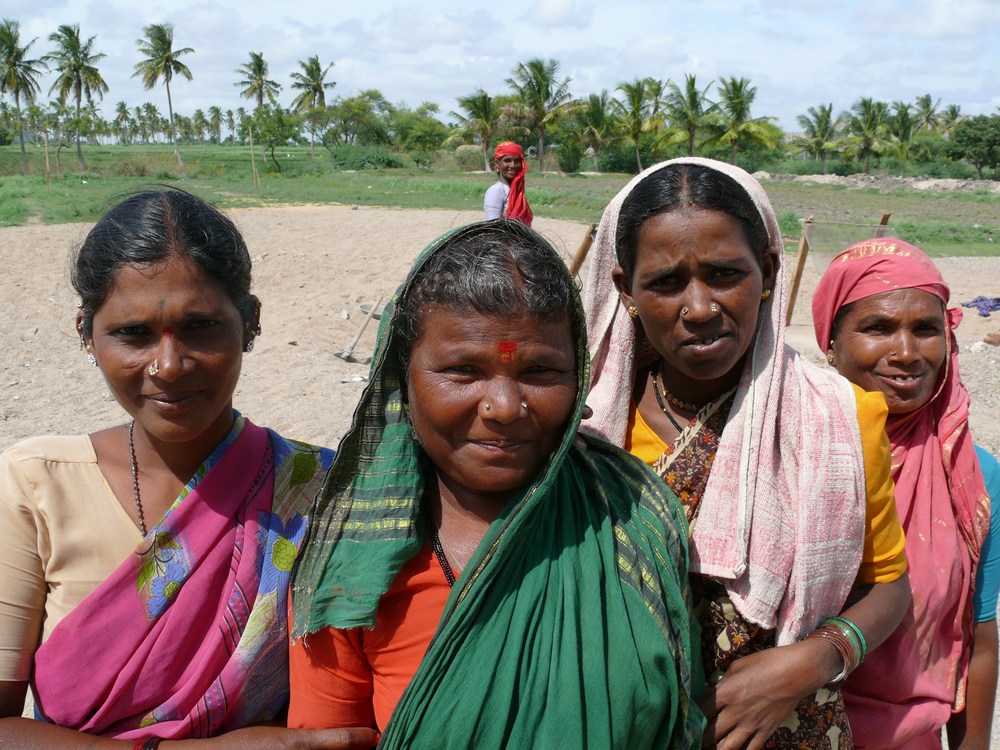
Women from the lowest caste in India, Dalits. Image via www.supportingdalitchildren.com

Meghna Bhat, Chicago, USA, SSH Blog Correspondent

In December 2012, the horrifying, brutal and fatal gang-rape and death of a young woman in New Delhi, India was followed by many other gang rapes, including the gang-rape of a young photojournalist in Mumbai in August 2013. Many other cases of sexual assault, gang-rapes and sexual harassment are becoming more visible in our news headlines. India has become known as ‘No Country for Women’, or ‘India: Land of 100 rapes a day’ and so on.

After the 2012 attack, people from all walks of life across India took to the streets protesting for the safety and rights of women. The topic of women’s safety and rape prevention dominated the news headlines. I was spellbound by the national gesture of public protests. It was mostly well-intentioned. However, I also realized that we, as a nation, don’t view and treat all survivors of sexual assault, rape and other forms of violence equally. I really wish our national protests, strict amendments and implications of anti-rape laws and calls to action among stakeholders could apply to and extend to every girl or woman sexually assaulted or sexually harassed.

Our society should be supportive and sensitive to each survivor whether she is a young girl from a middle-class family in a large metro city or if she is a poor girl from a village who barely speaks English. The same laws and resources currently allotted to “respectable victims” should be equally available for the low caste Dalit girl and the same with a sex worker or a homeless woman who was sexually assaulted.

In fact, I would suggest creating more accessible, inclusive and accommodating resources and legal help for survivors of gender violence among marginalized parts of our society. Do you know that Dalit women are most vulnerable and susceptible and have been targets of brutal and horrific sexual violence in India? What about transgender women in India, commonly known as hijras?  Many of these Dalit or/and transgender women traumatized by sexual violence face additional individual and organizational barriers due to their sex/ gender, caste, social class, occupation, etc.

What about male survivors of rape and gender-violence in India? With all the public discourse highlighting men being the perpetrators of heinous crimes, we are likely to think that only women get raped or abused. This can be attributed to the preconceived notion of men being stronger and able to protect themselves. Thus, these notions lead to glorifying the patriarchal underpinnings, and images of macho image and hyper masculinity. Public Health professional Urvashi Prasad wrote, “Male survivors have very few active organizations to support them, but more importantly perhaps, they often get little compassion or acknowledgement from society. Section 375 of the Indian Penal Code does not include males as rape victims.”

Furthermore, the presence of homophobia and laws (re)criminalizing homosexuality in our country reinforces re-victimization and trauma that LGBTQ survivors of sexual violence face in their daily lives.

All survivors should be able to seek help, including just and thorough police investigations and access to sensitive & non-judgmental medical support, legal advice, and counseling resources. All of these options should be offered to the survivor, whether she, he or they would like to report a police complaint or would like to go to the hospital or speak with a family member or crisis counselor. Survivors need to be informed of their rights and the proceedings by trained advocates.

Most importantly, it is so critical to promote comprehensive trauma-informed, victim-centered, sensitive and supportive programs for survivors of gender violence across all intersections. I am very well aware that what I am suggesting above cannot be achieved overnight. Being away from home doesn’t help either in providing the full picture of the local and grassroots efforts and initiatives being organized in India. I have been following four organizations in India (among many others) who have done some extensive impressive work for bringing justice to survivors of gender-violence. They are:

1) Lawyer’s Collective: “One of the leading public interest service providers in India with a proven record of setting high standards in human rights advocacy, legal aid and litigation.”

2) Majlis Legal Center: “Includes a group of women lawyers and social activists committed to informing, educating and empowering women on their legal rights.” The director, Flavia Agnes has been one of the pioneers of the women’s movement bringing justice to women and children’s rights.

3) The Humsafar Trust– “Is a community-based organization of self-identified Gay men, MSM, Transgender, Hijras, LBT people in Mumbai since 1994.”

4) Sangama– “A sexual minorities, sex workers and people living HIV human rights organization for individuals oppressed due to their sexual preference.”

When I am asked what’s the best way to prevent any form of gender-violence, I always recommend to start training and educating our young boys and girls in schools about respect, tolerance and gender equality! Here are two examples of such programs: Parivartan and Khel Planet.

In summary, we should be extremely thankful to our desi invisible heroes who work relentlessly and tirelessly for these survivors of gender-violence, especially sexual assault in India. There is extraordinary backstage work being done 24/7 in terms of advocacy, resources, medical help, counseling and legal justice for these survivors. Unfortunately, their contributions to social and gender justice do not make the headlines in our news media!

Meghna is a doctoral candidate in the Criminology, Law, and Justice program at the University of Illinois at Chicago, with a specialization in Gender and Women Studies. She is currently working on her dissertation, which focuses on representations of violence against women in a widely viewed form of Indian popular culture, Bollywood cinema.

Share

Filed Under: correspondents Tagged With: Delhi Gang Rape, India, sexual violence

Boston and NYC Street Harassment Events

November 8, 2015 By HKearl

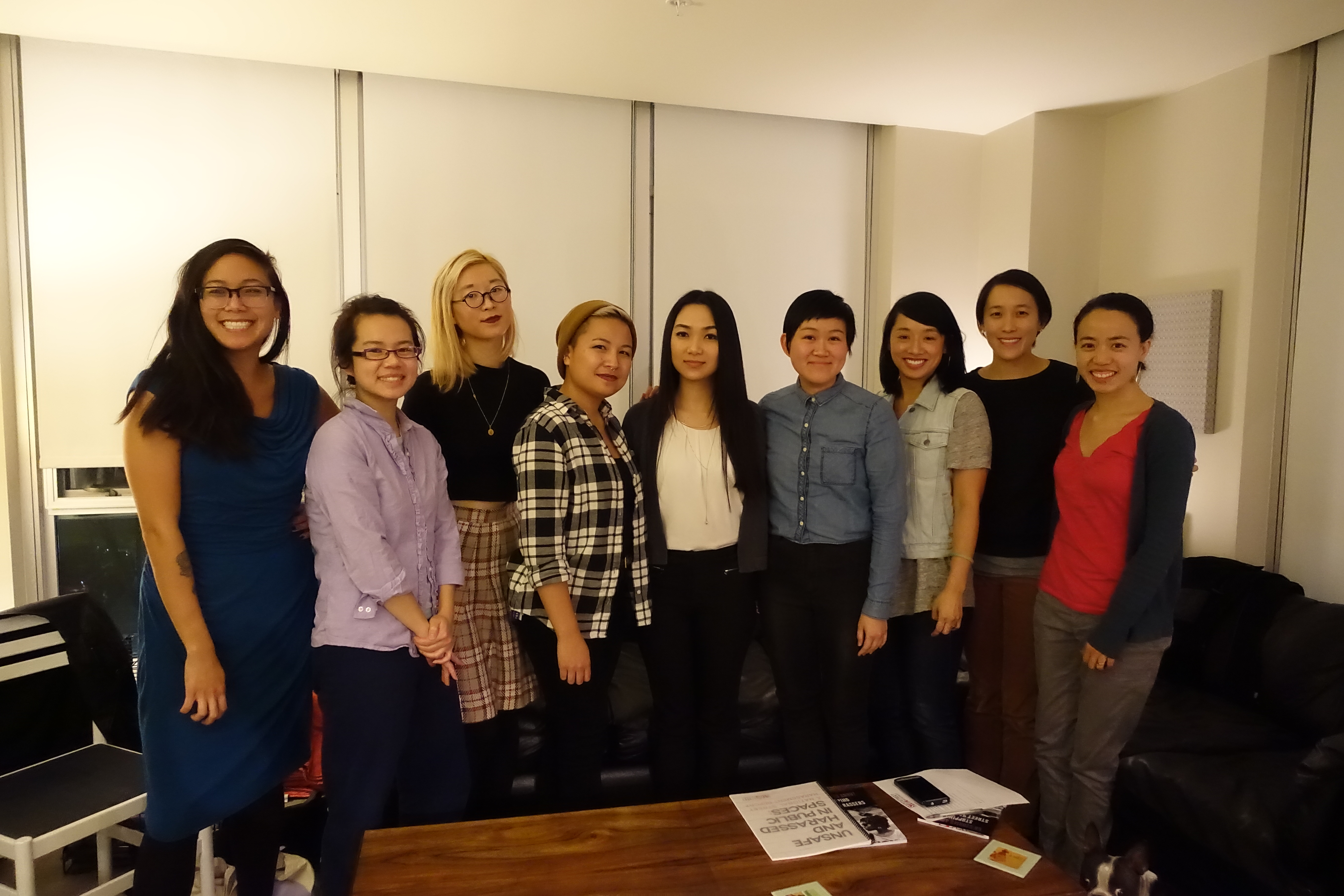
On Nov. 4, I had the honor of facilitating a focus group on street harassment with Asian-American women in Boston. I will add a summary of the session to our 2014 national study on street harassment by the end of the month. A common theme among the participants was how often the harassment was racialized as well as sexualized and how often they were treated like geishas or fetishes. Many recall the harassment beginning when they were 9, 10, 11 years old. Also, it was almost never Asian-American men who harassed them, rather men of other races, especially white and black men.

Asian-American focus group in Boston, MAAsian-American focus group in Boston

Many thanks to Sarah Chang for suggesting it and hosting it and thank you to her and the eight other women who bravely shared their stories.

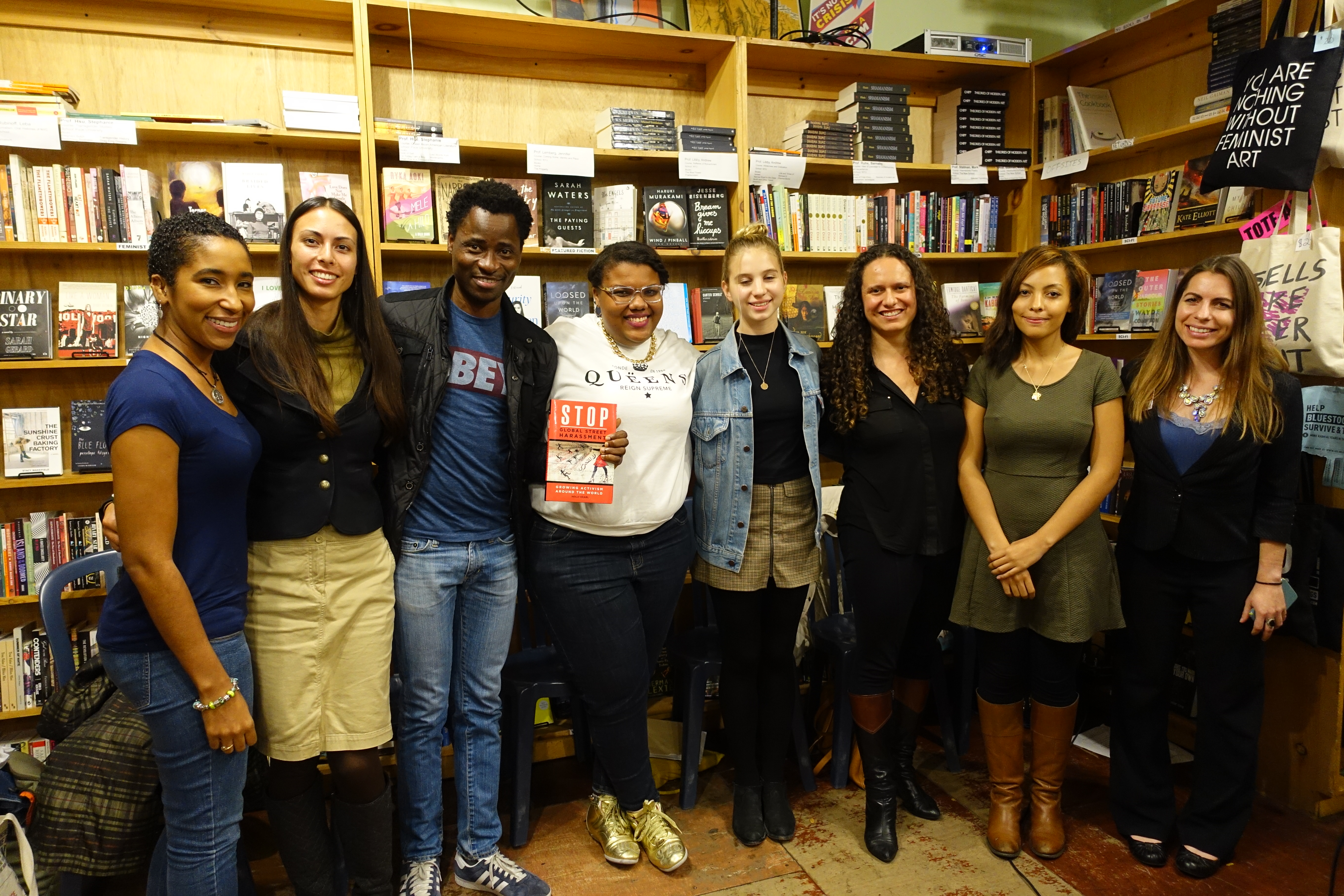
Then on Nov. 5, Bluestockings bookstore in New York City hosted a book event for my new book Stop Global Street Harassment: Growing Activism around the World. I was joined by seven co-presenters. Bisi Alimi is from Nigeria and lives in London; Gaya Branderhorst of Straatintimidatie is from the Netherlands and lives in New York; Alicia Wallace of Hollaback! Bahamas is from the Bahamas and just moved to New York; Ileana Jiménez is a high school teacher in New York City who talks about street harassment with her students; she brought two of her students who shared their stories, Shana and StellaRose; and Brittany Brathwaite is a community organizer for Girls for Gender Equity (GGE) in New York City.

11.5.15 Bluestockings Bookstore talk in NYCBluestockings bookstore, NYC

We discussed what street harassment looks like in our communities, various activism actions underway to address it, and why it is so important to talk to youth about it (because they may already be experiencing it and perpetrating it and because street harassment is learned behavior that can be unlearned — or ideally, never learned). There was a rich Q&A with the audience. Two women documentarians filmed the event and will be sharing the footage with me soon. I’ll post it when I have it.

GGE, Ileana’s and Alicia’s work are all featured in my book.

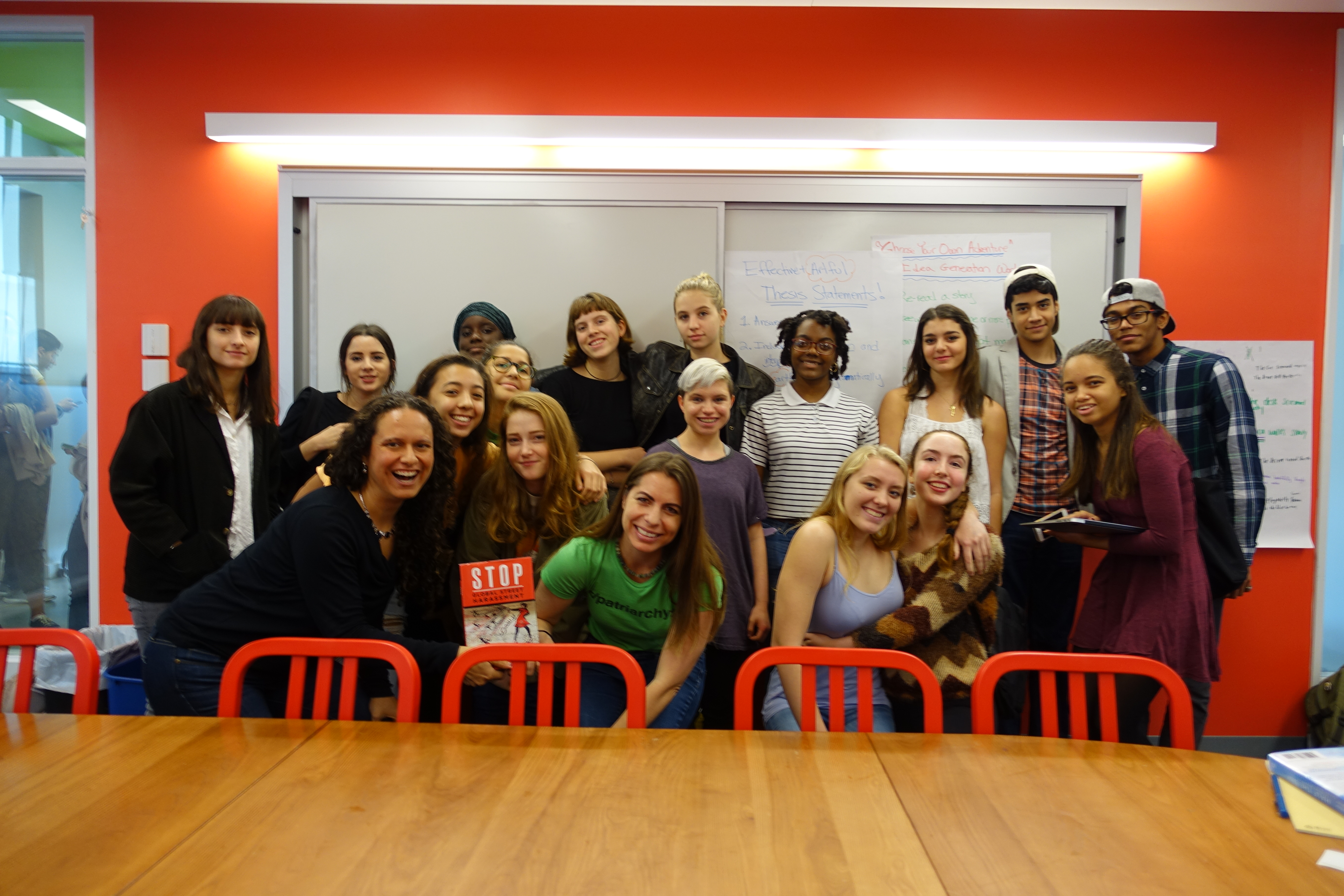
NYC High School ClassHigh school class, NYC

Lastly, on Nov. 6, I spoke with Ileana’s high school students at Elisabeth Irwin High School in New York City. Many of them are already routinely experiencing street harassment as well as sexual harassment in schools. Many thanks to Ileana for bringing this issue into the classroom and for caring so much about his students.

Share

Filed Under: Events, SSH programs, street harassment

« Previous Page
Next Page »

Share Your Story

Share your street harassment story for the blog. Donate Now

From the Blog

  • #MeToo 2024 Study Released Today
  • Join International Anti-Street Harassment Week 2022
  • Giving Tuesday – Fund the Hotline
  • Thank You – International Anti-Street Harassment Week 2021
  • Share Your Story – Safecity and Catcalls Collaboration

Buy the Book

Search

Archives

  • September 2024
  • March 2022
  • November 2021
  • April 2021
  • March 2021
  • January 2021
  • April 2020
  • March 2020
  • February 2020
  • December 2019
  • November 2019
  • September 2019
  • August 2019
  • July 2019
  • June 2019
  • May 2019
  • April 2019
  • March 2019
  • February 2019
  • January 2019
  • December 2018
  • November 2018
  • October 2018
  • September 2018
  • August 2018
  • July 2018
  • June 2018
  • May 2018
  • April 2018
  • March 2018
  • February 2018
  • January 2018
  • December 2017
  • November 2017
  • October 2017
  • September 2017
  • August 2017
  • July 2017
  • June 2017
  • May 2017
  • April 2017
  • March 2017
  • February 2017
  • January 2017
  • December 2016
  • November 2016
  • October 2016
  • September 2016
  • August 2016
  • July 2016
  • June 2016
  • May 2016
  • April 2016
  • March 2016
  • February 2016
  • January 2016
  • December 2015
  • November 2015
  • October 2015
  • September 2015
  • August 2015
  • July 2015
  • June 2015
  • May 2015
  • April 2015
  • March 2015
  • February 2015
  • January 2015
  • December 2014
  • November 2014
  • October 2014
  • September 2014
  • August 2014
  • July 2014
  • June 2014
  • May 2014
  • April 2014
  • March 2014
  • February 2014
  • January 2014
  • December 2013
  • November 2013
  • October 2013
  • September 2013
  • August 2013
  • July 2013
  • June 2013
  • May 2013
  • April 2013
  • March 2013
  • February 2013
  • January 2013
  • December 2012
  • November 2012
  • October 2012
  • September 2012
  • August 2012
  • July 2012
  • June 2012
  • May 2012
  • April 2012
  • March 2012
  • February 2012
  • January 2012
  • December 2011
  • November 2011
  • October 2011
  • September 2011
  • August 2011
  • July 2011
  • June 2011
  • May 2011
  • April 2011
  • March 2011
  • February 2011
  • January 2011
  • December 2010
  • November 2010
  • October 2010
  • September 2010
  • August 2010
  • July 2010
  • June 2010
  • May 2010
  • April 2010
  • March 2010
  • February 2010
  • January 2010
  • December 2009
  • November 2009
  • October 2009
  • September 2009
  • August 2009
  • July 2009
  • June 2009
  • May 2009
  • April 2009
  • March 2009
  • February 2009
  • January 2009
  • December 2008
  • November 2008
  • October 2008
  • September 2008
  • August 2008
  • July 2008
  • June 2008
  • May 2008

Comment Policy

SSH will not publish any comment that is offensive or hateful and does not add to a thoughtful discussion of street harassment. Racism, homophobia, transphobia, disabalism, classism, and sexism will not be tolerated. Disclaimer: SSH may use any stories submitted to the blog in future scholarly publications on street harassment.
  • Contact
  • Events
  • Join Us
  • Donate
  • Facebook
  • Instagram
  • Pinterest
  • Tumblr
  • Twitter
  • YouTube

Copyright © 2026 Stop Street Harassment · Website Design by Sarah Marie Lacy