• About Us
    • What Is Street Harassment?
    • Why Stopping Street Harassment Matters
    • Meet the Team
      • Board of Directors
      • Past Board Members
    • In The Media
  • Our Work
    • National Street Harassment Hotline
    • International Anti-Street Harassment Week
    • Blog Correspondents
      • Past SSH Correspondents
    • Safe Public Spaces Mentoring Program
    • Publications
    • National Studies
    • Campaigns against Companies
    • Washington, D.C. Activism
  • Our Books
  • Donate
  • Store

Stop Street Harassment

Making Public Spaces Safe and Welcoming

  • Facebook
  • Instagram
  • Pinterest
  • Tumblr
  • Twitter
  • YouTube
  • Home
  • Blog
    • Harassment Stories
    • Blog Correspondents
    • Street Respect Stories
  • Help & Advice
    • National Street Harassment Hotline
    • Dealing With Harassers
      • Assertive Responses
      • Reporting Harassers
      • Bystander Responses
      • Creative Responses
    • What to Do Before or After Harassment
    • Street Harassment and the Law
  • Resources
    • Definitions
    • Statistics
    • Articles & Books
    • Anti-Harassment Groups & Campaigns
    • Male Allies
      • Educating Boys & Men
      • How to Talk to Women
      • Bystander Tips
    • Video Clips
    • Images & Flyers
  • Take Community Action
  • Contact

On a day of happiness, I could not escape street harassment

August 20, 2015 By HKearl

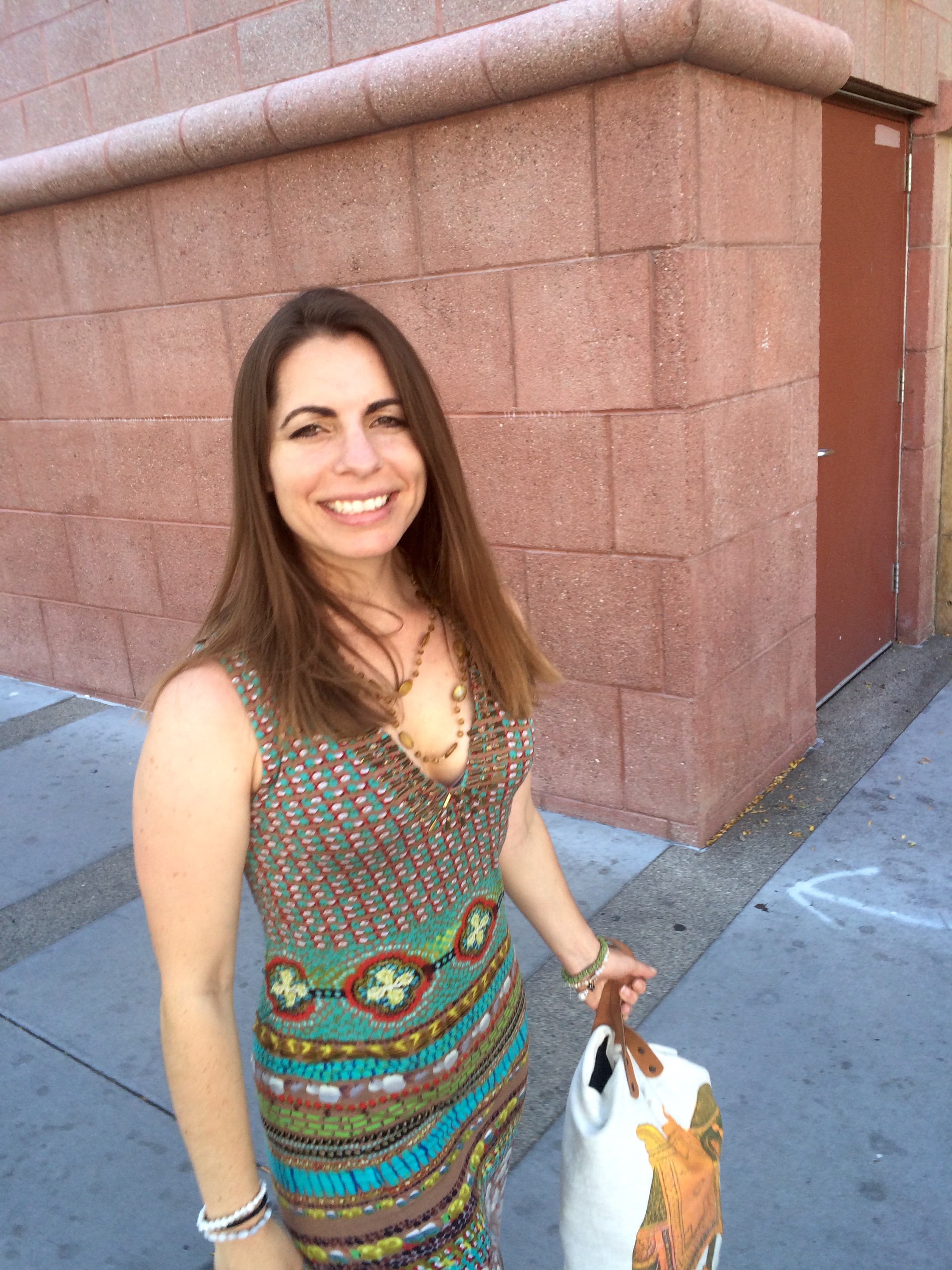
Me on this day, about an hour or so before the men street harassed me.
Walking to get married, about an hour before the men street harassed me.

My partner and I have been together for more than 12 years. For a number of reasons (including same-sex marriage now being legal across the USA) we did a civil service to legally marry earlier this month in Las Vegas, Nevada, while my partner was there on business. We got our license, walked a building over for a civil service ceremony and it was all done in an hour. Easy, low-cost.

My uncle lives in Las Vegas and after our ceremony (only attended by our witness, one of my cousins), my partner and I went to a grocery store to get food for dinner at his house. I didn’t wear a “wedding dress” but I was wearing a dress I bought for $25 at TJ Max.

We got back to the car and I had forgotten hummus. I went back inside alone.

On my way out of the store alone, two men told me I looked beautiful. It felt like the lead up to harassment but I thought, give them the benefit of the doubt, “you look beautiful” on it’s own isn’t really harassment (though since men don’t hear that as they walk around, it does reinforce sexism and that women’s value is our looks)… so I smiled and I said thanks… and they immediately launched into loud sexually explicit descriptions of my body as they disappeared into the grocery store. I cringed. I felt violated and dirty. And – because internalized victim blaming is hard to overcome – I thought, why didn’t I change out of my dress before walking around in public alone?

It upsets me that even on a day of happiness with my best friend, I could not escape street harassment. There is NO escape. I’m now in my 30s. I live in the suburbs and mostly work from home and mostly drive places. Compared to a decade ago, I can go days and sometimes weeks without facing street harassment. But there is still no way to permanently escape it. That makes me feel really angry, frustrated, and sometimes defeated.

This incident also reminded me that if it’s not blatant harassment at the onset, it’s hard to know how to deal with it, especially when you have 1 second to decide and can’t formulate a super clever retort. Should I have ignored them? Told them “that’s harassment” for simply saying I was beautiful? I doubt it would have mattered how I responded.

Ultimately it wasn’t about me, it was about them. They probably could care less how I felt or responded…. just like most harassers. They just felt entitled to my attention, my space, for their own reasons. And women are often raised to be polite, so we mostly put up with it, demure, deflect, appease, and avoid, especially when it starts off with something as seemingly innocent as “you look beautiful,” “what are you reading” or “what’s your name?”

This happened more than two weeks ago. I only decided now to write about it after reading this excellent Guardian article by Daisy Buchanan, “I’m tired of being kind to creepy men in order to stay safe.” This is an excerpt:

“We’ve all been bothered by persistent guys who pester us relentlessly, believing themselves to be entitled to our company and more. We’re under pressure to be polite and manage their expectations. Ignored men are angry men, and it’s horrible to sit silently while a man shouts at a packed carriage: “She thinks she’s too good to talk to me!”

When it comes to responding to harassers, you’re damned if you do and damned if you don’t – and sometimes it gets to the point when dealing with entitled idiots is so exhausting that you feel safer staying at home…

[We need] to create spaces where all women feel they are safe to look their harasser in the eye and say: “Leave me alone. I do not want to talk to you.” Because I’m tired of being kind to the creeps in order to stay safe. And I don’t want to stay in.”

The full article is worth a read.

This is my message to men: Please think twice before approaching a woman you don’t know in a public space. Think twice before you open your mouth. I don’t care if you’re not a harasser. Too many of you are and every woman has been harassed before. Unless she’s in danger or dropped something, just think twice about it. We don’t owe you our attention nor should we have to be polite to you even if we’ve and you’ve been raised to think that we should.


Share

Filed Under: Stories, street harassment

UK: Harassment and Technology – Legislation Is Not Growing Fast Enough

August 19, 2015 By Correspondent

Emma Rachel Deane, UK, SSH Blog Correspondent

PAY-Gemma-NewittLast month 20-year-old Gemma Newitt was left enraged after no charges could be brought against a man who took inappropriate photos of her in a supermarket. CCTV footage from a Co-op store in St Austell, Cornwall shows Karl Leggatt holding his mobile phone inches away from Newitt’s bottom as she browsed the shelves of the store. After the incident was reported to the Store Manager the police were called and Newitt was told that no arrests could be made because Leggatt had not broken any laws.

After celebrities including Katy Perry, Paris Hilton and Lindsay Lohan fell victim to an invasive lens, the “upskirt photo” became an all too familiar phrase. Although generally used to refer to an unauthorised photograph under a woman’s skirt, the term is also used in relation to more general voyeuristic photography depicting, almost exclusively, women. Despite the relatively recent phrasing, the interest in creating such images is not a recent occurrence and references in art can be found as early as the 1700s as well as a plethora of pictures created during the pin-up era. The difference between then and now, of course, is the development of technology. Smartphones now make it possible for non-consensual images to be uploaded to the internet and viewed by millions within minutes. There are entire websites dedicated to photographs of women sitting on benches, relaxing in parks and stepping out of cars completely unaware that they are being intimately photographed and posted on an erotica site.

Screenshot 2015-08-16 at 22Last year, despite complaints, crowdfunding site Indiegogo continued raising funds for a smartphone accessory, pitching itself on the ability to take stealthy photos of a woman’s body without her knowledge. The text on the webpage advertised the accessory’s ability to “take pictures round corners” while images used in the marketing focused on discreetly photographed breasts and legs.

Australia, New Zealand and India are countries that have specific legislation in place to tackle the issue based on a reasonable expectation of privacy but the UK is yet to follow suit. The Sexual Offences Act of 2003 criminalises ‘voyeurism’ in the UK and defines it as recording someone engaging in a private act or installing surveillance equipment in private areas without the knowledge or consent of the victim. This means that because Newitt was shopping in a public place, her body was considered available for public recording. Few countries have tackled the issue head on and created specific legislation for the protection of a woman’s privacy in this modern world of ever developing technology.

The attitude that women’s bodies are publicly owned is ingrained deeply in our society. We see this exhibited in a myriad of ways which each boil down to denying women agency over their own bodies. Restriction to abortion access, slut-shaming, sexual assault and the endless barrage of judgmental appearance based media representation are all displays of entitlement to the female form which promulgate a culture in which Leggatt could think of his actions as reasonable behaviour and stand vindicated by the law.

Emma Rachel Deane is a London-based retail manager for a fast growing women’s lifestyle brand and an outspoken advocate for women’s social justice issues. She can be found blogging on Raging Hag or tweeting @emmaracheldeane.

Share

Filed Under: correspondents, News stories, public harassment

“I just want to go outside and feel safe for once”

August 19, 2015 By Contributor

I’m a 17 year-old African-American girl, and I’ve never felt safe when in public on my own. Whether I’m on my way to work or headed downtown to hang out with friends, men feel the need to make remarks on how I look.

And it’s always older men. Men much older than me who make remarks on my appearance and call me beautiful and make me feel uncomfortable and vulnerable.

I used to think that maybe it ways the way I was dressing or how I did my hair that attracted all this unwanted attention. One day during summer, I was on my way to the public library to get some homework done. I stepped out of my house with my hair in a low pony-tail and a casual outfit, (leggings, oversized t-shirt, sneakers). Right away three men across the street had their eyes on me and watched me cross the street. One block away, an older man spotted me and said, ʺHey beautiful, how you doingʺ and on that same block another older man fixing his car looked me up and down and said, ʺHey how’s it going.ʺ As I entered the library another man yelled at me but I walked away quickly.

A few hours later, I started to head home. Crossing the street one man looked at me and told me I was a ʺblessed young ladyʺ and a construction worker got in my way just to say hello.

This is why I feel so unsafe when I go out alone. I always feel like people are watching me and I hate it. I just want to go outside and feel safe for once.

It’s not fair that at such a young age I’m scared to go out and enjoy a nice day because I’m worried about my well-being. But the sad reality is that I’m probably never going to feel safe when I’m out alone.

Optional: What’s one way you think we can make public places safer for everyone?

Security guards? They always make me feel safer

– Anonymous

Location: San Francisco, CA

Share your street harassment story for the blog.
See the book 50 Stories about Stopping Street Harassers for more idea

Share

Filed Under: Stories, street harassment

“There is just not ONE day that goes by without being harassed by men”

August 18, 2015 By Contributor

It happens every day, between 5 to 20 times a day. On my very short way to the bakery I may be catcalled 6 times. Sometimes a man brushes past me, coming from behind, whispering things in my ear. I feel scared and angry, and anger is keeping me awake at night. I dream I fight and break every bone in his face.

One day I was walking down the street and a man from a car called me. I ignored him because I’ve tried everything and in the end I always get called names. He slowed down and started following me in his car. Another time I was walking and a group of men was coming from the opposite direction. It was too late (and not easy) to change pavements so I continued, trying not to walk too fast or too slow, eyes down. They circled me and walked with me for a hundred meters. I told them, ʺYou won, I’m scared, now can you leave me alone?ʺ they continued a little then left. Anger is piling up inside me.

Now a simple catcall fuels me up for the day and it takes longer and longer to calm down. It happens everywhere, whether in posh areas or in poorer neighborhoods. It happens whether they’re on the phone or with their kids in their arms. It happens whether they’re barely fourteen or in their fifties. I’ve learned to spot groups of men, change my itinerary, avoid certain places at certain times, walk with my hands free ʺjust in caseʺ.

I dream of telescopic sticks and pepper sprays and knives.

One day I was having a burger in my car, parked right in front of the restaurant. Two men parked next to me and started knocking on my window, asking me to lower it down. I didn’t move, they started hitting harder and harder.

There is just not ONE day that goes by without being harassed by men out there.

People ask me why I don’t get accompanied by a guy? Right, because obviously women are not allowed to be outside anymore?! One day (in broad daylight, please stop thinking this is about going out late and ʺtaking risksʺ (?!)) a man on a bicycle climbed on the pavement, stopped right in front of me, told the male friend with me to ʺf**k offʺ. Which he did. Nothing else happened but I was so scared, and I felt so powerless.

Optional: What’s one way you think we can make public places safer for everyone?

There should be a public statement made by the politics. Not once did they take the initiative to say ʺBelgium is a free country where both men and women have the same rights. If you can’t respect this principle, those values, measures will be taken.ʺ I’m afraid I’d also add: more cameras…

– Anonymous

Location: Brussels, Belgium

Share your street harassment story for the blog.
See the book 50 Stories about Stopping Street Harassers for more idea

Share

Filed Under: Stories, street harassment

New Stop Global Street Harassment Book!

August 17, 2015 By HKearl

Street_Harassment
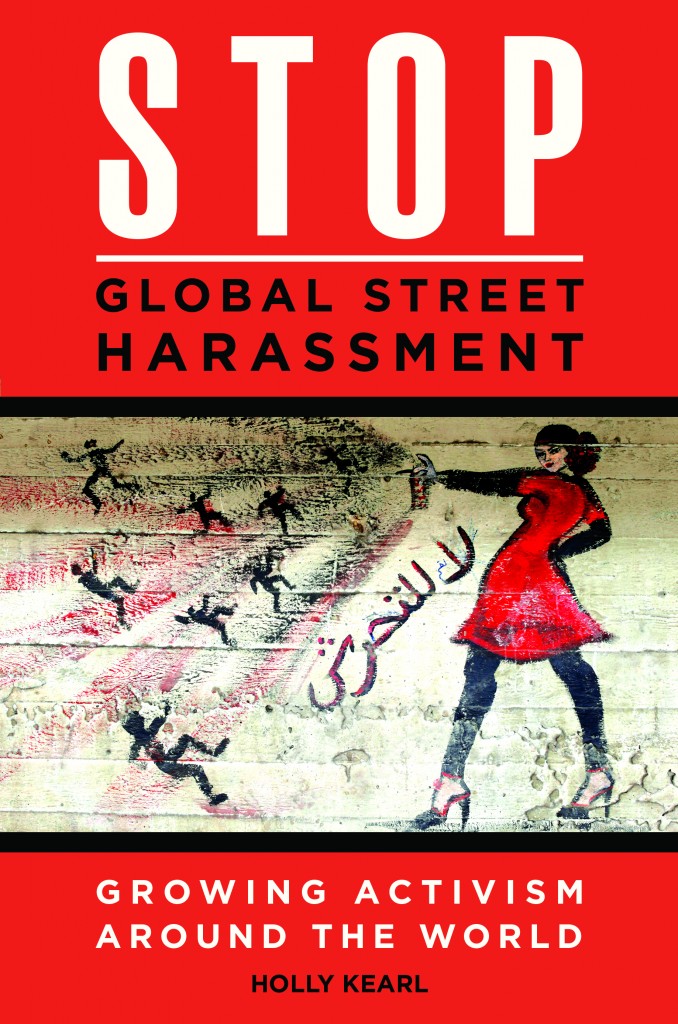
Stop Global Street Harassment: Growing Activism Around the World book cover

UPDATE: THE BOOK IS OUT!

You can purchase it here. Google is selling ebooks for 20% off!

Read an excerpt from the introduction.

Out of the heightened media attention to the issue of street harassment last fall following the “10 Hours of Walking in NYC as a Woman” video, I signed a contract for a second book with Praeger Publishers, the publisher of my 2010 book Stop Street Harassment: Making Public Places Safe and Welcoming for Women.

When that book was released exactly five years ago, it was one of the only books available on the topic and entities like the NYC City Council and United Nations immediately used it to inform new efforts to address the problem. Five years later, the landscape has changed a lot (for the better) when it comes to how people understand the issue, how it is covered in the media, and what is being done about it.

My new book looks at the time period of 2010 – February 2015 and highlights what individuals, grassroots organizations, international entities, and governments are doing to address street harassment. The final chapter suggests what else needs to be done. Around 75 activists are quoted, featured, or have essays in the book and it covers the issue on six continents and numerous countries. I am grateful to everyone who was involved.

GET THE BOOK:

You can purchase it here. Google is selling ebooks for 20% off! You also can request a copy or copies of the book for your local bookstore or library or personal use from Praeger directly. If you are a journalist who would like a review copy, please contact me, hollykearl AT yahoo DOT com.

BOOK EVENTS:

Stop Global Street Harassment event in Washington, DC on September 17, 2015
Image created by Noorjahan Akbar

September 17, Washington, DC book launch event. It was at American University. I was joined by activists from Afghanistan, Egypt and the USA and local anti-street harassment groups had resources and were available to answer questions. Read the recap of the event and watch videos of my four co-presenters.

September 30, I will be a speaker at George Mason University’s Fall for the Books event in Fairfax, VA, 1:30 p.m. It is free and open to the public.

November 5: New York City book launch event. It will be at the famous feminist bookstore Bluestockings at 7 p.m. I will be joined by activists from the Netherlands, Nigeria, and NYC. The event is free and open to the public. Facebook RSVP page.

November 14: I will have a book signing at the Winchester Book Gallery, Winchester, VA, 4-6 p.m.

Contact me if you are interested in hosting me for a book event! Here is information about campus talks.

THE TWITTER CHAT:

On September 1st at 11 a.m. EDT/3 p.m. GMT, activists from around the world who are featured in the book tweeted about street harassment in their area and what they are doing to stop it. Read the Storify of the conversation.

BOOK REVIEWS:

“In Holly Kearl’s new book, she powerfully and compellingly analyses the scale and breadth of the problem of street harassment and presents the reader with an uplifting snapshot of the activism being undertaken to tackle it. This is a hugely important global exploration of a seismic shift in our attitudes and responses to a universal experience. For some readers, the scale of the problem as Kearl describes it will be shocking. For others, it will be horribly familiar. But the campaigns and strategies she outlines for taking back the streets will fill every reader with hope, energy, and a powerful urge to be part of the solution. This is an important book and a compelling call to arms.”

—Laura Bates, Founder of The Everyday Sexism Project

“This book represents a major breakthrough in exposing the pernicious, prevalent, but long-ignored form of oppression that is a barrier to freedom and full equality for women around the world. It offers comprehensive analysis and research, is clearly written, and presents useful tools and information for those seeking change. It addresses misogyny and the related issues of race, culture, and gender identity with great insight and originality.

In the mid-1970s when my colleagues and I were defining and organizing around the issue of sexual harassment in the workplace, the problem of street harassment seemed too complicated and daunting for us to tackle. I am grateful to Holly and a new generation of women activists and researchers who have taken the fight to a new level to raise public awareness and change public policy and ingrained prejudice and behavior.”

—Susan Meyer, Former executive director of Working Women United Institute

“As Holly Kearl documents, street harassment is not a new problem. What is new is the strength of community activism and government support to end street harassment. This book updates us on the current fight against street harassment and the progress that has been made in the last five years. Understanding the role street harassment plays in perpetuating gender inequality and patriarchal power is crucial to improving women’s lives across the globe.”

—Kimberly Fairchild, Associate Professor of Psychology, Manhattan College, Riverdale, NY

“Stop Global Street Harassment is a sensitive and harrowing examination of the frequency, severity, and implications of a global pandemic disproportionately impacting girls and women: street harassment. Holly Kearl, activist and founding leader in the Stop Street Harassment movement, interweaves a powerful narrative combining global perspectives from social science research, personal narrative, and journalistic/social media accounts, resulting in an intersectional pièce de résistance. Kearl’s work is the most comprehensive work on the issue of global street harassment to date.

A compelling read and a brave indictment of hegemonic privilege, Stop Global Street Harassment represents a living account possessing the power to ignite a global audience by underscoring the experiences of untold activists, researchers, students, and parents throughout the world. This crucial work culminates with practical solutions and policy prescriptions that will not only inform NGOs and governmental entities, but also serve to inspire those individuals who live with street harassment on a daily basis, most of whom possess non-dominant identity statuses. This work is a call to action. Readers will be inspired not only to listen for the untold voices that have yet to be heard, telling their tales of the daily harassment they face in simply navigating public spaces, but also to work for change within their own communities. Stop Global Street Harassment is a must read.”

—Dr. Jennifer L. Martin, Assistant Professor of Education, University of Mount Union

“What an excellent resource Kearl’s book is for activists and scholars! Stop Global Street Harassment: Growing Activism Around the World should be read by feminist leaders far and wide; it would be a great reading selection for those teaching courses that address global issues, social problems, social movements, and gender issues. Holly Kearl has written an easy-to-read, engaging book about street harassment and the movement she helped develop to document and end it.”

—Laura S. Logan, Assistant Professor, Hastings College

Share

Filed Under: Resources, street harassment

« Previous Page
Next Page »

Share Your Story

Share your street harassment story for the blog. Donate Now

From the Blog

  • #MeToo 2024 Study Released Today
  • Join International Anti-Street Harassment Week 2022
  • Giving Tuesday – Fund the Hotline
  • Thank You – International Anti-Street Harassment Week 2021
  • Share Your Story – Safecity and Catcalls Collaboration

Buy the Book

Search

Archives

  • September 2024
  • March 2022
  • November 2021
  • April 2021
  • March 2021
  • January 2021
  • April 2020
  • March 2020
  • February 2020
  • December 2019
  • November 2019
  • September 2019
  • August 2019
  • July 2019
  • June 2019
  • May 2019
  • April 2019
  • March 2019
  • February 2019
  • January 2019
  • December 2018
  • November 2018
  • October 2018
  • September 2018
  • August 2018
  • July 2018
  • June 2018
  • May 2018
  • April 2018
  • March 2018
  • February 2018
  • January 2018
  • December 2017
  • November 2017
  • October 2017
  • September 2017
  • August 2017
  • July 2017
  • June 2017
  • May 2017
  • April 2017
  • March 2017
  • February 2017
  • January 2017
  • December 2016
  • November 2016
  • October 2016
  • September 2016
  • August 2016
  • July 2016
  • June 2016
  • May 2016
  • April 2016
  • March 2016
  • February 2016
  • January 2016
  • December 2015
  • November 2015
  • October 2015
  • September 2015
  • August 2015
  • July 2015
  • June 2015
  • May 2015
  • April 2015
  • March 2015
  • February 2015
  • January 2015
  • December 2014
  • November 2014
  • October 2014
  • September 2014
  • August 2014
  • July 2014
  • June 2014
  • May 2014
  • April 2014
  • March 2014
  • February 2014
  • January 2014
  • December 2013
  • November 2013
  • October 2013
  • September 2013
  • August 2013
  • July 2013
  • June 2013
  • May 2013
  • April 2013
  • March 2013
  • February 2013
  • January 2013
  • December 2012
  • November 2012
  • October 2012
  • September 2012
  • August 2012
  • July 2012
  • June 2012
  • May 2012
  • April 2012
  • March 2012
  • February 2012
  • January 2012
  • December 2011
  • November 2011
  • October 2011
  • September 2011
  • August 2011
  • July 2011
  • June 2011
  • May 2011
  • April 2011
  • March 2011
  • February 2011
  • January 2011
  • December 2010
  • November 2010
  • October 2010
  • September 2010
  • August 2010
  • July 2010
  • June 2010
  • May 2010
  • April 2010
  • March 2010
  • February 2010
  • January 2010
  • December 2009
  • November 2009
  • October 2009
  • September 2009
  • August 2009
  • July 2009
  • June 2009
  • May 2009
  • April 2009
  • March 2009
  • February 2009
  • January 2009
  • December 2008
  • November 2008
  • October 2008
  • September 2008
  • August 2008
  • July 2008
  • June 2008
  • May 2008

Comment Policy

SSH will not publish any comment that is offensive or hateful and does not add to a thoughtful discussion of street harassment. Racism, homophobia, transphobia, disabalism, classism, and sexism will not be tolerated. Disclaimer: SSH may use any stories submitted to the blog in future scholarly publications on street harassment.
  • Contact
  • Events
  • Join Us
  • Donate
  • Facebook
  • Instagram
  • Pinterest
  • Tumblr
  • Twitter
  • YouTube

Copyright © 2026 Stop Street Harassment · Website Design by Sarah Marie Lacy