• About Us
    • What Is Street Harassment?
    • Why Stopping Street Harassment Matters
    • Meet the Team
      • Board of Directors
      • Past Board Members
    • In The Media
  • Our Work
    • National Street Harassment Hotline
    • International Anti-Street Harassment Week
    • Blog Correspondents
      • Past SSH Correspondents
    • Safe Public Spaces Mentoring Program
    • Publications
    • National Studies
    • Campaigns against Companies
    • Washington, D.C. Activism
  • Our Books
  • Donate
  • Store

Stop Street Harassment

Making Public Spaces Safe and Welcoming

  • Facebook
  • Instagram
  • Pinterest
  • Tumblr
  • Twitter
  • YouTube
  • Home
  • Blog
    • Harassment Stories
    • Blog Correspondents
    • Street Respect Stories
  • Help & Advice
    • National Street Harassment Hotline
    • Dealing With Harassers
      • Assertive Responses
      • Reporting Harassers
      • Bystander Responses
      • Creative Responses
    • What to Do Before or After Harassment
    • Street Harassment and the Law
  • Resources
    • Definitions
    • Statistics
    • Articles & Books
    • Anti-Harassment Groups & Campaigns
    • Male Allies
      • Educating Boys & Men
      • How to Talk to Women
      • Bystander Tips
    • Video Clips
    • Images & Flyers
  • Take Community Action
  • Contact

New Anti-Harassment Transit Campaigns

April 21, 2015 By HKearl

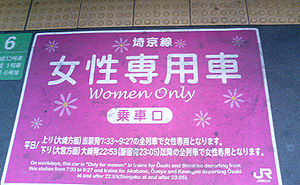
Sexual harassment is a problem on transit systems worldwide. Women in particular face a lot of harassment (one piece of evidence is this 2014 poll of riders from 16 major transit systems in the world). More than a dozen countries even offer women-only transit options as one (band aid, short-term) solution, including in Egypt, Japan, India, Mexico, and Nepal.

But anti-harassment PSAs and reporting efforts are gaining traction, too. Earlier this year, both New York City and Washington, DC, released new PSAs about harassment (SSH helped with the ones in the DC). In DC, there is an online reporting form and front line transit staff are trained to handle harassment complaints.

Last week, over International Anti-Street Harassment, transit systems launched new anti-harassment campaigns in:

London (“Report It To Stop It“)

Los Angeles (“It’s Off Limits” – passengers who see or experience sexual harassment can call the sheriff’s hotline at 888-950-7233 or report through the free LA Metro Transit Watch safety app)

Vancouver (#ItsNotaCompliment)
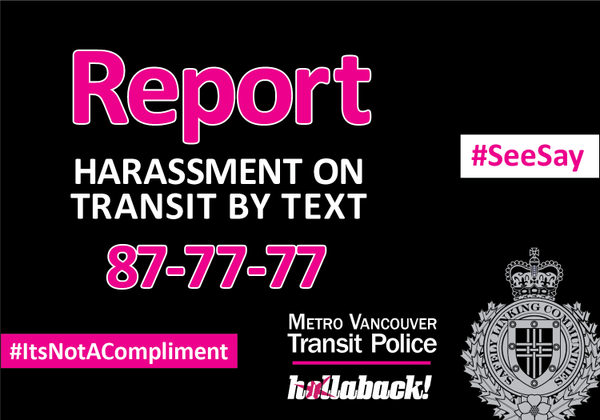
4.13.15 Vancouver Transit ads

In France, a new study released last week found that 100% of women had been harassed while riding public transportation and I talked to staff at the office of women’s rights who said they will be launching a nation-wide campaign next month to address it (to my knowledge, they will be the first country to do this on that scale).

This is all great news. We need more transit systems to step up and take this issue seriously.

Share

Filed Under: anti-street harassment week, News stories, public harassment Tagged With: transit harassment

Romania: Anti-Street Harassment Week in Bucharest

April 21, 2015 By Correspondent

Simona-Maria Chirciu, Bucharest, Romania, SSH Blog Correspondent
11167666_879511048761694_6696537207933721063_n
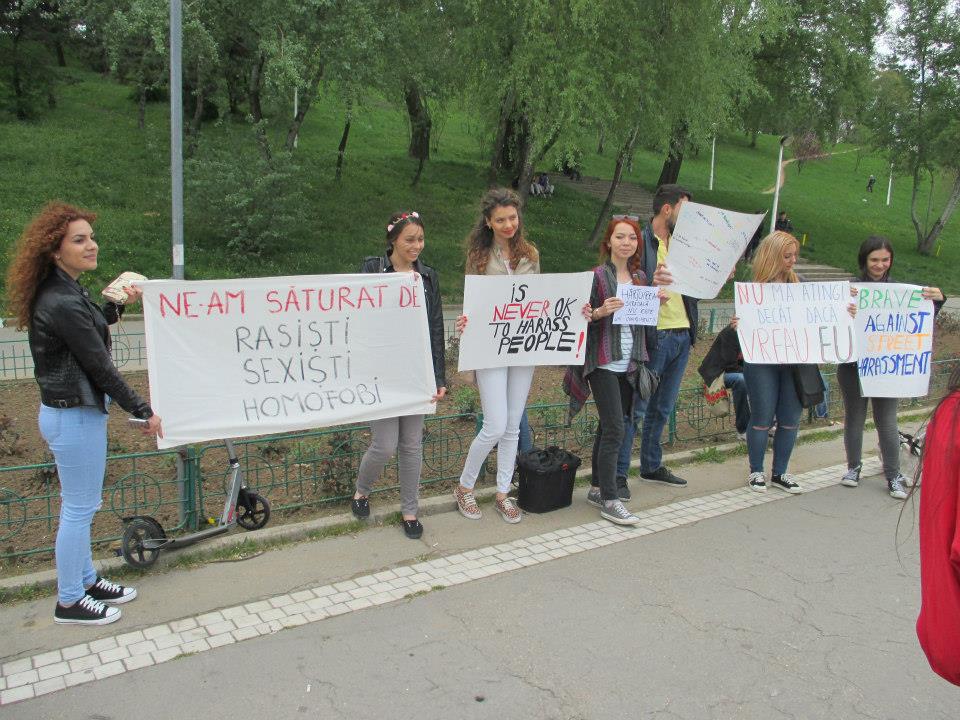
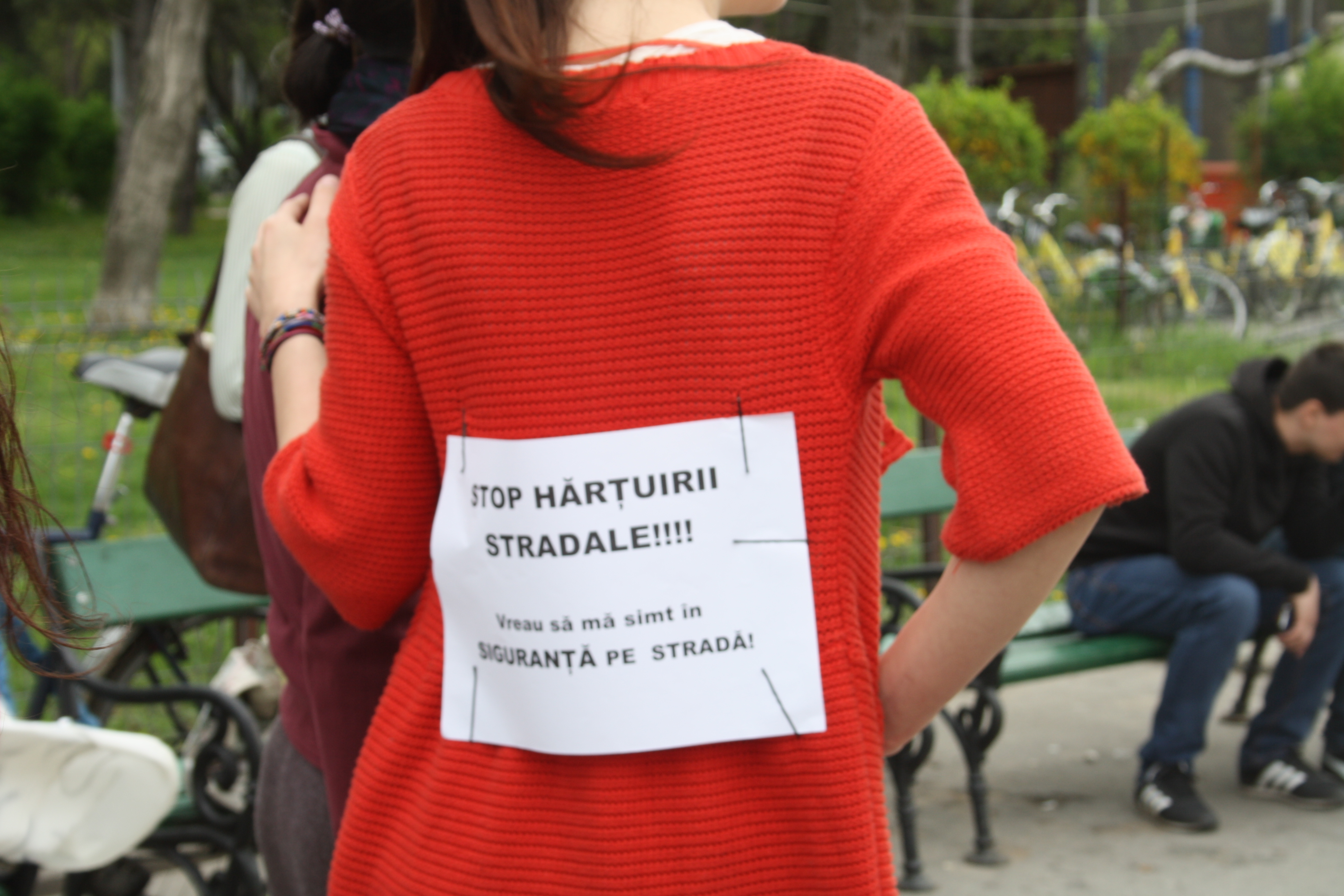
We had a week full of events for International Anti-Street Harassment Week in Romania. Activists and feminists were very active in raising awareness about this problem by posting online testimonials about street harassment experiences, sharing international events, participating in flashmobs and distributing fliers.

FILIA NGO and volunteers posted testimonials all week on Facebook and other activists Tweeted about street harassment. These kinds of online posting and discussions with people about street harassment is important. For example, some young women commented on our testimonials, opening up about their own experiences. Is vital for us to start talking more and more about this problem, in online but also in public spaces.

IMG_4730When it comes to street harassment in Romania, people tend to ignore it, to minimize the gravity of it. They excuse the harassers and blame the victims, so for this year’s International Anti-Street Harassment Week, three feminist NGOs from Bucharest — FILIA, FRONT and AnA: Society for Feminist Analyses — organized a public action in a park in Bucharest.

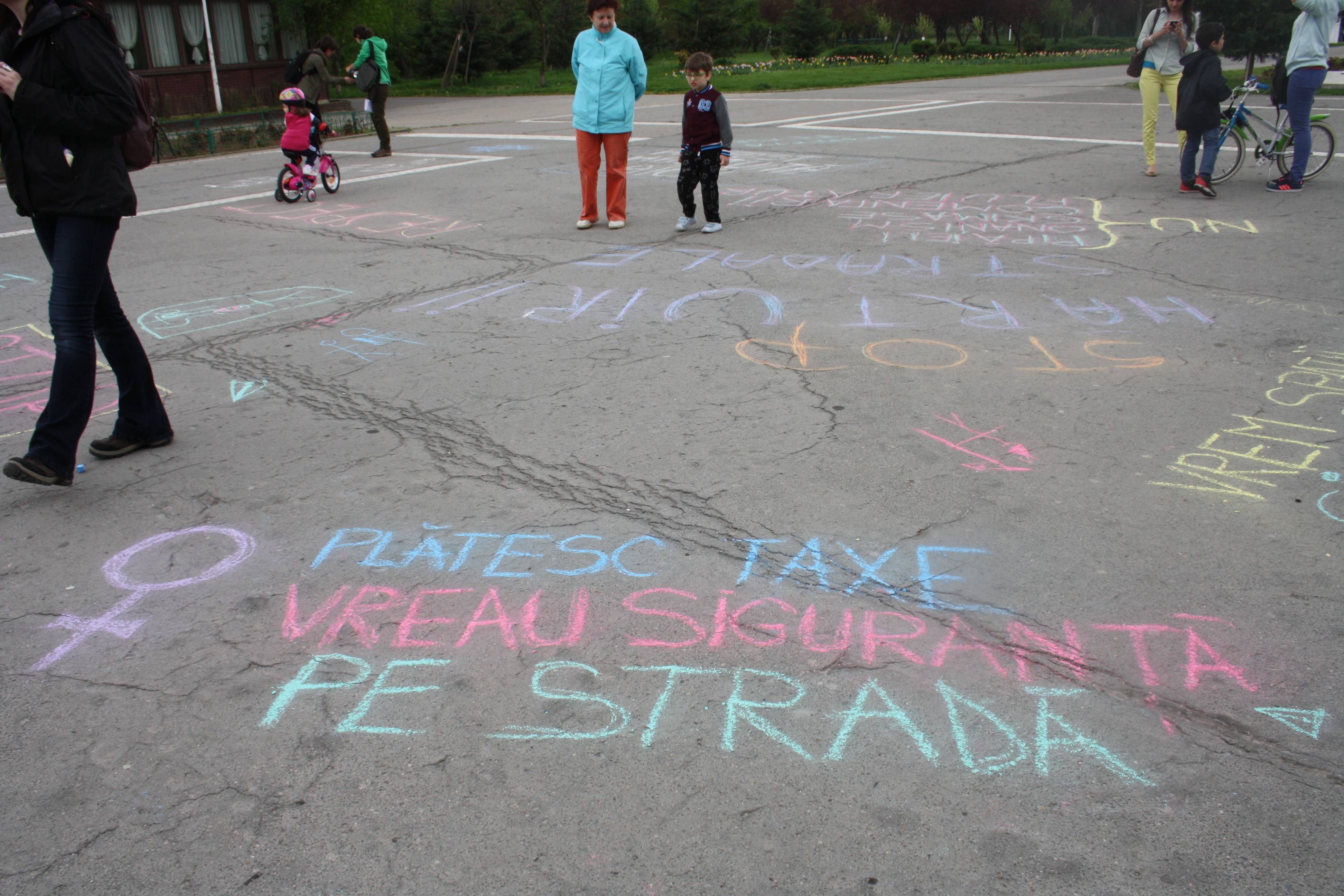
We gathered in a large park on Saturday, 18 April, to raise awareness about victim-blaming and the importance of bystanders intervention. How did we do that? We begun with writing chalk messages against street harassment like: “My skirt doesn’t concerns you!”, “I was harassed HERE”, “I don’t harass women”, “The public space must be safe for all of us”, “Take action against street harassment”, “Brave against street harassment”, “STOP street harassment”, “Harassment is violence”, “Respect women”.

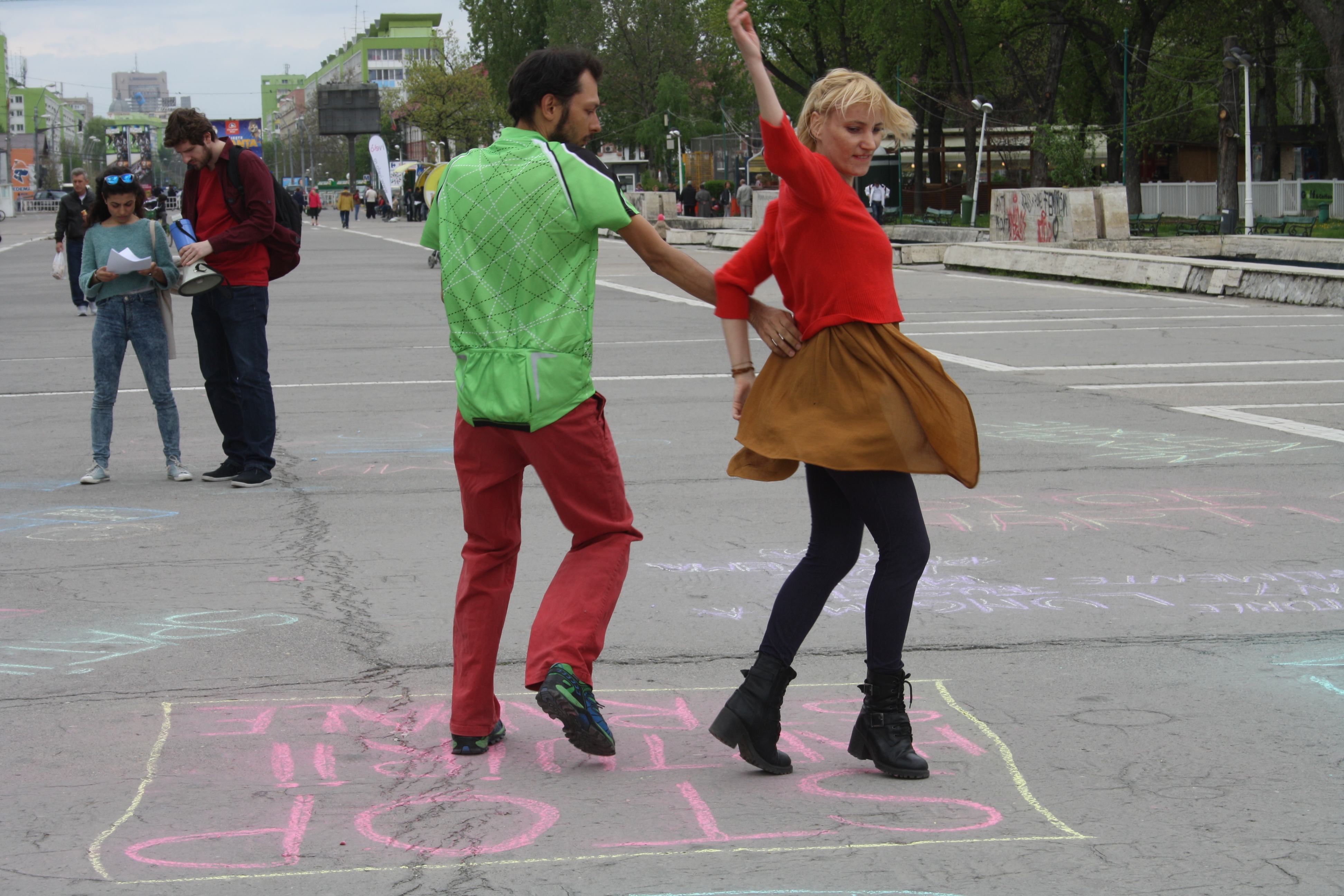
IMG_4766 Many people in the park took a moment to stop and read or asked us what are we doing, what is street harassment or just stopped to congratulate us on our work. After the chalking, we made a flashmob – an artistic dance to symbolize the “relation” between the aggressor and the harassed woman, a relation of dominance and submission, a power relation. A powerful woman, an actress and activist on Roma rights – Mihaela Dragan – recited testimonials about street harassment to go with the dance. It was great! Then, the other participants made a circle, surrounding the dancers with banners and placards with messages against street harassment, for the people to see them.

IMG_4667 At the end of the activity we shared fliers with this simple message:

“When was it the last time you saw a girl or a woman catcalled, whistled, groped on the street, bus or park? What was your reaction? Street harassment is a daily problem for girls and women worldwide. Whistles, honking, leers, groping, sexual commentaries about women’s body, stalking, flashing, masturbation in public, threats with rape or physical aggression and other behaviours of street harassment in public space are making girls and women to feel unsafe. Street harassment has nothing to do with sexual attraction or what a woman is wearing. Is about the need of the harassers to demonstrate their power on their targets, the women who are seen just like sexual objects, walking down the street to please the men. Is time to get over stereotypes and stop blaming the women, but their aggressors. Say STOP to street harassment! Women have the right to a safe space too! Take attitude if you see a harassed women on the street!”

I was very glad that so many women and men in Bucharest got involved in this amazing week and I hope will be that way and something more in 2016 too!

Simona is the Vice President of a feminist NGO – FILIA Center and a PhD student in Political Sciences, working on a thesis on street harassment in Bucharest. You can follow her on Facebook.

Photos by Ana-Maria Popa.

Share

Filed Under: anti-street harassment week, correspondents, street harassment

Washington, DC area #EndSHWeek actions

April 21, 2015 By HKearl

International Anti-Street Harassment Week was huge… groups in at least 40 countries took a stand. In the Washington, DC-area, where SSH is based, we were also busy five with offline actions.

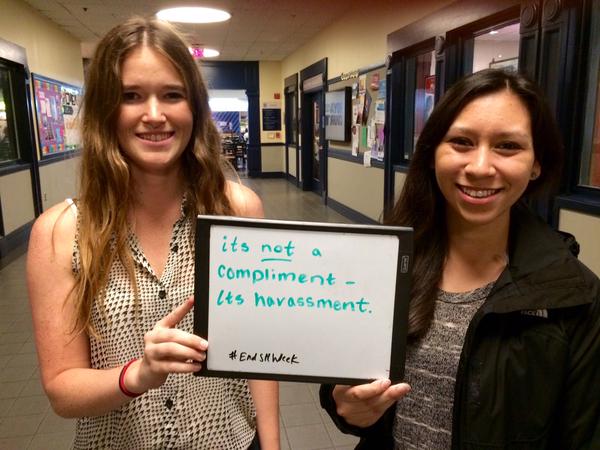
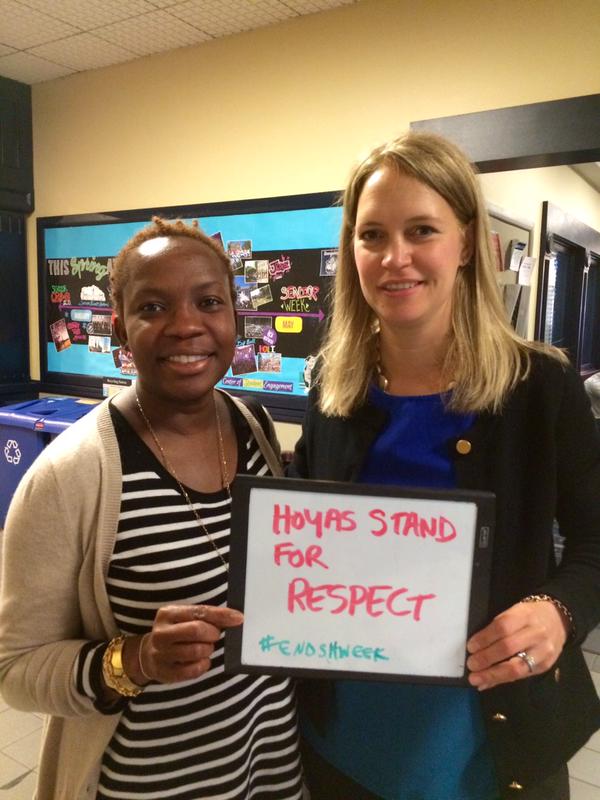
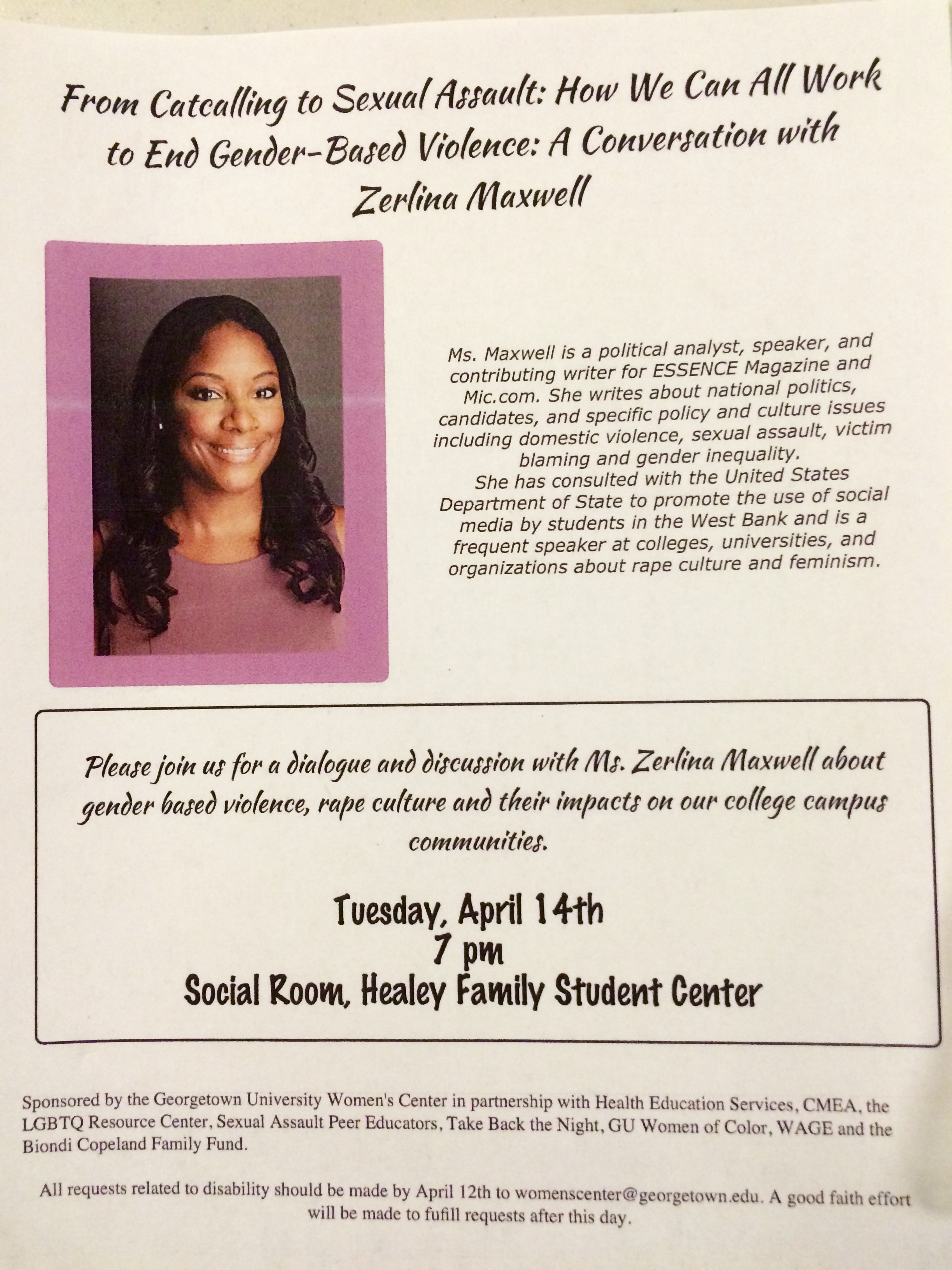
On April 14, we joined the Georgetown University Women’s Center in distributing information and encouraging people to write white board messages for social media and attended a talk on rape culture (including street harassment) by writer and political pundit Zerlina Maxwell.

 4.14.15 GU in DC2 4.14.15 GU in DC
 4.14.15 Zerlina Maxwell talk at GU wtih womens center staff and volunteers. DC 4.14.15 Zerlina talk GU in DC

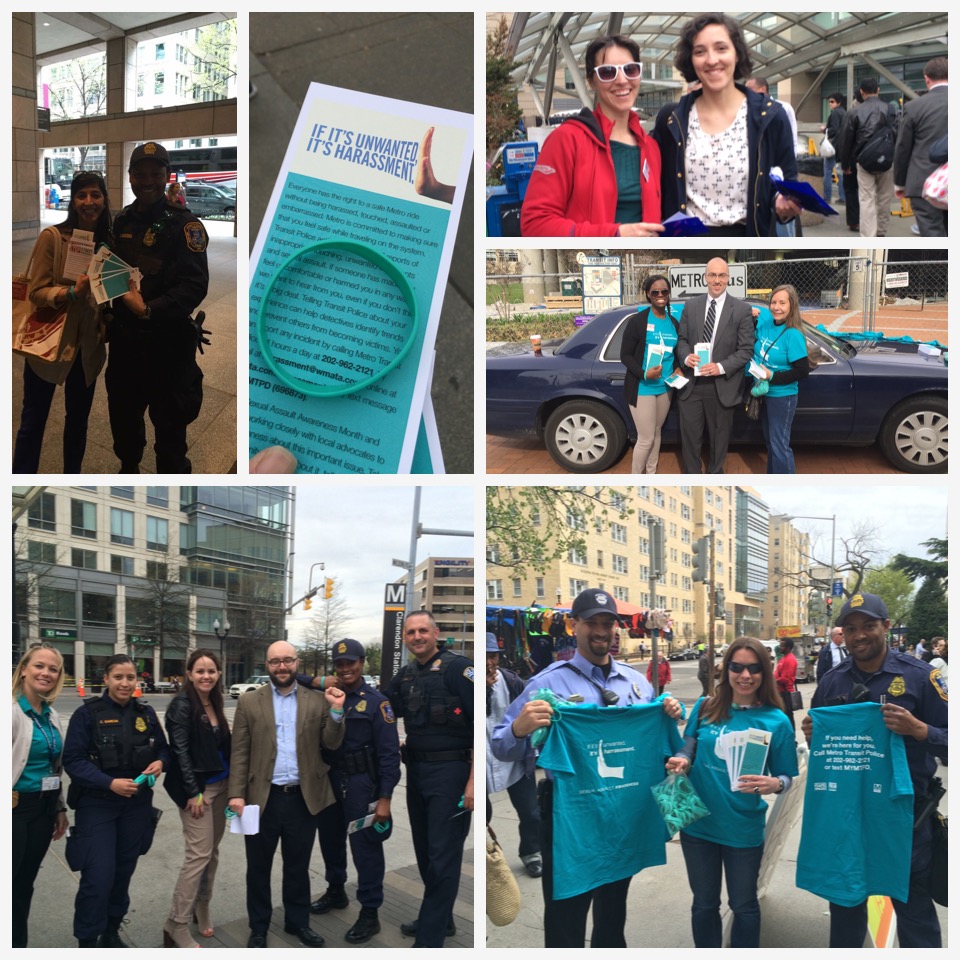
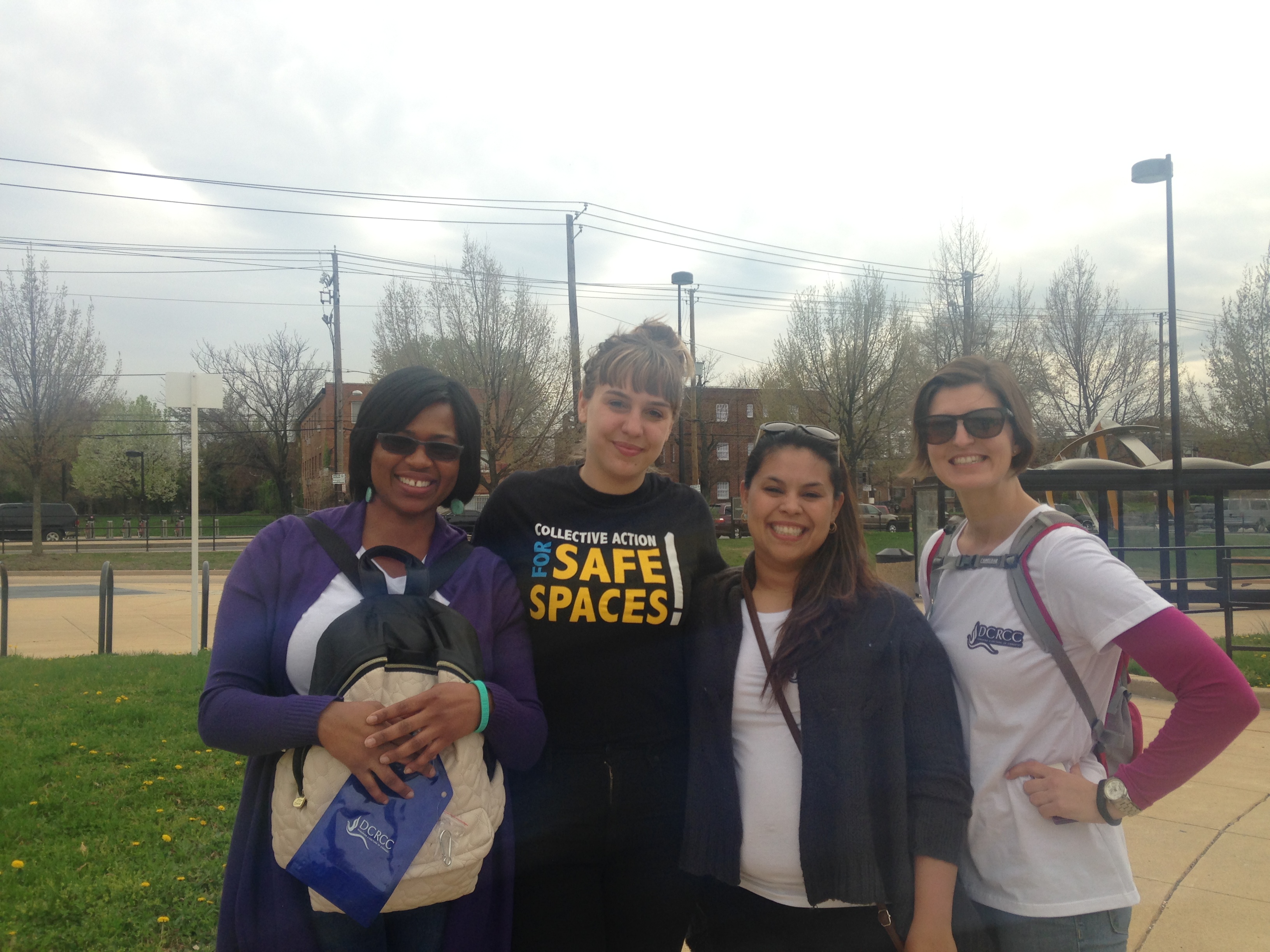
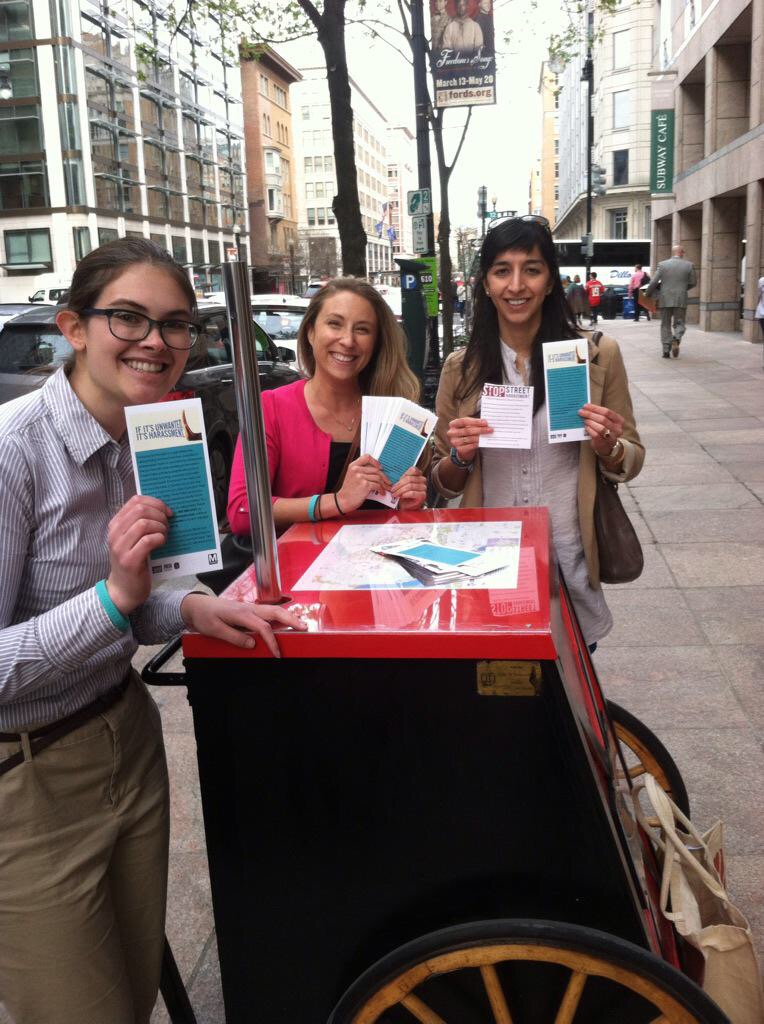
April 15, several of our board members (Liz, Layla, and Maureen) and volunteers, staff and volunteers with Collective Action for Safe Spaces (CASS) and the DC Rape Crisis Center, and staff from the Washington Metropolitan Area Transit Authority distributed flyers, tshirts, and bracelets at five Metro stations about harassment on the transit system and how to report it. We were able to reach hundreds of people.

4.15.15 WMATA DC

 4.15.15 CASS WMATA DCRCC flyering  4.15.15 Metro Center WMATA DC

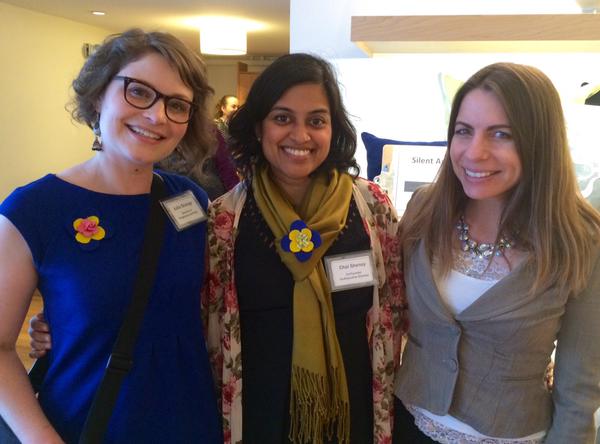
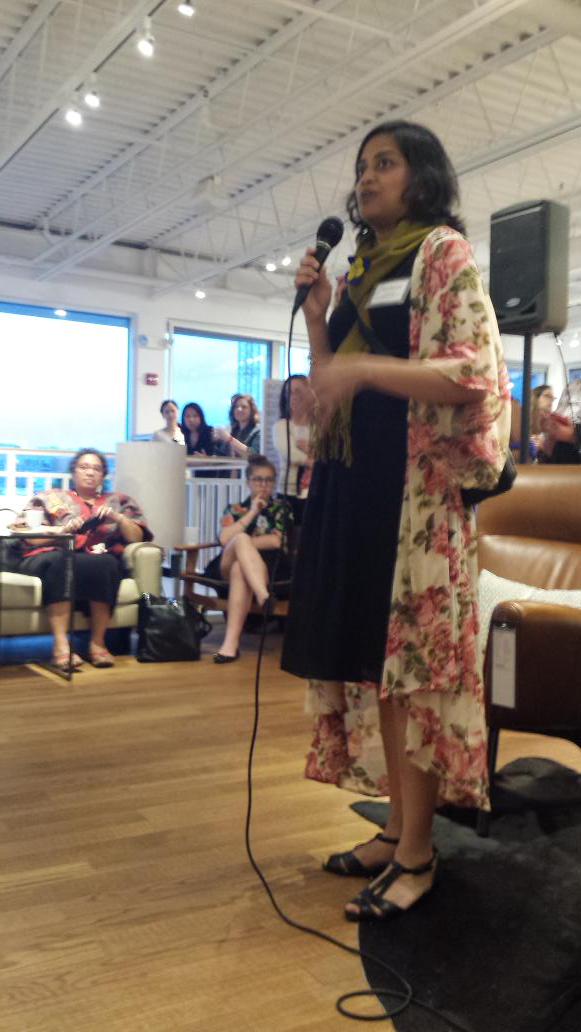
April 16, we celebrated the achievements of our friends CASS at their six year anniversary party!

 4.16.15 CASS Party 4.16.15 Chai at CASS event in DC

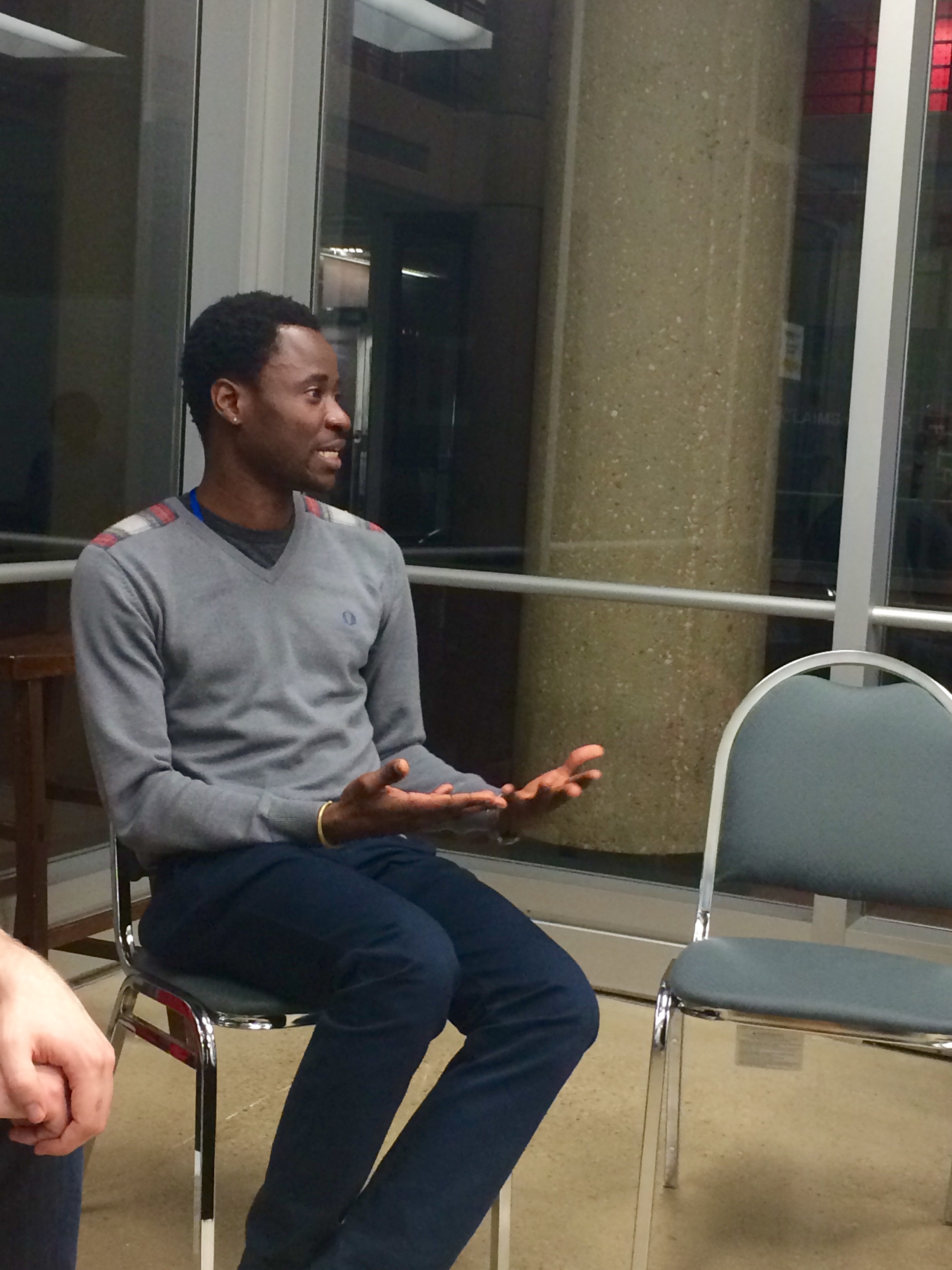
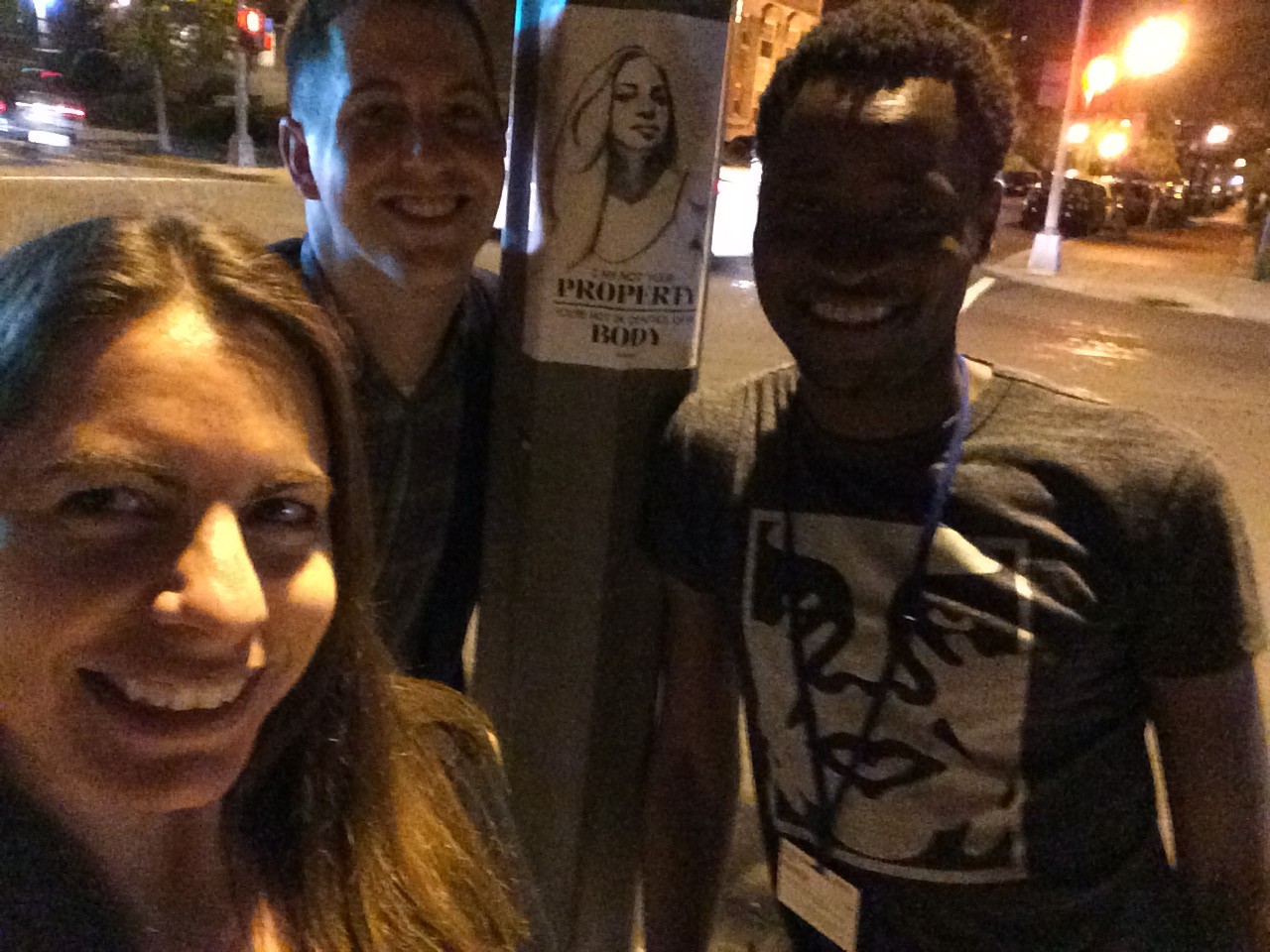
April 17, we hosted Nigerian LGBT/HIV activist Bisi Alimi at the meeting of the Gay District group at the DC Center. He talked about discrimination against LGBT individuals, including in Nigeria, and how that includes harassment and assault in public spaces. SSH board member Patrick, Bisi and I put up a few Stop Telling Women to Smile posters afterward as part of the International Night of Wheat Pasting!

 4.17.15 Bisi at DC Center  4.17.15 Bisi, Patrick, me STWTS in DC

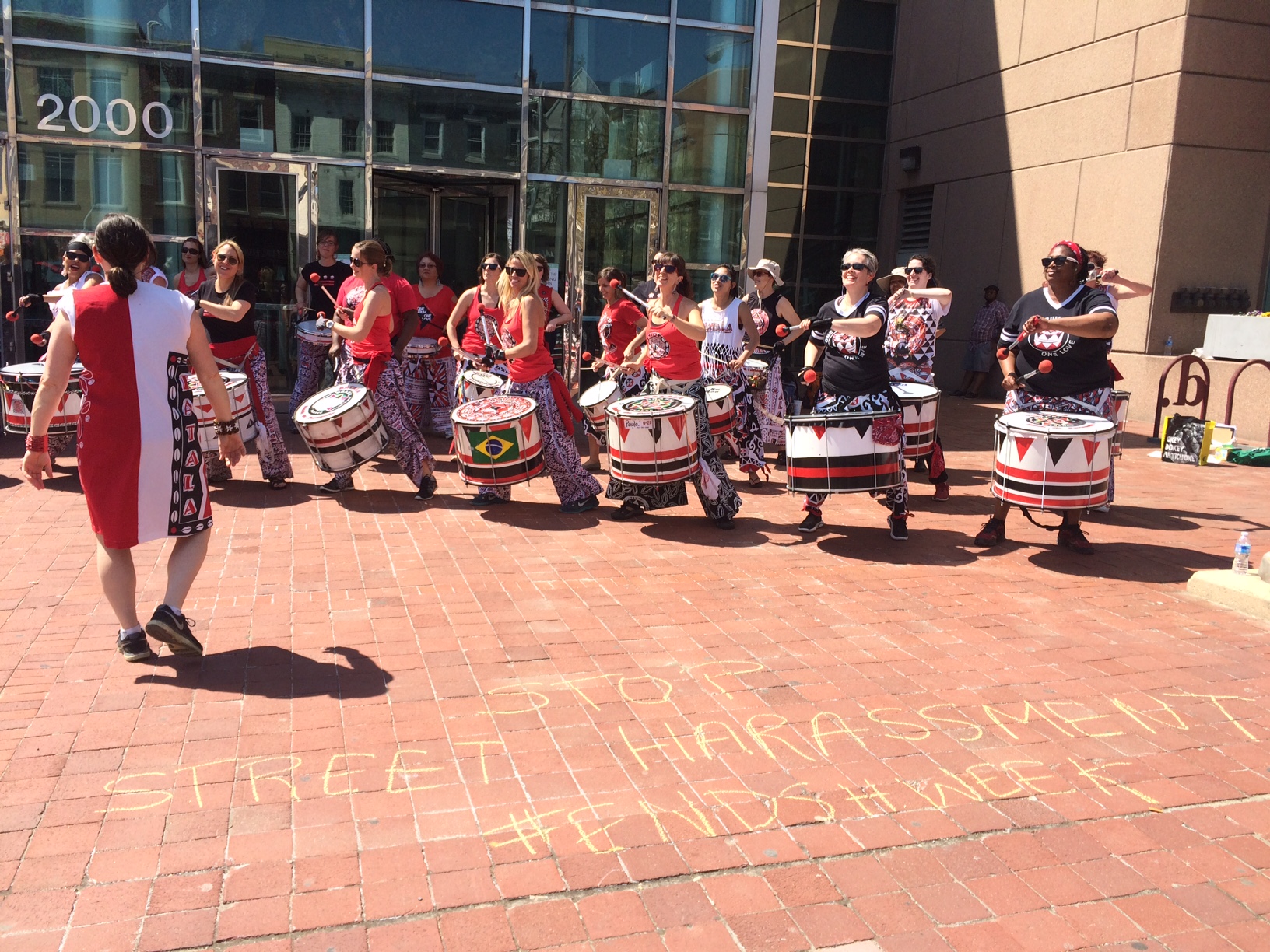
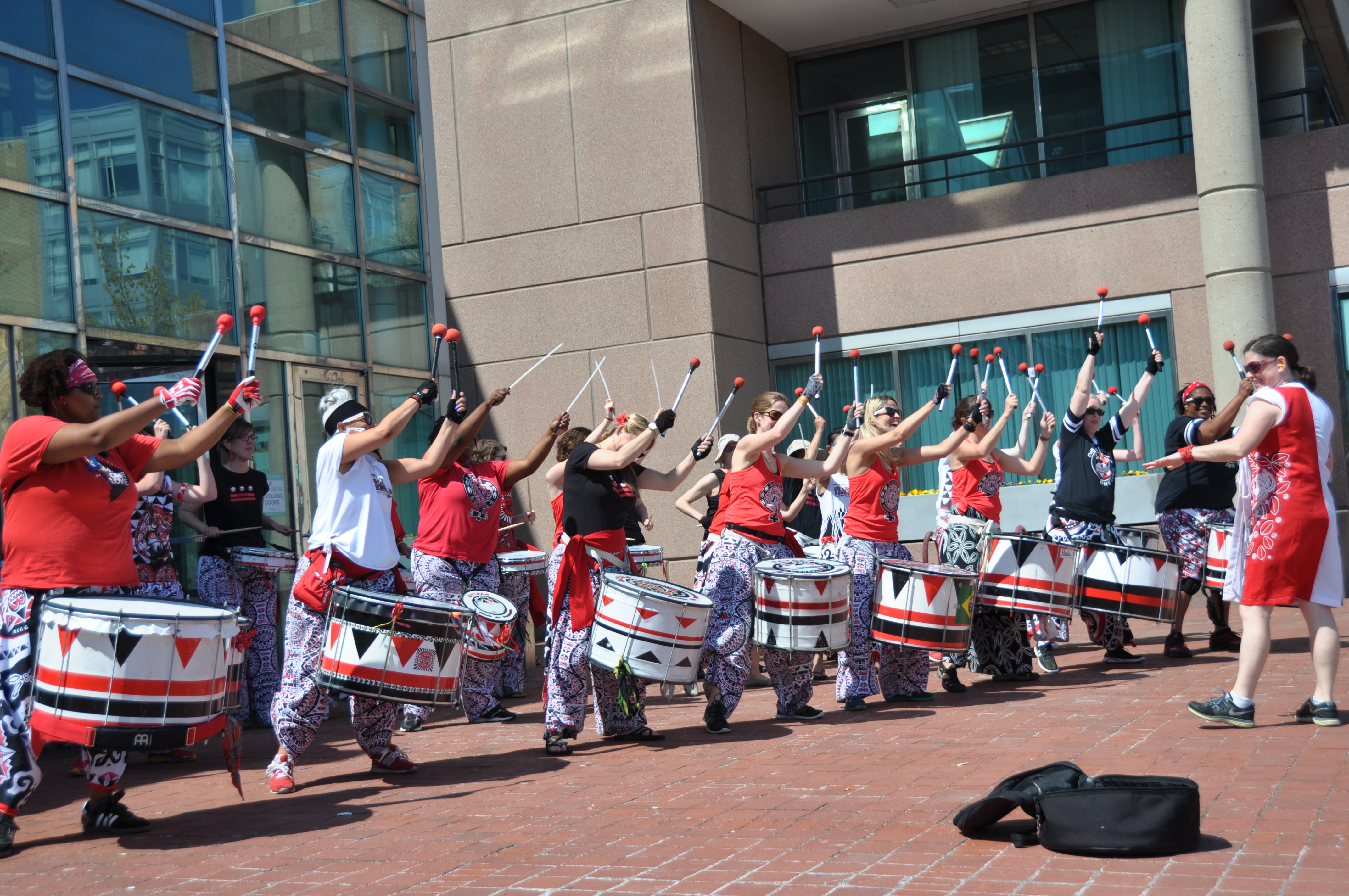
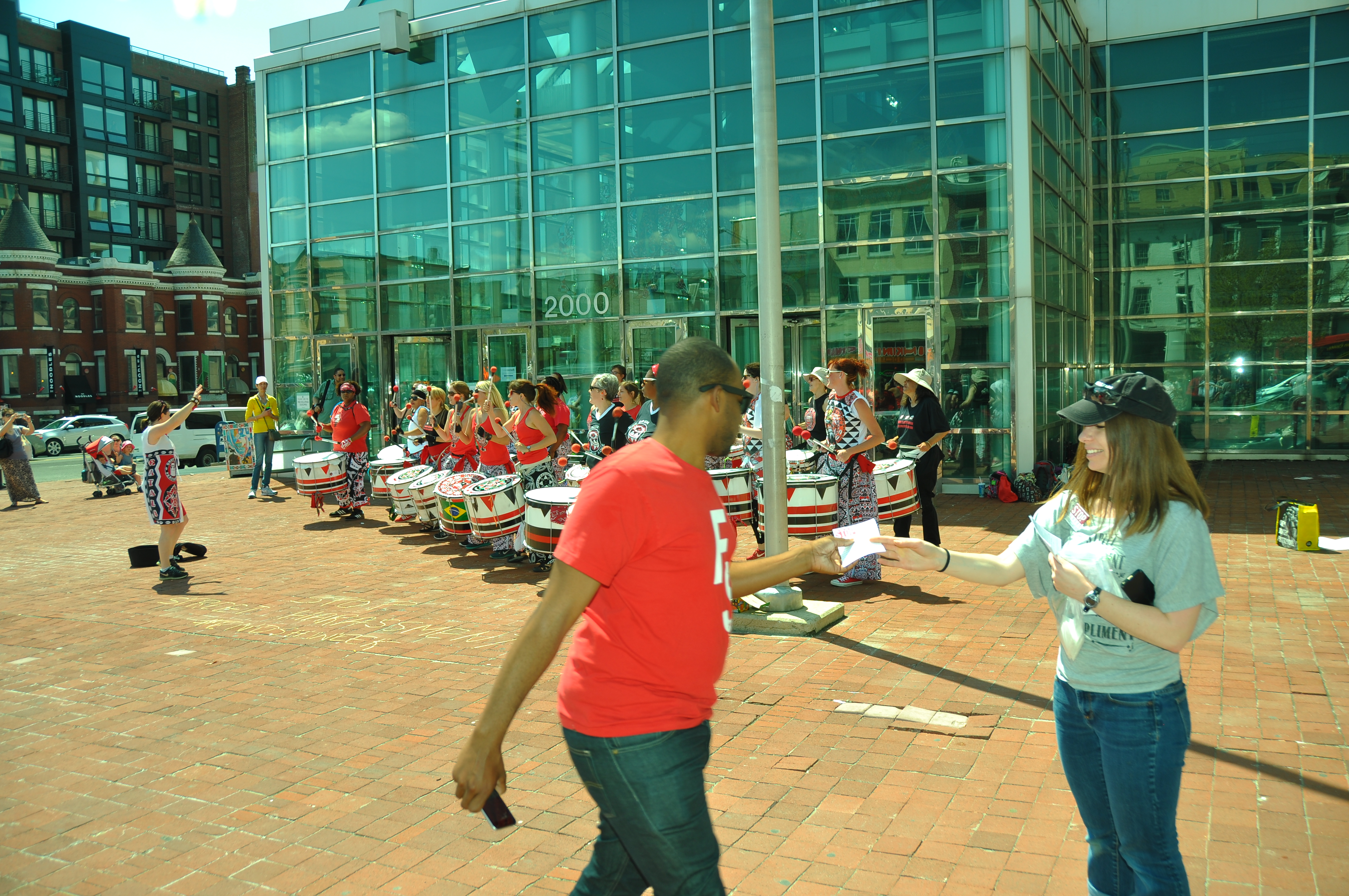
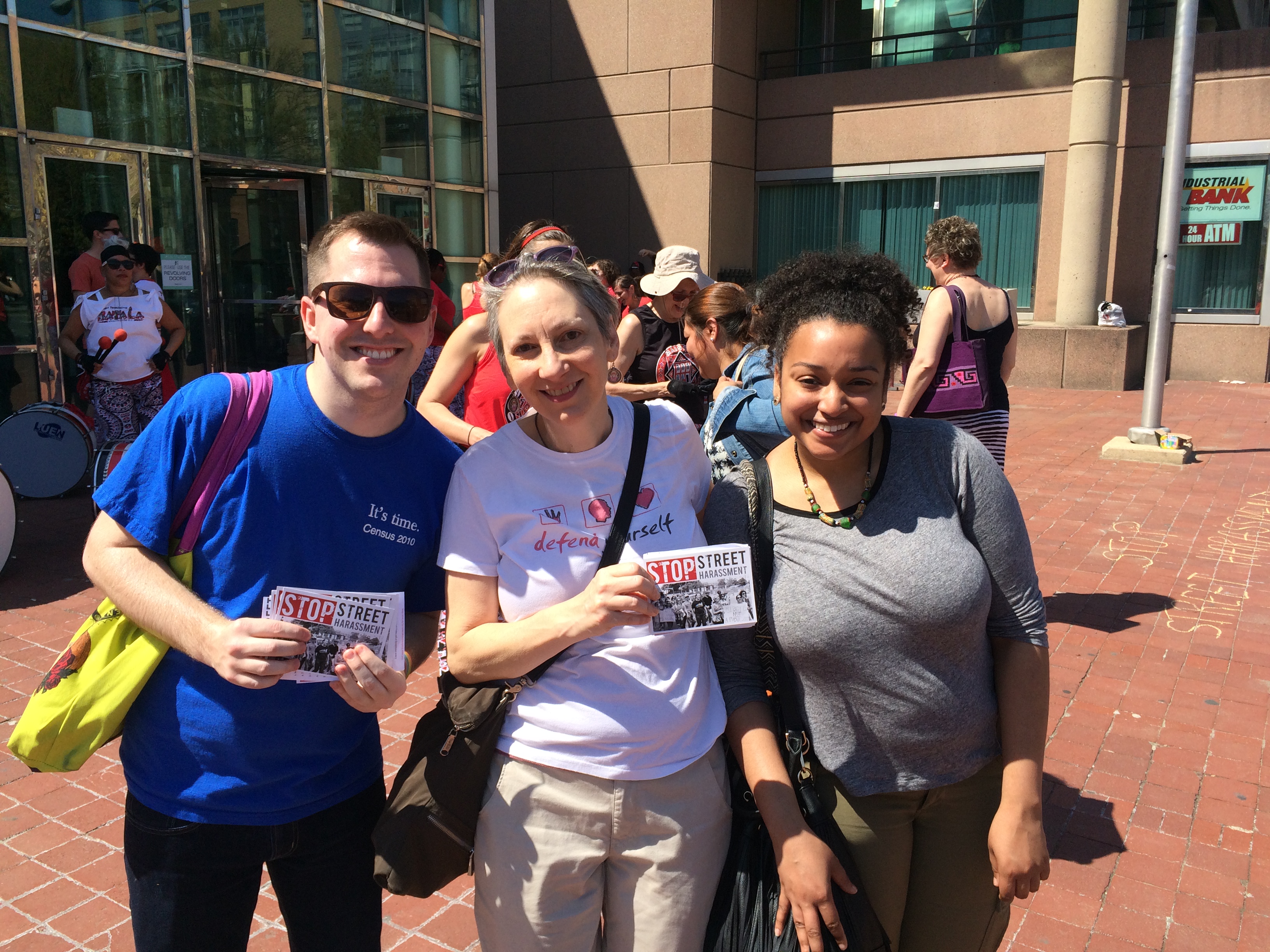
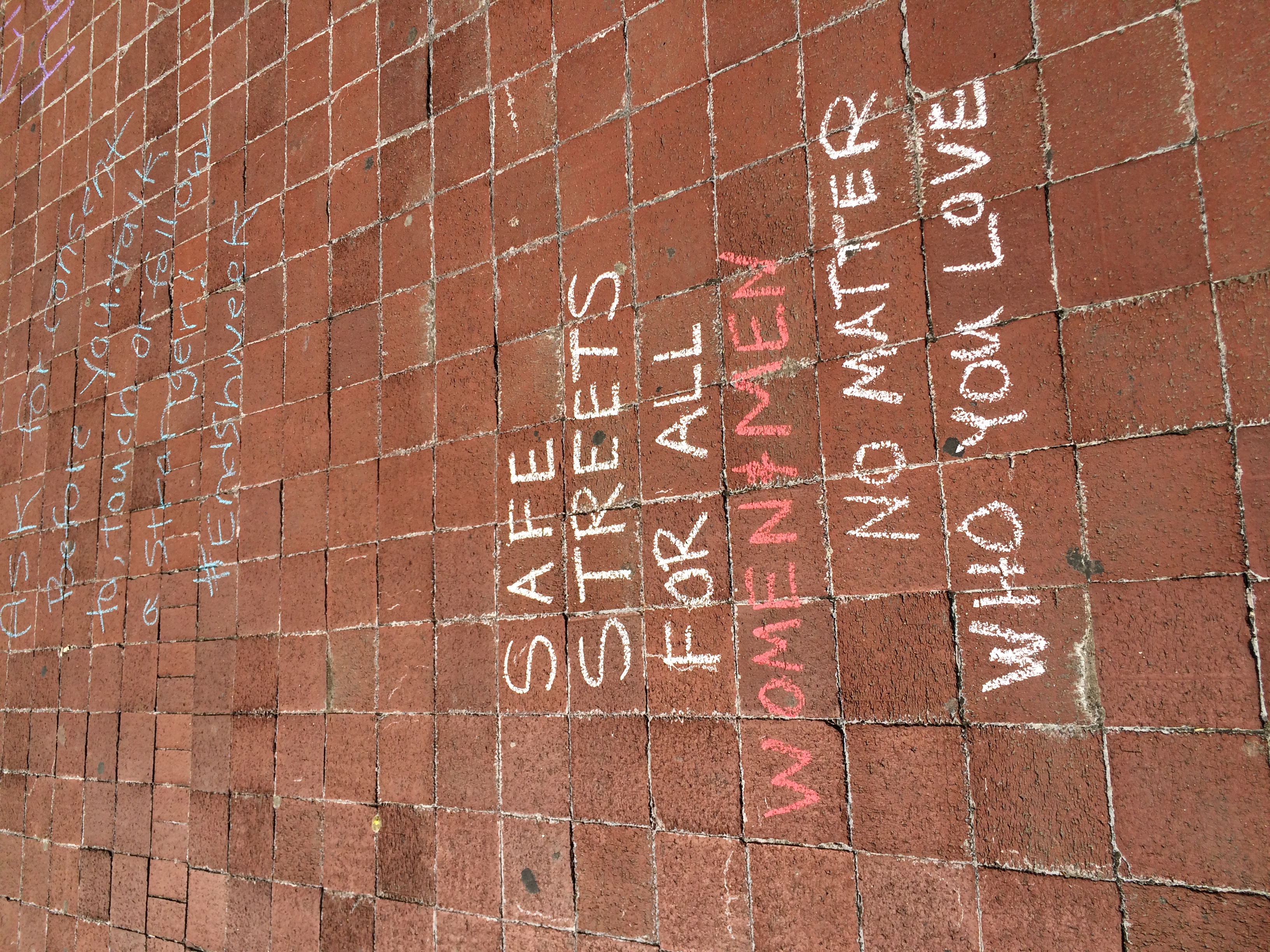
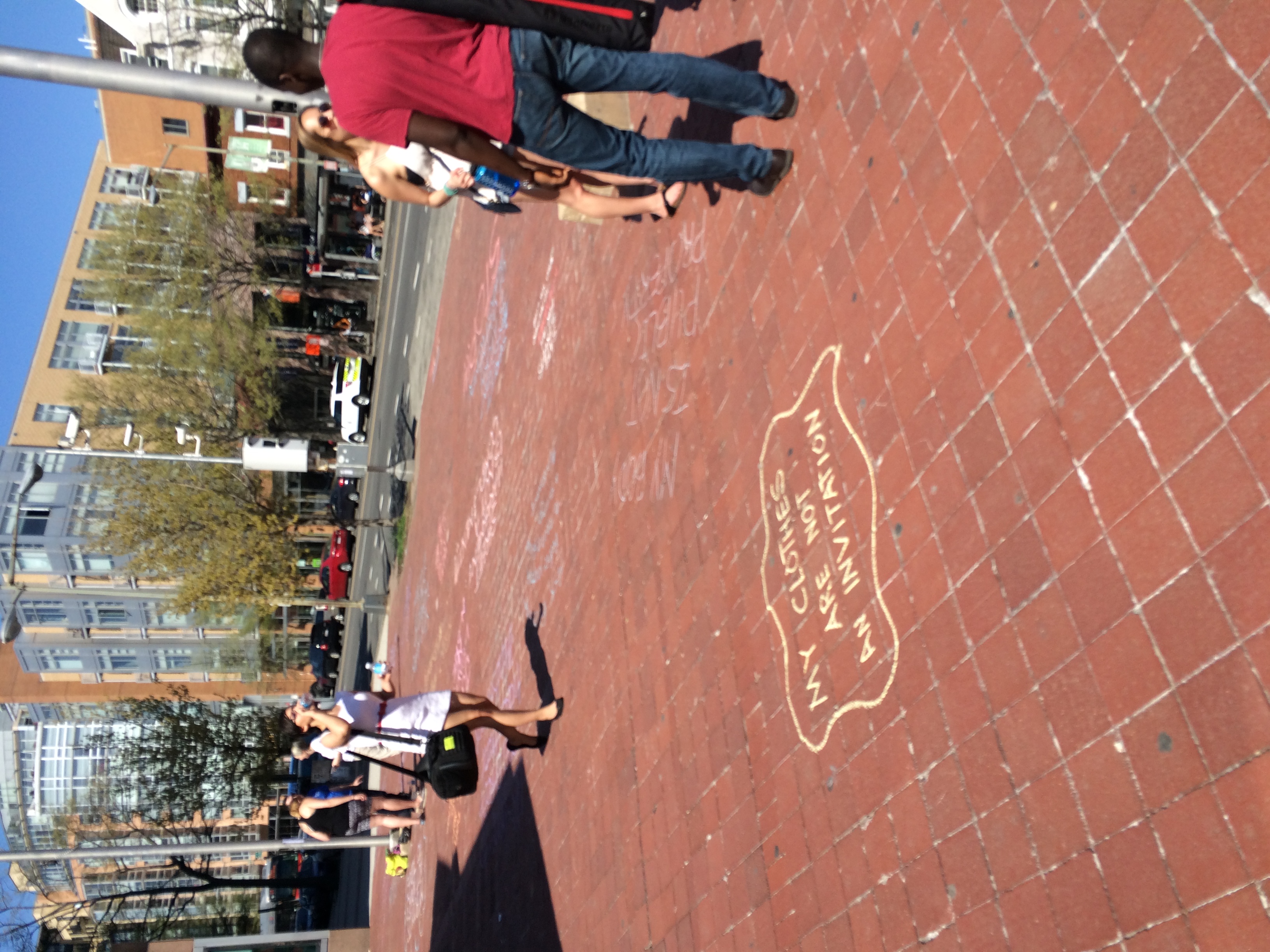
Finally, on April 18, we joined Batala, CASS, and Defend Yourself for street action. From drumming to flyering and chalking (watch a 90 second video clip), we were able to raise a lot of awareness about street harassment. Batala was particularly amazing and drew crowds to hear their beats, giving us an opportunity to talk to people about street harassment, etc.

 4.18.15 SSH Batala  DSC_1284
DSC_1300  IMG_6703
IMG_6729

Share

Filed Under: anti-street harassment week, Events, nonprofit

UK: This Doesn’t Mean a Yes Campaign

April 21, 2015 By HKearl

4.11.15 London - ThisDoesntMeanAYes“A short skirt is not a yes.
A red lip is not a yes.
A wink is not a yes.
A slow dance is not a yes.
A walk home is not a yes.
A drink back at mine is not a yes.
A kiss on the sofa is not a yes.
The only ‘yes’ is a ‘yes’.”

On the eve of International Anti-Street Harassment Week, our friends Rape Crisis UK teamed up with fashion photographer PEROU on new campaign #ThisDoesntMeanYes to dispel the myths around what constitutes consent. They photographed nearly 200 women and officially launched the campaign at www.thisdoesntmeanyes.com on April 15.

In their press release they wrote: “PEROU photographed women who were chosen at random in a pop-up street studio, capturing and empowering each individual in a composition that each felt natural to them. Our aim: to show through our collection of images, that no matter what a woman is wearing, she is never ‘asking for it’ and the mentality ‘she wants it’ is fundamentally wrong.”

Rape Crisis UK explained: ‘No one should be able to blame rape on a short skirt. A short skirt can’t talk – a short skirt can’t say yes’.

Join the campaign by posting your image on social media using #thisdoesntmeanayes.

4.11.15 London - ThisDoesntMeanAYes from PRThe four women behind the campaign are: Nathalie Gordon is an Advertising Creative, Lydia Pang is a Creative Art Commissioner, Abigail Bergstrom is a Commissioning Book Editor and Karlie McCulloch is an Illustration Agent.

Share

Filed Under: anti-street harassment week, Resources Tagged With: rape culture, thisdoesntmeanayes, victim blaming

Germany: Women-Only Transit Options

April 21, 2015 By Correspondent

Lea Goelnitz, Berlin, Germany, Blog Correspondent

women_only_public_transportIn more than one dozen countries, women-only public transportation is chosen as a short-term (or mid-term!) solution to street harassment. These countries are as diverse as Japan, India, Brazil, the Philippines and UAE, and offer sex segregated compartments in their trains or subways. In India public buses have benches reserved for women, entire trains for women and a women-only carriage in the Delhi metro. On the platform of the metro stop, the pink sign marks the “safe” area.

As the latest example of women-only transit, in the beginning of April the Guardian reported that there would be a new women-only rickshaw- service in Pakistan. The founder was fed up with facing daily harassment and now offers safe rides in pink rickshaws. I disagree with celebrating this business idea too much if the reason for the need of such women-only services is not sufficiently seen as a problem. We have to address the root causes.

Although I used to ride in the women-only carriage in Delhi and I guess it created a certain feeling of safety, I always felt like I was being put on display. Having all the women gathered in one space surrounded by men felt awkward. It is frustrating to know that these women-only spaces are a big move away from a gender equal society and from achieving real safety. Through sex-segregation, men do not need to adjust to a society in which women are equal and have the right to be in public spaces. The onus is on women to change.

In addition to women-only trains there are taxi services for women, which are even more widespread. There is SheRides in New York, Cab for Women by Women in Delhi and the Women´s Night Taxi in Hannover, Germany. In Germany there are also women-only parking lots, which are the ones closest to the building.

These interventions and businesses run by women create a safe option for women who otherwise might not go out or who will feel uncomfortable when they are out. As long as politics and culture fail women, this might be the only way to go. On the upside, in most cases it even provides women with economic empowerment. But of course even that is not perfect; the few female drivers may face safety issues as long as they are in the male-dominated space of taxi waiting lanes and rest areas.

Since January one of the major taxi companies in Delhi incorporated women drivers, catering to female passengers as well. This might be a small step forward. At least the men driving for this company will have to get used to having female colleagues.

In order for women to be safe, more women need to be out in public, as passengers and drivers.

Lea works in journalism and women´s rights and is involved in the women´s rights NGO Discover Football, which uses football as a tool for empowerment and gender equality. Follow her on Twitter, @LeaGoelnitz.

Share

Filed Under: correspondents, News stories, public harassment Tagged With: public transit, women-only

« Previous Page
Next Page »

Share Your Story

Share your street harassment story for the blog. Donate Now

From the Blog

  • #MeToo 2024 Study Released Today
  • Join International Anti-Street Harassment Week 2022
  • Giving Tuesday – Fund the Hotline
  • Thank You – International Anti-Street Harassment Week 2021
  • Share Your Story – Safecity and Catcalls Collaboration

Buy the Book

Search

Archives

  • September 2024
  • March 2022
  • November 2021
  • April 2021
  • March 2021
  • January 2021
  • April 2020
  • March 2020
  • February 2020
  • December 2019
  • November 2019
  • September 2019
  • August 2019
  • July 2019
  • June 2019
  • May 2019
  • April 2019
  • March 2019
  • February 2019
  • January 2019
  • December 2018
  • November 2018
  • October 2018
  • September 2018
  • August 2018
  • July 2018
  • June 2018
  • May 2018
  • April 2018
  • March 2018
  • February 2018
  • January 2018
  • December 2017
  • November 2017
  • October 2017
  • September 2017
  • August 2017
  • July 2017
  • June 2017
  • May 2017
  • April 2017
  • March 2017
  • February 2017
  • January 2017
  • December 2016
  • November 2016
  • October 2016
  • September 2016
  • August 2016
  • July 2016
  • June 2016
  • May 2016
  • April 2016
  • March 2016
  • February 2016
  • January 2016
  • December 2015
  • November 2015
  • October 2015
  • September 2015
  • August 2015
  • July 2015
  • June 2015
  • May 2015
  • April 2015
  • March 2015
  • February 2015
  • January 2015
  • December 2014
  • November 2014
  • October 2014
  • September 2014
  • August 2014
  • July 2014
  • June 2014
  • May 2014
  • April 2014
  • March 2014
  • February 2014
  • January 2014
  • December 2013
  • November 2013
  • October 2013
  • September 2013
  • August 2013
  • July 2013
  • June 2013
  • May 2013
  • April 2013
  • March 2013
  • February 2013
  • January 2013
  • December 2012
  • November 2012
  • October 2012
  • September 2012
  • August 2012
  • July 2012
  • June 2012
  • May 2012
  • April 2012
  • March 2012
  • February 2012
  • January 2012
  • December 2011
  • November 2011
  • October 2011
  • September 2011
  • August 2011
  • July 2011
  • June 2011
  • May 2011
  • April 2011
  • March 2011
  • February 2011
  • January 2011
  • December 2010
  • November 2010
  • October 2010
  • September 2010
  • August 2010
  • July 2010
  • June 2010
  • May 2010
  • April 2010
  • March 2010
  • February 2010
  • January 2010
  • December 2009
  • November 2009
  • October 2009
  • September 2009
  • August 2009
  • July 2009
  • June 2009
  • May 2009
  • April 2009
  • March 2009
  • February 2009
  • January 2009
  • December 2008
  • November 2008
  • October 2008
  • September 2008
  • August 2008
  • July 2008
  • June 2008
  • May 2008

Comment Policy

SSH will not publish any comment that is offensive or hateful and does not add to a thoughtful discussion of street harassment. Racism, homophobia, transphobia, disabalism, classism, and sexism will not be tolerated. Disclaimer: SSH may use any stories submitted to the blog in future scholarly publications on street harassment.
  • Contact
  • Events
  • Join Us
  • Donate
  • Facebook
  • Instagram
  • Pinterest
  • Tumblr
  • Twitter
  • YouTube

Copyright © 2026 Stop Street Harassment · Website Design by Sarah Marie Lacy