• About Us
    • What Is Street Harassment?
    • Why Stopping Street Harassment Matters
    • Meet the Team
      • Board of Directors
      • Past Board Members
    • In The Media
  • Our Work
    • National Street Harassment Hotline
    • International Anti-Street Harassment Week
    • Blog Correspondents
      • Past SSH Correspondents
    • Safe Public Spaces Mentoring Program
    • Publications
    • National Studies
    • Campaigns against Companies
    • Washington, D.C. Activism
  • Our Books
  • Donate
  • Store

Stop Street Harassment

Making Public Spaces Safe and Welcoming

  • Facebook
  • Instagram
  • Pinterest
  • Tumblr
  • Twitter
  • YouTube
  • Home
  • Blog
    • Harassment Stories
    • Blog Correspondents
    • Street Respect Stories
  • Help & Advice
    • National Street Harassment Hotline
    • Dealing With Harassers
      • Assertive Responses
      • Reporting Harassers
      • Bystander Responses
      • Creative Responses
    • What to Do Before or After Harassment
    • Street Harassment and the Law
  • Resources
    • Definitions
    • Statistics
    • Articles & Books
    • Anti-Harassment Groups & Campaigns
    • Male Allies
      • Educating Boys & Men
      • How to Talk to Women
      • Bystander Tips
    • Video Clips
    • Images & Flyers
  • Take Community Action
  • Contact

“One of the men took out his phone and snapped a picture of me”

June 27, 2014 By Contributor

I was at the park with my boyfriend feeding some ducks on a Sunday evening. I was wearing my church clothes and as I stood up from feeding some ducks the wind caught and blew my dress up exposing most of my legs if not my underwear.

There were two men who passed when this happened. I tried to manage my skirt quickly but by the time I had gotten it down it was already too late. One of the men took out his phone and snapped a picture of me.

I told my boyfriend what had happened but he said I was paranoid. I looked over my shoulder at the men who were walking away. I saw the one with the phone nudge his friend and show him something on his phone. They then both looked back at me and grinned.

I’m still ticked that this happened and that I didn’t say or do anything after this happened.

– Anonymous

Location: Ogden, Utah

Share your street harassment story for the blog.
See the book 50 Stories about Stopping Street Harassers for more ideas

Share

Filed Under: Stories, street harassment

“I ignored what the guy said and kept on walking”

June 26, 2014 By Contributor

I was going for my usual run on evenings and as I was passing by a business place, I heard a deep male voice said to me, “I would beat up that tight pussy”. I ignored what the guy said and kept on walking.

– Anonymous

Location: Trinidad, West Indies

Share your street harassment story for the blog.
See the book 50 Stories about Stopping Street Harassers for more ideas
Share

Filed Under: Stories, street harassment

“He sat back down, and I kept walking”

June 25, 2014 By Contributor

I was walking home late from a friend’s house, when I saw a guy sitting on the curb. I crossed the street to avoid walking directly by him, but as I was passing him, he yelled, “Hey, Miss!”

Crap, I thought, there is no one around. This could go poorly. “Yes?” I replied.

“How you doing?” he said, and got up, crossing the quiet street toward me.

I held up my hand. “I’m going to need you to leave me alone – I’m a woman walking by myself at night, and this is a little scary.”

He stopped in his tracks, and said, “Oh, I didn’t mean it like that!”

“That’s okay”, I said, “I’m going to keep walking, and you can go back to whatever you were doing.” And he sat back down, and I kept walking.

– SVN

Location: Waltham, MA

Share your street harassment story for the blog.
See the book 50 Stories about Stopping Street Harassers for more ideas

Share

Filed Under: Stories, street harassment

USA: Weighing in on harassment against interracial couples

June 25, 2014 By Correspondent

Kasumi Hirokawa, PA, USA, SSH Blog Correspondent

As a car window rolled down, I waited. Perhaps my boyfriend saw it coming, too. “Chinky legs, chinky legs, chinky legs! Ayeeeee!” A male voice chanted at us when we crossed the street, hand in hand.

It was the second time people shouted insensitive remarks at us. Or to me? I do not know. Both incidents I experienced seemed to involve men yelling Asian slurs. Somehow in 2014, the sight of an East Asian woman and a black man linking arms still offends people. The sight of two people in love.

State College, Pa. is a small town of approximately 41,757, according to the United States Census data as of 2013. It’s also very white. The data estimates 83% of the town residents identified as white in 2010. I have also heard that Pennsylvania is one of KKK’s favorite hangouts from multiple sources, including this article by TIME magazine. However, none of these justify hate.

I still remember the first time something like it happened. I think I will never forget if it happens again. It was on our way home from a formal at a mutual friend’s house. We were walking back as we passed by a pair of wobbling white men when my boyfriend abruptly turned around and stopped. “What is it?” I asked. He replied through his clenched teeth, “I thought I heard them say horrible things. Something like ‘sideways pussy.’ Did you hear it?” I was not paying enough attention to even notice it. But my boyfriend is not the kind to make this sort of things up, especially when it is obvious that I am tired.

Unable to find much reliable literature on harassment against interracial couples online, I wondered if similar things happen to other interracial couples. I sought out a few friends of mine, each of whom was in at least one interracial relationship.

Mandy* is an Asian American woman and a student at a local university. She said she was at the receiving end of “judgmental” stares when she was with her boyfriend, who is black, for a gathering in a campus building. She recalled being the only Asian girl in the room: “People [kept asking me], ‘Are you with him?’”

Kyle*, a recent college graduate who lives in Green Lane, Pa., said he and his former partner was never subjected to “direct attack” from strangers but they “caught bad looks and [received] poor service” at restaurants. He said waiting staff would bring food to others who were seated after them – a white man and a black woman. “Waitresses wouldn’t stop by as frequently and you could see them looking [at us],” he recounted.

The days of racism and sexism are seemingly over in the eyes of those who refuse to look at what is happening around them. Who knows what the person behind you in the Starbucks line thinks about another from a different racial, religious or sexual orientation groups? They would shake hands with a fake smile with anyone when sober. How about when their PC façade is washed down by alcohol, mob mentality or raging sense of entitlement? Just like creepy comments hurled at me when I’m alone, these hurtful words and gestures are supposed to remind us that we have stepped out of the line and the harassers have the power to police us.

Kasumi is a recent graduate from Penn State with a BA in journalism. Her writing has been published in Valley Magazine, City Weekend Shanghai, Penn State GeoBlog and Shanghai Daily. You can follow her on Twitter, @kasumihrkw

Share

Filed Under: correspondents, Stories, street harassment

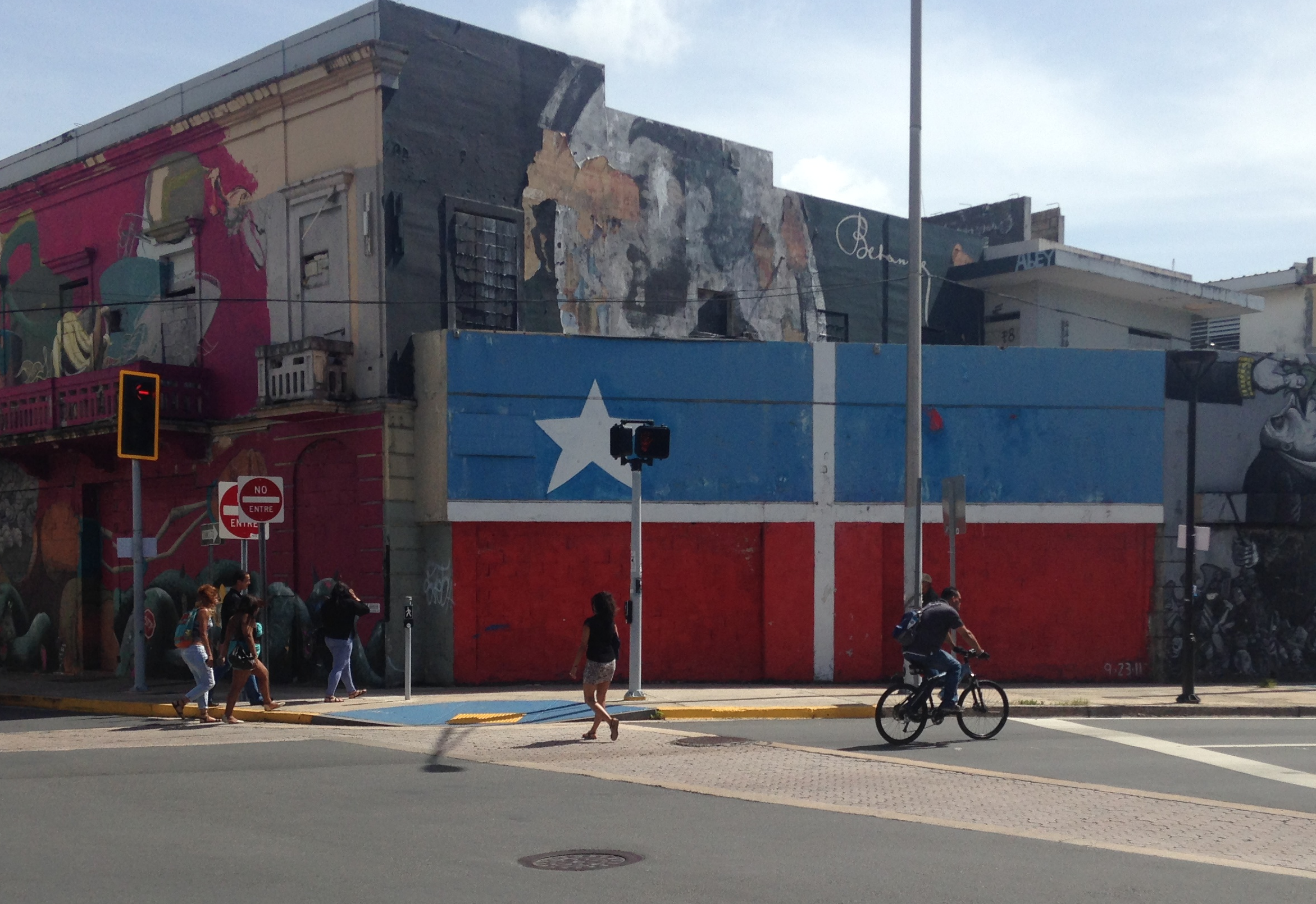
Puerto Rico: El riesgo de ser universitaria, inmigrante o trabajadora en Río Piedras

June 24, 2014 By Correspondent

Cristina del Mar Quiles, Puerto Rico, SSH Blog Correspondent

Río Piedras, un importante sector de San Juan, es una de las pocas áreas de Puerto Rico donde se camina mucho y se depende del transporte público. Es justo donde ubica el principal campus de la Universidad de Puerto Rico, por lo que es habitado en gran medida por estudiantes. Pero Río Piedras también es el segundo centro urbano con mayor población de inmigrantes dominicanos, que en su mayoría son mujeres que llegaron a la isla con la intención de trabajar y poder enviarles dinero a sus familiares en República Dominicana.

Las características demográficas de este centro urbano multiplican en un área pequeña las dinámicas de acoso callejero que son práctica y costumbre en el resto de Puerto Rico. Las estudiantes, las mujeres dominicanas y las trabajadoras de los comercios del área se convierten a diario en el punto de miradas acosadoras, silbidos, chistes machistas, comentarios vulgares e, incluso, masturbaciones públicas.

Para nutrir este escrito con algunos testimonios, me di a la tarea de caminar por el casco urbano de Río Piedras. Sabía que no sería difícil encontrar mujeres que hubieran experimentado el acoso callejero.

Cerca de la librería Mágica, en la avenida Ponce de León, me topé con una estudiante, Katia López. Me contó que es alumna de una de las escuelas públicas cercanas al área. Con 15 años, Katia no me pudo responder cuándo fue la primera vez que un desconocido le lanzó un comentario sobre su apariencia, le pitó o le dijo algo que la incomodara, pero cuando le pregunté que si experimentaba este tipo de situación frecuentemente me respondió con un largo y resignado “sííííííí”.

“En verdad estoy acostumbrada… O sea, yo siempre camino con mis amigas y siempre nos están tocando bocina, tirándonos besos desde los carros… A mí no me gusta, ‘no like’, pero creo que ya, simplemente, los ignoro”, me dijo.

Como estudiante de escuela en Puerto Rico, Katia debe vestir uniforme cada día de clase. O sea, al verla en su uniforme, es evidente que se trata de una menor de edad. Su aspecto físico es el de una niña y su uniforme debe confirmarlo. Pero, en su caso, eso no ha sido disuasivo para el acoso callejero.

Cuando cerca de la estación del tren abordé a Lucía Durán, una dominicana de 34 años que trabaja como empleada doméstica , me respondió con una mirada de resignación y me dijo: “Ay, es que eso pasa todo el tiempo. Tú no te imaginas lo que una tiene que aguantar en la AMA… Lo peor es cuando la guagua va llena, temprano en la mañana o a las 5 de la tarde, los hombres aprovechan y se paran detrás de una… Ahí se aprovechan tocan a una y una ahí aguantando y soportando…” Lucía piensa que muchos hombres se aprovechan de las mujeres dominicanas, pues si no tienen residencia legal en la isla, es muy poco probable que acudan a donde alguna autoridad a denunciarlos.

A Ana Marie Carrasquillo la encontré cerca de la Plaza del Mercado. Es una universitaria que vivió por algún tiempo en Río Piedras, pero que no ha dejado de comprar los frutos frescos que se venden en la Plaza del Mercado. Cuando le pregunté sobre el asunto del acoso callejero, esta muchacha prácticamente se desahogó. Me dijo que le pasó que un día de camino a su hospedaje un hombre le llamó la atención, cuando miró, el tipo se estaba masturbando. “Obviamente me sentí mal, insegura. Quería salir corriendo y llegar rápido a mi apartamento. No sabía qué pensar, pero me puse bien nerviosa. Cuando llegué, no sé por qué, empecé a llorar. Fue una sensación que no te puedo explicar”. Unas semanas después, una mañana en que salía de su apartamento en la calle Humacao hacia el campus universitario, se dio cuenta de que el mismo hombre la esperaba al otro lado de la calle. Ella caminó de prisa, pero lo escuchaba a él siguiéndola. Mientras, él decía en voz muy bajita comentarios sexuales.

Luego de esos incidentes, Ana Marie dejó de hospedarse en Río Piedras. Renunció a la independencia que había adquirido cuando fue aceptada en la Universidad de Puerto Rico y sus padres le permitieron vivir cerca del campus y ya no con ellos en su casa en Naranjito. Pero Ana Marie no quiso exponerse más y decidió volver a vivir a la casa de sus padres, donde sí se sentía segura. Eso significó que todos los días se tenía que levantar dos horas antes, gastar sobre $50 dólares en gasolina cada semana, coger un tapón de una hora en el trayecto de Naranjito a San Juan y perder 20 minutos buscando estacionamiento para poder llegar a su clase de Biología a las 8:30 de la mañana.

El caso de Ana Marie es una evidencia clara de cómo el acoso callejero transforma e impacta negativamente la vida de quienes lo sufren.

“Cuando le cuento esto a la gente, me dicen que soy una exagerada. Pero, yo pienso, y es bien triste y frustrante tener que decirlo así, que al menos mí no me hicieron más daño; al menos a mí no me violaron, porque otras cuantas la han pasado peor que yo”. Entonces Ana Marie me cuenta de la mujer que fue encontrada gimiendo de dolor tras ser atacada y dejada en un edificio abandonado frente a la terminal de guaguas públicas de Río Piedras, y de las estudiantes que fueron violadas en sus hospedajes por un extraño que irrumpió en sus dormitorios en medio de la noche.

La experiencia de Ana Marie es una de las más dramáticas que he escuchado, pero sé, me consta, que el acoso callejero es una cuestión de todos los días. Aún así, he buscado, pero es muy poco lo que se ha dicho o escrito sobre este tema en Puerto Rico.

Permea la idea de que los llamados “piropos” son una forma en que los hombres pueden halagar y hacer sentir bien a las mujeres que caminan por la calle. Muchos piensan que las mujeres que visten escotes, ropa ceñida o pantalones y faldas cortas se exponen a ello y que hay algunas que por su constitución física no podrán evitarlo nunca, pues su voluptuosidad provoca el deseo masculino.

Todas estas concepciones están equivocadas. Entonces, el principal arma de defensa que tenemos es nuestra voz; educar e insistir en que no son “solo piropos”. Hay detrás de cada comentario, de cada bocinazo una cultura que ha convertido a la mujer en accesorio y objeto del que se puede disponer al antojo masculino. Necesitamos visibilizar las experiencias, cuestionar los estándares sociales y contestar, denunciar y luchar.

Cristina es una periodista y productora de noticias de San Juan, Puerto Rico. Posee un bachillerato de la Universidad de Puerto Rico, Recinto de Río Piedras, donde también completa su maestría en Consejería. Puedes seguirla en Twitter en @cristinadelmarq

________________________________________________

Puerto Rico: The risk of being a college student, immigrant or a female worker in Río Piedras.

Río Piedras, an important sector of San Juan, is one of the few areas of Puerto Rico where people walk a lot and rely on public transportation. It is where the main campus of the University of Puerto Rico is located, so it is inhabited mostly by students. But Río Piedras is also the second most populated urban center of Dominican immigrants, who are mostly women who came to this island with the intention to work and send money to their relatives in the Dominican Republic.

The demographic characteristics of this urban center in a small area multiply the dynamics of street harassment that are usual and customary in the rest of Puerto Rico. The students, Dominican women and workers of the businesses in the area often face harassing looks, whistling, sexist jokes, lewd comments and even public masturbation.

To nurture this writing with some testimonials, I gave myself the task of walking through the town of Río Piedras. I knew it would not be difficult to find women who had experienced street harassment.

Near the Librería Mágica, on Ponce de León Avenue, I came across a student, Katia López. She told me she attends a public school near the area. At 15, Katia could not answer me when was the first time that a stranger cat-called on her appearance, or said anything that made her feel uncomfortable, but when I asked her if she had experienced this kind of situation she responded with a long and resigned “siiiiiii”.

“I’m really used to it… I mean, I’m always with my friends and guys honk their horn at us, or throw kisses from their cars … I do not like it, ‘not like’, but now I simply ignore it”, she said.

As a student of a school in Puerto Rico, Katia should wear a uniform every day of class. So, seeing her in her uniform, is a clear evidence that she’s a minor. Her physical appearance is that of a girl and her school uniform should confirm that. It has not been a deterrent to street harassment.

When I neared the train station, I talked to Lucía Durán, a 34 years old Dominican who works as a maid. She replied with a look of resignation and said, “Oh, this happens all the time. You can not imagine what one has to endure in the AMA (public transportation buses) … The worst is when the bus is full, early in the morning or 5 in the afternoon, the men take advantage and stand behind… There is a leverage play and there holding and supporting … “Lucía thinks that many men take advantage of Dominican women because of their illegal residence in the island, is very unlikely to denounce to the authorities.

I found Ana Marie Carrasquillo near the Market Square. She’s a college student who lived for some time in Río Piedras. Although she’s now in another town, she kept buying the fresh fruit sold in the Market Square. When I asked about the issue of street harassment, this girl practically vented. She told me about a day in particular on the way to her student housing, a man called her attention. As she looked, the guy was masturbating. “Obviously, I felt bad, and unsafe. I wanted to run faster and get to my apartment. I did not know what to think, but I got really nervous. When I arrived, I don’t know why, I began to cry out loud. It was a feeling I can’t explain. ” A few weeks later, one morning when she left her apartment on the Humacao street to the college campus, she realized that the same man was waiting across the street. She walked fast, but listened to him following her.

After those incidents, Ana Marie stopped staying in Río Piedras. She renounced the independence she had acquired when she was accepted at the University of Puerto Rico and her parents allowed her to live by herself close to campus and not at home with them in Naranjito. But Ana Marie would not be exposed anymore to situations like these and decided to live in her parental home, where she felt safer. That meant that every day she had to get up two hours before, spend about $ 50 on gas each week, take a traffic jam of an hour in the path from Naranjito to San Juan and lose 20 minutes looking for parking to be on time for her Biology class at 8:30 a.m.

The case of Ana Marie is a clear evidence of how street harassment transforms and negatively impacts the lives of those whom it affects.

“When I tell people about this, they say I’m exaggerating. I think -and it’s very sad and frustrating to have to say so- that at least I wasn’t so damaged; at least I wasn’t raped, because few others had it worst “. Then, Ana Marie tells me of the woman who was found moaning in pain after being attacked and left in an abandoned building in front of the public buses terminal at Río Piedras. Or as happened to the

students who were raped in their lodgings by a stranger who broke into their bedrooms in the middle of the night.

Ana Marie’s experience is one of the most dramatic I’ve heard, but I know, I know, street harassment is an everyday issue. Still, I have searched, but very little has been said or written about this in Puerto Rico.

It tarnishes the idea that the so-called “compliments” are a way in which men can flatter women walking down the street. Many think that women who expose cleavage, sport tight clothing and short skirts or trousers are rightfully exposed to catcalling without remedy.

All these views are wrong. Because of this, the main weapon of defense we have is our voice; educate and insist that they are not “just compliments.” Behind every comment, every honk there’s a culture that has turned women into an accessory and an object that can be subjected to the male will. We need reveal these experiences, question and answer social standards, denounce and fight.

Share

Filed Under: correspondents, street harassment

« Previous Page
Next Page »

Share Your Story

Share your street harassment story for the blog. Donate Now

From the Blog

  • #MeToo 2024 Study Released Today
  • Join International Anti-Street Harassment Week 2022
  • Giving Tuesday – Fund the Hotline
  • Thank You – International Anti-Street Harassment Week 2021
  • Share Your Story – Safecity and Catcalls Collaboration

Buy the Book

Search

Archives

  • September 2024
  • March 2022
  • November 2021
  • April 2021
  • March 2021
  • January 2021
  • April 2020
  • March 2020
  • February 2020
  • December 2019
  • November 2019
  • September 2019
  • August 2019
  • July 2019
  • June 2019
  • May 2019
  • April 2019
  • March 2019
  • February 2019
  • January 2019
  • December 2018
  • November 2018
  • October 2018
  • September 2018
  • August 2018
  • July 2018
  • June 2018
  • May 2018
  • April 2018
  • March 2018
  • February 2018
  • January 2018
  • December 2017
  • November 2017
  • October 2017
  • September 2017
  • August 2017
  • July 2017
  • June 2017
  • May 2017
  • April 2017
  • March 2017
  • February 2017
  • January 2017
  • December 2016
  • November 2016
  • October 2016
  • September 2016
  • August 2016
  • July 2016
  • June 2016
  • May 2016
  • April 2016
  • March 2016
  • February 2016
  • January 2016
  • December 2015
  • November 2015
  • October 2015
  • September 2015
  • August 2015
  • July 2015
  • June 2015
  • May 2015
  • April 2015
  • March 2015
  • February 2015
  • January 2015
  • December 2014
  • November 2014
  • October 2014
  • September 2014
  • August 2014
  • July 2014
  • June 2014
  • May 2014
  • April 2014
  • March 2014
  • February 2014
  • January 2014
  • December 2013
  • November 2013
  • October 2013
  • September 2013
  • August 2013
  • July 2013
  • June 2013
  • May 2013
  • April 2013
  • March 2013
  • February 2013
  • January 2013
  • December 2012
  • November 2012
  • October 2012
  • September 2012
  • August 2012
  • July 2012
  • June 2012
  • May 2012
  • April 2012
  • March 2012
  • February 2012
  • January 2012
  • December 2011
  • November 2011
  • October 2011
  • September 2011
  • August 2011
  • July 2011
  • June 2011
  • May 2011
  • April 2011
  • March 2011
  • February 2011
  • January 2011
  • December 2010
  • November 2010
  • October 2010
  • September 2010
  • August 2010
  • July 2010
  • June 2010
  • May 2010
  • April 2010
  • March 2010
  • February 2010
  • January 2010
  • December 2009
  • November 2009
  • October 2009
  • September 2009
  • August 2009
  • July 2009
  • June 2009
  • May 2009
  • April 2009
  • March 2009
  • February 2009
  • January 2009
  • December 2008
  • November 2008
  • October 2008
  • September 2008
  • August 2008
  • July 2008
  • June 2008
  • May 2008

Comment Policy

SSH will not publish any comment that is offensive or hateful and does not add to a thoughtful discussion of street harassment. Racism, homophobia, transphobia, disabalism, classism, and sexism will not be tolerated. Disclaimer: SSH may use any stories submitted to the blog in future scholarly publications on street harassment.
  • Contact
  • Events
  • Join Us
  • Donate
  • Facebook
  • Instagram
  • Pinterest
  • Tumblr
  • Twitter
  • YouTube

Copyright © 2026 Stop Street Harassment · Website Design by Sarah Marie Lacy