• About Us
    • What Is Street Harassment?
    • Why Stopping Street Harassment Matters
    • Meet the Team
      • Board of Directors
      • Past Board Members
    • In The Media
  • Our Work
    • National Street Harassment Hotline
    • International Anti-Street Harassment Week
    • Blog Correspondents
      • Past SSH Correspondents
    • Safe Public Spaces Mentoring Program
    • Publications
    • National Studies
    • Campaigns against Companies
    • Washington, D.C. Activism
  • Our Books
  • Donate
  • Store

Stop Street Harassment

Making Public Spaces Safe and Welcoming

  • Facebook
  • Instagram
  • Pinterest
  • Tumblr
  • Twitter
  • YouTube
  • Home
  • Blog
    • Harassment Stories
    • Blog Correspondents
    • Street Respect Stories
  • Help & Advice
    • National Street Harassment Hotline
    • Dealing With Harassers
      • Assertive Responses
      • Reporting Harassers
      • Bystander Responses
      • Creative Responses
    • What to Do Before or After Harassment
    • Street Harassment and the Law
  • Resources
    • Definitions
    • Statistics
    • Articles & Books
    • Anti-Harassment Groups & Campaigns
    • Male Allies
      • Educating Boys & Men
      • How to Talk to Women
      • Bystander Tips
    • Video Clips
    • Images & Flyers
  • Take Community Action
  • Contact

“Cat calling and harassing strangers on the street shouldn’t be socially acceptable”

June 5, 2014 By Contributor

I shut them both up. I was 21, and me and my girlfriend were going to go out on the town. First we needed some wine to have whilst we got ready. We walk down to the shops, and outside were three males. Two of them comment to each other “they’re sexy” bla bla, as we walk past, I hear the third say, “I’ve seen better.”

Charming. Like our whole purpose in life is to look pretty for you ummmm no. But my friend and I say nothing. As we exit the store the same guy mutters “sluts” just loud enough for us to hear. OK, that’s it.

I whirl round and demand aggressively, “WHAT was that?” This idiot stutters and stammers, he can’t believe I’ve had the guts to say something to him and then replies, “Oh nothing.”

I give him a death stare and snap, “Yeah that’s what I thought.”

My friend and I carry in our journey home, the laughter of this guys’ friends wetting themselves at his humiliation ringing in our ears.

Same night friend and I leave the pub, and a guy shouts, “Show us your tits,” and I shout back “Why don’t you show me yours you fat b***tard.” People around us fall over themselves laughing. If your big enough to dish it out, be big enough to take it back.

Do you have any suggestions for dealing with harassers and/or ending street harassment in general?

If you’re a woman in public, in a crowd/with someone, say something. And make sure it’s nasty and humiliating for the person trying to humiliate you. They won’t do it again. Men, if you see a woman being harassed, stand up for her, tell the guy, “Look, bro, that’s not ok and makes you look like an idiot.” Cat calling and harassing strangers on the street shouldn’t be socially acceptable.

– LM

Location: Queensland, Australia

Share your street harassment story for the blog.
Check out the new book 50 Stories about Stopping Street Harassers!
Share

Filed Under: Stories, street harassment

Street Harassment Documentary Premiers TODAY!

June 5, 2014 By HKearl

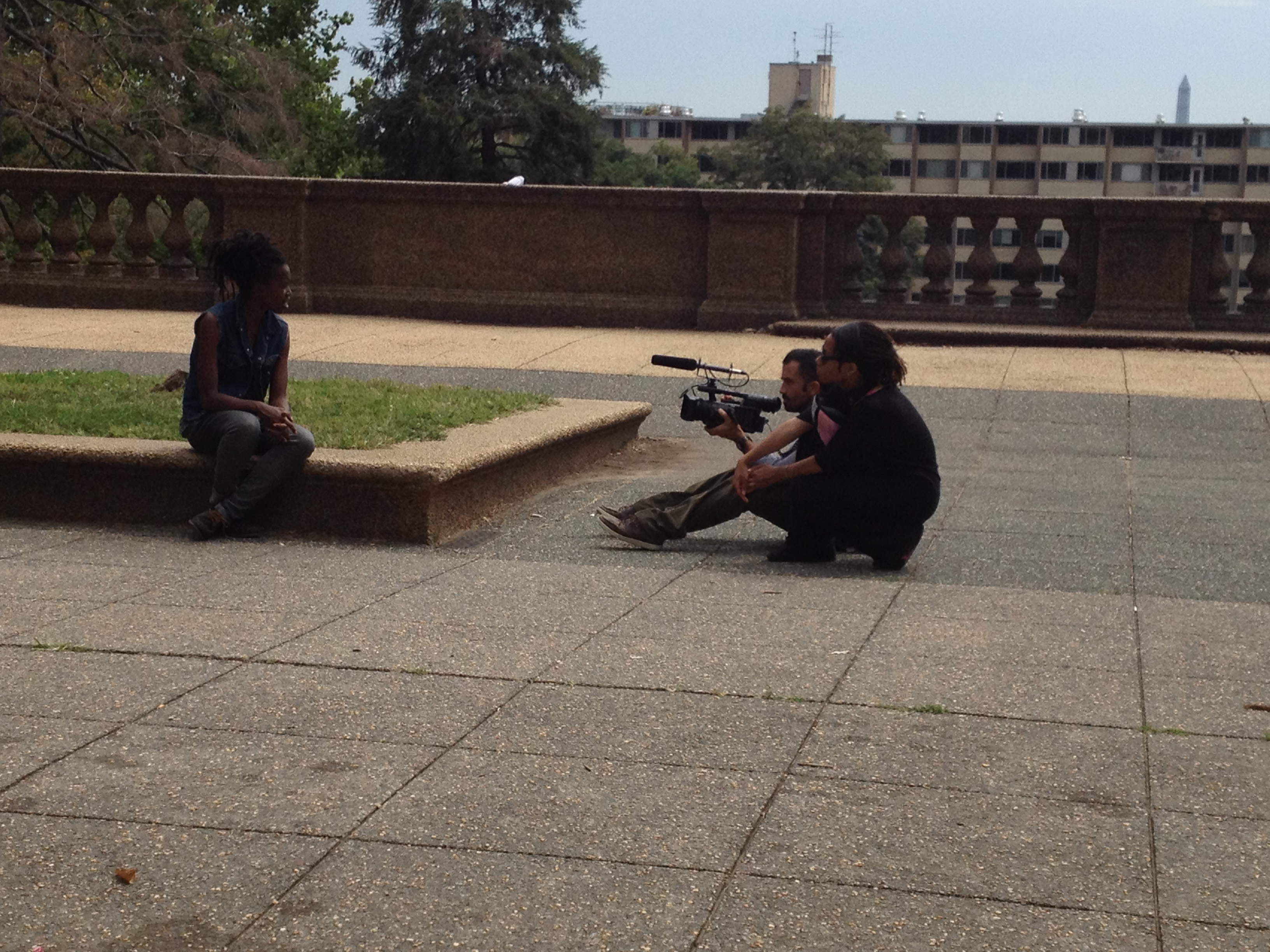
One of our long-time supporters (and a role model for me) Dienna Howard has spent the last year filming and editing a documentary about street harassment. She’s worked extremely hard to learn all of the skills and components necessary to make a documentary and I’m so proud of her!

Her documentary premieres TODAY on Arlington Independent Media!

You can live stream it here : https://www.arlingtonmedia.org/programming/live-stream

Thursdays 6:30 p.m.
Saturdays 3 p.m.
Sundays 8 a.m. (Starting 6/15 due to another show being aired in that slot on 6/8)

If you live in Arlington, Virginia, you can watch it on tv, too. These are AIM’s channels: Comcast-69 | Verizon-38

Share

Filed Under: Resources, street harassment

“Which story?”

June 4, 2014 By Contributor

Which story? How about this one. I was 17 and leaving a mall. Walking to my car in parking lot, a young man with baggy sweatpants followed me to my car. I noticed it and head down, hurried, getting my keys ready to get in and lock up quickly. I had my 4 yr old sister with me and hurried to get her in the backseat. He leaned on the hood of my car and started masturbating. I got in, locked the doors, drove backward as quick as I could, but not before driving forward just a little bit 🙂 Just enough to knock him on his jerk off ass.

Do you have any suggestions for dealing with harassers and/or ending street harassment in general?

It’s not very common where I live – it is rather socially unacceptable for people to be harassed on the street in most parts of Canada. Didn’t stop this particular person, who, when I reported it, I found out had been doing it to others, too.

– Anonymous

Location: Calgary, Canada

Share your street harassment story for the blog.
Check out the new book 50 Stories about Stopping Street Harassers!
Share

Filed Under: Stories, street harassment

“I often just firmly say ‘NO’ to my harassers”

June 4, 2014 By Contributor

I’ve lived in Upper Manhattan, in Inwood, for a year now. This is a mostly un-gentrified Dominican neighborhood. I’m a petite Caucasian woman with red hair and very fair skin; needless to say, I stand out a bit more than I’d like.

I am harassed every single day at all hours in my neighborhood. On my way to work, on my way home, getting groceries; anywhere, anytime. If I come home late at night, I specifically alter my route to avoid streets that I know to expect a lot of harassers to be loitering.

While most of my harassment consists of whistles, hisses, kissing noises, lewd remarks, and a lot of Spanish (which I don’t speak, so I mercifully can’t understand these remarks), I have also had my arms grabbed and been followed by men.

Because of the language barrier, I often just firmly say “NO.” to my harassers. The times I haven’t felt safe enough to address a group of harassers have been the times that I’ve been followed, or the harassing has become louder, more aggressive, and more degrading.

It’s unfortunate that I feel unsafe and uncomfortable in my own neighborhood on a daily basis. I do feel that my harassment is racially charged – my name is NOT “sexy little white girl,” “sexy white mama,” or any of the other horrible nicknames men have found to incorporate my race into a disgusting comment.

I am exhausted by the stress of being outside of my apartment. My plan is to move as soon as I possibly can.

Do you have any suggestions for dealing with harassers and/or ending street harassment in general?

I do plan to begin reporting men who harass me while they are working – delivery drivers, MTA employees (especially), and anyone else I can easily identify their employer. I’m also going to try the cards on the site as a way to silently respond to harassers while making a statement.

– AB

Location: Vermilyea Ave, NYC 10034

Share your street harassment story for the blog.
Check out the new book 50 Stories about Stopping Street Harassers!
Share

Filed Under: Stories, street harassment

Our New National Study on Street Harassment Found….

June 3, 2014 By HKearl

FOR IMMEDIATE RELEASE
06/03/14

Contact: Holly Kearl, hkearl@stopstreetharassment.org, (571) 449-7326

Two in Three American Women Experience Sexual Harassment and Assault in Public Spaces

Stop Street Harassment Releases a Groundbreaking National Report

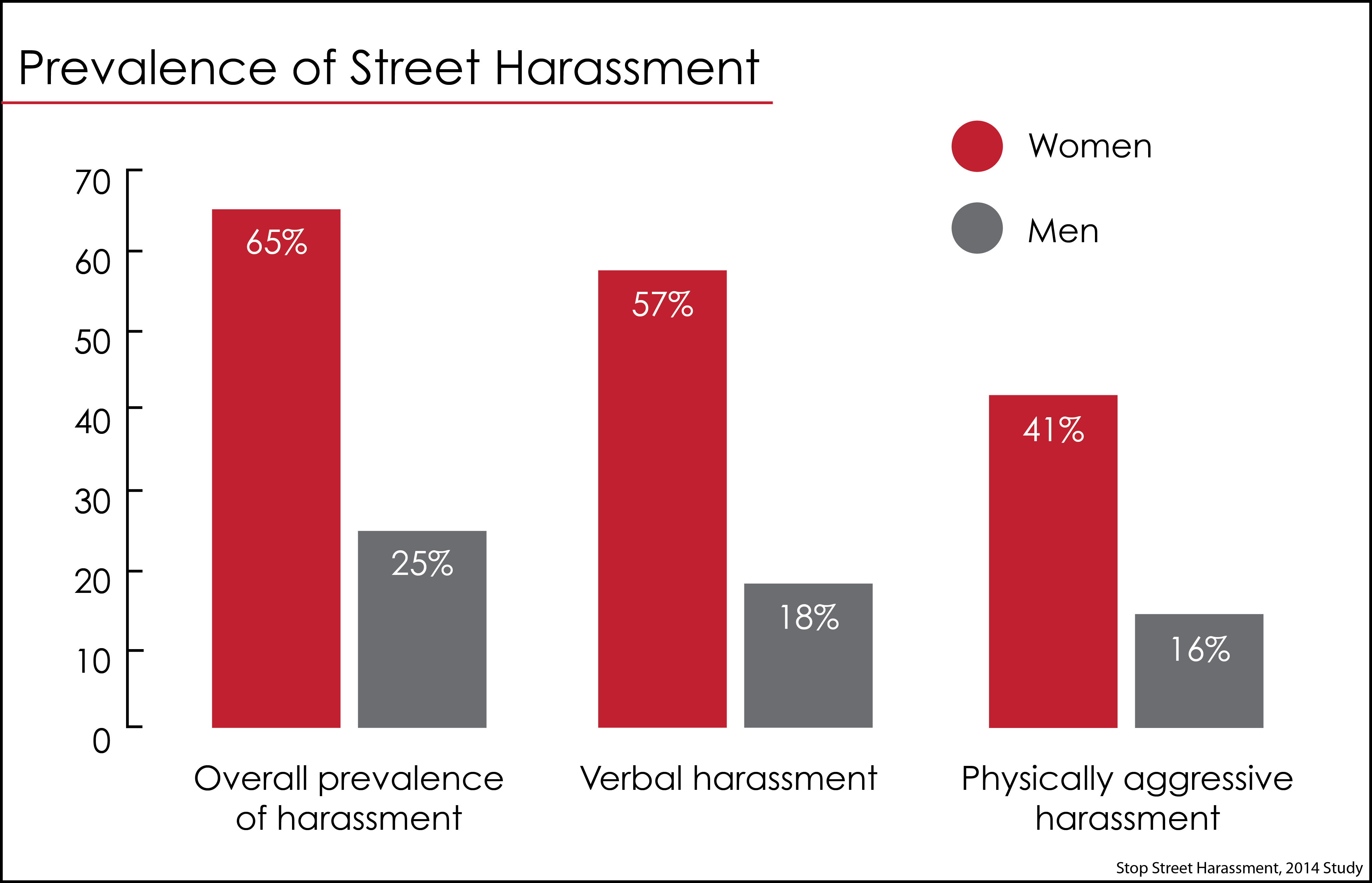
RESTON, VA — From “hey baby” to homophobic slurs, from following to groping, sexual harassment and assault in public spaces by strangers, or “street harassment,” is experienced by more than 107 million women in the United States, according to a study released today by the nonprofit organization Stop Street Harassment (SSH). GfK conducted the 2,000-person nationally representative survey in early 2014.

Half of all women had been harassed by age 17 and most women were somewhat or very concerned that the harassment would escalate into physical violence. Most harassed women also reported changing their lives in some way because of it, including avoiding locations where they had been harassed, no longer going places alone, and even moving neighborhoods or quitting jobs.

Some men also reported experiencing street harassment, especially men who identified as gay, bisexual or transgender. Being the target of a homophobic or transphobic comment (9%) was the most common experience for all harassed men. Half of respondents said their harassment started by age 17, and many men changed their lives because of the harassment they experienced.

The overwhelming majority of both women and men identified one man or a group of men as the perpetrator of harassment.

“It is shameful that millions of people are harassed by men simply for being in public spaces while they travel to and from school, work, stores, and events,” said Holly Kearl, executive director of Stop Street Harassment and author of two books on the subject. “If we want to see the United States achieve equality for all, it is imperative that communities — and we as a nation — address this pervasive human rights violation.”

While verbal comments were the most common form of harassment, an alarmingly number of women had faced more severe forms, too. Among all female respondents, 23% had been purposely sexually touched, 20% had been followed, and 9% had been forced to do something sexual.

“Street harassment is a pervasive form of sexual violence that has a profound impact for those who are harassed, their friends and families, and their community. Failing to address this systemic problem continues to perpetuate the belief that this behavior is acceptable,” said Michele Black, PhD, a SSH report advisor and the lead author of the U.S. Centers for Disease Controls (CDC) National Intimate Partner and Sexual Violence Survey 2010 Summary Report. “It is important that bystanders step forward and show that street harassment will not be tolerated,” the recently retired CDC epidemiologist said.

The report also includes stories from 10 focus groups conducted across the nation as well as recommendations for what we all can do to address this problem. There are separate recommendations directed to educators, community leaders, transit authorities, law enforcement, business owners, and individuals, complete with examples of promising and replicable initiatives.

The full report and a two-page executive summary are available for download on the SSH website.

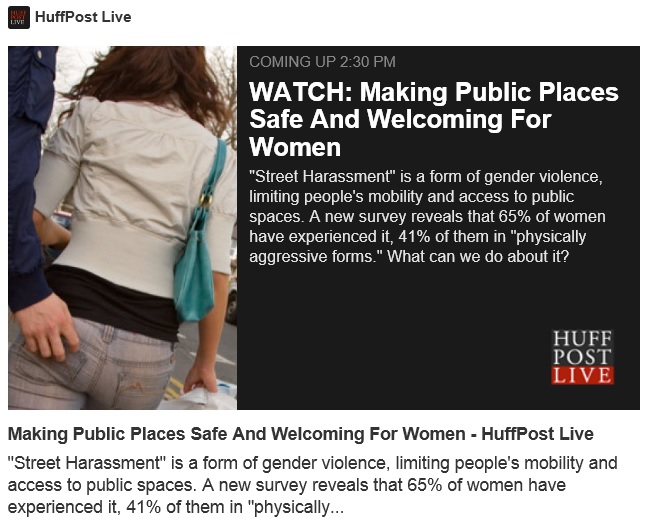
HuffPost Live will air a segment on the report at 2:30 p.m. EDT today.


Share

Filed Under: national study, SSH programs, street harassment

« Previous Page
Next Page »

Share Your Story

Share your street harassment story for the blog. Donate Now

From the Blog

  • #MeToo 2024 Study Released Today
  • Join International Anti-Street Harassment Week 2022
  • Giving Tuesday – Fund the Hotline
  • Thank You – International Anti-Street Harassment Week 2021
  • Share Your Story – Safecity and Catcalls Collaboration

Buy the Book

Search

Archives

  • September 2024
  • March 2022
  • November 2021
  • April 2021
  • March 2021
  • January 2021
  • April 2020
  • March 2020
  • February 2020
  • December 2019
  • November 2019
  • September 2019
  • August 2019
  • July 2019
  • June 2019
  • May 2019
  • April 2019
  • March 2019
  • February 2019
  • January 2019
  • December 2018
  • November 2018
  • October 2018
  • September 2018
  • August 2018
  • July 2018
  • June 2018
  • May 2018
  • April 2018
  • March 2018
  • February 2018
  • January 2018
  • December 2017
  • November 2017
  • October 2017
  • September 2017
  • August 2017
  • July 2017
  • June 2017
  • May 2017
  • April 2017
  • March 2017
  • February 2017
  • January 2017
  • December 2016
  • November 2016
  • October 2016
  • September 2016
  • August 2016
  • July 2016
  • June 2016
  • May 2016
  • April 2016
  • March 2016
  • February 2016
  • January 2016
  • December 2015
  • November 2015
  • October 2015
  • September 2015
  • August 2015
  • July 2015
  • June 2015
  • May 2015
  • April 2015
  • March 2015
  • February 2015
  • January 2015
  • December 2014
  • November 2014
  • October 2014
  • September 2014
  • August 2014
  • July 2014
  • June 2014
  • May 2014
  • April 2014
  • March 2014
  • February 2014
  • January 2014
  • December 2013
  • November 2013
  • October 2013
  • September 2013
  • August 2013
  • July 2013
  • June 2013
  • May 2013
  • April 2013
  • March 2013
  • February 2013
  • January 2013
  • December 2012
  • November 2012
  • October 2012
  • September 2012
  • August 2012
  • July 2012
  • June 2012
  • May 2012
  • April 2012
  • March 2012
  • February 2012
  • January 2012
  • December 2011
  • November 2011
  • October 2011
  • September 2011
  • August 2011
  • July 2011
  • June 2011
  • May 2011
  • April 2011
  • March 2011
  • February 2011
  • January 2011
  • December 2010
  • November 2010
  • October 2010
  • September 2010
  • August 2010
  • July 2010
  • June 2010
  • May 2010
  • April 2010
  • March 2010
  • February 2010
  • January 2010
  • December 2009
  • November 2009
  • October 2009
  • September 2009
  • August 2009
  • July 2009
  • June 2009
  • May 2009
  • April 2009
  • March 2009
  • February 2009
  • January 2009
  • December 2008
  • November 2008
  • October 2008
  • September 2008
  • August 2008
  • July 2008
  • June 2008
  • May 2008

Comment Policy

SSH will not publish any comment that is offensive or hateful and does not add to a thoughtful discussion of street harassment. Racism, homophobia, transphobia, disabalism, classism, and sexism will not be tolerated. Disclaimer: SSH may use any stories submitted to the blog in future scholarly publications on street harassment.
  • Contact
  • Events
  • Join Us
  • Donate
  • Facebook
  • Instagram
  • Pinterest
  • Tumblr
  • Twitter
  • YouTube

Copyright © 2026 Stop Street Harassment · Website Design by Sarah Marie Lacy