
• About Us
    • What Is Street Harassment?
    • Why Stopping Street Harassment Matters
    • Meet the Team
      • Board of Directors
      • Past Board Members
    • In The Media
  • Our Work
    • National Street Harassment Hotline
    • International Anti-Street Harassment Week
    • Blog Correspondents
      • Past SSH Correspondents
    • Safe Public Spaces Mentoring Program
    • Publications
    • National Studies
    • Campaigns against Companies
    • Washington, D.C. Activism
  • Our Books
  • Donate
  • Store

Stop Street Harassment

Making Public Spaces Safe and Welcoming

  • Facebook
  • Instagram
  • Pinterest
  • Tumblr
  • Twitter
  • YouTube
  • Home
  • Blog
    • Harassment Stories
    • Blog Correspondents
    • Street Respect Stories
  • Help & Advice
    • National Street Harassment Hotline
    • Dealing With Harassers
      • Assertive Responses
      • Reporting Harassers
      • Bystander Responses
      • Creative Responses
    • What to Do Before or After Harassment
    • Street Harassment and the Law
  • Resources
    • Definitions
    • Statistics
    • Articles & Books
    • Anti-Harassment Groups & Campaigns
    • Male Allies
      • Educating Boys & Men
      • How to Talk to Women
      • Bystander Tips
    • Video Clips
    • Images & Flyers
  • Take Community Action
  • Contact

Interview with UK Researcher

February 4, 2013 By Contributor

Editor’s Note: Fiona Elvines is Operations Coordinator at Rape Crisis South London where she helps people who have experienced rape and/or childhood sexual abuse. She is also in her final year of PhD research at London Metropolitan University where she is studying street harassment.

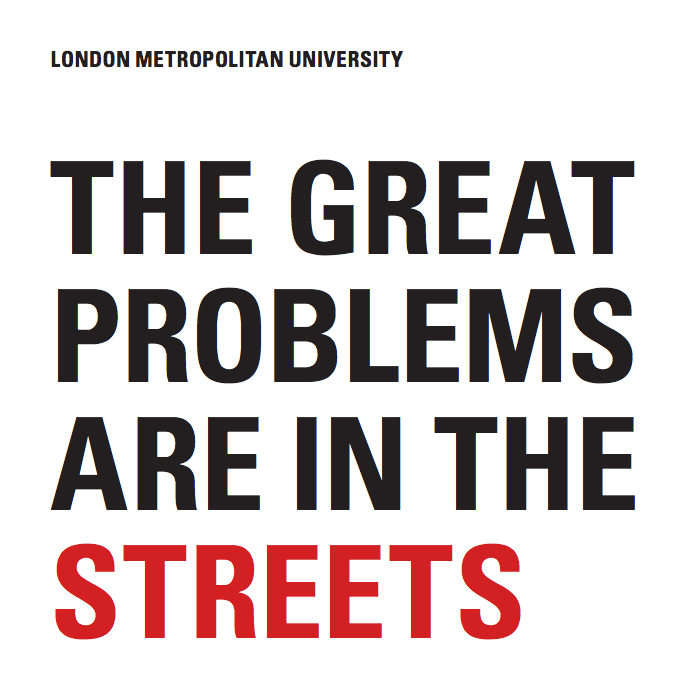
Hollaback Edinburgh recently conducted an interview with her about her dissertation (The Great Problems are in the Streets: Women’s Experiences of Male Stranger Intrusion) and they kindly allowed me to excerpt some of it here. You can read the full interview on their site.

1. What led you to this research?

I came to this research initially through my work at Rape Crisis and thinking about how the impact of the routine intrusions women encounter from men on the street make it incredibly difficult to feel like you can move past an experience of criminalised sexual violence like rape. I wanted to know more about what women who have experiences along the continuum of sexual violence feel about intrusion from male strangers in public space, and how we strategise or make sense of ourselves through it. I was also really frustrated by the victim blaming I encounter in working in rape prevention and wanted to develop an evidence base for the numerous ways in which women already limit and adapt our daily movements based on men’s intrusive practices.

2. Why do you think this is under-researched?
I think that the study of all forms of male violence against women is still really young and that feminists have worked hard to capture the evidence needed for policy change on issues like rape, domestic abuse and childhood sexual abuse. As much as I think this focus has been and is necessary, I feel it’s resulted in a loss of interest in the routine aspects of men’s intrusive practices, missing a crucial aspect of women’s everyday experience. I also think male stranger intrusion is normalised, minimised and trivialised, and that the sheer frequency of intrusive encounters means forgetting is brought in as a natural coping strategy. The women I’ve spoken with have told me how, when they have spoken out about what they’ve experienced be it to friends or parents or a partner, they have been met with a response that minimises their experience of it, reframes the intrusion as complimentary, or simply tells her it’s just part of growing up. All of this has resulted in a lack of understanding in terms of the scale of the problem and the impact it has on women’s daily decision making, sense of safety and relationship to our bodies and our self. This is starting to change, particularly with the rise of blogs such as Hollaback and Everyday Sexism, which have meant that we are starting to get a sense of the extent to which women are negotiating men’s intrusion in public space and beginning to hear experiences that might help to validate our own.

3. What kind of response did you get when you put the call out for participants?

The response was amazing. I received over 150 emails from women within 2 hours of my call being tweeted.

4. Were you surprised by the response?

Completely. I really wasn’t expecting to speak to more than 20 women. I ended up with 51 participants who completed an initial conversation with me and then kept a diary of their experiences from 2 weeks to 2 months before talking to me again or sending through feedback about their findings and any changes or discoveries they had made during the course of the research. I feel the response itself demonstrates the extent to which women experience such encounters as meaningful in particular ways, and illustrates how spaces for us to talk about the meaning they have for us are difficult to find.

5. What would you say to people who have been street harassed?

The most important message to get out there I believe has to do with countering these early responses. You get to decide what does and doesn’t count as violence or intrusion or harassment. Your experience of it is valid and you get to choose the meaning that it has. I would also say that no one can tell you how you should, or if you should, respond, react or manage each encounter. Everyone I spoke with does some version of an escalation calculation to strategise their response based on perceived safety and personal contextual factors such as history, mood or simply tiredness. We can only benefit from an increase in women talking about experiences the whole way along the continuum of sexual violence. Hopefully moving us towards a more complete understanding of the complexity, impact and motivations behind men’s intrusive practices, and women’s resistance and resilience in the face of them.

Share

Filed Under: Activist Interviews, street harassment

USA: Challenging Sexism with #NotBuyingIt

February 1, 2013 By Contributor

By: Erin McKelle, SSH Correspondent

Street harassment, unfortunately, is a universal experience for women. In an informal survey conducted by Stop Street Harassment, 95% of women reported being leered at and having been honked or whistled at while 81% have been the targets of sexually explicit comments and 82% reported being the targets of vulgar gestures. This tells us that street harassment happens to virtually all women. Women are being violated in our streets every single day.

For some reason, we don’t seem to be all that concerned. Street harassment is not well recognized as a problem and is even talked about as being a reward for beauty or attractiveness. Recently, Mayor Bloomberg of New York City was quoted as having commented on a woman he found attractive at a holiday party, stating “Look at that ass on her.” Also, in 2001, a book was made as a kitschy present for Bloomberg’s 48th birthday which featured some of his most infamous quips. One of those was in regards to street harassment “ I know for a fact that any self-respecting woman who walks past a construction site and doesn’t get a whistle will turn around and walk past again and again until she does get one.”

The fact that a highly respected figure can make comments like this and be revered for them by co-workers is astounding. Do you think comments like this would ever be tolerated in regards to rape or abuse? Why is street harassment treated so differently, as if it’s a joke or comic relief? There is nothing funny about women experiencing harassment as they are simply going about their day-to-day lives. There is nothing funny about women having to endure such behavior.

All of this comes back to the fact that women are seen as sexual commodities. Their bodies are men’s to behold and if you’ve got it, well, you deserve it. It doesn’t matter that you have a turtleneck sweater on; because you have large breasts its men’s right to gawk and make lewd comments…at least that’s what society says. Society tells men that women’s bodies are there to be ogled and that objectification is completely normal and even part of being a man! Reducing women to their body parts (especially the sexual ones) is how men are; they are visual, after all!

It’s attitudes like these that perpetuate street harassment. It’s also attitudes like these that perpetuate sexism, sexual violence and degradation. When we reduce women to a part of their body, we take away the human part of them. They no longer become a person worthy of respect and human decency; they become a mere object to be played with. Their feelings, emotions, thoughts, ideas and convictions don’t matter because they are no longer viewed as fully human.

Because objectification is such a cultural norm (just take a look at some advertisements), these attitudes are normal. And because these attitudes are normal, street harassment is the norm. It’s also because of this normalcy that we don’t see the issue as a problem. That’s really at the heart of why we don’t talk about it. It can be made light of because it’s not seen real issue. That is why we have to work to call out injustice that we see and not tolerate it. This also means we can’t tolerate objectification and sexism in the media.

If you are interested in calling out advertisers for sexist and objectifying advertisements, then join Miss Representation on Super Bowl Sunday for their #NotBuyingIt Twitter campaign, in which they are going to be calling out sexism in ads that will be running in between game time. Simply watch the game, pay attention to the ads and when you see something you feel is sexist, send out a tweet to Miss Representation and the company with the hashtag #NotBuyingIt.

Campaigns like this are inspiring change in our world! Join in, take part and use your voice to end the attitudes and normalcy that cause street harassment to be silenced!

Erin is an e-activist and blogger based in Ohio. You can find more of her work here and here.

Share

Filed Under: correspondents Tagged With: #notbuyingit, miss representation, super bowl

USA: NYC Mayor has a Sexism Problem

February 1, 2013 By Contributor

Image via Hollaback!

By: Talia Weisberg, SSH Correspondent

Since Michael Bloomberg has been mayor of New York City, my hometown and current city of residence, since I was seven years old, he’s the only mayor I can really remember. Ever since I was able to form an opinion on Bloomberg, I’ve felt pretty neutrally about him; I had never heard of anything he’d done that made me squeal in delight or gasp in horror.

As a result, I was really taken aback when I read that Bloomberg had said, “I know for a fact that any self-respecting woman who walks past a construction site and doesn’t get a whistle will turn around and walk past again and again until she does get one.” It was recorded by Bloomberg LP employees in The Portable Bloomberg: The Wit and Wisdom of Michael Bloomberg, a 1990 book dedicated to record the mayor’s more memorable comments.

I had to read the quotation twice for its actual meaning to set in. At first, I was confused; is he trying to say that women will purposely walk past construction sites, even multiple times, to garner attention from the workers there? No, that can’t be, I must have read that incorrectly. Everyone knows that women don’t like that, that women will cross the street to avoid construction sites and the unwanted comments that often come with them. Then I read the quotation a second time and realized that my eyes hadn’t deceived me.

It’s so upsetting to find out that the man who has led my hometown for the past decade is so insensitive to street harassment, an issue so close to my heart. Bloomberg made it seem like women want and even vie for the chance to be catcalled. In reality, the polar opposite is true: women feel unsafe and humiliated and just plain grossed out when they are harassed on the street. I daresay that few people would go out of their way to have such an experience.

Upon doing research on Bloomberg’s history with sex discrimination, his track record is far from clean. The Equal Employment Opportunity Commission filed a class-action lawsuit against Bloomberg LP for 72 women who suffered from pregnancy-related discrimination. Another statement in The Portable Bloomberg is “If women wanted to be appreciated for their brains, they’d go to the library instead of to Bloomingdale’s.”

He also told NYC Council Speaker Christine Quinn, “Do you pay a lot to make your hair be two colors? Because now it’s three with the gray.” (Considering his own hair is gray, he’s got a lot of chutzpah.) Had I known all this, I wouldn’t have been so surprised that Bloomberg was so insensitive towards street harassment.

Well, Bloomberg’s final term will be up in November, and the mayoral position will be up for grabs. I certainly hope that his replacement will be more understanding of street harassment, and recognize the fact that it’s not just a catcall. It’s a women’s rights issue.

Talia Weisberg is a Harvard-bound feminist hoping to concentrate in Studies of Women, Gender, and Sexuality. Her work has appeared in over 40 publications and she runs the blog Star of Davida blog (starofdavida.blogspot.com).

Share

Filed Under: correspondents, News stories, street harassment

Unusual Punishment for Street Harassers in Carlisle, UK

January 31, 2013 By HKearl

There are few ordinances or policies that address sexual harassment and even fewer that are enforced, so I am fascinated to hear about a city ordinance in Carlisle, UK, that plays out like this when it’s enforced:

“A man who made sexually offensive remarks to a woman at a Carlisle bus stop has been banned from approaching any lone women on the street for the next ten years.

The unusual order was passed on 56-year-old David Delahunty at the city’s Crown Court today (THURS) as part of his punishment for kissing a woman on the cheek after making insulting sexual suggestions to her at a bus stop.”

And more:

“For the court order – imposed after Delahunty pleaded guilty to a charge of sexual assault – bans him for the next ten years from approaching or speaking to ‘any lone female not known to him in a public place’ except in an emergency.

The court heard the woman, who was in her 20s, was waiting for a bus in West Tower Street on November 26 last year when Delahunty came up, made suggestive comments and kissed her on the cheek.

He even frightened her by claiming – falsely – that he had just been released prison after serving a sentence for rape.”

I’m not sure how enforceable the punishment is, but I like the idea — threatening someone on the street is serious and makes people feel unsafe in their community and it should be dealt with seriously.

Thoughts?

Thanks to reader Kate for the news tip.

Share

Filed Under: News stories, street harassment

NYC Mayor, Street Harassment is a not a compliment

January 30, 2013 By HKearl

It’s no secret that many politicians and leaders are corrupt and say and do inappropriate things, but it’s still very disappointing to hear some of the extremely sexist things New York City Mayor Michael Bloomberg has said over the years, as revealed by Gawker. He’s even equated street harassment with compliments, saying:

“I know for a fact that any self-respecting woman who walks past a construction site and doesn’t get a whistle will turn around and walk past again and again until she does get one.”

Unacceptable.

Street harassment is gender violence and a human rights violation. Remarks like his are a great reminder why we need feminists (women and men) in political positions. How can we trust that his government will ever address street harassment if this is his view? How can we ever feel he’ll advocate for pro-women policies if he seems to hate and degrade women?


Share

Filed Under: street harassment

« Previous Page
Next Page »

Share Your Story

Share your street harassment story for the blog. Donate Now

From the Blog

  • #MeToo 2024 Study Released Today
  • Join International Anti-Street Harassment Week 2022
  • Giving Tuesday – Fund the Hotline
  • Thank You – International Anti-Street Harassment Week 2021
  • Share Your Story – Safecity and Catcalls Collaboration

Buy the Book

Search

Archives

  • September 2024
  • March 2022
  • November 2021
  • April 2021
  • March 2021
  • January 2021
  • April 2020
  • March 2020
  • February 2020
  • December 2019
  • November 2019
  • September 2019
  • August 2019
  • July 2019
  • June 2019
  • May 2019
  • April 2019
  • March 2019
  • February 2019
  • January 2019
  • December 2018
  • November 2018
  • October 2018
  • September 2018
  • August 2018
  • July 2018
  • June 2018
  • May 2018
  • April 2018
  • March 2018
  • February 2018
  • January 2018
  • December 2017
  • November 2017
  • October 2017
  • September 2017
  • August 2017
  • July 2017
  • June 2017
  • May 2017
  • April 2017
  • March 2017
  • February 2017
  • January 2017
  • December 2016
  • November 2016
  • October 2016
  • September 2016
  • August 2016
  • July 2016
  • June 2016
  • May 2016
  • April 2016
  • March 2016
  • February 2016
  • January 2016
  • December 2015
  • November 2015
  • October 2015
  • September 2015
  • August 2015
  • July 2015
  • June 2015
  • May 2015
  • April 2015
  • March 2015
  • February 2015
  • January 2015
  • December 2014
  • November 2014
  • October 2014
  • September 2014
  • August 2014
  • July 2014
  • June 2014
  • May 2014
  • April 2014
  • March 2014
  • February 2014
  • January 2014
  • December 2013
  • November 2013
  • October 2013
  • September 2013
  • August 2013
  • July 2013
  • June 2013
  • May 2013
  • April 2013
  • March 2013
  • February 2013
  • January 2013
  • December 2012
  • November 2012
  • October 2012
  • September 2012
  • August 2012
  • July 2012
  • June 2012
  • May 2012
  • April 2012
  • March 2012
  • February 2012
  • January 2012
  • December 2011
  • November 2011
  • October 2011
  • September 2011
  • August 2011
  • July 2011
  • June 2011
  • May 2011
  • April 2011
  • March 2011
  • February 2011
  • January 2011
  • December 2010
  • November 2010
  • October 2010
  • September 2010
  • August 2010
  • July 2010
  • June 2010
  • May 2010
  • April 2010
  • March 2010
  • February 2010
  • January 2010
  • December 2009
  • November 2009
  • October 2009
  • September 2009
  • August 2009
  • July 2009
  • June 2009
  • May 2009
  • April 2009
  • March 2009
  • February 2009
  • January 2009
  • December 2008
  • November 2008
  • October 2008
  • September 2008
  • August 2008
  • July 2008
  • June 2008
  • May 2008

Comment Policy

SSH will not publish any comment that is offensive or hateful and does not add to a thoughtful discussion of street harassment. Racism, homophobia, transphobia, disabalism, classism, and sexism will not be tolerated. Disclaimer: SSH may use any stories submitted to the blog in future scholarly publications on street harassment.
  • Contact
  • Events
  • Join Us
  • Donate
  • Facebook
  • Instagram
  • Pinterest
  • Tumblr
  • Twitter
  • YouTube

Copyright © 2026 Stop Street Harassment · Website Design by Sarah Marie Lacy