• About Us
    • What Is Street Harassment?
    • Why Stopping Street Harassment Matters
    • Meet the Team
      • Board of Directors
      • Past Board Members
    • In The Media
  • Our Work
    • National Street Harassment Hotline
    • International Anti-Street Harassment Week
    • Blog Correspondents
      • Past SSH Correspondents
    • Safe Public Spaces Mentoring Program
    • Publications
    • National Studies
    • Campaigns against Companies
    • Washington, D.C. Activism
  • Our Books
  • Donate
  • Store

Stop Street Harassment

Making Public Spaces Safe and Welcoming

  • Facebook
  • Instagram
  • Pinterest
  • Tumblr
  • Twitter
  • YouTube
  • Home
  • Blog
    • Harassment Stories
    • Blog Correspondents
    • Street Respect Stories
  • Help & Advice
    • National Street Harassment Hotline
    • Dealing With Harassers
      • Assertive Responses
      • Reporting Harassers
      • Bystander Responses
      • Creative Responses
    • What to Do Before or After Harassment
    • Street Harassment and the Law
  • Resources
    • Definitions
    • Statistics
    • Articles & Books
    • Anti-Harassment Groups & Campaigns
    • Male Allies
      • Educating Boys & Men
      • How to Talk to Women
      • Bystander Tips
    • Video Clips
    • Images & Flyers
  • Take Community Action
  • Contact

USA: Sexual Violence Should NEVER be Normal

January 29, 2017 By Correspondent

Libby Allnatt, Phoenix, AZ, USA, SSH Blog Correspondent
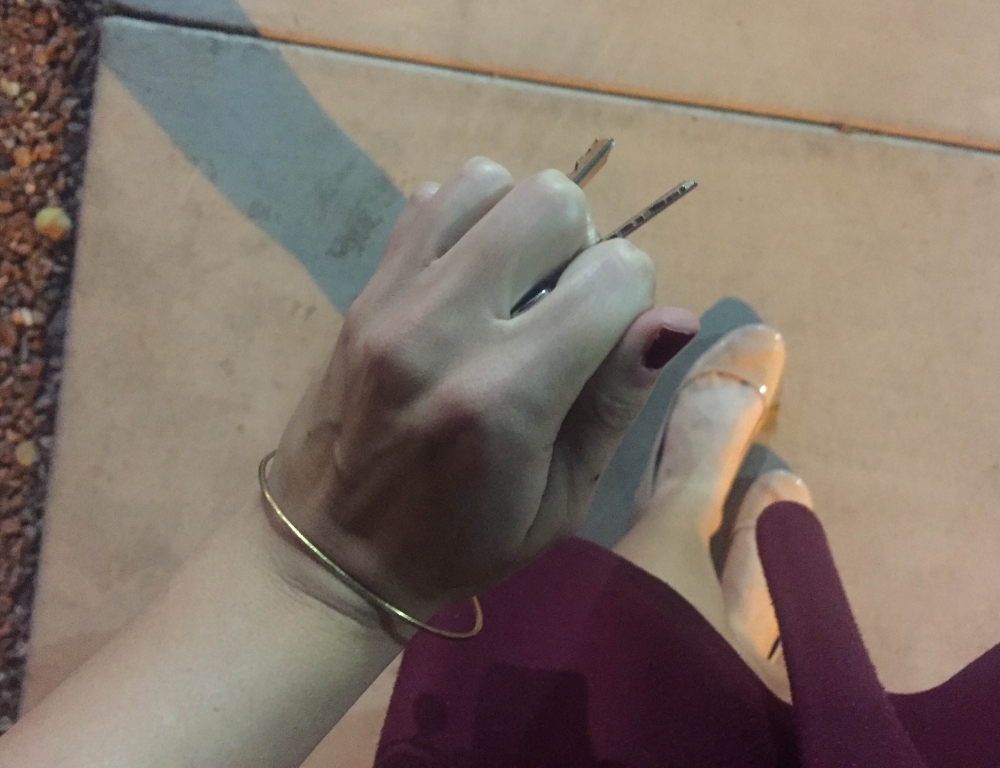
Photo taken by the author

Trigger Warning – Attempted Rape

As the United States grapples with the misogyny, racism and bigotry that was seemingly validated with the election of Donald Trump, it is more important than ever to not normalize sexual violence.

The presidential election of 2016 rattled much of the nation.

It was supposed to be her.

On January 20, 2017, we were supposed to be inaugurating our first woman president.

But that’s not what happened. If you are outside the United States, I would venture to guess you’re aware of the trash fire that has transpired here since the country not only condoned the candidacy of an admitted sexual predator, but handed him the White House on a silver platter.

The election threatened the livelihood of many groups: Muslims, Mexicans, Jews, the LGBTQ+ community, just to name a few. These threats should not be underestimated. Trump’s refugee ban last week served as proof that he will try and make good on his threats.

Another group who felt threatened as we watched the polling results roll in on November 8: women. (Not all women, I should add. More than half of white women voted for Trump.)

The attitudes that normalize Trump’s “locker room talk” are the same attitudes that women must face the repercussions of every day as we walk down the street.

I started a new job this semester and work nights three days a week. At first I felt uneasy about knowing I’ll be walking home late at night, in the dark, in the city. But I refuse to feel scared.

I and the women around me have had lots of experiences with street harassment, and I feel disgusted to even say that I haven’t had it as bad as many others. I have struggled to understand the roots of the phenomenon and arm myself with knowledge.

While I believe we should avoid demonizing Trump alone (change is broader than one man, and government and the nation as a whole also needs to be held accountable for what they condone and initiate), we can’t ignore what his victory represented to a lot of people: that America condoned the actions of an admitted sexual abuser.

Groups have thoroughly documented hate crimes by perpetrators who used Trump’s exact words. A man harassed me a few days after the election using Trump’s words.

After the election of Donald Trump, women’s everyday fear of sexual assault was intensified, as if that’s even possible.

The other night when I walked home from work, a man in a car catcalled me. (The anonymity and distance of being in a vehicle does wonders for the empowerment of harassers.) I breathed a sigh of relief when he drove away.

The next night I walked home again. My stomach clenched when a group of four men were walking in my direction. I clutched my keys between my fingers.

A thought passed through my head: What if I got raped right now?

They passed me without saying anything, and I felt ridiculous for being scared of a group of innocent men. But this is our reality.

Some say street harassment is a fact of life, that we should deal with it.

But do they know what it’s like to breathe a sigh of relief when you make it through the door because you arrived untouched and unbothered?

I text my mom the second I get back to my apartment, the text already written out before I depart for home. The response she sent last night once I notified her of my safe arrival? “Yay!” A casual and all-too-normal declaration of joy at your daughter making it home unscathed.

“Because when girls go to college they’re buying pepper spray and rape whistles while guys are buying condoms #yesallwomen“

— Stephanie Greene (@all_worn_out) August 11, 2014

The fears are for good reason. Last year at my own apartment complex a man followed a girl into the building, forced his way into her room, and tried to rape her before her male roommate stepped in. I would link to the news story, but I am obviously wary of publicizing the apartment complex I live in.

Paranoia. Fear. Guarding our bodies at all costs. Could we take on a man twice our size? Do we have our pepper spray? How do we fight back?

We fight back by not being scared. By continuing to talk about the obscene, ridiculous and terrorizing details of our experiences. By intervening when we have to. By holding accountable those who don’t take it seriously.

The hand signing executive orders to deny women reproductive rights and health care has been accused of groping their bodies. The words that spew hatred for any skin color that isn’t white come from the same mouth that makes jokes (threats) of dating 14-year-old-girls.

I don’t care who’s in the Oval Office. Sexual violence isn’t normal. And I refuse to ever let anyone make me feel like it is.

Libby is a student at Arizona State University. Originally from Salt Lake City, Utah, she is majoring in journalism with a focus on print and she is minoring in psychology and women’s studies. You can follow her on Twitter @libbyallnattasu and Instagram @LibbyPaigeA.

Share

Filed Under: correspondents, Stories Tagged With: misogyn, presidency, sexual assault, trump

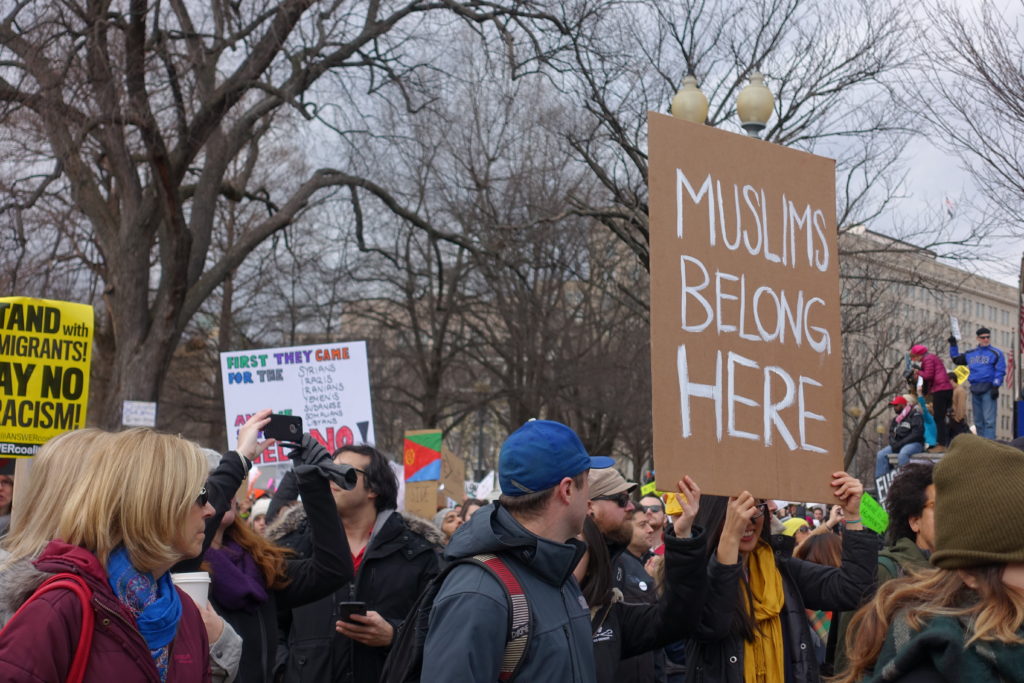
Muslims Belong Here: Marching in D.C.

January 29, 2017 By HKearl

Via the Guardian:

“Thousands of protesters gathered and marched in cities and at airports across the US on Sunday, in opposition to the executive order from Donald Trump which imposed a freeze on refugee admissions and a ban on travel from seven Muslim-majority countries….

Around 100 people were held at airports on Friday and Saturday. Many were released as a dramatic court victory for the American Civil Liberties Union in New York on Saturday night saw a federal judge place a temporary stay on the order and rule that all those held should be released.

But by late afternoon on Sunday, travellers remained in custody at various airports, with attorneys reporting that some border agents were refusing to comply with the judge’s order.”

Myself and two of our DC-area Stop Street Harassment board members attended the Washington, D.C. protest. We also met up with Chai, the c0-founder of Collective Action for Safe Spaces.

We rallied at the white house and then marched down 15th Street, up Pennsylvania Ave to the U.S. Capitol and then back.  There was a huge pocket of people protesting along the route in front of Trump Towers. Basically waves of people marched from 1 p.m. until well after 4 p.m.; when I passed the white house en rote to my car around 4:45 pm, groups of people were still heading down 15th street, marching.

Trump has made a lot of executive orders that I’ve disagreed with during his first week in office, but this one is having an immediate, scary and unfair impact on people’s lives. Many members of congress have spoken out and even Dick Cheney, who I didn’t think could do anything but evil, has come out against this move by Trump.

No doubt Islamaphobia will be on the rise in public spaces in the USA by emboldened Trump supporters. This is not okay. Everyone should be and feel welcome in our country, no matter their religion or country of origin.

Chai

#NoMuslimBan #RefugeesWelcome #Resist

Share

Filed Under: immigration, SSH programs Tagged With: immigrant, muslim, refugee, resist, trump

UK: Street Harassment Across the United Kingdom

January 27, 2017 By Correspondent

Annabel Laughton, Gloucestershire, UK, SSH Blog Correspondent

Hello readers! I’m delighted to be blogging for Stop Street Harassment, and am looking forward to bringing you some exciting activist stories from England. For my first post, I decided to find out what the street harassment picture looks like in the UK as a whole.

2016 produced some interesting research related to Street Harassment. As reported on the SSH blog in March, the UK-based End Violence against Women coalition commissioned a YouGov survey. The most striking figure to emerge was that 85% of young women have experienced street harassment, and 45% of young women have experienced it in the form of sexual touching. Street harassment isn’t restricted to the 18 – 24 year olds though; 65% of all women have experienced it, and 35% have experienced it as sexual touching. In another headline finding, over 75% of women were under 21 the first time it happened.

Girlguiding UK produced the Girls Attitudes Survey 2016, which among many other findings, showed that 37% of girls aged 11 – 16 experience street harassment sometimes or often. Even more recently, the Fawcett Society released a new report, Sounds Familiar, which shows women experiencing high levels of hostility in all areas of life. It highlights the disproportionate targeting of Muslim women by abusers, and shows that the tired old trope of blaming women for what they were wearing is alive and well.

It is my view that street harassment is grossly underestimated as a problem in the UK. I believe most men are blind to its existence, or think it only happens on isolated occasions. I don’t think most men understand the extent and forms of sexual harassment that women experience in public every day, or the impact it has on women. Furthermore, I believe there is little understanding of how street harassment connects with and enables other forms of violence and oppression women face in the UK. A woman is raped in Britain every six minutes. Two women a week are murdered by a partner or ex. 1220 cases of forced marriage were reported in 2015. Almost two thirds of young women have experienced sexual harassment at work.

These facts do not stand apart from one another, and neither do wider cultural ones: on average, boys first view porn at the age of 11; only 7 of the FTSE 100 companies have a female boss; the gender pay gap is 18%. I suspect some perpetrating harassment do not truly know that is what they are doing, so accustomed are they to seeing women as existing for their entertainment.

As SSH reported, in 2016 Nottinghamshire police became the first police force in the UK to classify misogyny as a hate crime. To me that indicates just how far society is lagging behind in its understanding of this issue. Whether it’s a “cheer up love” or a sexual comment, a leer, being followed home, a hand up the skirt or rape, we all know we are targeted because we are women.

But all is not lost. There are many powerful and inspiring women tackling street harassment here, and over the next few months I’ll speak to activists standing up to this pervasive culture of objectification and abuse.

Annabel is involved in campaigns for human rights, mental health, environmental issues and social justice. She has an honours degree in Classical Studies, a diploma in counselling, and works in Higher Education.

Share

Filed Under: correspondents Tagged With: UK

Northern Ireland: Catcalling is Not a Compliment. Men Know It.

January 26, 2017 By Correspondent

Elaine Crory, Belfast, Northern Ireland, SSH Blog Correspondent

Often in discussions about how to tackle street harassment, there are suggestions that it should be a criminal offense, perhaps even a hate crime. And in response, inevitably far too many men clamour to defend the practice and share collective horror at the idea that mere words should be a crime, that they should be restricted in this way because of “snowflake” women, taking offense to a bit of banter.
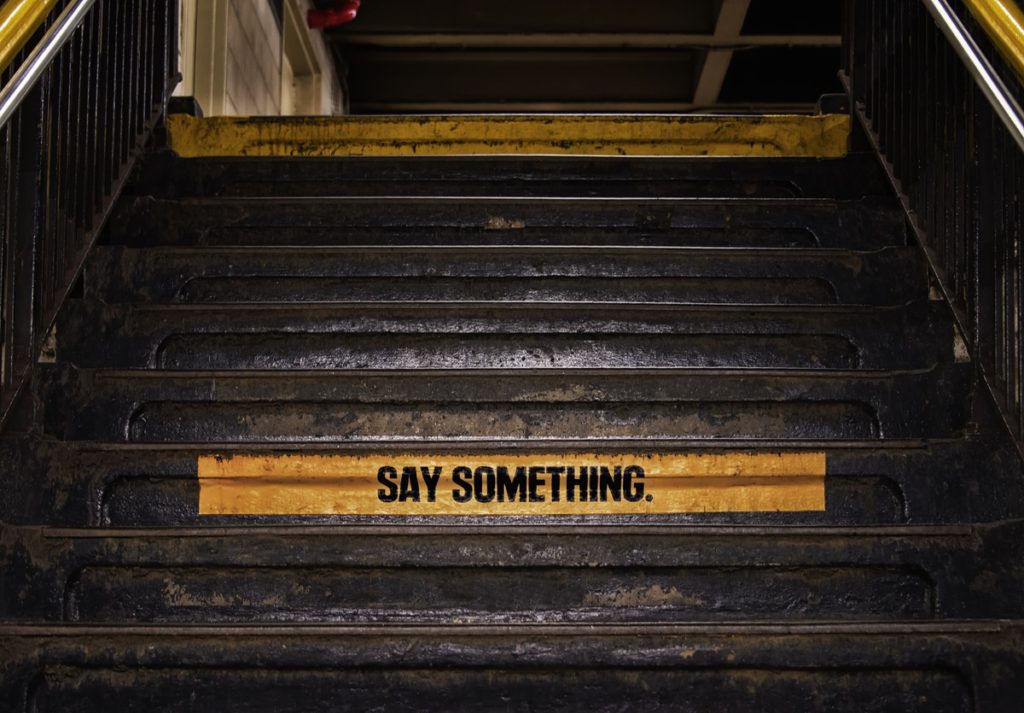
That’s disingenuous though, and I think men know it. Street harassment, the verbal kind consisting of catcalling or comments on appearance, are not genuinely motivated by a desire to get to know the woman. They are about social status and control.

“All the world’s a stage”, Shakespeare once wrote, “and all the men and women merely players”. When we’re young and finding our way in the world, it certainly can feel as though we are trapped in roles, reading lines we have not written for ourselves, particularly where gender roles are concerned. For young men under patriarchy, this often consists of vigorously demonstrating their red-blooded, usually heterosexual, manliness; a performance of manhood, as much for the benefit of their male peers as for any young women. Gender theorists have argued for decades that gender is performative, and never is it more obvious that in adolescence. So, some young men find themselves catcalling women, laughing along with the dubious behaviour of the ‘alpha’ of their group as he skirts acceptable behaviour, playing a role for all he’s worth. With time and self-awareness many young men grow out of this and distance themselves from that kind of black and white thinking. Many, however, do not.

These are the men clogging newspaper comments sections with fury when catcalling is called out for what it is. They are the ones who use alcohol as an excuse to get a little too loose with words and sometimes with their hands on a boy’s night out. They are the ones who defend “locker room” talk and the behaviour it implies as “alpha male boasting”. They know that it’s about social control, but they will not admit it. They don’t expect women to turn and swoon as they tell sexual obscenities from doorways and moving cars. A recent viral video, where a woman pretends to take a man up on his sleazy offer, shows this amply. That’s not what they want, anyway. They want women to look down and scurry away, feeling ashamed and self-conscious. Or to shout angrily, maybe even with tears in her eyes; to feel violated and exposed.

They want you to know that your appearance in public makes you their property and that they are the real owners of the streets, you are allowed there on their terms only.

It’s not a compliment, and they know it, including because they don’t only dole out “positive” comments. My own very first experience of street harassment taught me that. I was only thirteen and already bowed by self-consciousness. I carried myself as though to shrink through a crack in the pavement. I was crossing the main square in my small town when I found myself in the path of three young men, probably a decade older than me, and much taller and larger. One of them deliberately put himself in my path and dodged further into my way when I tried to walk around him. He leaned down and made a show of looking me up and down. “F*ck, you’re ugly”. He spat the words out. I scurried away. I wasn’t angry or defensive. I believed him. There’s that role playing again.

It took many years before I saw this for what it is, and many conversations with people who had had other abuse of that kind thrown their way while navigating the public sphere, including racial abuse, being called fat, homophobia and transphobia, even abuse on the basis of belonging to a visible subculture like goth or punk. I get it now; these men think they own public space, and we must meet their aesthetic standards in order to take up space there. Our job as activists against street harassment is to show them how wrong they are.

Elaine is a part-time politics lecturer and a mother of two. She is director of Hollaback! Belfast, co-organises the city’s annual Reclaim the Night march, and volunteers with Belfast Feminist Network and Alliance for Choice to campaign for a broad range of women’s issues.

Share

Filed Under: correspondents, street harassment

Romania: Street Harassment in Winter Time is Business as Usual!

January 25, 2017 By Correspondent

Simona-Maria Chirciu, Bucharest, Romania, SSH Blog Correspondent

First of all, this is my second time as a SSH Blog Correspondent and I am so happy to have this honour.

I am in charge of Hollaback! Romania and I am working on a PhD thesis regarding gender-based street harassment in Romania, so I am involved 24/7 in the awesome fight for safe spaces.  I really think that together we are powerful and fierce and we can support others to find their strength, too.

Right now in Romania we are having a tough winter. The weather is so cold and nobody wants to stay out for a long time. But still, street harassers do not take a break in winter. Business as usual, right?

Stories represent a vital tool in fighting street harassment and link together harassed people. I want to share three different stories of street harassment in this winter. The first story is mine.

I know already that women can’t have a break from street harassment, even if outside it’s -10 Celsius degrees. I remain a street harassment target (in my harassers’ eyes) and a fighter year after year, winter after winter.  A couple of days ago I was barely walking because of the glazed frost. Walking in winter time is quite an adventure if you don’t have a car or money for taxi. I was sick and moody but I had to go to work. I crossed the street, when a driver honked and then stopped his car near me, open the other door and ask me to go in the car with him! His lewd smile made me sick on my stomach. A 45-50 years old man harassing a young woman in the street instead of minding his own business.

I said, ”You are such an idiot! Leave me alone!” He was surprised because I had the nerve to answer him and then drove off. Harassers act powerful but they take this power from us. We are the ones to decide if we accept this, or we hold on to our power and fight them back.

Since the last year I have noticed many girls and women are posting their street harassment experiences on social media. This is quite a surprise for me, as a researcher and as a activist so I try to do my best in encouraging girls and women to do so: to use their voice and to tell their stories.

The second story is of Mihaela from Bucharest. She shared her story on the Hollaback! Romania Facebook page  using #harassmentinthebus (#hartuireinratb) on 8th December 2016,.

Her story goes like this:  ”Bucharest, Rahova neigbourhood. I was walking to the classes with the tram 32. Beside one seated lady was a man standing. At the next stop she left and I took her seat. That man comes near me and using the excuse he wanted to make room for another person to cross, he almost was brushing his groin to my face. I sighed loudly to show my disapproval. He backed off. I knew he did this on purpose but my first thought was, ”I am wrong to think this. I am the one guilty.”

Then, someone wanted to cross again and this time he did the same thing. I was so close to touching his genitals with my face. But this time he was not moving back from my face, so I started to show my disgust. Nothing! I badly wanted to scream at him to back off but I was afraid of his reaction and the reaction of bystanders as well. I was worried that people will say that I am the one wanting to get close to him and do something with him  …. So often the victim is the one to blame.”

Yes! The victim is the one to blame… Why? Because we are living in a rape culture, in a patriarchal society that teaches girls and women to be quiet, to know and accept their place and to please boys and men. Their voices, their experiences, their rights are not so important. And if men are sexist, violent or abusive, always the blame is on women.

So often I hear this from girls and women: ”I was too afraid … I don’t know, maybe it’s my fault.. Maybe I did something to make him react like this …” and so on. The blame is not on us, it’s on the perpetrators and harassers! Always! Full stop!

The third and the last story is of one of my friends and a former colleague, K., as she was leaving Bucharest. She is a feminist and is a strong woman. I care for her and I was so upset hearing this but I asked for her consent to write her story. When she said to me what happened to her, I was so surprised: she was harassed and sequestered by a taxi driver. I heard a similar story from another woman two years ago and it was very bad indeed. The good news is that we managed to fight for justice and that taxi driver is in prison… I know harassment and sexual violence are so common, so prevalent. But let’s back to my friend, K.

”It was New Year’s Eve. I was at a party in a local pub. I was searching for a taxi. I found one but because it was night, he overcharged me. I was in the cab with one of my girl friends. The taxi driver was ok, he was quiet and serious. I dropped off my friend in front of her house. Then, he drove to my place but when I wanted to get off, he blocked the doors. He wanted me to give him my phone number or my Facebook account and asked if maybe if I can go to a coffee with him at 6 am in that morning.  So I said to him, ‘Look, mister! I want you to let me out of the car. In the second place, you are working now, and your job is not to insist I give you my contact. Moreover, you saw I was with my boyfriend when I approached you.’

He was insisting even harder so I texted a message on Whatsapp to find someone to help me escape from him. I was a hostage in his car! I texted to a friend and he called me. He tried to make me feel ok. ‘Please, talk to me. In this way, the driver will know someone knows you are not safe right now,’ he said. So, I was talking to this friend and the taxi driver refused to let me go. After some time, he started to panic and opened the doors, but only after mentioning that ‘I don’t know what a good catch I am losing’. After I was home and safe, I talked to my boyfriend and he said to me that if he knew this, he wouldn’t let me go alone, but I think this is so stupid: in 2017, a woman is not able to ride alone?!”

Yes, maybe it sounds stupid, but this is the reality of many women and LBTQ folks: you don’t know if you are safe from harassment and violence even when you choose to pay and go for a taxi, instead of public transportation.

One day, I was talking to a friend and I made a funny but real comparison: “Harassers are like cockroaches!” because they are intruders, they are many, they are tough, they are everywhere. But we are the one to decide if we accept the harassers in our space or if we fight them back (not with insecticide, of course, but with action!).

Even when we are feeling too small or too weak to create a change, when we are scared and traumatized by our experiences, when we are all alone and we try to resist and fight this back, we can make it! Our bad experiences do not define who we really are. Our actions do! So it’s good to keep in mind that our actions can bring change for us and for others.

Stay safe, strong and be super-fighters against street harassment this winter!

Simona-Marie is a Ph.D. Student in Political Sciences, working on a thesis on gender-based street harassment in Romania. She is an activist and organizes numerous public actions (marches, flash-mobs, protests) against sexual violence and street harassment against women. Now she is part of an working-group trying to improve by public policies the situation of young homeless people in Romania. You can find her on Facebook.

Share

Filed Under: correspondents, Stories Tagged With: winter

« Previous Page
Next Page »

Share Your Story

Share your street harassment story for the blog. Donate Now

From the Blog

  • #MeToo 2024 Study Released Today
  • Join International Anti-Street Harassment Week 2022
  • Giving Tuesday – Fund the Hotline
  • Thank You – International Anti-Street Harassment Week 2021
  • Share Your Story – Safecity and Catcalls Collaboration

Buy the Book

Search

Archives

  • September 2024
  • March 2022
  • November 2021
  • April 2021
  • March 2021
  • January 2021
  • April 2020
  • March 2020
  • February 2020
  • December 2019
  • November 2019
  • September 2019
  • August 2019
  • July 2019
  • June 2019
  • May 2019
  • April 2019
  • March 2019
  • February 2019
  • January 2019
  • December 2018
  • November 2018
  • October 2018
  • September 2018
  • August 2018
  • July 2018
  • June 2018
  • May 2018
  • April 2018
  • March 2018
  • February 2018
  • January 2018
  • December 2017
  • November 2017
  • October 2017
  • September 2017
  • August 2017
  • July 2017
  • June 2017
  • May 2017
  • April 2017
  • March 2017
  • February 2017
  • January 2017
  • December 2016
  • November 2016
  • October 2016
  • September 2016
  • August 2016
  • July 2016
  • June 2016
  • May 2016
  • April 2016
  • March 2016
  • February 2016
  • January 2016
  • December 2015
  • November 2015
  • October 2015
  • September 2015
  • August 2015
  • July 2015
  • June 2015
  • May 2015
  • April 2015
  • March 2015
  • February 2015
  • January 2015
  • December 2014
  • November 2014
  • October 2014
  • September 2014
  • August 2014
  • July 2014
  • June 2014
  • May 2014
  • April 2014
  • March 2014
  • February 2014
  • January 2014
  • December 2013
  • November 2013
  • October 2013
  • September 2013
  • August 2013
  • July 2013
  • June 2013
  • May 2013
  • April 2013
  • March 2013
  • February 2013
  • January 2013
  • December 2012
  • November 2012
  • October 2012
  • September 2012
  • August 2012
  • July 2012
  • June 2012
  • May 2012
  • April 2012
  • March 2012
  • February 2012
  • January 2012
  • December 2011
  • November 2011
  • October 2011
  • September 2011
  • August 2011
  • July 2011
  • June 2011
  • May 2011
  • April 2011
  • March 2011
  • February 2011
  • January 2011
  • December 2010
  • November 2010
  • October 2010
  • September 2010
  • August 2010
  • July 2010
  • June 2010
  • May 2010
  • April 2010
  • March 2010
  • February 2010
  • January 2010
  • December 2009
  • November 2009
  • October 2009
  • September 2009
  • August 2009
  • July 2009
  • June 2009
  • May 2009
  • April 2009
  • March 2009
  • February 2009
  • January 2009
  • December 2008
  • November 2008
  • October 2008
  • September 2008
  • August 2008
  • July 2008
  • June 2008
  • May 2008

Comment Policy

SSH will not publish any comment that is offensive or hateful and does not add to a thoughtful discussion of street harassment. Racism, homophobia, transphobia, disabalism, classism, and sexism will not be tolerated. Disclaimer: SSH may use any stories submitted to the blog in future scholarly publications on street harassment.
  • Contact
  • Events
  • Join Us
  • Donate
  • Facebook
  • Instagram
  • Pinterest
  • Tumblr
  • Twitter
  • YouTube

Copyright © 2026 Stop Street Harassment · Website Design by Sarah Marie Lacy